Friends and collaborators gathered to celebrate the visionary’s career.

When Oscar nominee Jacob Elordi first heard that Guillermo del Toro wanted him for Frankenstein, the timeline alone might have made the job feel impossible. He was filming in Australia when the call came in and had just about three weeks between wrapping that project and arriving on del Toro’s set in Toronto. But even with the clock ticking, Elordi jumped at the opportunity to work with “one of the greatest artists of the last century.”
“This is a real painter,” Elordi says of the Academy Award–winning filmmaker. “His paintbrush is all of us and the craftsmen that he hired.” So when del Toro asked him to be “one of his brushes,” the actor says simply: “I was ready to go.”
Elordi’s physical transformation would, of course, be as demanding as the performance. Before he stepped in front of the camera, he would spend hours disappearing under layers of makeup and prosthetics. From the outset, del Toro asked him to treat that time as a sacred ritual: “Putting on the makeup needed to be like a sacrament,” Elordi says. “It needed to be holy and spiritual.”
That idea helped transform what could have felt like a punishing process into a daily act of devotion. It set the tone for the collaboration that followed — anchored by one of del Toro’s most essential craftspeople, prosthetics designer Mike Hill, the artist responsible for creating the Creature that Elordi would come to inhabit.
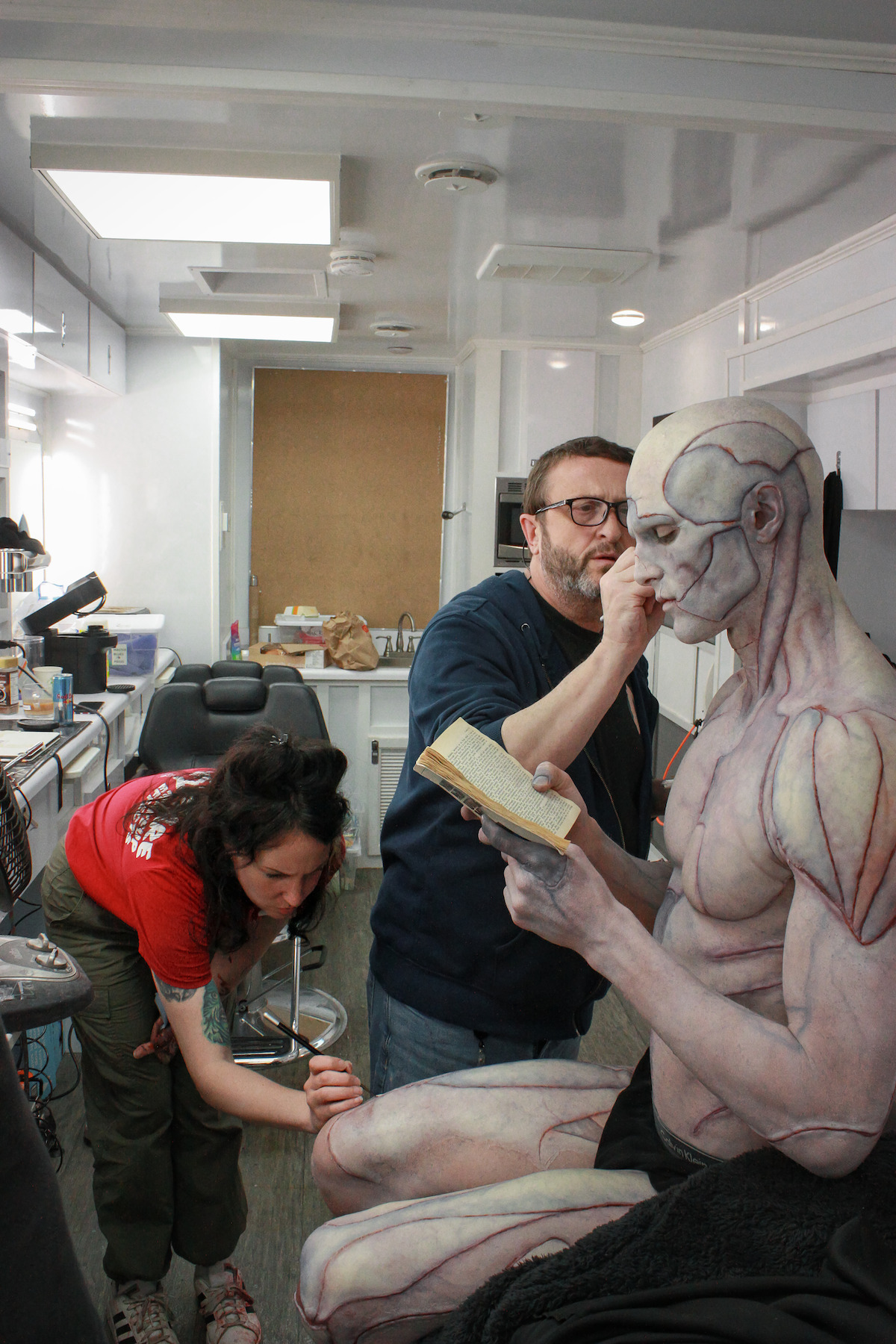
Hill, a veteran prosthetics designer and monster maker whose long collaboration with del Toro includes The Shape of Water and Nightmare Alley, approached Frankenstein with a clear mandate from the script. Despite sharing an affinity with del Toro for the creature makeup worn by actor Boris Karloff in James Whale’s classic 1931 adaptation, he would reject the familiar shorthand.
“We agreed that we didn’t want all these garish wounds and stitching,” Hill says. “Victor Frankenstein is not a butcher. He’s trying to make the perfect man, so he wouldn’t make this thing look like a car accident.”
Hill’s mission to highlight the Creature’s fundamental humanity matched Elordi’s approach to preparing for the role. “Most of the film references [del Toro] had for me were silent films from the ’20s and ’30s,” Elordi says. His task was to “understand that nuance of expression,” the high-wire act of conveying intense emotion without tipping into artifice. And the creature’s makeup, he says, was specifically engineered to aid that kind of performance.
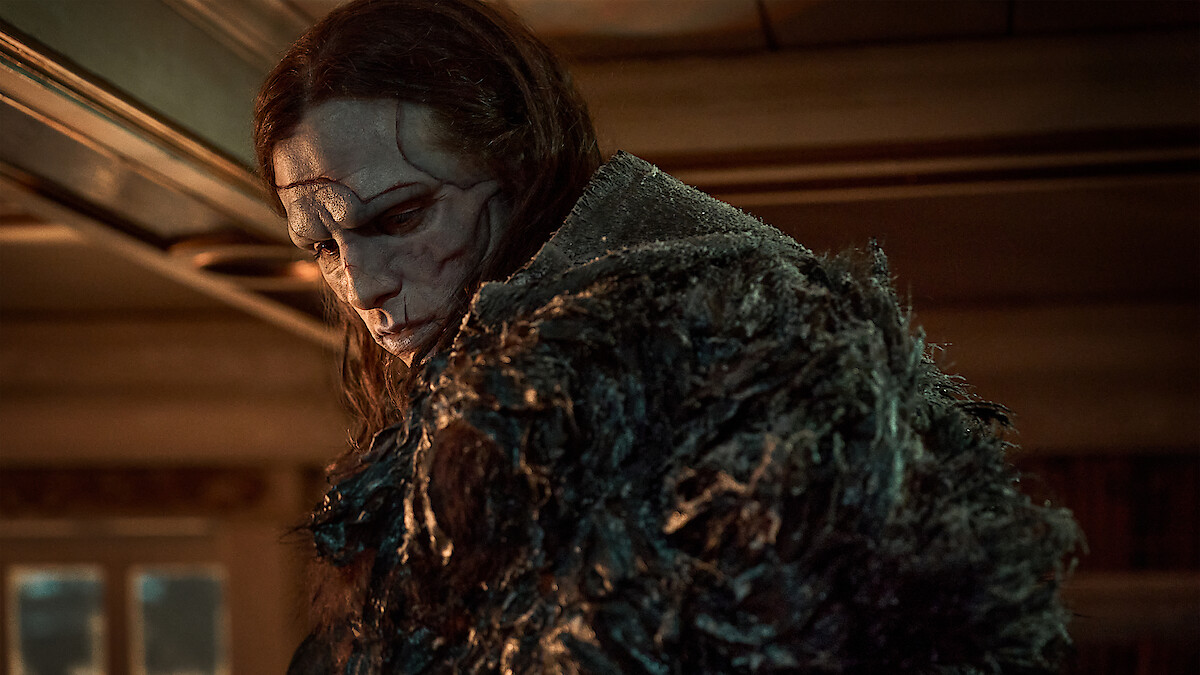
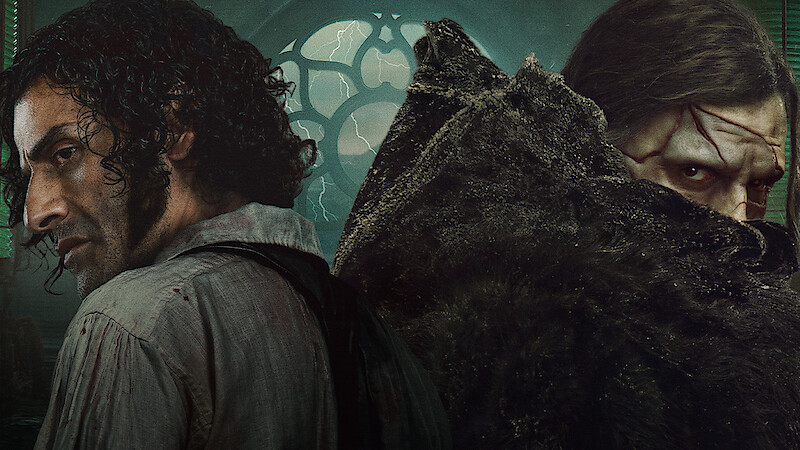
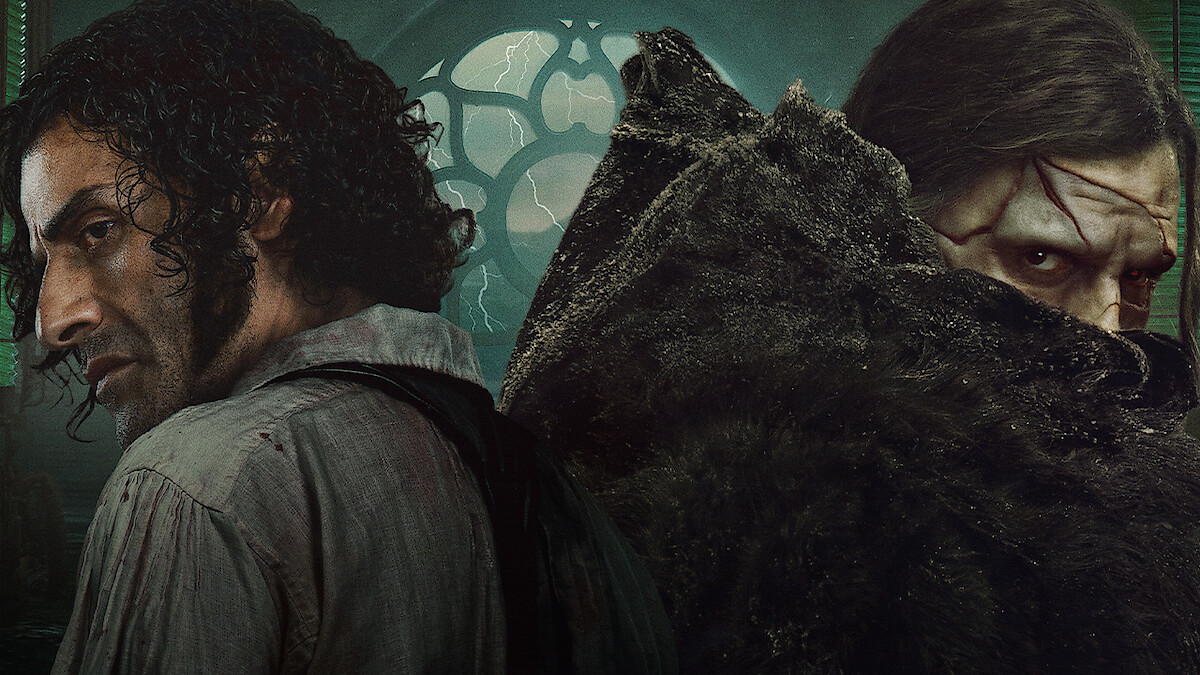
“The makeup that Mike created is designed in a way that all the scars and the brow point toward my expression,” Elordi says. “It’s designed so that you focus on the Creature’s eyes, which is where his soul is. … His eyes are where the human is.”
Hill says he found Elordi to be an “ideal” canvas for bringing the Creature to life. Once he was cast, early design ideas could be tailored to the particulars Hill kept noticing — his physicality, his eyes, his bone structure.
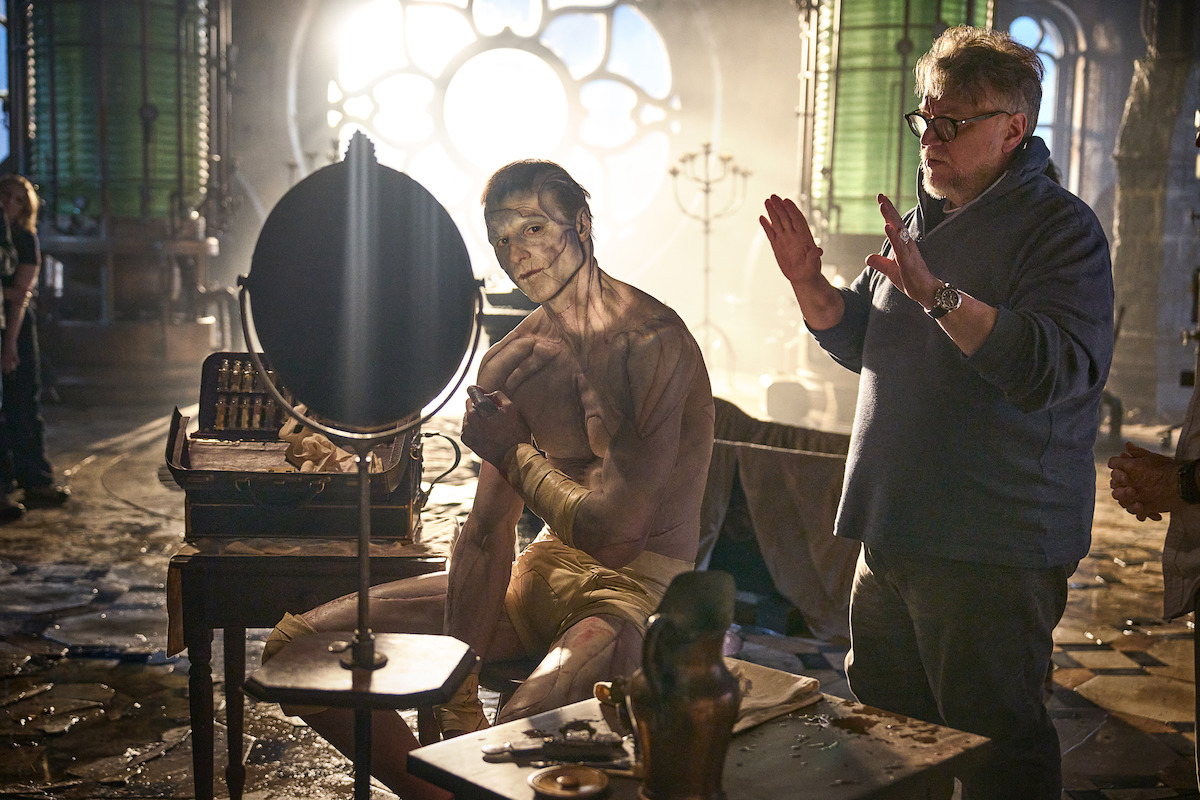
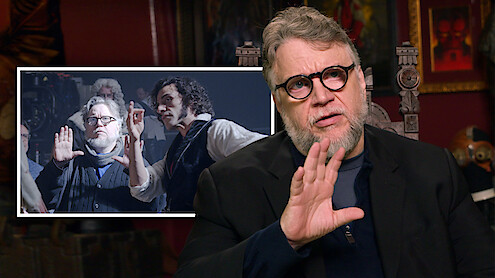
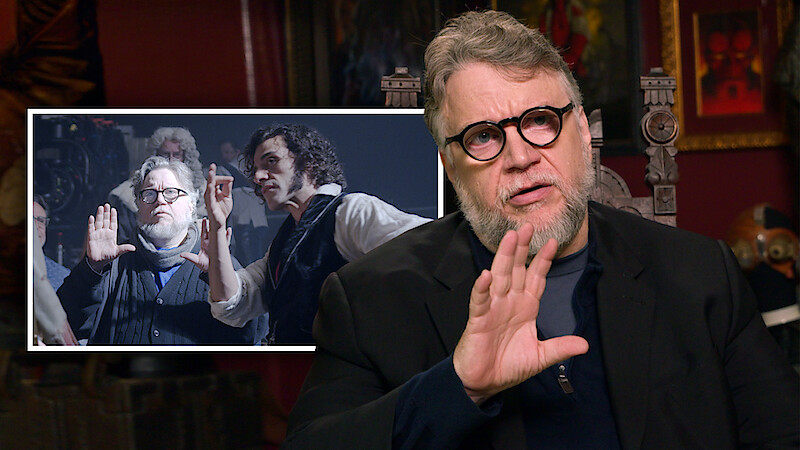
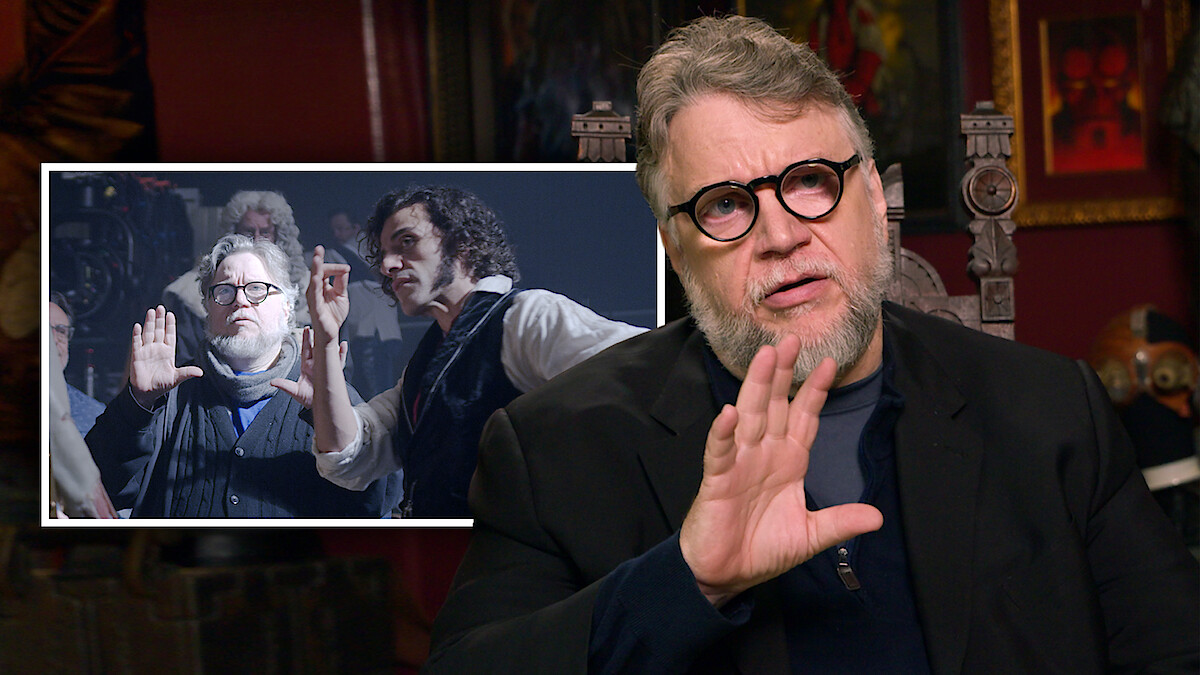
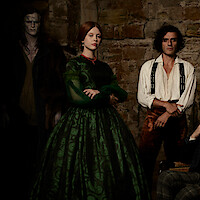
Jacob Elordi as The Creature and Guillermo del Toro on the set of Frankenstein
“There was almost this elegance to him and his mannerisms,” Hill says. “He had these very doleful brown eyes that were a lot like Boris Karloff’s eyes, which were very soulful, and these long, heavy lashes. He has these intense cheekbones that we just intensified somewhat. He had everything we were looking for. It was just A-plus casting. He was born to do this.”
But before Elordi ever sat down in the makeup chair, he had to find his own way into the Creature — and fast. Soon after signing on, del Toro handed him a reading list of some 15 titles, from books on baby development and Butoh — the Japanese dance-theater form that balances beauty and the grotesque — to the Book of Job and Milton’s Paradise Lost. With very little time to absorb it all, Elordi found that the pressure opened the door to a more immediate kind of discovery on set.
“Because of the truncated amount of time, I was learning a lot of what it was while I was filming in the moment,” he says. “There were things that happened in the film that I never could have planned or put into my body or into my brain. There were things that were spontaneous and organic.”
Hill’s work still had to function as a practical, repeatable build. With a team of technicians, including prosthetics supervisor and hair stylist Megan Many, he devised a 42-piece full-body prosthetic application. Even a “smaller” day, focused on the head and shoulders, meant a dozen overlapping appliances placed with exacting consistency. But within that structure, Hill still built in choices that could help shift the Creature’s emotional register from shot to shot.
Elordi wore dentures to make his teeth appear larger and one large brown contact lens to give his face an asymmetrical effect. “When he wants to display his more monstrous side, we could focus on the big eye,” Hill says. “When he’s leaning into his more human side, we shoot him from the right eye, which is the smaller eye.”
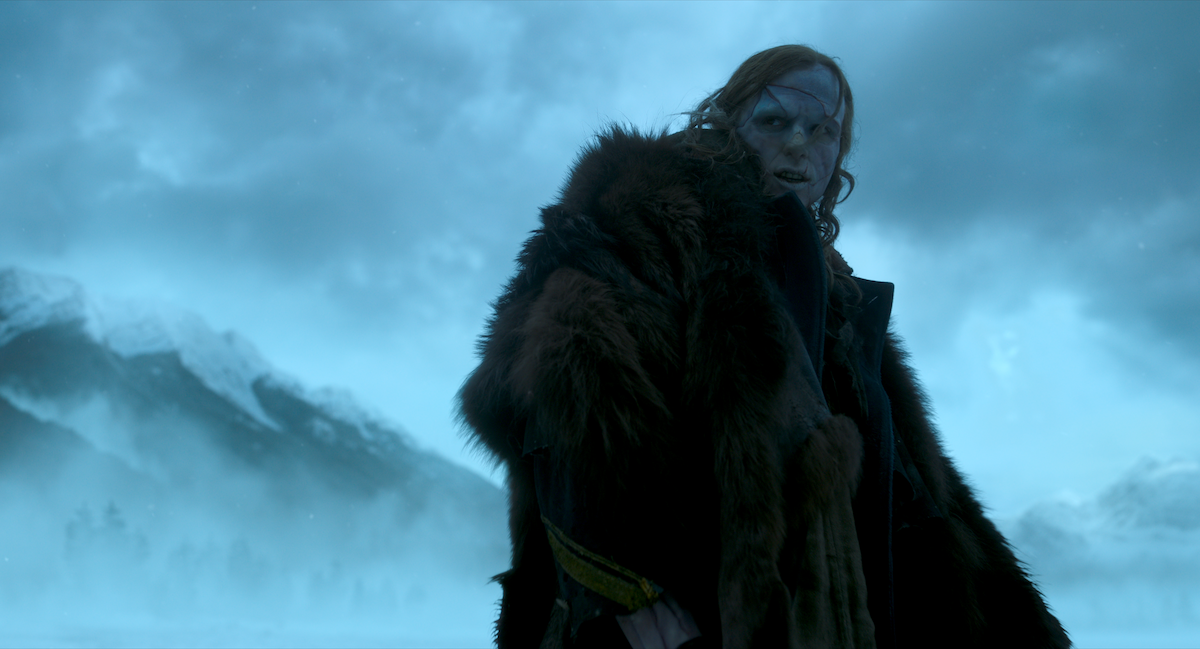
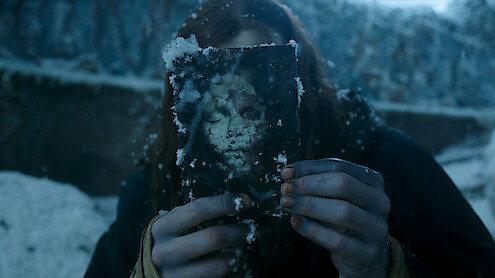
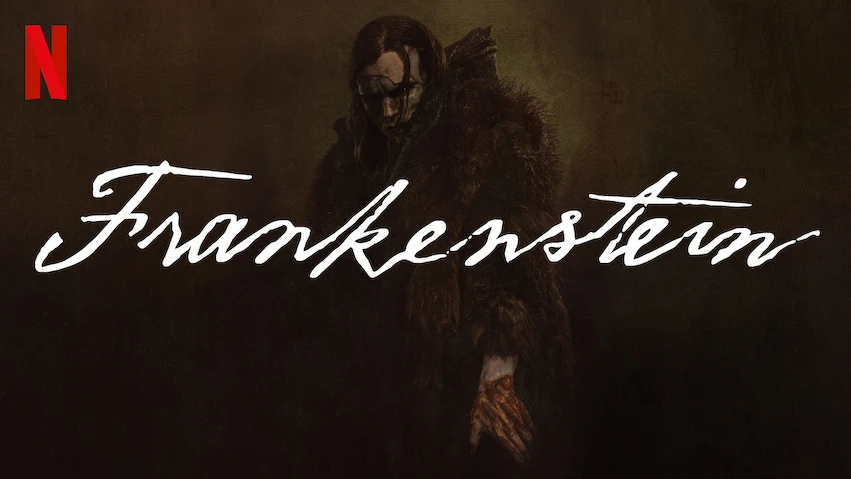
The Creature (Jacob Elordi)
By the end of the film, Hill says, the design completes the Creature’s arc. “He’s been through a lot,” he says. “He’s torn up [after] various accidents, and he’s in these big furs, what you would consider a monster on the outside. It’s a big departure from when we first see him, when he’s in just these wraps around his waist and his hands. He’s basically a nubile newborn then. It was nice to see the progression from newborn to the man at the end, who the world has not treated too well.”
In mapping that progression for himself, Elordi leaned on del Toro’s reading list. From the book that covered a baby’s “first four years … when he is first born into the world and is consciously unconscious,” Elordi says, he then moved into the bigger questions in the Book of Job and Paradise Lost, whose aggrieved voices keep reopening the same wounds, “asking the creator, ‘Why?’ You can find those questions in yourself, and I could map my own growth and life through those questions.”
But on set, the day always began the same way — hours before call, in the chair with Hill and Many. That was where all the reading, design work, and intention came together into something like the sacred ritual del Toro had envisioned.
“We’d meet in the dead of night in this car park in Toronto, and we’d all be kind of bleary-eyed,” Elordi recalls. “Megan would light some incense, and then magic would happen. And after 10 hours, you’d open your eyes — and the Creature was there.”
The magical journey of Frankenstein continues. Elordi and Hill became first-time Academy Award nominees for their contributions to del Toro’s sweeping vision. The film was nominated for nine awards, including Best Picture. “I have been enamored by actors and this craft of acting for as long as I can remember, remembering. It’s a great pleasure to share a stage with all of my heroes past and present,” says Elordi, a nominee for Best Supporting Actor at the Golden Globe Awards, BAFTA Awards, and the Actor Awards in addition to his Oscar nod and Critics Choice Award win for his performance. “ I love this Creature and I love the movies.”