This article contains major character or plot details.
Years ago, writer Julie Gearey was at a grocery store, and had a fleeting moment of connection with a young religious woman.
The stranger was dressed in full traditional garb, accompanied by multiple children, and the two shared a smile. “I thought, ‘I wonder what her life is like when she goes home,’ ” Gearey tells Tudum. “We are a similar age, we have similar-age kids, and yet I’m going my way into the mainstream world, and she’s going left into her world.”
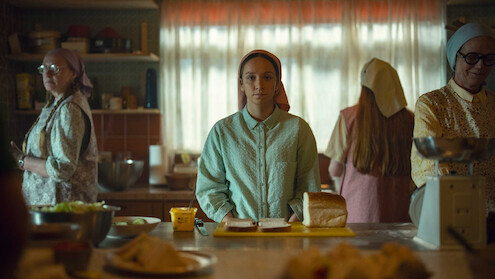
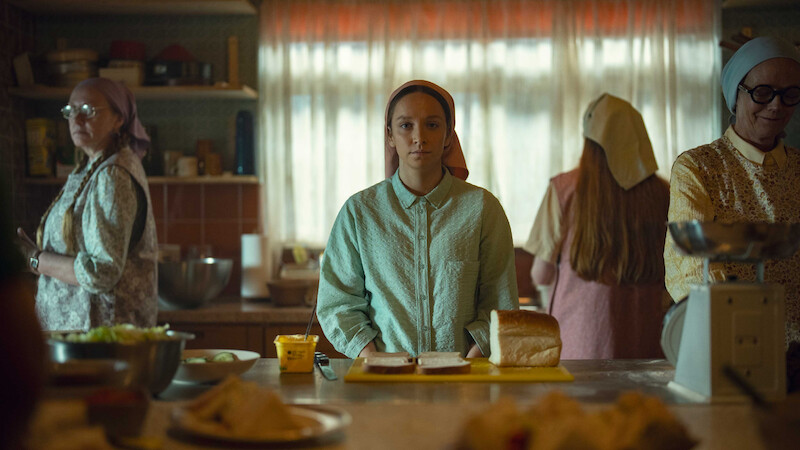
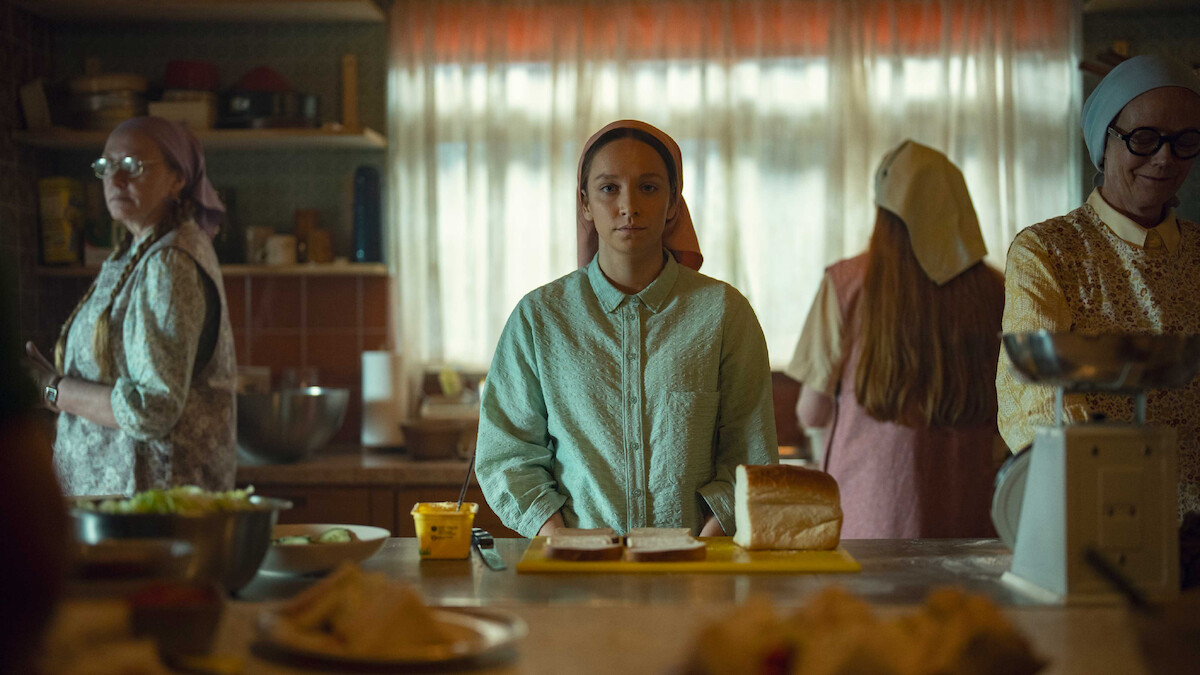
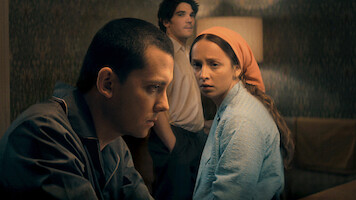
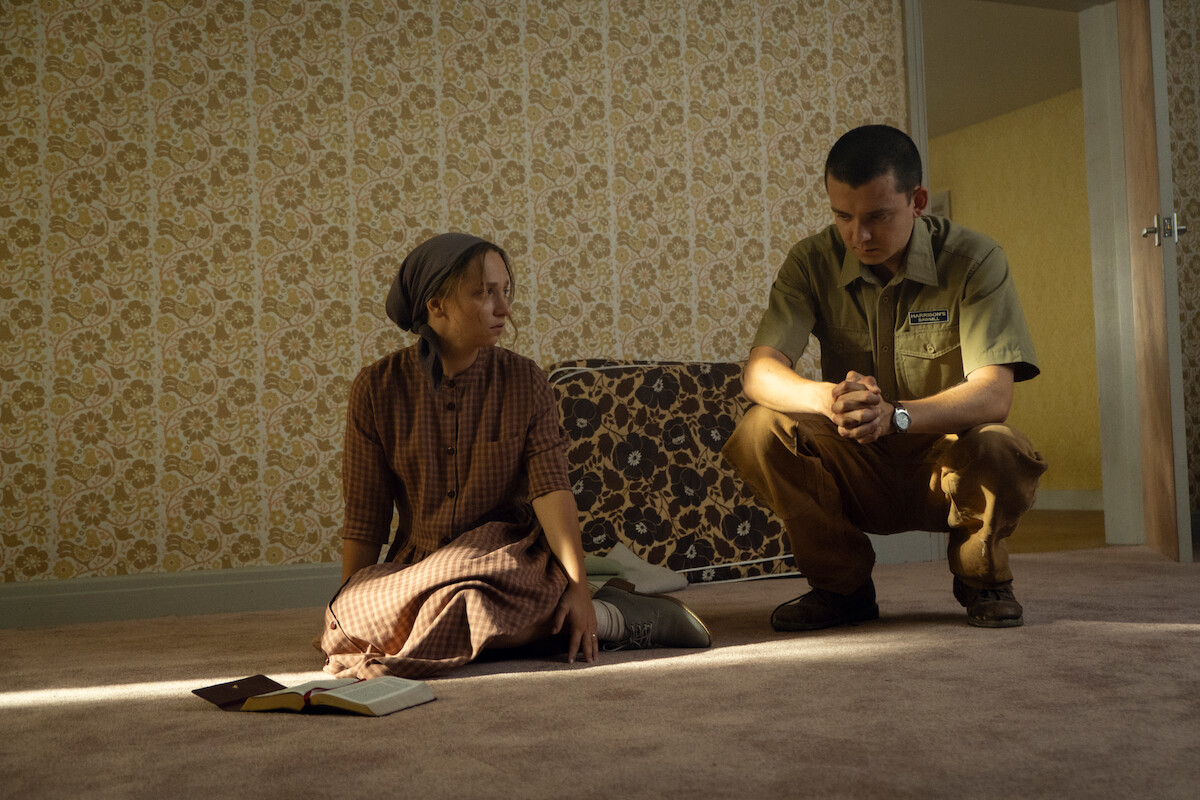
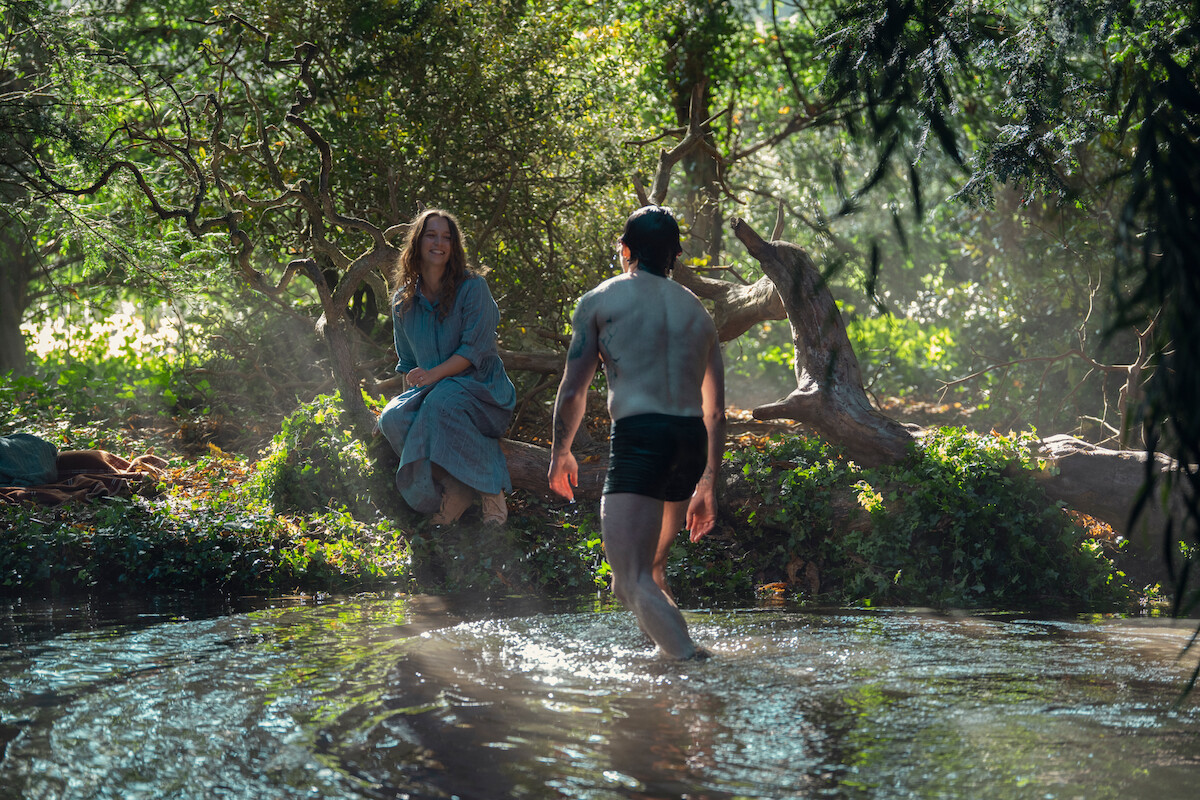
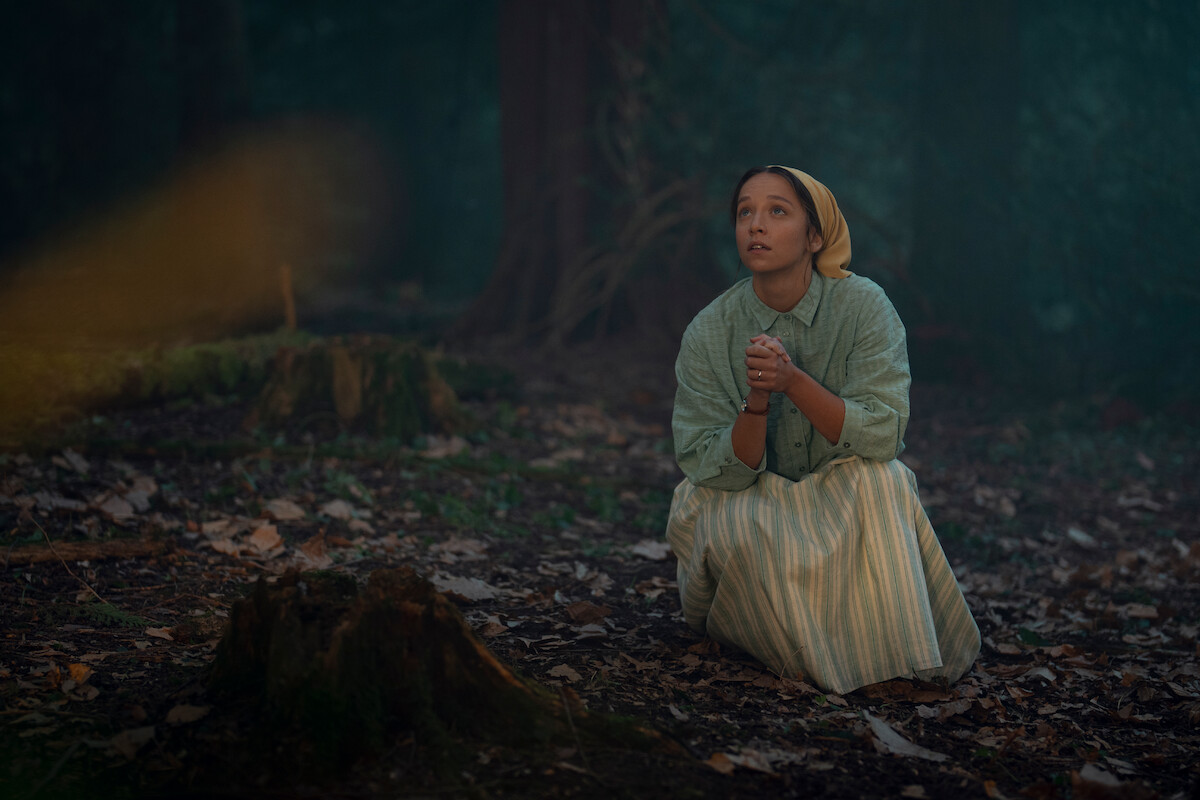
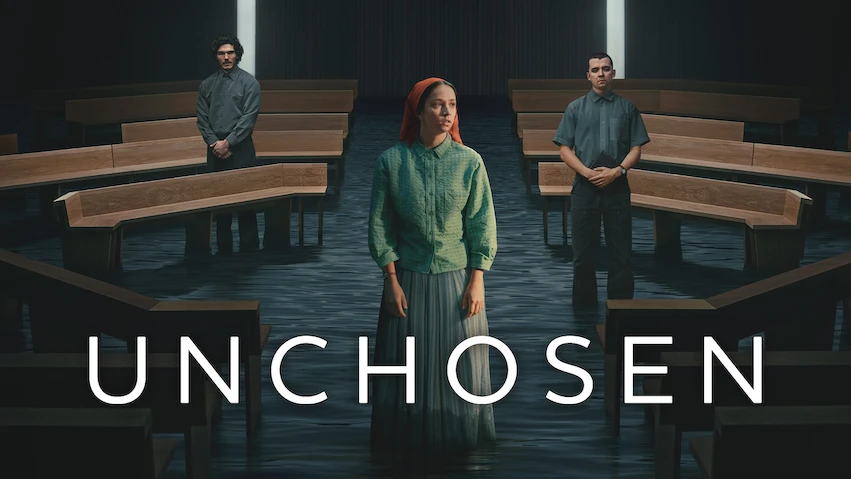
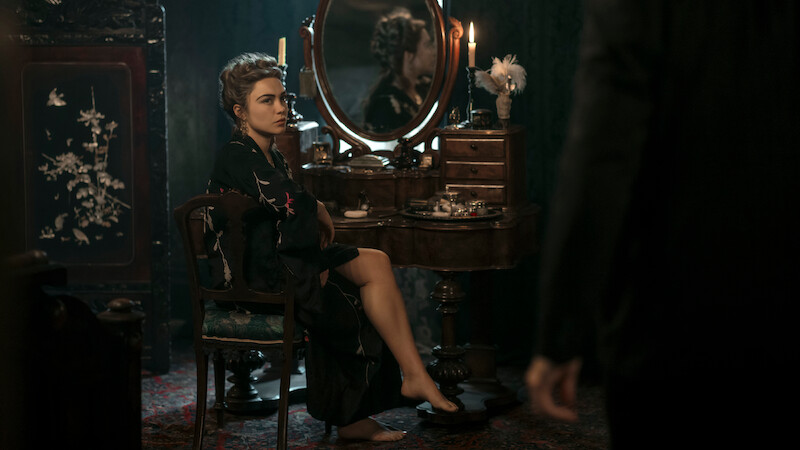
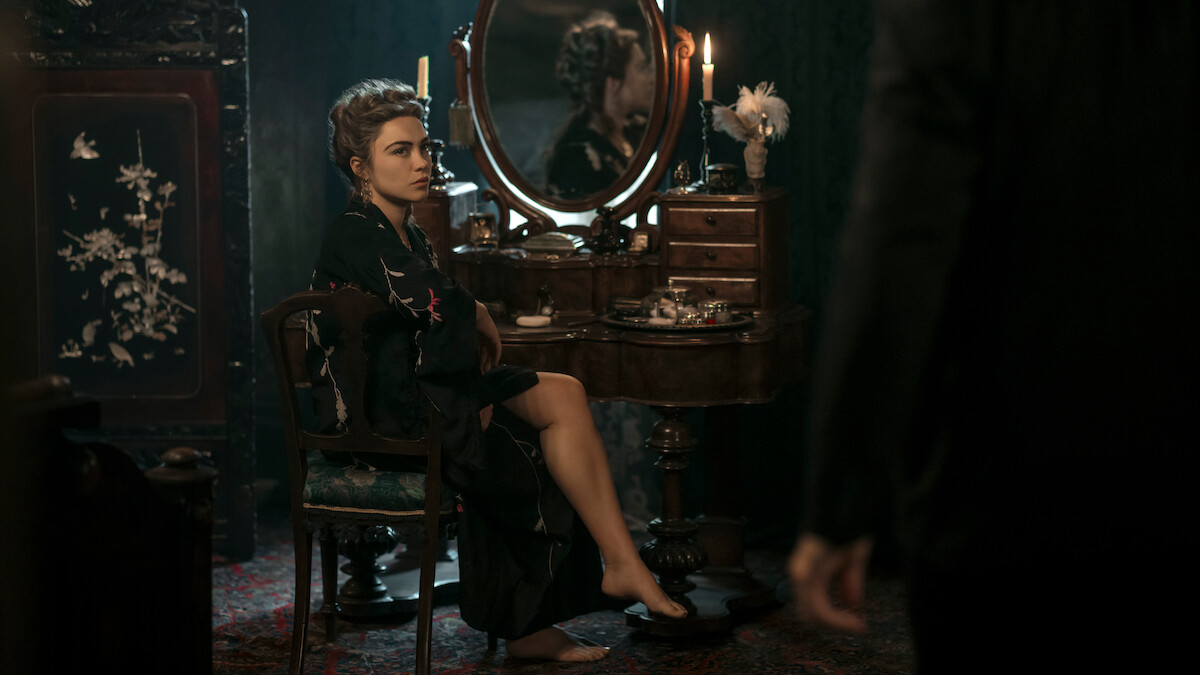
The encounter with that woman would serve as the inspiration for Rosie (Molly Windsor), one of the central characters in Unchosen, on Netflix now. Cloistered away in a strict religious community, Rosie finds herself drawn to a mysterious stranger named Sam (Fra Fee) after he saves her daughter Grace (Olivia Pickering) from drowning. As she becomes entangled in a new romance, she’s also dealing with abuse from her husband, Adam (Asa Butterfield), who’s hiding his own secret. A rising star in their cult community (also known as the fellowship), Adam is quietly struggling with his sexuality, and also finds himself attracted to Sam.
Sam is an intriguing loner who happens to be a convicted murderer, and he employs his power of manipulation to climb the ranks of the cult while using Rosie and Adam as pawns in the process. As the season comes to a close, Rosie manages to escape by the skin of her teeth, Adam stands up for his family at long last, and Sam reigns over the oppressive community.
Below, Gearey, Windsor, Butterfield, and Fee answered all our burning questions about that pulse-accelerating finale and cliffhanger ending.
Is Unchosen based on a true story?
Yes and no. While the show features a completely fictional cult and characters, Gearey did pull inspiration from the real-life stories of former cult members. The writer connected with people who had managed to escape their religious sects, tracking them down via online forums and social media. “It was important to reassure them as much as we could that, firstly, nobody watching the show would ever recognize them, and, secondly, that whatever they had to say about the emotional experience of being involved, we would try to respect and reflect as truthfully as possible within the show,” Gearey explains.
Adam’s difficulty reconciling his sexuality with his religion was drawn from the similar experiences of former cult members. “Several people we met had struggled with their sexuality within these groups,” says Gearey. “That was a story that kept coming up again and again, if you’re not straight, there’s no place for you.”
Another truthful nod? That horrifying scene when cult members use copious amounts of alcohol to punish Isaac (Aston McAuley) for having a cell phone.
“We spoke to some people who’d escaped a particular group that used alcohol in terms of softening people up,” Gearey says. “In fact, in several of these groups, alcoholism is a real problem, and I think it’s because people are miserable. They’re drinking to suppress that misery. We talked a lot about that, how it would be interesting to see people drinking whiskey socially, but then to also use that as an instrument of coercion, manipulation, and control.”
When shaping the character of Adam, Butterfield turned to a 2020 BBC documentary which chronicles life inside a radical Christian movement. One member in particular, who carried himself in a rigid, robotic way, stood out to the actor.
“Even walking up the steps, he would take it one at a time, almost as though he was scared of falling,” Butterfield shares. “I thought that was quite interesting and applied that to Adam, who is someone who has this secret — this thorn of untruth — that he’s holding inside himself.”
What happens between Adam and Rosie?
After enduring a painful, violent marriage with Adam, Rosie decides to end their relationship and take Grace with her as she escapes the cult. She also reveals to her husband that she’s been sleeping with Sam, which he angrily condemns despite the fact that he, too, had a sexual encounter with the escaped convict.
“Adam has his entire world essentially thrown into the air at that point,” Butterfield tells Tudum. “Not only has he finally heard this truth from Rosie, but he has his own truth still buried in his gut, [which is] so twisted and painful.” Meanwhile, Gearey notes, Adam is being used and manipulated by Sam the whole time.
“Sam has enough sociopathic nature within him to sense people’s weaknesses and people’s trauma, and zero in on it,” the writer says. “Adam is an obstacle to Sam having Rosie.”
All the animosity between Adam and Rosie temporarily goes out the window when Adam learns that Sam threatened Grace’s life. He decides to help Rosie and their daughter escape, loading them up in his car to drive them away from the compound. “They’re so important to him, and that’s why he knows that he has to give them up at the end,” says Butterfield. “He has to let them go because that would be the ultimate sign of love. He can’t put them in any more danger, even if it means never seeing them again.”
Adam and Rosie share a surprisingly tender moment before escaping, with the pair briefly clasping hands. “Adam supported her leaving, which I think she didn’t see coming,” Windsor tells Tudum. “I think [she feels] a sense of gratitude. Women can’t get divorced in the fellowship, and it’s quite uncommon for people to leave.”
Adds Windsor, “Adam has done some inexcusable things to Rosie, but I think because it’s so raw, and it’s happened so quickly, the threat of Sam and Grace takes priority. She hasn’t had time to process anything, she’s not had time to work out what that relationship is.”
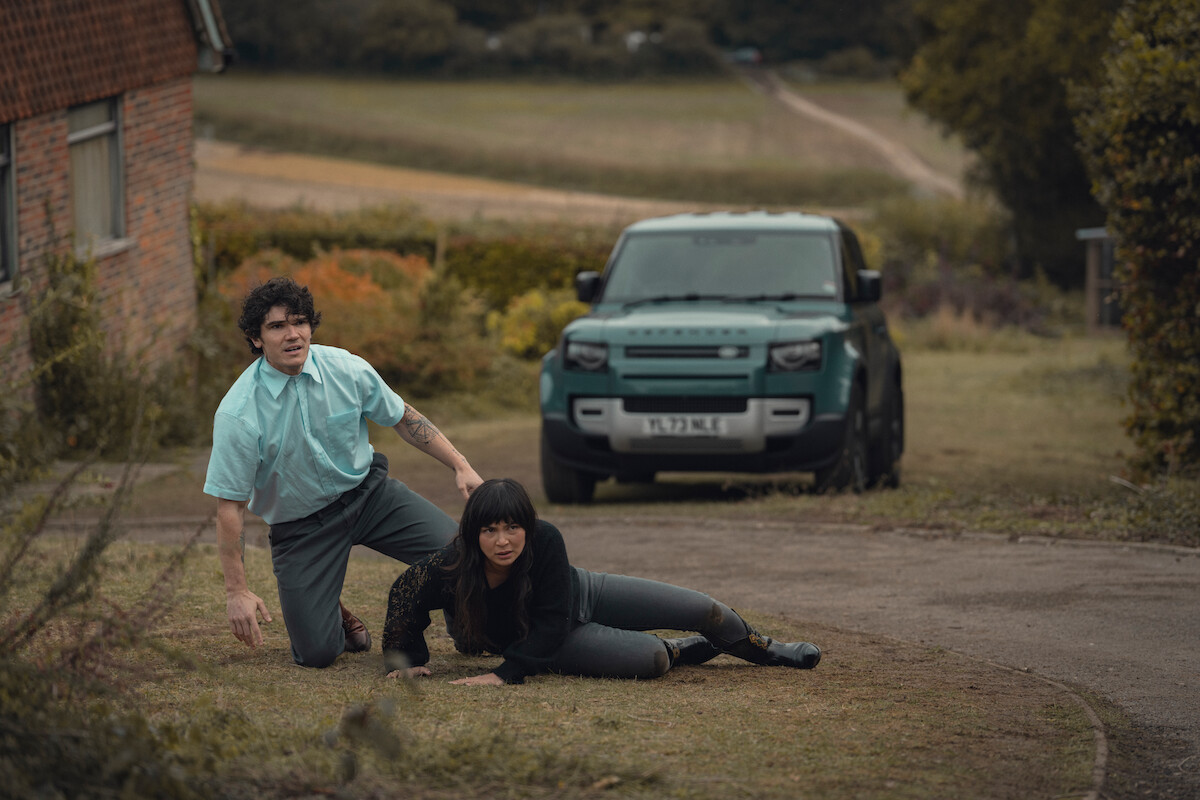
The family departs their home in the pouring rain, only to be chased down by Sam, who realizes that Rosie and Grace are leaving. Adam quickly tells his wife and daughter to escape and attacks Sam — a moment Butterfield found “cathartic.”
“I remember reading the script and thinking, ‘Yes, finally,’ ” he says. “Adam has all of this pent-up guilt and shame and rage. He’s finally able to really stand up for himself and for his family. It’s taken him a long time to be able to do that.”
Why does Sam let Rosie live?
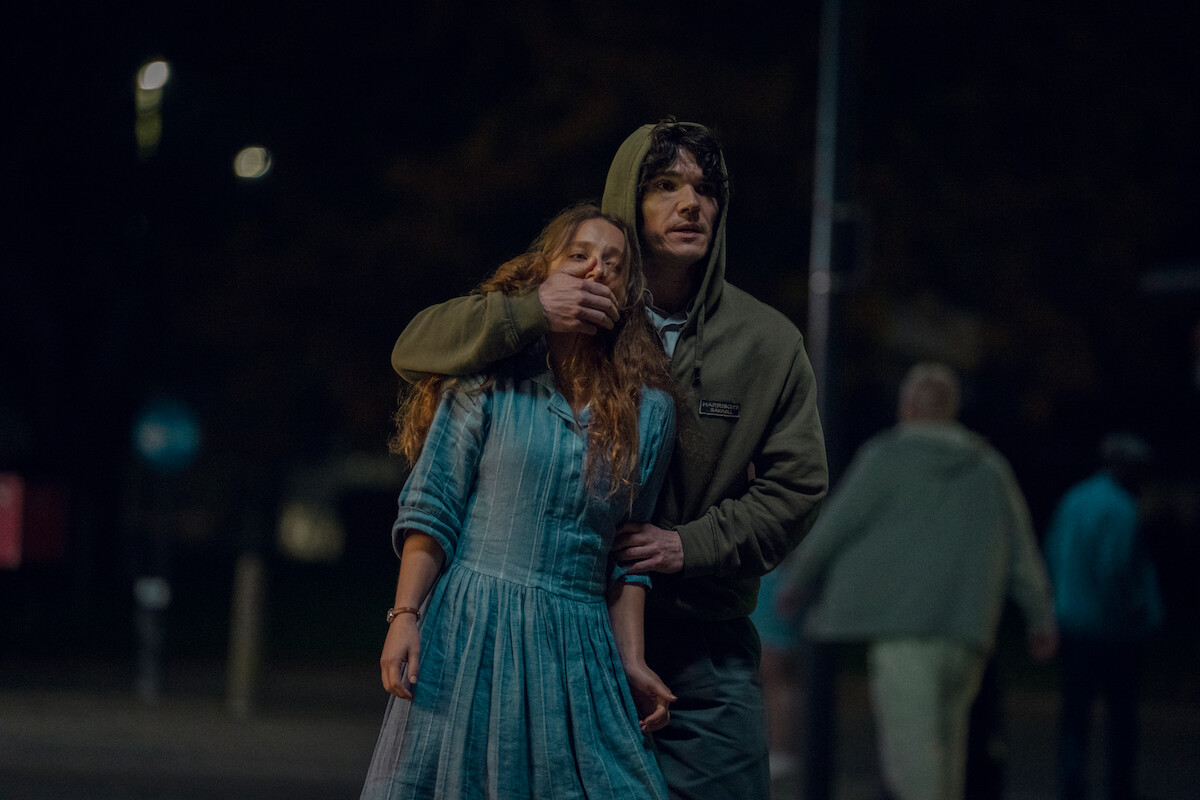
Sam is able to break free of Adam’s grasp, and he chases Rosie and Grace through the woods. Furious that Rosie is leaving, he grabs her, pushes her into a tub of water, and begins to drown her. That moment, Fee tells Tudum, was the absolute peak” of Sam’s unraveling. Just when it seems like Rosie might not make it out of the forest alive, Sam relinquishes his grip long enough for her to run away, Grace in tow.
In almost killing Rosie, Fee notes, Sam is mirroring the very same action that put him in prison in the first place — murdering his girlfriend when he was a teen.
“Something manages to get through the red mist,” Fee says. “Whether it’s recognition of his actions when he was 16 that caused his life to be taken away from him, whether it’s a voice of God that exists in the fellowship, whether it’s the voice of Rosie, something manages to cut through the white noise of his mind and his anger.”
Gearey thinks of that moment as a “proper redemption” for Sam. “Otherwise it’s like, what has it all been for?” she says. “The Sam at the beginning of the show would’ve just drowned her, but he’s been through this experience, and he does want to be a better version of himself. There is some light within him.”
As Rosie and Grace flee, a feeling of self-loathing washes over Sam. Fee describes what he was thinking while filming that scene: “How could I be doing this to another person I love? How could I be back at the beginning? Did those 16 years in prison mean nothing? Have I not changed a bit?” And there were feelings of resignation, too.
“I think [Sam was thinking], ‘Enough now. You've tried to keep on top of this whole situation, but enough now. Your dream of going off to live a lovely, wholesome life with this woman is absolutely over. Just give up. Submit to it. Exhale.’ ”
Does Sam really love Rosie?
After learning that Rosie is leaving the cult, Sam, emotional, reveals that he loves her. But does he actually mean it? Or is this just another instance of him being a master manipulator?
Fee, Windsor notes, knew how to keep her on her toes in moments like that. “There are a lot of scenes that we did where I’d read it and thought, ‘Okay, I know where this is going.’ And then his performance just spins it on its head, and he takes you down a route that you’re not expecting.”
Windsor points to those final moments in the saw mill, when Sam reveals his feelings for Rosie, as one such scene. “Fra played it with a beautiful vulnerability, and I think I could see the boy in him, which just gives it an extra layer that I wasn’t expecting,” she says. “I remember the first take of that scene where I was like, ‘Whoa.’ ”
For Fee, there’s a gray area when it comes to Sam actually loving Rosie. “Both of those people needed something, and they both represented what the other needed,” he says. “Was it love? I’m not quite sure, but it was a need and a connection. I think Rosie represented a life that he had lost when he was thrown into prison. She’s a young woman. Did she perhaps resemble his ex-girlfriend? [Regardless] she represented that innocence, that lost childhood, so the connection, the need, the desire was real.”
It was important to Gearey that Sam wasn’t a “full psychopath,” but rather had “elements of sociopathy.”
“It’s not interesting writing a full psychopath as a character, because if you have full psychopathy, you cannot change, you cannot grow,” the writer explains. “When he’s saying those things to Rosie at that moment, he means it. But that doesn’t mean when he’s outside the moment, he’s not capable of doing really, really monstrous things.”
That tightrope walk — between Sam’s vulnerable side and his destructive side — is particularly apparent in the scene in the meeting hall, when he reveals to Rosie, through tears, that he murdered his ex-girlfriend.
“In the moment he feels it, but then we obviously have that shot at the end of the scene when his eyes flash, and they’re dark, and you just think, ‘Oh, well, now we’re not so sure,’ ” Gearey says. “I wanted the audience to feel uncertain around him, but fascinated by him.”
How did Sam manipulate his way into becoming the leader of the cult?
When we last see Sam, it’s been a year since he almost drowned Rosie. During that time, he’s weaseled his way to the very top of the cult’s chain of command, and now serves as the community’s leader. The reveal happens in the show’s final moments, when Sam enters the meeting hall and, bathed in light, delivers a sermon to his rapt audience, dressed in the clothes that Mr. Phillips and Adam wore.
“I think the key to Sam’s character is he’s an absolute survivor,” Gearey says. “He’s an arch manipulator, he’s a survivor, and that’s the power of him as an antagonist.”
The writer’s decision to hand the cult’s reins to Sam was born of her desire to give him the most complete journey possible. “You start with him escaping from prison, and then he ends where he ends in the series,” she explains. “It’s always [about] trying to give your characters the biggest arcs across the series, because that’s really, really satisfying for the actor and, I hope, really satisfying for the audience.”
When it came time to shoot that final scene, Gearey told Philippe Kress, the director of photography, to “just go for it” and to “shoot him like he’s a rock star, have that sort of mystery, and that sort of majesty, and then have the reveal with the light that it’s him.”
What happens next for Rosie, Sam, and Adam?
First things first, Windsor hopes that Rosie gets a “big sleep” after her traumatic experience in the forest.
“She’s done it, she’s left, but I think there’s the scary moment where she’s safe, and then it’s like, ‘OK, what next?’ ” the actress says. “Integrating into society will be tricky, learning to trust people again will be really tricky.”
Adds Windsor, “She’s got a whole other journey to go on now. I think, generally, when you go through something really scary or traumatic, you’re in shock and just getting through it. It’s not until after that you go, ‘Whoa, that was a lot.’ ”
Adam, meanwhile, has his own complicated feelings to unwrap. “I would hope that he could find the strength to leave [the cult], but I think he’s still got a journey ahead of him, an internal journey to really confront his own truth, to confront the loss of his family, to confront Sam,” Butterfield says. “It’s so deeply ingrained in him, this life and this world. Unlike Rosie, who needs the change and who’s seen the chance to change, I don’t think Adam’s really opened his eyes to that yet.”
As for Sam? “He entered the fellowship as a hero. He saved Grace,” Fee says. “They all think of him as this hero, and he’s going to allow that narrative to play out for as long as possible. I think he’s very much on a high, high pedestal at the end of the show.”
What Sam wants the most, Fee says, is peace. And he might just have captured that feeling at long last … with a slight caveat. “Sam has a version of peace, in the same way that the members of the community have a version of peace (that we see in the opening episode), but I think that the fear of not knowing what’s around the corner, and the feeling of constantly having to look over his shoulder, hasn’t dissipated.”
After escaping prison, Sam set about reclaiming his lost childhood and picking up where he left off as a teen. “I think he wanted to be with somebody and have a life that was filled with love,” says Fee. “[Maybe] he’s replaced that love with the admiration and devotion of followers, but we all know that that’s not real.”
Watch all six episodes of Unchosen now.