Deep Dive
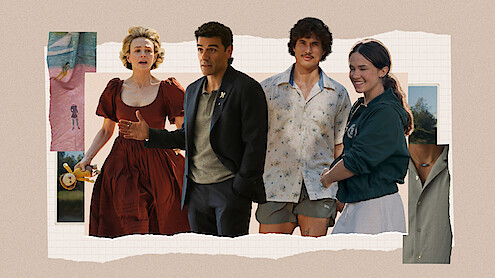
Costume designer Olga Mill breaks down the season-inspired looks.
By Olivia Harrison
1:00 am

Take a bite out of the hidden details, references, and music.
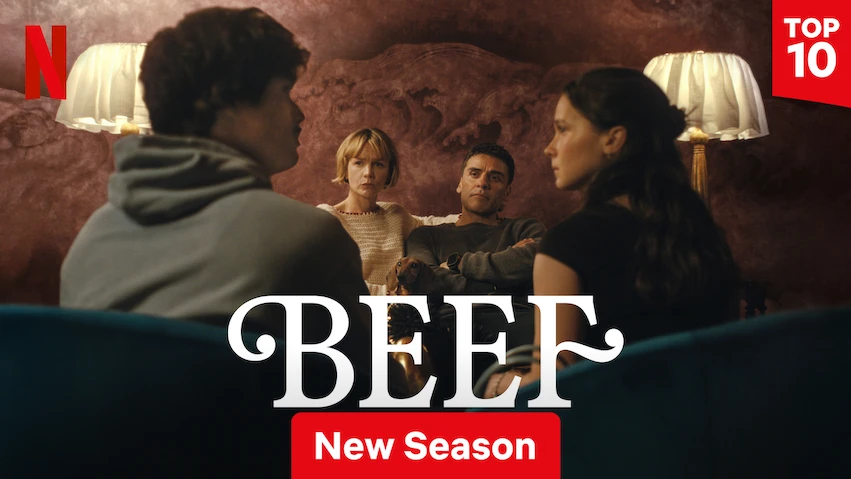
BEEF creator Lee Sung Jin is known for his highly attuned attention to detail, a creative force able to capture the intricacies and complexities of modern life and unpack them on our screens with sardonic wit. And in the show’s second season, which centers around an escalating feud between two couples that explodes with global ramifications, Lee has embroidered the plot with little Easter eggs, inside jokes, hidden messages, and more — the salty sprinkles that add a little punch to that juicy piece of BEEF, if you will.
Here, we take a magnifying glass to the details you may have missed.
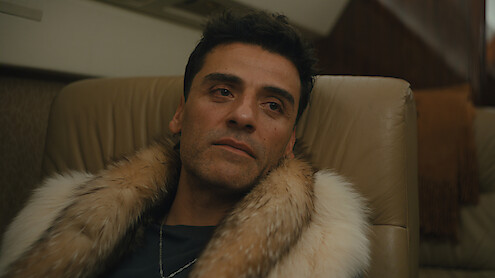
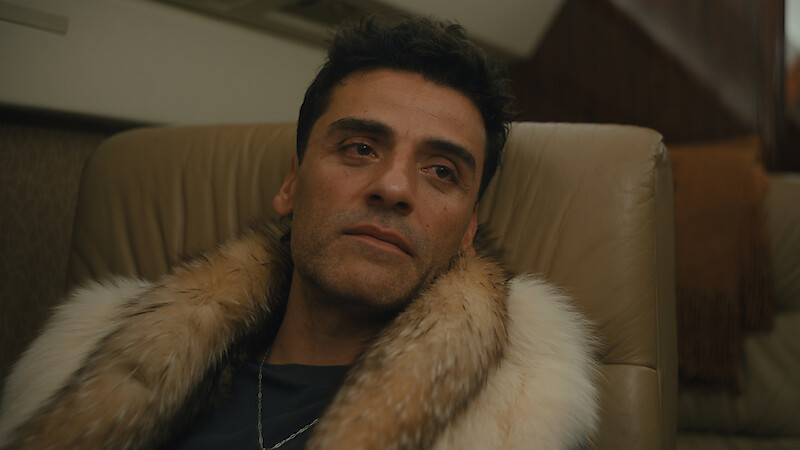
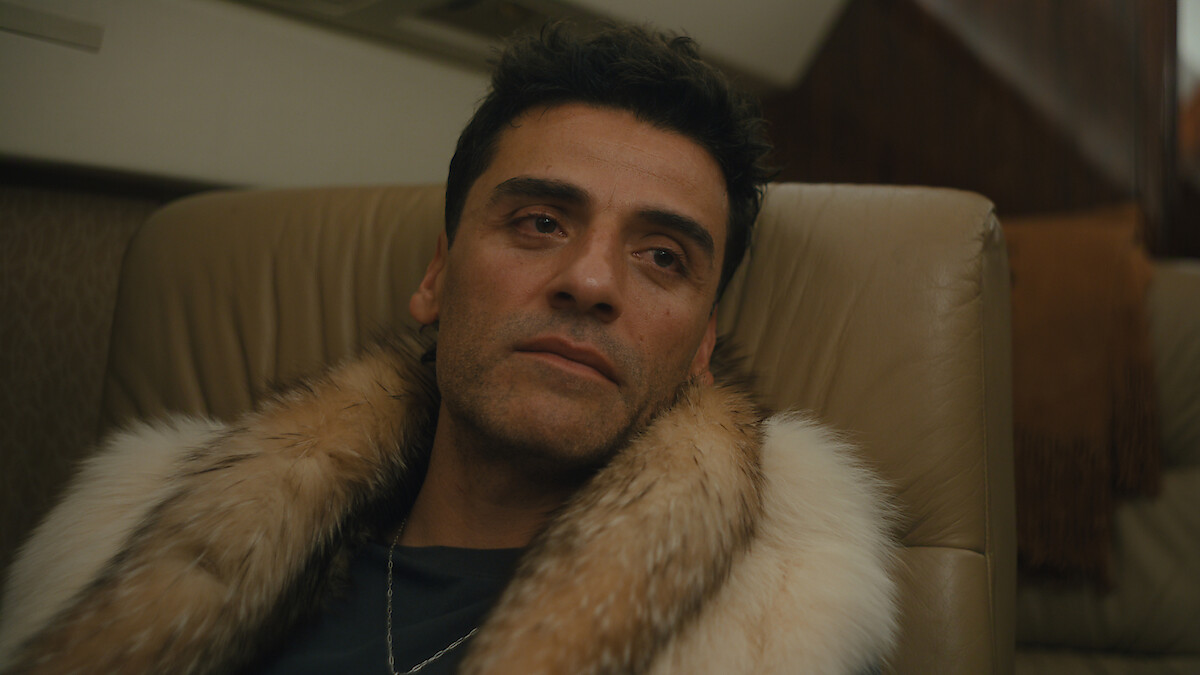
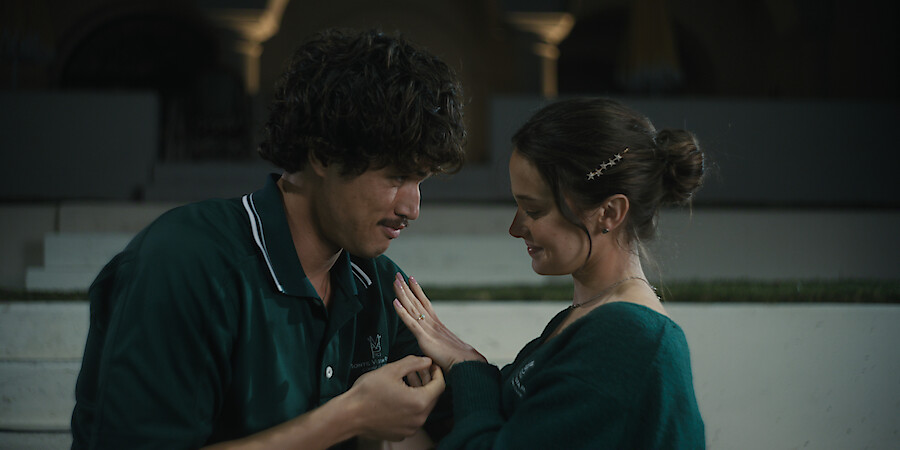
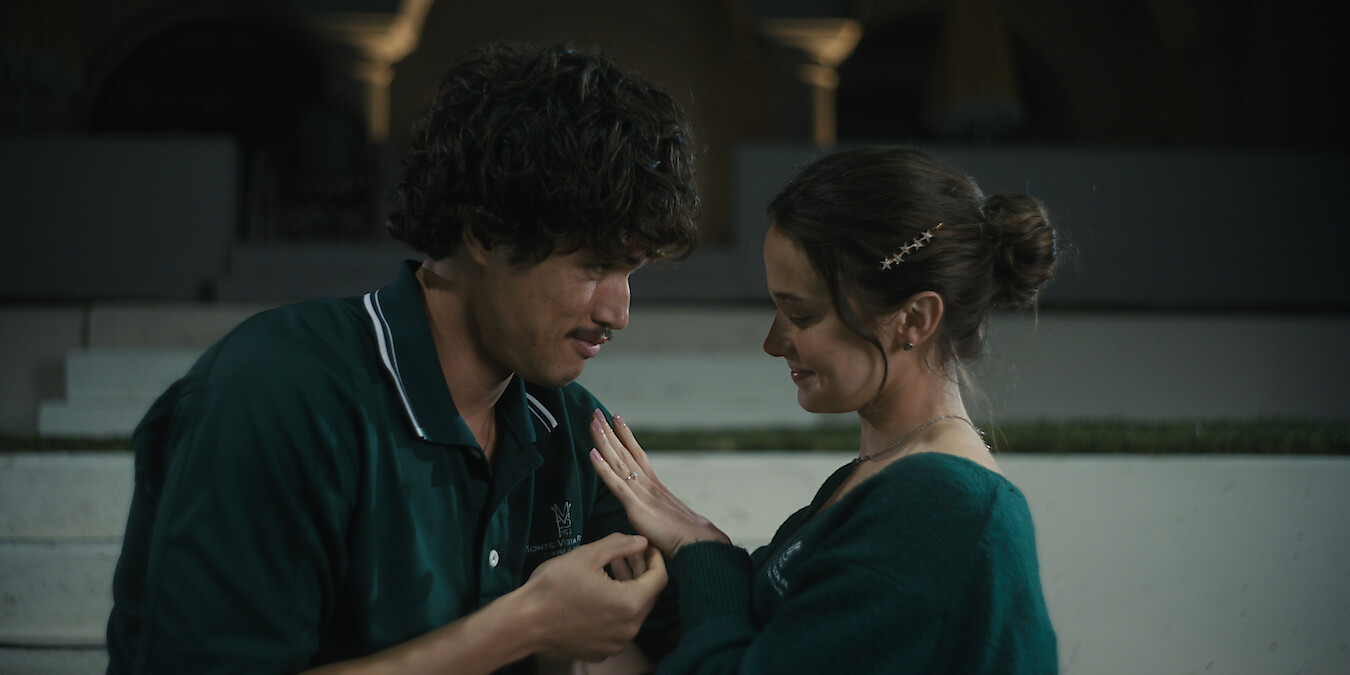
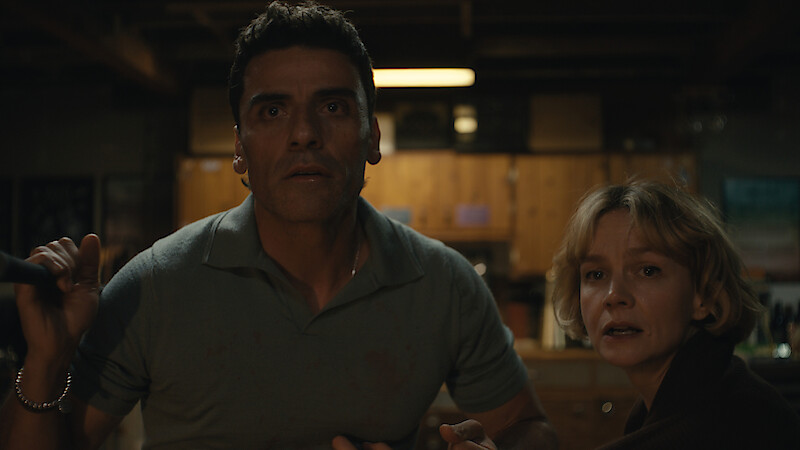
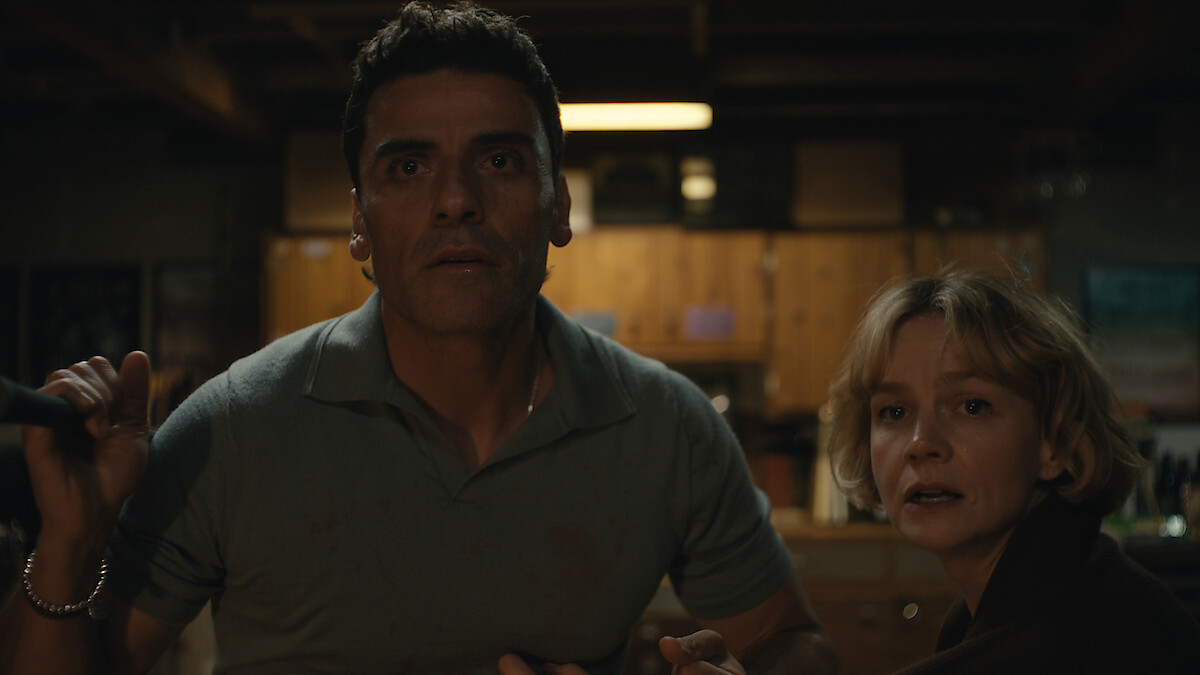
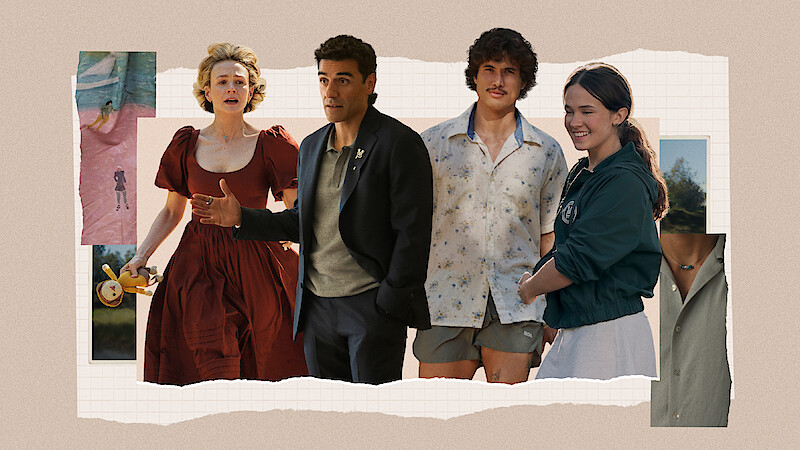
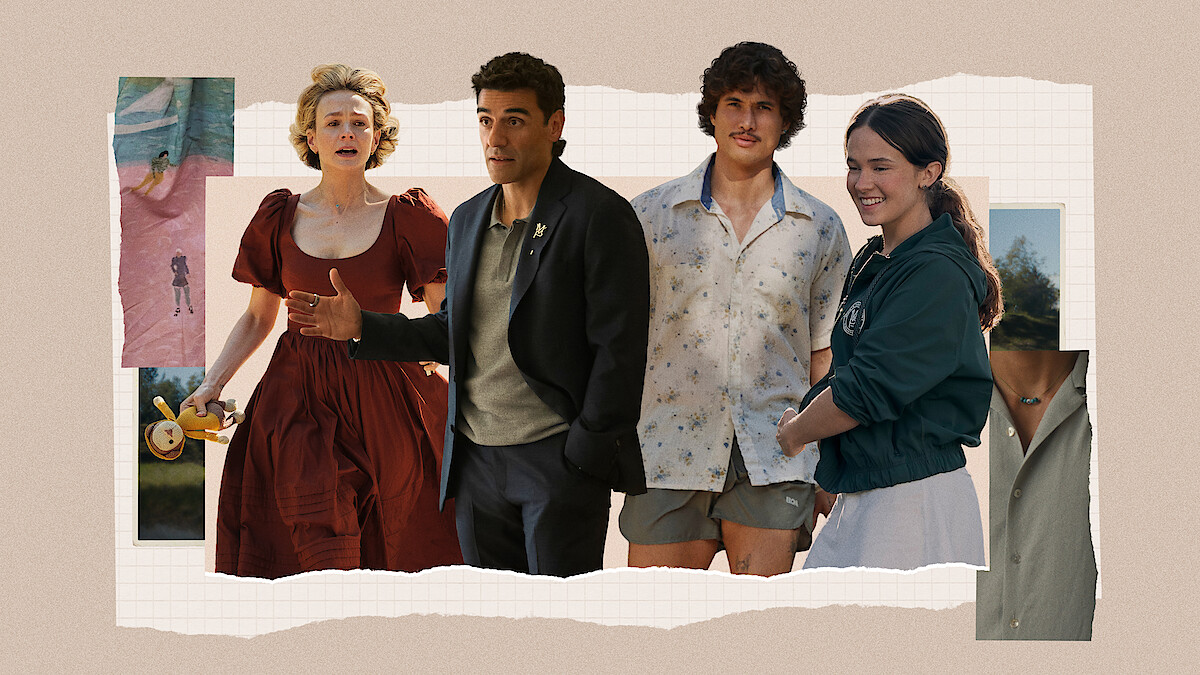
In many ways, Season 2 is all about the idea of mirroring. Sometimes those reflections are between romantic partners who see their own flaws in the eyes of their significant other. Elsewhere, we see echoes between one couple and another, with Ashley (Cailee Spaeny) and Austin (Charles Melton) constantly comparing themselves to Lindsay (Carey Mulligan) and Josh (Oscar Isaac). Throughout the latest cut of BEEF, there are thematic convex mirrors everywhere: the season opens with a line of ants marching through the grounds of the country club — a nod to the insect colony mindset. The insects return in the concluding episode as things wrap up. Also by the finale, Ashley and Austin have so manifestly transformed into Josh and Lindsay that Ashley — who’s taken Josh’s job as general manager — even parrots the exact speech that Josh gave to begin the season. In another neat bit of verbal mirroring, Lindsay and Josh debate whether Ashley and Austin will start “lording” the blackmail video over them in Episode 2, with Josh being sure such pretensions won’t arise. Yet, by the end of the installment, he laments that Ashley is doing exactly that the moment she requests a small token of recognition.
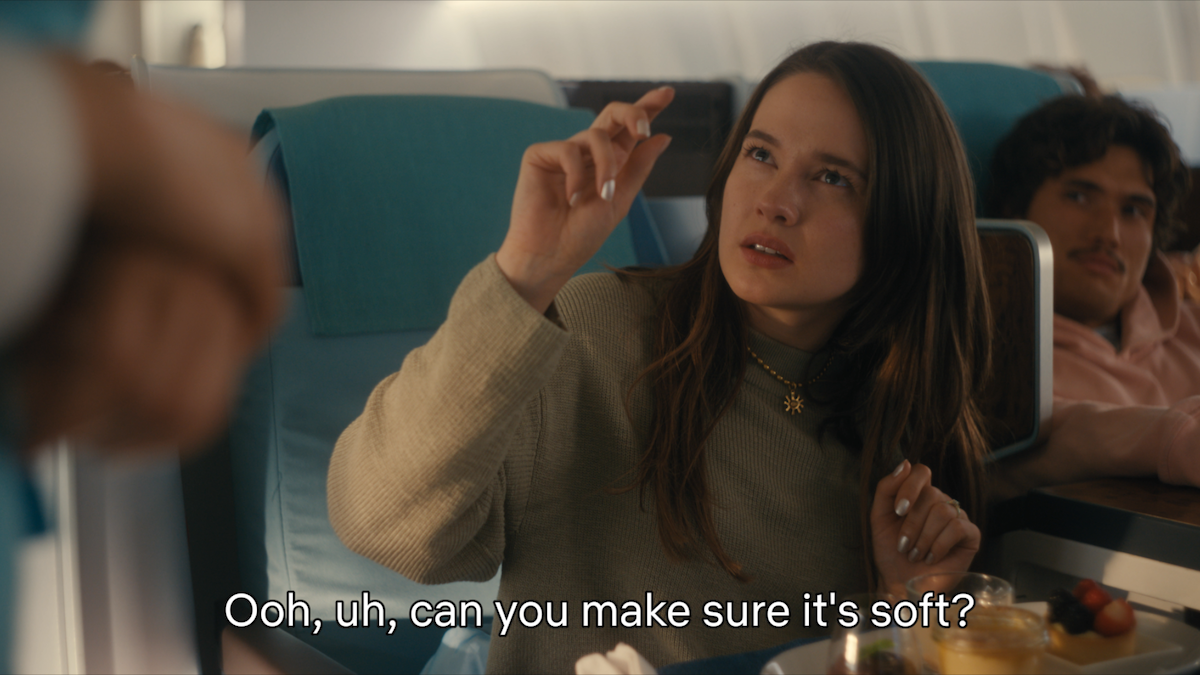
At times, the characters quite literally dissolve into one another, catching glimpses of themselves refracted through the lives they envy or resent. In Episode 1, as Josh speaks with wealthy club member Troy (William Fichtner), he momentarily hallucinates becoming the affluent man, imagining a version of himself with Troy’s ease and status. When Lindsay is let go from the club, she hauls her decor out in defeat — only to suddenly appear dressed in the soft purple pastels of the very women she once designed for, as if she’s slipped into the life she was never allowed to inhabit. In Episode 3, a quiet shot of Josh’s desk lingers on a framed wedding photo of him and Lindsay, before it subtly transforms into an image of Josh marrying himself — a surreal reflection of his own narcissism. Later, when Ashley grows exacting over a chocolate chip cookie she requests in first class, the perspective shifts, and she sees herself as the flight attendant tasked with satisfying her own difficult demands. And in Episode 8, in Korea, Austin takes note of a nearby couple at a spa and sees himself as the woman’s beleaguered partner.
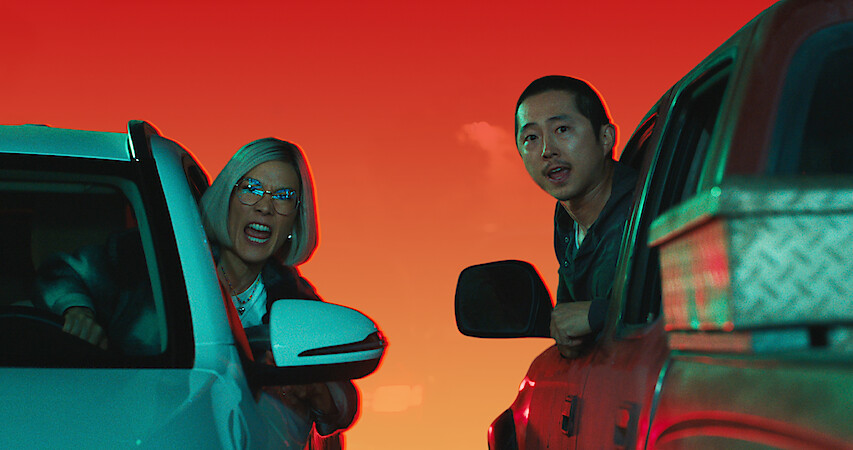
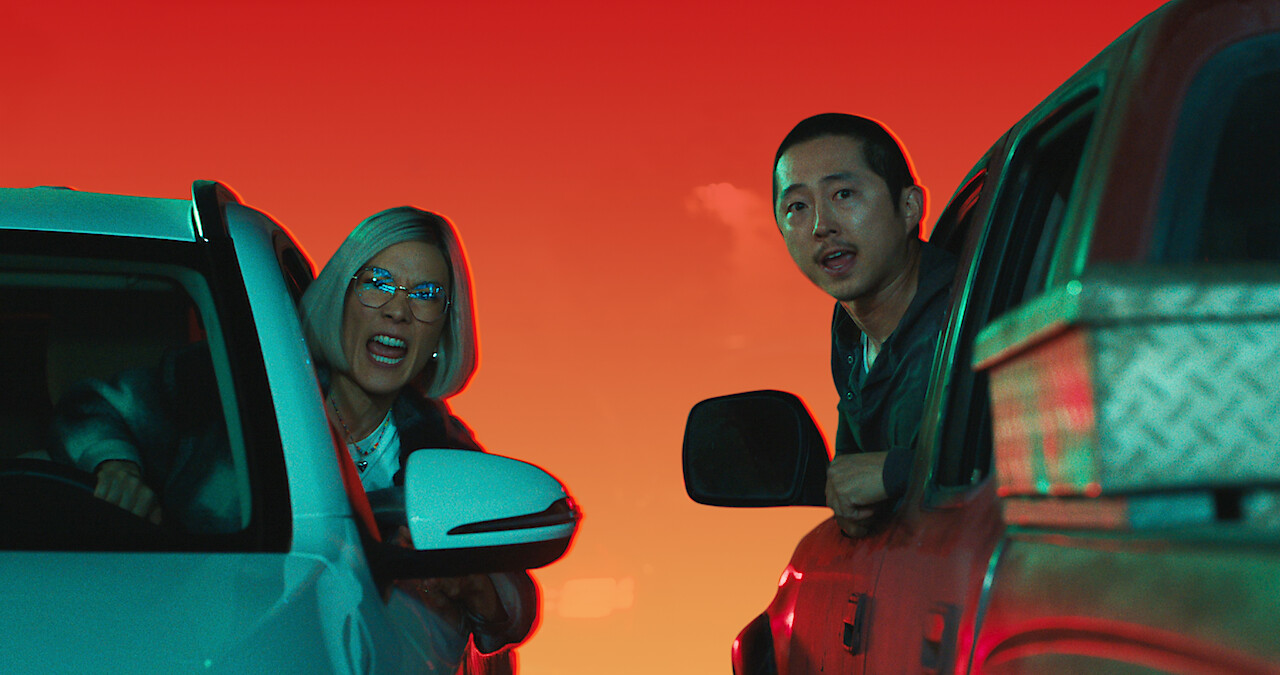
There is a mirroring nod to Season 1 as well: the drama of that first season began with a fateful road rage incident between Danny Cho (Steven Yeun) and Amy Lau (Ali Wong). But here, in a winkingly meta moment, Ashley and Austin barely miss having a car wreck as an oncoming sedan pulls out of a driveway in Episode 1.
Mirror moment from BEEF S1 E1 and BEEF S2 E1.
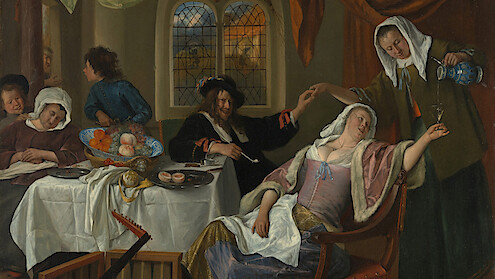
This season, Lee has slyly slipped a canonical work of fine art into each episode’s title card, but his engagement with art history is not limited to those overt nods. Throughout BEEF, he stages living tableaux — moments in which characters seem to drift into the visual language of iconic paintings.
In Episode 1, Ashley’s humiliation on the golf course — bent over, collecting stray balls under the indifferent gaze of the wealthy — summons the same exhausted feeling as Camille Pissarro’s Peasant Woman Gathering Grass (3). And in Episode 2, Lindsay’s body tells a familiar tale: Sprawled across her garden, reaching — or perhaps collapsing — toward the house, she evokes Andrew Wyeth’s famous Christina’s World (1). Her pose carries the same tension between yearning and paralysis, a body caught in the space between desire and arrival. In Episode 5, a brief but resonant image of Josh drinking orange juice straight from the jug takes on similar visceral resonance to A Boy Drinking (2), a portrait by Italian baroque master Annibale Carracci. By Episode 6, the visual language turns darker: A shot of Austin alongside the model skeleton he keeps in his home has the same gruesome wit as Self-Portrait with Death Playing the Fiddle (4), by 19th-century Swiss symbolist Arnold Böcklin, conjuring a quietly macabre vision of the specter of death.
1. Christina's World (1948) by Andrew Wyeth and BEEF S2, E2 / 2. A Boy Drinking (1580) by Annibale Carracci and BEEF2 E5 / 3. Peasant Woman Gathering Grass (1881) by Camille Pisarro and BEEF S2 E1 / 4. Self-Portrait with Death Playing the Fiddle (1872) by Arnold Böcklin and BEEF S2 E6.
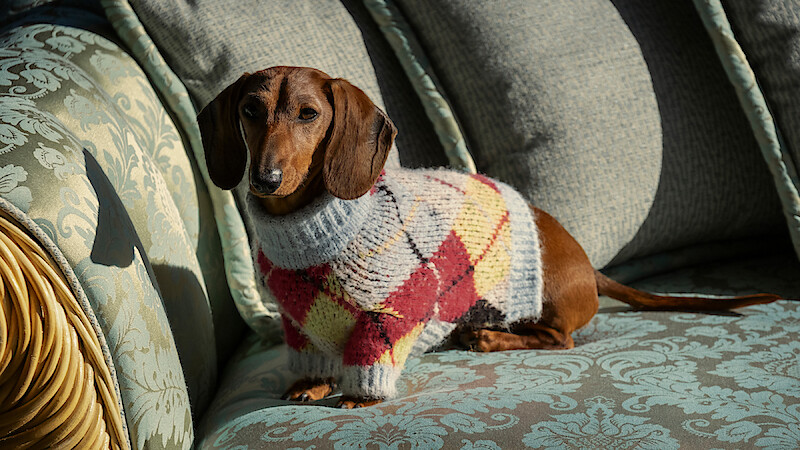
Also, in addition to the ants we see at the beginning of the season, keep your eye out for more bugs. Early on, Austin is upset over a bee that dies in their house, undone by the fact that he tried, and failed, to save it. By Episode 4, as Ashley recuperates at home after surgery, the ants are back, gathering along her windowsill. Then, in Episode 5, Josh casually crushes an ant on the bar cart after he and Lindsay return home with a different dachshund from the shelter, the gesture abrupt and unthinking.
The songs featured throughout BEEF Season 2, selected by acclaimed music supervisor Jen Malone, are not just for dramatic effect — they actually inform the plot and reveal aspects of the characters’ personalities. There is, of course, an overarching battle among the age groups happening in BEEF’s second season: Josh and Lindsay represent the millennial mindset, backed by generational anthems like Father John Misty’s “Real Love Baby” and Daft Punk’s “Get Lucky.” Josh is whipped up into an ecstatic frenzy when, as a gift from Troy, he’s given the opportunity to jump onstage and play alongside hipster electronica icons Hot Chip while they perform their signature song “Over and Over” at a private concert.
That millennial sensibility is often contrasted against the youth of the Zoomers. In Episode 3, Lindsay and Josh have a conversation set to millennial favorite M83’s “Midnight City.” The screen then dissolves to Austin and Ashley’s apartment, with Gen Z icon Chappell Roan playing in the background.
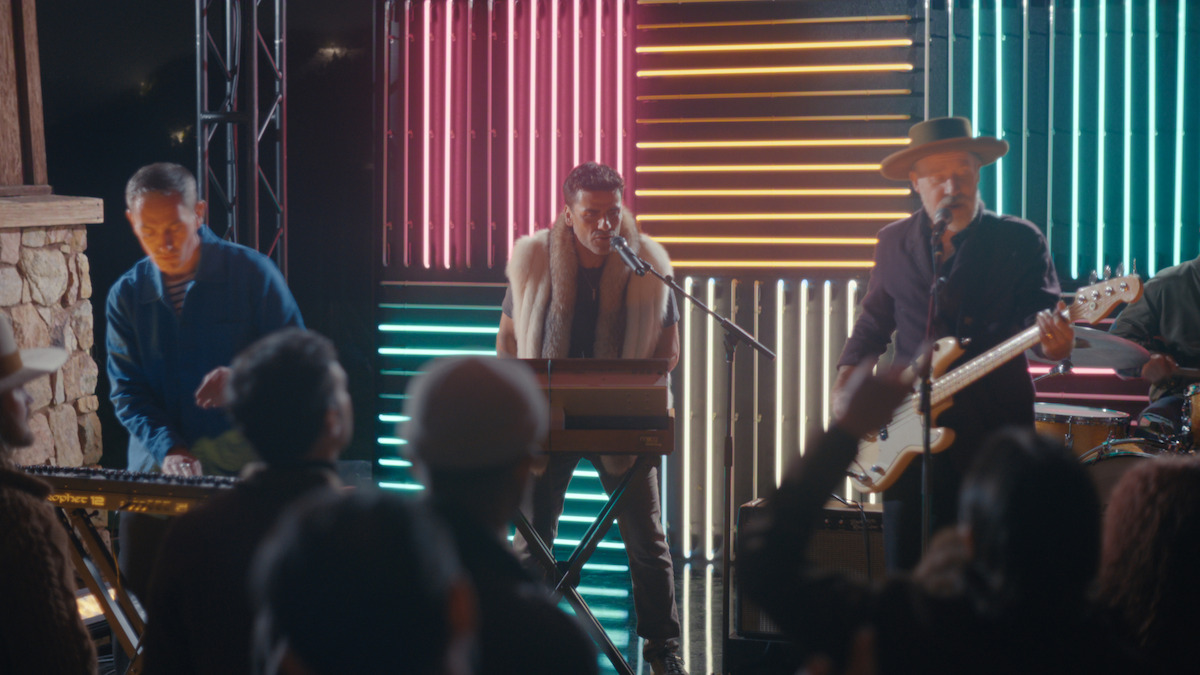
Josh (Oscar Isaac) performs with Hot Chip in BEEF S2, E5.
There’s also an overarching musical choice that offers a window into show creator Lee’s mindset: BEEF’s second season features a score by Finneas O’Connell, best known for his long-running collaboration with his sister, Billie Eilish. Lee knew he wanted to tap into the Finneas sound the moment he heard the siblings’ Oscar–winning song “What Was I Made For?,” from Barbie, which also turns up here in a subtle moment in Episode 2.
In the late-capitalist landscape of BEEF, consumer choice isn’t trivial, but a matter of identity. What you buy becomes a proxy for who you are, what you desire, and where you believe you belong. In the second season, that logic condenses into something almost absurdly small: beverages, especially for Ashley.
When Josh and Ashley first circle each other, testing the boundaries of power, her deference surfaces in miniature: she worries that having only watermelon White Claw to offer him might be insufficient — a social misstep disguised as a drink choice. Later, in the throes of her harrowing hospital experience in Episode 4, that same impulse sharpens into something more desperate and revealing. Her need for comfort becomes hyper-specific: she instructs Austin to bring her red Gatorade, blue if red isn’t available, but definitely not yellow — though purple, she concedes, would be “OK.”
By Episode 7, the dynamic has completely inverted. Ashley, now fully transformed, occupies a position of authority over Lindsay. She sends Lindsay to fetch her a Shirley Temple, specifying Sprite as the mixer — and, failing that, just an apple juice.
But whatever beverage Ashley receives, will she — or any of the other insatiable players of BEEF — ever feel the relief of truly quenched desires?