

Cole Sprouse
Up Close
‘May December’ Broke Charles Melton’s Heart
The Riverdale star leaps to the big screen in Todd Haynes’ new melodrama.
Jan. 10, 2024
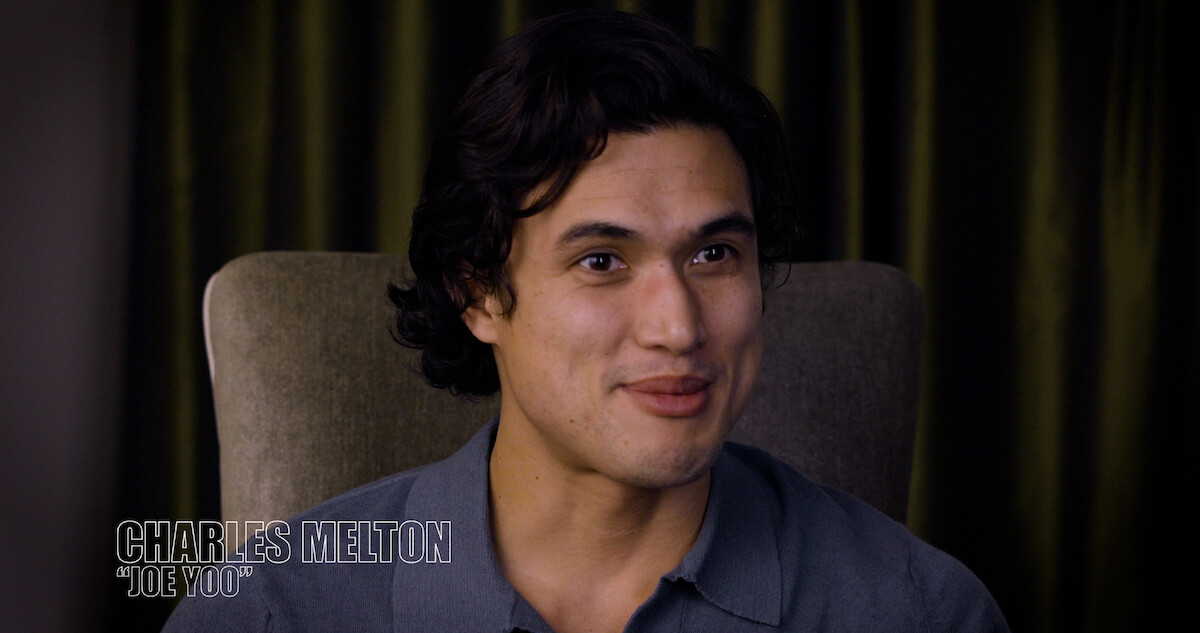
When Charles Melton was 11 years old, his dad sat him down and gave him a talk. Phil Melton served in the US military, and he was about to be deployed to the Middle East. “I remember my father giving me this inspirational talk about life and really encouraging me to take care of my two younger sisters and my mom while he was away at war for a year,” Melton tells Tudum. “And as a kid, if you’re given a size 10 shoe, you’re just like, ‘OK, I’ll wear it.’ Even if it’s too big.”
That talk from his father popped into Melton’s head more than two decades later, as he prepared to take on the role of Joe in Todd Haynes’ acclaimed new melodrama May December. Joe was also a child forced to take on responsibilities far above his understanding — under very different circumstances. Twenty years before May December begins, Joe had a relationship with fellow pet store employee Gracie Atherton (Julianne Moore). He was 13 and she was a married mother of three in her 30s. She went to prison, where she gave birth to Joe’s child; when she emerged, she and Joe married and had two more children.
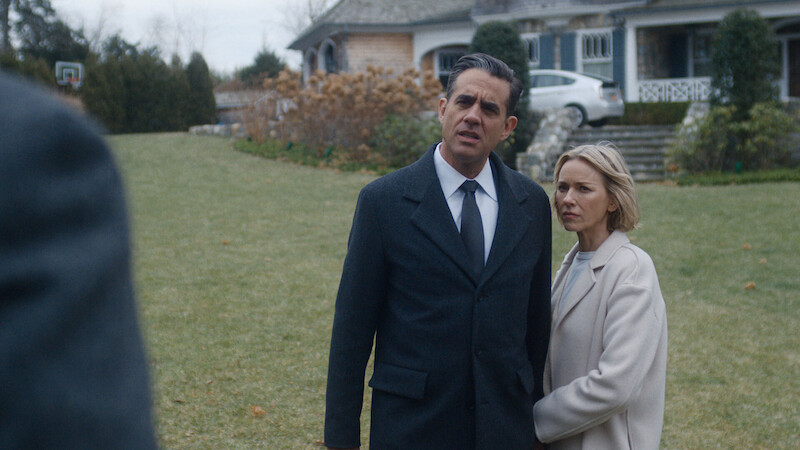
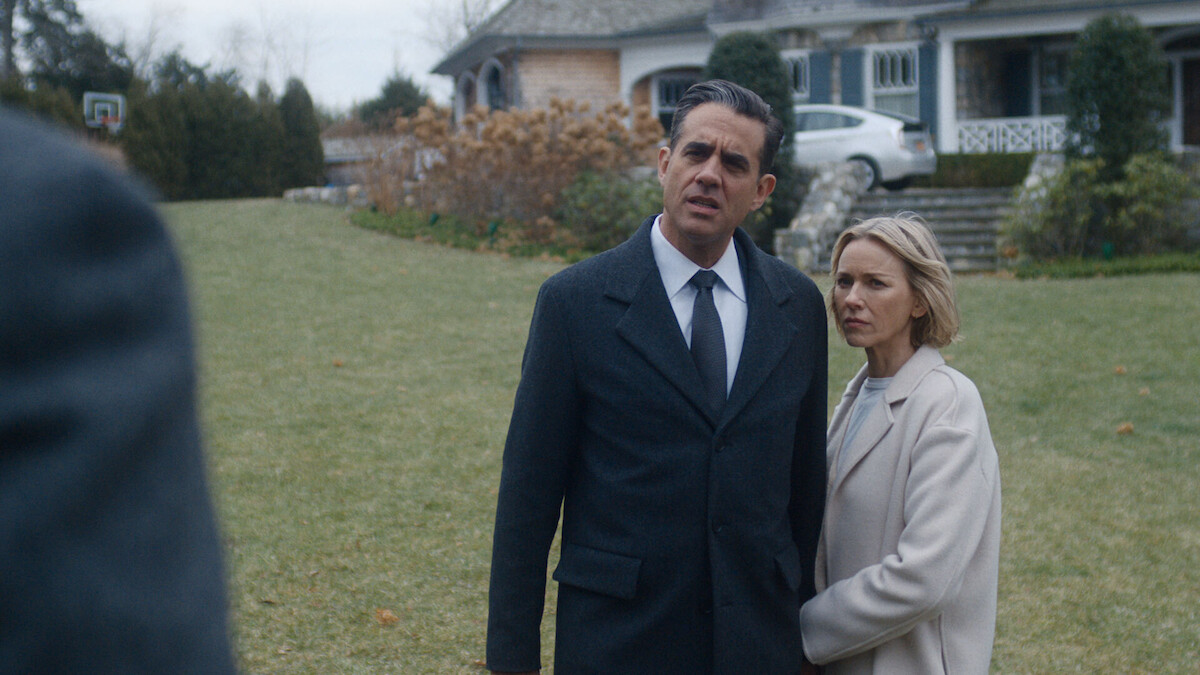
When Joe is introduced, he’s been married to Gracie for years; they’ve raised their children together, and he continues to insist he’s not a victim, even as television actor Elizabeth (Natalie Portman) pries open his life to research a new role. “I could find parallels with Joe — not so much the circumstance,” Melton says, but rather “understanding this deep sense of responsibility and how that would create this adaptive adult child in order to survive in life.”
The 32-year-old actor is perhaps best known for his role in the soapy Archie Comics adaptation Riverdale (although he’s given scene-stealing performances elsewhere, in films like Bad Boys for Life and shows like Poker Face). To Haynes, who hadn’t seen Riverdale, Melton was an unfamiliar face, one whose sculpted good looks initially seemed like a poor fit for the unassuming Joe. “He’s just so glamorously handsome that it seemed to leap out of the movie,” the director says. “But his audition was remarkable. And I kept watching it over and over again. There was such restraint in it. There was such a sense of being locked up and unable to speak. Something that Charles understood about this character was ahead of me.”
Joe’s constrained demeanor stands in sharp contrast with that of Moore as Gracie. In one scene, Joe returns home to find Gracie in pieces in their bedroom, childishly devastated that a neighbor has canceled an order for the cakes that Gracie bakes and sells. He comforts her as a parent would, a chilling inversion of their dynamic. It was one of the scenes Melton auditioned with — and an intimidating proposition for the young actor.
“I think you’d be a little nervous when you find out that you’re going to be doing a chemistry read with Julianne Moore,” he laughs. “But when I first met Julie, we had a lot of connective tissue from the get-go. I was born in Juneau, Alaska. She went to school in Juneau, Alaska. I’m an army brat. She was an army brat. She lived in Germany. I lived in Germany.” In an ironic twist, the same upbringing that provided Melton with inspiration for his performance also bonded him to Moore, the performer who would embody one of Joe’s many responsibilities.
Another responsibility — and another audition sequence — was contained in the memorable rooftop smoke session that sees Joe getting high with his soon-to-graduate son, Charlie (Gabriel Chung). “That was [Gabriel’s] first project,” Melton says. “I remember him telling me that the first actor he ever read with was with me during his chemistry read, which I thought was pretty cool.”
Melton spent time with his on-screen children when the cameras weren’t rolling; he had them over to his Savannah, Georgia, rental for pizza and movie nights. When it came time to shoot the roof scene for real, however, he found himself conflicted. “I thought Joe was going to be crying and sobbing, and there’s going to be snot bubbles everywhere,” Melton says. “And I just couldn’t really get there. I realized it was because I wasn’t meant to get there. I was crying in between the takes with Todd on that day, but whenever those cameras started rolling, it was like, ‘No, Joe can’t cry for himself. Joe hasn’t asked himself these questions.’ ”
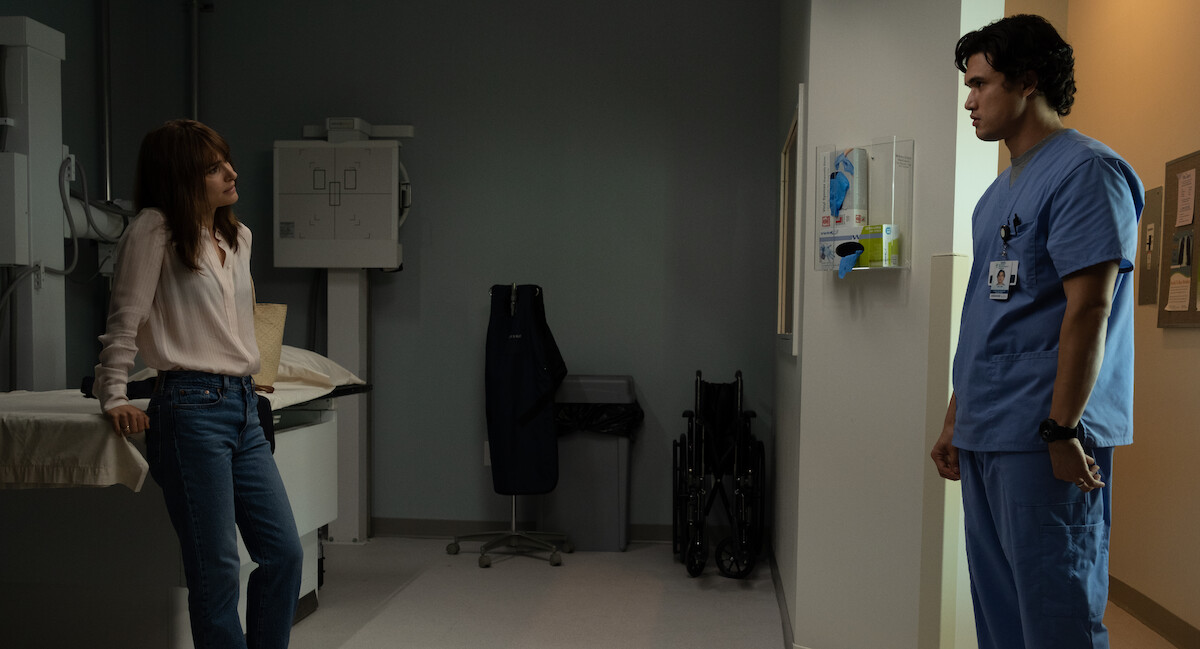
As Portman’s Elizabeth continues to examine Gracie and Joe under a magnifying glass, those questions begin to rise to the surface, and Melton’s restrained performance fragments. Joe “has all these things outside of him,” Melton reflects. “Being a great father, being a loving husband, being a provider. All these things come before he does, and he’s never had the chance to really look at himself. And the arrival of Elizabeth… in a way, she comes and she starts tapping on this glass globe of this couple’s life.”
She does more than just that: As Elizabeth molds closer and closer to Gracie in her pursuit of the perfect performance, she also affects a strikingly similar relationship with Joe. In one heartbreaking scene, the two have sex and Joe begins to open up — before realizing that Elizabeth cares more about her movie than she does about him. “This is just what grown-ups do,” she tells him as he storms out.
“You see this child rising to the surface where there really wasn’t anything resolved,” Melton says. “Thinking about the scene after the sex scene with Elizabeth, Joe’s really looking at himself for the first time and musters that courage to ask the question we as the audience maybe are asking — and the question he’s never asked himself, which is ‘What if I wasn’t ready to be making those kinds of decisions?’ ” Joe asks the question of Gracie in the same room where he had comforted her after her cake-delivery meltdown; it’s a reverse angle of the previous scene and restores their relationship to its original dynamic — back to a child and an abuser.
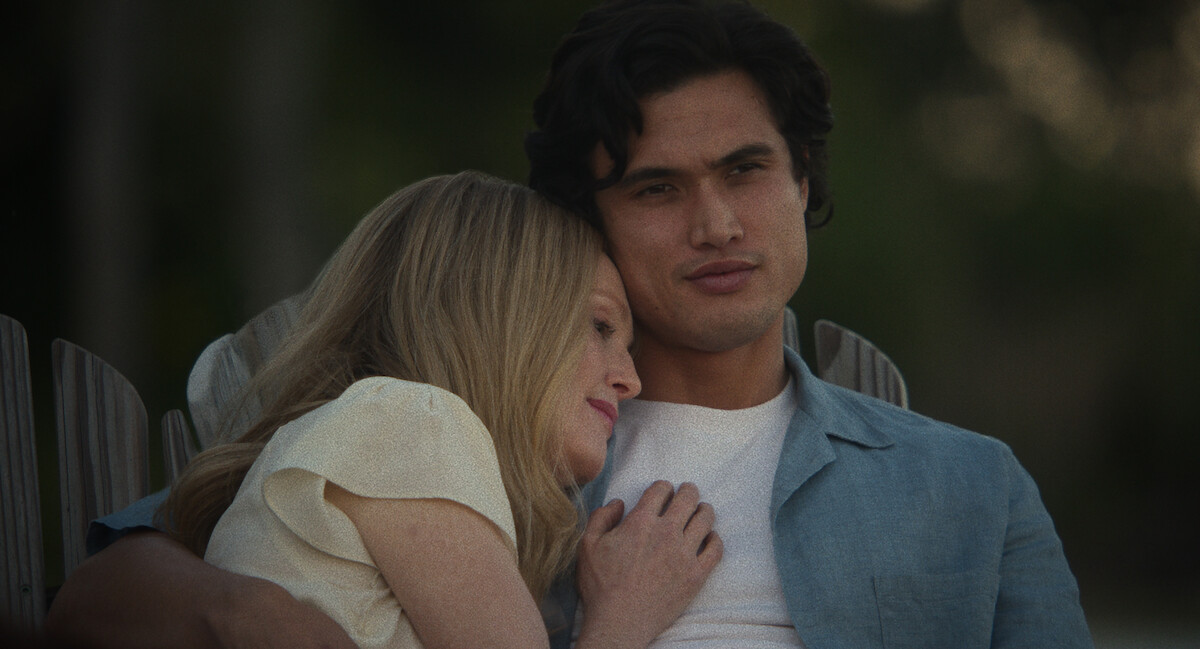
Gracie ultimately gives Joe none of the answers he’s searching for — “It’s graduation,” she exclaims and leaves him to his thoughts. In our final glimpse of Joe, he watches the children he raised — as a child himself — accept their high school diplomas. Finally, at long last, he lets himself cry. “It’s a heartbreaking moment, but it’s also a joyous moment because it’s this fearlessness that Joe has going into the unknown, not really knowing, but just being free in that moment,” Melton says. “What was a part of his arrested development, his job as a father, is now being let go into the world.”
On the morning of his children’s graduation, one of Joe’s beloved butterflies emerges from its chrysalis fully grown, and he releases it into the air behind the Atherton-Yoo home. Much like his children, much like that butterfly, much like Melton himself, Joe is growing up in real time. “Joe broke my heart,” Melton says. But they’ll be OK.
Listen to Charles Melton in conversation with Krista Smith on the podcast Skip Intro below: