🤐 SPOILER ALERT 🤐
The art in BEEF is a character in and of itself.
Yes, we know that sounds pretty pretentious, but the way in which art — in the form of architecture, high-end furniture and weird ceramics — is created and commodified plays a big role in telling the story of Amy (Ali Wong) and Danny’s (Steven Yeun) growing sense of rage and alienation.
From impractical designer chairs to a collection of culturally appropriated headwear, every work of art is loaded with meaning. Tudum spoke with production designer Grace Yun to walk through the inspirations for key pieces in the series, which she explains stemmed from the “many deep character dive conversations” she had with showrunner Lee Sung Jin.
George’s Sculptures
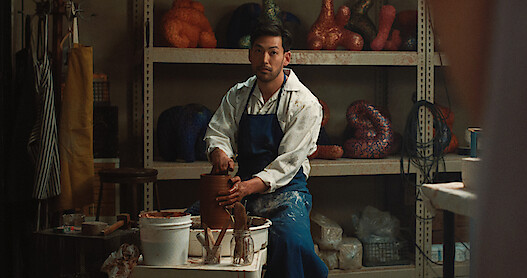
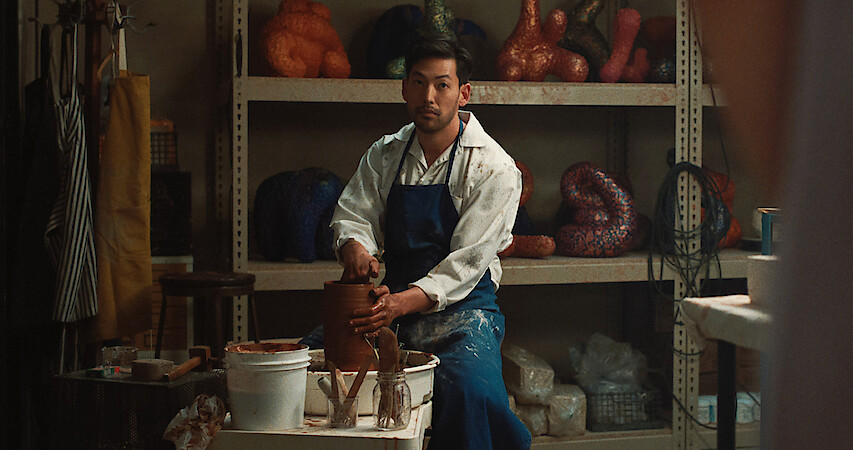
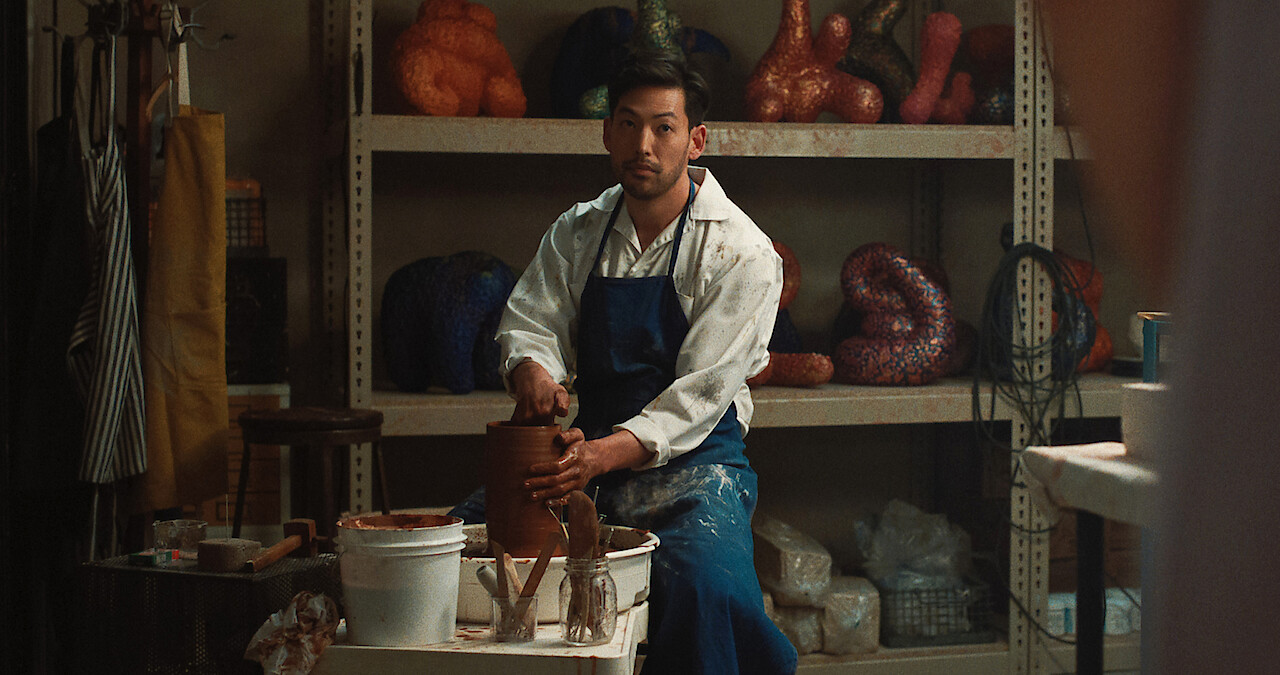
Amy’s husband George (Joseph Lee) sculpts lumpy ceramic vases in their home studio –– aka, their basement. His late father was a famous artist who designed the legendary Tamago chair in the series.
Who made George’s sculptures?
The art department made them in-house. Early on, Sonny and I thought these amorphous blob shapes represented how George floats through life and doesn’t really restrict himself. He’s very free-flowing and welcoming of what’s happening around him. I happened upon a chart of abstract yoga poses to base the sculptures off of, and we started nicknaming them things like “The Dinosaur” or “The Dog.” It’s a very playful take of, “What would George do if he had Play-Doh in his hands?” His art comes from that childlike space, too.
Why was sculpture George’s chosen art?
Amy made so many curated choices in their home, and [George’s] downstairs studio is the space she allows him to get messy in. We wanted to signal that he’s quite prolific and maybe not selling much, which ties back to his father not being so great with the business aspect of making art. George’s character has a lot of time. That’s a point of resentment and envy Amy has towards him.
Did Joseph Lee make any of the sculptures?
No, but he’s an artist himself. He has beautiful paintings that he does, so he could appreciate and understand the multistep process his character would go through.
How did you want to track the evolution of George’s art at his show after the time jump?
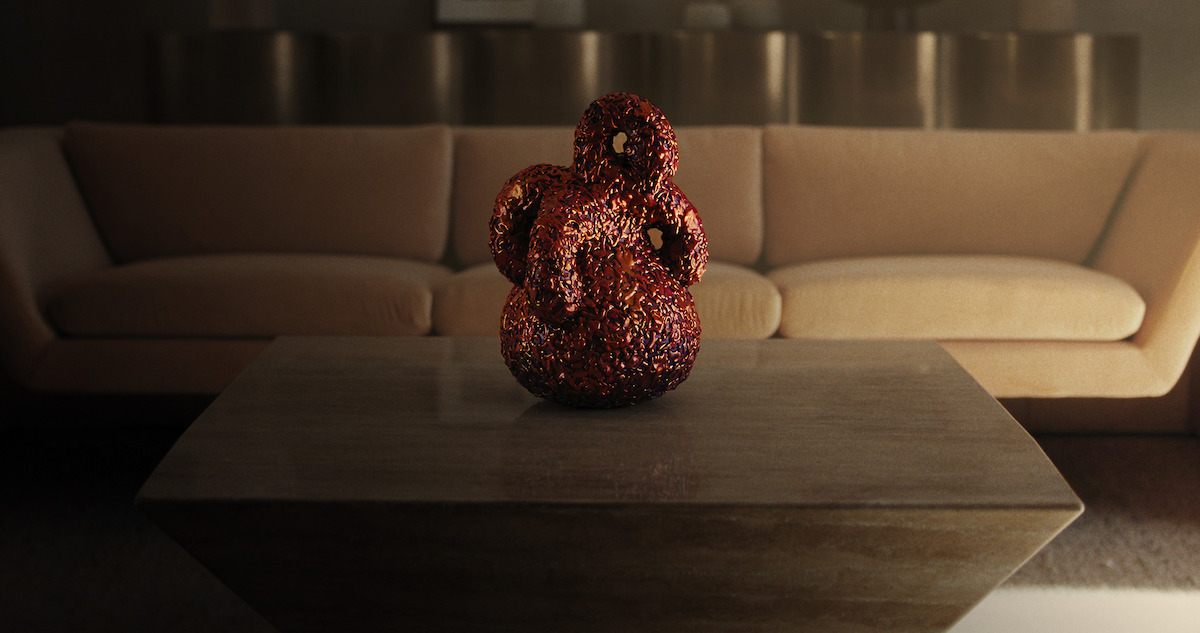
Sonny and I started thinking, “Okay, at this point he’s been hurt by Amy.” To make it feel like he’s a little worn at the edges and like he’s grown and matured himself, we wanted him to try different types of glazing and bring in colors that looked like the patina of something that was fired under a lot of heat. They’re much larger pieces to reflect him becoming a bigger fixture inside the home as well, literally hanging inside the house. He’s no longer restricted to the basement.
The 65 Chair Exhibit
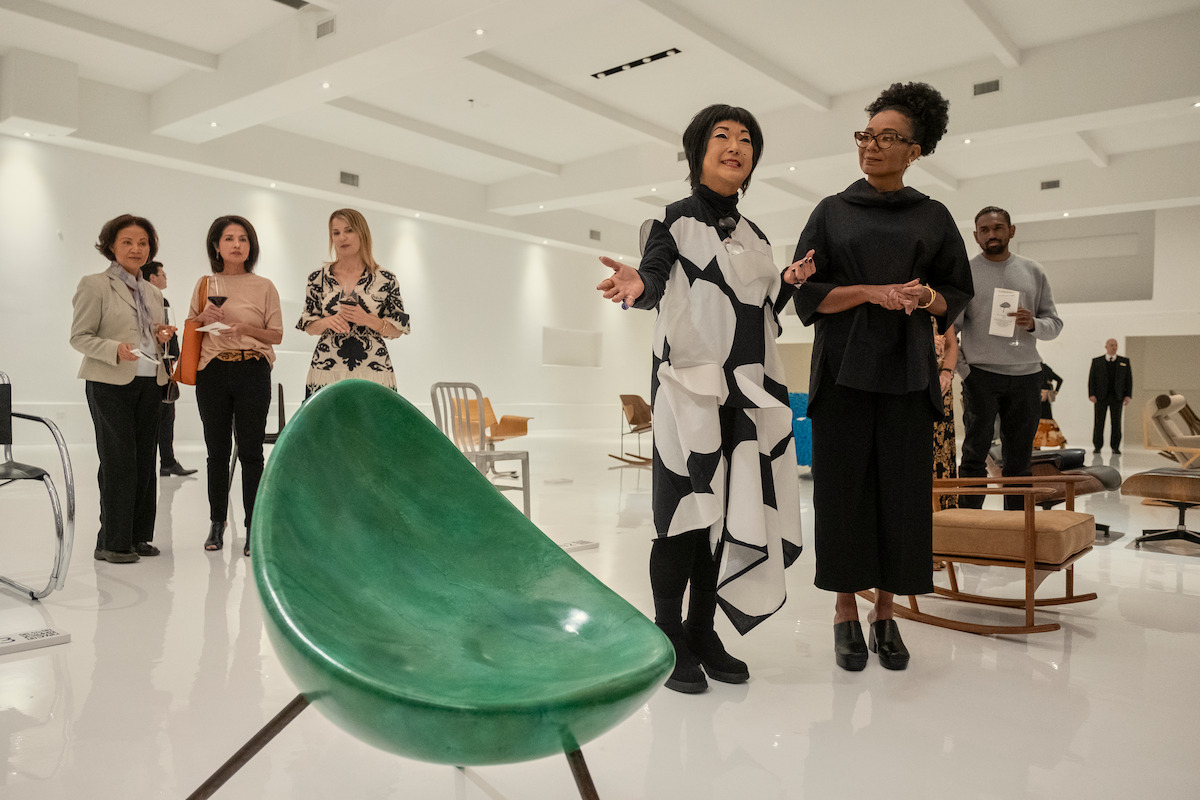
Amy and George attend an art show where George’s father’s Tamago chair is featured amongst other artful chairs.
Were there actually 65 chairs and how did you approach selecting them all?Originally there were 100, but we wanted to have enough room around each one. We looked through so many types of chairs from different eras, so it looked like a collection of all the approaches you could take designing them. Sometimes we chose one just because it made us laugh. The fuzzy blue Cookie Monster one was very nice to pet.
What was the criteria for making the Tamago chair?
That there was a touch of impossibility in that it’s made out of stone, shaped like an egg and on three legs. Something that’s funny to look at and yet simple in design. We did a few prototypes to make sure somebody could actually sit in it and that the rear end print was not so obvious, but that you could see it when you looked at it. The prototype expanded from being more geometric into a very smooth little scoop.
Jordan’s House
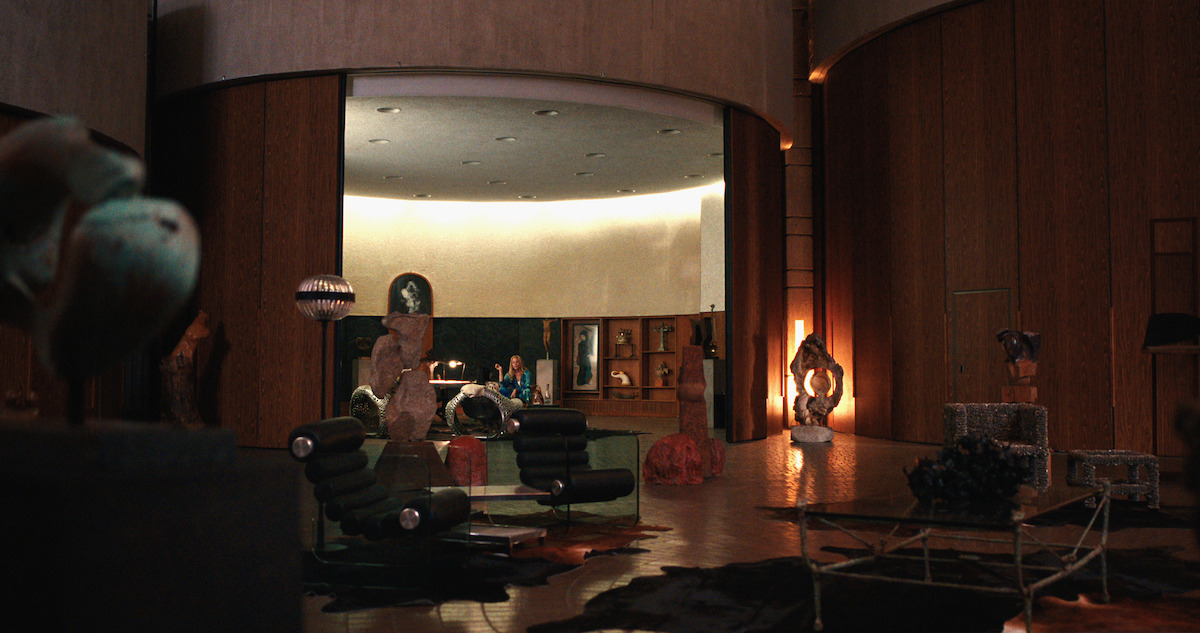
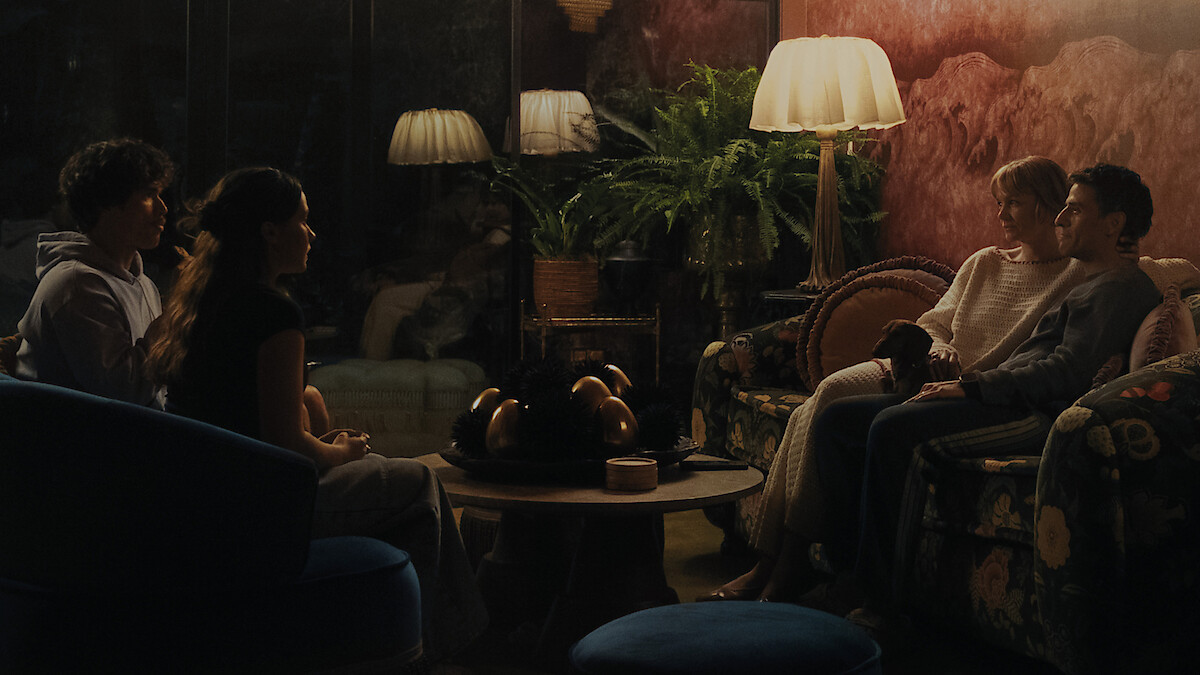
Jordan (Maria Bello) lives in a modern mansion ripped from the pages of a shelter magazine full of curated pieces that only a stupidly wealthy person could own.
How did you want Jordan’s home to reflect her personality?
Jordan treats her house as a private exhibition space for herself. In looking at magazine spreads, the set decorator and I thought it would be funny if we could have furniture pieces that wouldn’t be inviting, but would be exclusive enough for Jordan to be interested in. Sonny and I really leaned into the theme of private curation and cultural appropriation with the crown room.
Did you build those sliding wooden doors?
We found that space, the House of the Book, all the way up on a hillside in Brandeis, California. While we were scouting it, we discovered that there were rooms that would automatically open. It was the first place we saw that felt like her character.
How did you curate the crown collection?
We were hoping to make all 16, but we couldn’t because of budgetary restrictions. We made one that was scripted — the golden headdress that looked like a bird with earrings from an ancient Peruvian culture. The rest were sourced from prop houses. We wanted to make sure that the cultural references weren’t necessarily Anglo-Saxon-centric — that they were from Asia or South America due to Jordan’s character appropriating things. My personal favorite is the one that Amy puts on her head — the Marge Simpson. There were quite a few people trying them on when we were [set] dressing. When we were shooting Episode 9, some of the actors had the idea to wear them during the robbery.
This interview has been edited for length and clarity.
BEEF is now streaming on Netflix.