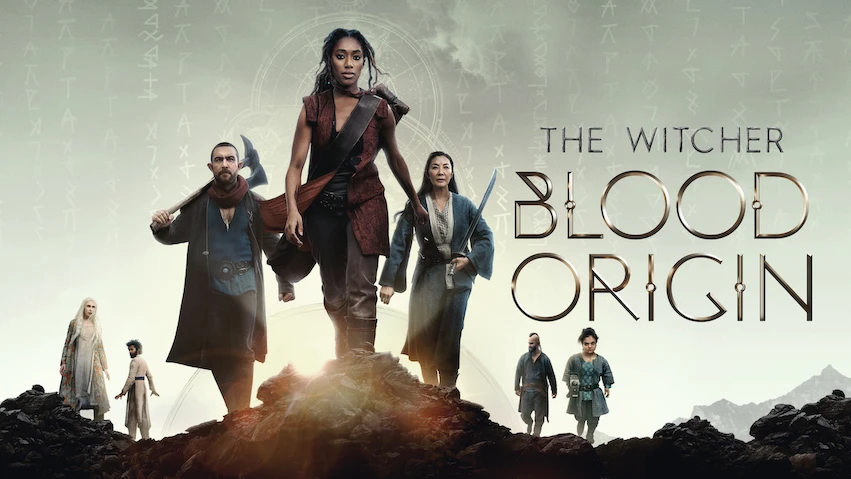
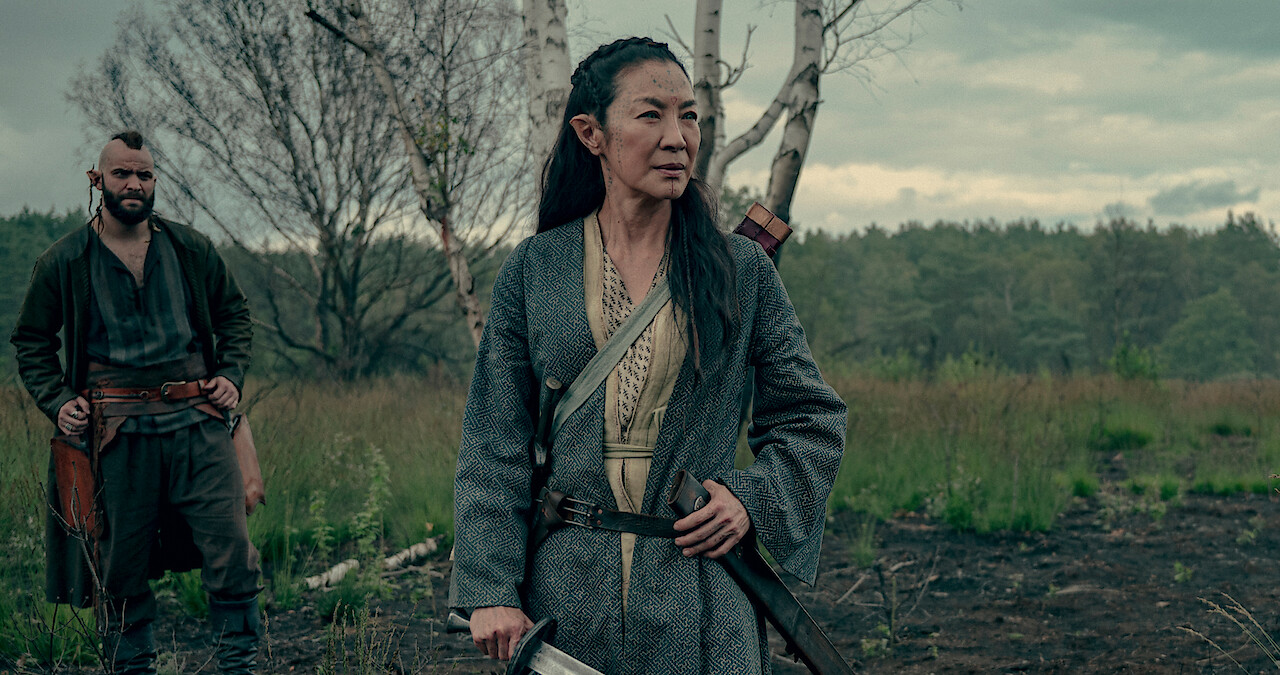
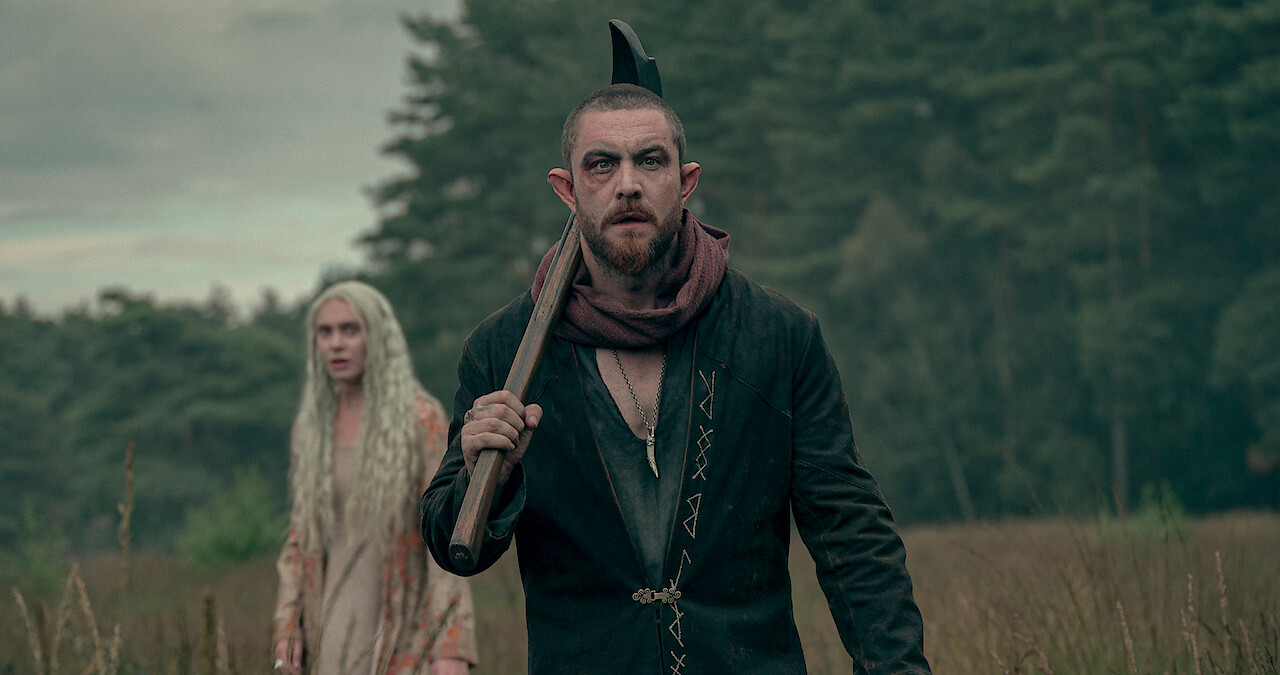
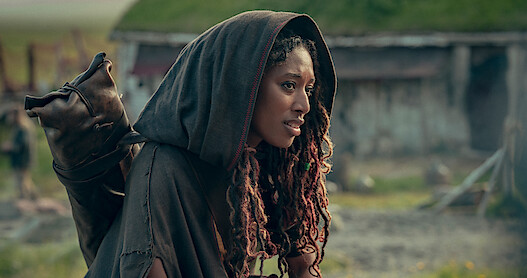
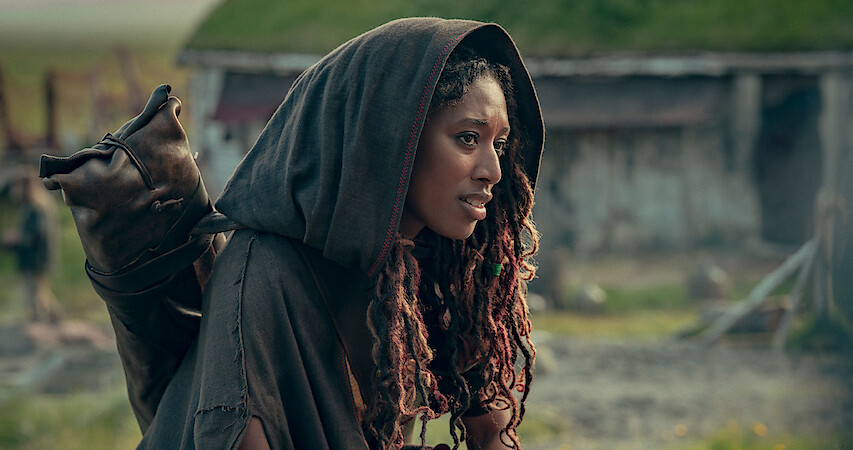
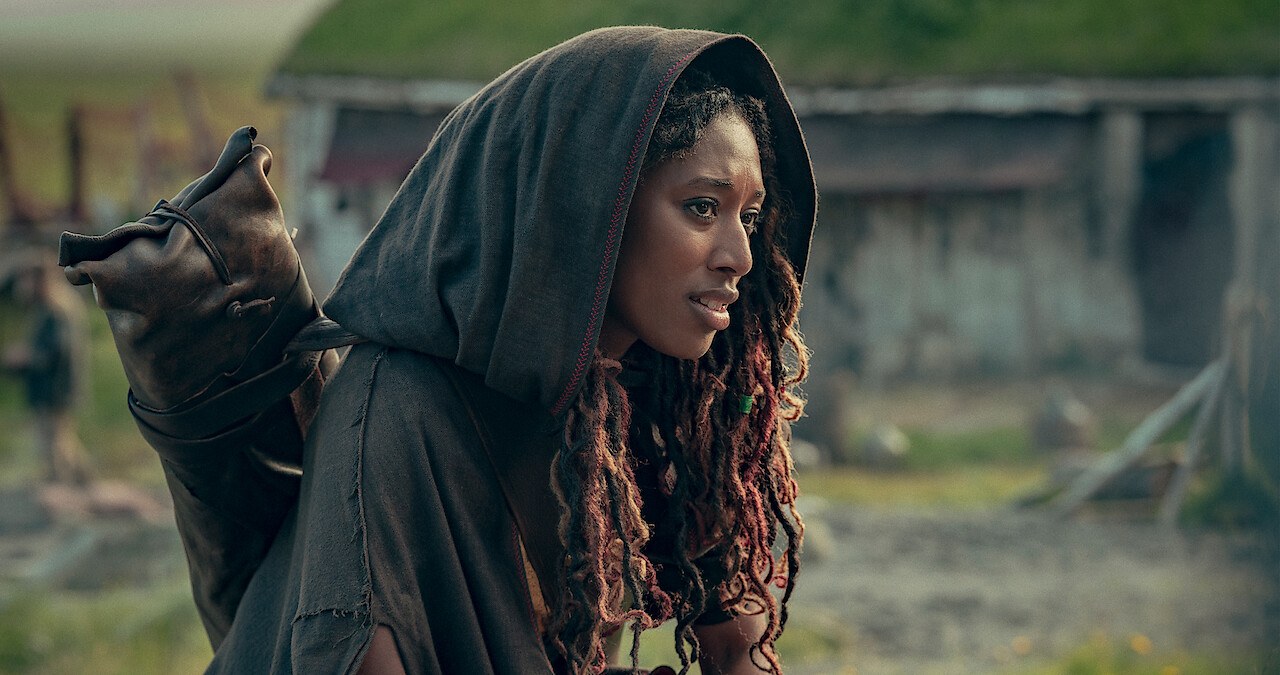
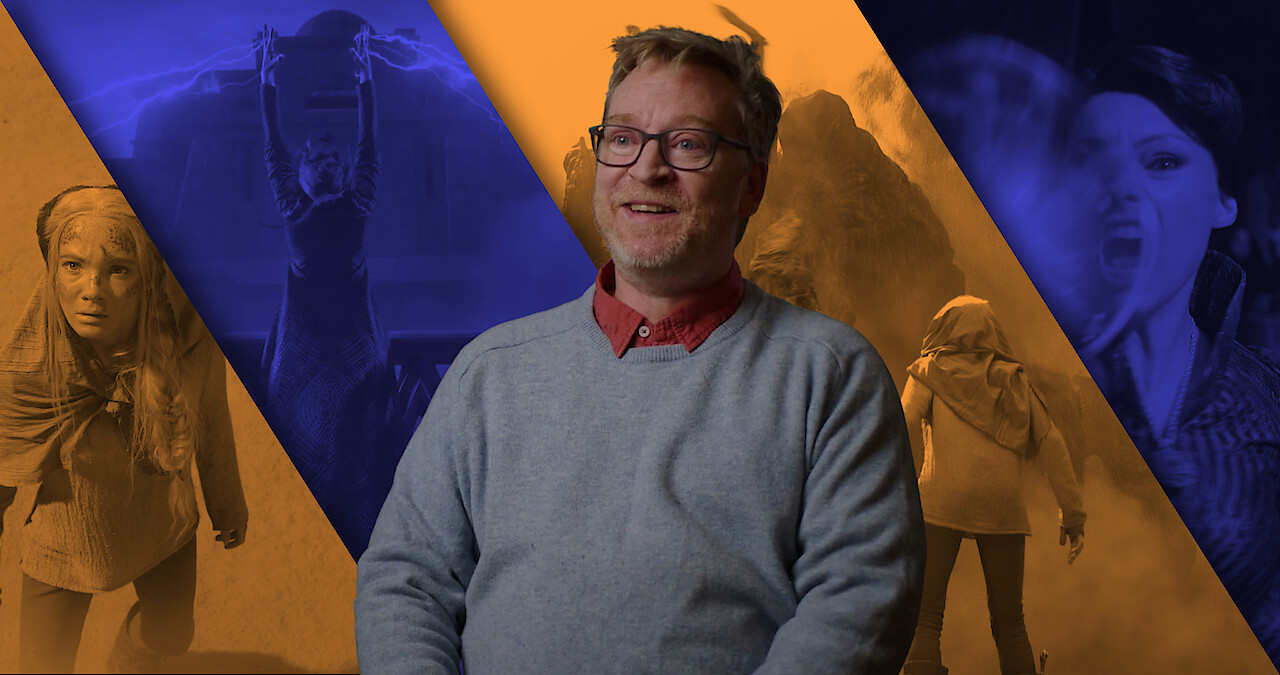
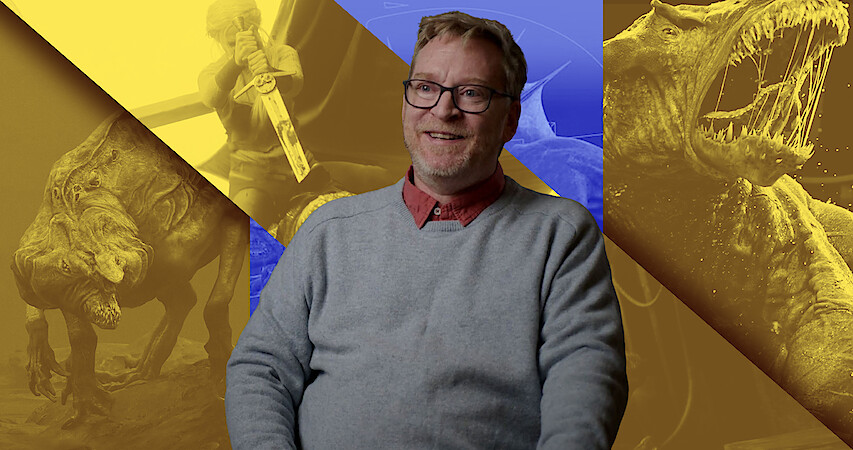
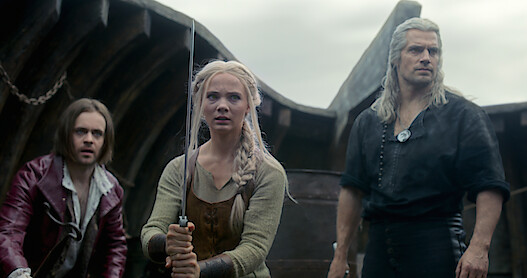
A four-episode prequel to The Witcher –– featuring elven warriors, towering monoliths and plenty of Chaos –– The Witcher: Blood Origin feels like a two-part movie, showrunner Declan de Barra tells Tudum, saying, “it’s what happened organically, the shaping into four episodes from all the footage we shot… I wanted it to be a punch in the face, so that you can’t take your eyes off it.”
Want to know more about the Golden Era of Elves and its heroes and villains? De Barra shares the details on some of Blood Origin’s deleted scenes — and some of the material he added to the series to make it impossible to look away.
The introduction of Brother Death
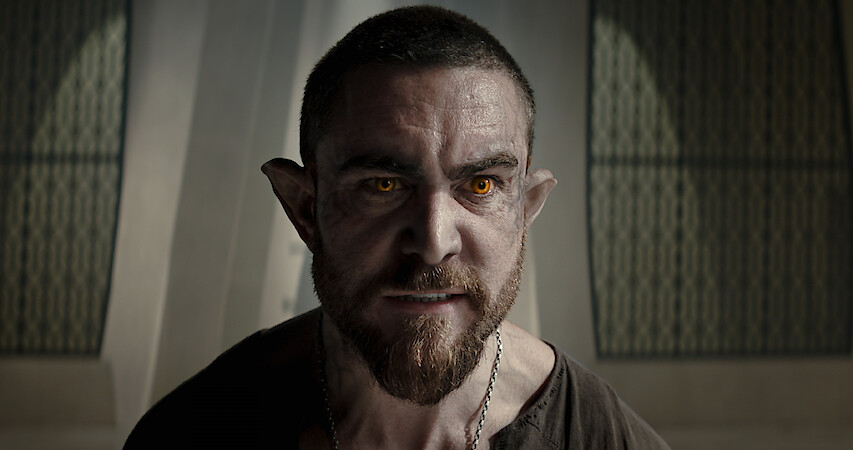
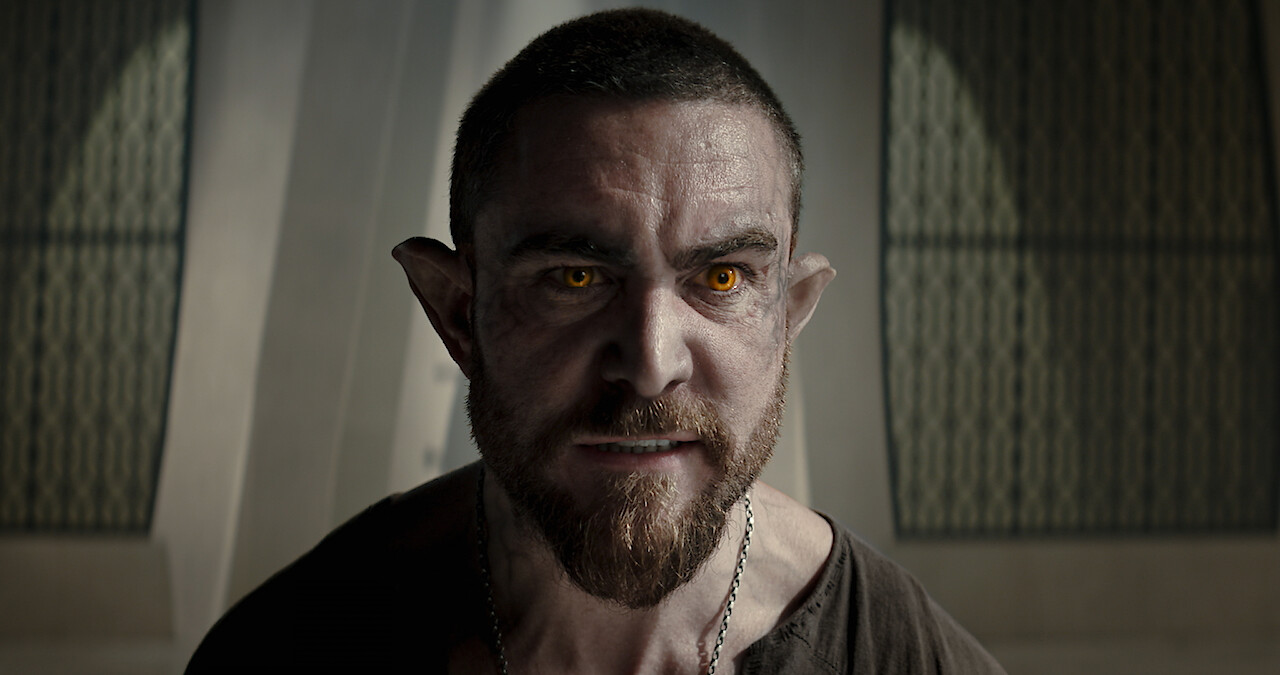
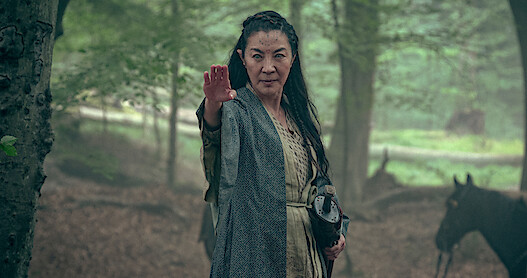
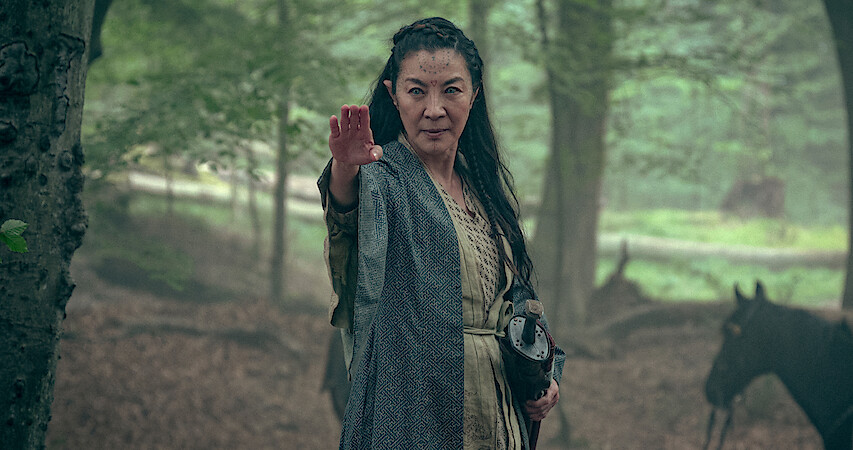
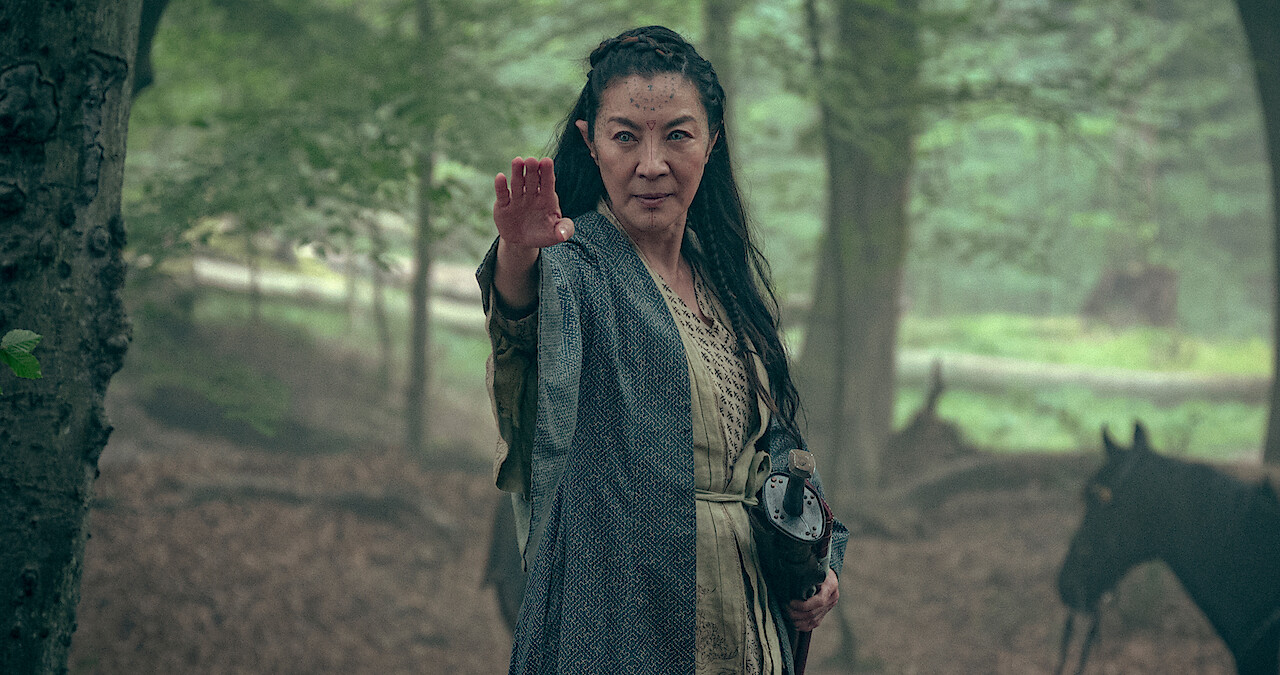
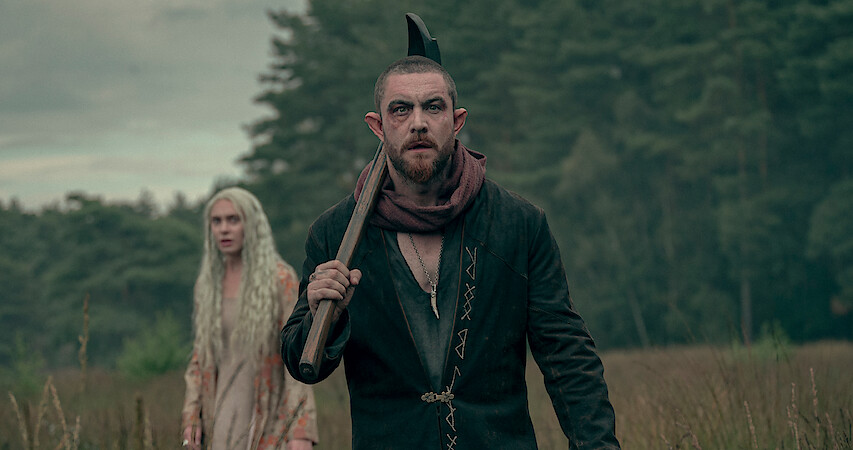
Callan or Brother Death (Huw Novelli) first encounters Fjall (Laurence O’Fuarain), Éile (Sophia Brown) and Scían (Michelle Yeoh) after Scían is poisoned; he acts as a savior, bringing the heroes to a healer who can help her. But the character’s introduction was meant to be far more ominous.
When the trio were riding to Daedwode to rob its bank in order to hire mercenaries, they would’ve come across a burned down village and heard the sound of water. Following the noise leads them to Brother Death, who is urinating on the severed heads of three soldiers.
“He kind of nods to them, they nod at him, and they ride on out of town; then he sees a wanted poster of them on the wall, looks at them again, and we go, ‘Oh god. He’s going to go after them. He’s a bounty hunter,’ ” de Barra says. “That was such a cool intro. Nobody speaks any words and it was just visually dynamic.”
The scene was one of the cuts de Barra had the hardest time with, but after casting Novelli he realized the actor could be threatening enough just by being seen tracking the heroes.
Syndril lost his wife.
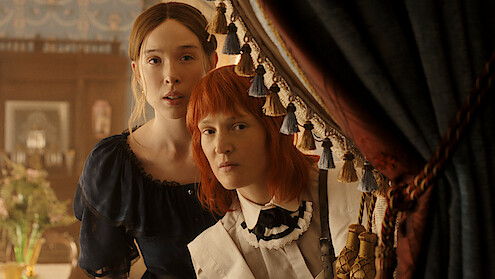
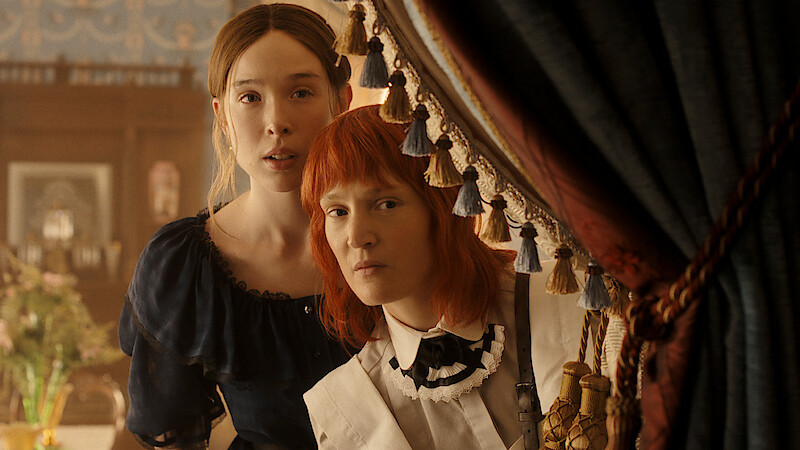
Ket (Kim Adis) serves as handmaiden to Empress Merwyn (Mirren Mack), but her role in the show originally had more backstory. Along with acting as Merwyn’s friend and confidant, she was married to the mage Syndril (Zach Wyatt). When Syndril was imprisoned to try to force him to continue his work on the monoliths, Merwyn and Ket were meant to help break him out — though Ket would’ve died during the escape. That tragedy hardened Syndril’s resolve to destroy the Golden Empire.
“When we decided, ‘I’m going to make this sharper,’ you pull a scene, but that scene has threads to everything else,” de Barra says. “That was a really tough one to cut, but we had to in order to make all the rest work.”
A touch of the divine
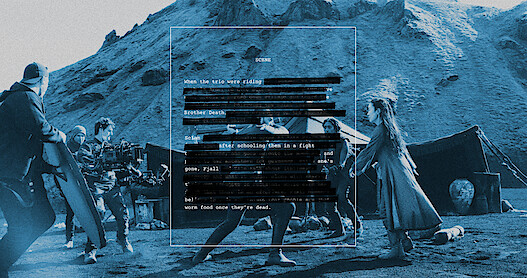
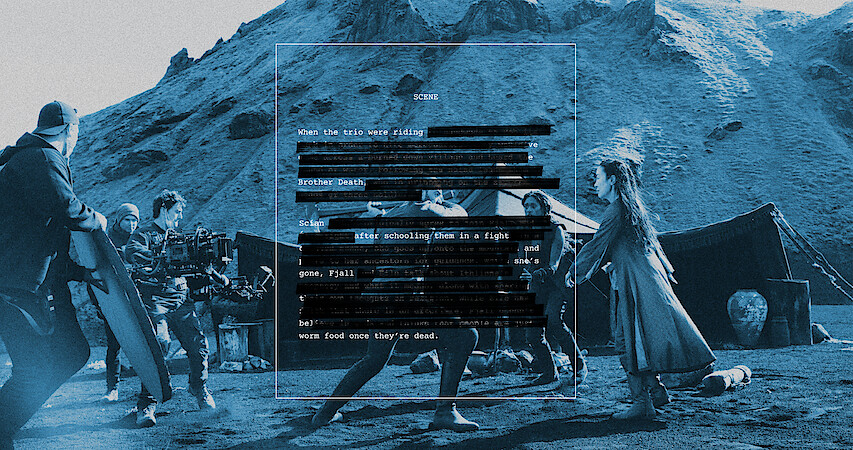
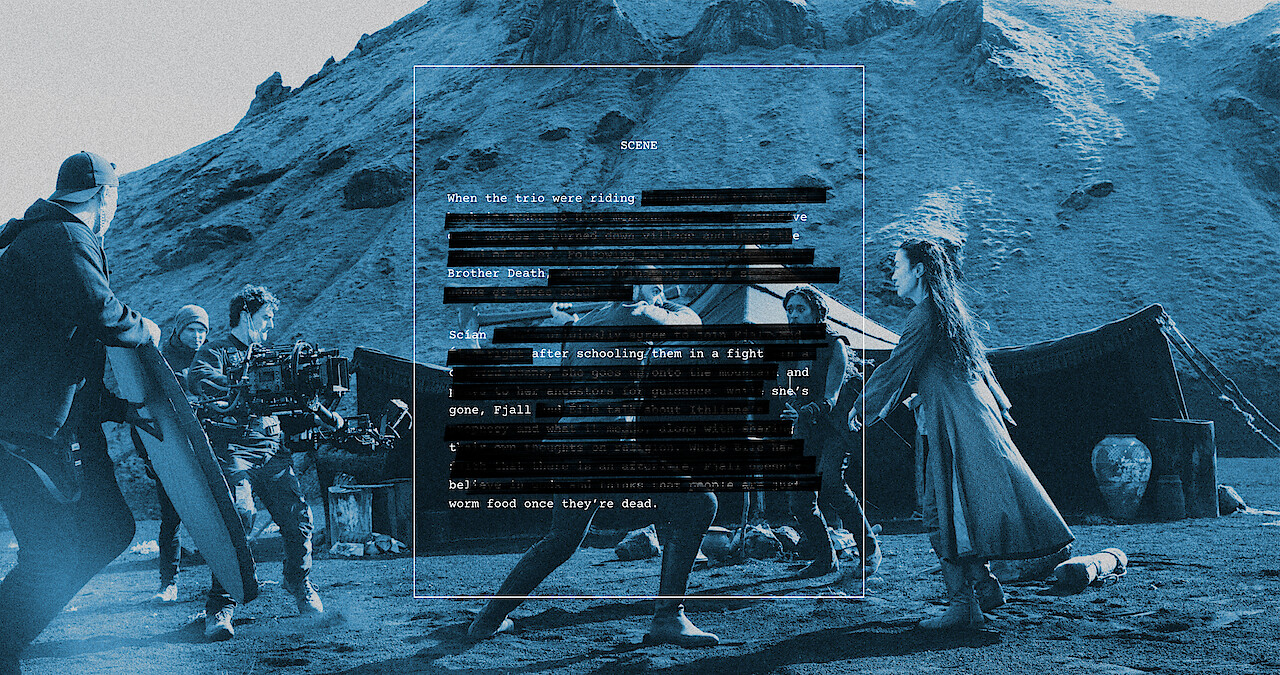
Scían didn’t originally agree to join Fjall and Éile right after schooling them in a fight. In a deleted scene, she goes up onto the mountain and prays to her ancestors for guidance. While she’s gone, Fjall and Éile talk about Ithlinne’s prophecy and what it means, along with sharing their own thoughts on religion. While Éile has faith that there is an afterlife, Fjall doesn’t believe in gods and thinks that people are just worm food once they’re dead.
Fenrik shows her ambition.
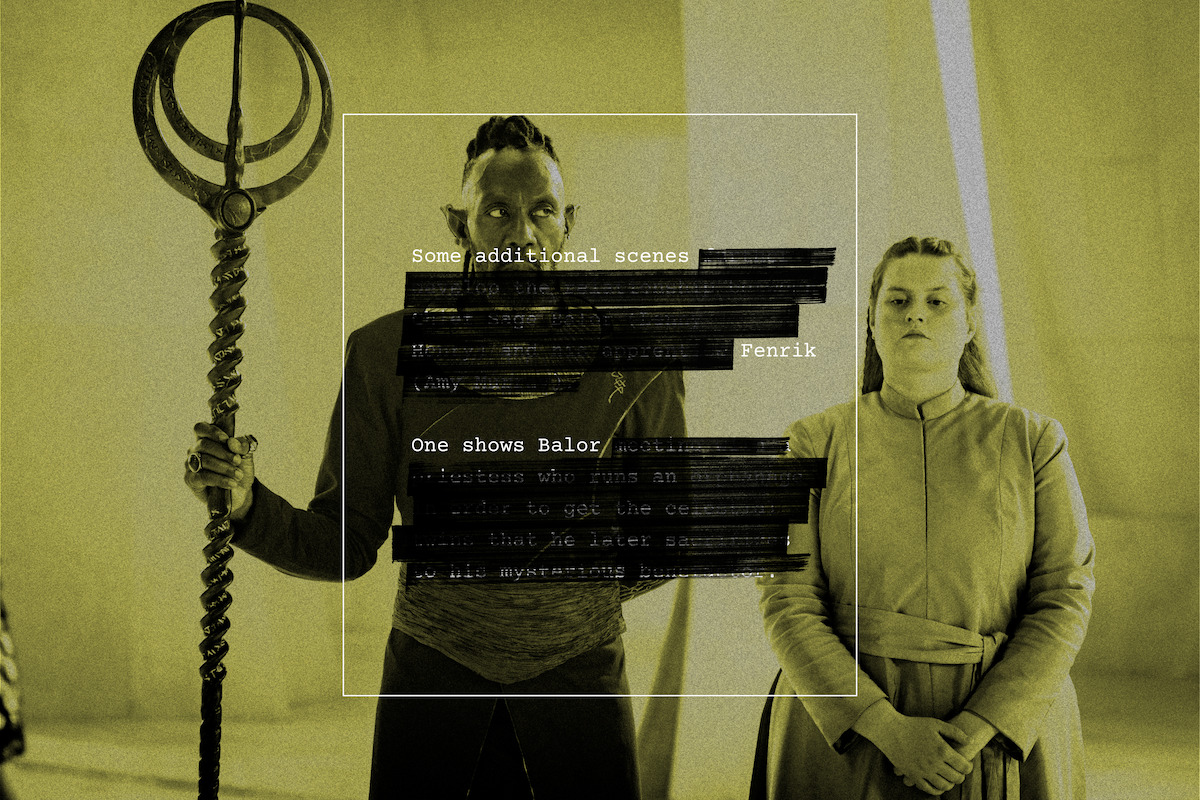
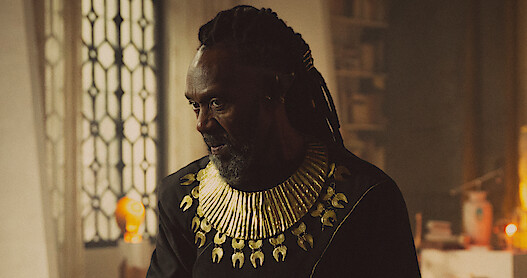
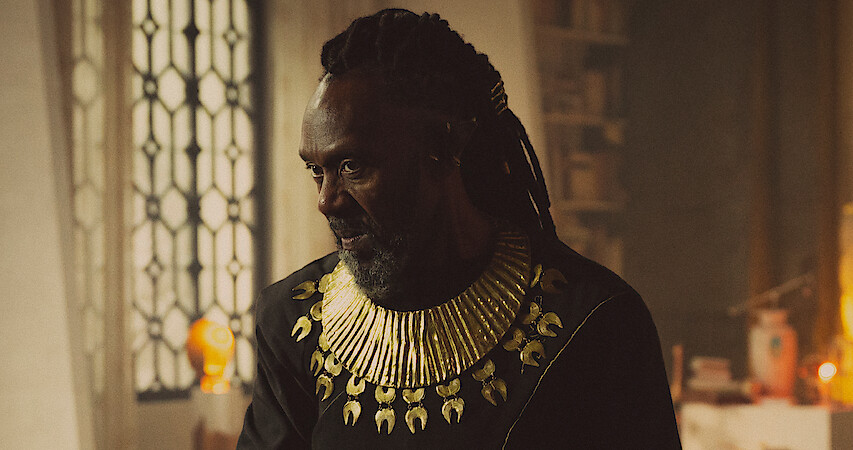
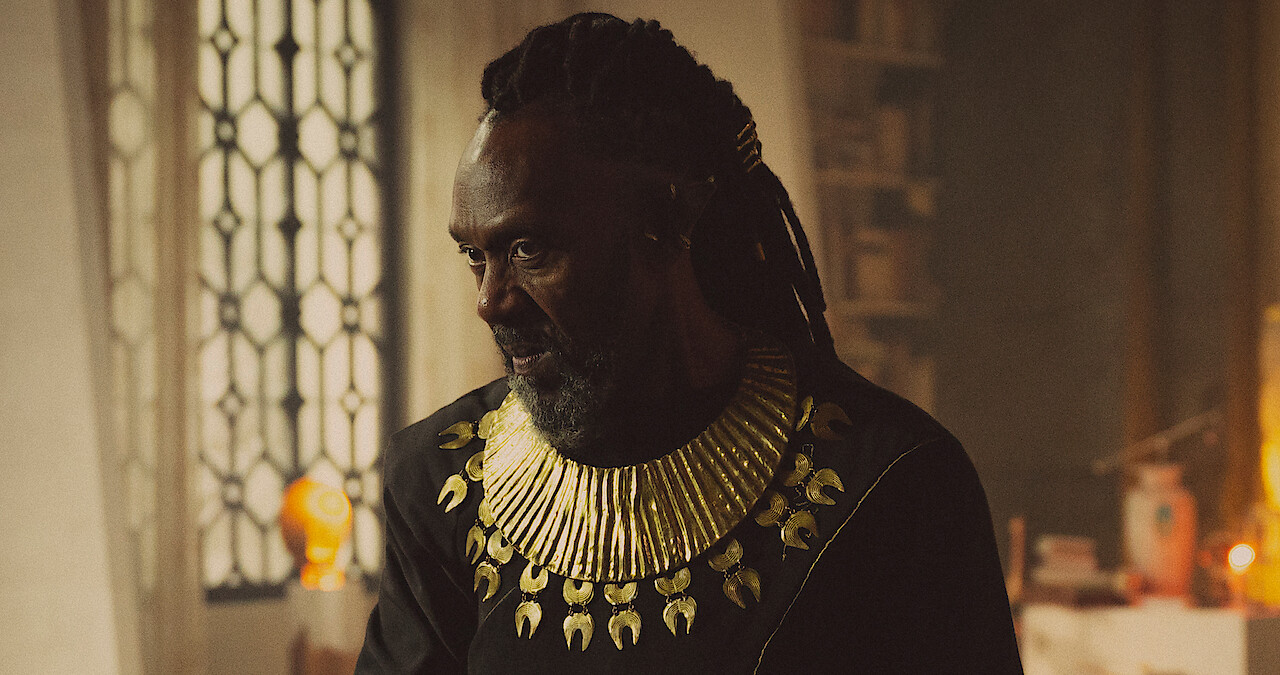
Some additional scenes further develop the relationship between Chief Sage Balor (Lenny Henry) and his apprentice Fenrik (Amy Murray). One shows Balor meeting with a priestess who runs an orphanage in order to get the celestial twins that he later sacrifices to his mysterious benefactor.
“We learn that these children have special powers; we realize that [Balor] and Fenrik had grown up in one of these orphanages for talented children who were often abandoned by their parents, because they were scared of the powers they had,” de Barra says.
Another scene shows Fenrik in the Xin’trean throne room appreciating just how far she’s come.
“She’s just delighted with herself, because she knows she’s going to be number two to the most powerful god emperor in the world, Balor, and she’s sitting on the throne,” de Barra says. “Then Balor gets there and asks, ‘Should I be worried?’ They have this lovely father-daughter conversation.”
There are no monsters here.
Éile’s original intro scene foreshadowed the arrival of monsters on the Continent. She’s seen on a boat where she comforts a scared girl by telling her that monsters don’t exist. Soon after, a sailor harasses Éile, and the Raven Clan warrior-turned-bard shows off her impressive fighting skills.
“We see very quickly that Éile takes no shit,” de Barra says. “She basically says to the kid, ‘See? No monsters. Just assholes.’”
A bloody funeral
The assassination attempt targeting the newly crowned King Alvitir and his sister Merwyn originally took place during the funeral of their father, Mad King Darach.
“There was a much bigger battle at that point and we took it down to its essence, which I was happy with,” de Barra says.
More monstrous worlds
An attempt to use the monoliths to get closer to Xin’trea leads to the heroes encountering a terrifying monster. Originally the group were going to travel between three different worlds, which got progressively worse and each had their own monsters.
Seanchaí chooses Jaskier.
The Witcher bard Jaskier (Joey Batey) wasn’t originally in Blood Origin, but when executive producer Lauren Schmidt Hissrich read the script, she suggested adding him in as a connection between the prequel and the present story. Originally, the frame story was simpler, showing Jaskier singing at the beginning, but when reshoots began, de Barra thought they could do better. He came up with Minnie Driver’s role, a mysterious shape-shifter who asks Jaskier to help resurrect a forgotten tale.
“The theme of the whole show is that words and songs and stories are more powerful than armies,” de Barra says. “I wanted to build out on that. The idea of Seanchaí came to me very clearly. Someone who travels between all these wonderful worlds in [Andrzej Sapkowski’s] books and collects stories like seeds and plants them back in these different worlds when the underdogs need them. I love that idea.”