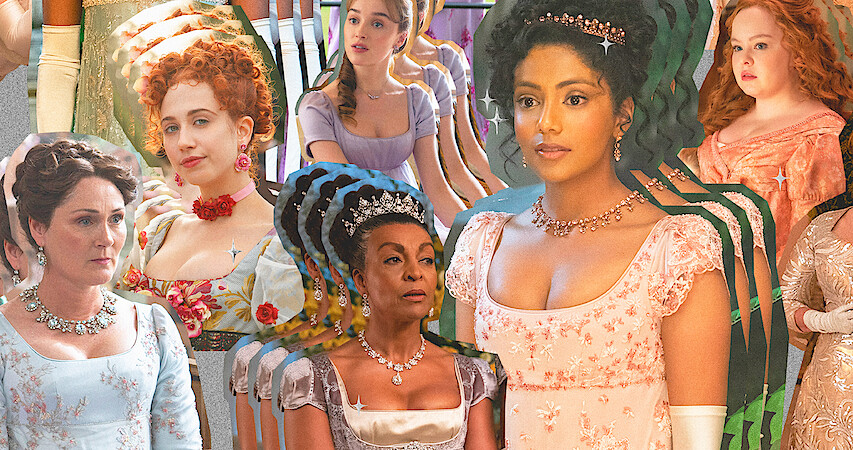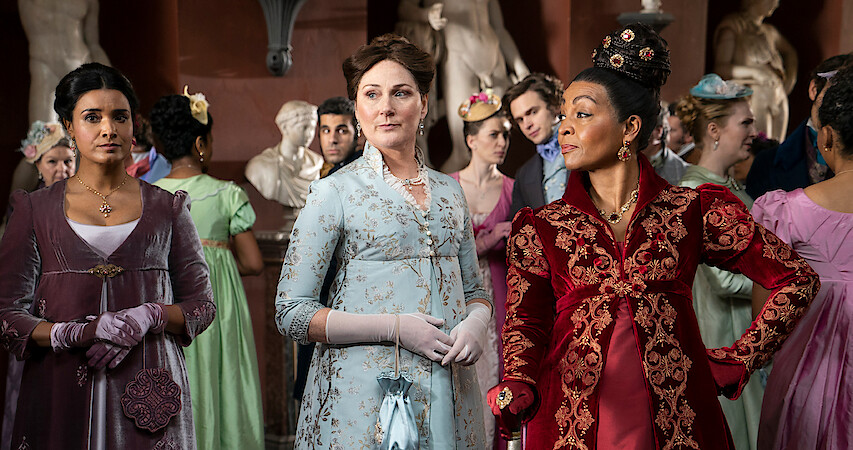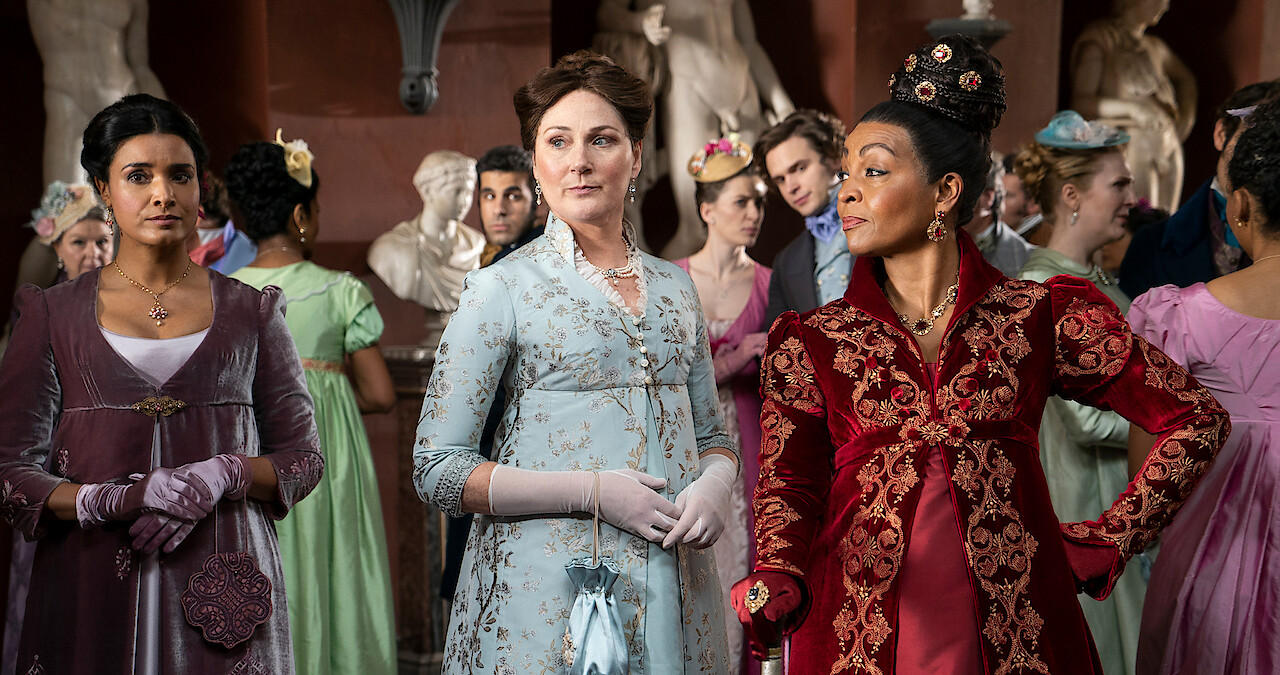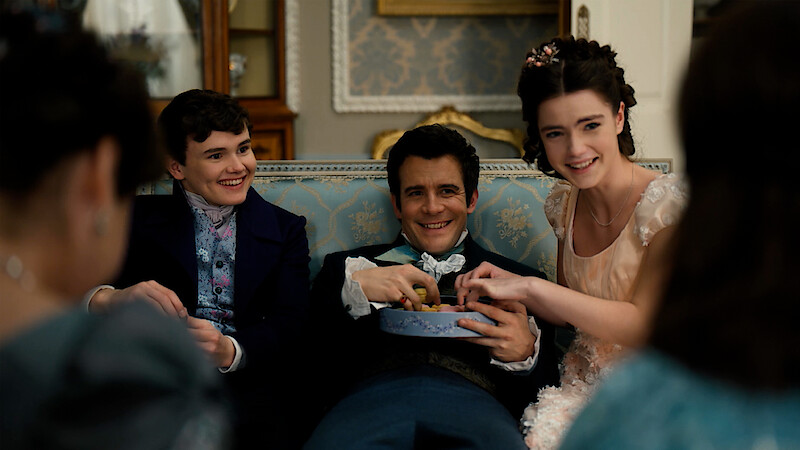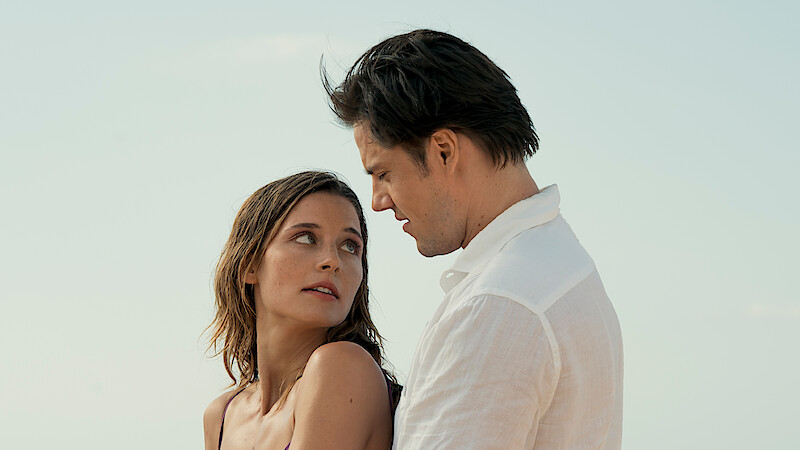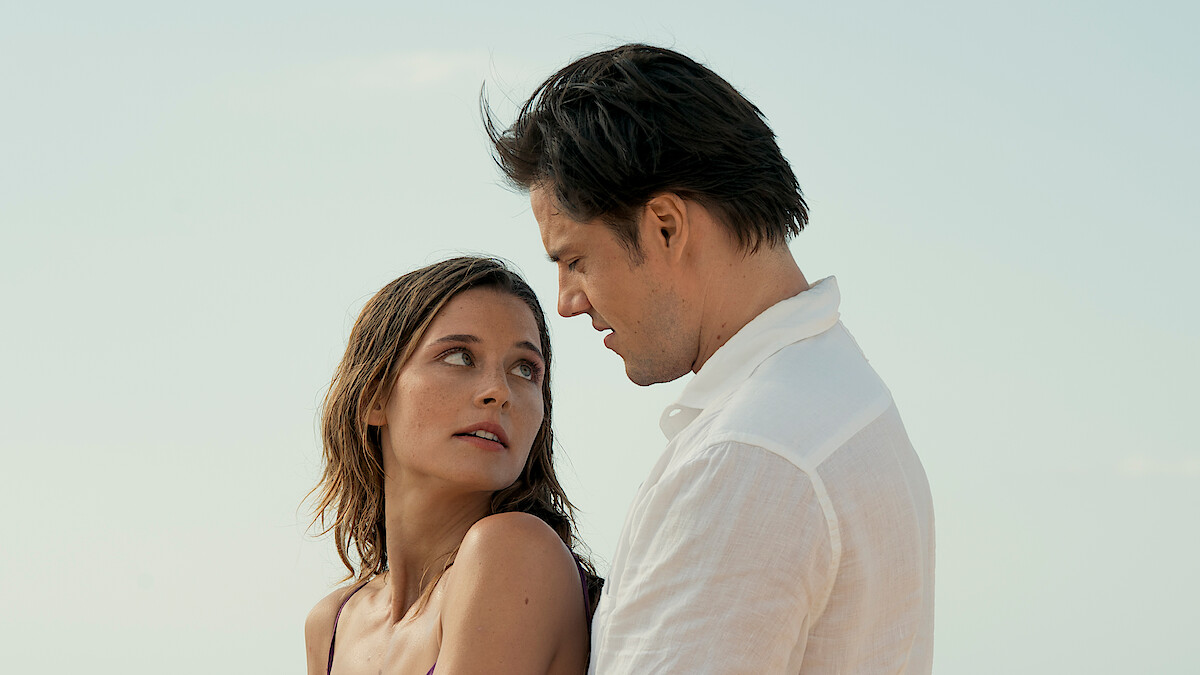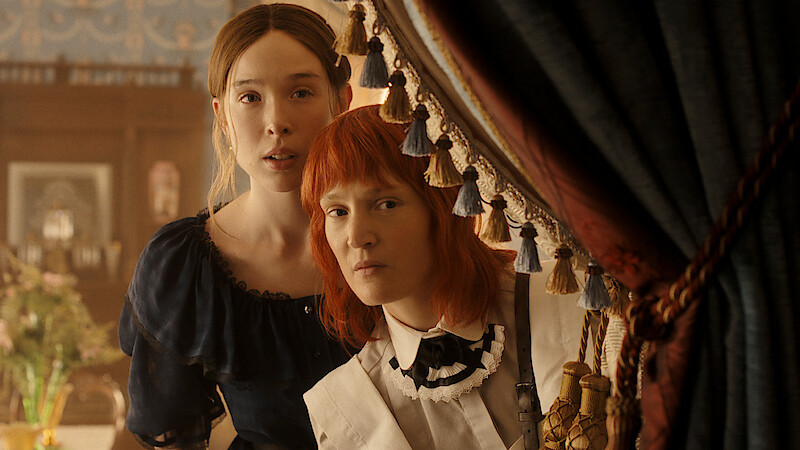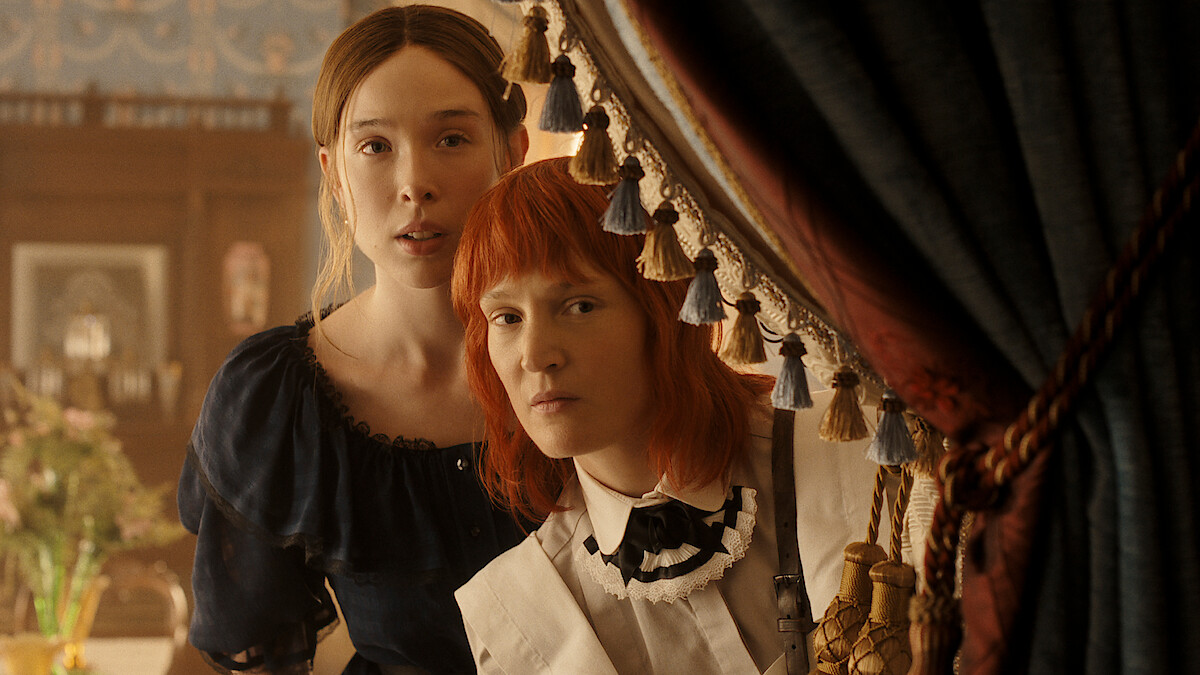
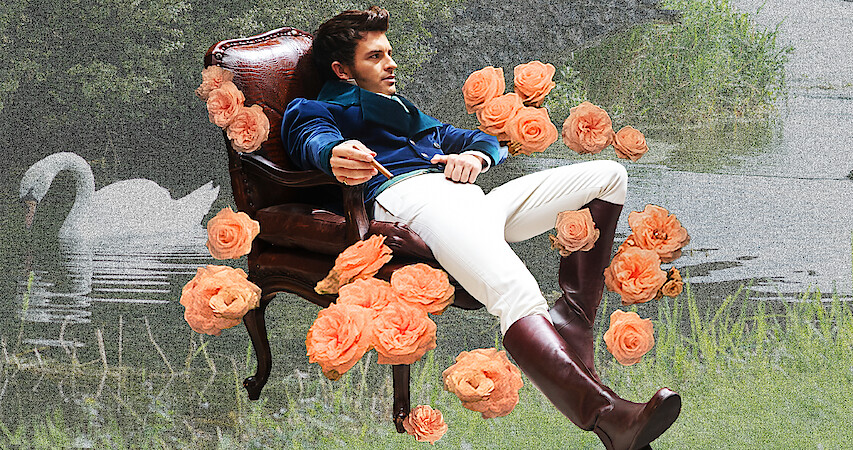
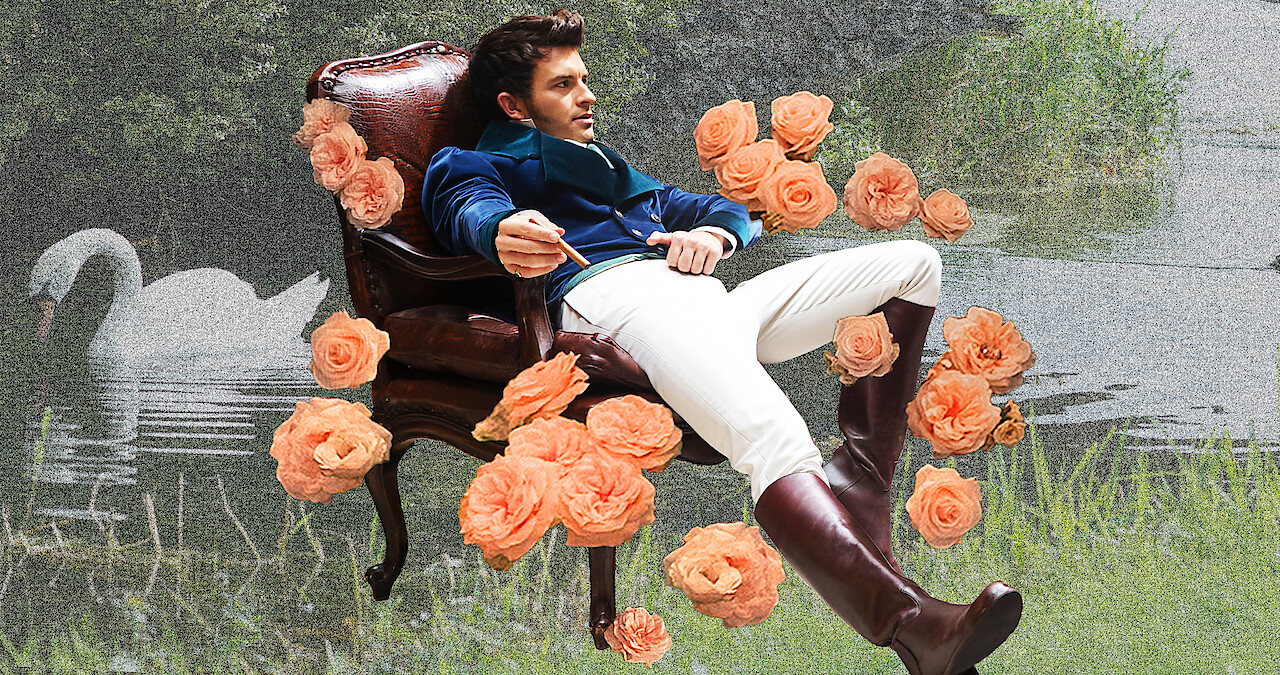
Source photo: Liam Daniel/Netflix
Fashion
It’s Buckskin Breeches Season
Uncovering the sexy history of Bridgerton’s pantaloons.
By Tracy E. Robey
March 22, 2022
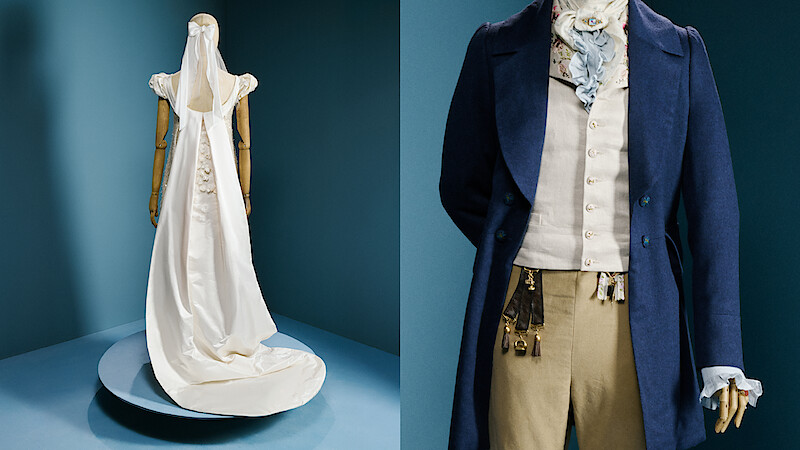
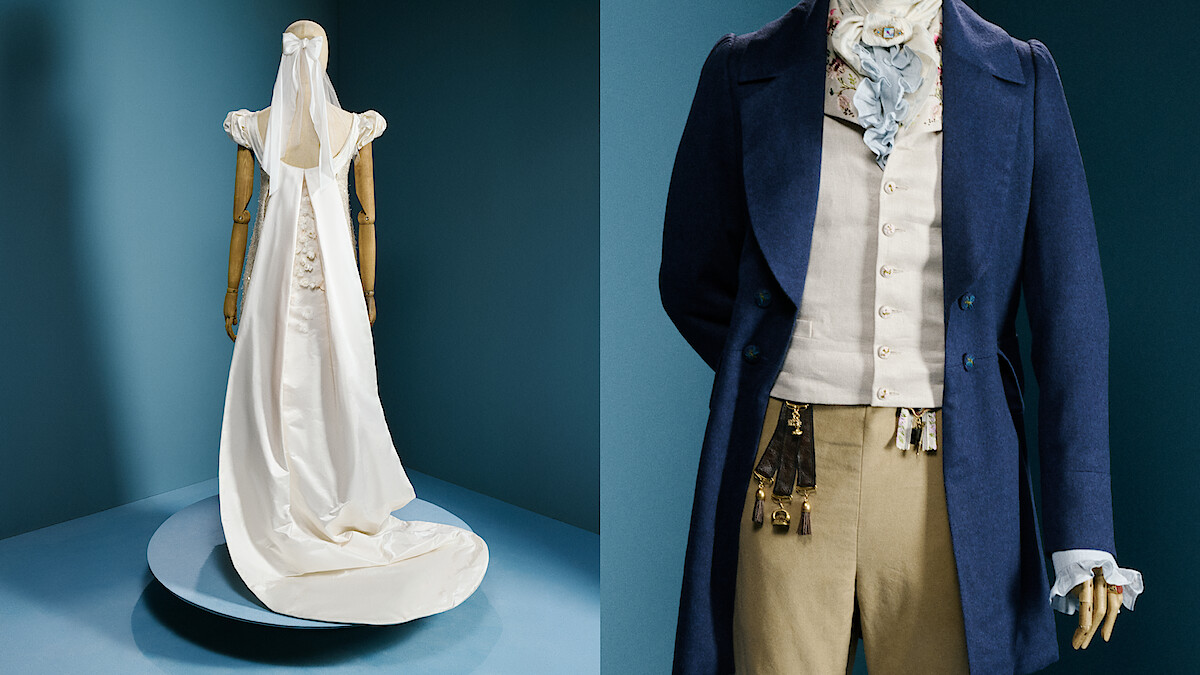
Today we shall speak about an item of clothing so scandalous that it was banned for a time in ancient Rome — and discussed with open thirst in Regency England. I am, of course, referring to men’s pants, the history of which we will review with care so as to better understand and appreciate the trousers worn so memorably by Lord Anthony Bridgerton (Jonathan Bailey) in Bridgerton. In the eyes of tunic- and toga-wearing Romans, trousers symbolized warlike Germanic “barbarians,” whose invasions into Roman territory probably inspired Emperor Honorius to ban boots, animal skin apparel and trousers from the multicultural empire around the year 397.
It is, however, a truth universally acknowledged that transgressive fashion trends don’t just disappear; the battle against pants, like the Roman Empire itself, was eventually lost. When you think about it, pants are a funny sartorial battleground. All this fuss over a pair of fabric tubes for legs? Of course, there’s also that torso section that can really make or break an entire look, but for 15th-century peasants, there was often no need for a crotch section at all — “pants” were just tall socks under a long shirt. You can check out the look in the NSFW February portion of the Très Riches Heures du Duc de Berry prayer book, which features a man and woman wearing what amounts to thigh-high stockings, sitting with their bits exposed to the cold.
The pants of the Renaissance were slightly more sophisticated, as tailors decided to sew the backs of the leg tubes together to create a seat. A belted shirt over the front kept one’s junk covered, but men eager to show off their lunge gains kept raising the shirt hemlines until they needed a new protective element to keep their privates under wraps: the codpiece. Over time, this piece of fabric meant to cover the leggings gap became a precursor to pockets; it was a quasi-bottomless bag — the gargantuan Louis Vuitton Neverfull of menswear, if you will — holding everything from coin purses to pistols, bottles and a looking glass if we can trust works of fiction. (OK, that last one is doubtful, but we do love gossip.) This brings us to the man of the season, Anthony Bridgerton, an expert at both wearing and dropping his pants.
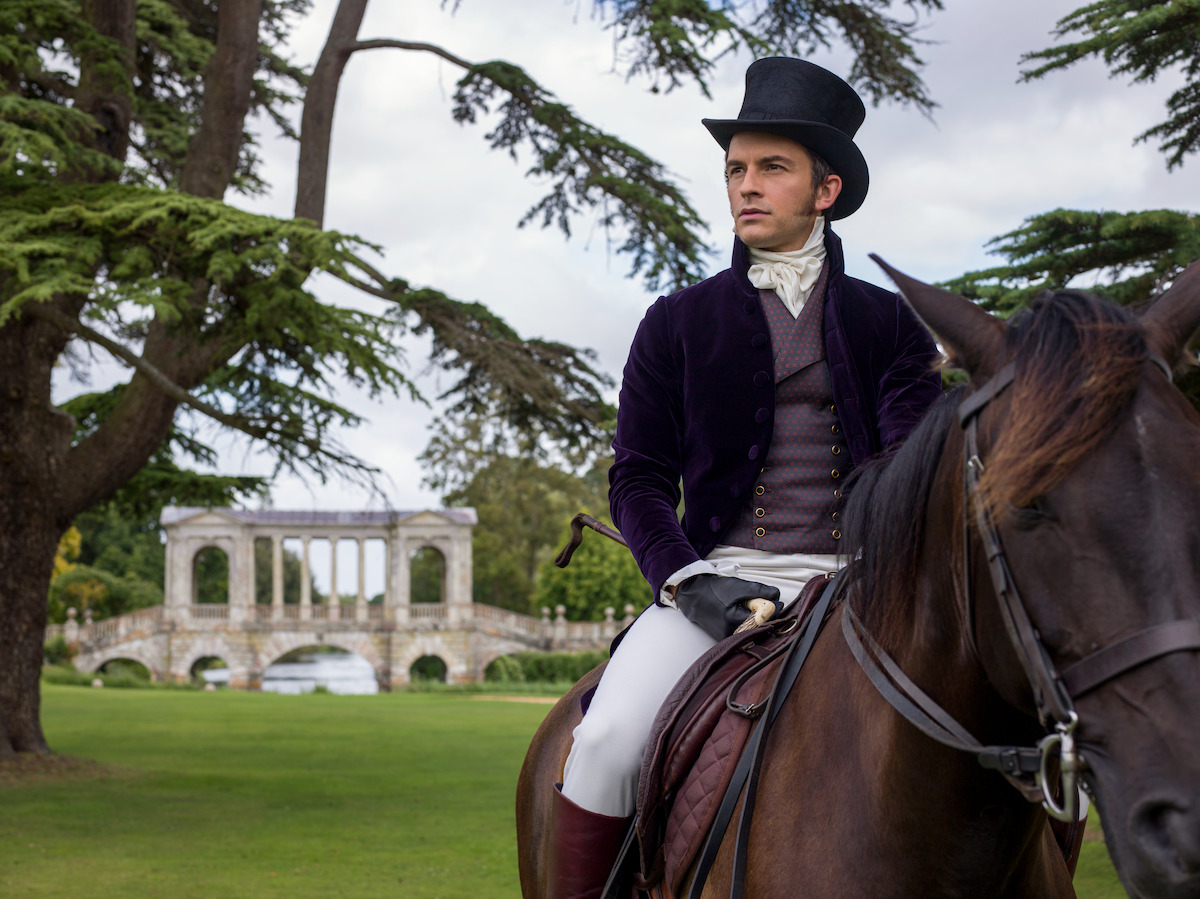
Regency romance novels often feature men whose muscled thighs test the seams of their breeches, particularly those made out of buckskin. It’s as if everyone in the past was walking around with Peloton quads, which makes sense given the demands of horseback riding. Buckskin breeches came into fashion in the mid-1700s, though they weren’t popular with everyone. The Gentleman’s Magazine complained in 1739 that high-status men were wearing durable but soft buckskin breeches like their servants, which echoed the old Roman anxiety about not knowing who was on your team unless they had the proper uniform. Almost 80 years later, in Bridgerton, we don’t really see many men in true breeches, buckskin or otherwise, since the style was starting to wane among the aristocracy.
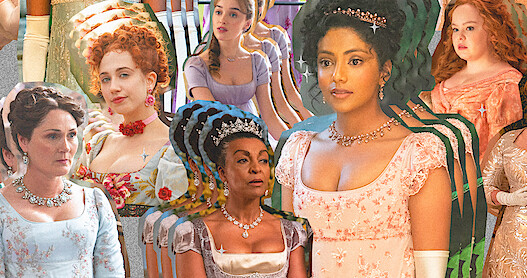
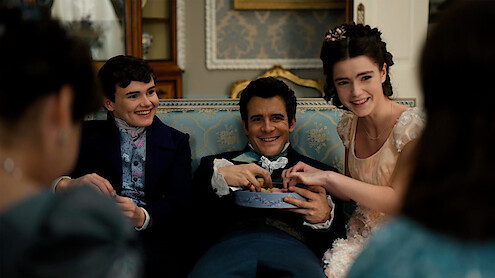
Nigel Berbrooke (Jamie Beamish) exclaims, “I wore my satin knee breeches for the occasion!” during one of his ill-fated attempts to woo Daphne (Phoebe Dynevor), but most of the men in Bridgerton wear longer pantaloons or trousers that extend well past the knee. The long-pant trend follows the trajectory seen earlier with buckskins in Britain and trousers in Rome: New menswear fashions came to the upper classes from below despite fears about adopting the “coarse” styles of the commoners. During the French Revolution, which took place just a couple decades before Bridgerton, the sans-culottes (meaning “without breeches”) were the radical, rebellious common people, who wore longer, looser and more practical trousers. Despite — or maybe because of — anxiety among the English nobility about losing their heads like their French cousins, trousers once associated with farmers and sailors became the daytime uniform of the rich and rakish.
Not to perv on the dead, but the thirsty gaze directed pantsward isn’t revisionist history and didn’t start with Bridgerton or historical romance novels. Actual fashion icon of the Regency era, Beau Brummell, convinced his fellow clothes horses to leave off their drawers so as to avoid visible male pantylines in their leggings-tight trousers. (Jonathan Bailey meanwhile revealed that he wore a dance belt under his character’s pantaloons.) Men who had hip dips and lacked lean muscled calves resorted to padding to fill out their pants, a subject of satirical cartoons of the time. In the late 18th century, The Belfast Newsletter mentioned a young man’s breeches adorning his “taper legs and tempting thighs,” a great early moment in horny on main, when feeds were just front pages. How horny was the discourse? When reassuring a dinner guest who arrived too late to change from his buckskin breeches, an older woman said, “Sir, I assure you I can see the gentleman through a pair of buckskin breeches as well as if he were in silk or satin.”
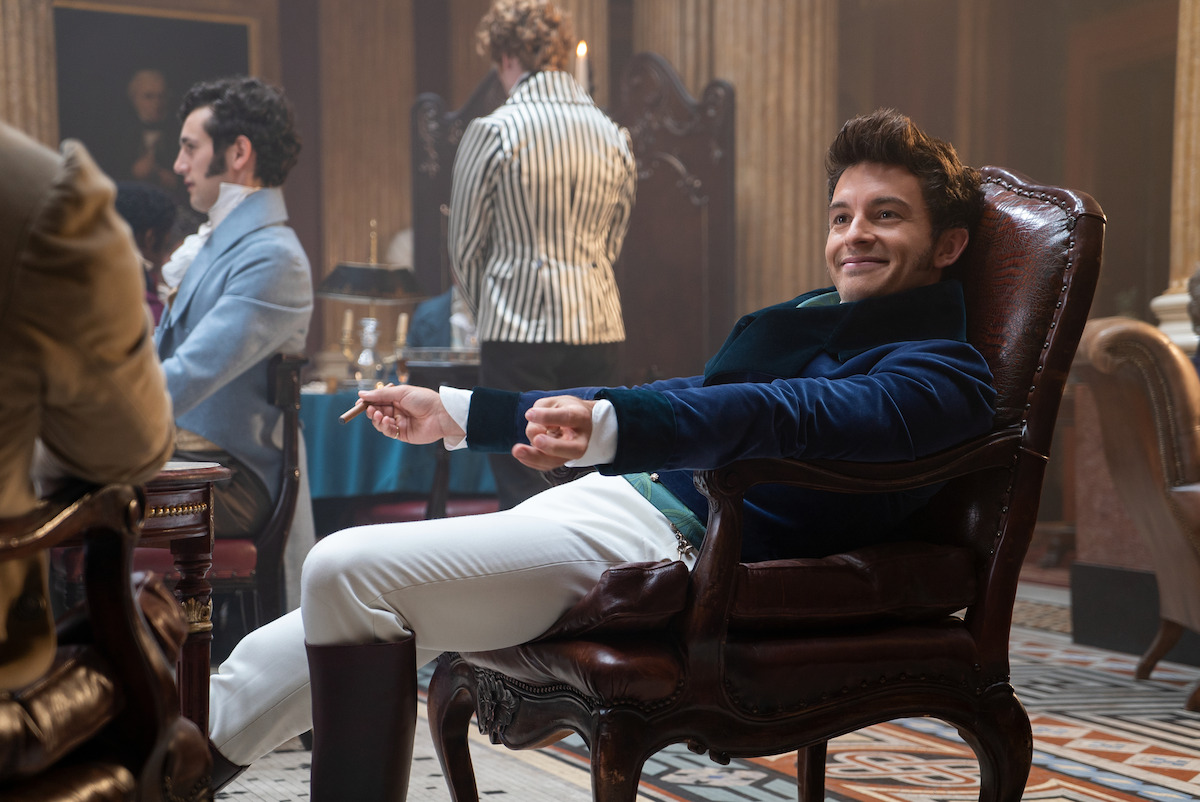
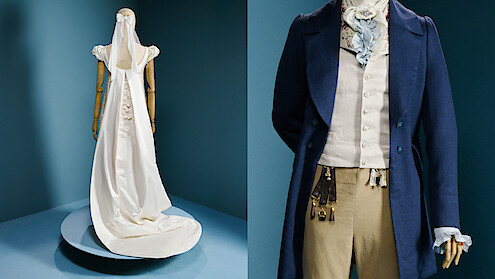
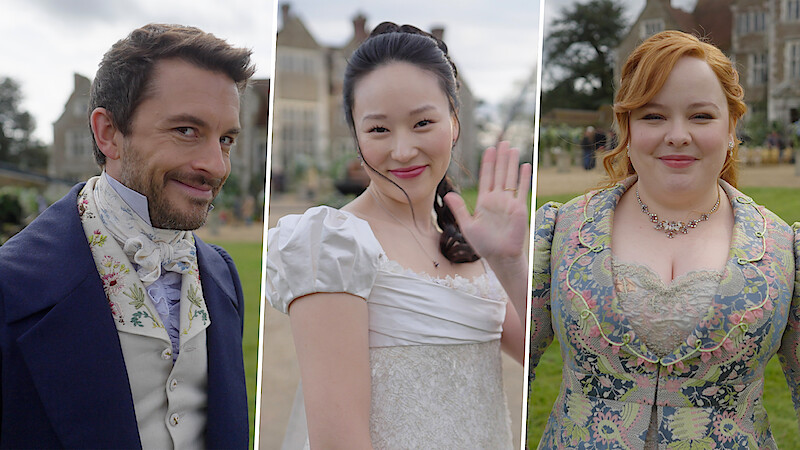
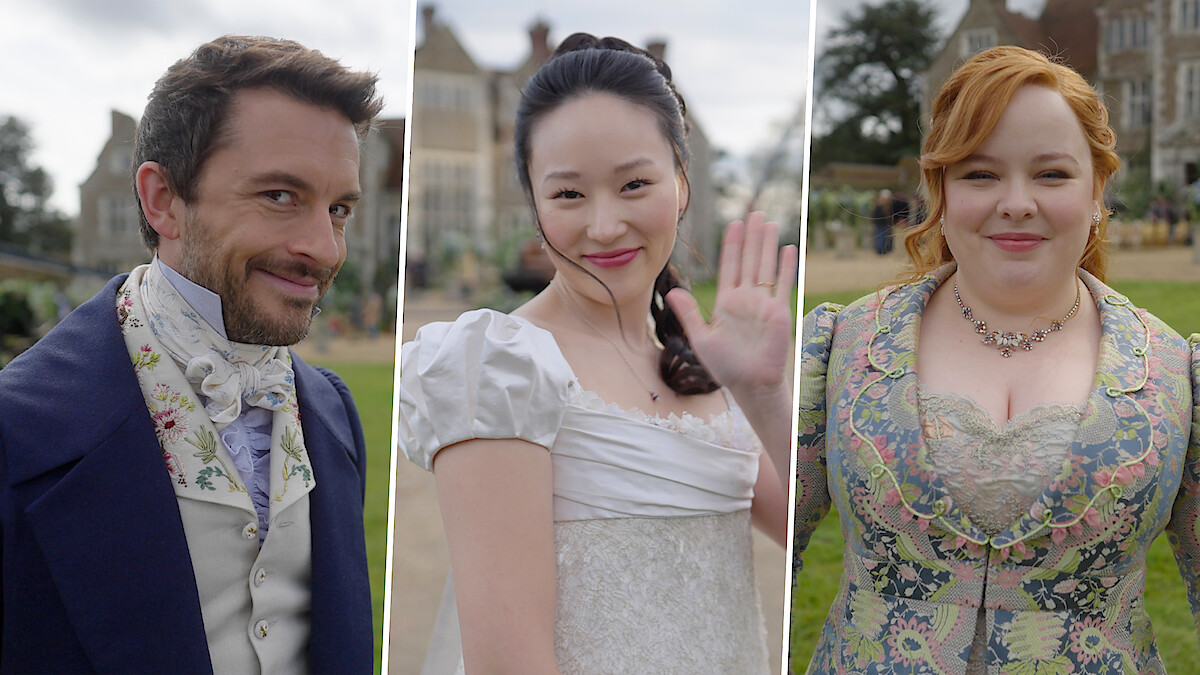
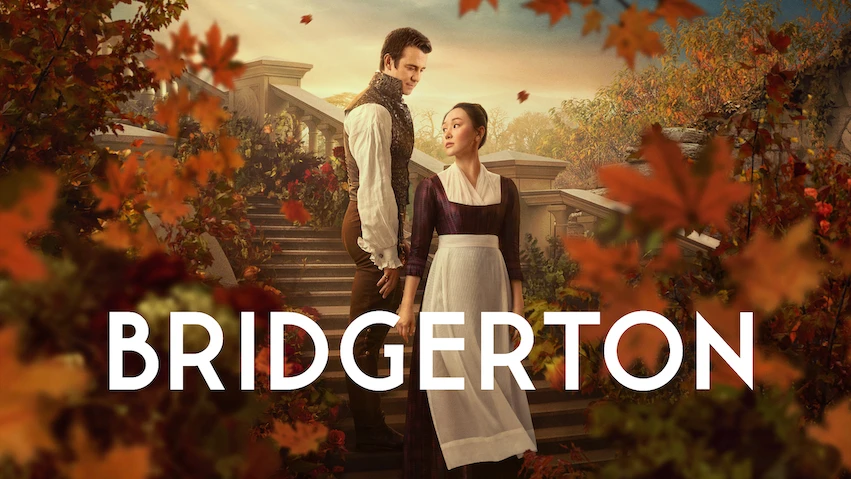
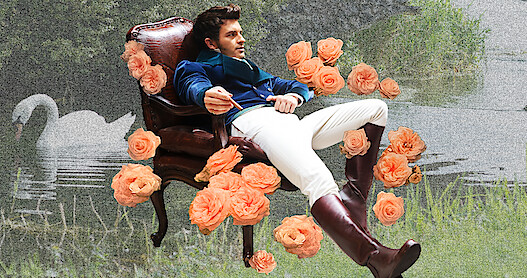
In Bridgerton Season 1, Anthony was often easy to spot in crowded scenes due to his perfectly tailored white pants tucked into black boots. Sources from the 1790s and early 1800s abound with jarring uses of the word “elastic” to describe how pants should fit — as if Robert Hooke theorized about the law of elasticity for the sake of pouring men into their pants. As men’s coats transitioned from the fuller, longer styles of the 18th century to be cut away in the front, tailors upped their trouser game to better show off their clients’ legs. One Regency himbo told his tailor that he didn’t even want pants if he could get into them.
While the physics of that fit must have been interesting, it demonstrated that dandies wanted tight, unwrinkled pants. Tailors responded by adding a second seam to the legs to eliminate the saggy seat effect that plagued earlier pants-wearers. A satisfied customer wrote of his nonelastic corduroy pants, “It would be unjust to the tailor to say that they fitted like my skin, for they sat a great deal closer.” And when he stripped off the trousers, his “legs were like fluted pillars grooved with the cords of the pantaloons.” To paraphrase Bridgerton’s Queen Charlotte (Golda Rosheuvel), a pair like that on Viscount Anthony would certainly be most enchanting indeed.