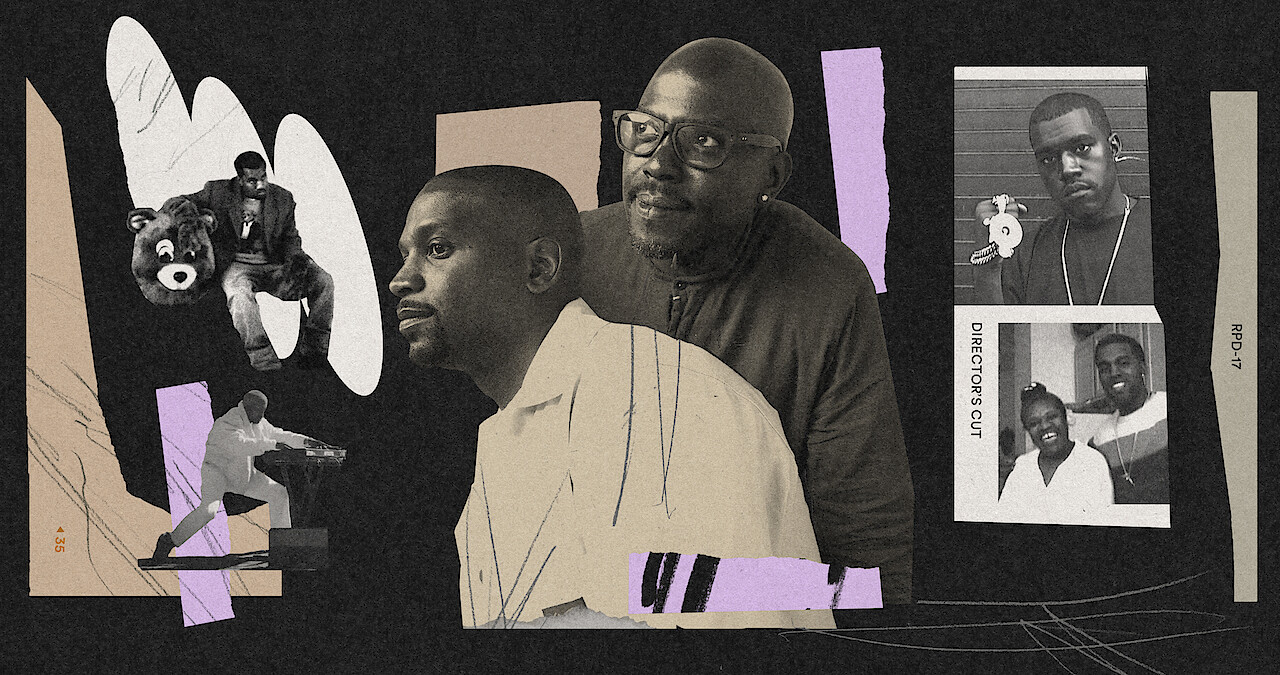
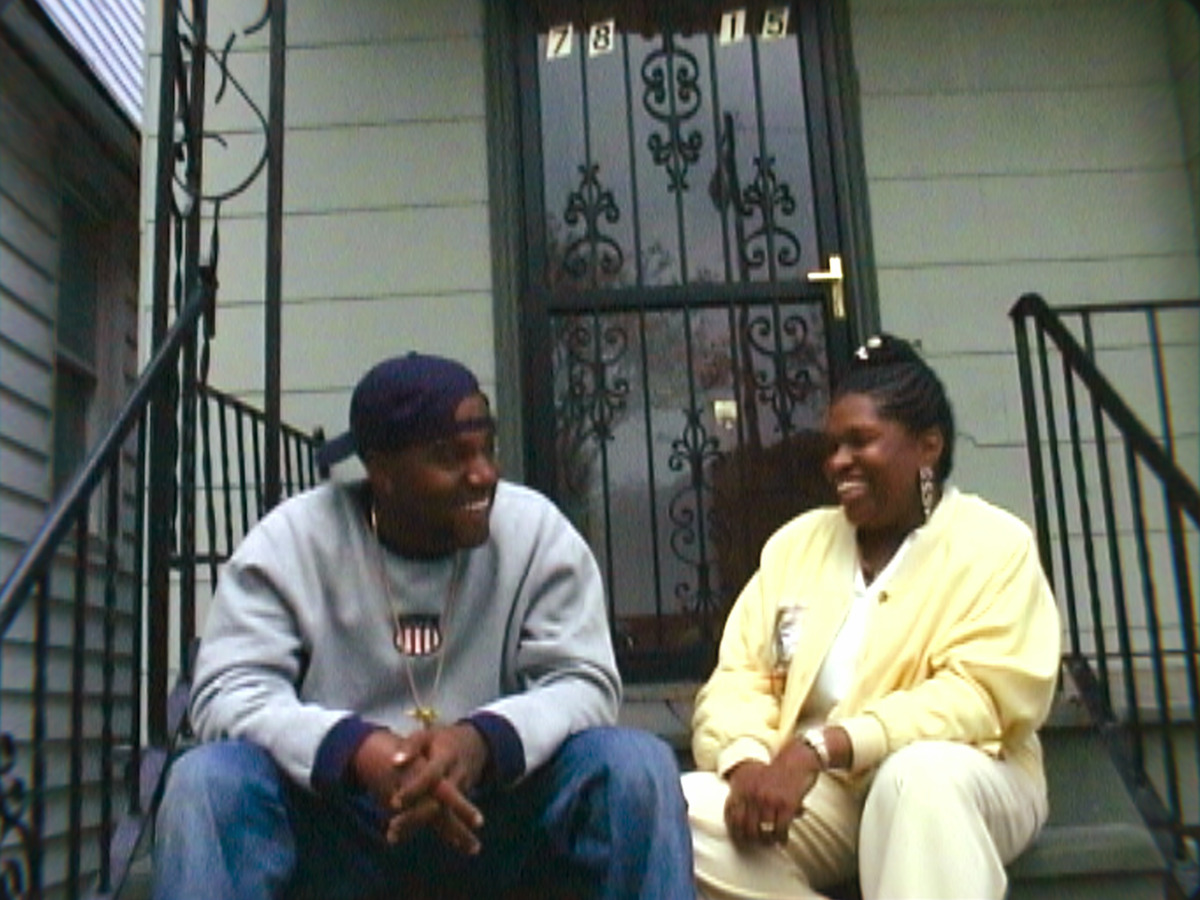
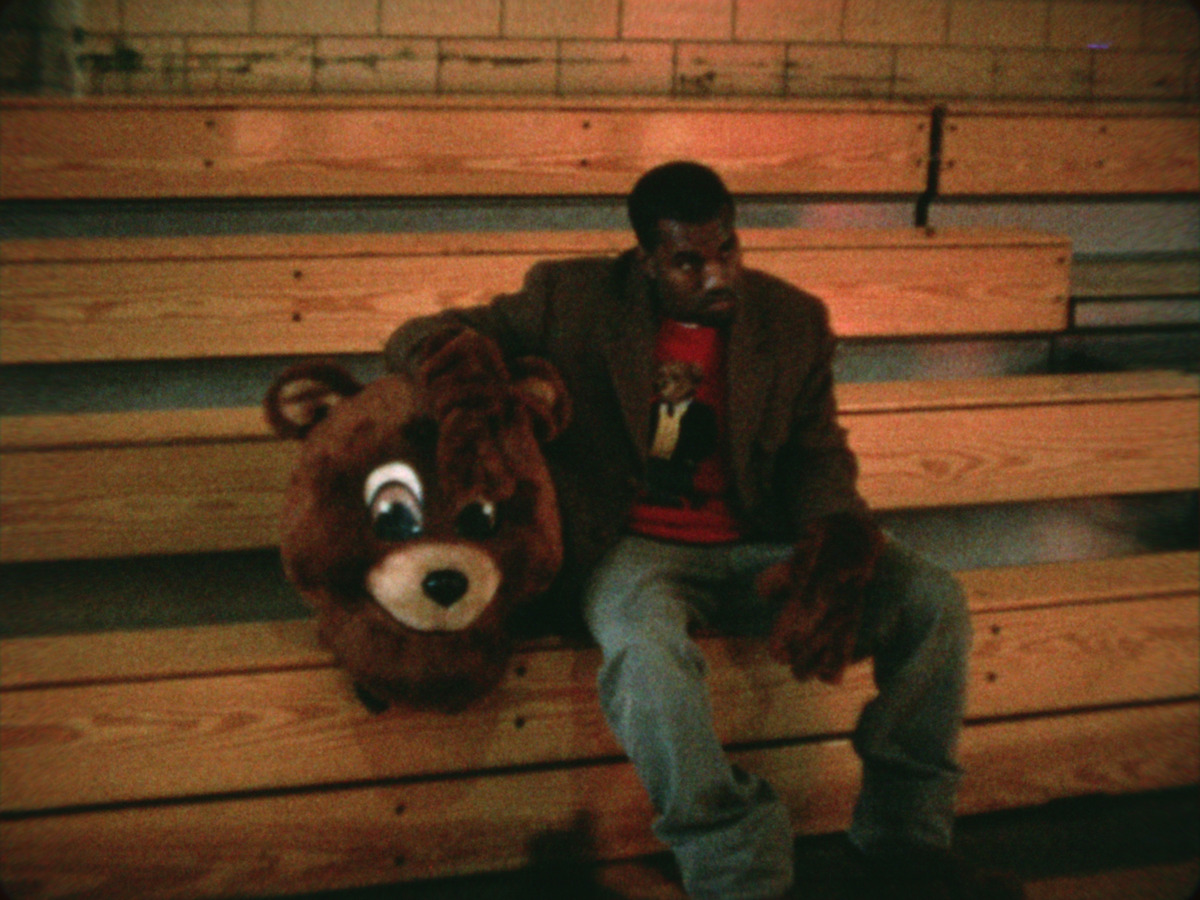
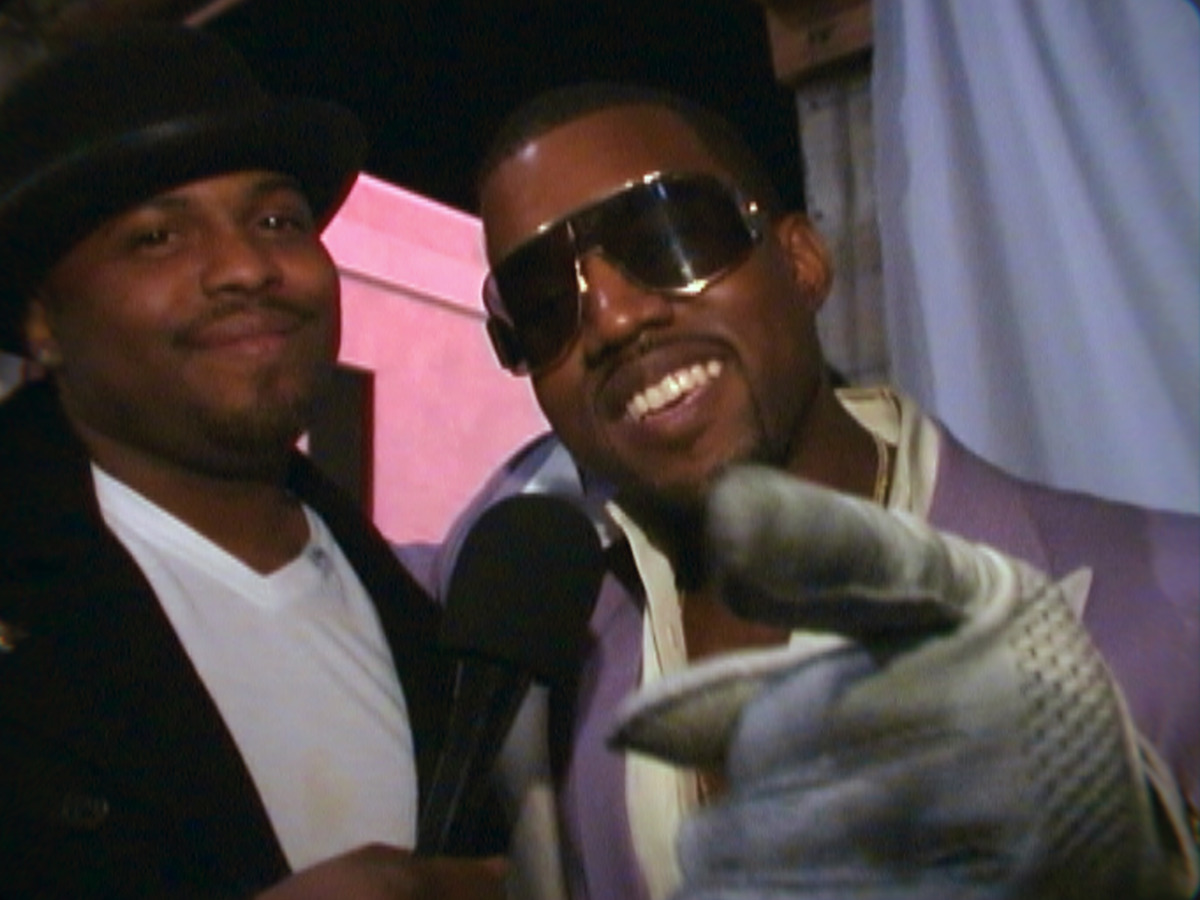
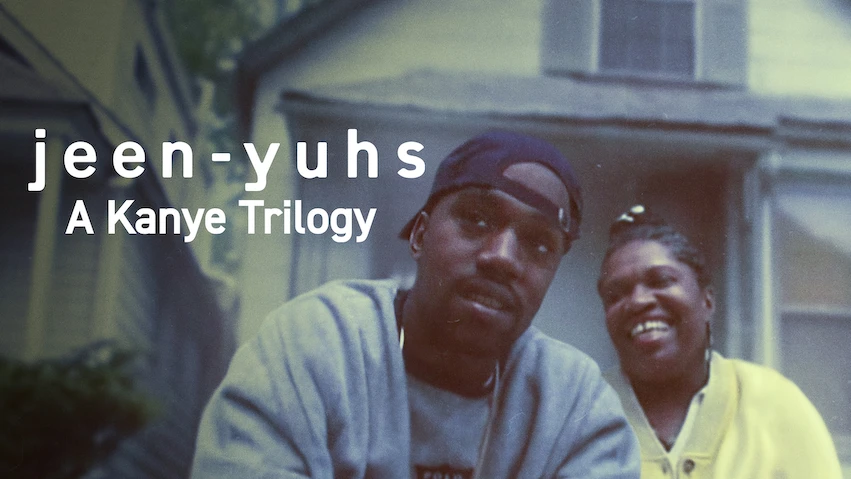
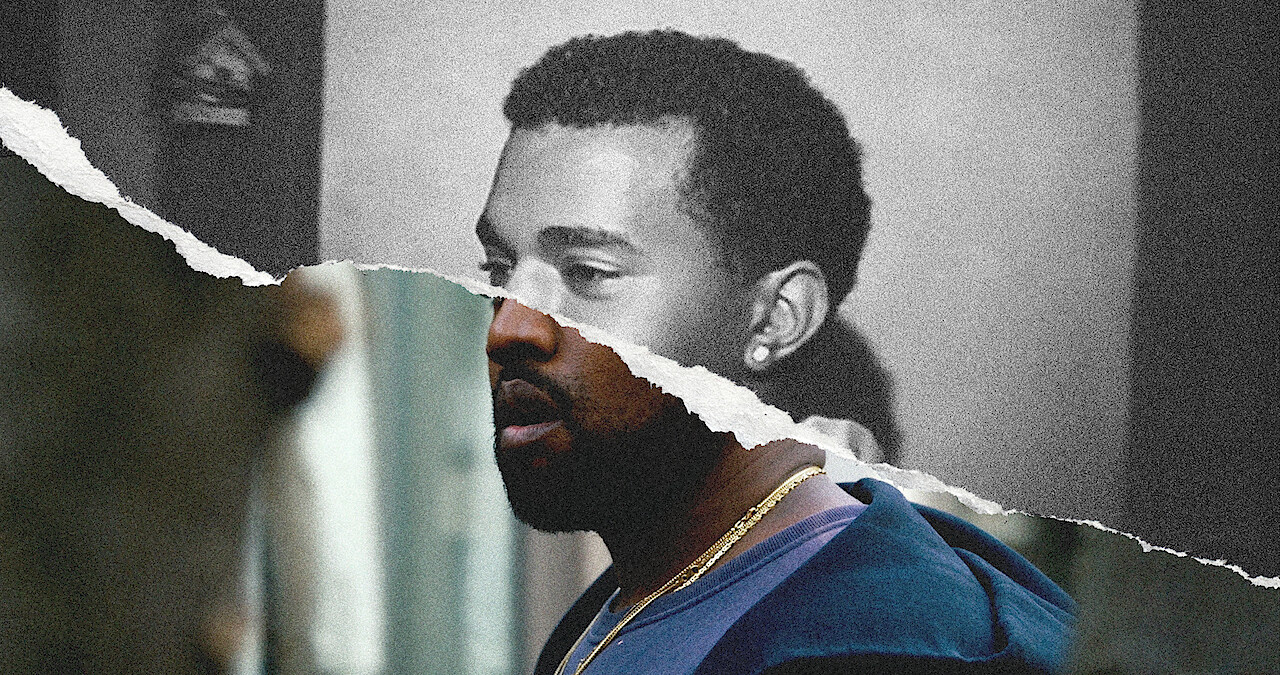
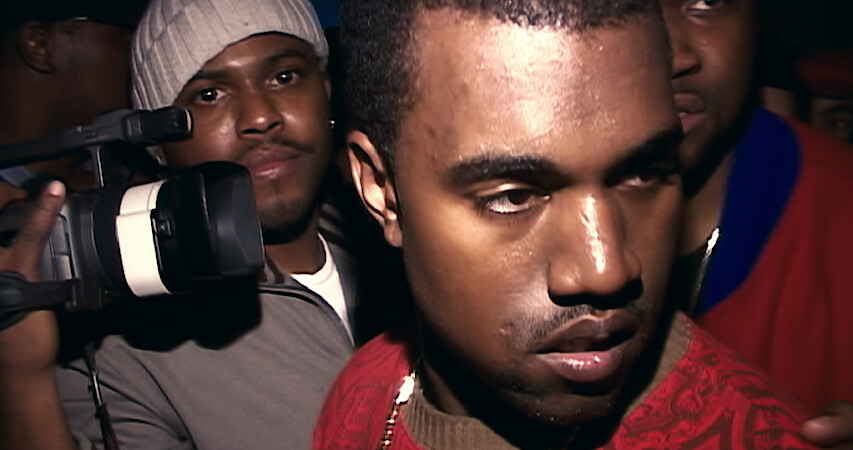
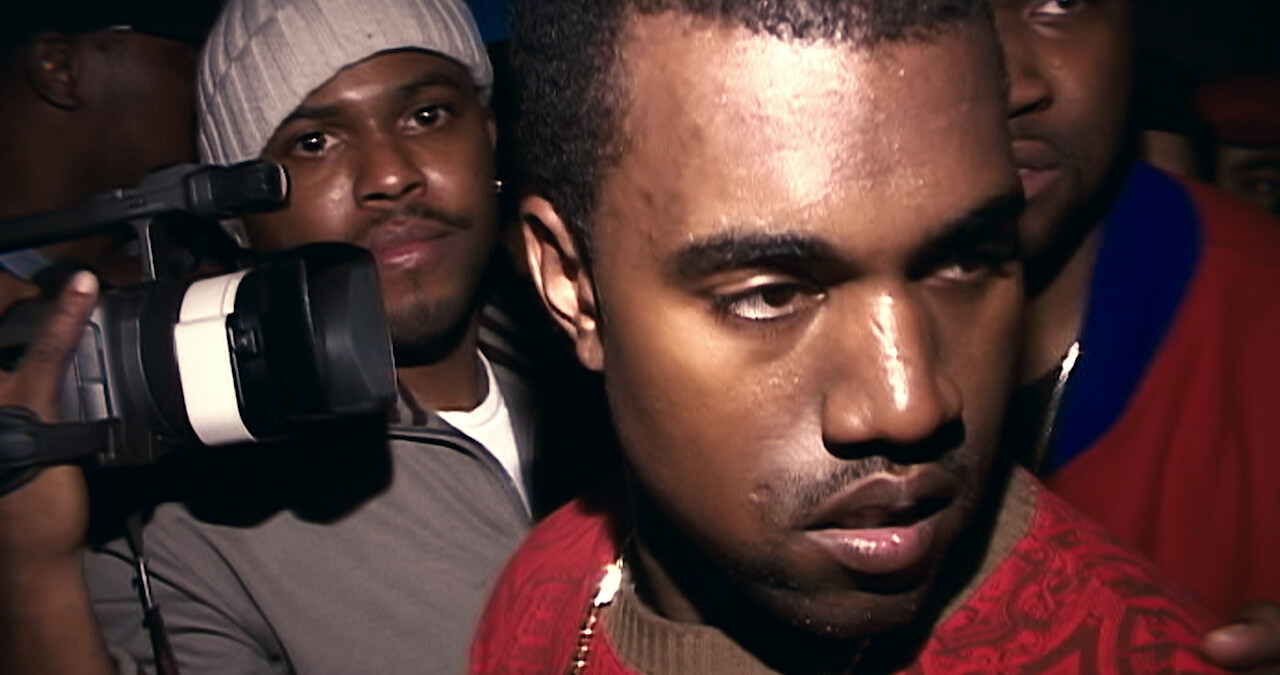
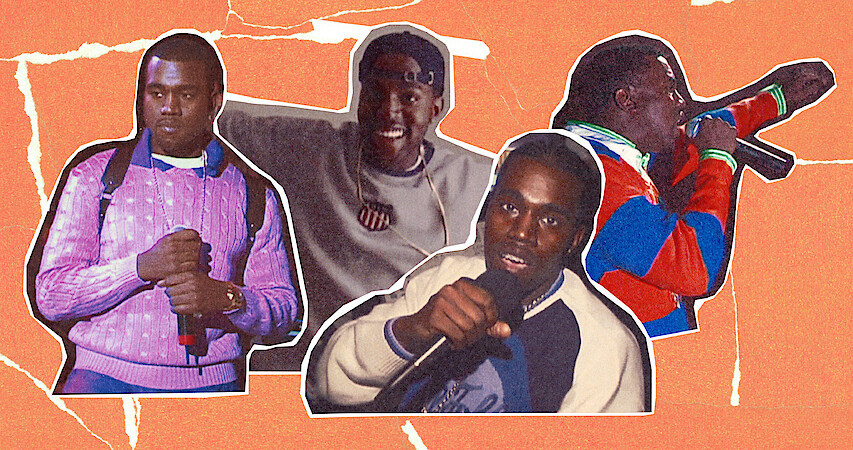
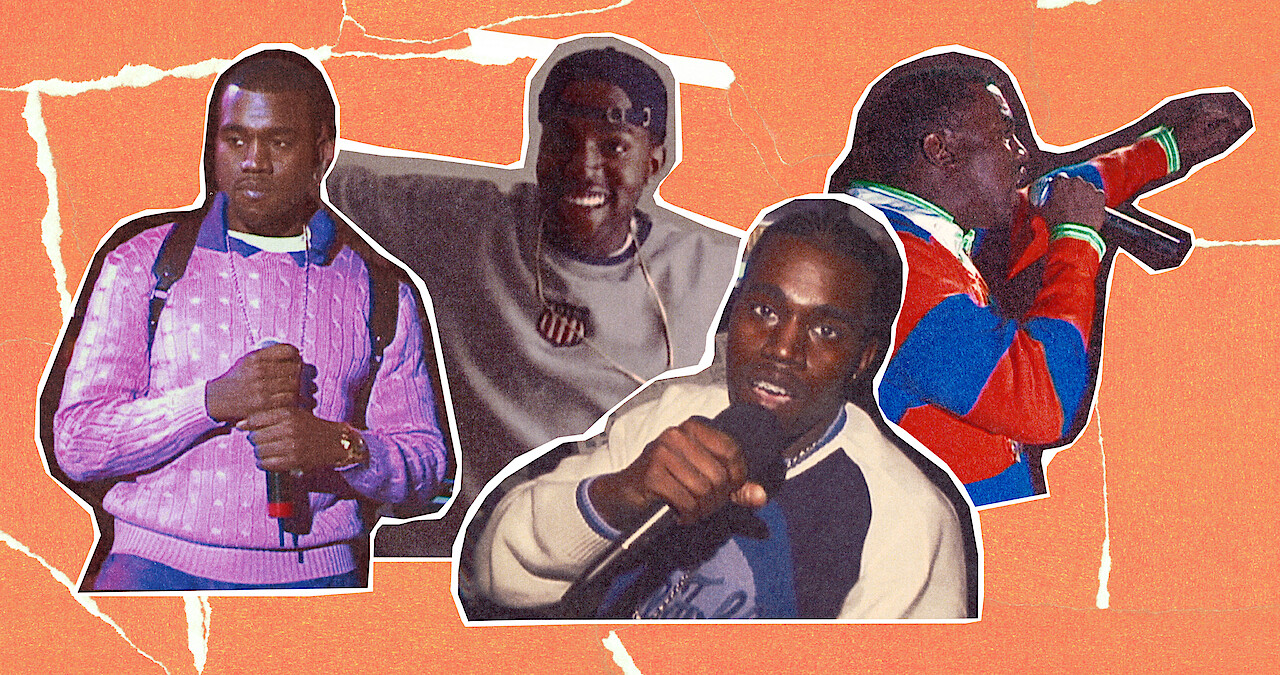
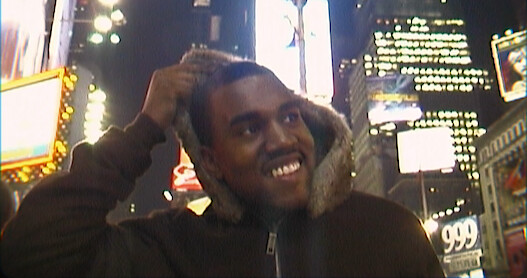
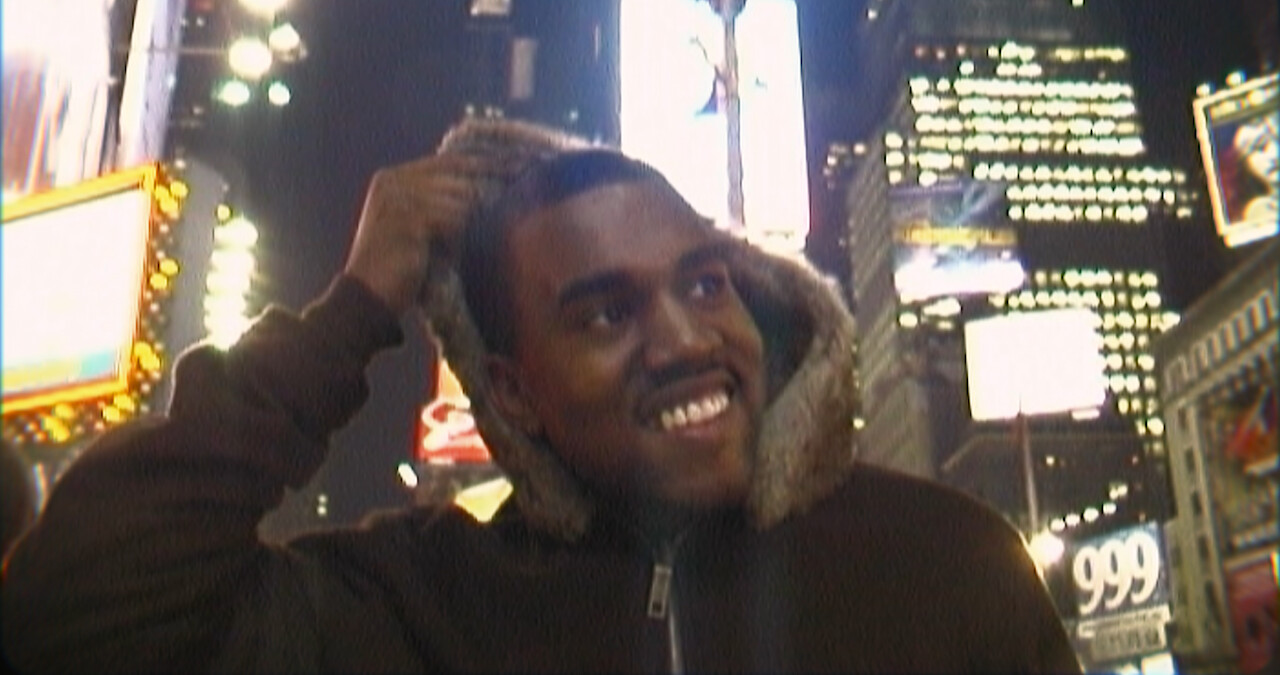
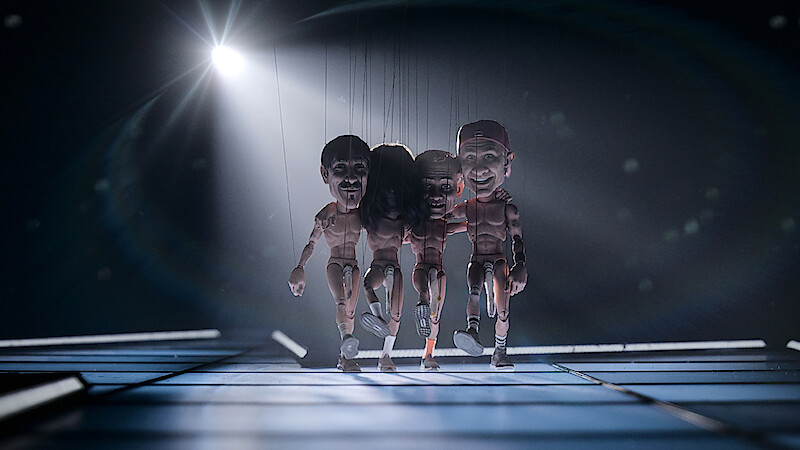
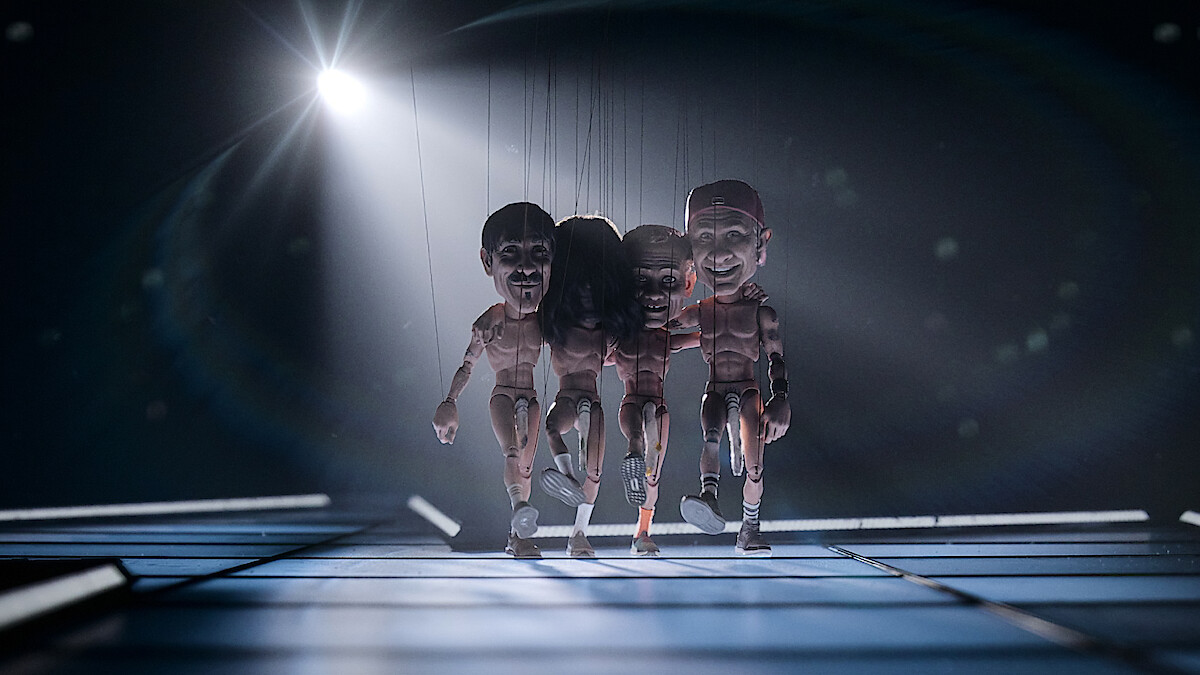
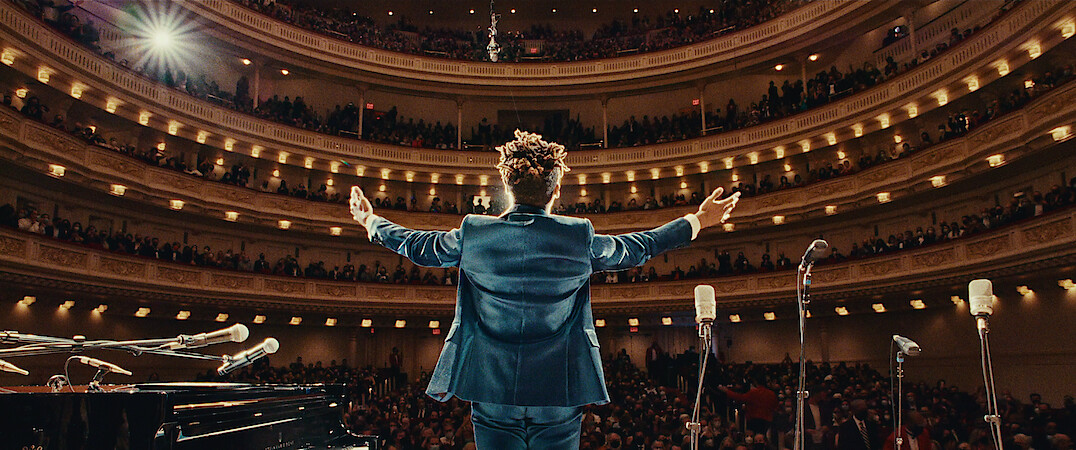
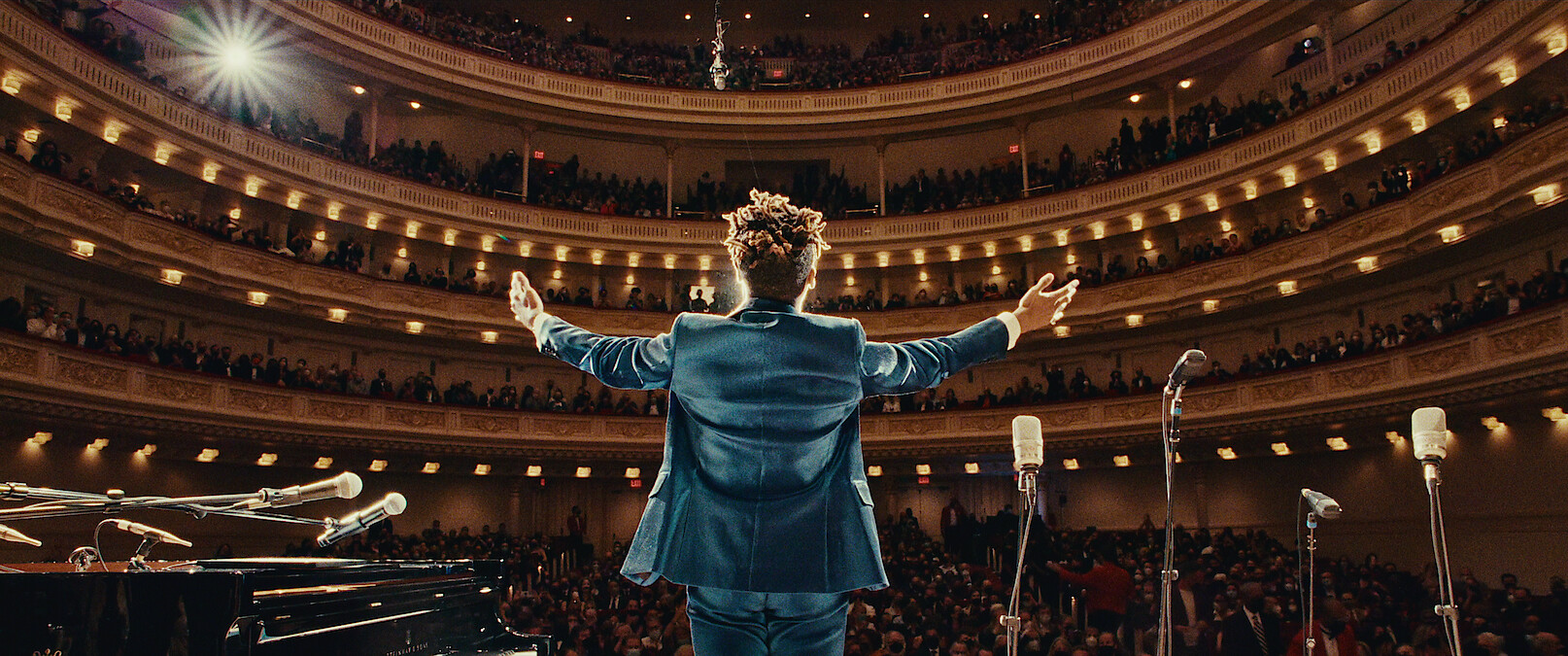
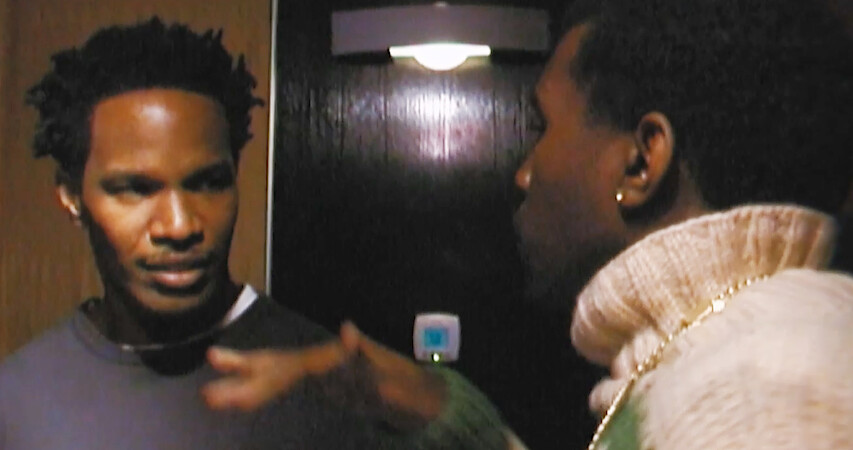
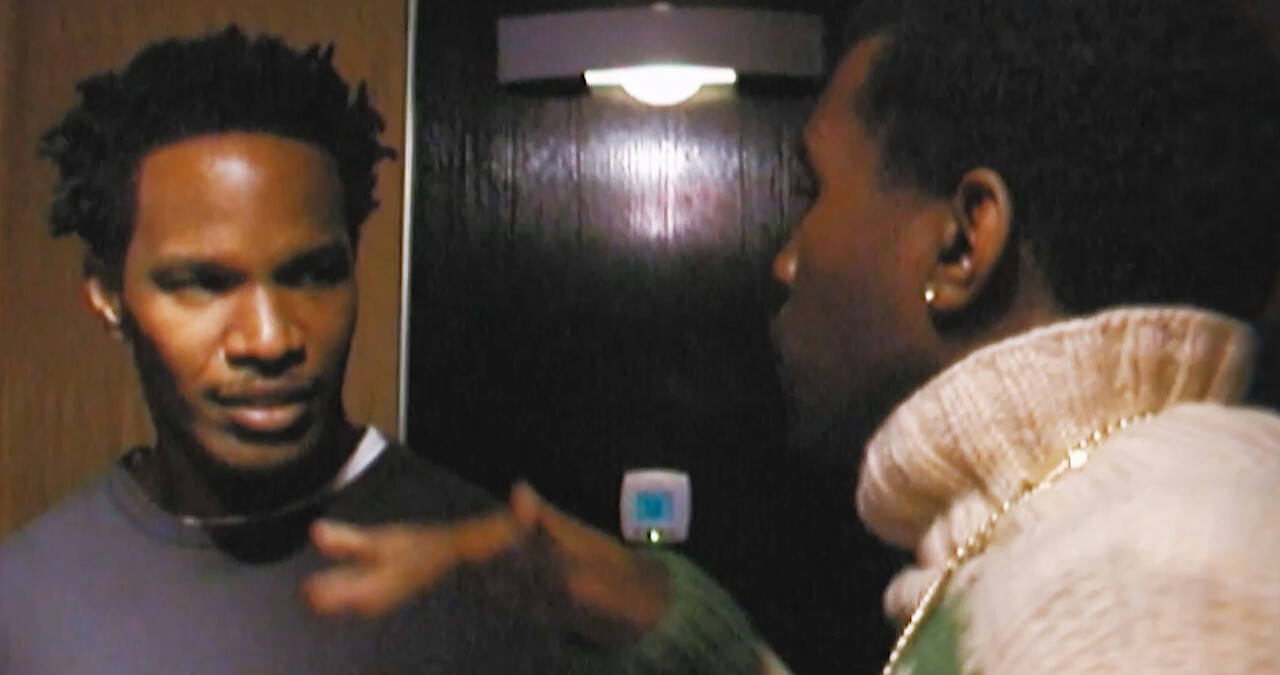
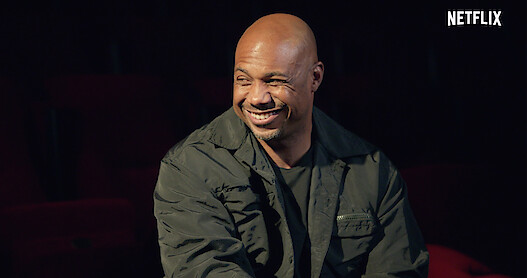
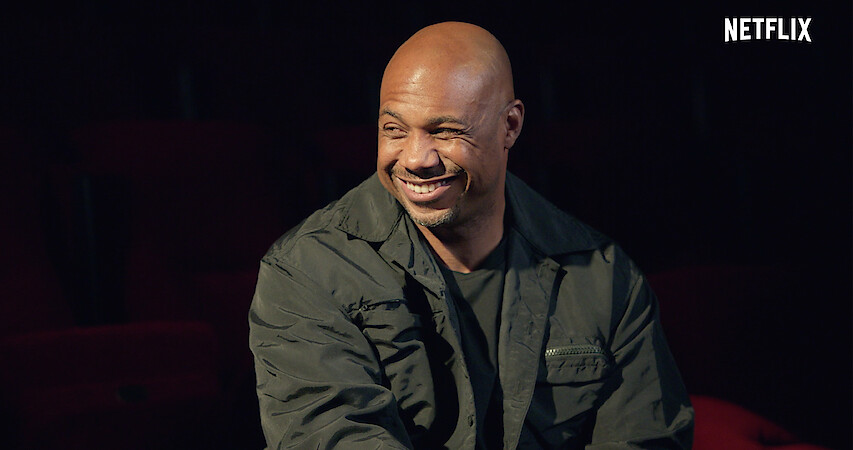
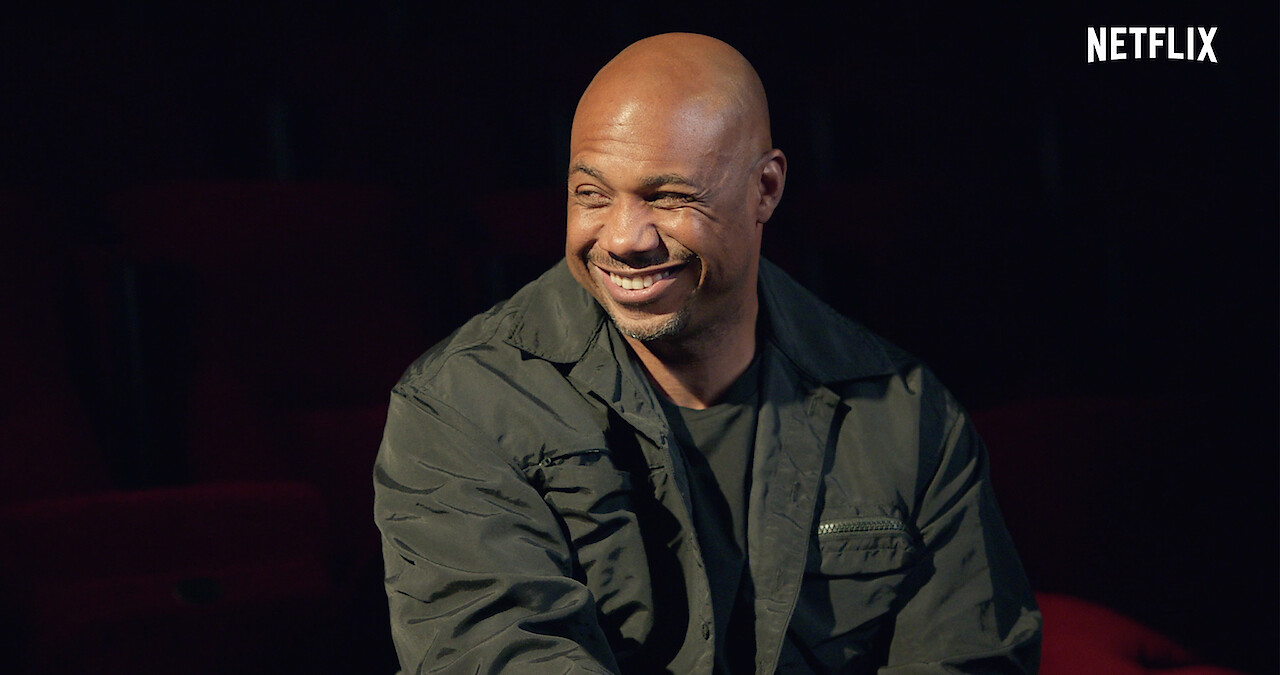
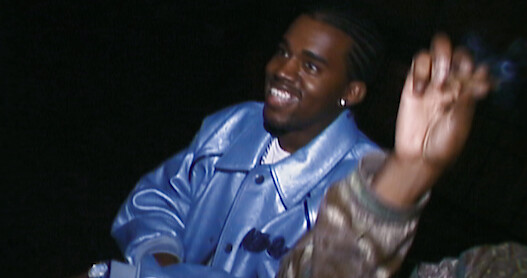
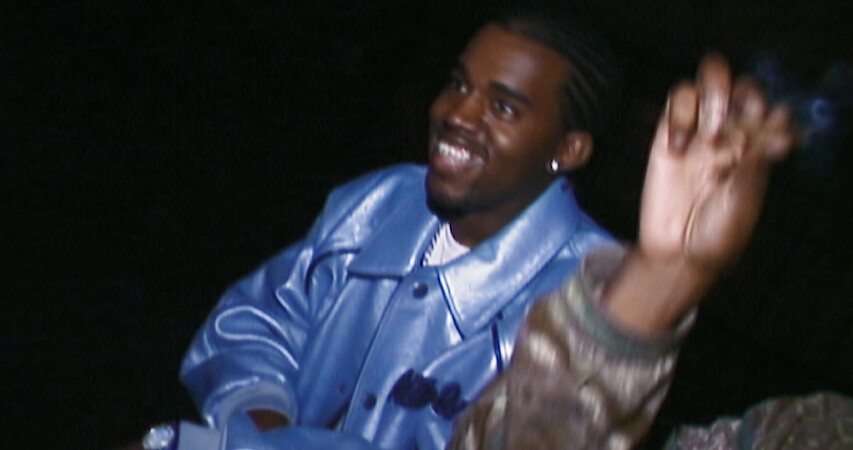
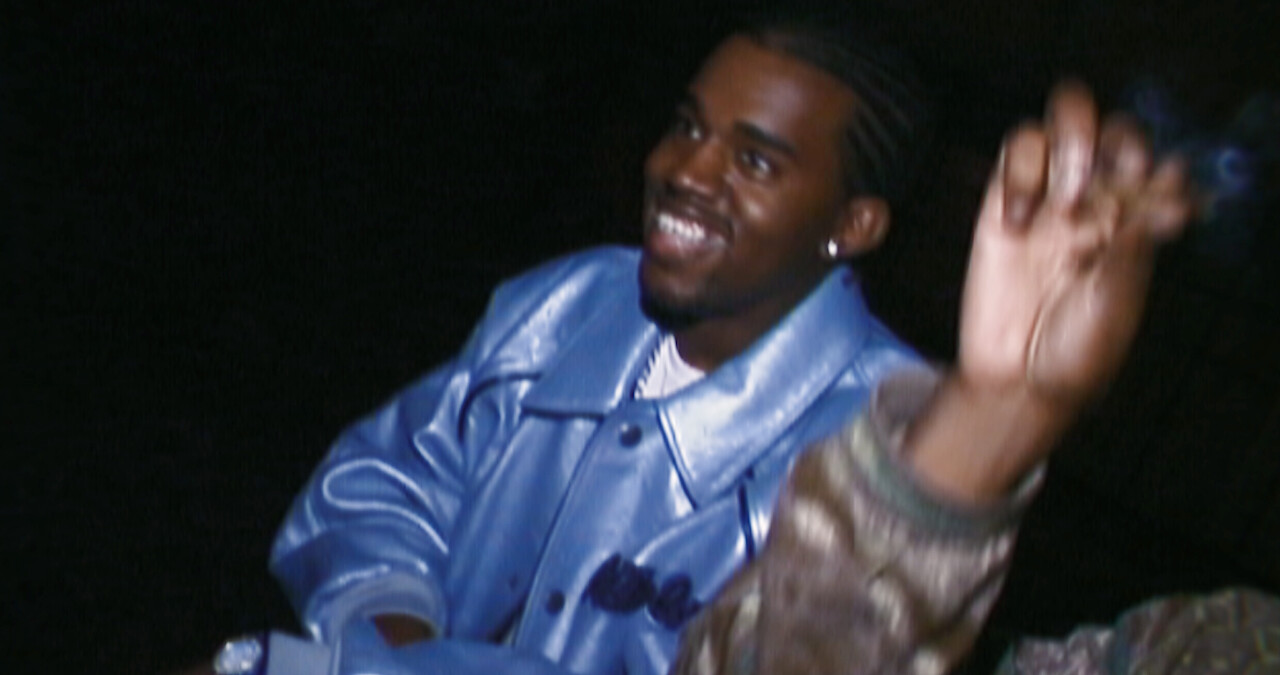
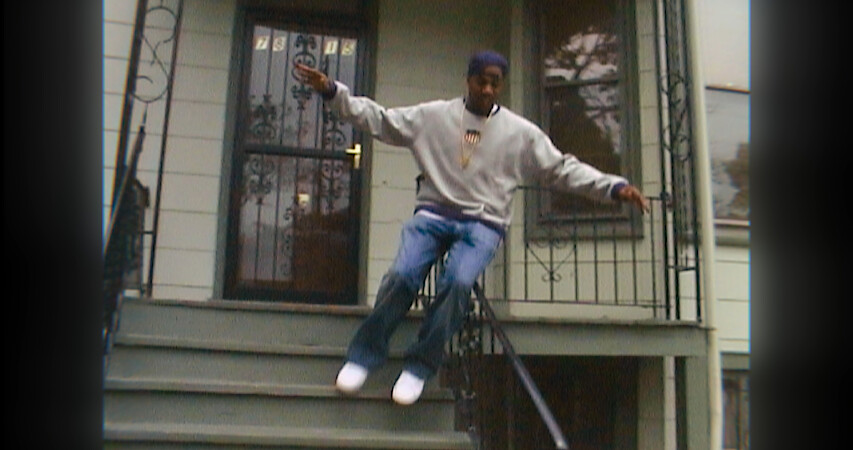
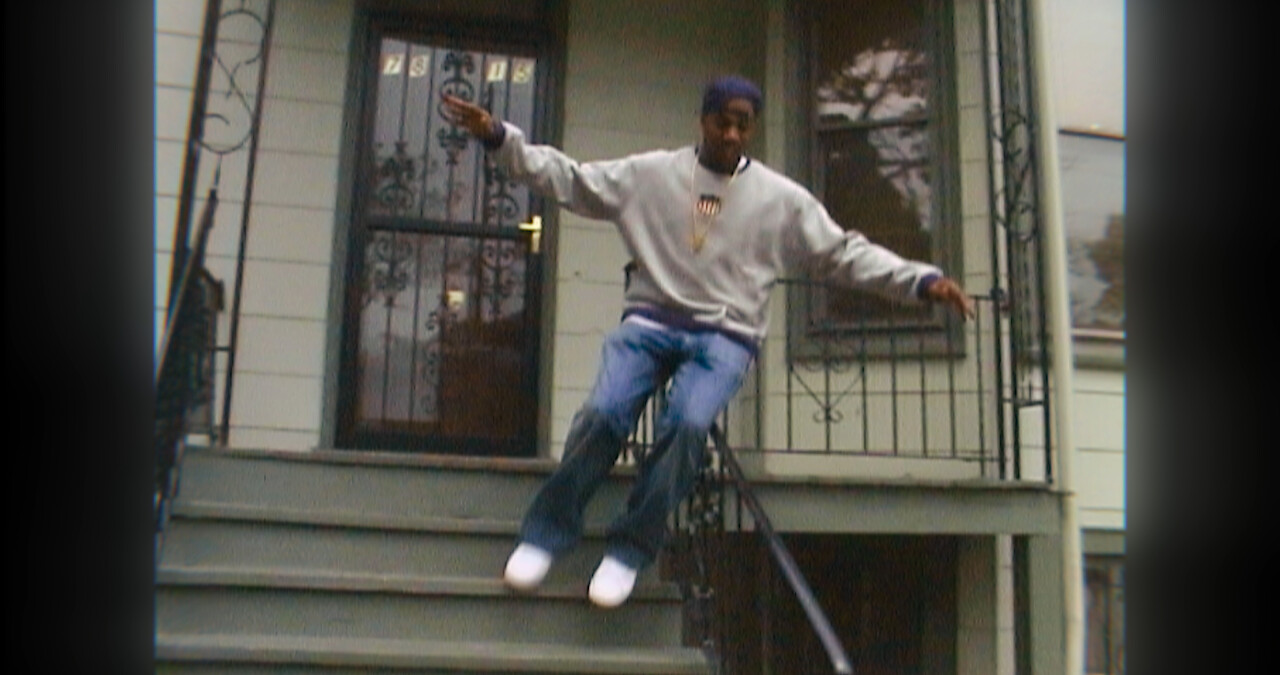
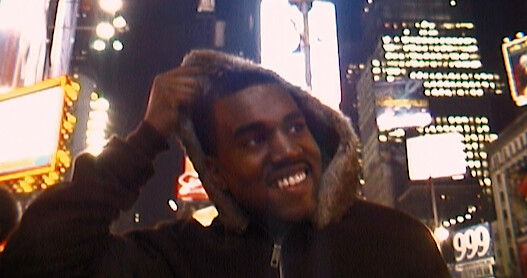
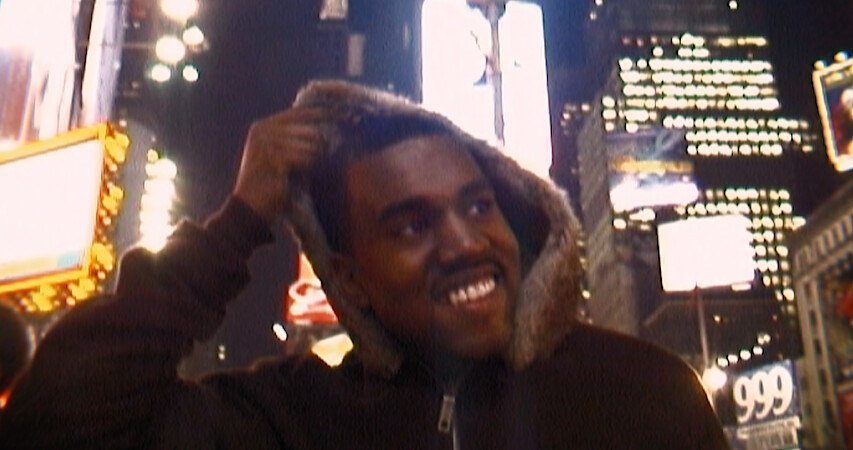
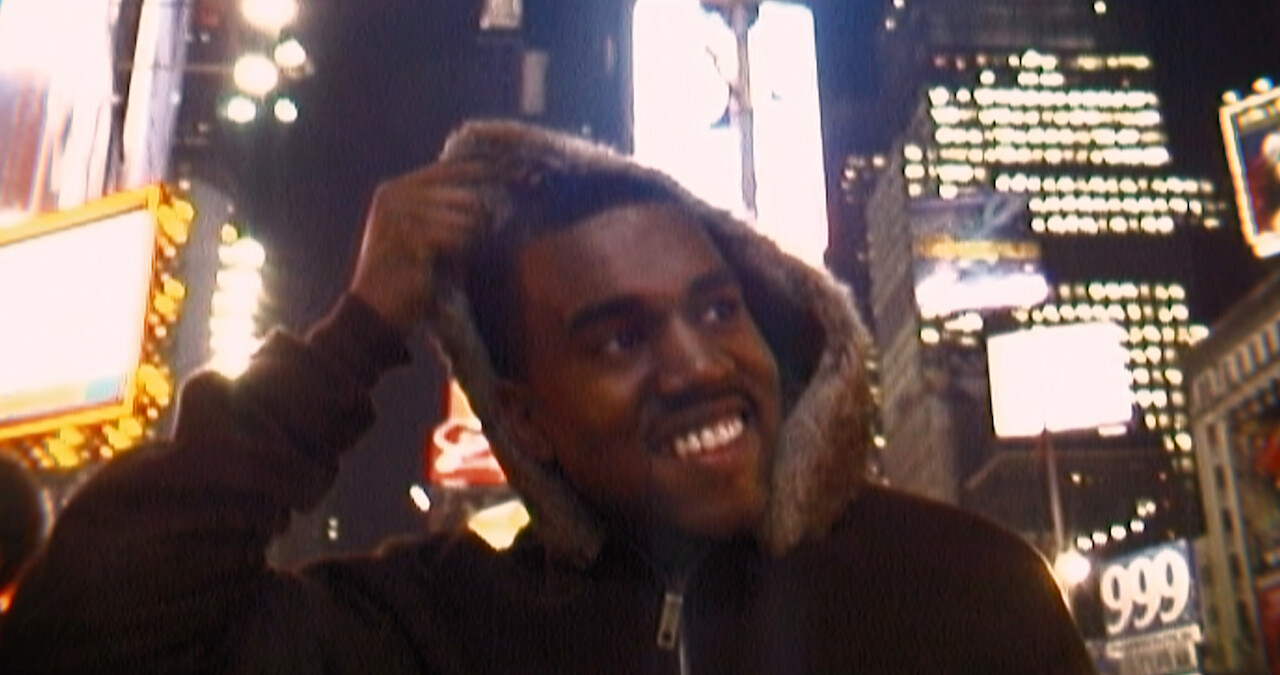
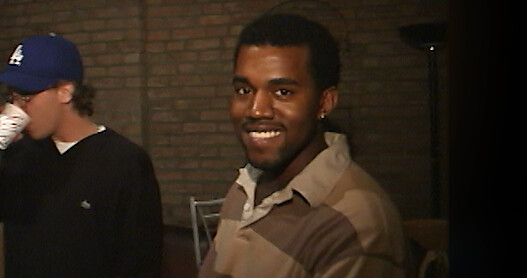
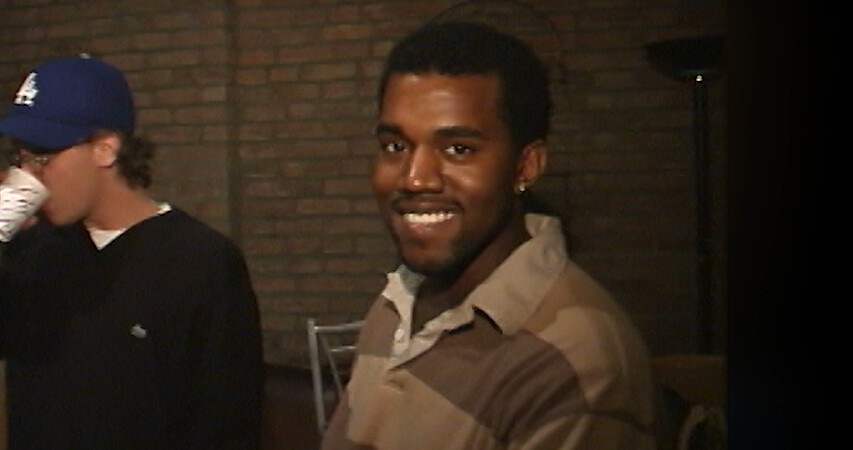
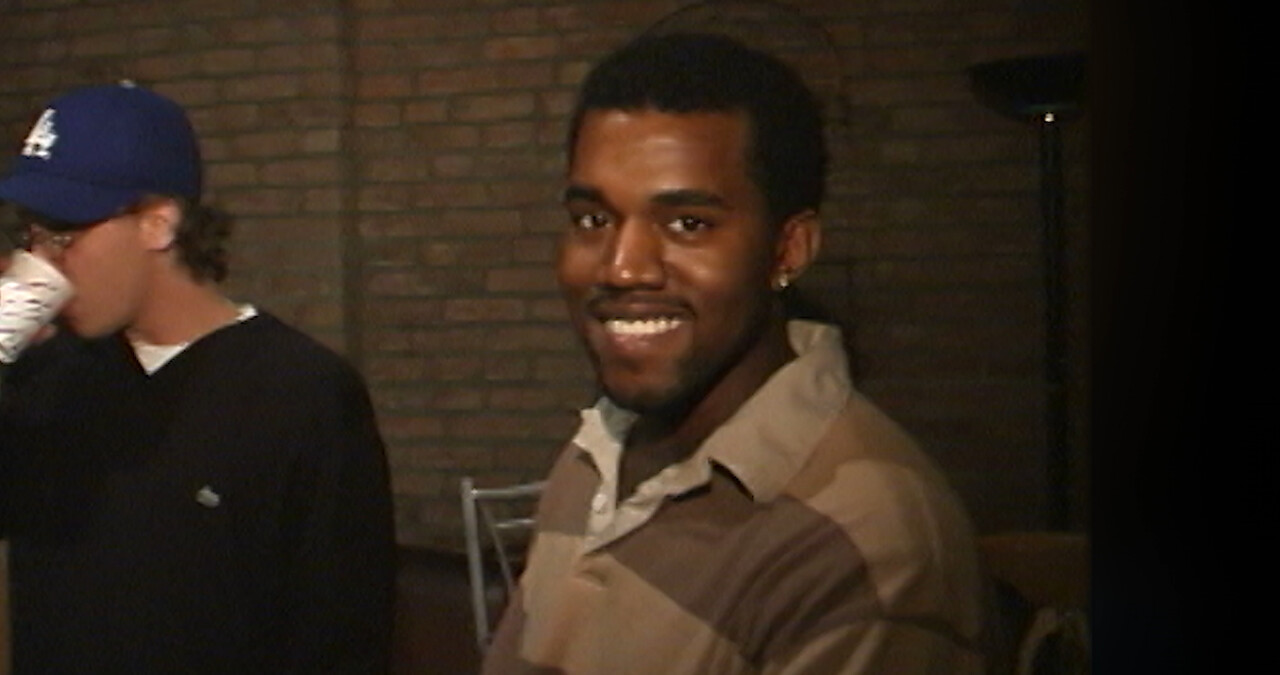
In 1994, Chicagoan Clarence “Coodie” Simmons fused his love for comedy with his deep knowledge of Windy City hip-hop on Channel Zero, a public access show that he produced and hosted, which featured interviews with prominent local rappers. Through his work on the show, he met a rapper and producer named Kanye West. In 2000, Simmons heard the beat that would eventually become Jay-Z’s “H to the Izzo.” Recognizing something special in West, Simmons uprooted his life to follow West to New York City and document his every move. Inspired by films like Steve James’ Hoop Dreams, Simmons captured hundreds of hours of footage from this period. These formative and unpredictable years became jeen-yuhs: A Kanye Trilogy.
Simmons made the film with New Orleans–born designer and filmmaker Chike Ozah, whom he met during a segment on West for MTV’s You Hear It First, where Ozah worked as a broadcast designer. Later, they partnered on music videos like West’s “Through the Wire” and “Jesus Walks,” and would form Creative Control, a film and music video production company where they collaborated over the next two decades on films like ESPN’s 30 for 30 film Benji and the Stephon Marbury documentary A Kid from Coney Island. “We’re always saying that everything we did before this was a rehearsal,” says Simmons. “From Benji to A Kid from Coney Island, everything was leading to this moment for us to take all of this footage [to make jeen-yuhs].”
The three-part film spans nearly five hours and is made from 267 hours of never-before-seen footage of West behind the scenes. It focuses on a young West making his 2004 debut album, The College Dropout, and follows his life and musical trajectory all the way up until 2021’s Donda. As much as the film is about West and his career, it’s also about the massively influential rapper and the documentarians’ enduring and complicated friendship, making it a more personal and disarming music documentary compared to the majority of films in the genre.
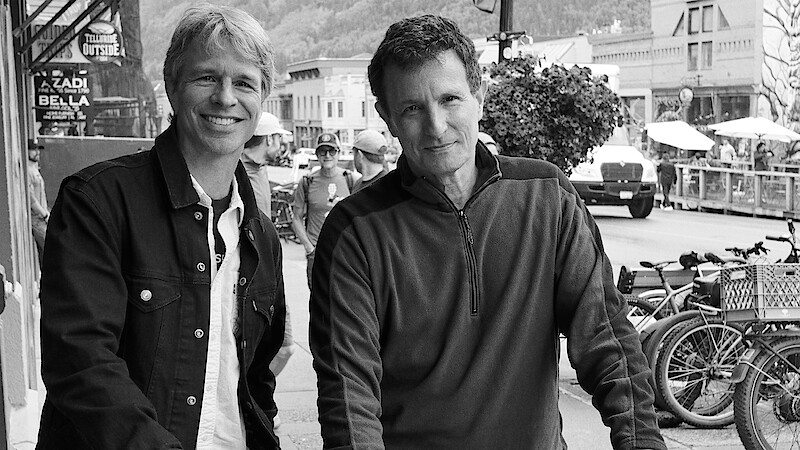
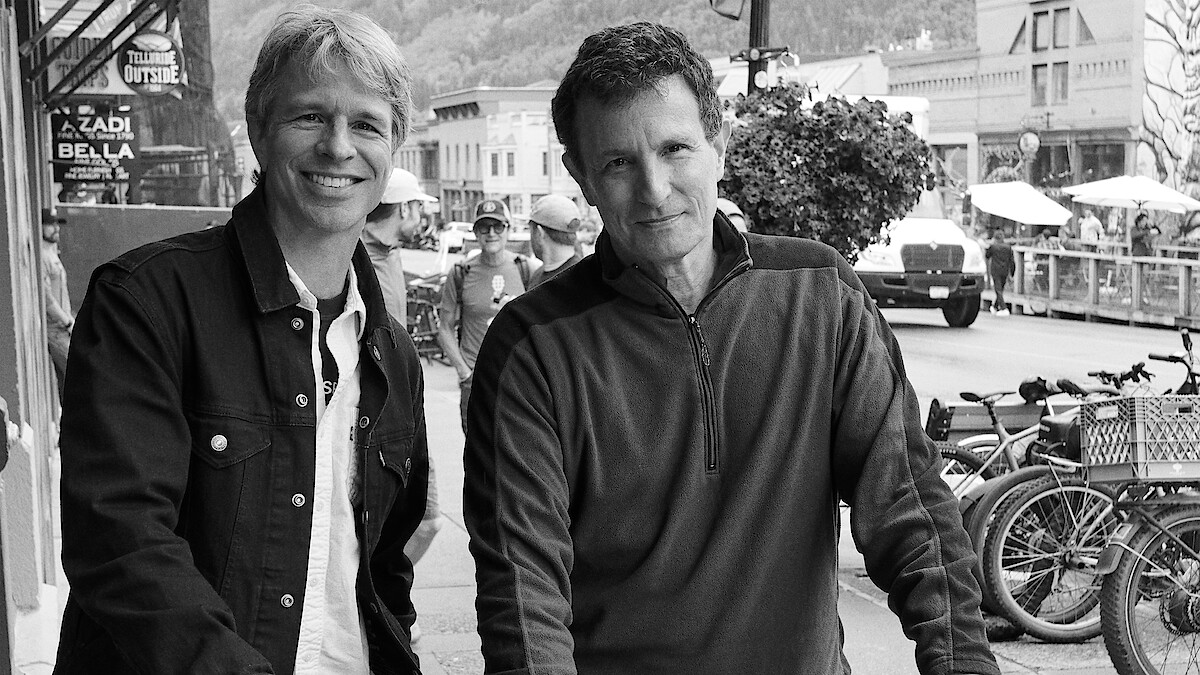
In this edition of “Director’s Cut,” Simmons and Ozah break down their collaboration, what people get wrong about Ye (the rapper legally changed his name in 2021), and why empathy and context are so important in storytelling.
This project has been in the works for 20 years. We can't imagine how you two are feeling. Was there a point where you guys weren't sure that this footage would ever see the light of day?
Coodie Simmons: There were plenty of times when it felt like that, but we knew that this was going to be an impactful film for people to see. I knew God was not going to let it not get released. This project was ordained, and this is the perfect time to put it out.
As your partnership has evolved, especially through making this film, what did you guys learn about filmmaking and each other?
Chike Ozah: Coodie, I consider him my older brother. We've become lifelong friends, connected at the hip. We learned film by jumping in the fire. Although I went to art school, Coodie picked up the camera and was doing Channel Zero. The streets taught him how to film. We didn't take a traditional route into filmmaking because we went on the street and started running. For us, we learned a lot of lessons that way — hard lessons — but that just got us stronger. Our goal is always to empower other people who come from similar backgrounds that we've come from, so that they can follow the nontraditional routes to becoming filmmakers as well.
Simmons: I just thank God for Chike. I was a stand-up comic, so I always understood timing and telling a story. Since Chike went to art school, he's really good at paying attention to details, like typography and the look, so it was a perfect marriage when we got together. He's like a little brother to me that I always wanted. It was the “Through the Wire” video that brought us together and, from that point on, we just decided to keep moving.
I remember when Chike quit MTV to work with me and I couldn't believe it. I'm like, "Wait a minute; you’re making all that money over there and you quit? I'm over here eating oatmeal every day." But he saw the vision and he took this journey and sacrificed everything. We sacrificed everything together, which makes life so much easier. Believe me, when you have a partner and people that have the same common goals, you can move mountains with God.
The first two episodes of the series touch on the earliest points of Ye's career, but the final episode covers everything after The College Dropout. What was more challenging: narrowing down the 267 hours of footage to tell the story of The College Dropout or trying to summarize everything that's happened in Ye's life and career afterward?
Ozah: Part three was definitely the most challenging code to crack. Our experience as filmmakers to this point really helped us feel like those hundreds of hours of footage weren't intimidating. As students of film now, it made it easy to come up with a path and a journey that we wanted to follow and how to put this film together. We would know exactly what footage was important and which darlings we could kill.
Simmons: The first parts covering everything up to The College Dropout, God wrote all that already. It was right there in the footage. But part three was definitely the most challenging, because first, me and Kanye had a separation period [which is covered extensively in the documentary]. During that time, I would watch Kanye like everybody else would watch him. I had no communications with him, but then God brought us back together.
Ozah: When I see Coodie's camera, it represents empathy. There's something special about [Coodie], and he brings out something special in you. It could be because Coodie greets everybody with love and his intent is always pure, and it's hard to be adversarial to that. When you see these moments of Coodie capturing Kanye, you see a certain side of Kanye. Coodie had access to him that only few people in the world get, and now we're putting that to the forefront for people to see for the first time. A lot of people have only seen Kanye through a media lens, which I don't think necessarily contains empathy. We get a good juxtaposition now in this film between the two lenses.
Considering your relationship with Ye, how was it emotionally revisiting all the footage that made this film?
Simmons: It is a time machine. I thought Kanye had a crazy work ethic, but then, watching the film and all the footage, I must have had one too. But it felt like we were just having fun. We were just moving in our passion, so it wasn't work. It was just a flow that God put us on and I stuck with it.
If I could try to draw a through line in your filmography, it’s that you two are fascinated with extremely talented people who are under immense pressure to live up to high expectations, like Ben Wilson, Steph Marbury and Ye. What have you learned about how people cope with the weight of everyone’s hope around them?
Ozah: These types of people just make the most compelling story, probably because of the adversity. The common thread through all our characters is they were able to overcome adversity. With all of our subjects, it's about the impact and the influence that they've been able to have in a positive way. But a lot of that came from them always fighting against adversity, persevering through it and coming out on top at the end.
Simmons: I say that God writes and Jesus directs. The story's already written. You have to have an antagonist. You have to have the climax. You have to have all of these moments in a movie. Your life is a movie and you are a protagonist, and you can control the way you want to live your life. jeen-yuhs is not really a documentary — it's life and a movie.
How does the media get Ye wrong, and do you think this film works as a corrective?
Ozah: What they don't take into consideration with Kanye is looking back on his journey and thinking first about where he's coming from to get to this point and what he has had to overcome. When you approach him, think about the impact the loss of his mother might have had on him. What is he still dealing with? We get so caught up in the moment that we forget to contextualize the moment. We're able to contextualize Kanye because we're allowing viewers who have never really known about his history past a Google search to see the story through Coodie's lens properly. Context can make you have empathy for a bad decision. I can empathize with somebody who did something that I didn't necessarily agree with, but it makes me understand their decision better.
Simmons: Kanye is a real person. He's not an actor. He's not a superhero. As a young man who went through what he went through — you sit in front of a hundred thousand people screaming your name and worshipping you, and nobody understands what happens to your mind after? Nobody really knows that feeling unless you're Michael Jackson or Prince. This man is a real person who goes through the same issues you go through; it's just not public.
So much of hip-hop is about history — preserving it and understanding where this music came from and who made it. How do you guys view this film being a part of this history?
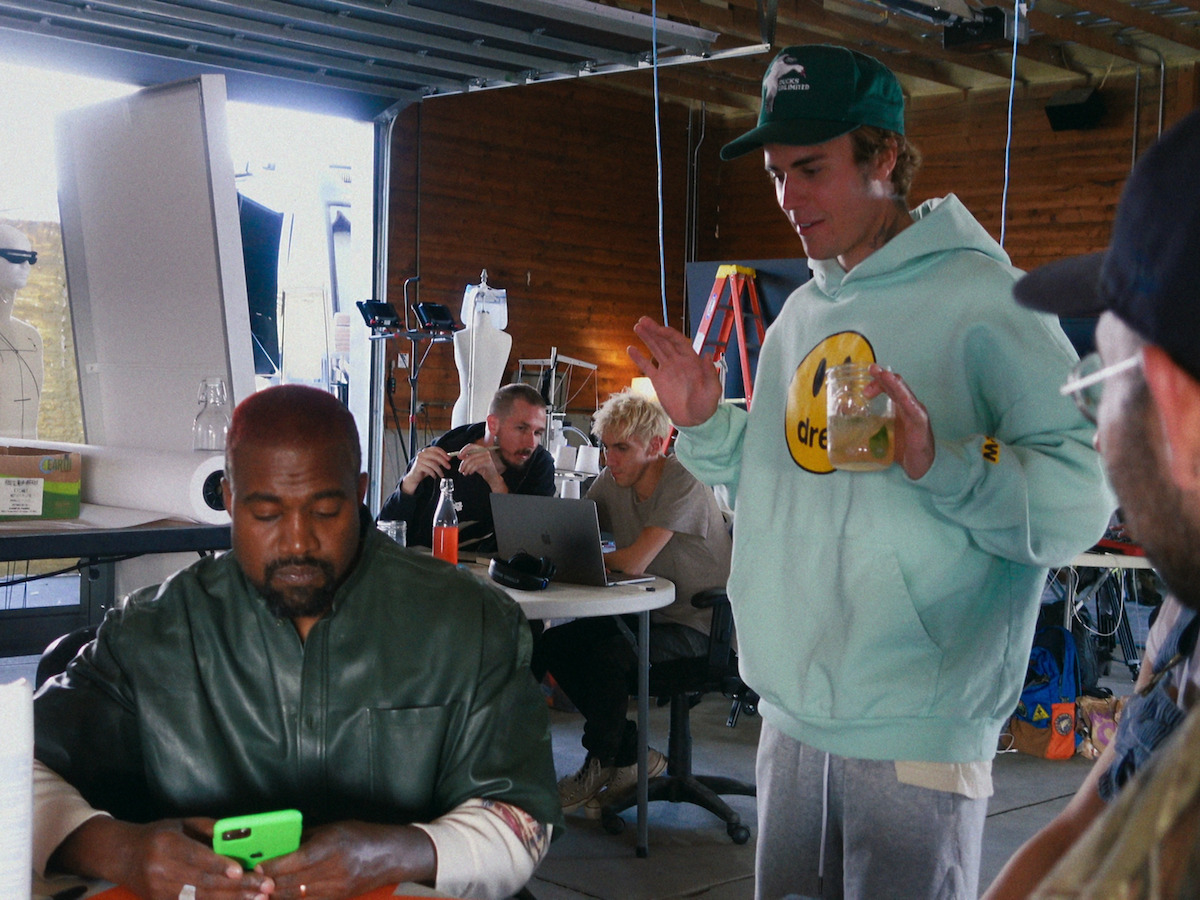
Ozah: That's what makes a film so special; it's not that we even set out to do that. It just does that, by happenstance of Coodie putting the camera on him and sticking with it for these decades. You truly get this evolution of music, fashion and everything through different decades. But to me, what sticks out the most in that journey and in that history is the relevance of Kanye. You see so many artists who have come and go from when we started to now. The amazing scene to me is in Wyoming when Kanye's working and seeing all the artists in that room. There's not one artist there who was around during the Channel Zero time. Some of these kids weren't even born yet. But Kanye's still there. His music is still timeless.
Simmons: Hip-hop will never die. People thought it was going to end in the ’80s. It's just getting bigger and bigger.
This interview has been edited and condensed for clarity.