

Living
The Fatphobic History of Magic Leek Soup
When Sylvie suggests marketing magic leek soup to American consumers, Emily is shocked. Here’s why.
By Olivia Harrison
Dec. 30, 2021
It’s hard to pinpoint exactly when the American obsession with all things French began, but it’s fair to say it’s become such a fixture in our culture that pretty much everyone knows there’s a wrong way to do things and a right way to do them — and the right way tends to be the French way. At least, that’s what media companies pushing “French Girl Style” and parenting books about how to “bring up bébé” would have you believe. But while an emphasis on the value of perfecting messy black eyeliner or dressing your children in Petit Bateau T-shirts is harmless enough, there’s another Gallic cultural import that’s a lot more insidious: French diet culture.
In the early 2000s, Mireille Guiliano’s book French Women Don’t Get Fat: The Secret of Eating for Pleasure became a No. 1 national bestseller in the US. In it — and in other books and a blog — Guiliano shares advice and recipes given to her by a family physician she refers to as “Dr. Miracle,” whom she visited after gaining weight while living in the States, and whose advice, she claims, helped set her on a path to moderation — i.e., weight loss.
“Dr. Miracle, the family physician who helped me wake up and recover from my weight gain,” writes Guiliano, “was something of a gourmand. He gave me a number of recipes, but none more important than the one he gave me for the first, and only, ‘tough’ weekend. On reflection, it wasn’t so tough at all, because of his ‘magical leek soup,’ a trick used by many of the local women for generations. He had prescribed it to both my mother and grandmother at one point or another.”
When French Women Don’t Get Fat came out, it capitalized on a phenomenon referred to as the “French paradox,” which was introduced to a mainstream American audience in a 1991 episode of 60 Minutes. The French paradox, in part, refers to the fact that incidences of coronary heart disease and obesity rates are apparently low among the French, despite their diets being relatively high in saturated fats.

“Part of the reason French Women Don’t Get Fat became this entire industry is because of cultural jealousy that American women don’t get to be thin and eat croissants and butter the way French women do,” explains Amee Severson, a registered dietitian nutritionist. The French Women Don’t Get Fat lifestyle hinges on intuitive eating and the idea that no foods or beverages are off-limits. It calls itself the “ultimate non-diet book” that doesn’t include guilt or deprivation. Yet the whole process starts with consuming nothing but glorified leek juice for two days, which according to Kimmie Singh, a registered dietitian nutritionist, is a form of deprivation. It’s also a product of a marketing technique that refuses to go away.
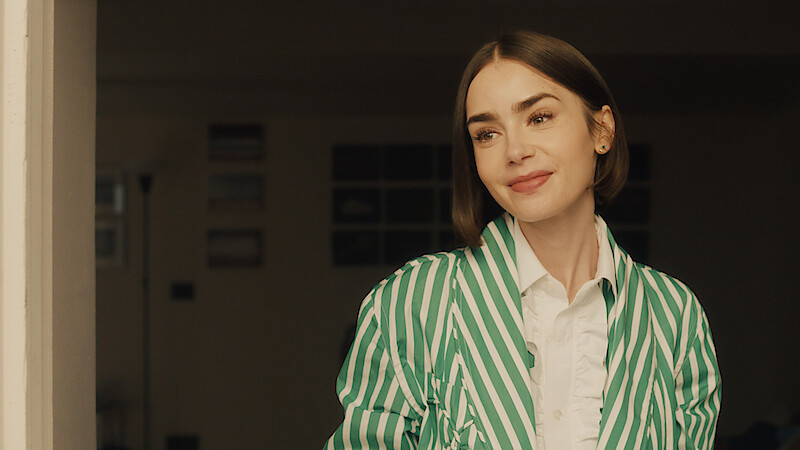
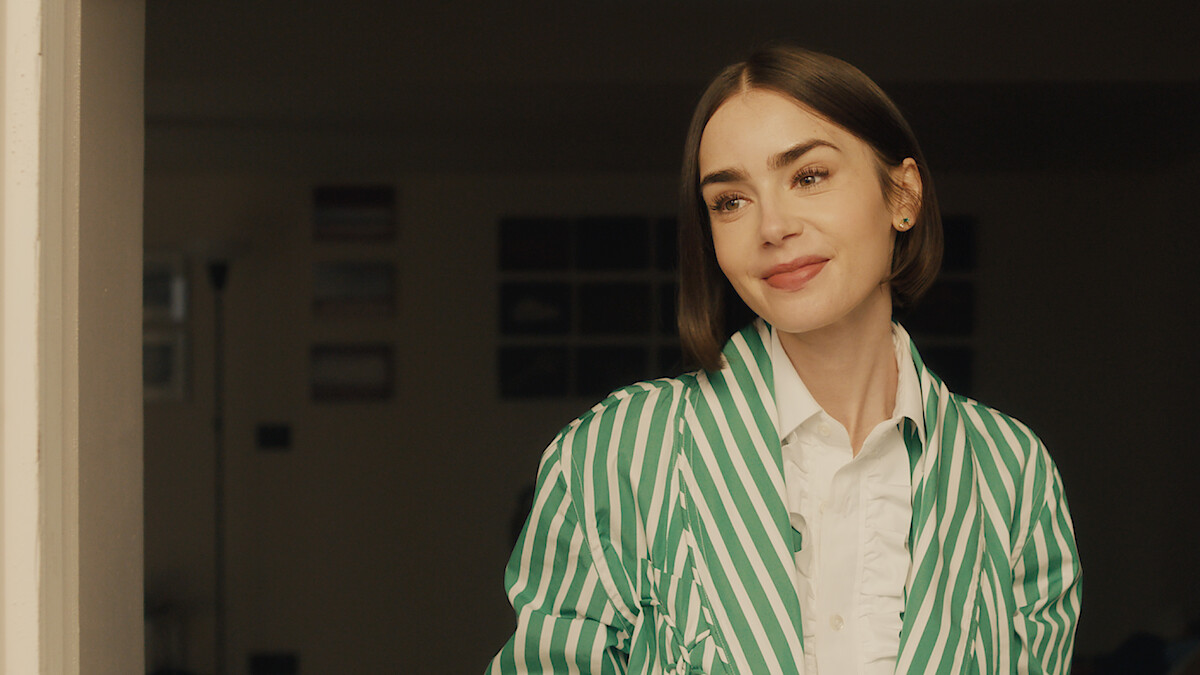
This particular technique can be seen in the Emily in Paris Season 2 episode “Jules and Em,” wherein Emily is tasked with creating a marketing plan that would make leeks more appealing to US consumers. With help from Savoir, the folks at the leek lobby hope that the beloved French staple will become “the next Brussels sprouts.” However, after Emily’s proposed “Le leek, c’est chic!” campaign is shot down for being a cliché, Sylvie (Philippine Leroy-Beaulieu) swoops in to suggest introducing Americans to "Magic Leek Soup” — also known, she says, as “a little secret” among French women. Sylvie explains to a startled Emily that “leeks are a diet food for French women. We boil them and drink the water. It’s our magic trick.”
Of course, there isn’t much that’s “magic” about severe caloric restriction leading to weight loss, no matter how much the rhetoric has pretended that French people indulge as they wish but are able to stay thin by simply occasionally practicing moderation. According to Severson, who did part of her dietetic internship in Paris and conducted research on the prevalence of eating disorders in France, if you read between the lines of French Women Don't Get Fat and dig into the culture as a whole, the amount of restriction happening is abundantly clear — and clearly abundant. When it comes to diets and weight concerns, the real difference between French and American culture is how they are — or aren’t — spoken about.
“It’s gauche to talk about diets in public, and it’s gauche to talk about your body insecurities in public, but those still very much exist,” Severson says. The fact that Sylvie refers to magic leek soup as a “secret” illustrates that. This idea that it’s improper to speak openly about weight-loss practices contributes to the illusion that French women are all “naturally” thin. “The effort happens when no one can see, so people are struggling and just not saying anything. People are skipping meals and not eating and just trying to appear as the French effortless ideal,” she explains. “It’s really hard to be fat in France. It’s really not okay.”
This effortlessly thin ideal and fatphobia have a long and deeply racist history within French culture. According to Dr. Sabrina Strings, associate professor of sociology at the University of California, Irvine and author of Fearing the Black Body: The Racial Origins of Fat Phobia, aversion to being fat, at least in part, has its origins in France. “France is where we had some of the early race scientists who were making claims about Black women being constitutionally fat and fatness being evidence of ‘savagery.’ A lot of the most important theorists, the race scientists, were French,” she explained in a 2020 webinar with the National Association to Advance Fat Acceptance. “It was these ideas from France and England that were making their way to the United States, so we can see how there was this huge Western bloc of powerful and wealthy nations that were promoting these ideas.”
Magic leek soup and French Women Don’t Get Fat are themselves a kind of French paradox. Despite masquerading as a path toward moderation, they’re very much diet tricks, which Emily points out. “I just don’t think that we should be promoting weight-loss cures,” Emily says. “Fad diets are really dangerous, and America is more about health and wellness now.”
Emily has a point: Promoting diets as such is no longer an effective marketing tool in the US, though that doesn’t mean words like health and wellness, when used in marketing campaigns, aren’t understood as coded versions of weight-loss vocabulary. So when, in French, one of the leek lobby folks says, “Americans love anything about weight loss!” — to which Luc (Bruno Gouery) responds, “Any gimmick!” — it’s impossible not to feel a moment of uncomfortable recognition. After all, Guiliano always referred to magic leek soup as “the start of a lifelong commitment to wellness,” and American consumers devoured it in the same way they’ve bought into other fad diets marketed as wellness regimens.
“Nobody wants to admit that they’re on a diet, or nobody wants to admit that their program is a diet. People want to distance themselves from [dieting] as far as possible without actually asking if what they’re doing or selling is a diet.” Singh says. “But in reality, there are actually a lot of ways that diet culture can really seep into the ‘lifestyle changes’ we often see. It takes a lot more work to unlearn those messages, and then for each individual person, a lot of work to take the messages out of any sort of dietary change and check in with the motivations around it. If somebody says it’s intuitive eating, or if they say it’s not a diet, you really can’t trust that at face value because diet culture is so pervasive.”
Severson agrees. “I think diet itself is becoming another four-letter word because people are becoming more aware that not only do diets come with this risk of eating disorders, but also they likely won’t work,” she says. “That knowledge and that shift have absolutely been completely co-opted by the diet industry. The language is shifting, and the public knowledge is shifting, but the diet industry, in general, is, unsurprisingly, one step ahead of this and is shifting their marketing to try and keep people in that loop.” That’s right, in the end, it all comes back to marketing — and what it is that consumers are, and aren’t, willing to swallow.