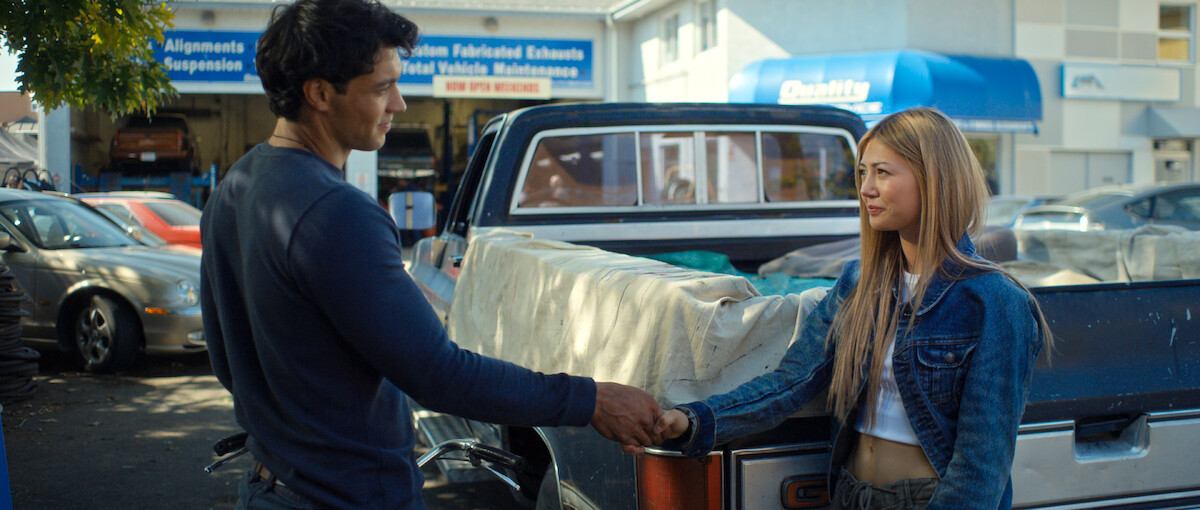
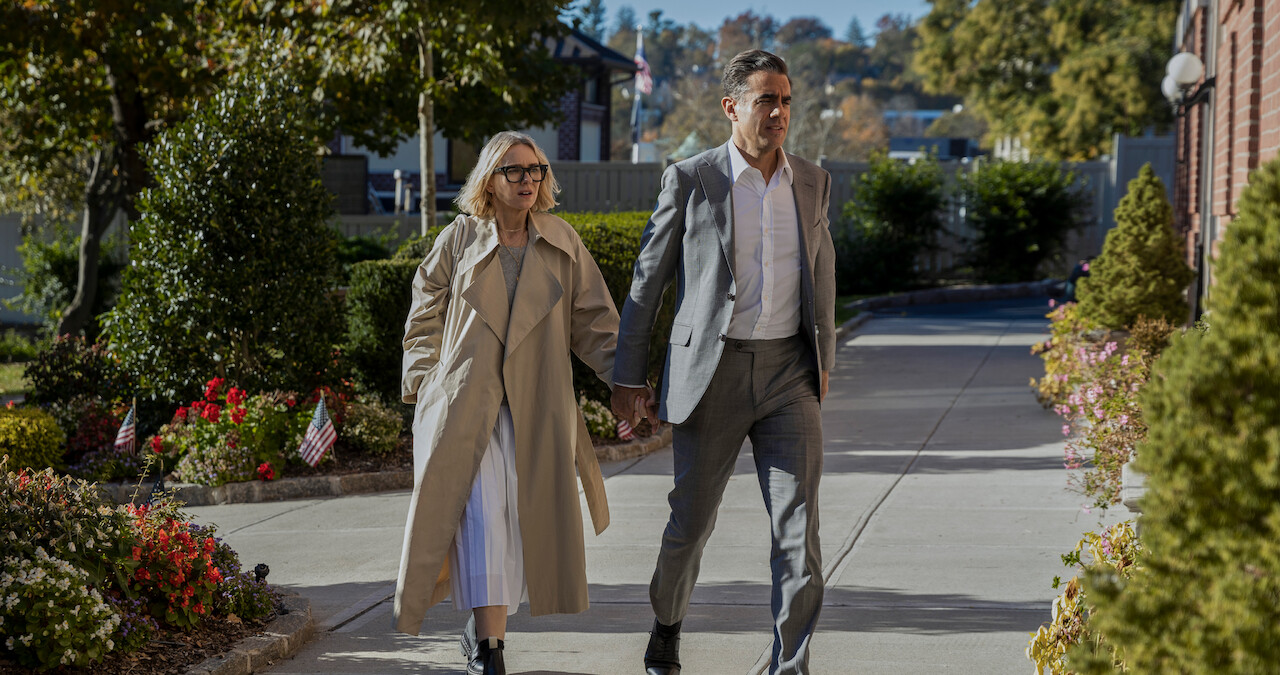
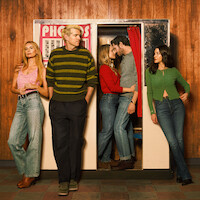
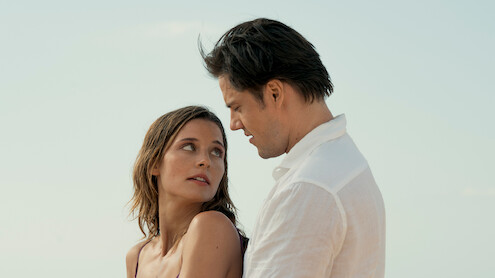
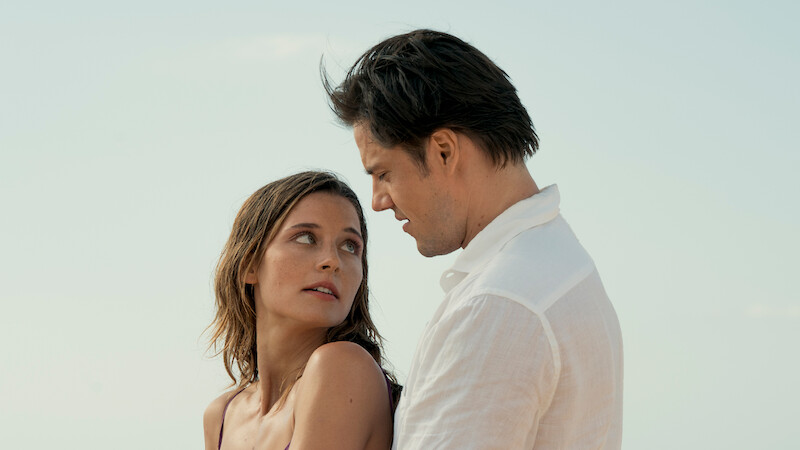
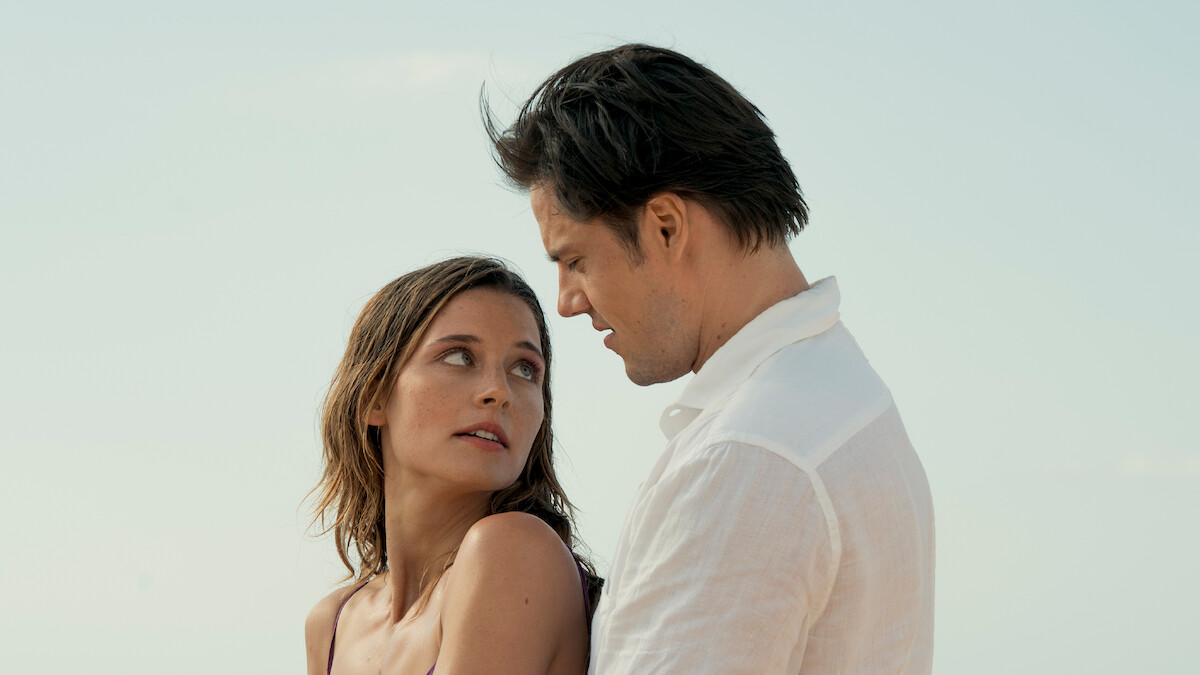
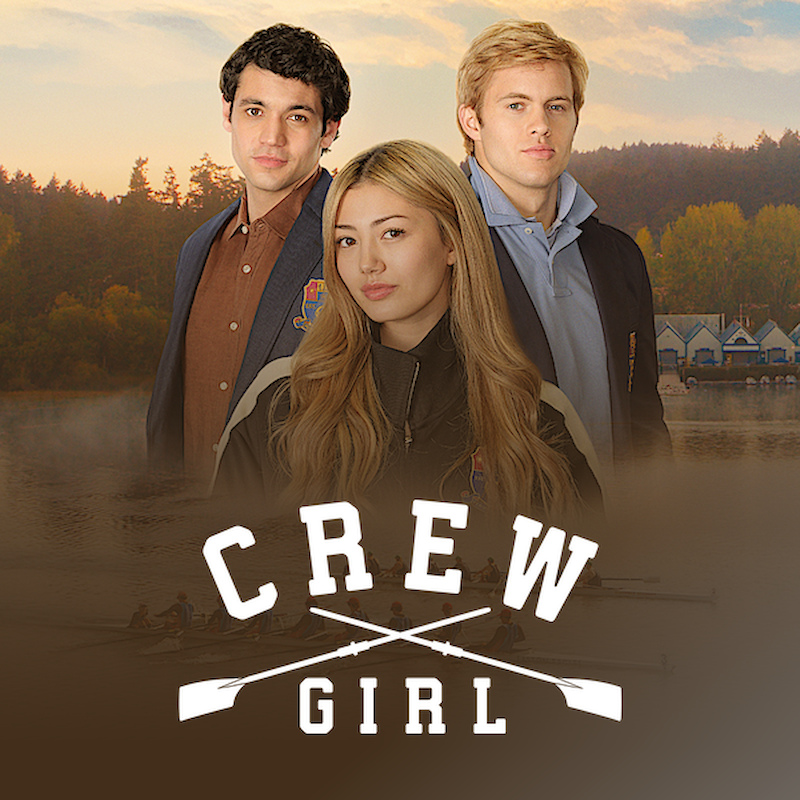
Just as the leaves begin to turn shades of orange and red, Crew Girl arrives to transport us to the preppy, autumnal world of an exclusive New England private school. Set in the fictional hamlet of Eagle’s Cove, the new series centers around a high school student named Teagan (Miku Martineau) whose life is upended by a family scandal, forcing her to move back to her mom Ella’s (Jessica Paré) small hometown on the East Coast.
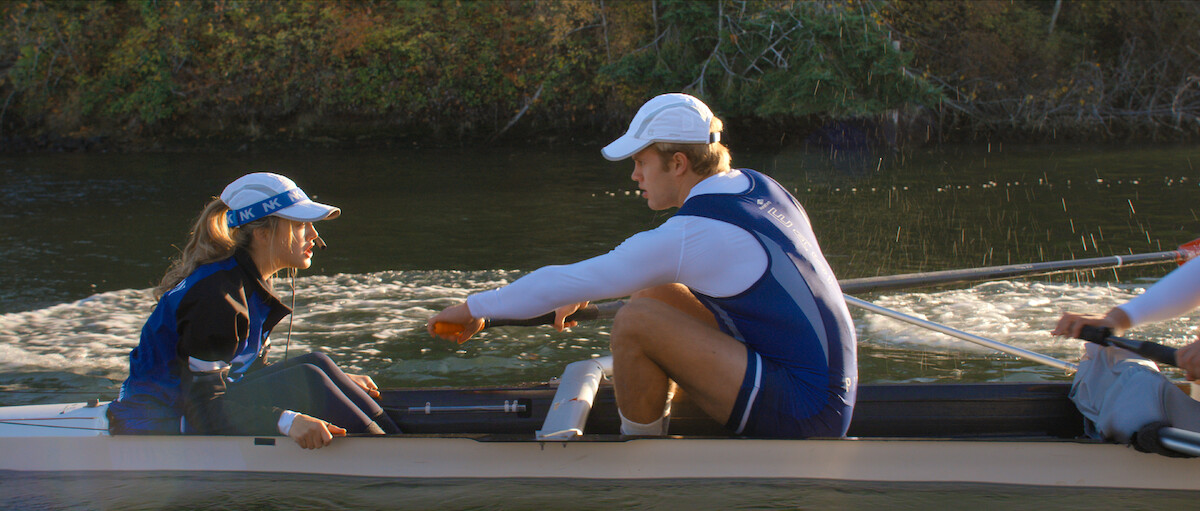
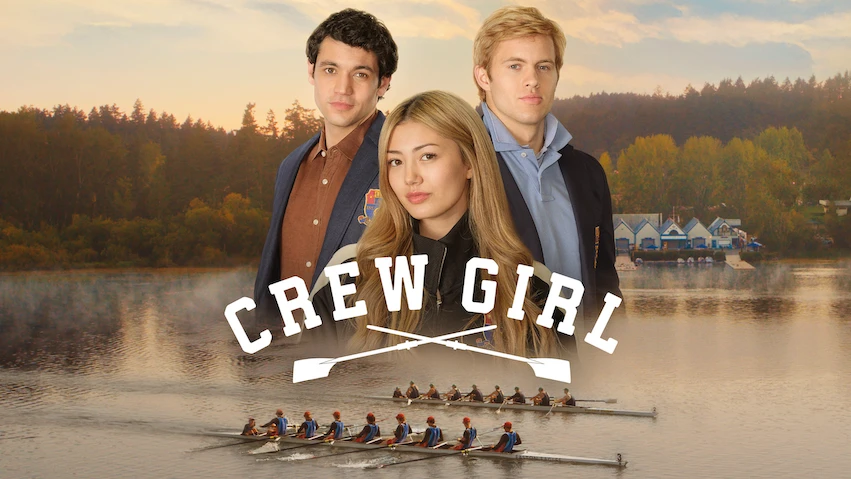
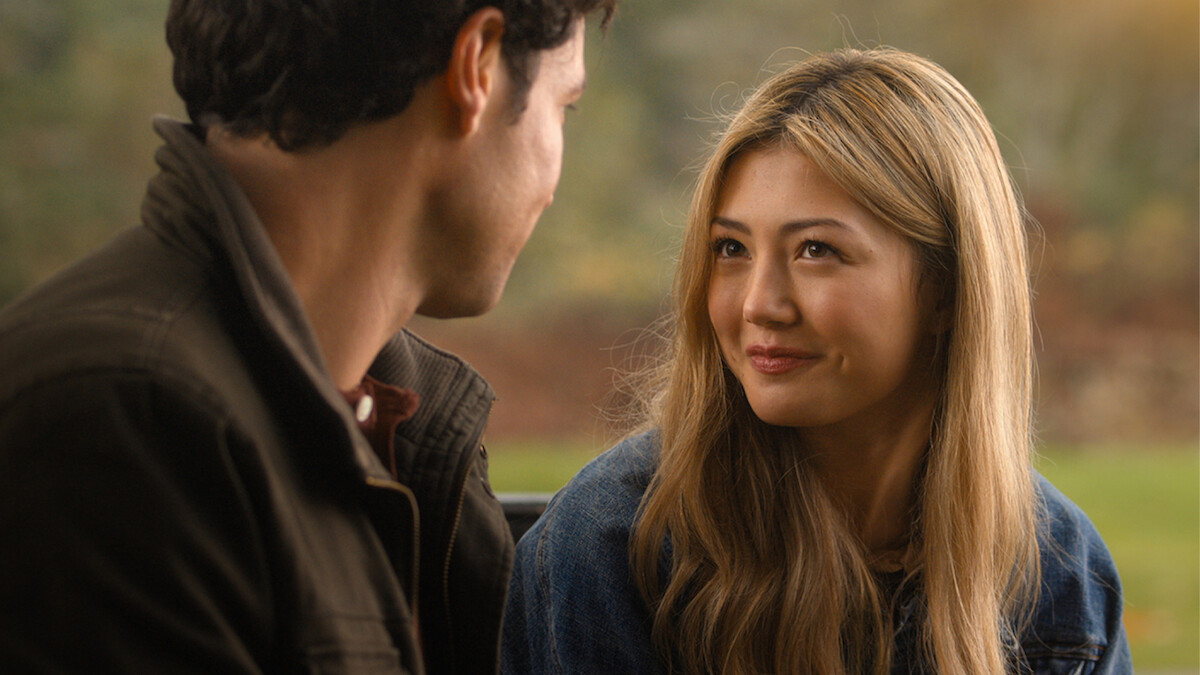
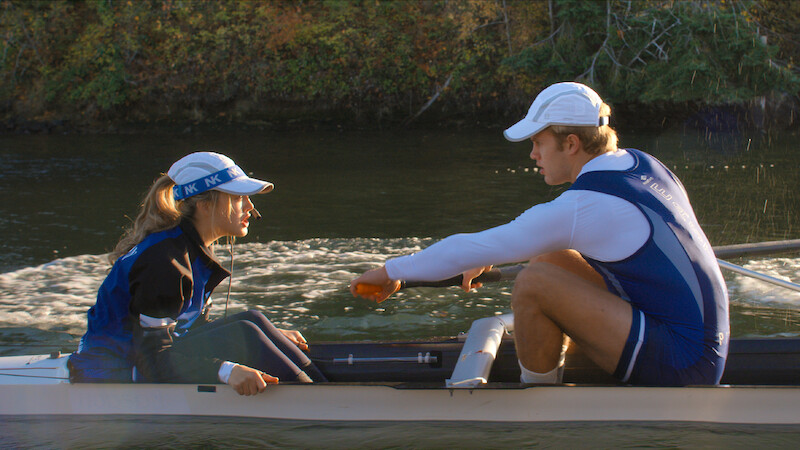
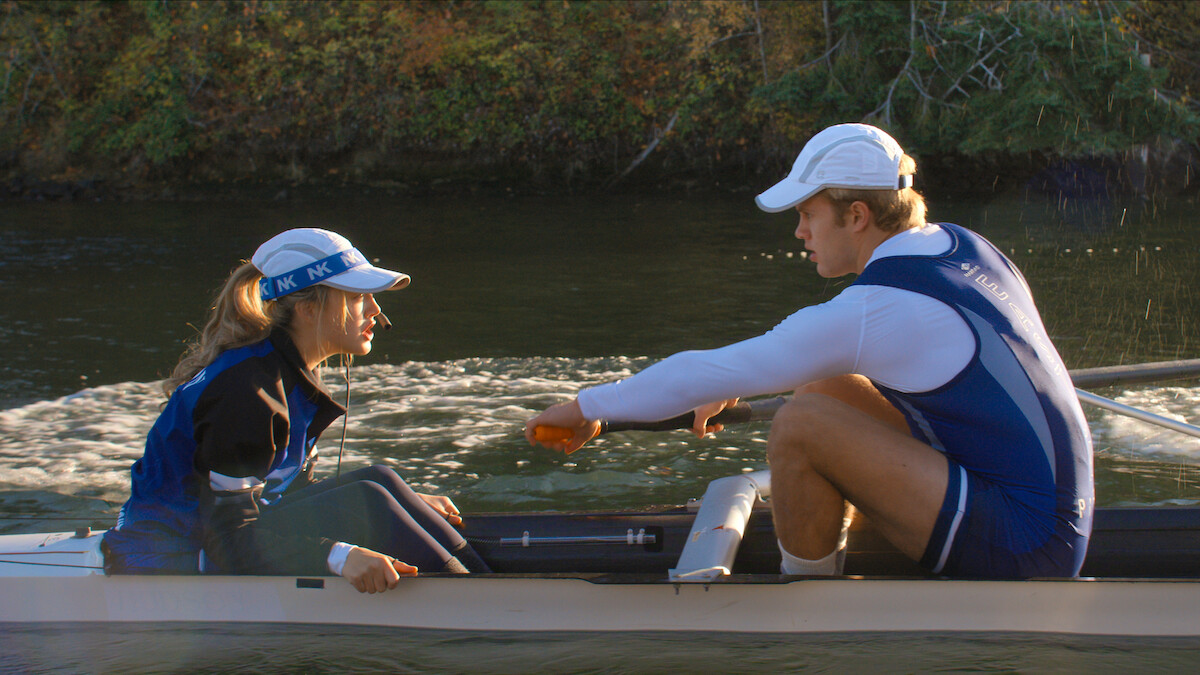
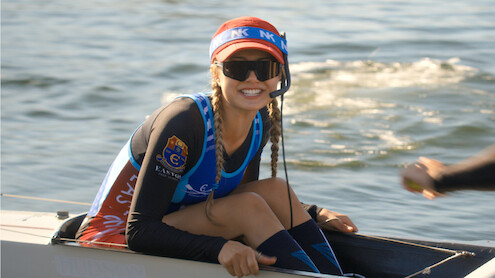
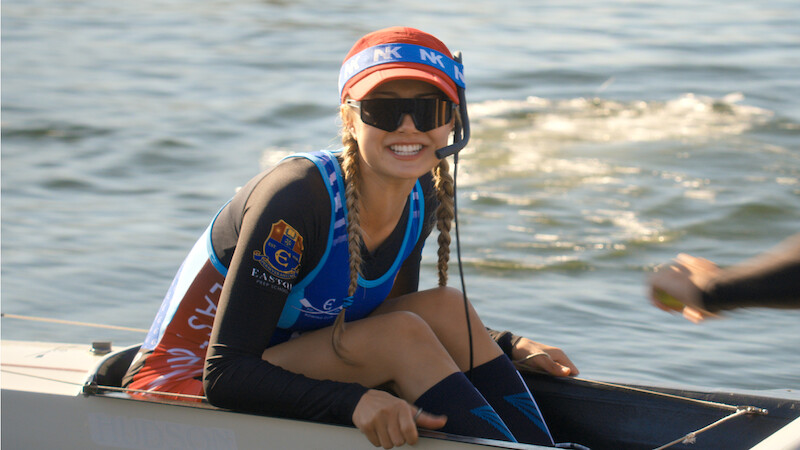
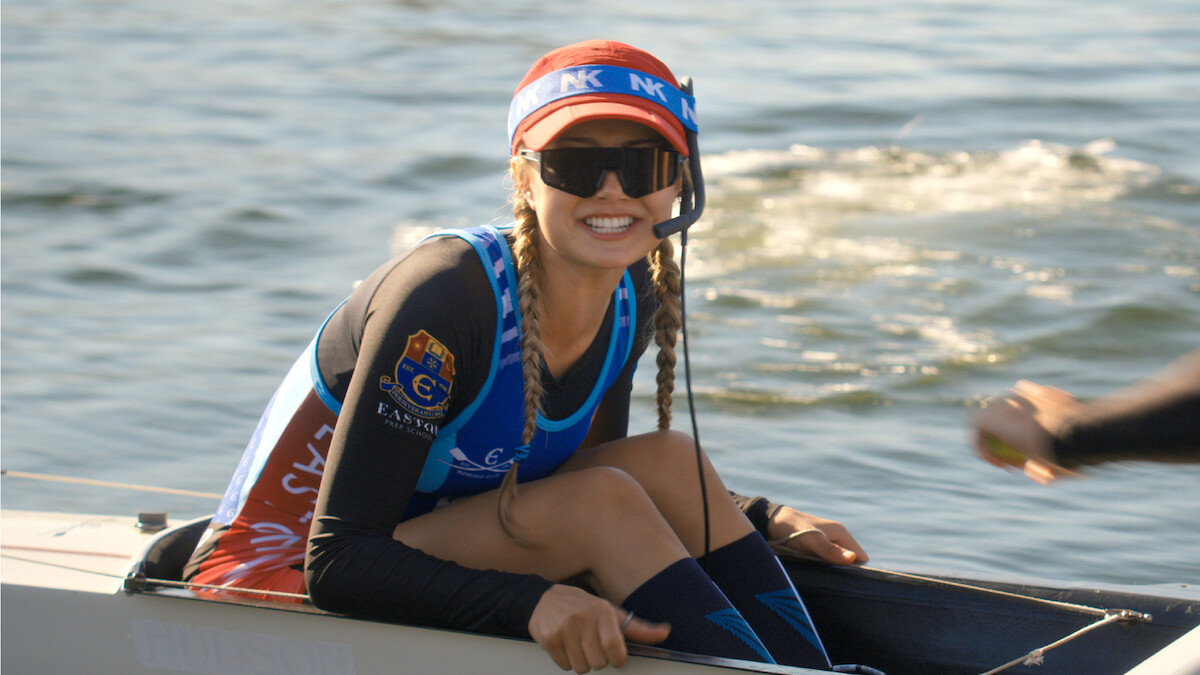
Teagan struggles to find her place in this buttoned-up new environment, where students wear designer getups to the fall formal and receive sports cars for their birthdays. An accomplished rower at her old school, Teagan discovers that Easton Prep doesn’t have a girls’ crew team, so she stumbles into the coxswain seat of the boys’ boat — only, she’s never coxed before. She sets out to steer eight unruly teenage boys to the podium at the prestigious Haverford Cup, wading through inter-team politics and long-held rivalries. And if that wasn’t complicated enough, she finds herself caught in a love triangle with two of the team’s handsome star athletes, Cam (Kyle Clark) and Josh (Sam Braun).
Like so many of the best teen dream series — Dawson’s Creek, Gilmore Girls, Gossip Girl, and Outer Banks, to name a few — Crew Girl warmly envelops us in a richly rendered world of its own. How did the creative team, led by showrunner Vivian Lin, capture the lush, pumpkin-spiced vibes of Easton Prep? Is Eagle’s Cove a real place? And did they actually film those exciting crew scenes right on the water? Settle into the cozy community of Crew Girl, which has been renewed for Season 2.
Read to find out about all the locations, and stream all of Crew Girl Season 1 now.
Where was Crew Girl filmed?
The series is set in Eagle’s Cove, a fictional New England town, but it was shot in Victoria on Vancouver Island, British Columbia. “Just driving into work each day was so beautiful,” says Lin.
Is Eagle’s Cove a real town?
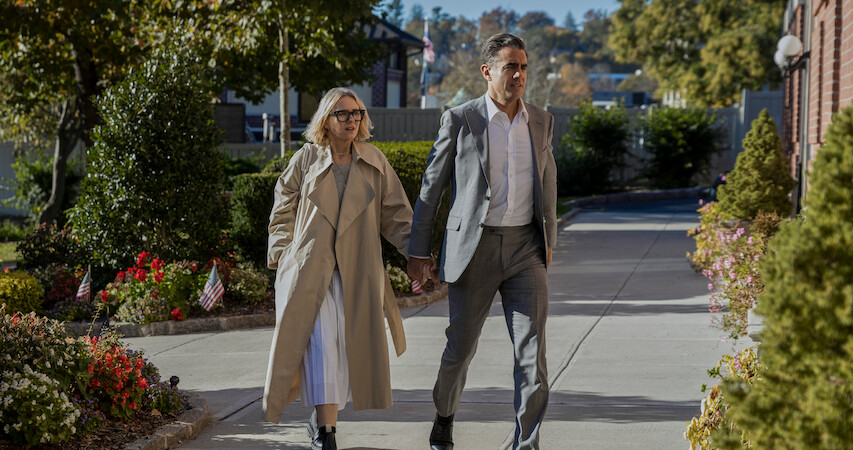
Eagle’s Cove takes inspiration from quintessential small coastal towns, including the fictional Stars Hollow in Gilmore Girls. But the money and access also draw Crew Girl comparisons to Gossip Girl. “Eagle’s Cove is very much a coming-of-age, small-town vibe, but there is also so much wealth and power; Easton Prep is such an elite school. When Teagan first gets there, she’s a fish out of water. It’s intimidating,” says Martineau. “People come from very different family backgrounds and dynamics. It is a perfect world for all of these young characters to exist in to make it very interesting and juicy.”
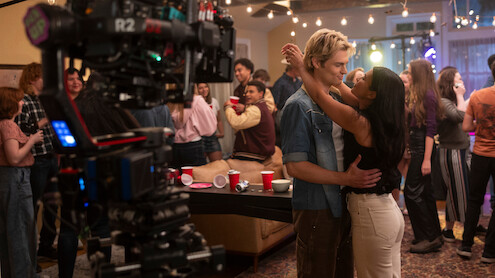
“You get the small town setting with big city money: the boathouse and dock parties,” Braun describes. “Everybody knows each other. So when a new person comes in, they stand out like a sore thumb.” Clark, whose character is the only rower on financial aid, adds, “Because it’s a small town, you can see that separation of wealth. Wealth is more prominent and symbolic.”
Was Crew Girl’s Easton Prep filmed at a real school?
The scenes at Easton Prep were shot at Hatley Castle, a 40-room mansion built in 1908, which is set on formal gardens and old-growth forests. The estate has also appeared in The Descendants and the X-Men films, among others. “That was a once-in-a-lifetime experience,” says Lin.
Crew Girl follows a long line of series set at prep schools. Lin thinks she knows why it’s such an alluring setting. “Prep school gives you such a fun vibe. There’s an out-of-touch-ness that’s so fun to play,” the showrunner says. “Cam and Teagan are the only ones like, ‘What is this place? We’re just trying to get on the rowing team and pay for our unis.’ Meanwhile, someone’s lighting a McLaren on fire.”
How did Crew Girl film the rowing scenes?
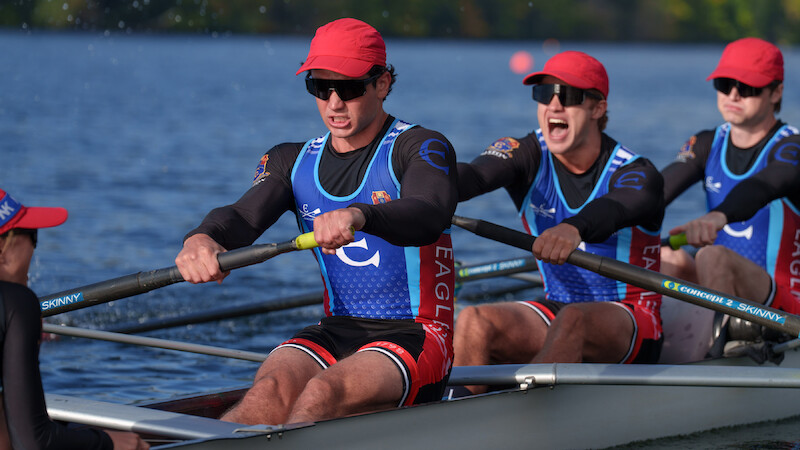
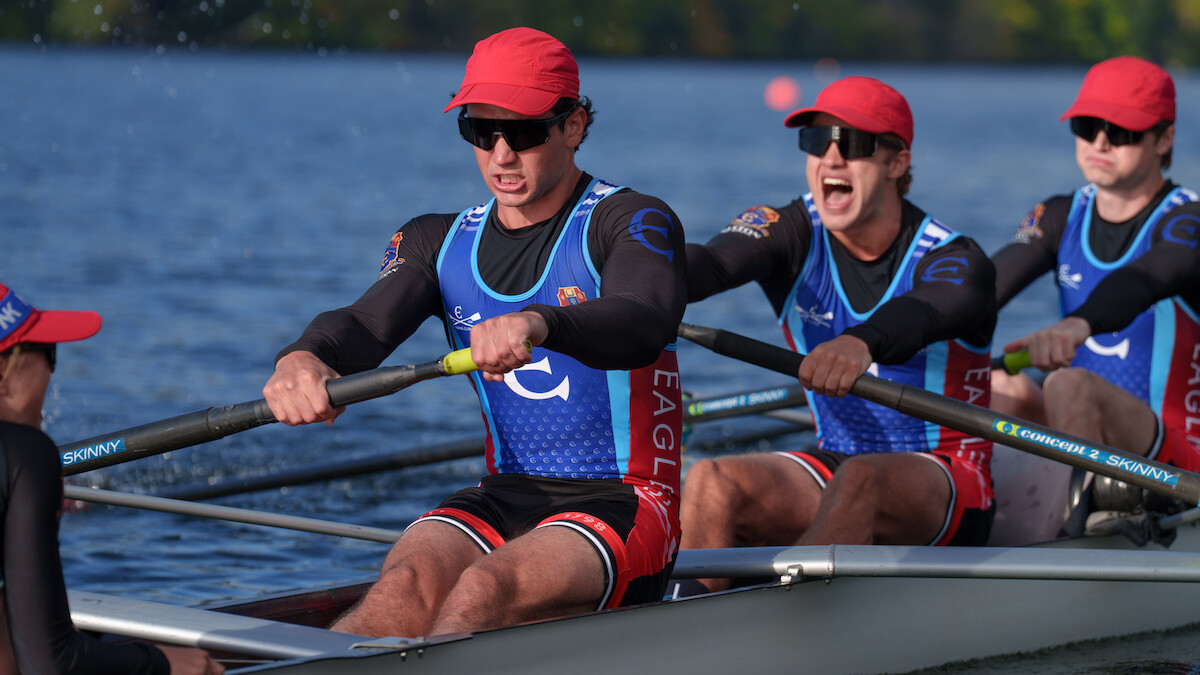
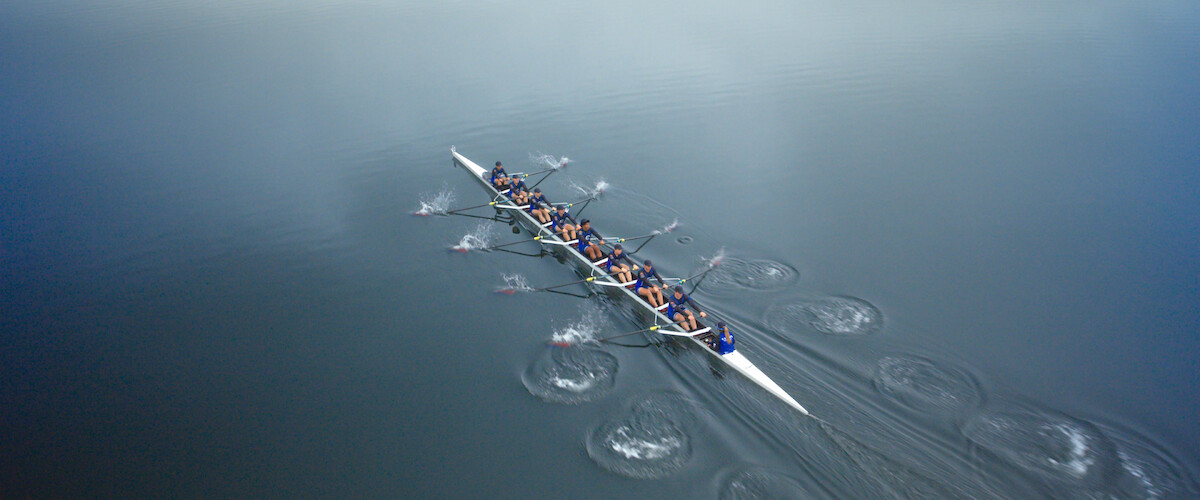
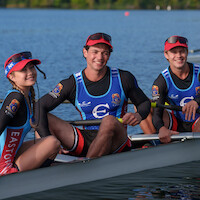
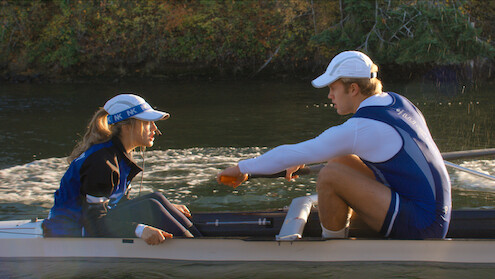
Crew Girl is the first Canadian production to film scenes with eight-person rowing sequences. “Only a handful of people have ever shot eight-person boats because they’re 67 feet, and your set is on water,” Lin explains.
Capturing such fast-paced scenes on the water required a technical setup. “We built this huge barge that holds our entire crew and gear, and we strapped the 67-foot boat to it,” says Lin. “Luckily, none of the crew fell off.” If one 67-foot boat sounds daunting to capture on camera, Lin notes that during the regatta scenes, they filmed up to five boats at a time.
Braun and Clark reveal how the barge scenes required a little cinematic sleight of hand. “People think maybe it’s easier to row on the barge, but it was actually harder,” Clark says. “It’s tricky because the barge is moving at 10 kilometers [about 6 miles] an hour, and the oar can only move so quickly when you’re traveling at that speed,” Braun describes. “You had to finesse the performance with a little bit of movie magic to make it look like we were ripping through the water. When we were doing the drone stuff, we got cooking for sure.”
Shooting these technical scenes brought the actors closer together. “There’s so much coordination, and you have to work as one unit because if one of you is off, it can throw off the balance and rhythm,” Braun explains. “That was such great team bonding for us.”
The end product is a heart-pumping, edge-of-your-seat race, but Martineau admits that behind the scenes, it was much more relaxed. “In between takes is so much fun because we’d just be chatting, getting along so well and having such a great time,” she says. “It was all so challenging and rewarding and fun. We all did our very best to make it look great on screen, and I am proud of us.”