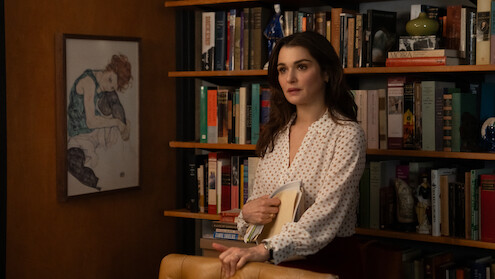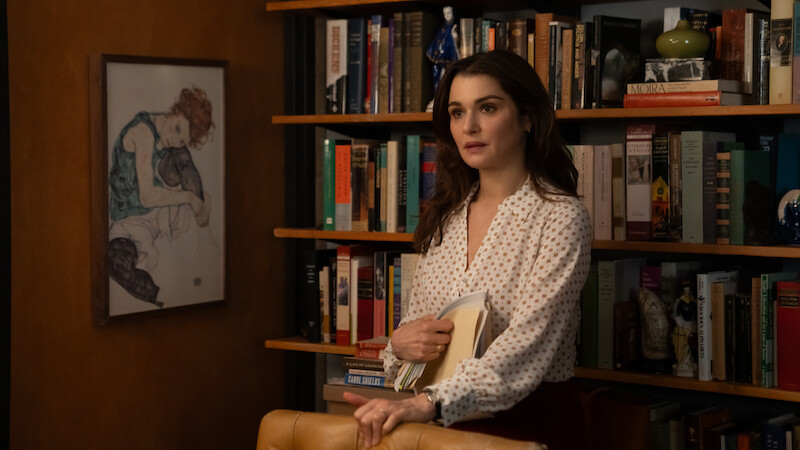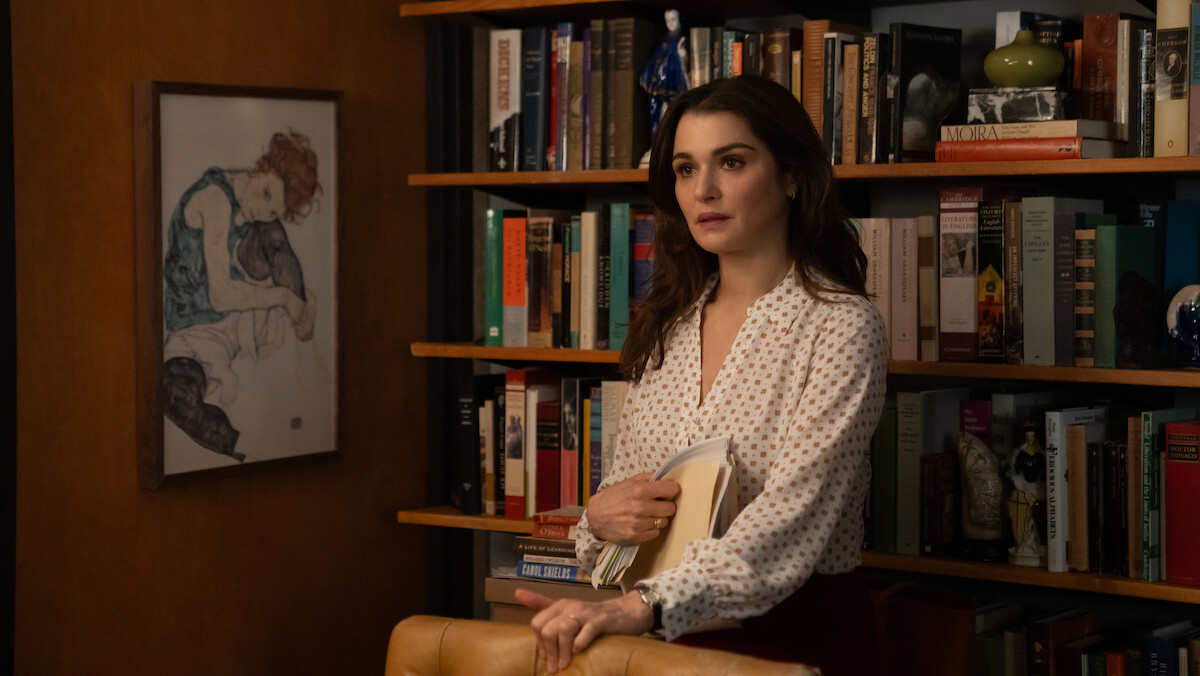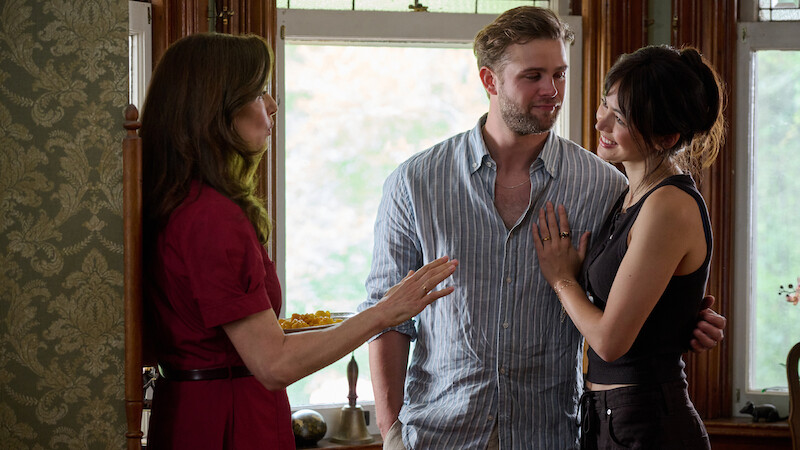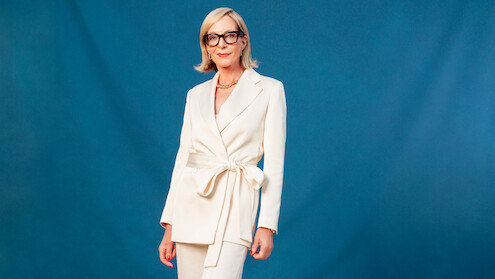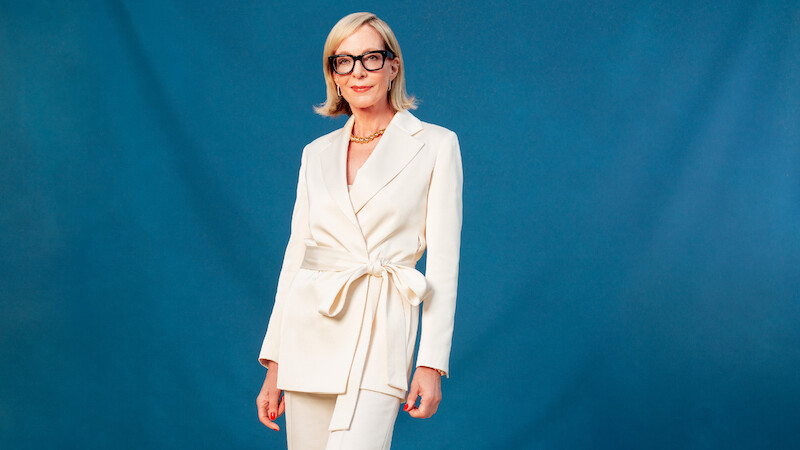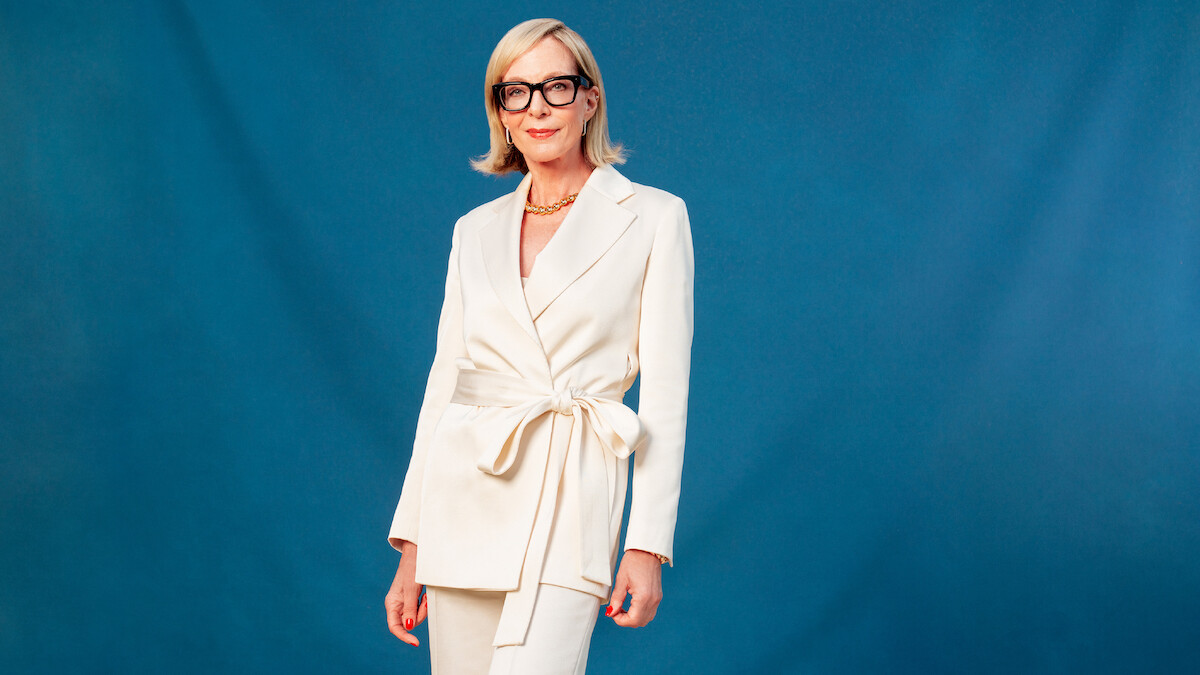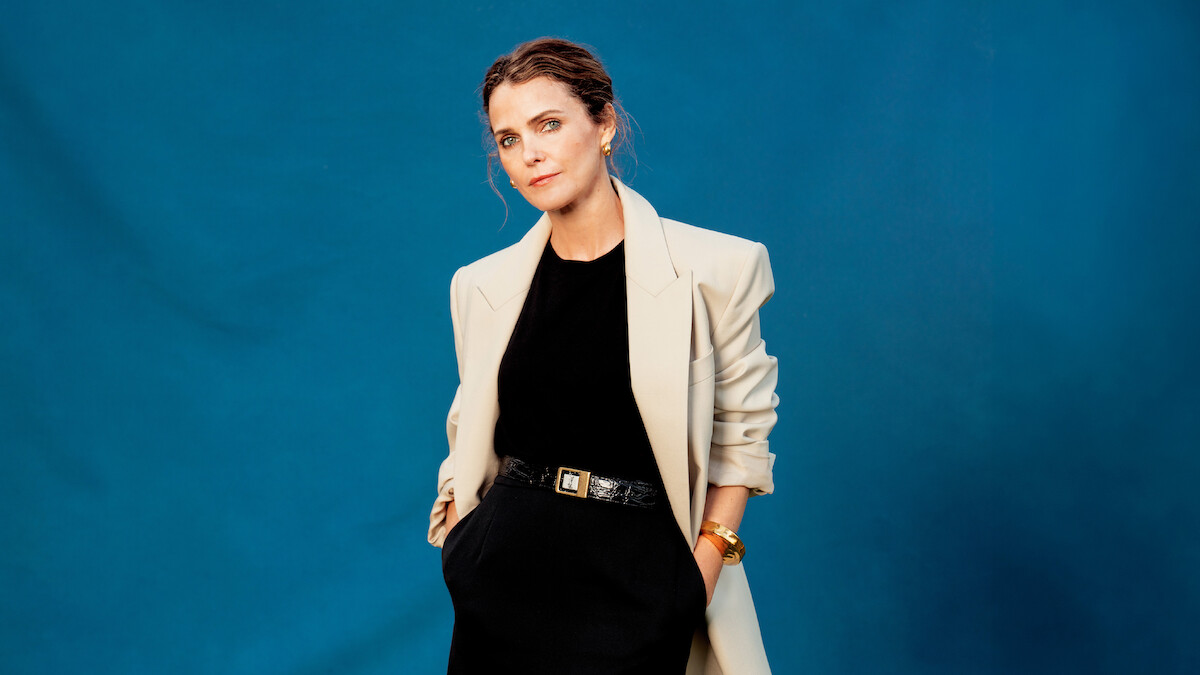
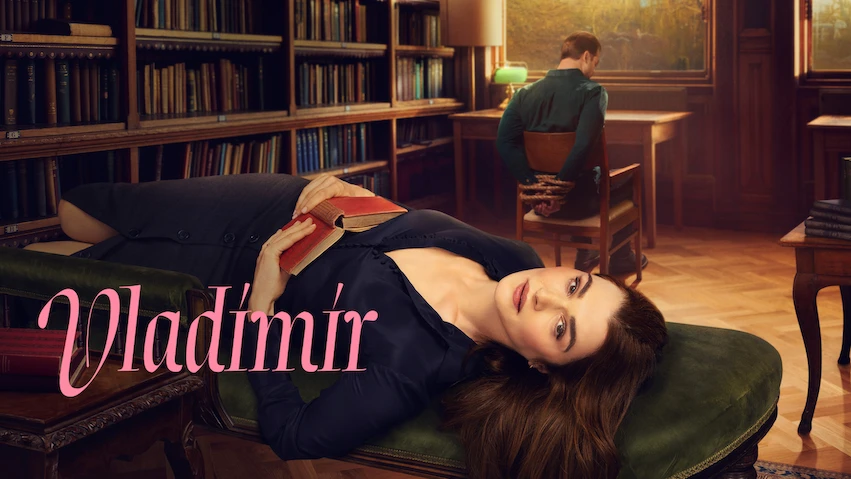
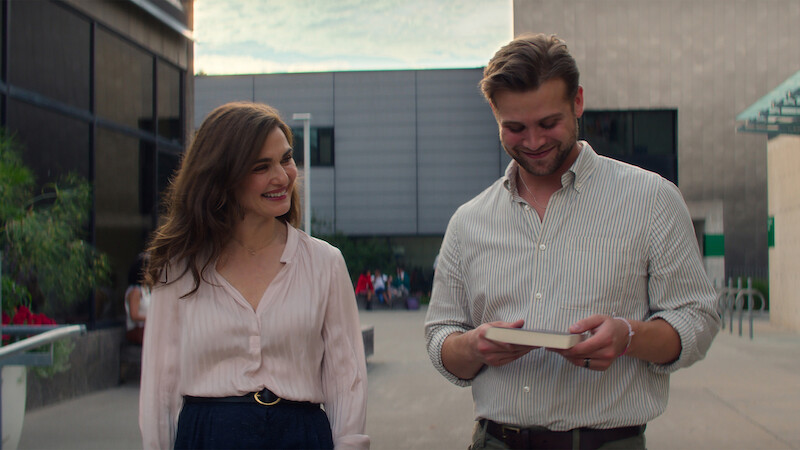
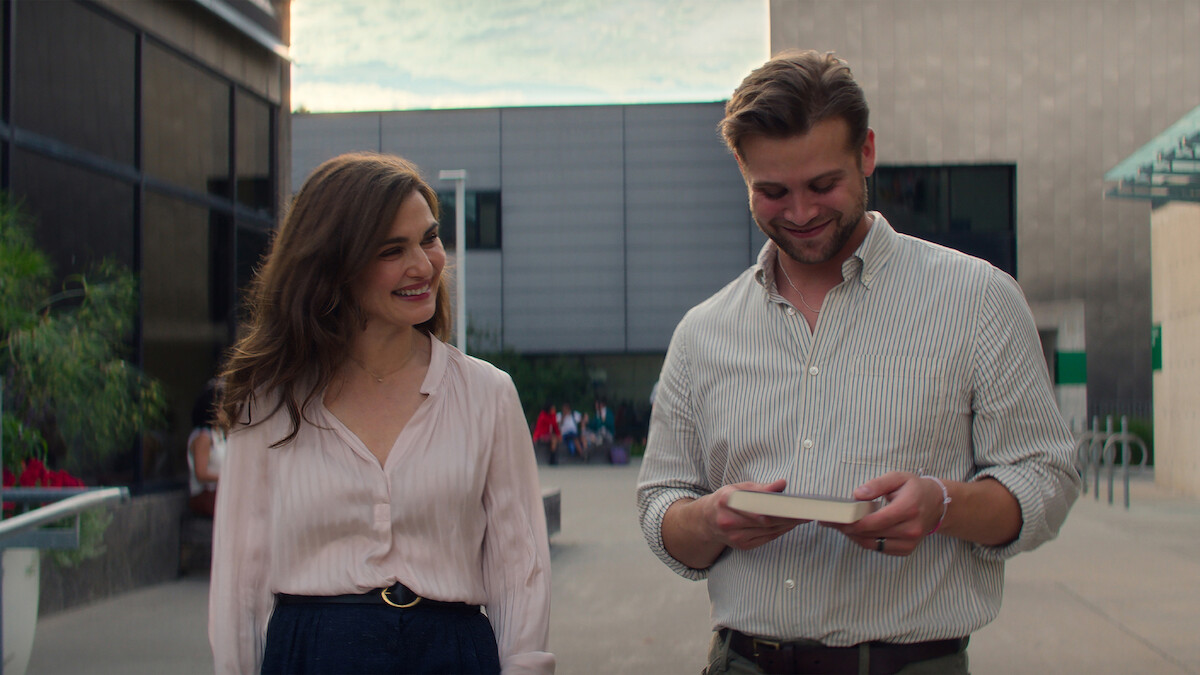
Rachel Weisz weaves a tangled, sexy web with Leo Woodall and John Slattery.

With Vladimir, the series adaptation of her 2022 novel, author Julia May Jonas had to figure out a way to bring an introspective and unreliable narrator to the screen. The eight episodes chart a middle-aged professor’s all-consuming obsession with her younger colleague, Vladimir, as her life unravels around her. “The big challenge,” says Jonas, “was how to take a book that was really internal and make it external.”
Jonas achieves this by having the protagonist, who remains unnamed, address the camera directly. Her fantasies about Vladimir play out onscreen, an intoxicating escape from her stale reality. The role is equal parts mischievous, sexy, and thought-provoking, and it required an actor who could thread a precarious needle.
Jonas immediately thought of Rachel Weisz. “As we were going over who could do it in the early days, I thought of her,” says the writer, creator, and executive producer. “I needed someone who is incredibly intelligent but also able to have this wicked humor and be lovable at the same time.”
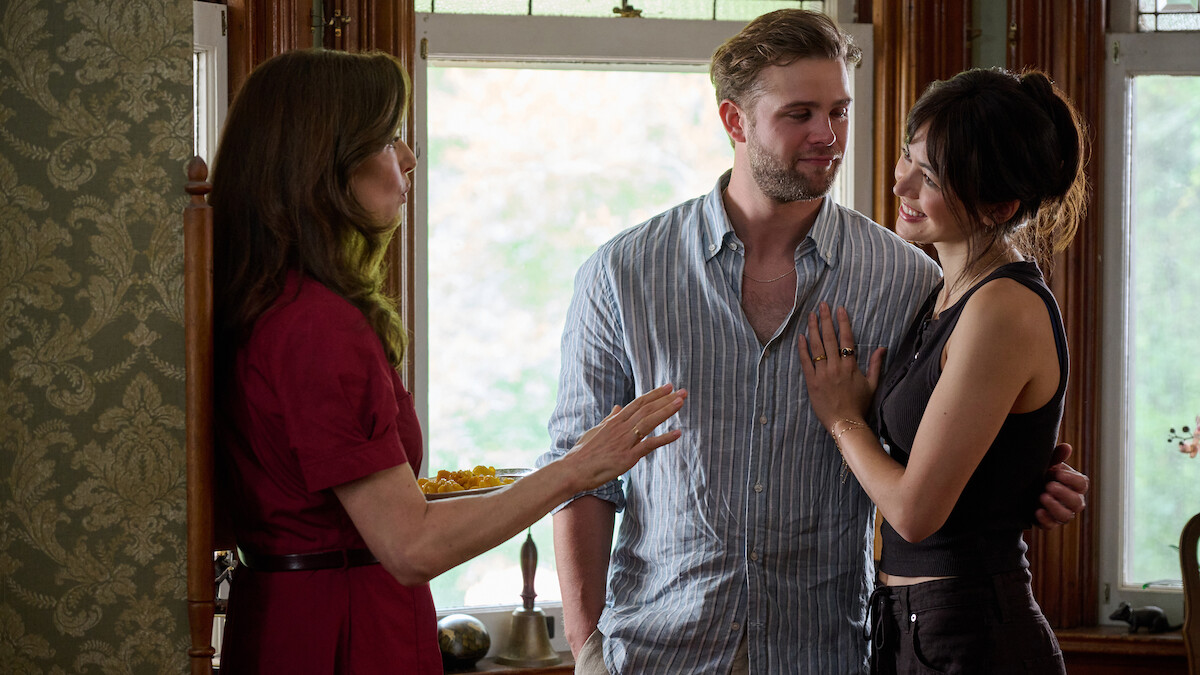
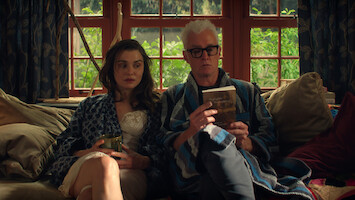
When we meet Weisz’s unnamed protagonist, she’s feeling discarded and impotent. Her writing career has stalled. She no longer feels sexually desired, and her open marriage to fellow professor John (John Slattery) is sluggish with scar tissue. Even her only daughter, Sid (Ellen Robertson), keeps her at arm’s length. “She’s relatable because of her fears that as you grow into an older woman, you’re asked to want less, take up less space, be more of service,” says Jonas.
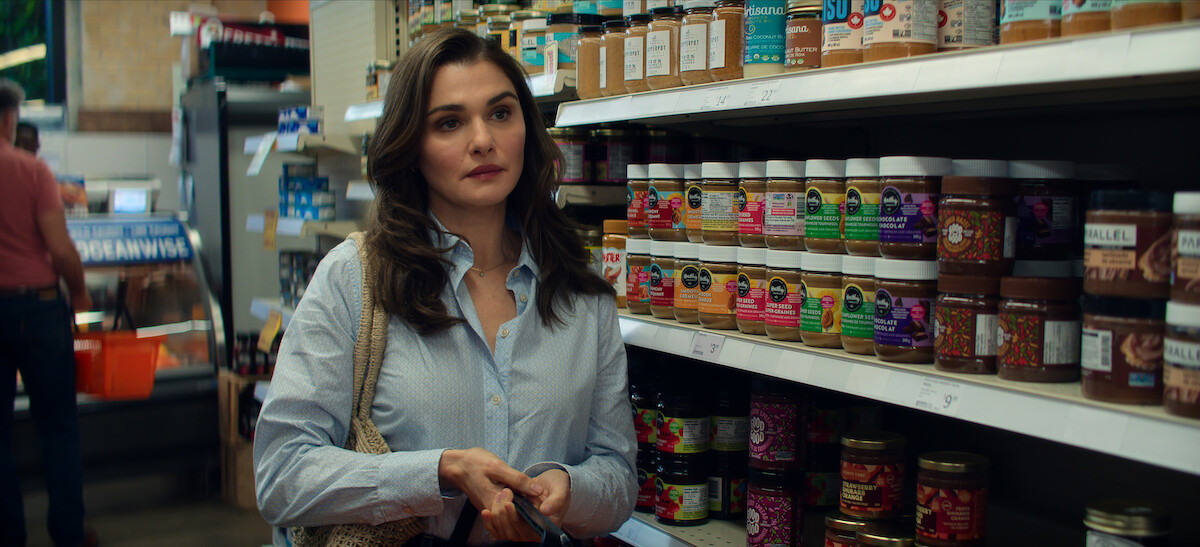
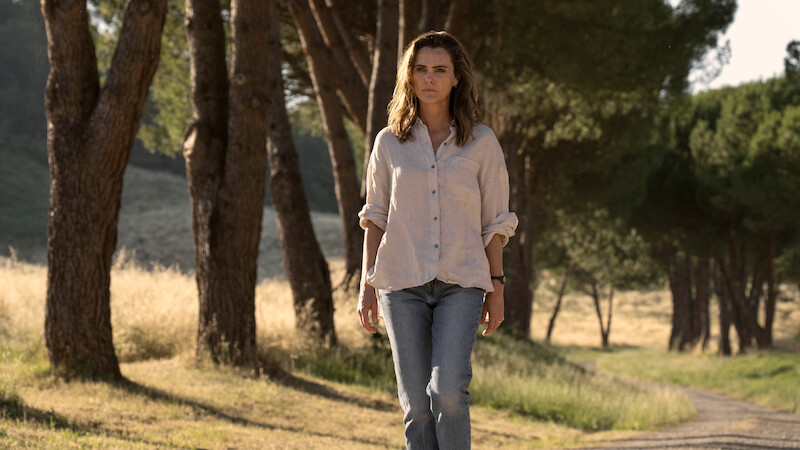
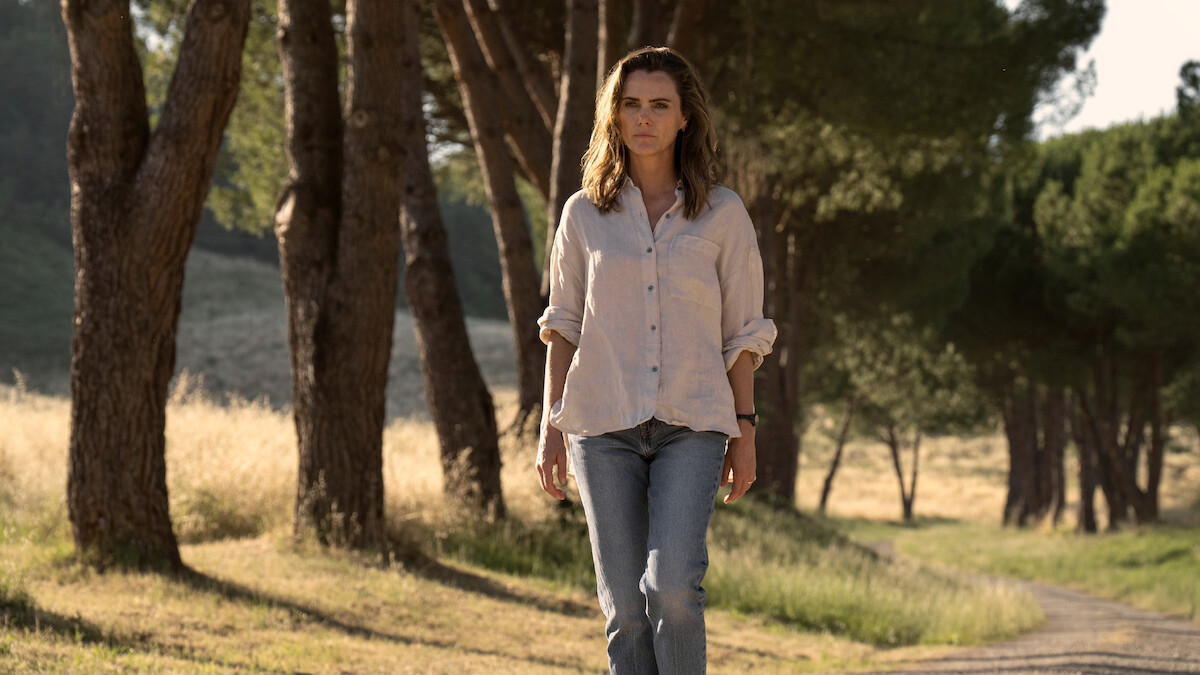
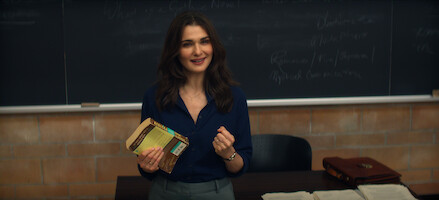
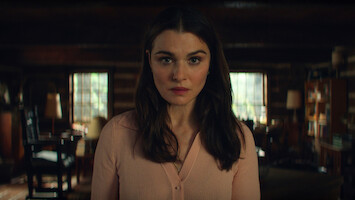
The Protagonist (Rachel Weisz)
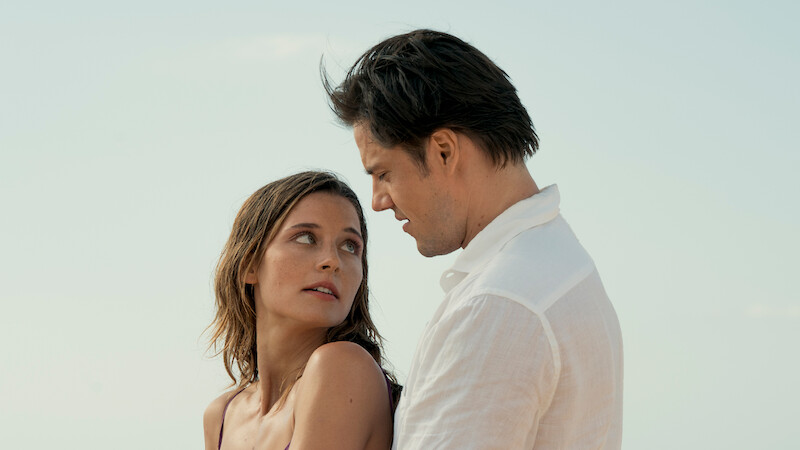
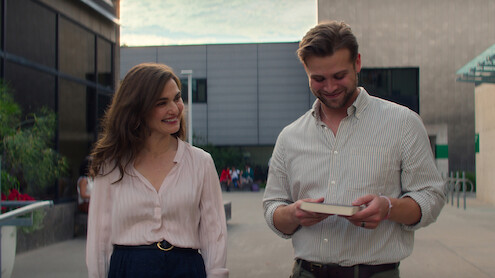
It’s against this stagnant backdrop that the protagonist falls down the rabbit hole of her obsession with Vladimir (Leo Woodall), a hotshot young writer who joins the faculty, along with his magnetic wife, Cynthia (Jessica Henwick). “It’s like a heightened fairy tale,” says Weisz, who also executive produces Vladimir. “Her fantasy is about the power of desire. The invigorating, stimulating, inspiring, and revivifying feeling that she gets from her obsession with Vlad. What it’s about is coming back to life in a certain way that had lain dormant for some time.”
Weisz has starred in scores of intense and idiosyncratic films, reaching a level of rare celebrity but always maintaining a deep relationship to her craft and audience. She carried blockbuster franchises like The Mummy and has earned two Oscar nominations for 2005’s The Constant Gardener and 2018’s The Favourite — the former of which she won. But Vladimir brings out a different, more playful side of the beloved actor. “There’s a very natural, charming kookiness about Rachel that I think is perfect for the role,” says Woodall. “She’s very organic, she’s very generous. She’s heaven.”
Slattery agrees, noting how deftly Weisz plays the character’s wide range. “She rides the line of sincere and untruthful. Funny, heartfelt, deep, and complicated,” he says. “I don’t know how she does it. It all seems to be in there, and she just kind of lets fly. It’s a ballsy thing to do.”
Ultimately, Vladimir is an in-depth character study. “[Weisz is] in practically every scene, which I’ve never experienced in all my years of directing,” says Oscar-nominated director Shari Springer Berman. “She doesn’t just show up as an actress. She shows up as the sort of shoulders that we’re laying the whole show on. She’s everything you could ever want in a leading woman.”
An edited version of the conversation with Weisz follows.
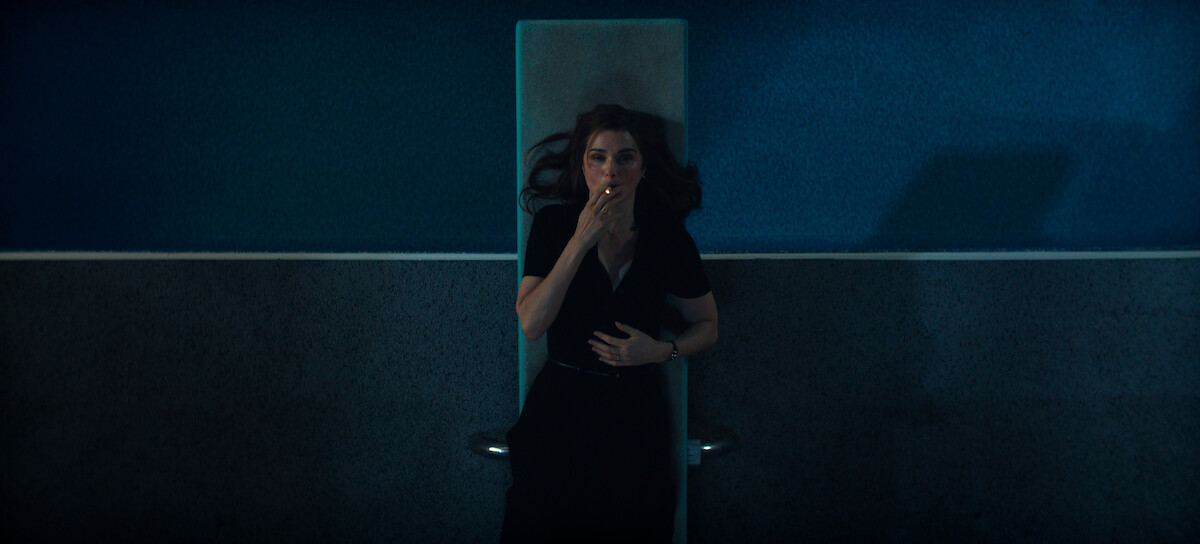
The Protagonist (Rachel Weisz)
What are some of the themes Vladimir explores, and how are they approached?
Rachel Weisz: The series explores themes related to desire, obsession, sexuality, lust. It also delves into the world of campus gender politics and cancel culture. There’s comedy and drama. It’s mischievous.
The protagonist speaks directly to the camera at points. What do these asides reveal about her?
Weisz: Julia May Jonas came up with the idea of having my character speak to the camera in personal asides, because the novel is a first-person narrative. You have direct access to what the character is thinking and then also what she wants you to think. What she wants you to think is a little distant from the total truth. The narrative she tells isn’t always accurate — but that seems like a very human trait: to adjust the truth for one’s audience when things are going out of control.
Tell us about your character’s headspace at the beginning of the series.
Weisz: My character and her husband, John, have been the king and queen of the English literary department. But 10 years ago, John had affairs with students who were all over 18. This has come to light as the series begins. John has been suspended from teaching. The woman you meet at the beginning of the series is trying to hold on for dear life as the earth has shifted out from under her because her husband’s going to be tried for his past indiscretions. This affects her standing as a professor because, by association, her reputation is tainted. Students question how she can “stand by her man.” She is losing her throne.
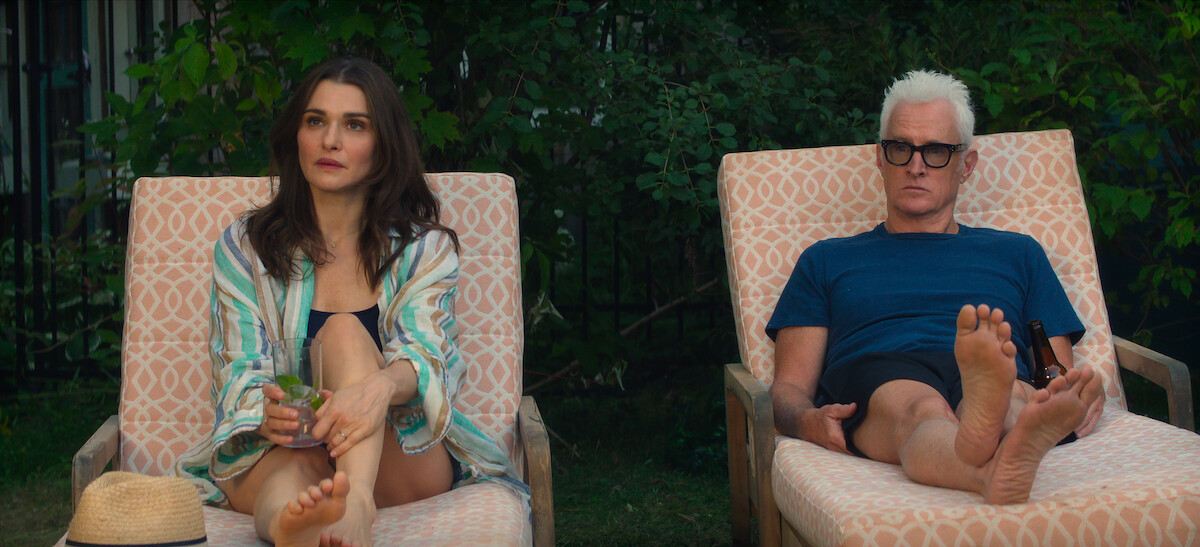
The Protagonist (Rachel Weisz) and John (John Slattery)
What makes academia such a pressure cooker environment for these themes of gender politics, desire, and creativity?
Weisz: For the protagonist, academia is her whole world, and everything gets very heightened. It’s a liberal arts college, so there’s a lot of political awareness in this student body, and it’s a complicated environment for her to defend her husband in.
What is it about Vladimir that intrigues the protagonist?
Weisz: He is kind. He listens. He has old-school manners. He’s thoughtful. He’s interested in her writing career. He asks her questions that other people don’t ask her. And, of course, it’s helpful that he is staggeringly handsome. But it’s really his personality — his kindness and the fact that he notices her.
What does Leo Woodall bring to the role of Vladimir?
Weisz: Leo’s a really soulful young man. He’s incredibly talented. I always tease him. Acting just seems very easy for him; I don’t know how he does it because I can never see the wheels turning. He’s got empathy, heart, wit, and gentleness. He’s also got machismo, which is really natural to him and not put on. So he’s an interesting cocktail.
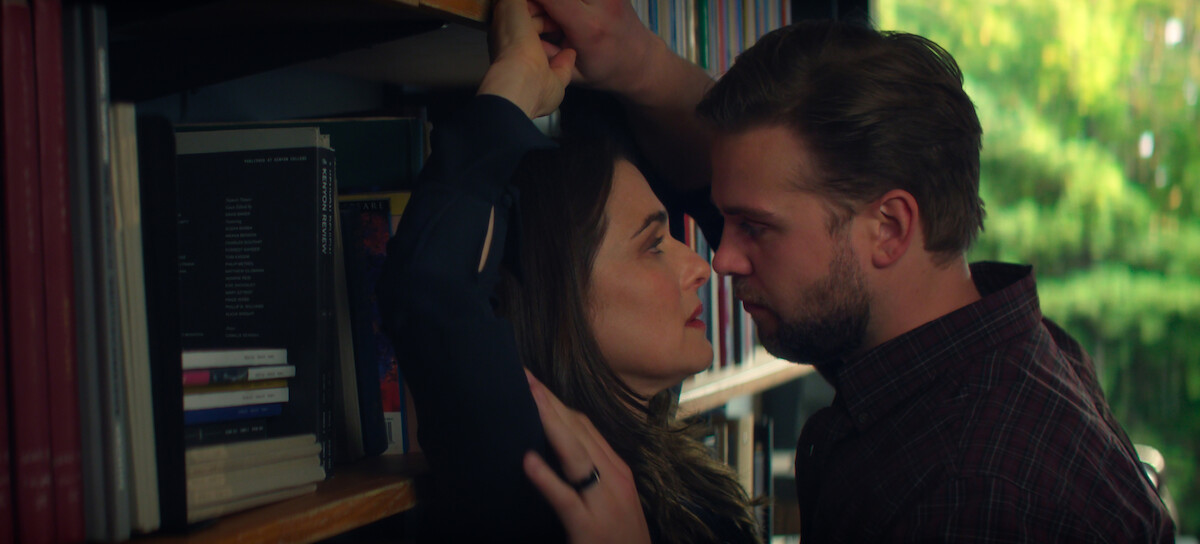
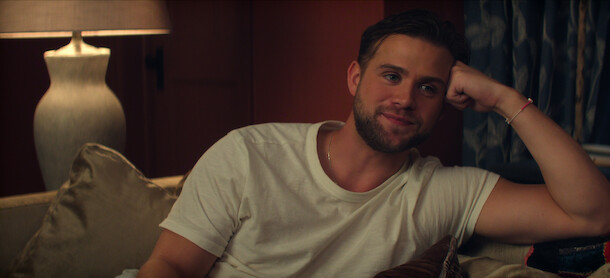
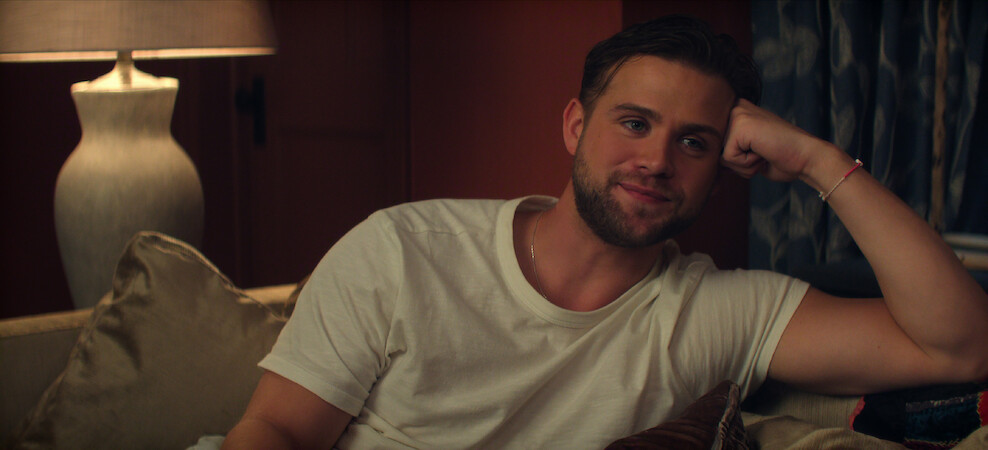
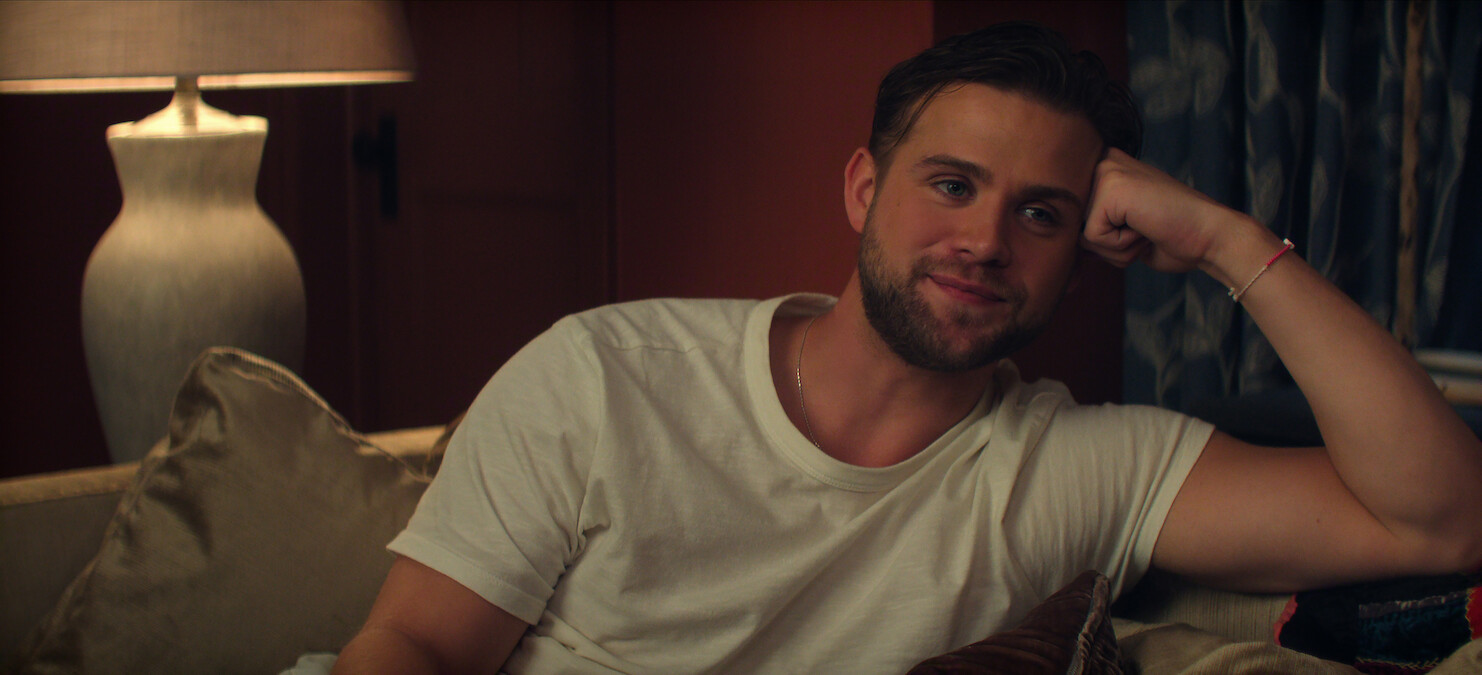
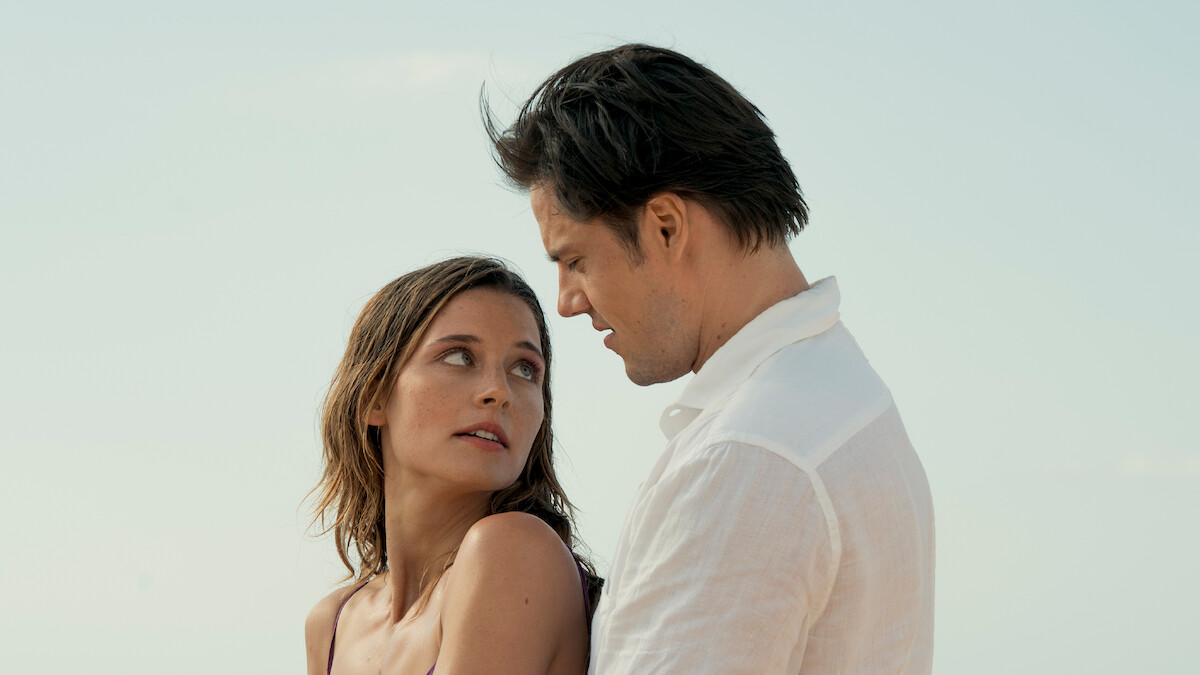
The Protagonist (Rachel Weisz) and Vladimir (Leo Woodall)
What makes the protagonist’s experience as a woman, wife, and mother relatable?
Weisz: My character has been married for a long time. She’s stood by her husband through thick and thin. They’re best friends. But he’s pushed her right to the edge of what she can handle with his behavior. She is a really devoted mother. She’s got one child, Sid. She’s tried really hard to keep her family together, but there have been some unusual circumstances that are putting them under quite a lot of pressure.
How do you prepare to take on such a complex role?
Weisz: I had Julia’s novel, which I’d read prior to being offered the role, and I had her screenplays. Her writing is so superb. It’s so funny and truthful — and slightly ridiculous. That’s what makes it funny.