

Suit up for special events at ballparks across the country, with giveaways, new merch, and in-game moments.

From the magenta glow of demons to the iridescent power of the Honmoon, here’s the story behind every hue.
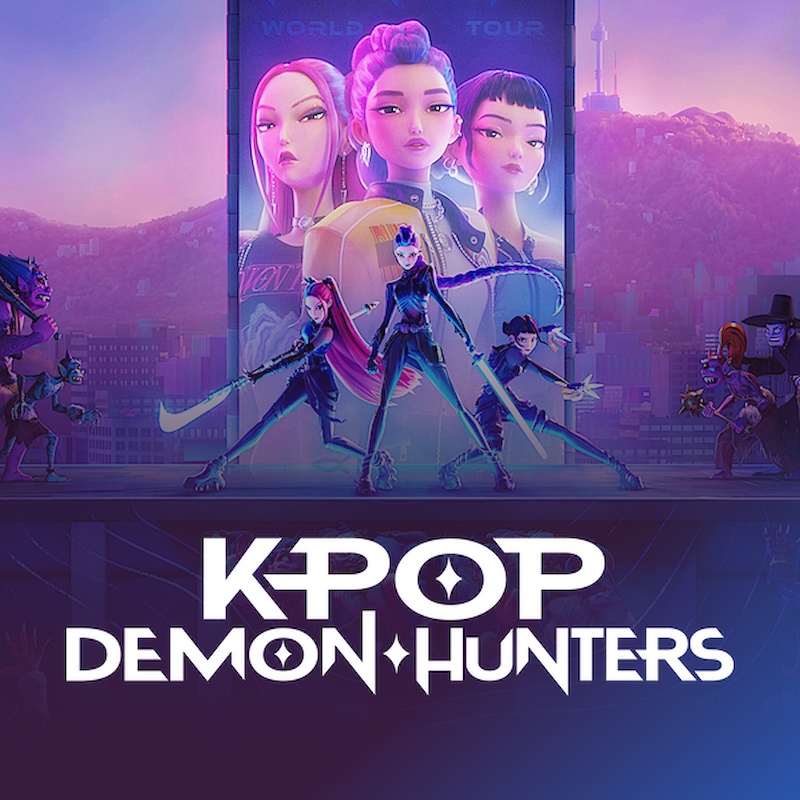
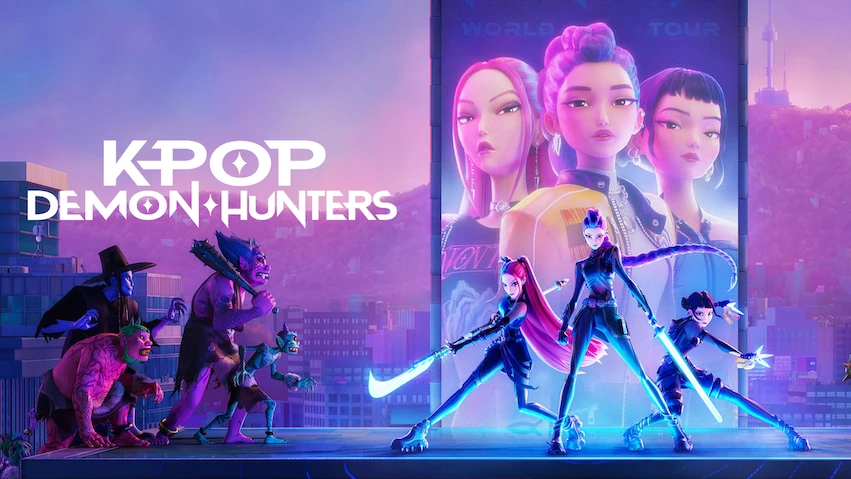
You could watch the entirety of KPop Demon Hunters without sound — though we wouldn’t necessarily recommend it — and the vibrant colors of the animation would tell you a prismatic visual story all on their own. The filmmakers and artists behind the Oscar-nominated, Golden Globe–winning film fine-tuned the exact shade of each couture costume, strand of hair, and Seoul skyscraper to convey character arcs, capture impeccable K-drama vibes, and pay homage to meaningful Korean traditions.
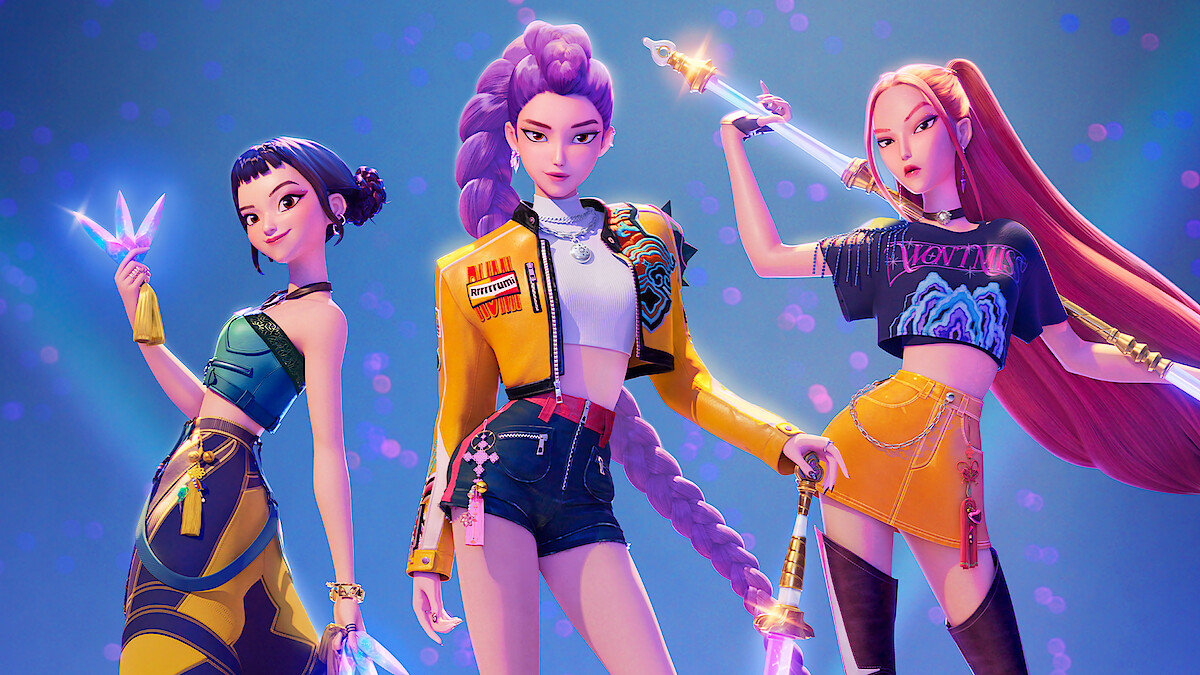
One of the notes that directors and writers Maggie Kang and Chris Appelhans gave to the animation team was that the aesthetic of the KPop Demon Hunters world shouldn’t be too obvious or rigidly color-coded. This sophisticated approach to color reflects the multitudes within Rumi, Mira, and Zoey, the demon-hunting K-pop idols of HUNTR/X. “It was one of the philosophies that Maggie talked about early on,” production designer Mingjue Helen Chen tells Tudum. “She didn’t want to pigeonhole the girls into one personality.” A common refrain about the look of HUNTR/X was, “They’re not Power Rangers.”
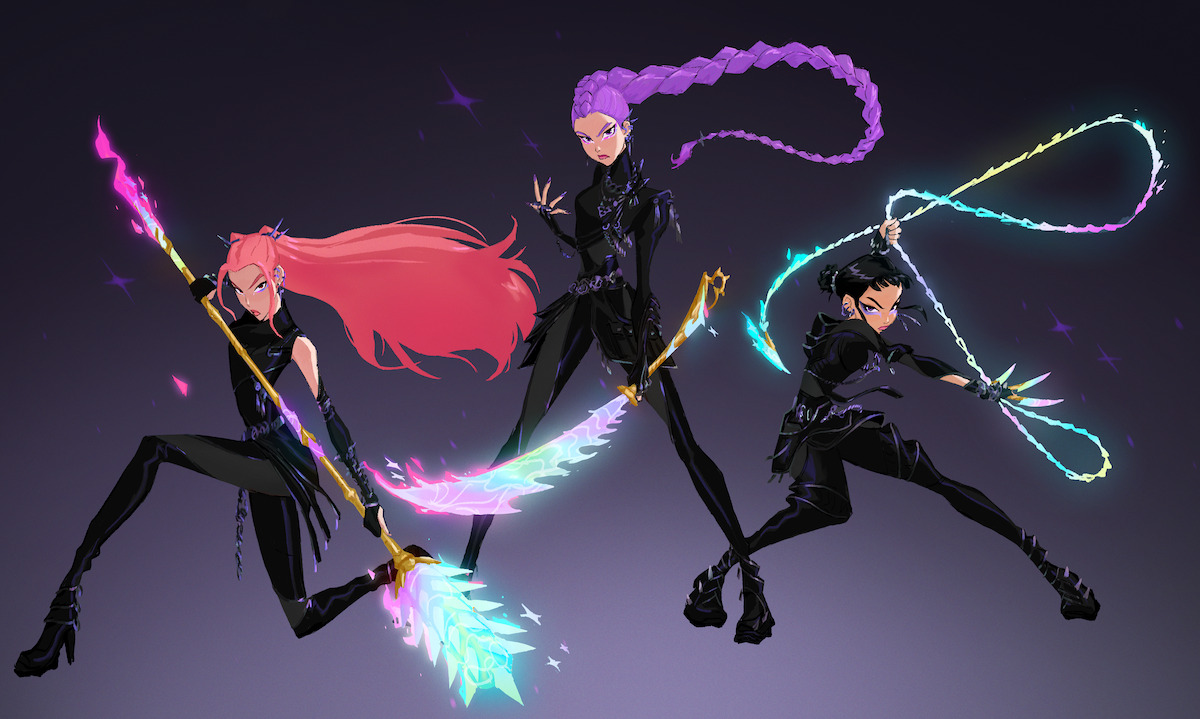
That color philosophy of defying expectations and infusing every frame with “magical girl” energy makes KPop Demon Hunters look different from anything you’ve seen on screen before. Each color is nuanced, reflecting the sophistication of Korean clothing and art throughout history. “The red is not a true red; it's got a little bit of pink in it,” explains Chen. “The green is not a true green; it's got a little blue in it. And so they end up all being very tertiary colors.”
From magenta-pink demon fire to the Saja Boys’ bubblegum pastel outfits to the exact shade of Mira’s hair — seriously, we finally get an answer to the mystery of what to call Mira’s hair color! — the artists behind KPop Demon Hunters dive deep into the eye-popping hues that built a world that so many have immersed themselves in over and over.
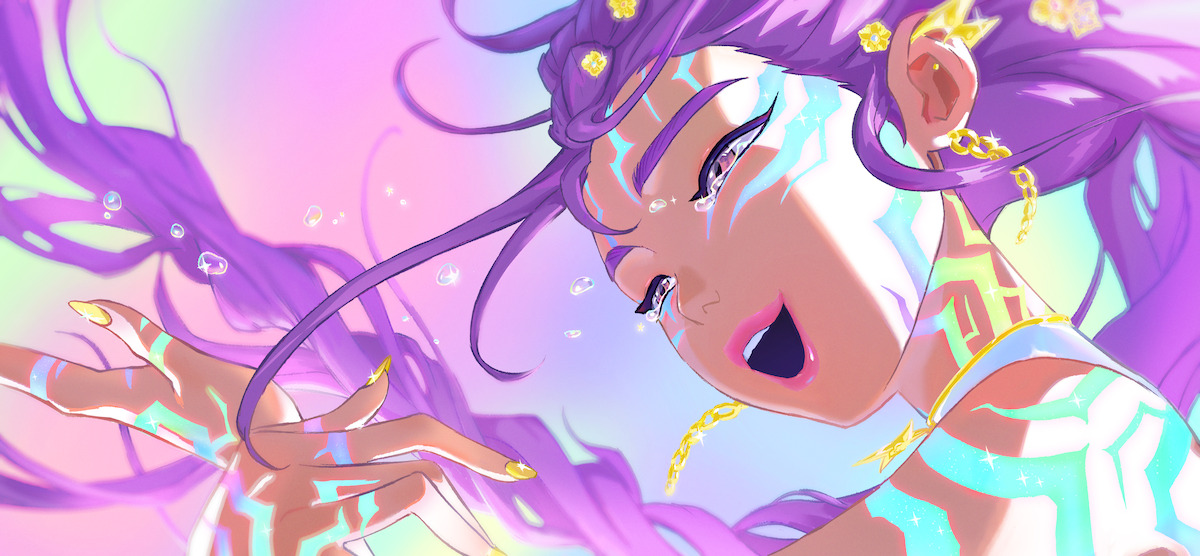
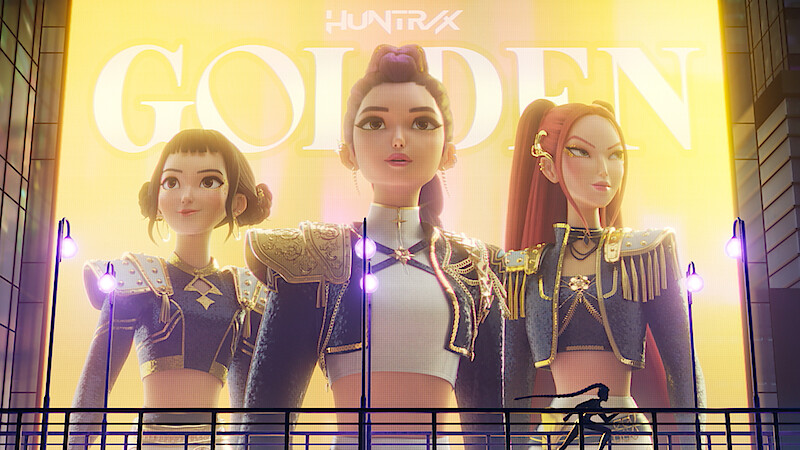
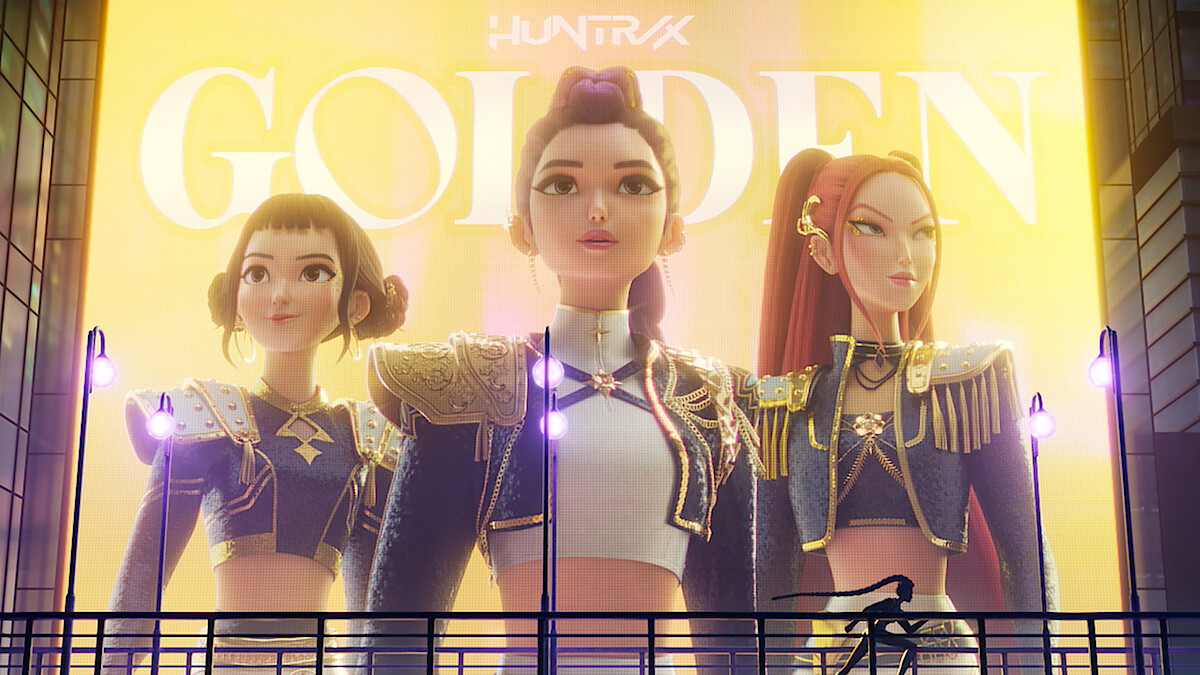
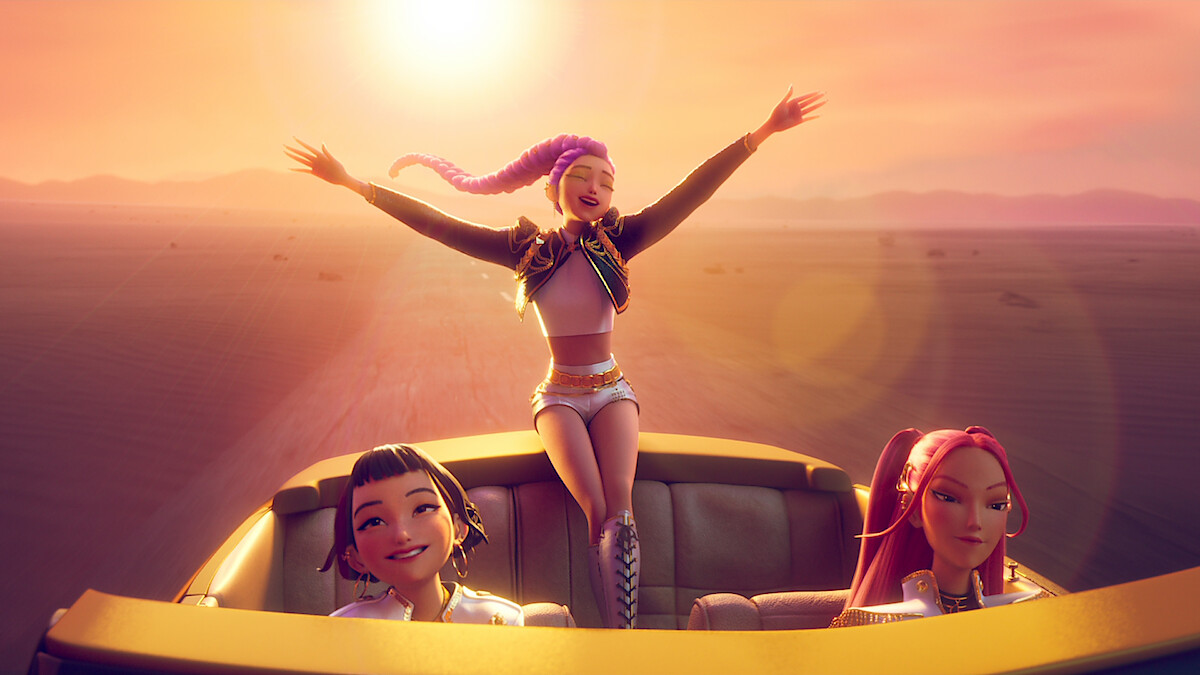
You might assume that gold is the most significant color in KPop Demon Hunters. After all, Rumi’s main goal throughout the film is to produce the Golden Honmoon, a magical barrier — conjured by music and love from the fans — that will seal the demon world from the human world forever. And there’s also a certain Oscar-nominated song called “Golden” — ever heard of it? — that serves as the emotional anthem of the film. But while gold represents Rumi’s dream at the beginning, the actual most important color in KPop Demon Hunters is one that can’t be found in any basic box of crayons: It’s iridescence, a whole spectrum of subtle, pearlescent shades that includes pink and soft blues and greens.
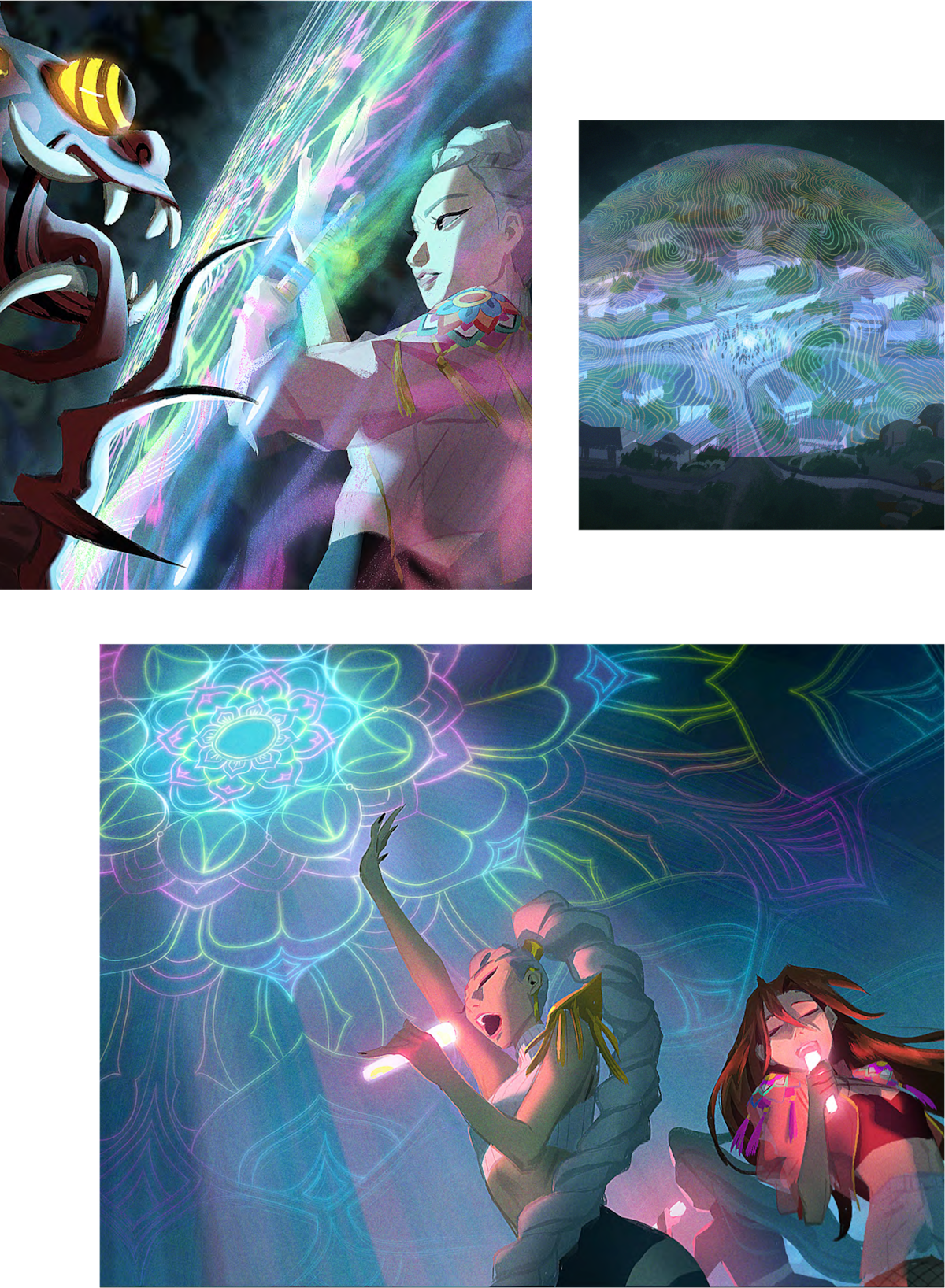
Unknowingly, Rumi, Mira, and Zoey are building toward something greater than they’ve even envisioned. At the end of the film, HUNTR/X doesn’t just produce a Golden Honmoon — they surpass that feat with a Rainbow Honmoon, symbolizing the unified voices of all the fans.
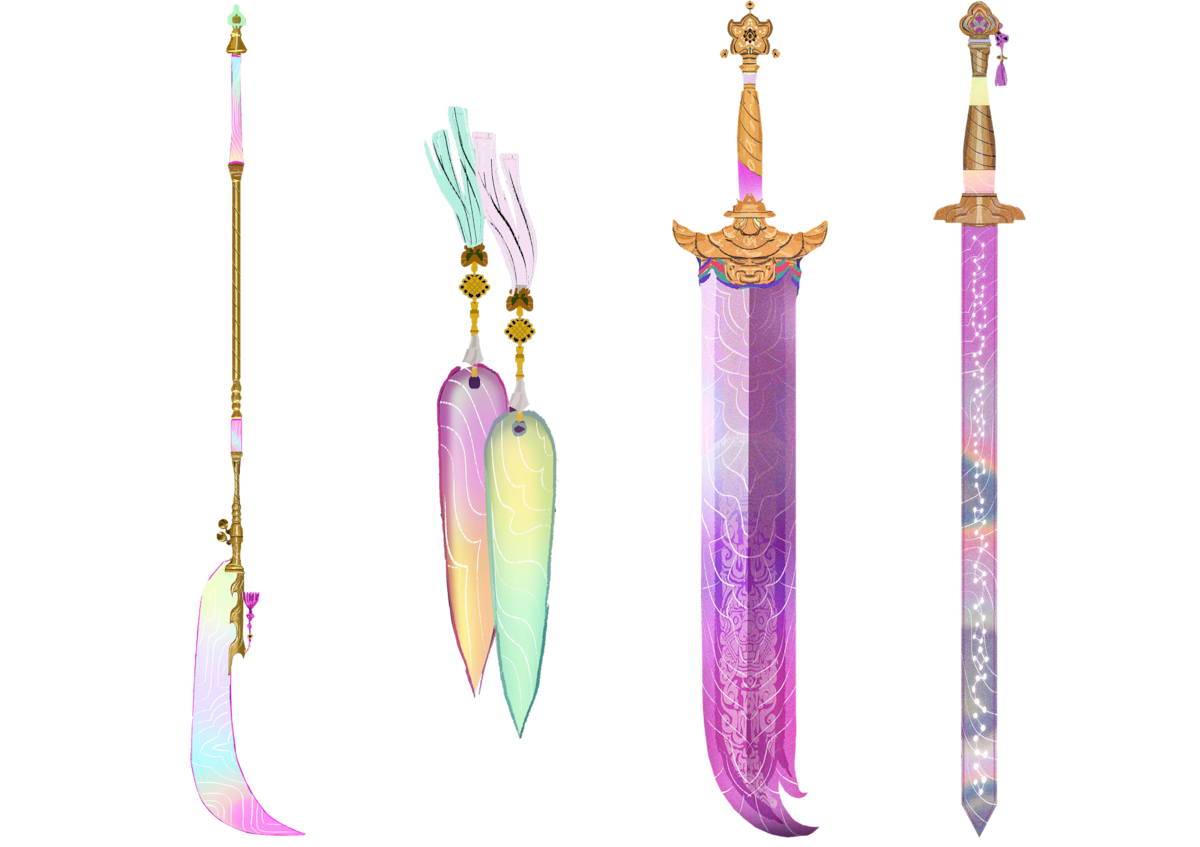
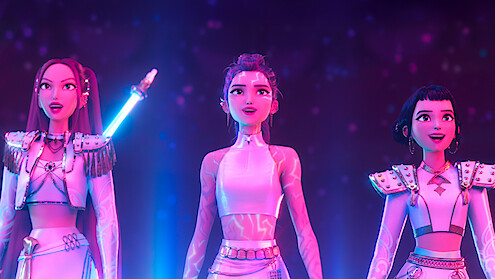
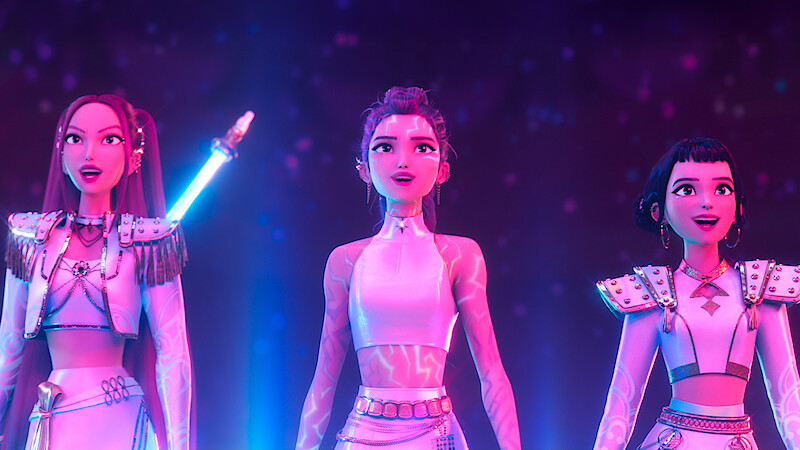
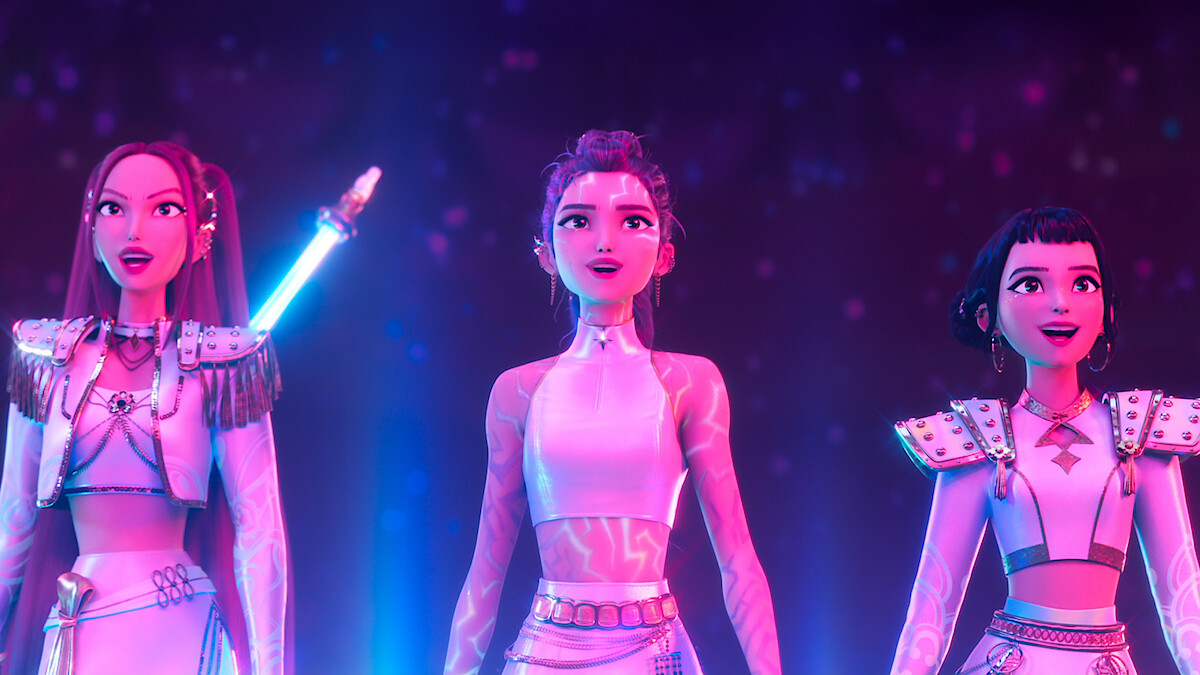
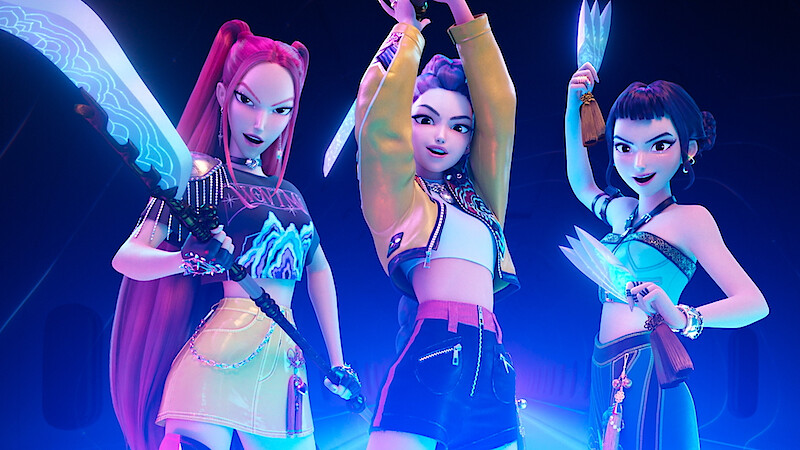
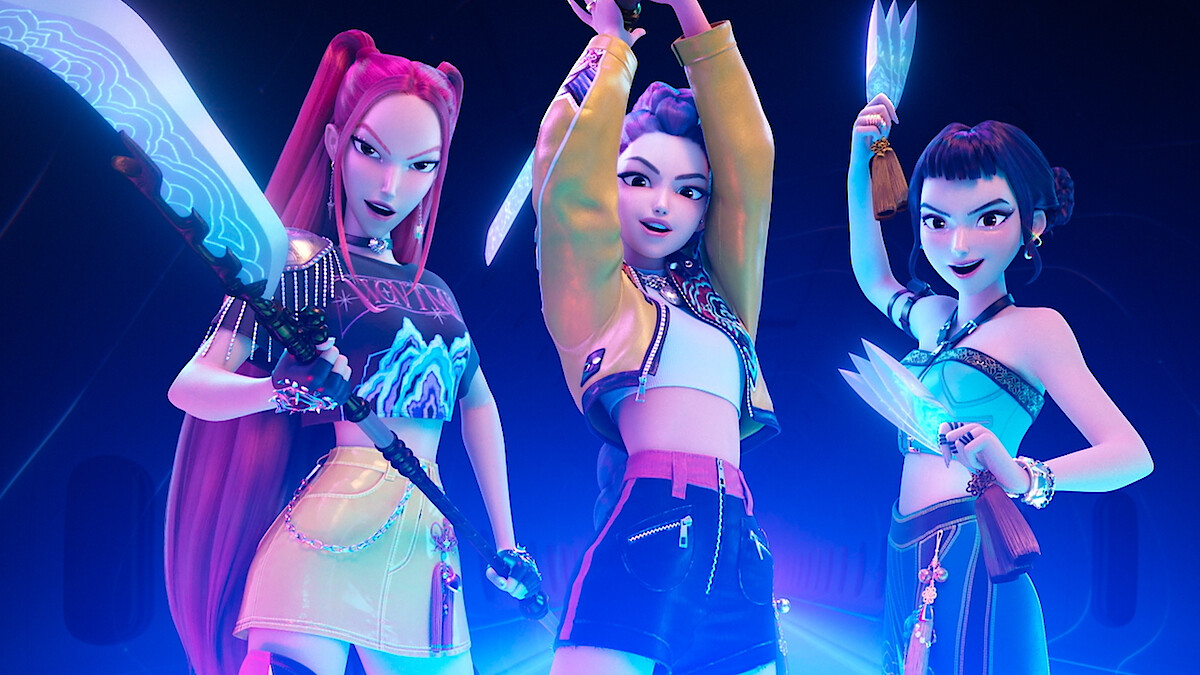
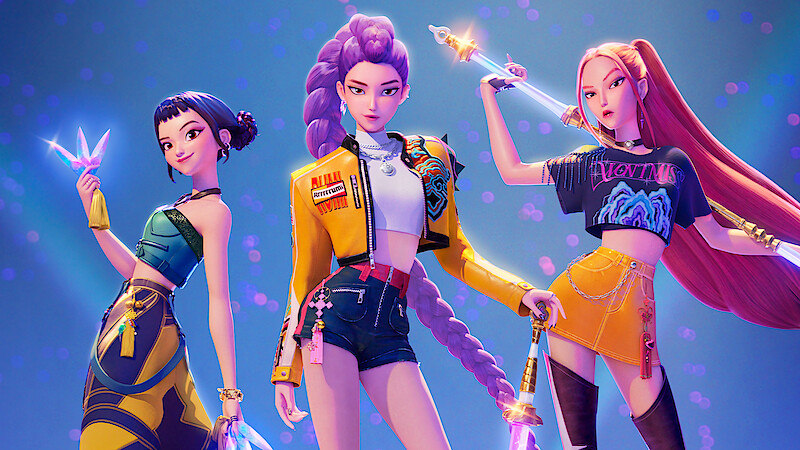
Though the world doesn’t explode with Rainbow Honmoon luminosity until the story’s end, the filmmakers and artists hinted at this fate from the very beginning, with iridescence serving as the guiding color principle. Honmoon colors are woven into the girls’ clothing as well as Rumi’s demon markings. It’s even visible in their weapons: Rumi’s Saingeom, aka the “Four Tiger Sword”; Mira’s Gok-do, aka “Curved Moon Sword”; and Zoey’s Shin-kal, aka “Spirit Blades.” These aren’t typical hard-edged blades but representations of a different kind of power. “I always pictured their weapons infused with musical energy: colorful, iridescent, and flowing like liquid light — visualized music bars or notes oozing and trailing from their movements, like a natural fusion of performance and spiritual power,” says character designer Ami Thompson. With Appelhans’ direction, Euni Cho, the character designer who worked closest on the weapons, took inspiration from cymatics, which is the science of visualizing audio frequencies.
In KPop Demon Hunters, iridescence is the color of music, strength, and HUNTR/X’s true destiny.
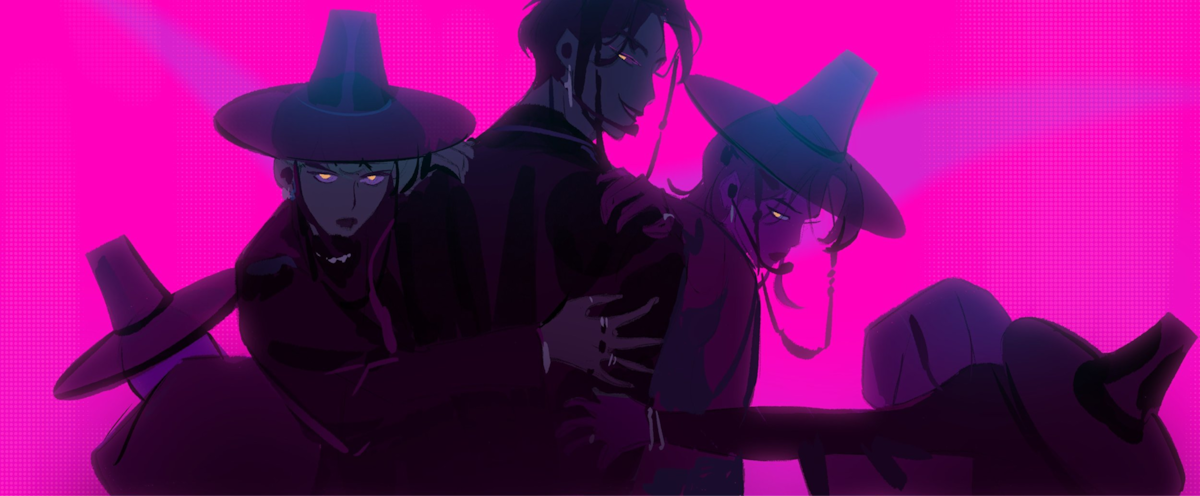
When creating the visual language of the demon world, the filmmakers and animators knew from the beginning that they wanted to do something that hadn’t been seen before. “We knew we didn’t want to do something so stereotypically hell, like this red thing,” says Chen. “So [art director Scott Watanabe] made a painting where he used this very pink magenta red, and that felt like something new.”
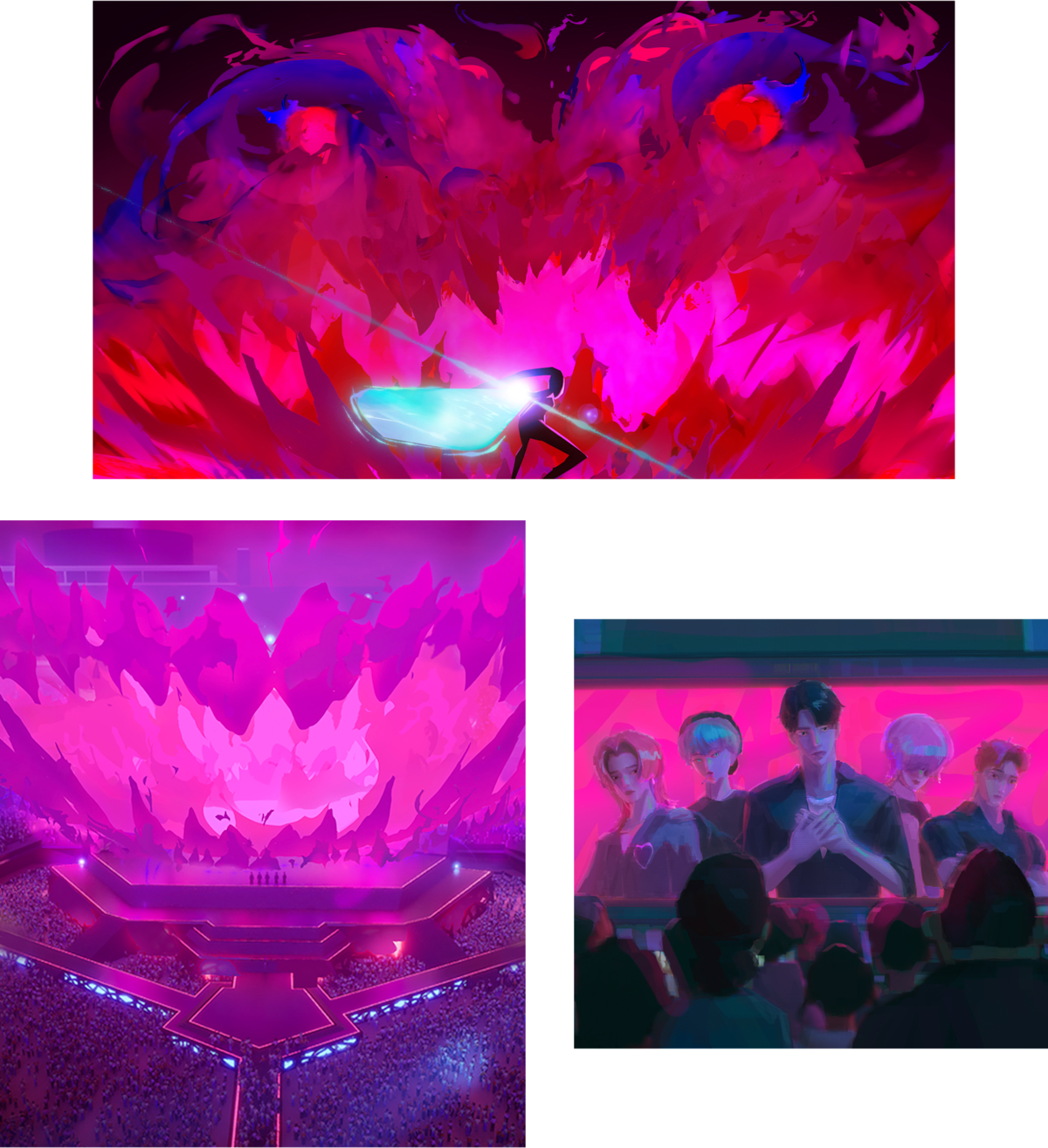
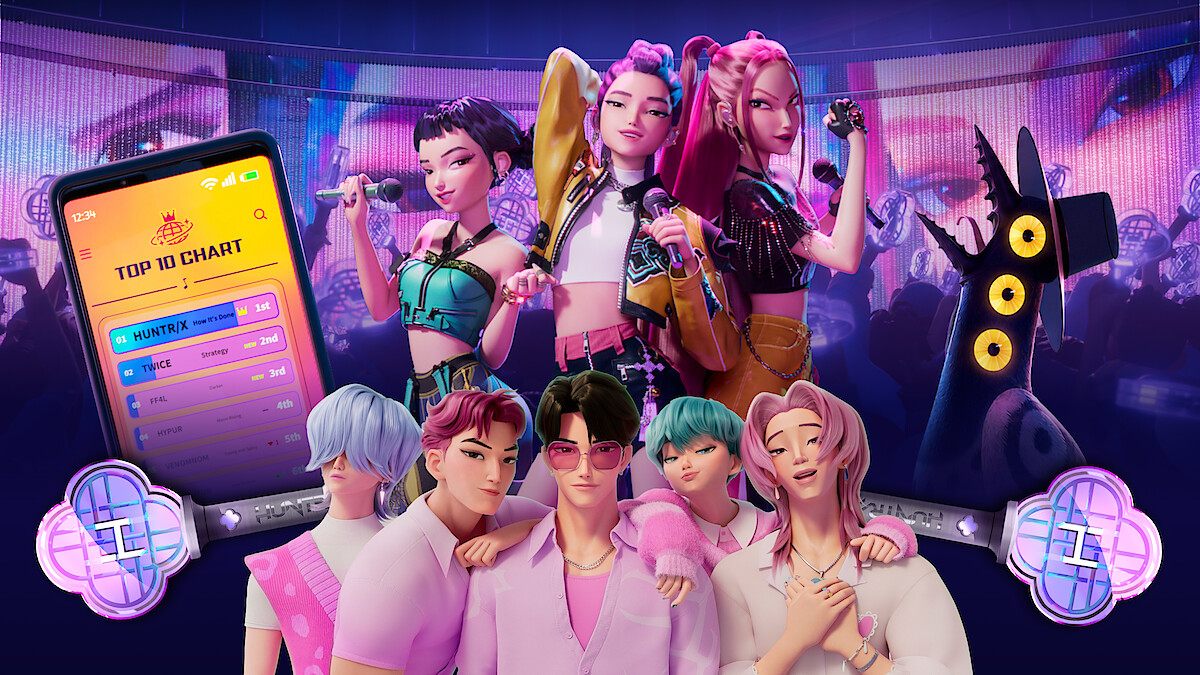
Anytime you see glowing magenta taking over the screen, you know that Gwi-Ma — the demon lord represented by magenta flames in the underworld — is feeling powerful. When the demon boy band Saja Boys cast their spell over a crowd with their street performance of “Soda Pop,” a magenta hue casts an eerily beautiful pall over the normally bright and primary-colored Seoul, symbolizing the rise of the demons’ influence.
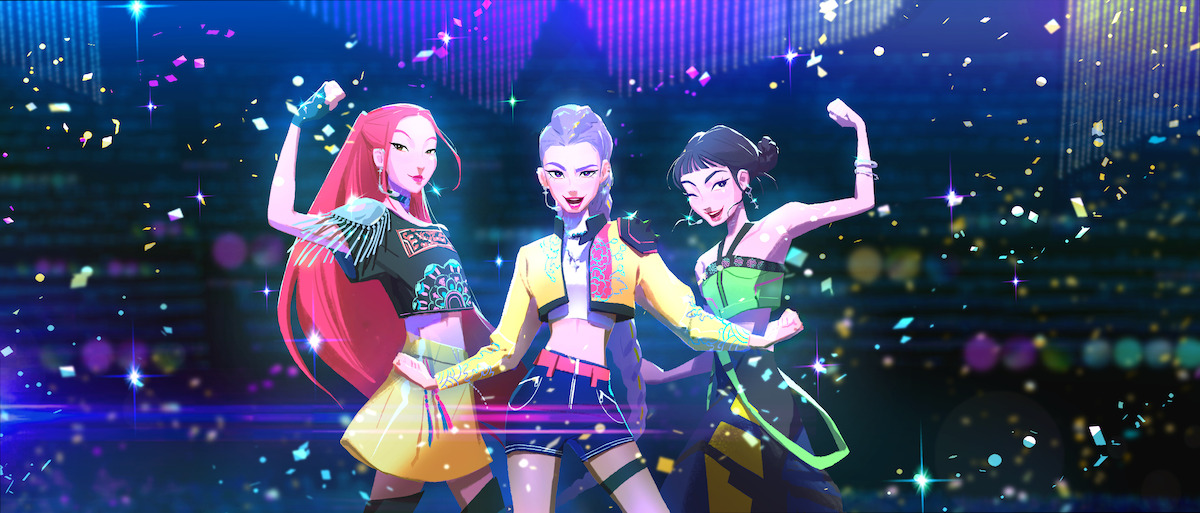
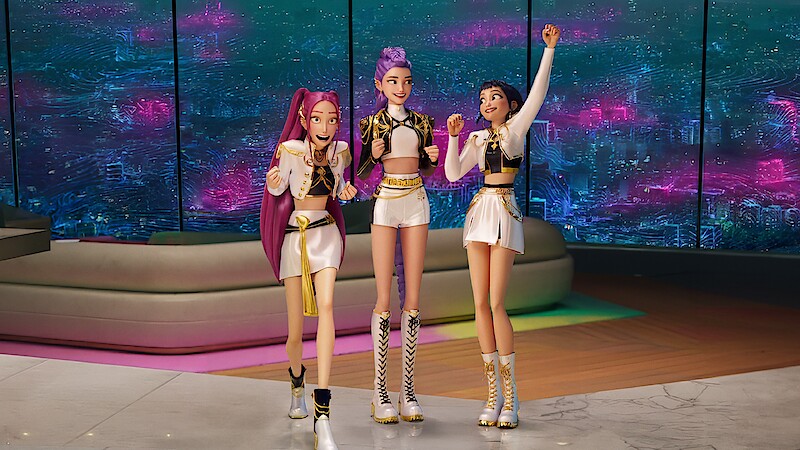
It’s the norm for animated characters to wear the same clothes throughout an entire movie or series. Not so for the hyper-stylish HUNTR/X, with their deep wardrobes, which span from trend-defying couture to cute pajamas and hoodies. “I think Scott [Watanabe] drew, not joking, 200-300 costume drawings across the whole movie,” says animation director Josh Beveridge. Rumi alone has 23 costume changes.
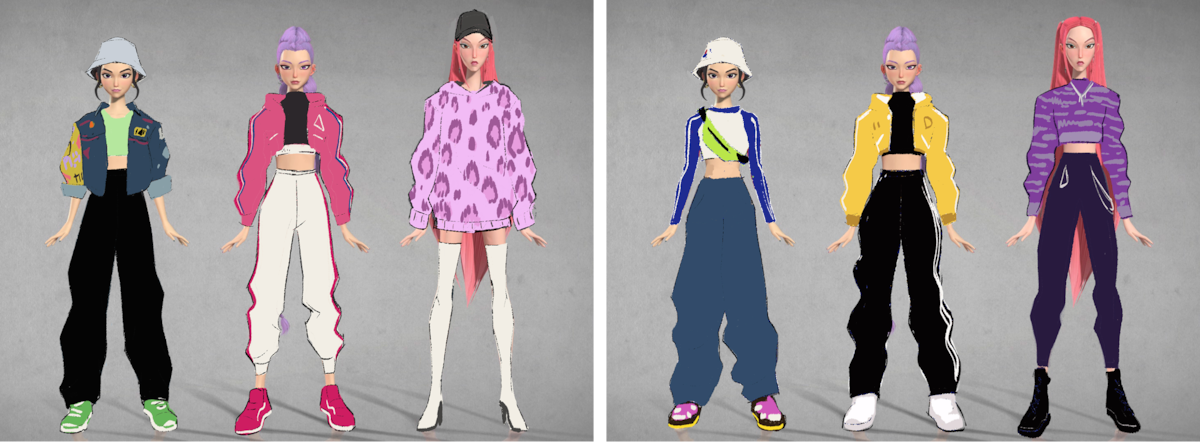
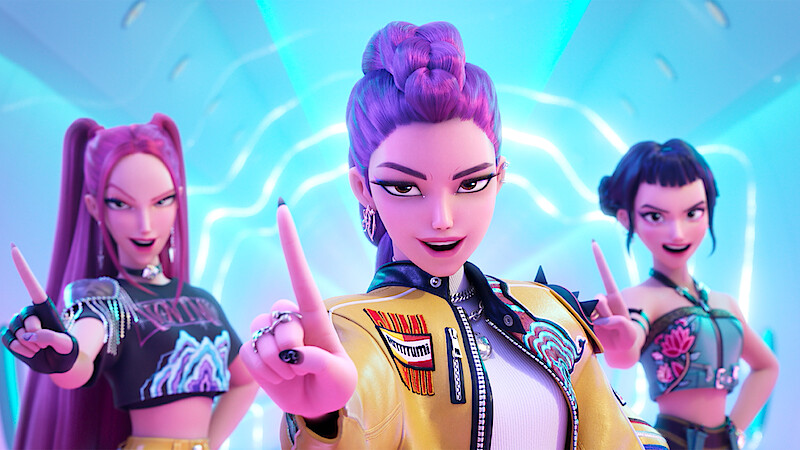
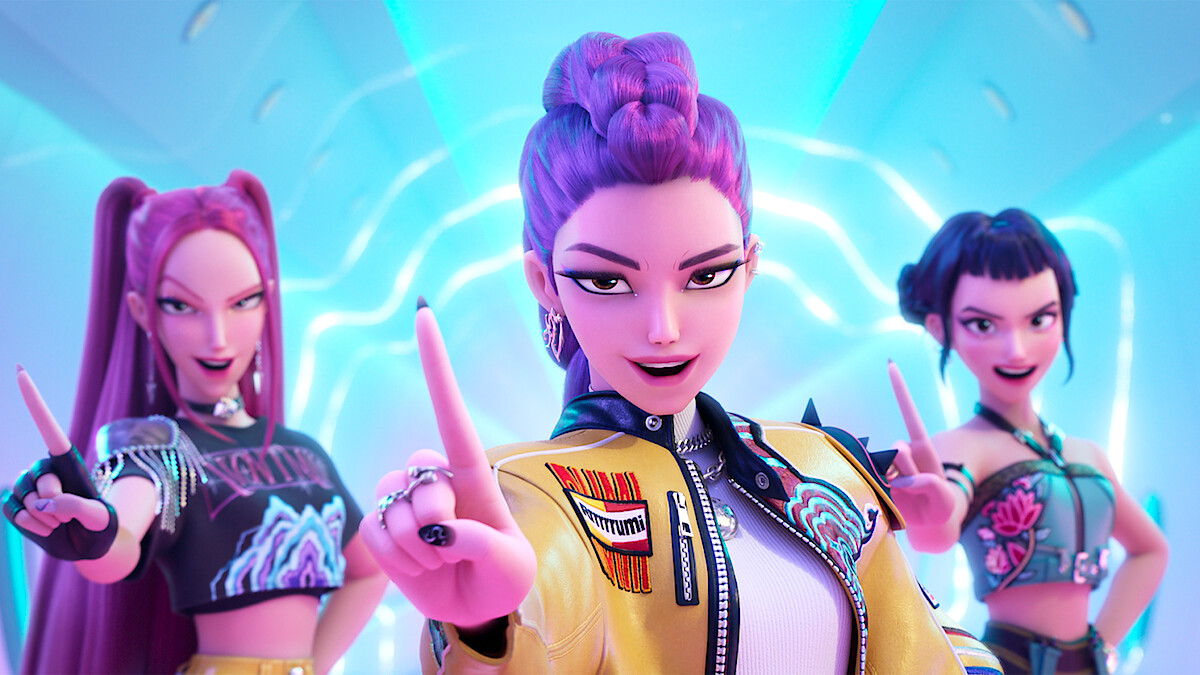
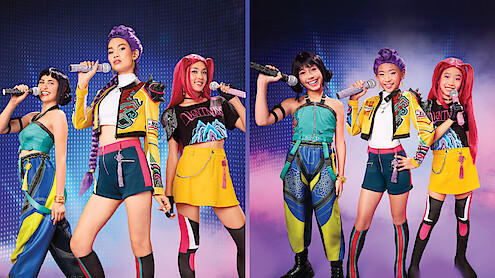
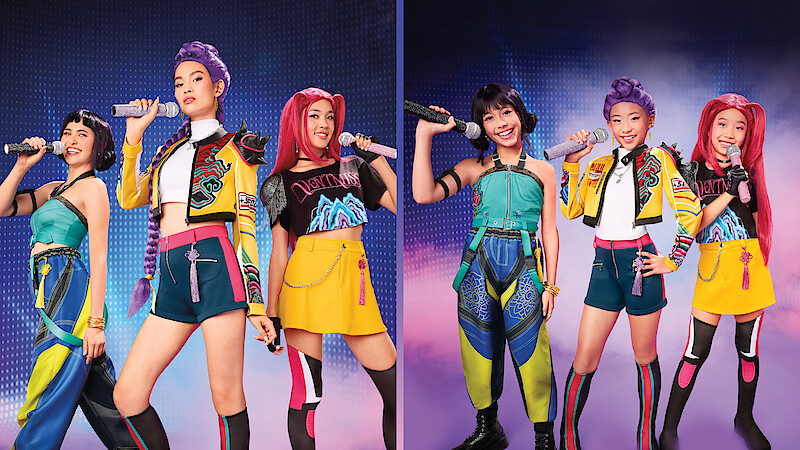
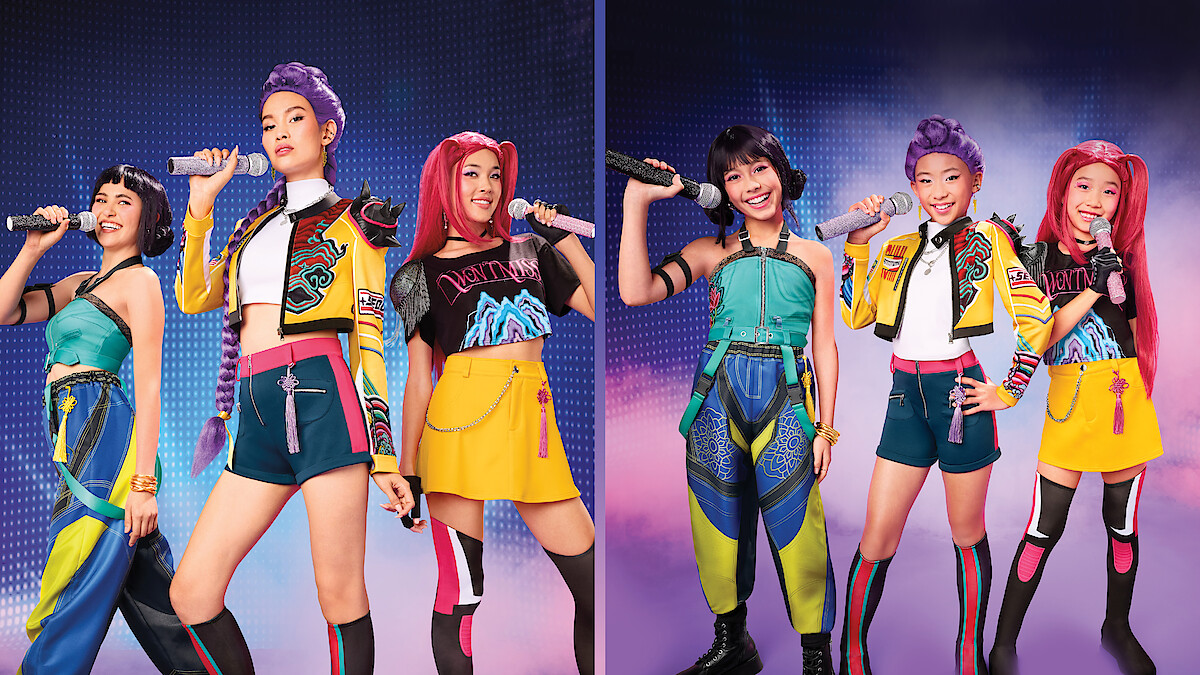
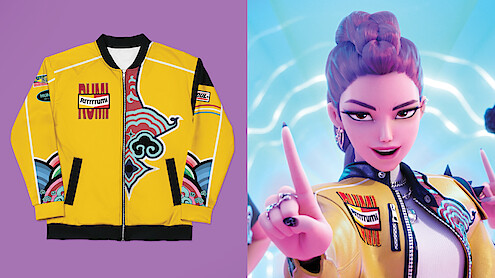
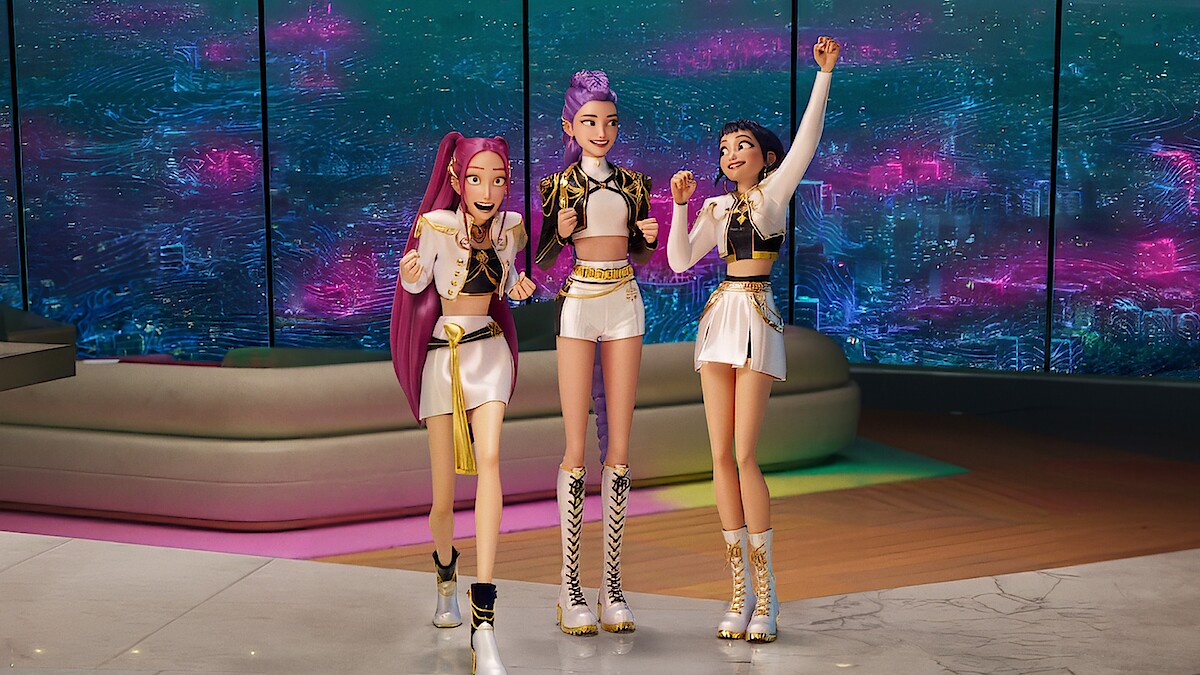
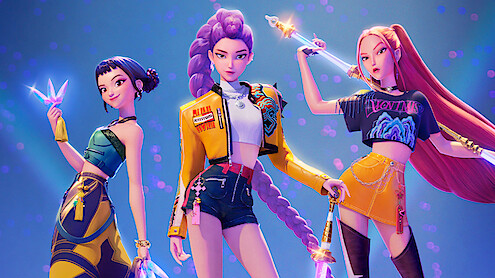
And the girls don’t limit themselves to a single signature color. Unless they’re wearing matching performance costumes, the trio switch things up constantly. The idea, according to Beveridge, is, “They don’t look coordinated, but they belong next to each other.” In the girls’ most iconic looks — the ones they rock at the beginning on their private jet, and the ones most often replicated on Halloween — none of them are boxed into one shade. You see yellow, for example, on all three girls, in different cuts and proportions.
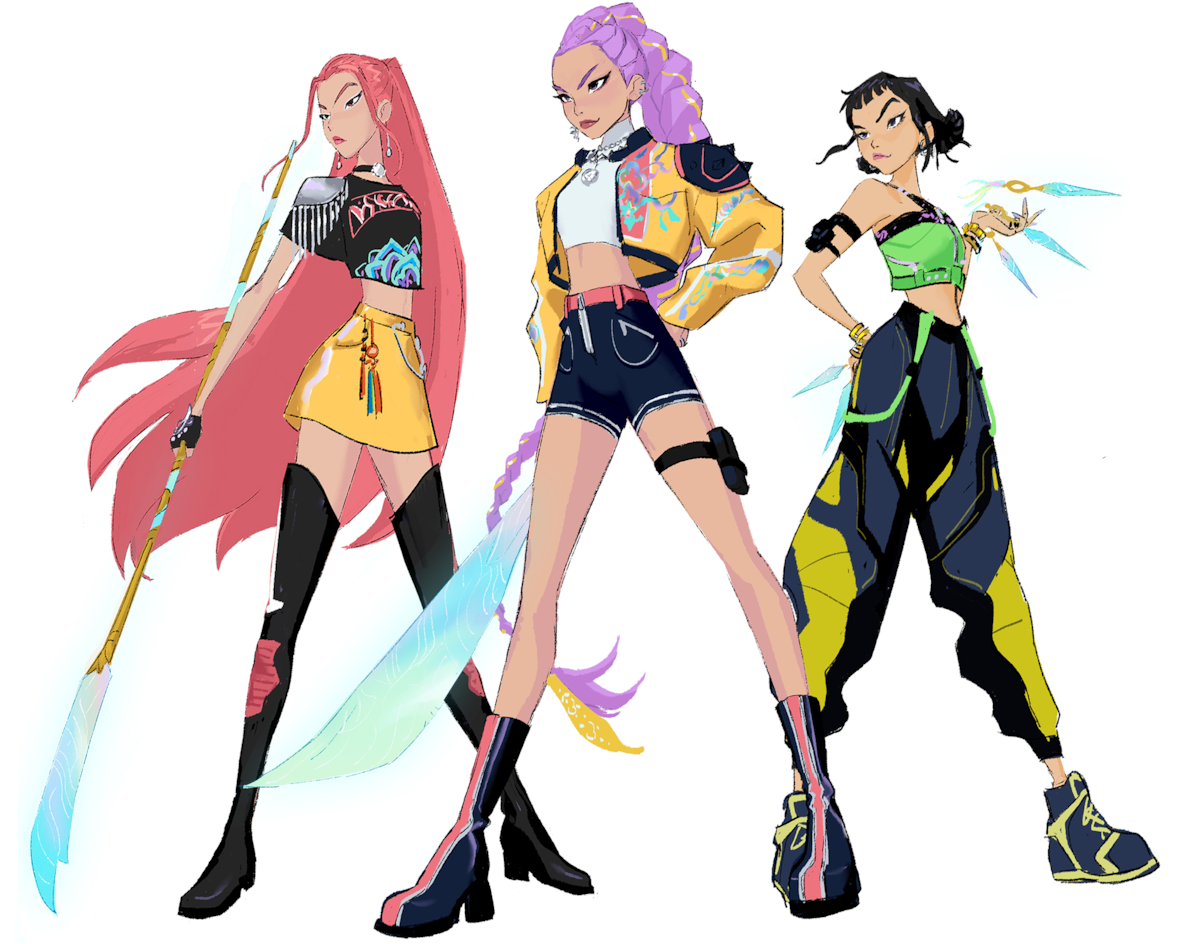
If you had to distill each girl into one representative color, you could look to their norigae, which are intricate charms worn in traditional Korean dress. But even here, differently colored beads and ornamentations reflect the specificity of each girl’s tastes and personality.
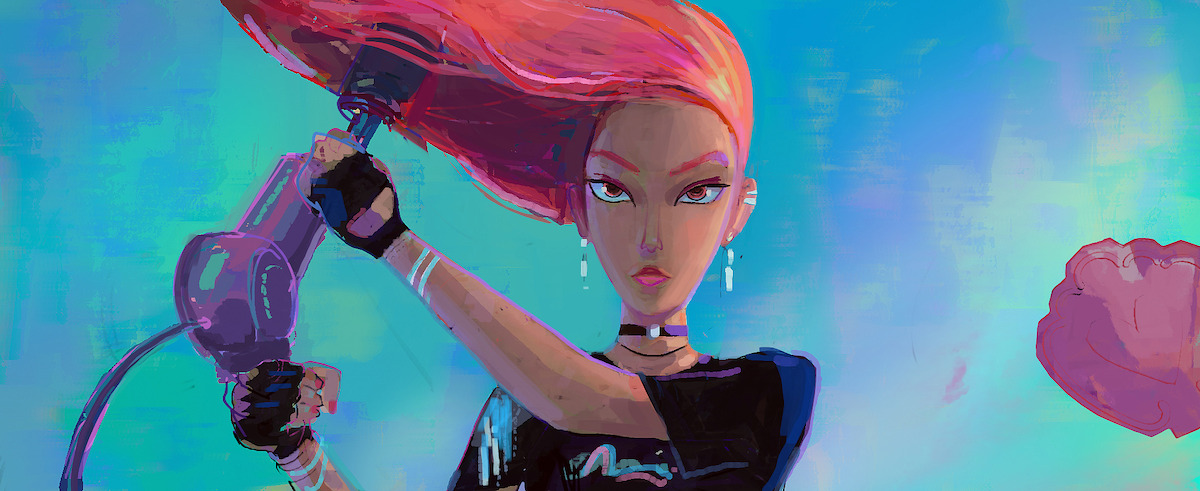
Obviously, Rumi’s hair is purple. But nothing about animating K-pop idol hair is that simple — or obvious. “There were so many meetings about it,” says Beveridge. “Hair color isn’t just one color. It’s got to have many layers. And there are so many decisions. How many flyways do you have? How messy of a knot is it?”
Chen says, “Up until a certain point, every artist painted Rumi slightly different colors. For the longest time, I was painting her hair white with a lavender tinge. In animation, you have to see how things evolve.”
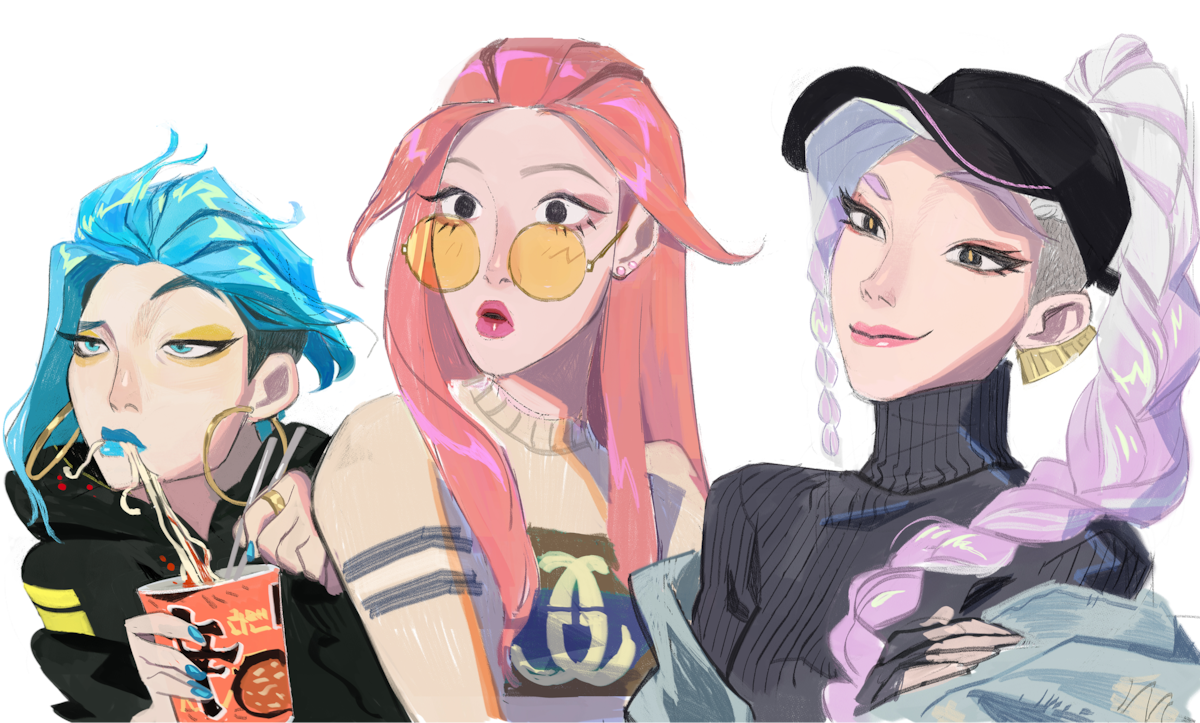
And now to an eternal mystery: What do we call the shade of Mira’s long, fiery hair? Like other colors in the KPop Demon Hunters universe, it’s a nuanced, in-between tone, but you know it when you see it. Not even the animators can quite put it into words. “I mean, ‘salmon’ doesn’t really feel like the right word. It’s a little deeper and more coral-y than that,” says Chen. “It’s a very specific tone. … It’s hard. If you asked me to pick it out right now on a color wheel, I don’t know what it’d be. Because it does have a little pink, a little orange — a little bit of all these unique colors.”
Beveridge tries to sum it up: “I’ve never heard an official name for it. We call it Mi-red.”
In the end, they settle on an approximation of a shade called “foxtail.” But “Mi-red” sounds more like it. Our favorite black sheep defies all categorization.
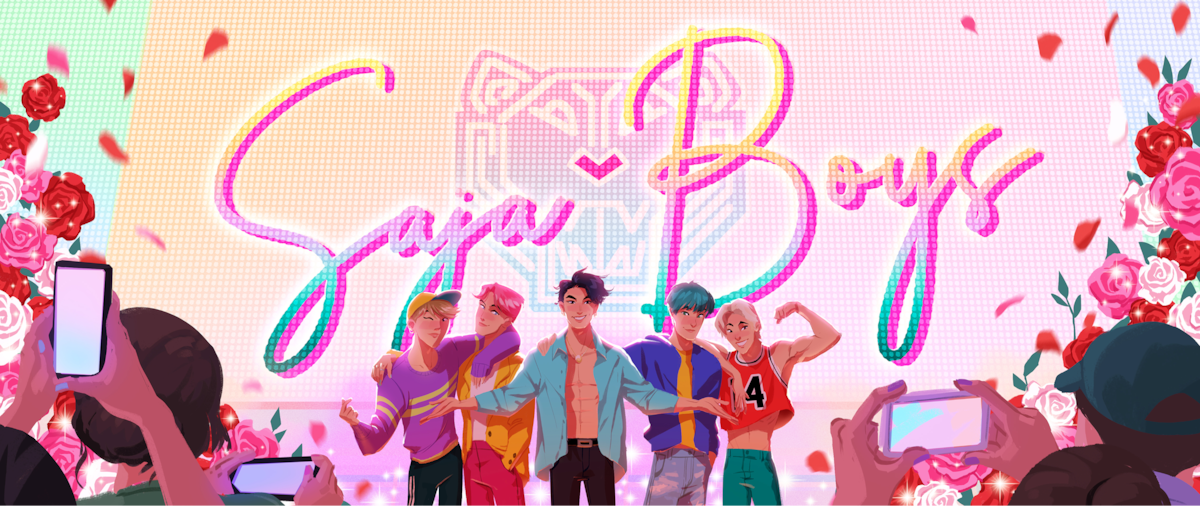
The Saja Boys were always going to make the shocking transformation from sugary sweet dream-boy facades to sinister demon forms in the end. “We were always checking in on where we start with them and where we end,” says Chen. “We wanted to make the reveal even more shocking, because edgy goth to edgy goth isn’t as big of a journey as starting from something totally different.”
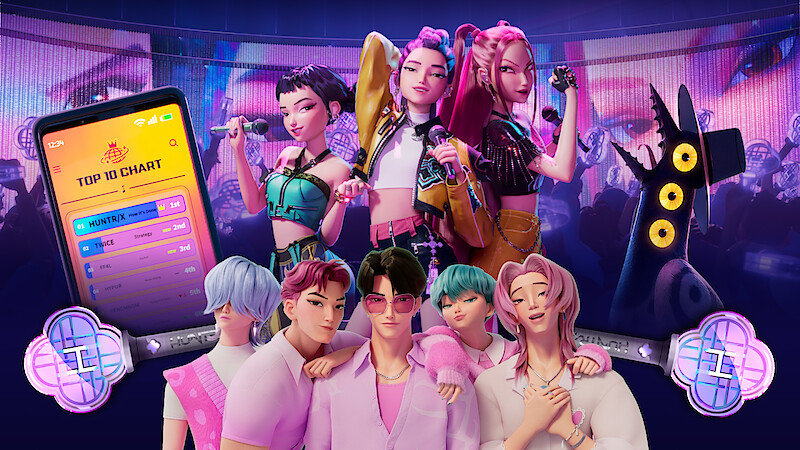
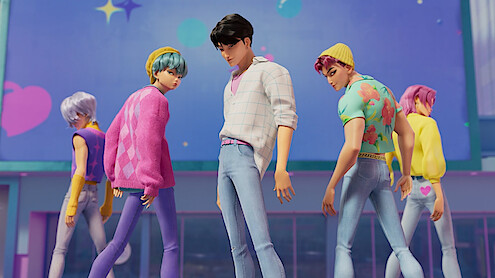
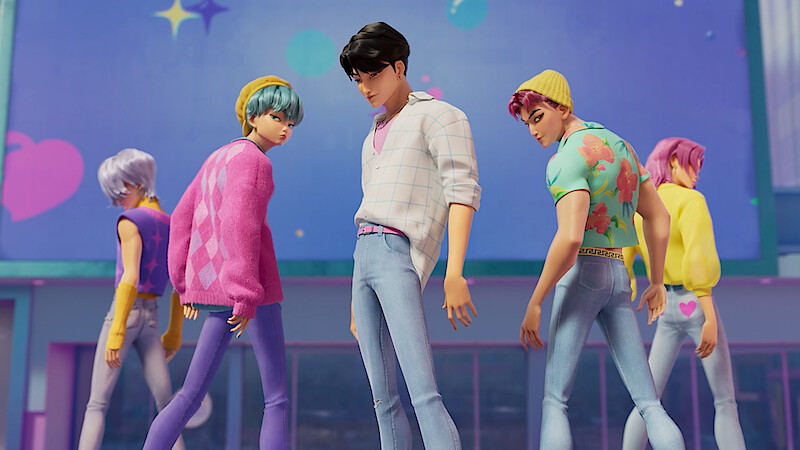
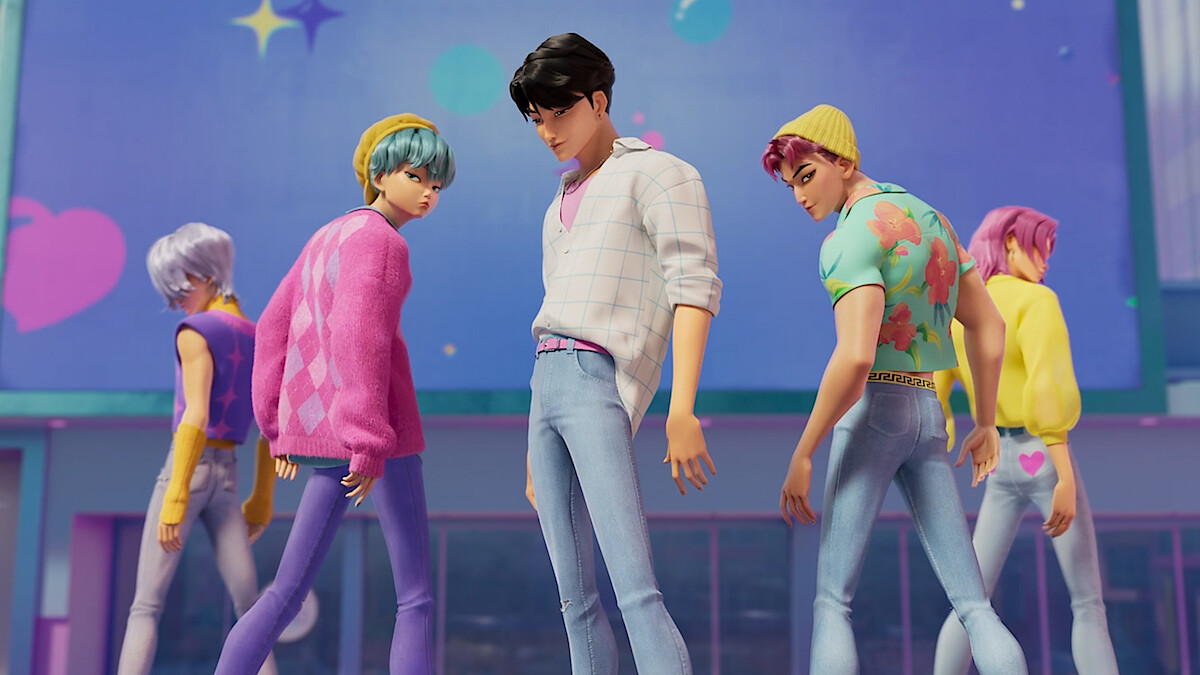
To play up the contrast, the team made their style as “bubblegum as possible,” with plenty of soft pinks and baby blues and teals. However, it still had to be believable that legions of fans would go wild for them. Beveridge says, “I had to remind the animation team to remember they’re also demons. It’s easy to put them into a small box and make them too cutesy. So we worked really hard to remember they’re still cool. This is fashion. Sure, the clothes are almost ridiculous, but they look cool at the same time.”
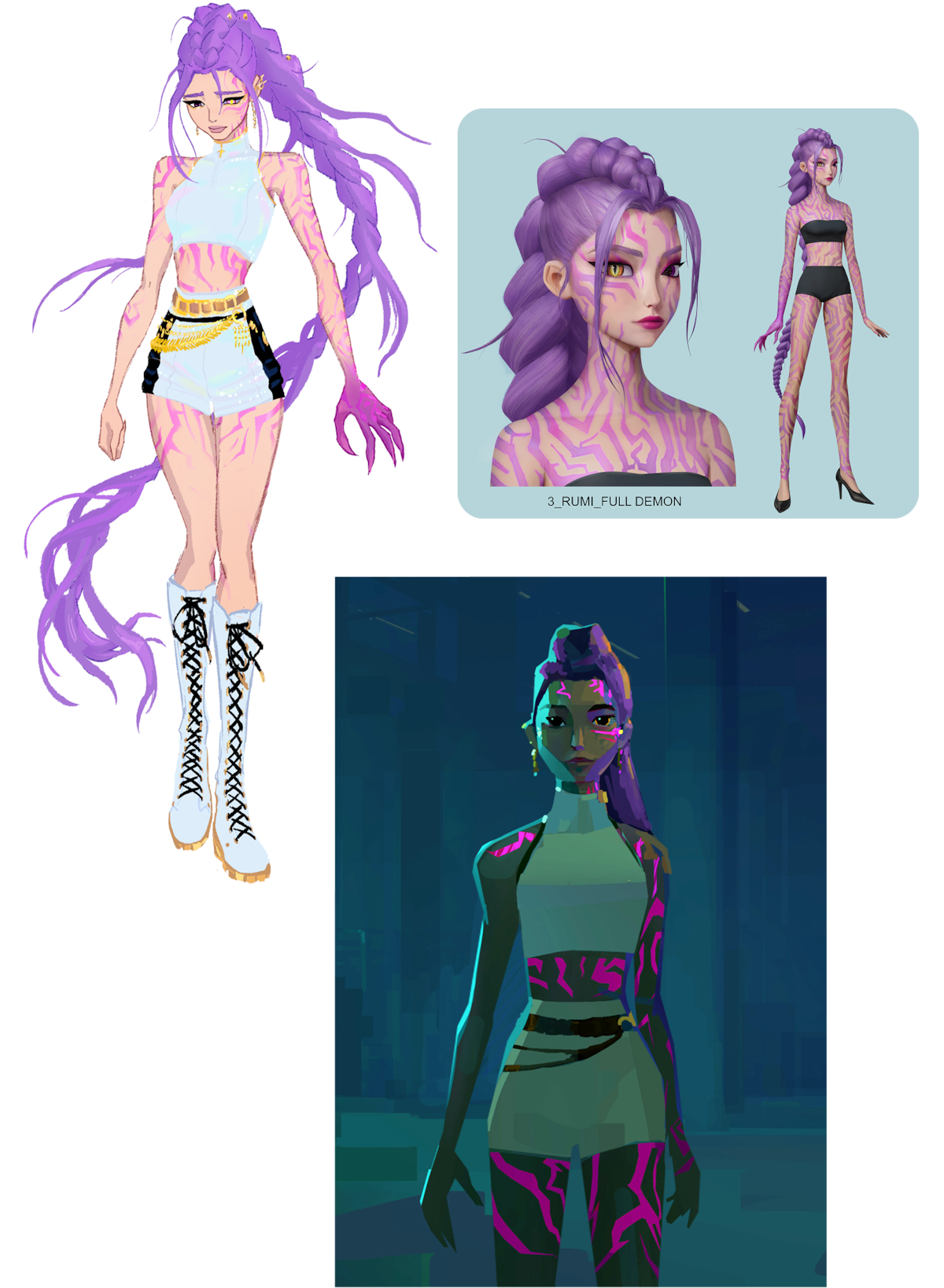
And their true demonic selves are terrifying in comparison, with their magenta skin and purple markings. “The artists tried so many different color combinations, but green on blue didn’t hit the same way,” says Chen. Artist Nacho Molina is credited with finding the right look for the demon patterns, which play a huge role in Rumi’s emotional arc.
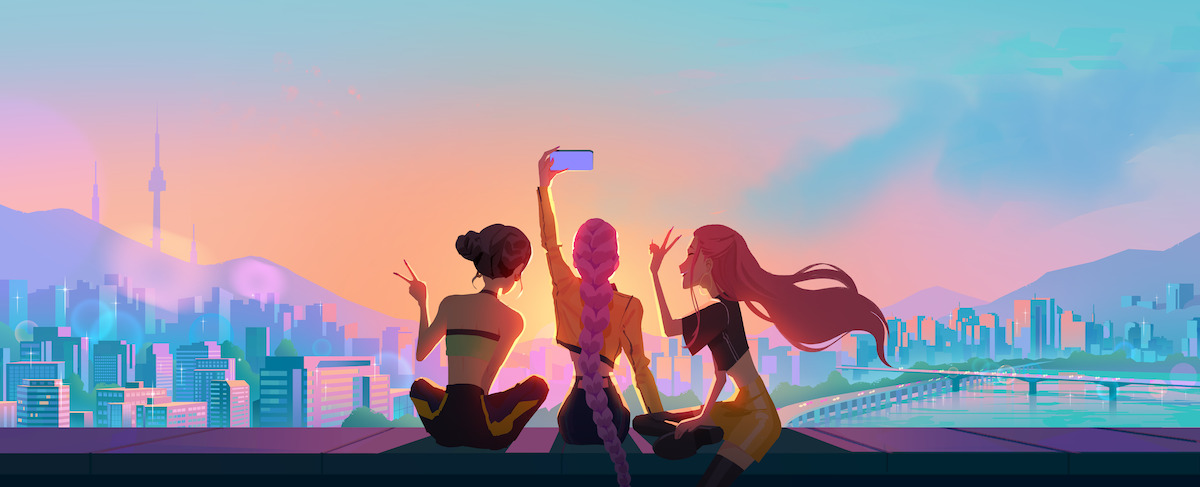
The reason KPop Demon Hunters looks like nothing else you’ve ever watched is that the focus always comes back to the emotional journey of the three girls. They were sold the promise of gold, but what they find is so much more colorful — and powerful. “They’re more than just one color,” says Chen. “Chris [Appelhans], for example, felt very strongly that he didn’t want to use a typical animation palette. That’s where the touchpoint of K-dramas came in, and how things are lit is very, very different from how we would normally approach it in animation.”
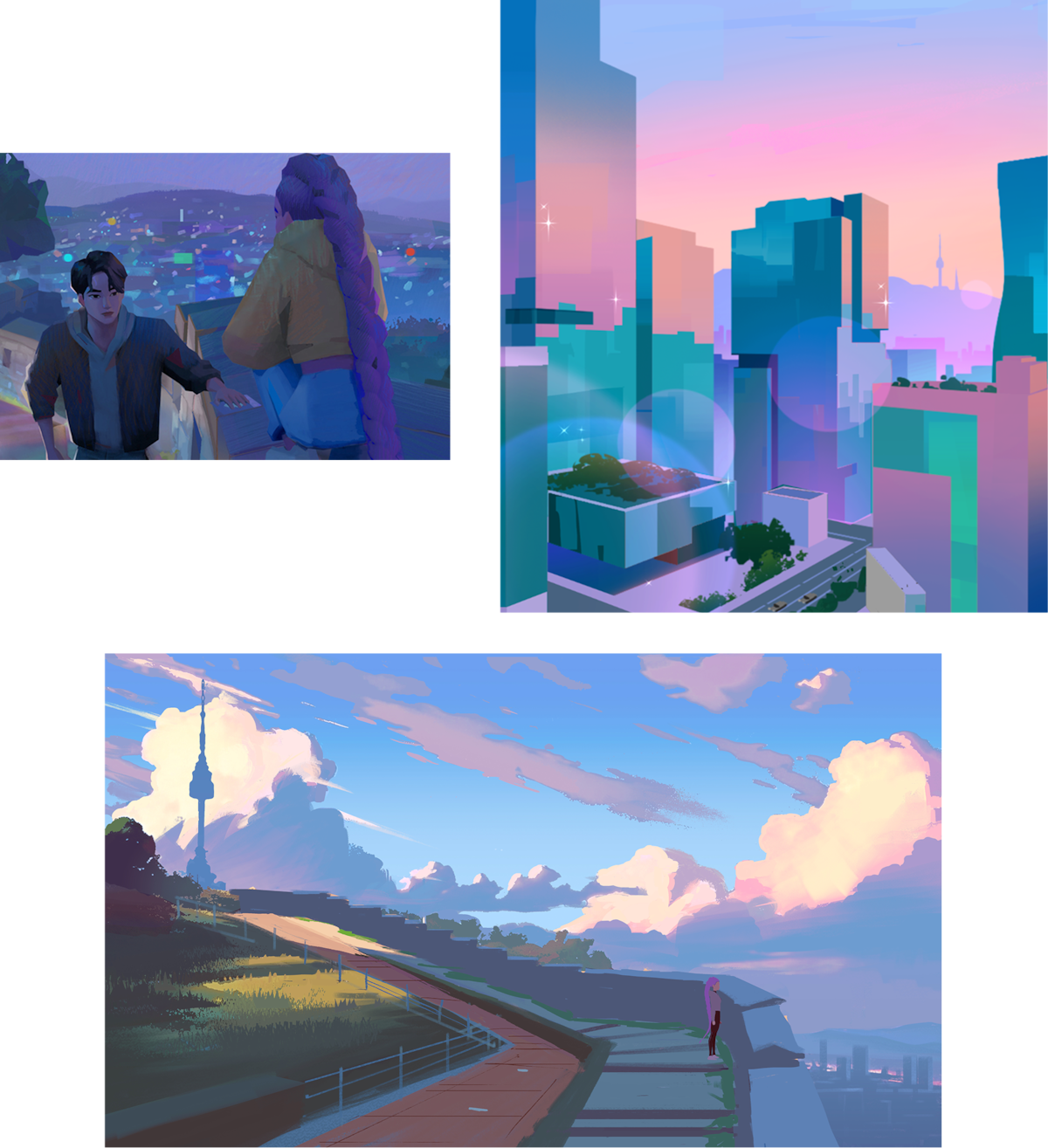
Perhaps counterintuitively, the softness of the K-drama-inspired lighting made it impossible to hide flaws in the animation. “Everything’s exposed in this gentle lighting,” says Beveridge. “It’s not graphic and flat — there’s gentle, gentle lighting and soft, soft edges. Our whole bag of tricks we’ve been developing for the last couple of movies I threw out the window.”
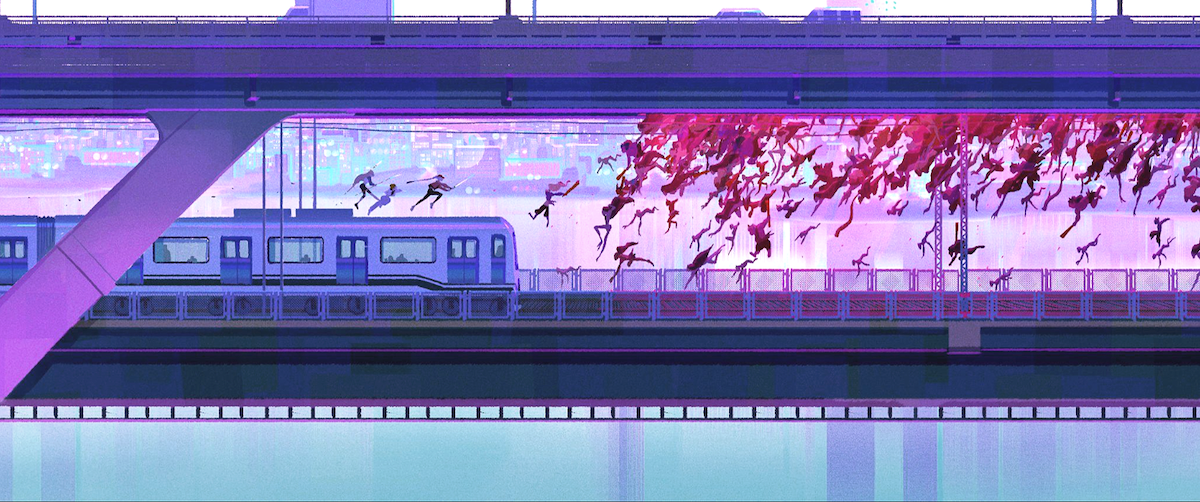
And to the filmmakers, soft never meant weak, and strength was never black-and-white. This sensibility is on display in HUNTR/X’s battle against the demons atop a speeding subway train on Cheongdam Bridge. Chen recalls, “I remember we talked about, ‘What if there was this crazy fight scene, but the colors were dreamy instead of very intense?’ We found moments of celebrating feminine colors — juxtaposing an action sequence with purples and pinks.”
KPop Demon Hunters is streaming now, only on Netflix.