Ricky Gervais: The Office co-creator, seven-time BAFTA winner, five-time Golden Globes host, five-time Golden Globes winner, and — of chief importance — cat lover. The After Life creator is back with the animated sitcom Ricky Gervais: Alley Cats, which centers around a rag-tag bunch of London street cats voiced by Gervais and a crew of British talent: Diane Morgan (Cunk on Earth), Tom Basden (Plebs), Andrew Brooke (The Agency), David Earl (Derek), Kerry Godliman (The Witness), Jo Hartley (Adolescence), Natalie Cassidy (EastEnders), and Tony Way (Savage House). The series was created, written, and directed by the star, co-directed by Elliot Dear, and animated by Blink Industries. Tudum spoke with the comedian about the making of the show, his inspiration for it, and, of course, cats.
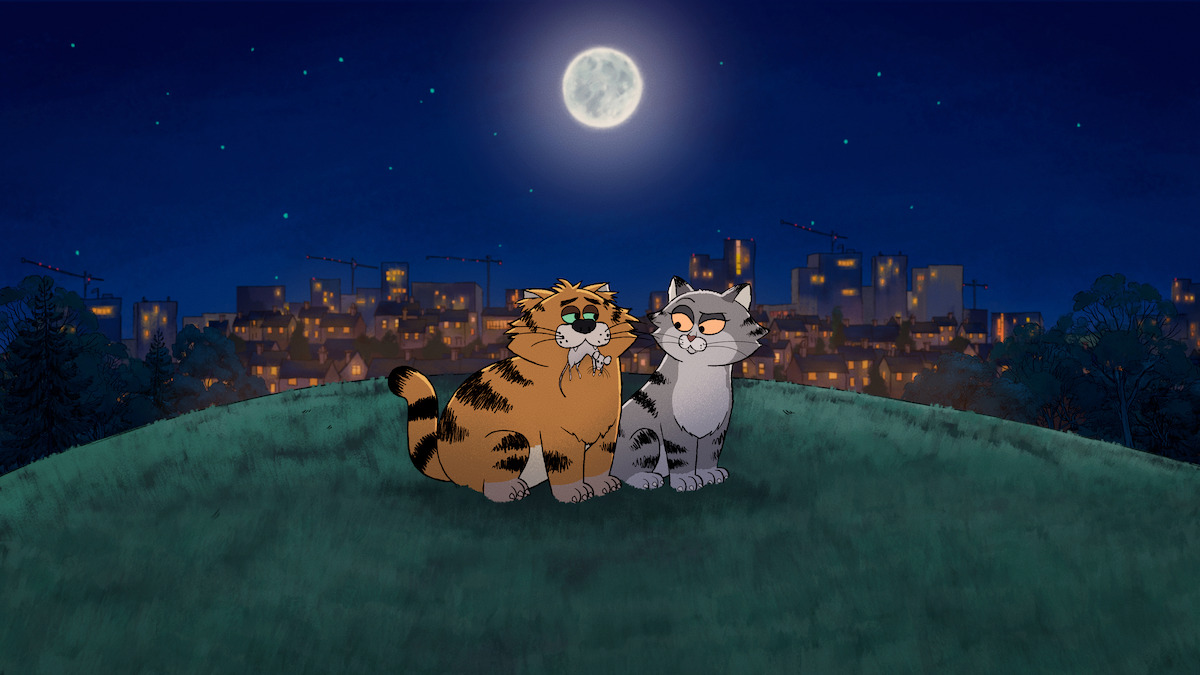
Gervais pitched Alley Cats as a sitcom about swear-y cats, and says the show is a love letter to the species. The stand-up grew up with felines in his home — among them, three female cats with traditional boy names like Colin. His cat now, a girl tabby slash tortoiseshell called Pickle, is partly his inspiration for the lead character he voices, Gus. “She’s turned out to be just the loveliest, sweetest, most affectionate cat ever,” Gervais tells Tudum. “There’s a little bit of her in Gus, definitely. The rest of Gus is probably me, a fat bloke on the sofa watching telly.”
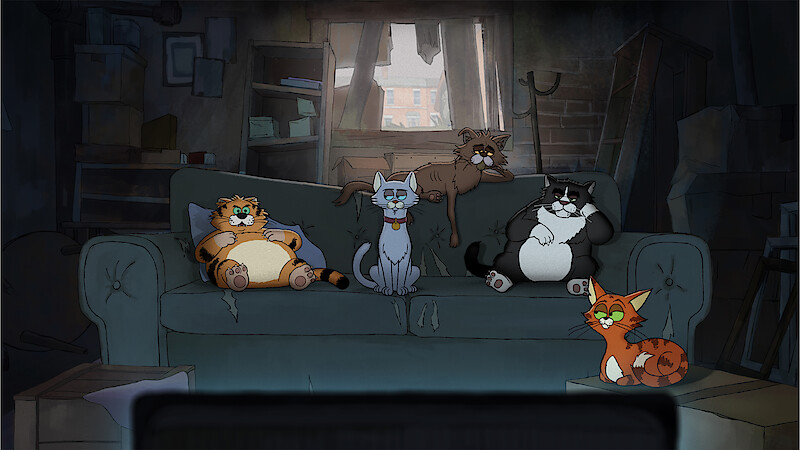
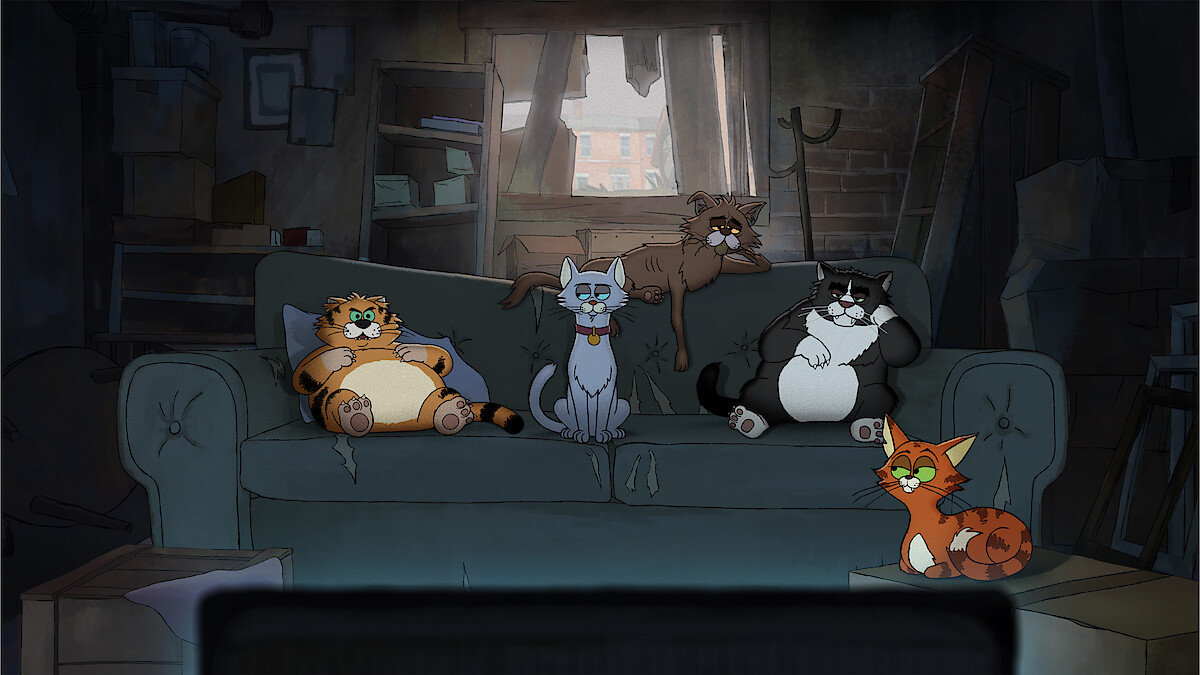
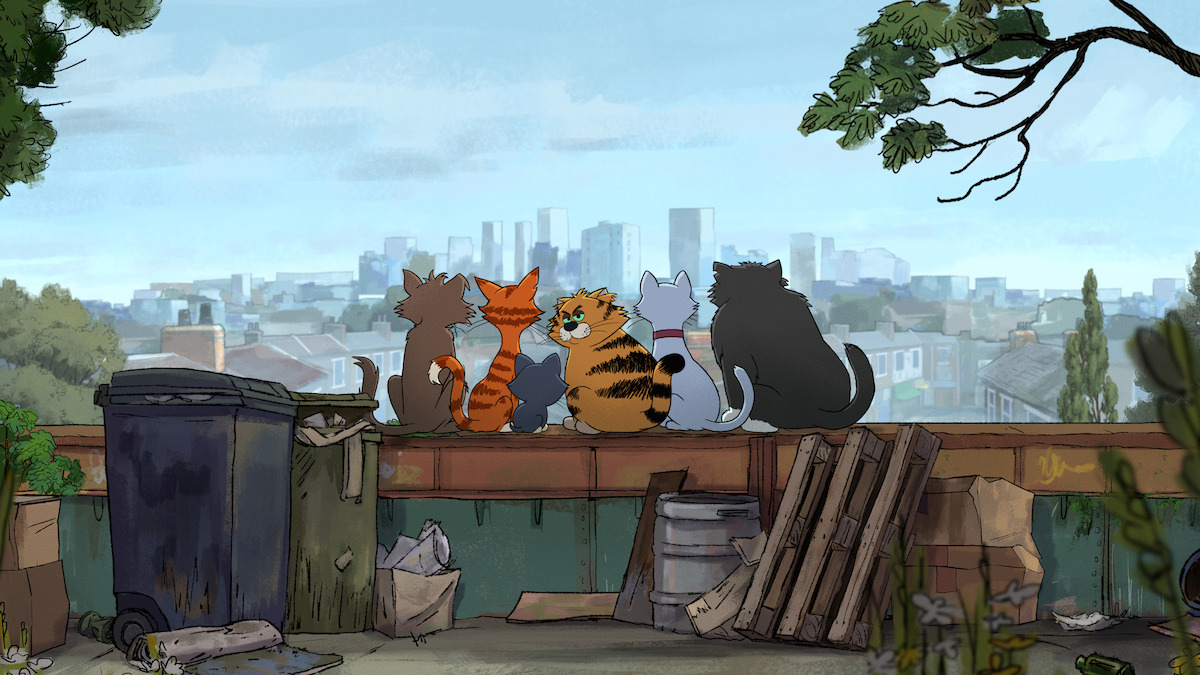
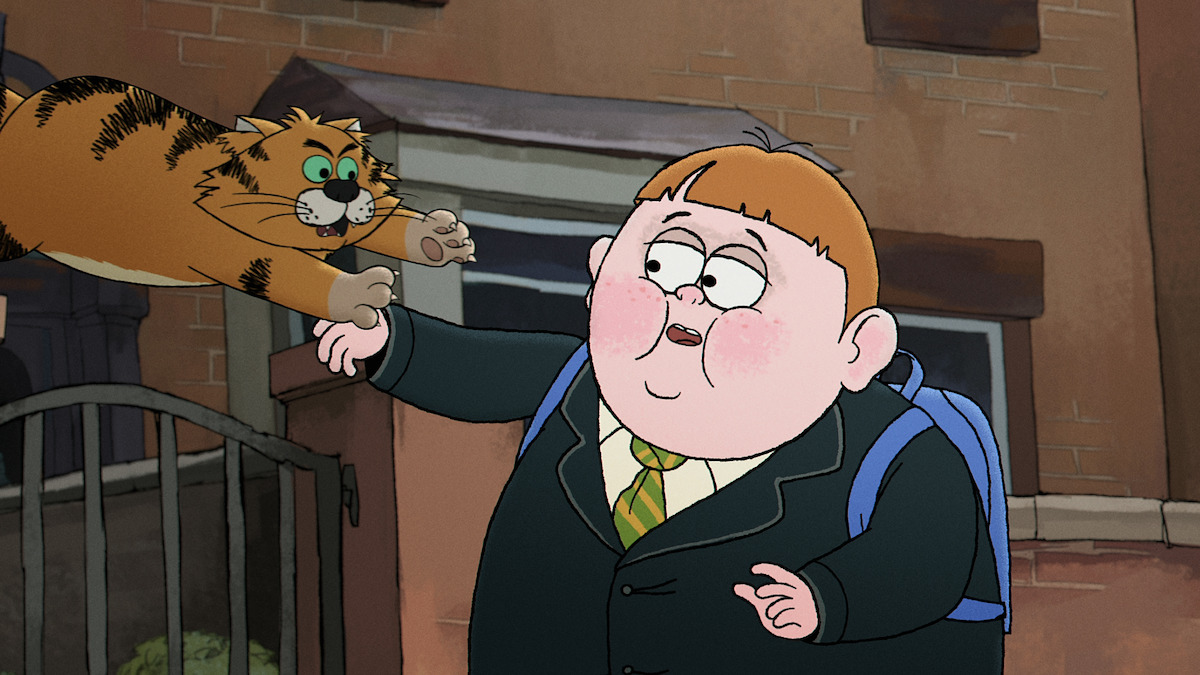
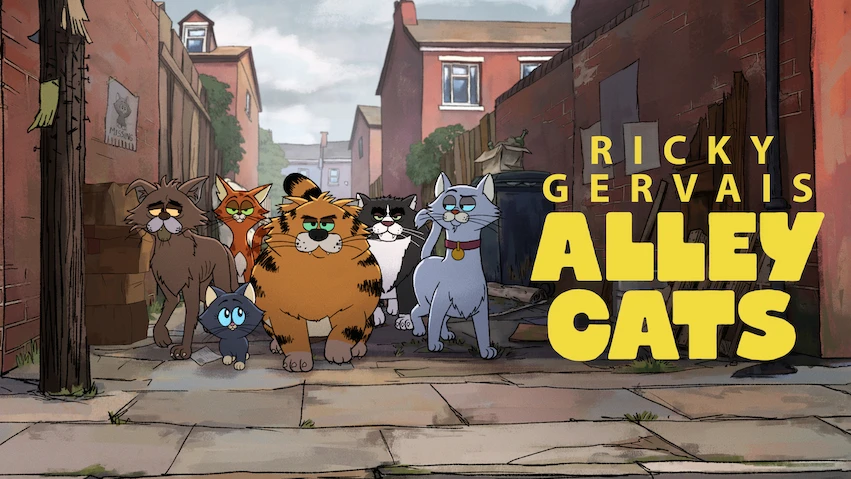
The short-form series — each episode runs about 15 minutes — follows five rough-and-tumble strays and their dapper domestic mate who face the challenges of the modern-day world on the streets of London. (They also spend a significant portion of their lives brutally razzing each other.) Curmudgeon and alleged tough guy Gus, chaotic tuxedo cat Fang (Brooke), shameless fleabag Puke (Earl), dimwitted Olive (Morgan), and a posh cat named Ponce (Basden) convene daily in an abandoned flat, where they laze away watching the tube before venturing out to find food and stumble upon harsh life lessons. On one of these daily jaunts, they meet a lost kitty called Kitten (Hartley), who’s desperate to get back to her adoptive family.
The show is a nod to the sitcom itself, Gervais says, specifically those with wisecrackers like Gus — like American series The Phil Silvers Show and Cheers, as well as Brit sitcoms like Porridge and Only Fools and Horses. “I made [the characters] obviously unwanted to add to the pathos and the jeopardy. I wanted them to be bottom-of-the-pile, so you’re rooting for them straight away,” Gervais says. “It’s almost like a typical British sitcom class conflict. They’re uneducated, they’re hungry, they’ve got to be tough, they’re streetwise, but their regular member of the gang is a middle-class pet who’s educated. That’s what starts all the conflict and all the bickering.”
Sure, Alley Cats is animated, but viewers won’t find characters making klaxon-horn sounds while their eyes bug out of their heads, or bouncing on their tails like Tigger. “It’s not surreal apart from the fact these cats talk. I’ve tried to make it quite naturalistic,” Gervais says. He also made the series distinct in its writing and production — the cast came first, then the scripts. “What usually happens is, particularly with big-budget films, they write a screenplay … they storyboard it, they cast it, they animate it — and the actors are the last thing on the list. With this, we did the other way ’round.”
While recording, Gervais encouraged his cast to ad-lib to capture off-the-cuff bits, some of which ended up shaping the storyline. “We just muck around, and we’re all in the same room at the same time, and it’s really lively. We sometimes leave in the laughs.” He wanted to ensure the plot and the performances are what stand out. “We hand it over [to the animators] and I go, ‘Animate what’s happening. Don’t add to the joke. Just animate these cats on their adventure.’ ”
The show captures real banter and laughter among the cast, which — given the nature of animation — means every cackle gets animated into the cats’ personalities. “It’s the best. It’s funny when you see a cat laughing in the background. Nothing happens by mistake in animation. It’s quite funny that you spend as much time [animating] someone corpsing [from an ad-lib] as you do a written line in a screenplay.”
Not unlike his previous comedies, Alley Cats is at times poignant and existential, with characters who can be both off-putting and endearing. The cats, amid catching mice and getting beaten up by fellow street toughs, are fully aware of their fleeting time on earth, facing hardships with as much sincerity as they can muster.
“Everything I’ve done has been a bit existential,” Gervais says. “[The UK series] The Office was about turning 30 or 40 and [wondering] if you were getting the best out of life; Derek was about the end of life and what you’re leaving behind; After Life, literally the most existential thing I’ve ever done. And [Alley Cats] is pretty existential because they’ve got even shorter lives than people — they know they haven’t got long.”
And it was important, too, for each episode to have those emotional arcs, even in a short sitcom packed tightly with jokes. “If there’s no emotional content, you don’t really care [about the cats],” Gervais says. “I want these cats to get under people’s skin so when something happens, it really means something.” Even though they’re cats, he says — they torture their food before they eat it, after all — Gus, Puke, and the rest are as complex as any sitcom character.
So what does he want people to walk away with from the series? “I just want people to love the cats,” Gervais says. “Without giving too much away, I want to surprise people with all these characters and with all these stories.”