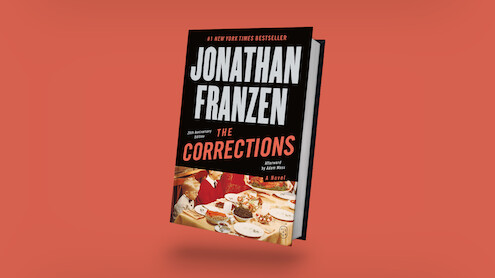
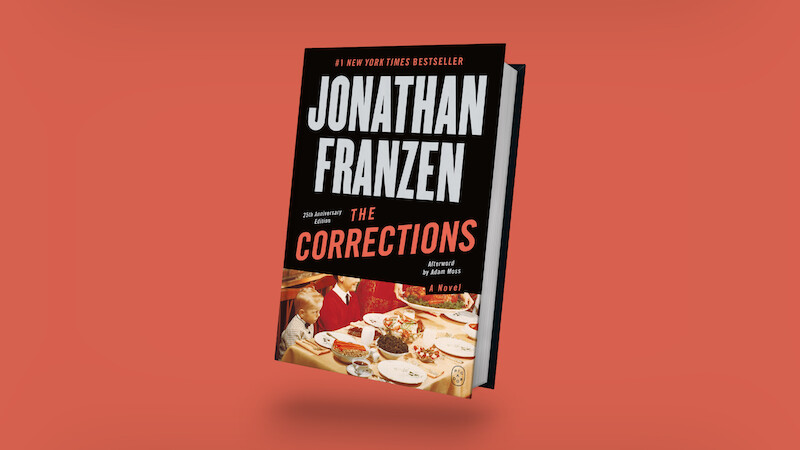
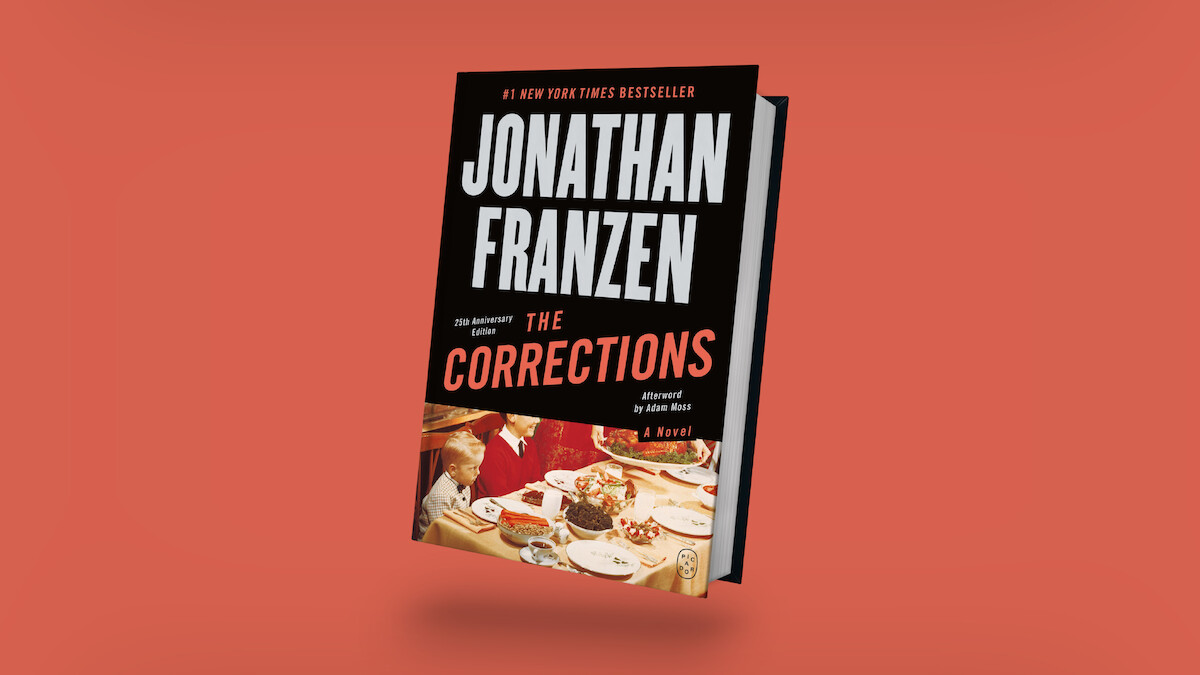
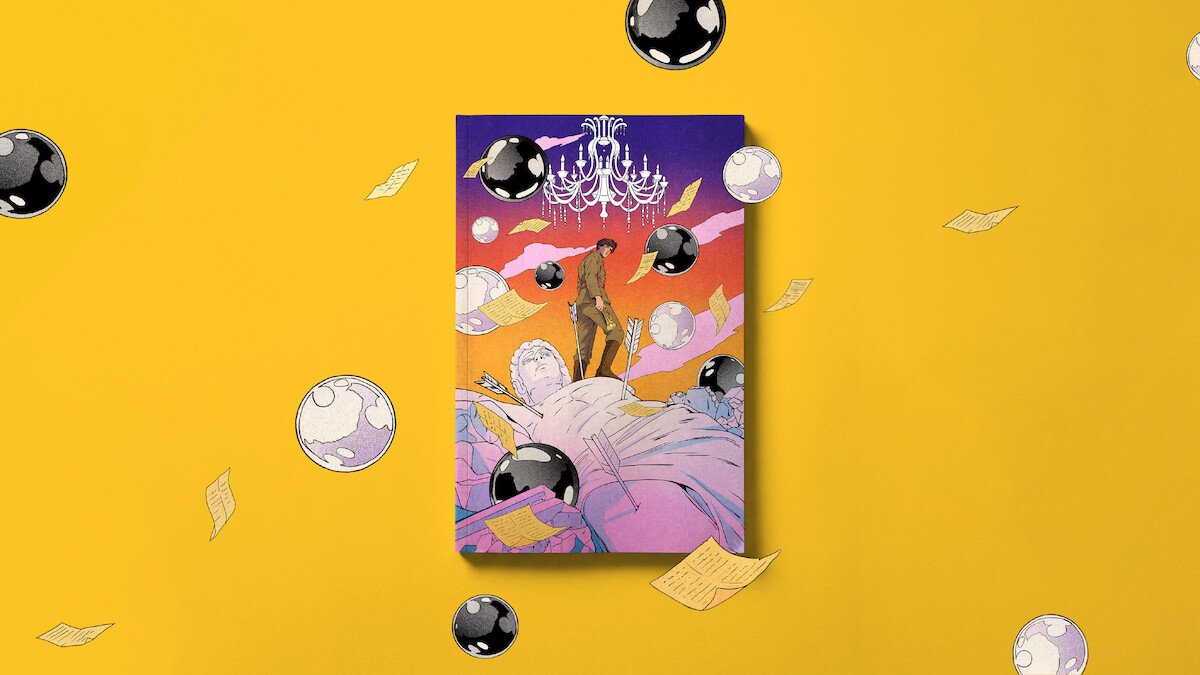
A little more than 25 years ago, Jonathan Franzen was stuck. He had published his second novel, Strong Motion, in January 1992, but now it was nearly the end of the decade, and the book that would become The Corrections refused to take shape. “I had been suffering with a misconception about what an American novel should look like and what it should try to do,” he says. “[So] I thought, ‘I’m just going to try to write a book that I might like to read, that some ordinary person might like to read. I’m not going to care about the larger social dimension. I’m not even going to care about finding an audience. I’m not going to be ashamed of writing an entire long novel about a woman who wants her family to come for Christmas’ — and that’s what I did. And to my surprise, it was a hit.”
Released on Sept. 4, 2001, the National Book Award–winning novel follows the Lambert family: Enid, a Midwestern mother with a tendency toward hoarding and harshly judging her adult children; her husband, Alfred, a former railroad engineer who isolates himself in his basement as he enters the twilight of his life; and their three kids — Gary, a successful money manager; Chip, a disgraced professor; and Denise, a hotshot chef. Against the backdrop of family drama, Franzen maps the full terrain of American anxiety at the turn of the millennium — bubbling discontent about ambition, infidelity, and capitalism — and it feels just as relevant now as it did 25 years ago. “Even though [the book] was mostly focused on pharmaceuticals, psychopharmaceuticals, I think the sudden dominance of our world by AI has brought the question back of ‘What is a human being? In what way are we not machines, if machines can do what we can or even better?’” he says. “But really, to me, what the book is and what the story is, is these five characters. The complexity of their interactions, the irreplaceable humanness of all of that, was my response to that materialistic or materialized view of the world.”
The Corrections continues to connect with readers who see themselves reflected in its hilarious and heartbreaking story. “I have pretty steadily for 25 years heard from readers of The Corrections: first-time readers, people who have gone back to it, people who read it when they were young, and now, when their parents are getting old, they’re reading it again, and it feels like a different book.”
Now Franzen is writing the next chapter of The Corrections: He’s adapting the literary sensation for Netflix. Penning the scripts for the episodic series, he’s reconnecting with the Lamberts and has realized he may have portrayed his characters too harshly. “I lost my mother in 1999, so before the book was published. I lost my dad in 1995. I’ve been parentless for a long time. And as the years go by, I miss them more and more, not less and less, and I have an ever-deepening appreciation of what amazing parents they were, so that has filtered into the new project,” says Franzen. “The person working on those scripts is somebody who misses [his mother]. Not that Enid is my mother, but they share some DNA for sure … I wanted to establish sympathy for Enid early and give her more dimensions, more nuance.” Returning to other characters reminds him of the experience of creating them: “There were some characters who were harder to write. Gary was the easiest because he’s just so funny, and his situation is so desperately funny. I wrote that section of the book much faster than anything else.”

David Livingston/Getty Images
Even as the series script evolves from the novel, the ingredients that make The Corrections so compelling remain the same. “This is a comedy about people who deceive themselves; that has not changed,” he says. “People are running from reality, telling themselves stories that do not correspond to reality, and reality chases them down, and there are corrections.”
Exploring how to adapt his own material for the screen over the years has presented a new challenge for Franzen. “The fact that none of my novels have been adapted for a visual medium had become something of a point of pride,” he says. “And yet, here I am trying to ruin that record. What am I doing? It has a lot to do with a hunch, a hope that there will be dimensions of the book that I’m unaware of that will be revealed by great actors working with a great director.”
One of the great actors joining Franzen? Three-time Academy Award winner Meryl Streep, who’ll play Enid. “She was not at the top of the list, she was the only person on the list,” the author says. Franzen’s other creative partners on The Corrections, which will be produced by Paramount Television Studios, are Emmy-nominated executive producer Mark Roybal (Mare of Easttown) and Academy Award–winning writer and director Cord Jefferson, who brought American Fiction, based on Percival Everett’s novel Erasure, to the screen.
While revisiting The Corrections after more than two decades, Franzen is less interested in his own milestone and is more taken with the timeless nature of storytelling. “I can pick up Stendhal, The Charterhouse of Parma ... and I’m suddenly there in Napoleonic Italy,” he says. “That’s the magic of words on a page. That’s the magic of narrative. It has this amazing capacity to remain fresh ... I am impressed not with the longevity of my books, because that would be unattractive, but the longevity of good novels in general.”