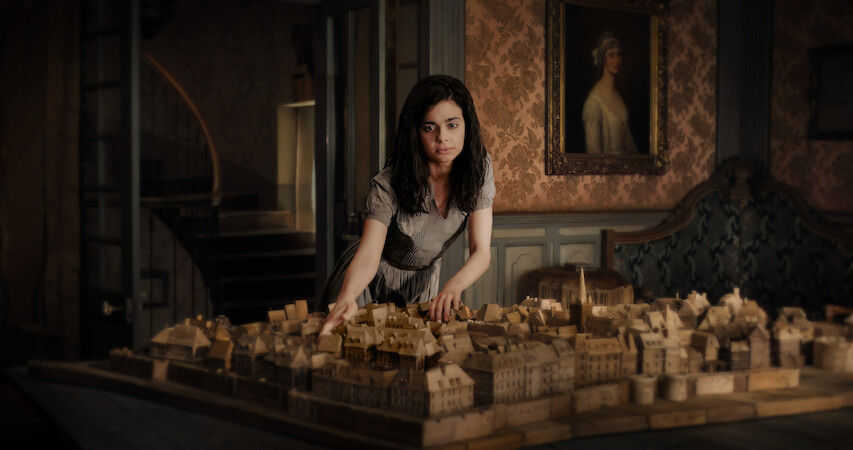
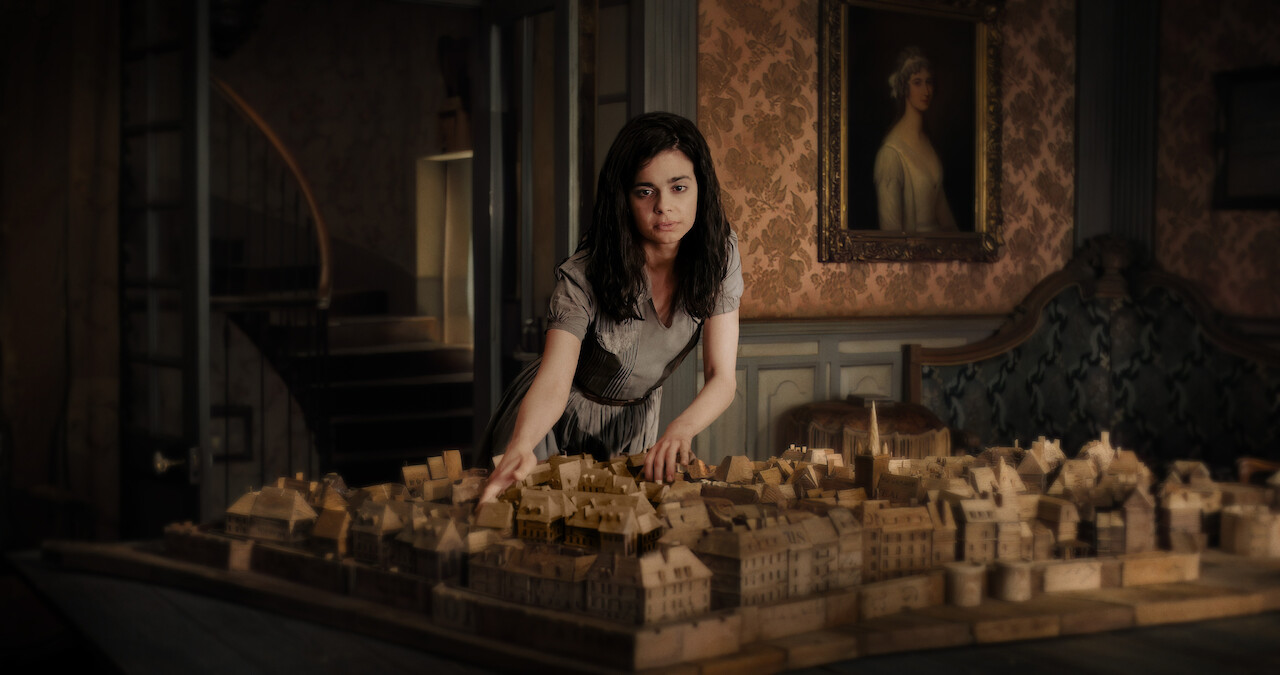
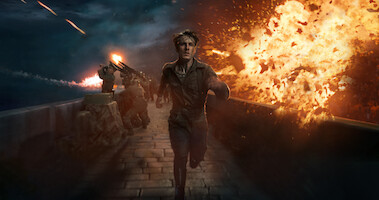
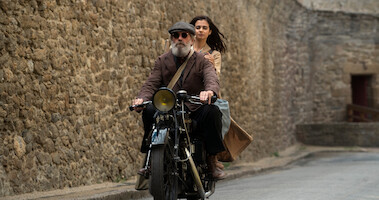
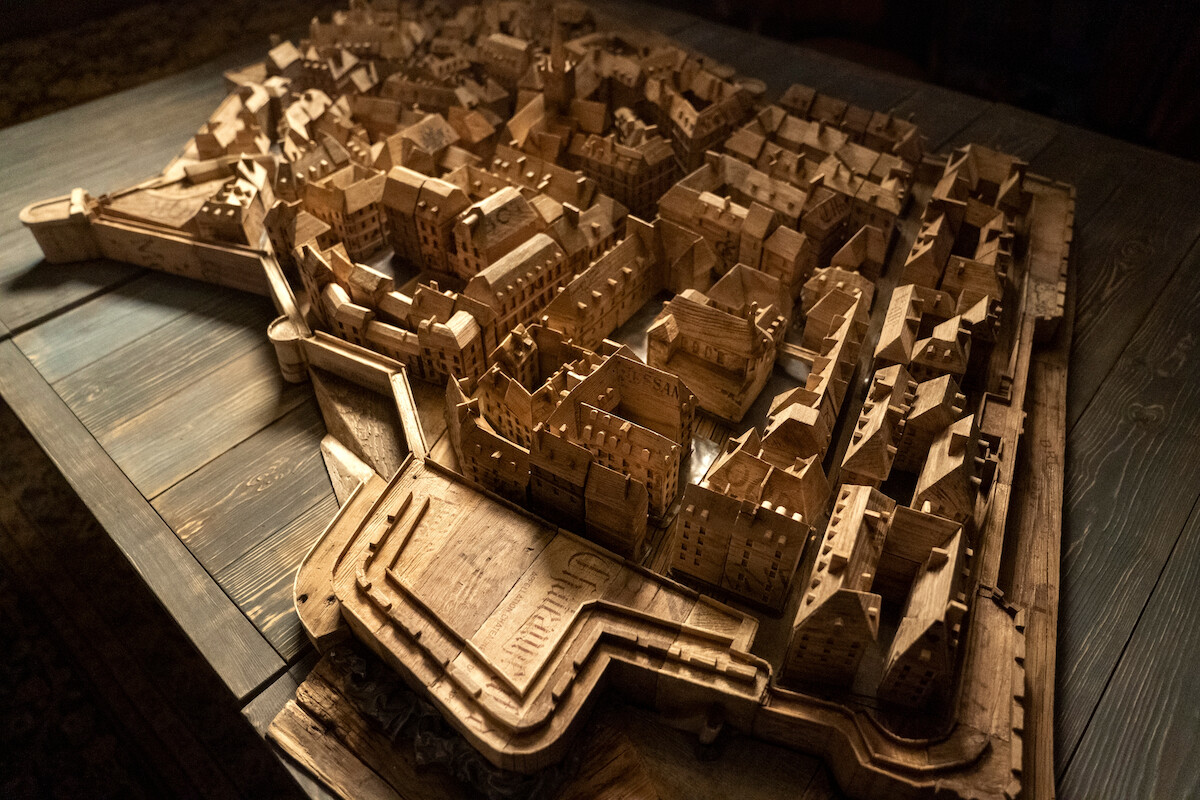
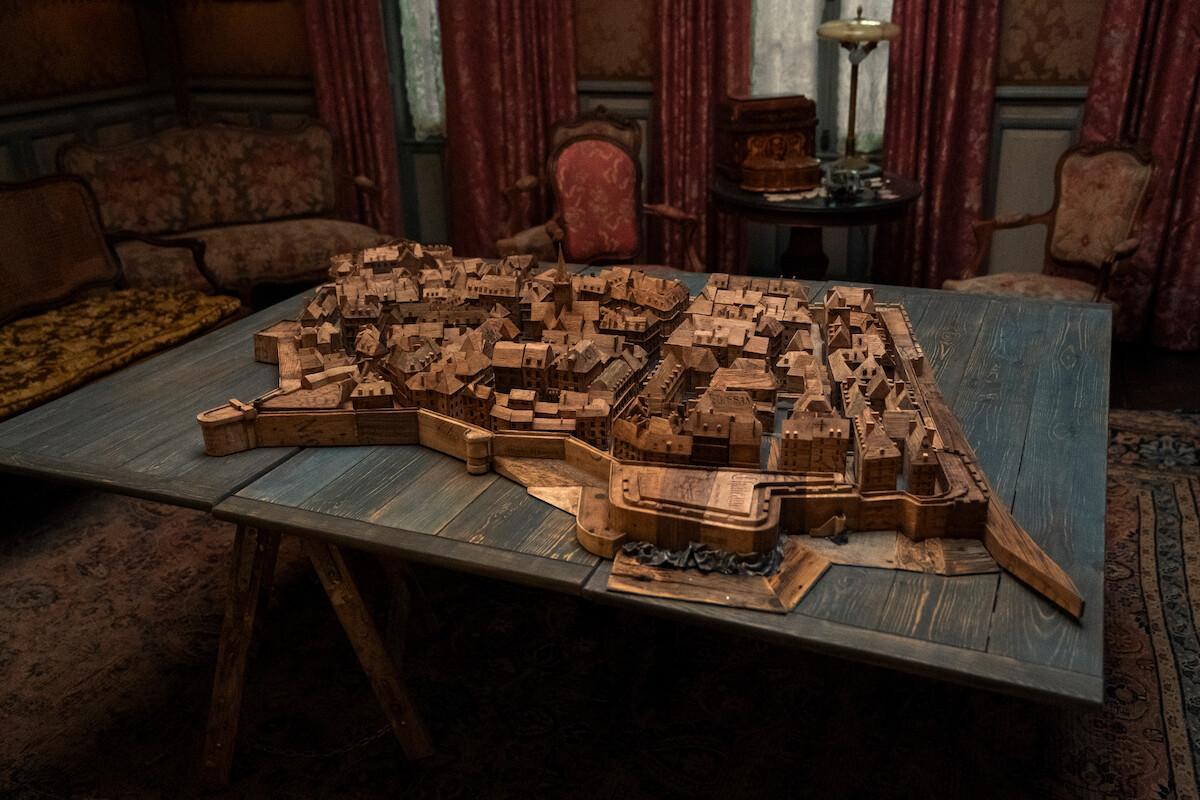
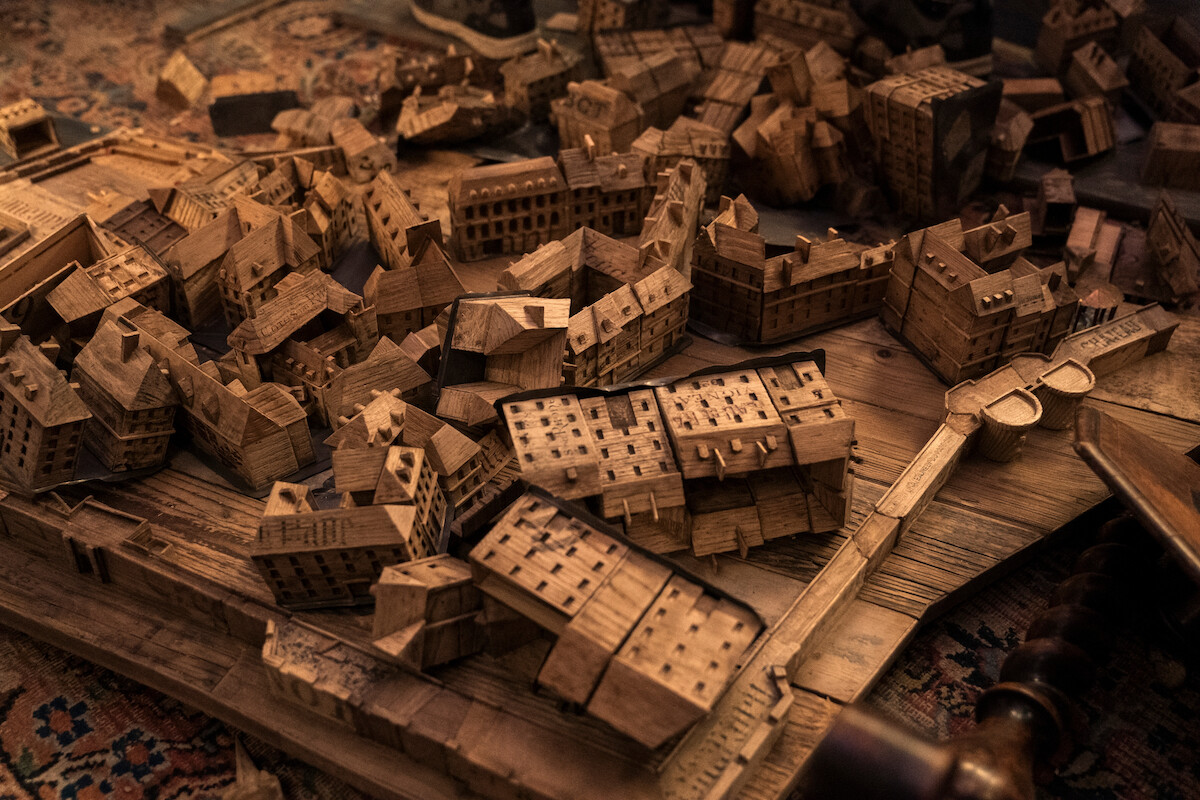
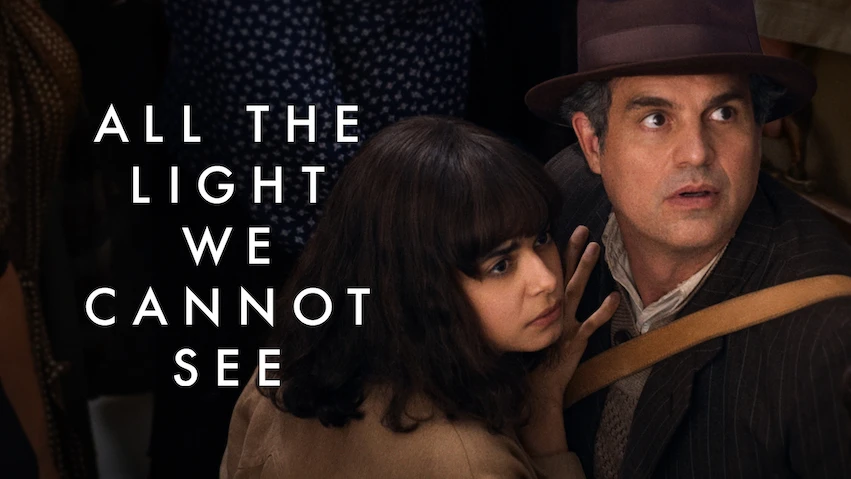
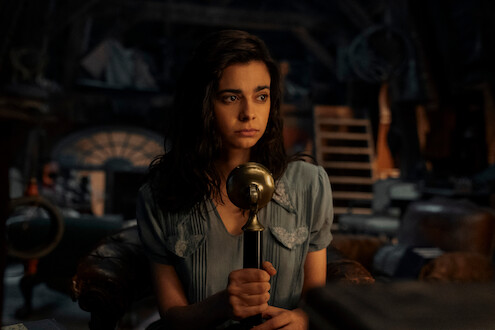
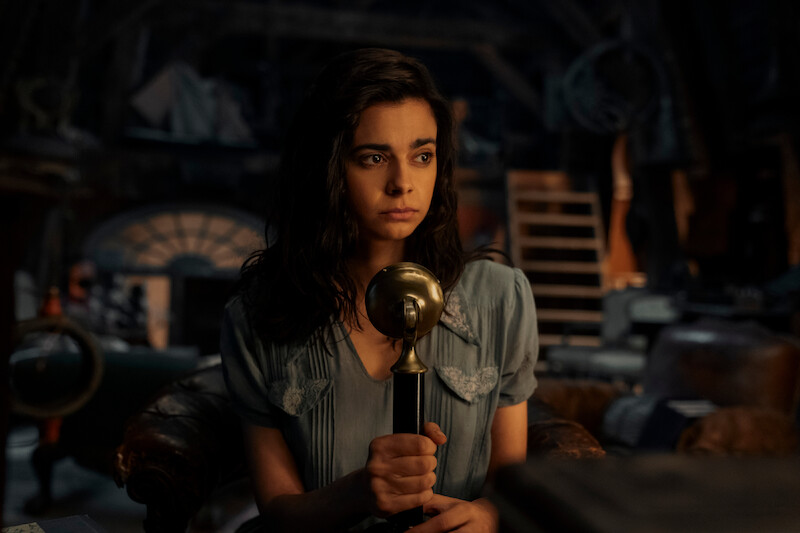
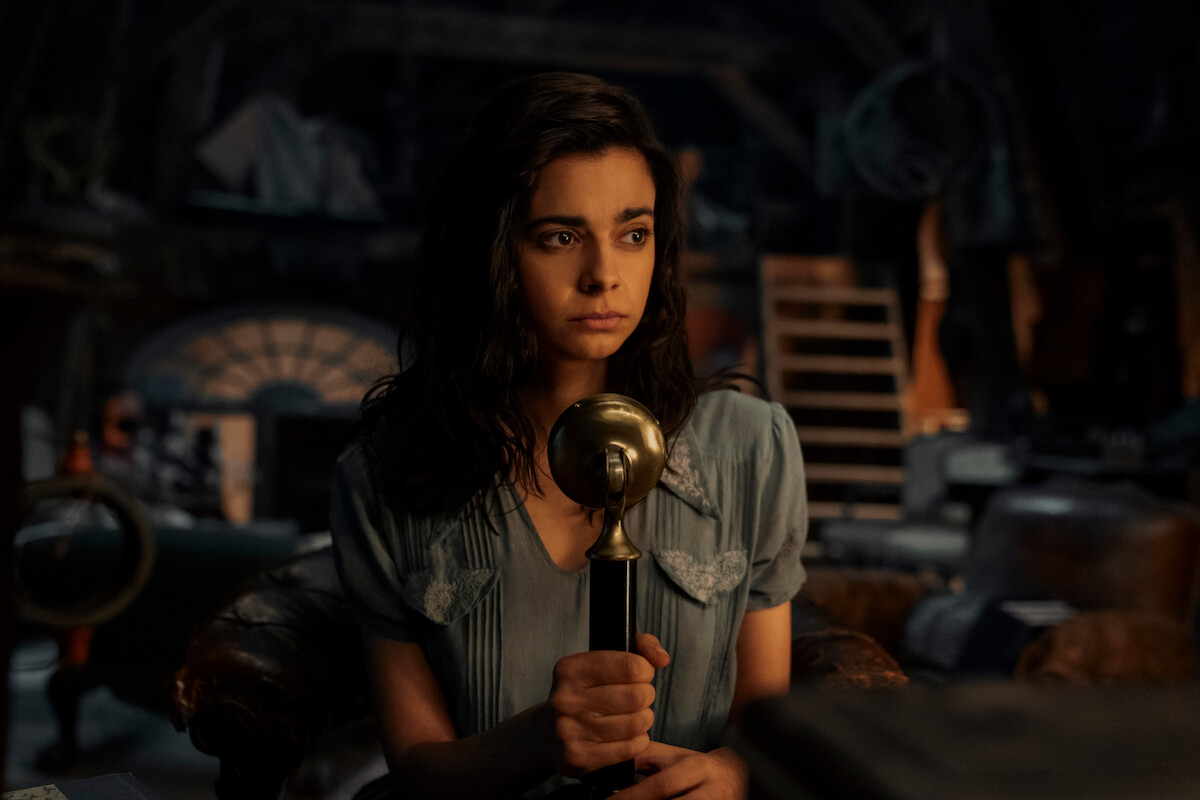
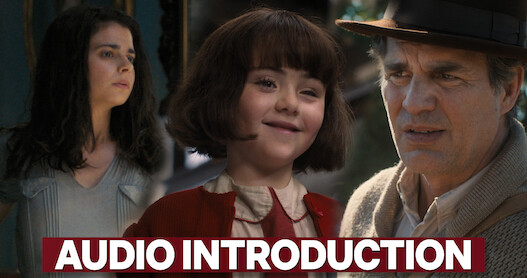
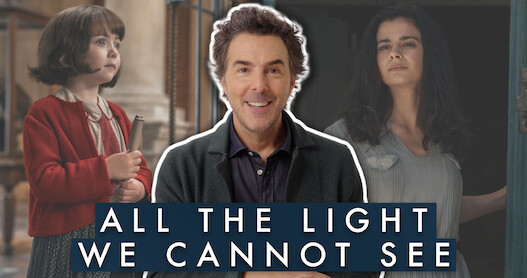
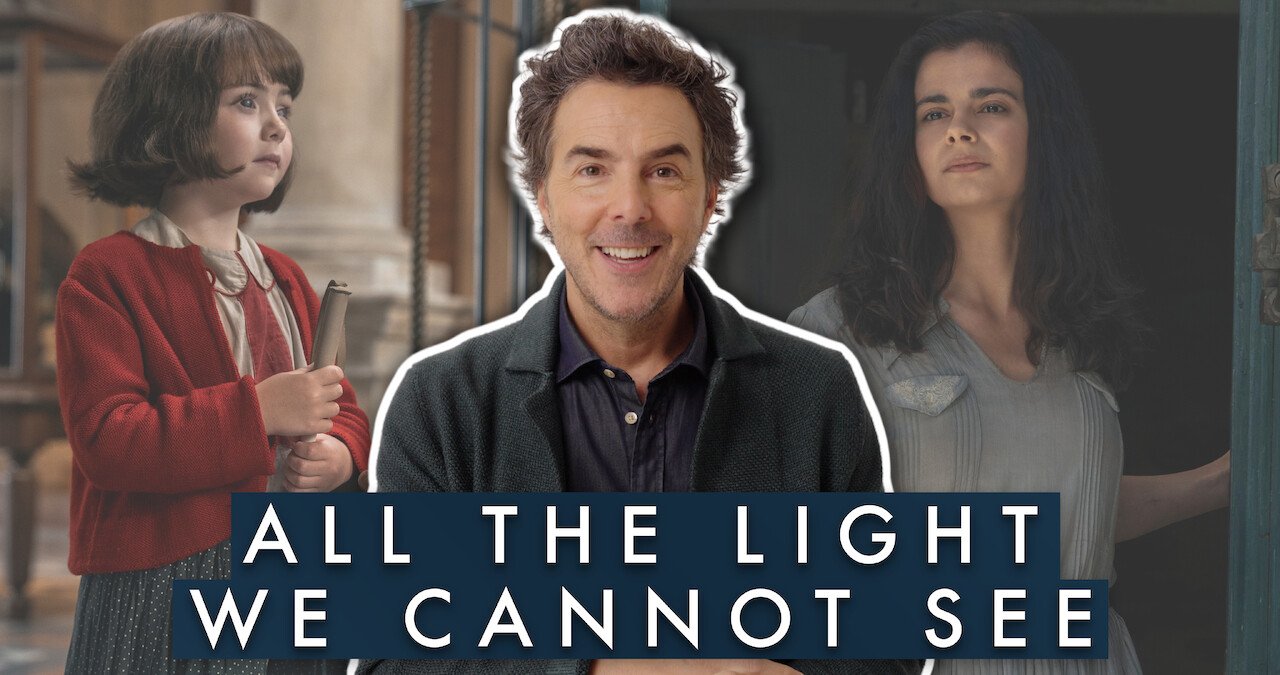
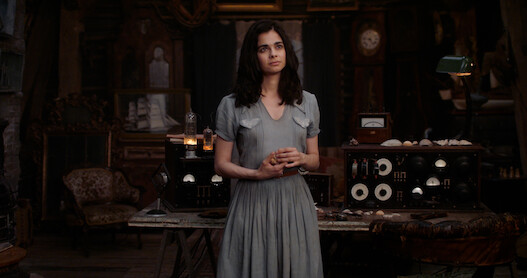
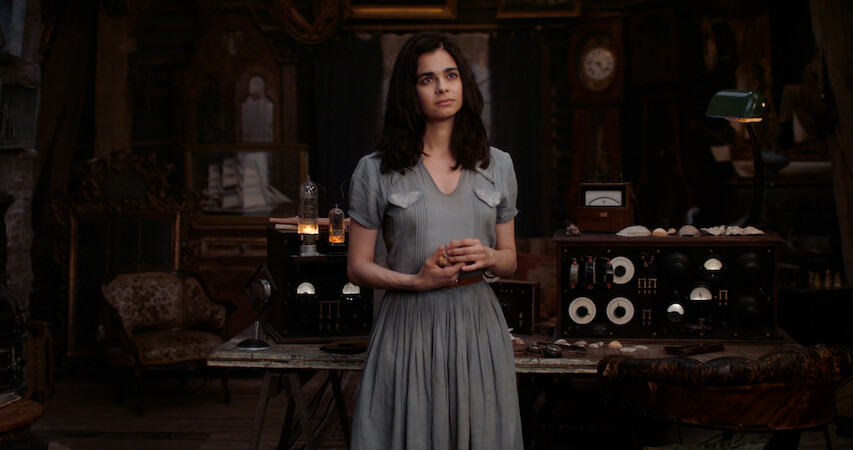
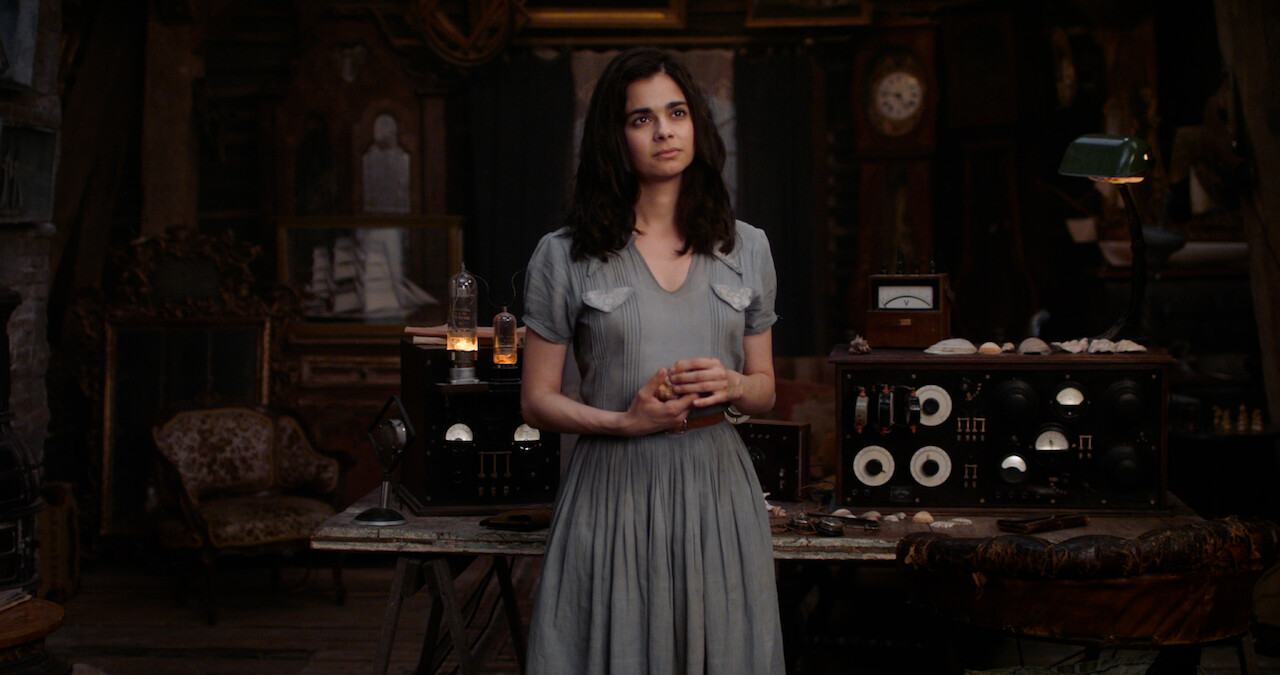
French teenager Marie-Laure LeBlanc (Aria Mia Loberti) was born without sight, but she knows the intricate streets of Paris and Saint-Malo, France, as well as anyone else who walks them daily. In Shawn Levy’s All the Light We Cannot See, based on Anthony Doerr’s Pulitzer Prize–winning novel of the same name, Marie-Laure doesn’t let her blindness hinder her ability to take on the world. To assist her in her day-to-day life, her father, Daniel (Mark Ruffalo), builds her a wooden scale model of each city, teaching her how to feel her way around with the touch of her fingers.
As we see in Episode 1, Daniel trains young Marie-Laure (Nell Sutton) to cross the street and find her way home using a miniature replica of the city. These models not only become a tool of survival for Marie-Laure in her daily life, they’re also especially crucial in helping her navigate each city during World War II, as she safeguards a precious jewel from the Nazis. Out of love for his daughter, Daniel spends countless hours handcrafting each detailed city from scratch, but it actually took the production team a much longer process to build each model for the limited series.
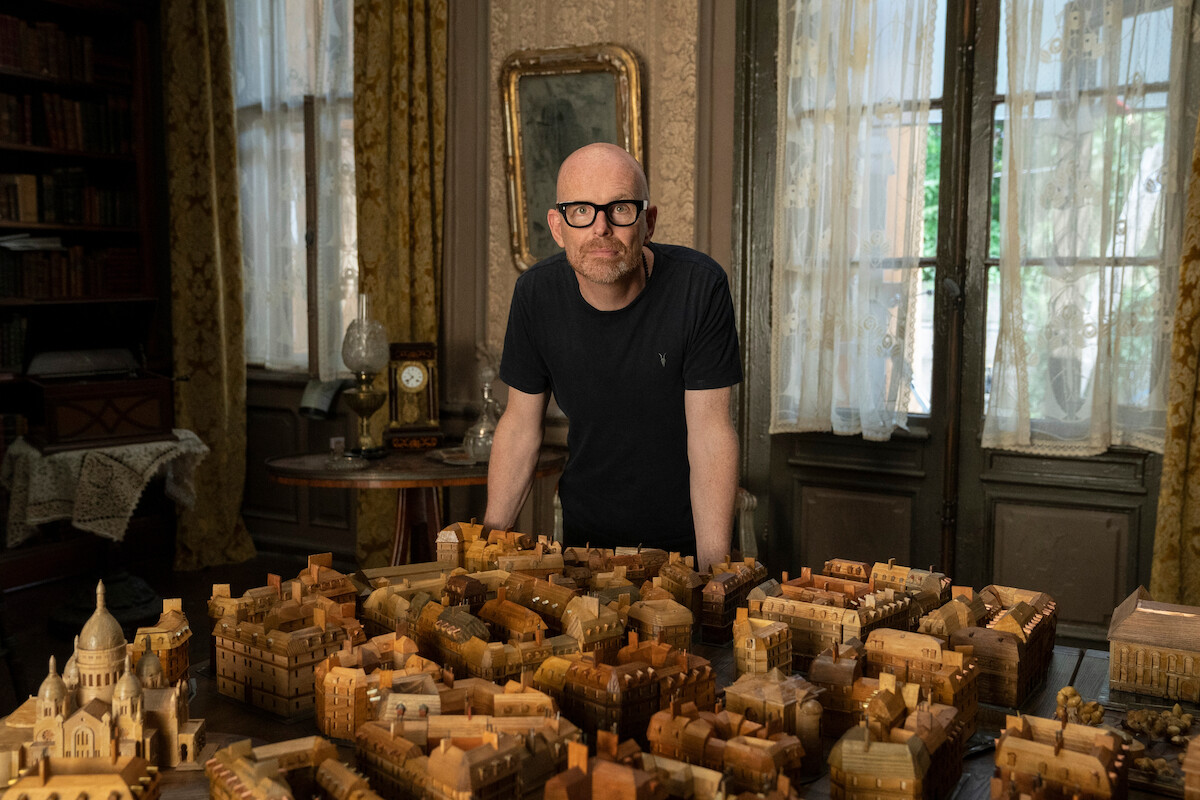
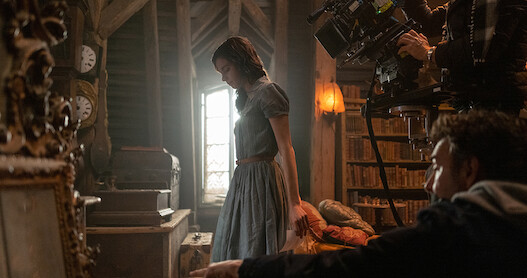
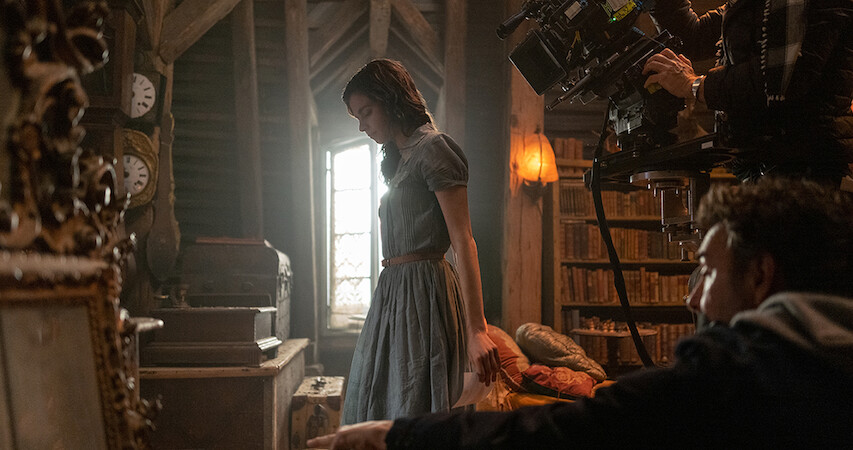
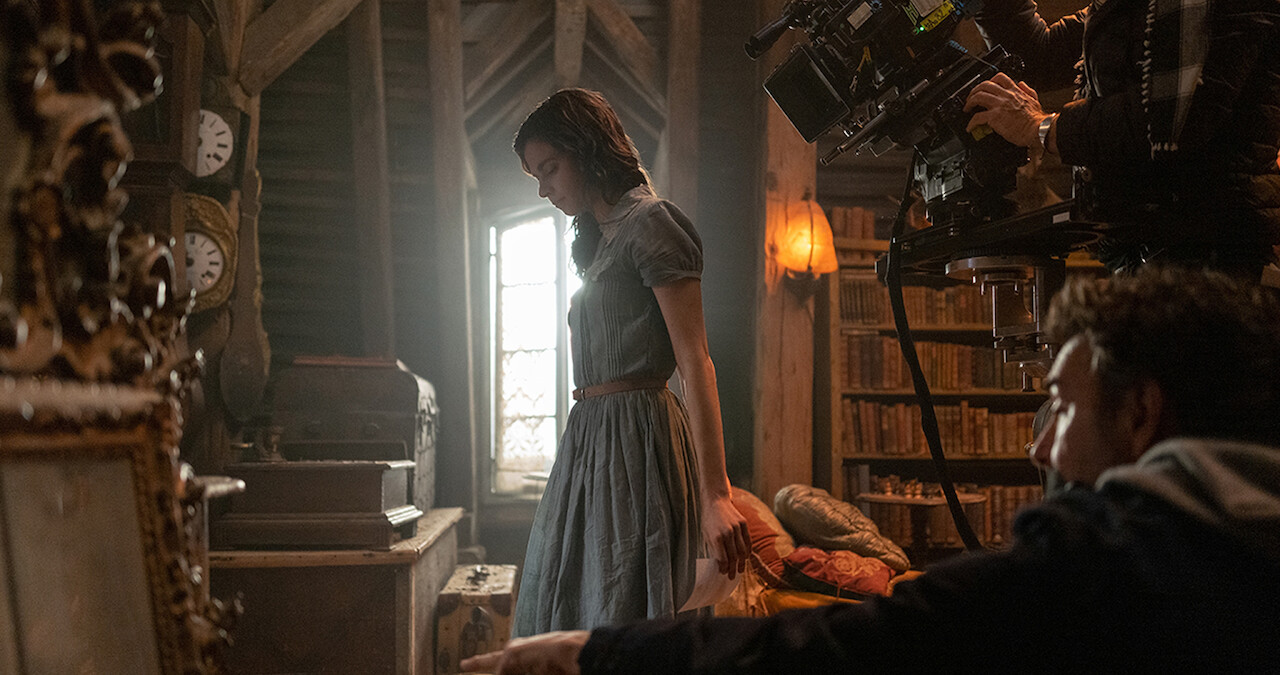
Production Designer Simon Elliott on the set of All the Light We Cannot See.
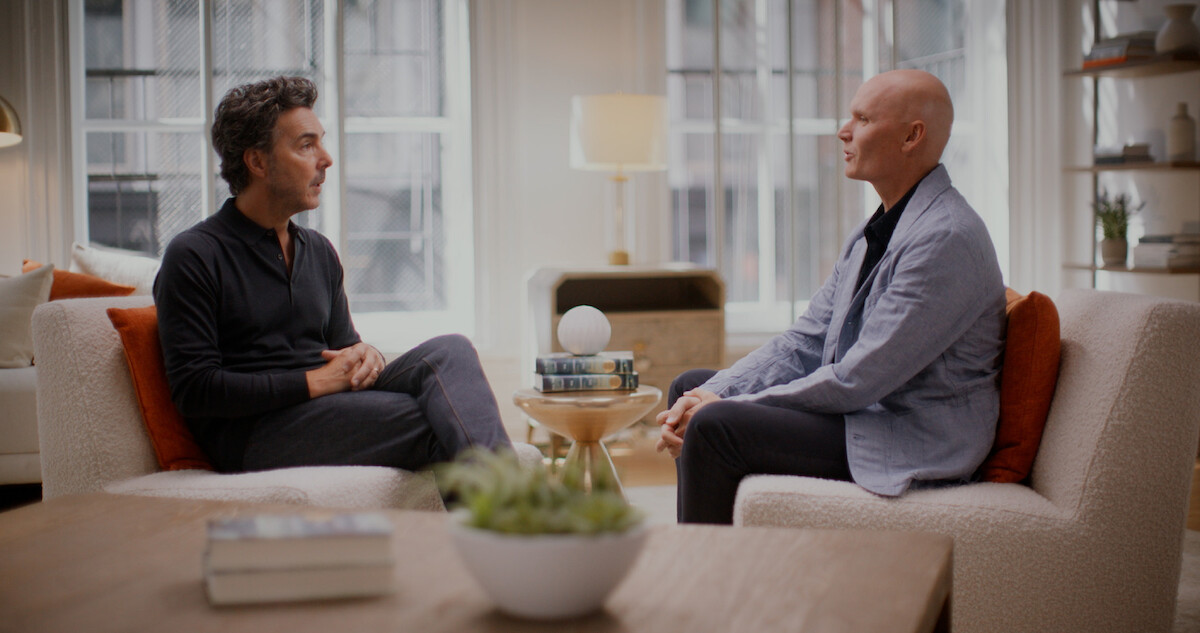
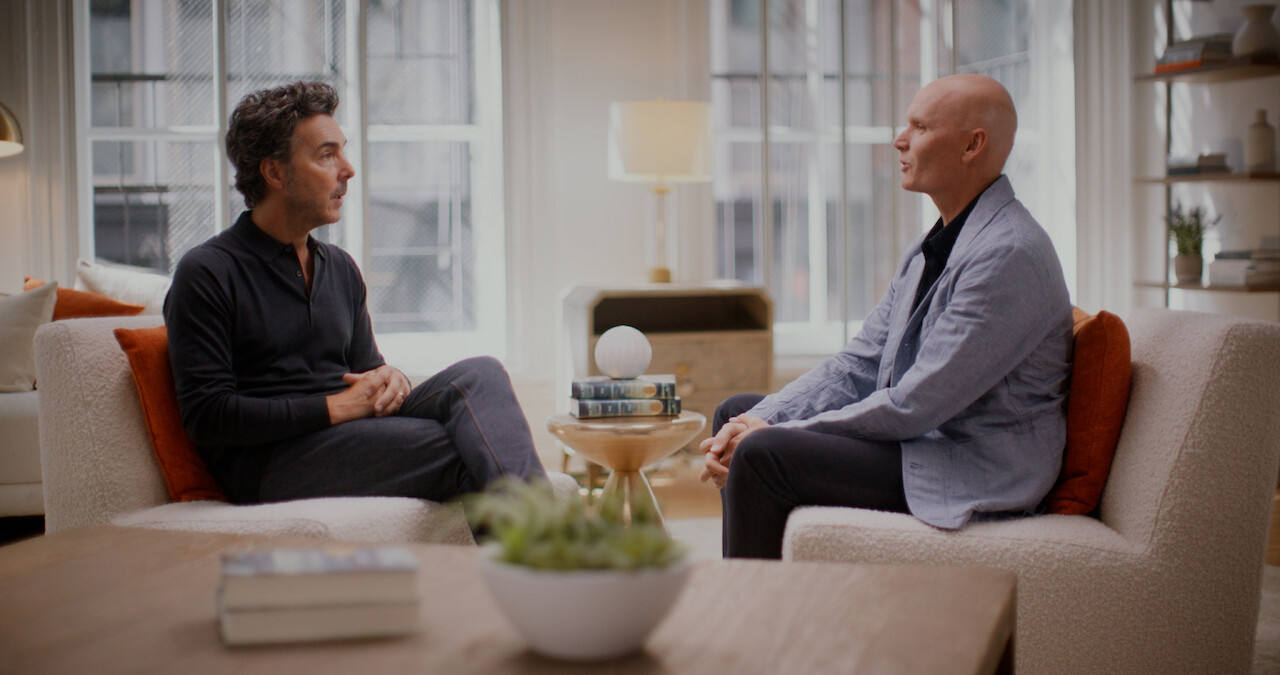
“It’s obviously such a key element of the book, so it went through a lot of development stages,” production designer Simon Elliott tells Tudum. “I was nervous because, obviously, Anthony has lived with this idea for a very long time. The pressure was enormous.” Although the author was mostly hands-off during the construction process, he was moved by Elliott and his team’s craft skills. “The series is absolutely gorgeous to look at — from the opening, with all the leaflets falling from the sky, to the montage of Marie-Laure’s father building her a scale model of Saint-Malo, it repeatedly took my breath away,” Doerr tells Tudum.
Before building the models, Elliott’s team studied Doerr’s written descriptions in the book, projected a map of each city in various sizes onto a table, then sketched different layouts. The team had to be considerate of many practical factors too during the entire process. “We’ve got to build the model, it’s got to go on a table, that table’s got to go in a room, we’ve got to put a camera in that room,” explains Elliott. Then they also had to be mindful of the fact that Loberti and Sutton are very different sizes, but the models had to fit both of their fingers.
Elliott says that the biggest challenge was deciding on the scale, since the models also had to make room for a camera lens. Over the course of eight weeks, the production design team used a plethora of technology — including a 3D printer — to create different maquettes that they could move around for the camera. Once the scale was set, the team used wood to build the final model of Paris. “Once it had all been done, then we had the actors interact with it so they could familiarize themselves — I had a lovely session with Nell and then a great session with Aria,” says Elliott. “It became important that once the camera was that close to it, you could feel the texture. Also, it became important for Aria’s physical interaction with it as an actor.”
Constructing the second model of Saint-Malo was a different process for the crew. In the series, Daniel builds the model during the most dire days of World War II. “The second one is rushed and it is made of found materials,” says Elliott. “What do you find in France in a time where resources are limited?” As a result, we see Daniel hastily building the maquettes out of wine and vegetable crates, giving the model a much more rustic look.
For Elliott, working with Loberti in All the Light We Cannot See was a pivotal career moment. “Every job comes with different challenges,” he says. “When you’ve been doing it as long as I have, you get a moment of just being able to think differently. Aria brought that to the table. I work in a visual medium, and then suddenly being alongside someone who doesn’t have that choice, it was kind of changing.” On previous productions, Elliott would physically introduce the actors to his sets and get their feedback. That wasn’t an option with this project.
“Doing that with somebody who doesn’t work in a visual world, that was really quite special because you can get lazy; I got complacent,” he says. “It’s easy to use language that everyone understands, but suddenly having to convey that visual world to somebody who inhabits a different world challenged me as a designer. It just changes your perspective, and I have taken that away with me.”
All the Light We Cannot See is now streaming on Netflix.