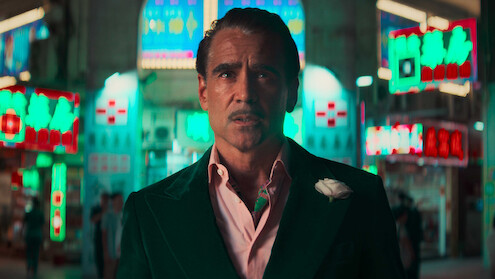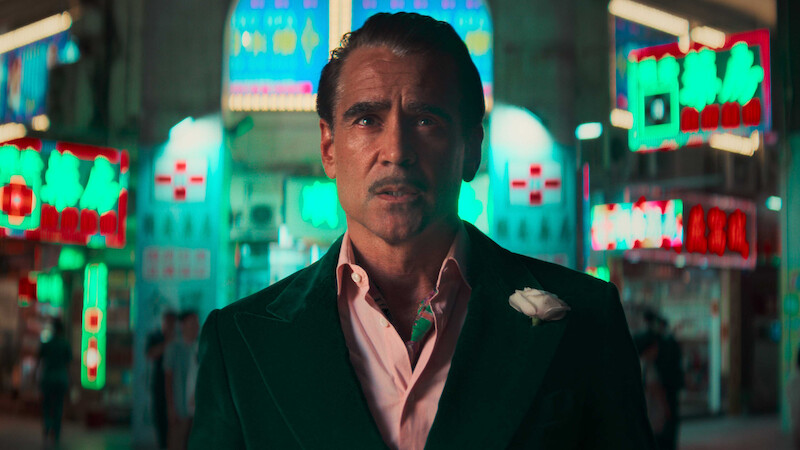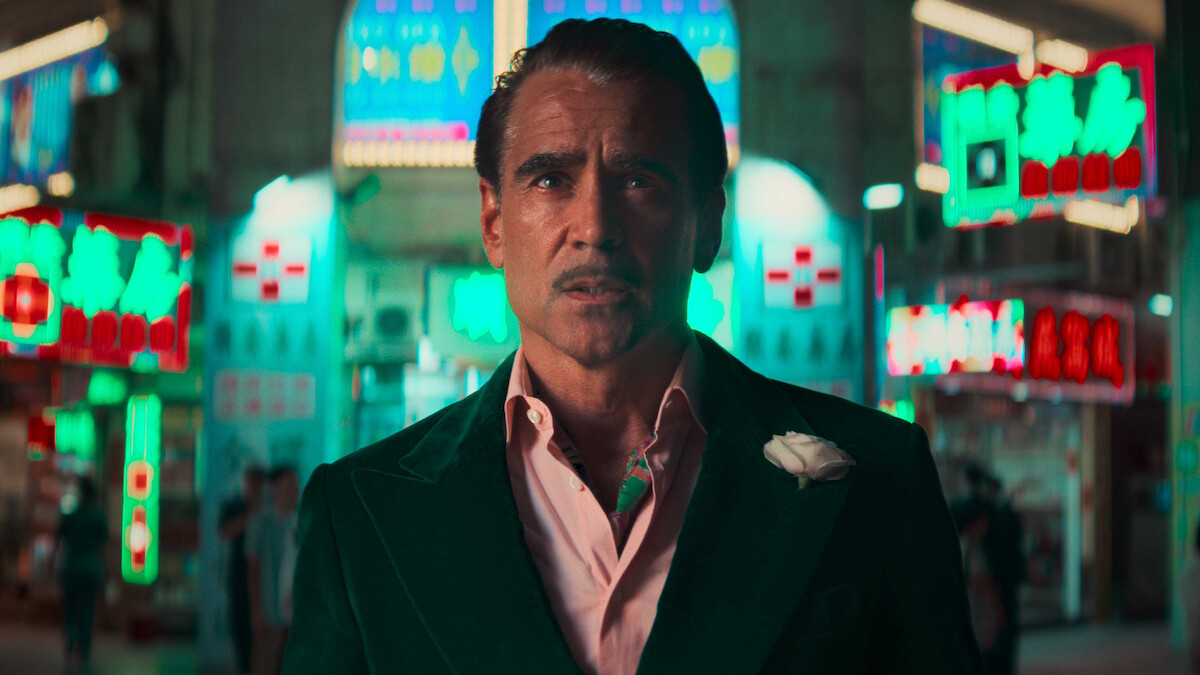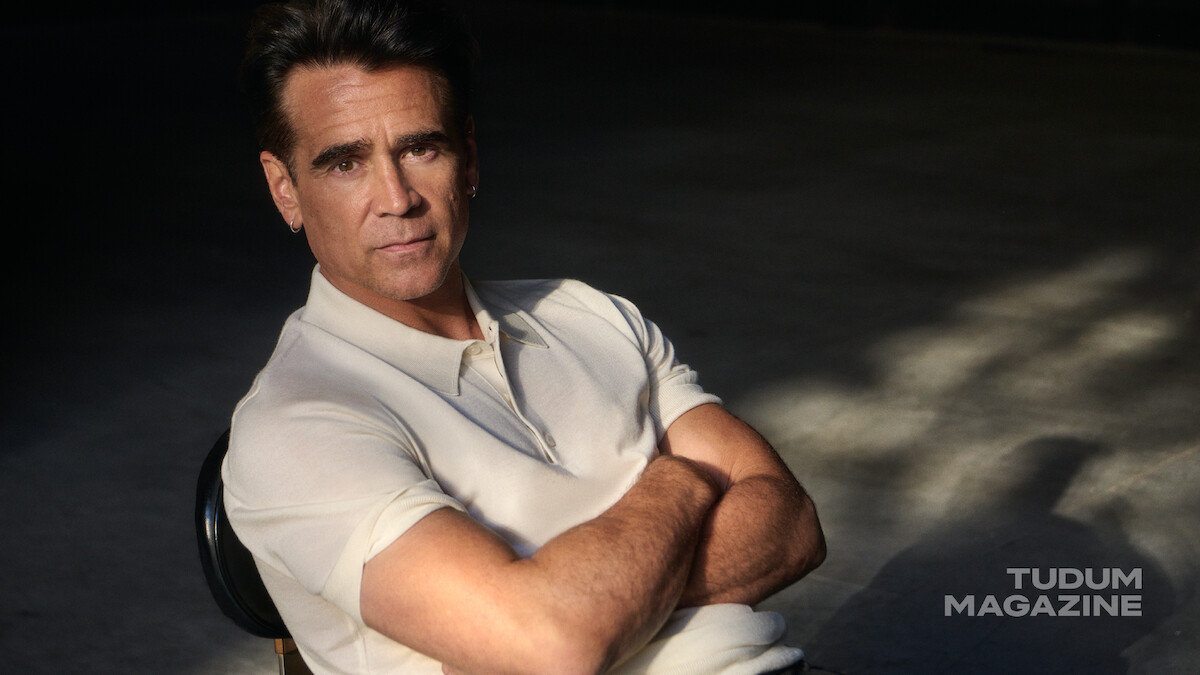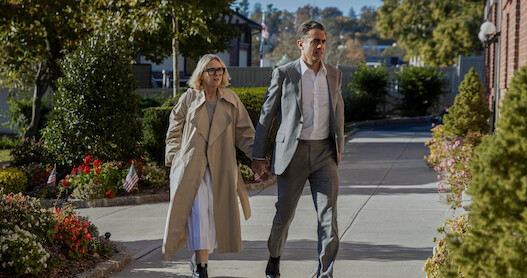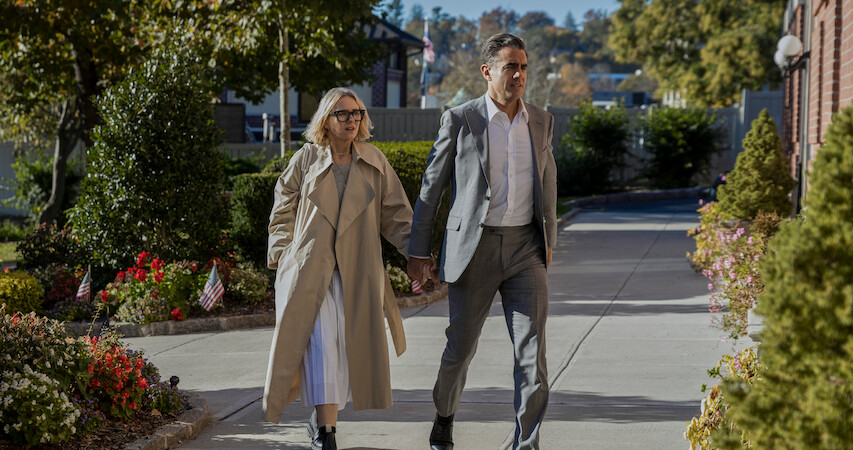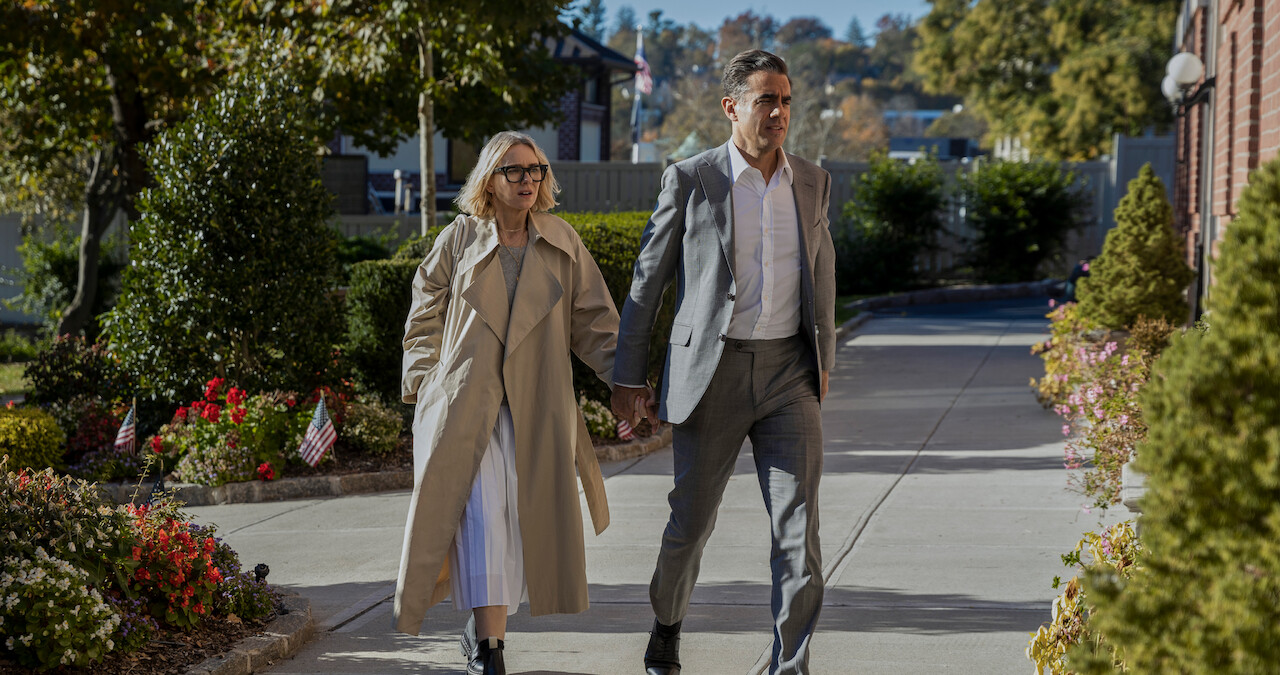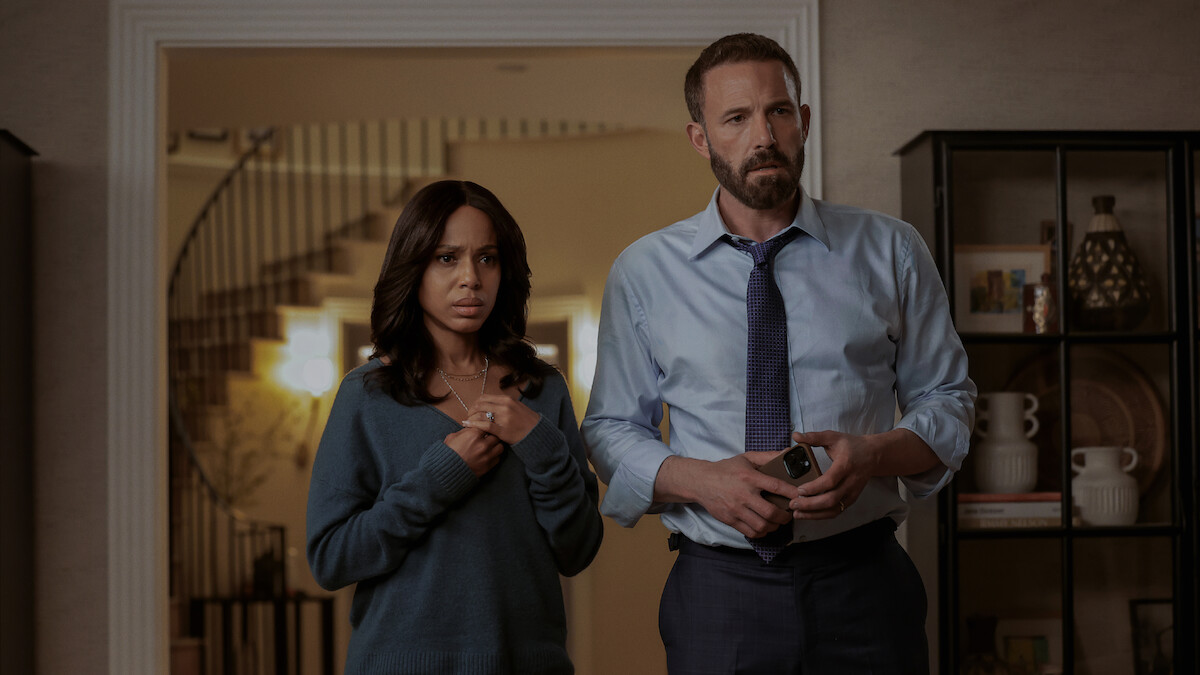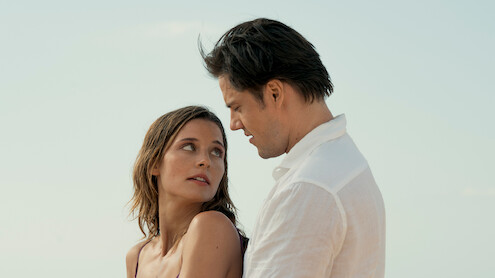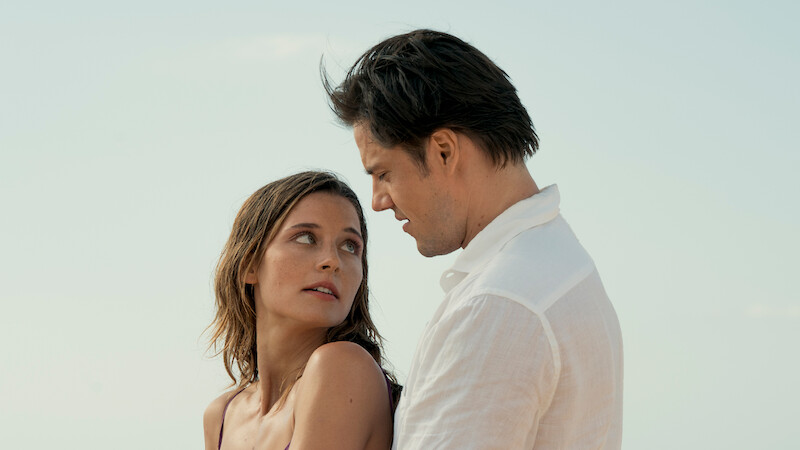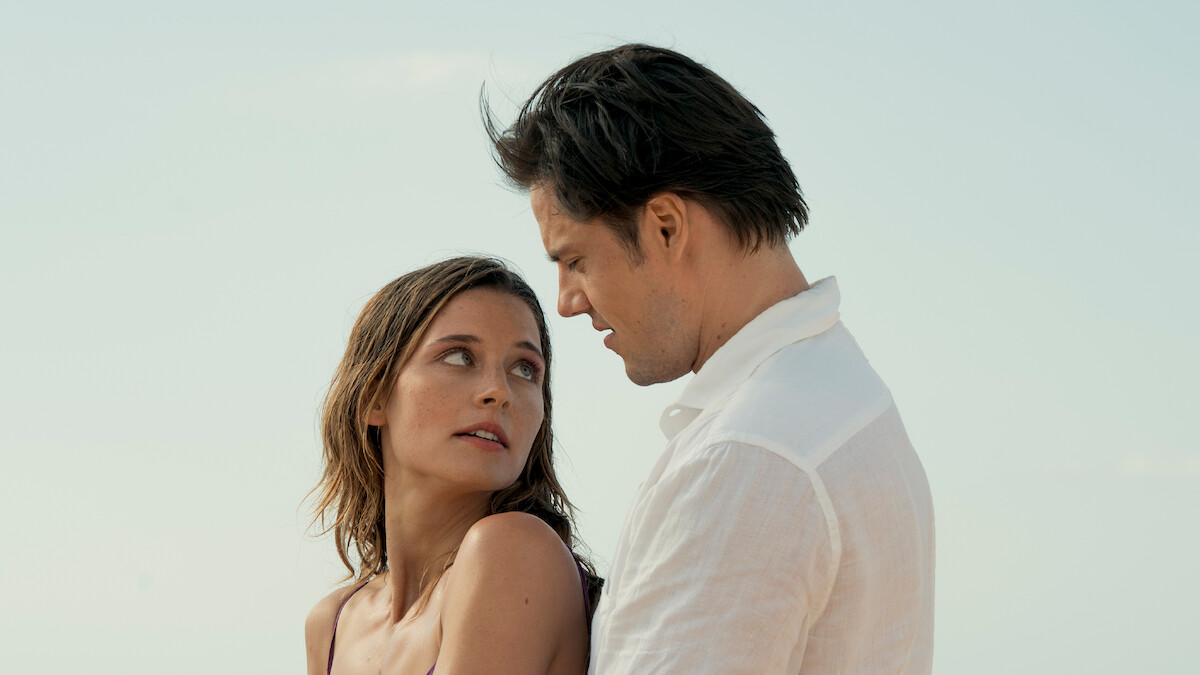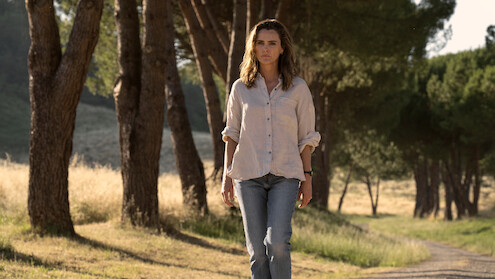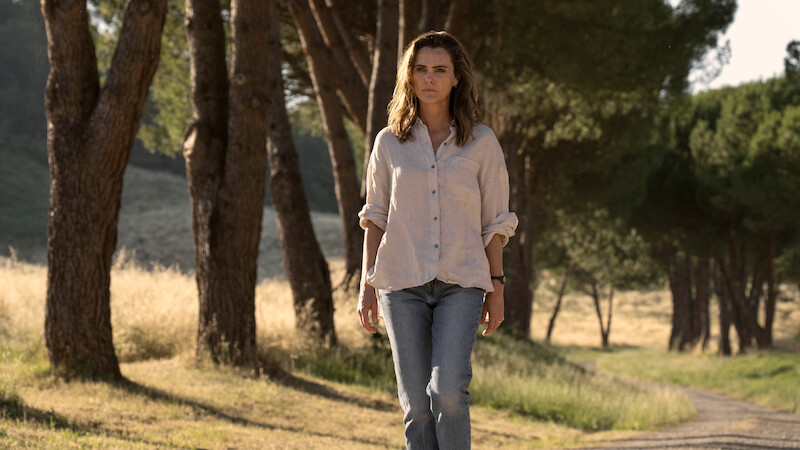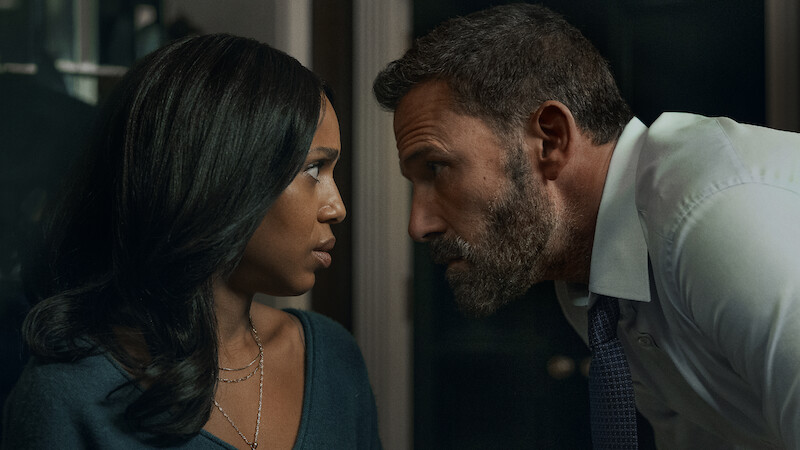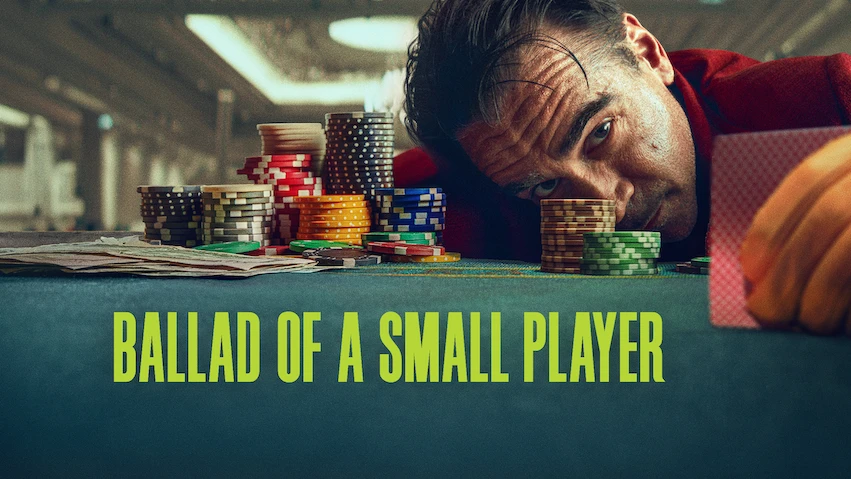
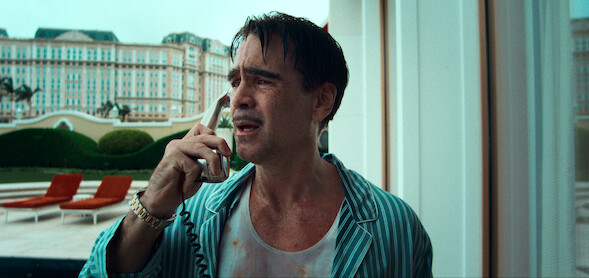
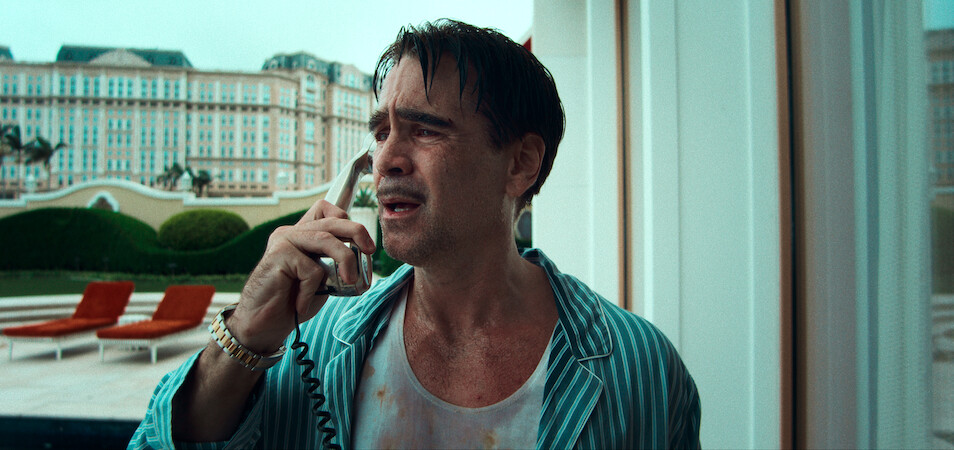
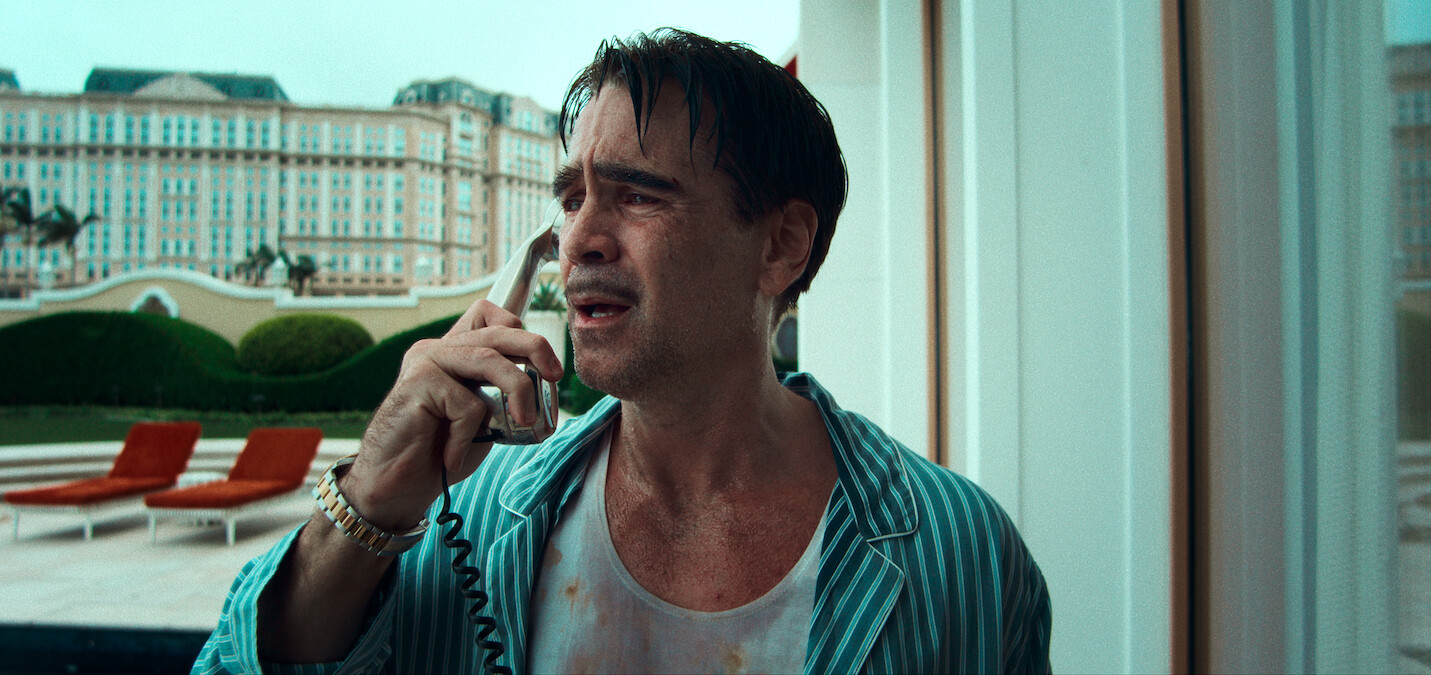
Colin Farrell plays gambling addict Lord Doyle in Edward Berger’s latest film.

Director Edward Berger (Conclave, All Quiet on the Western Front) was joined by actor Colin Farrell (The Banshees of Inisherin, The Penguin) and Oscar-winning composer Volker Bertelmann (All Quiet on the Western Front, A HOUSE OF DYNAMITE) at The Lineup: Live from the Egyptian event for a conversation on their kinetic feature Ballad of a Small Player. The film charts the path of gambling addict Lord Doyle as he hides from his past and his present financial hole — all set in the casinos of Macau against the backdrop of the Festival of the Hungry Ghosts. The trio discussed the bonds that were made before and during filming, how the setting inspired the performances, and the climactic binge scene.
An edited version of the conversation follows.
Henry Goldblatt: Edward, you’ve proved yourself to be such a versatile filmmaker with All Quiet on the Western Front and Conclave and now Ballad of a Small Player. What drew you to this particular story?
Edward Berger: Well, it’s a story about a man who has kind of lost his soul and his identity. He has a fake name, runs around in a city that is basically a copy of Las Vegas, which is already a copy of Venice and Paris and all the other wonderful cities in the world. So he’s a copy of a copy in a copy of a copy and basically is trying to find his identity. It’s a story where, in the end, love wins over grief, and I thought that never gets old.
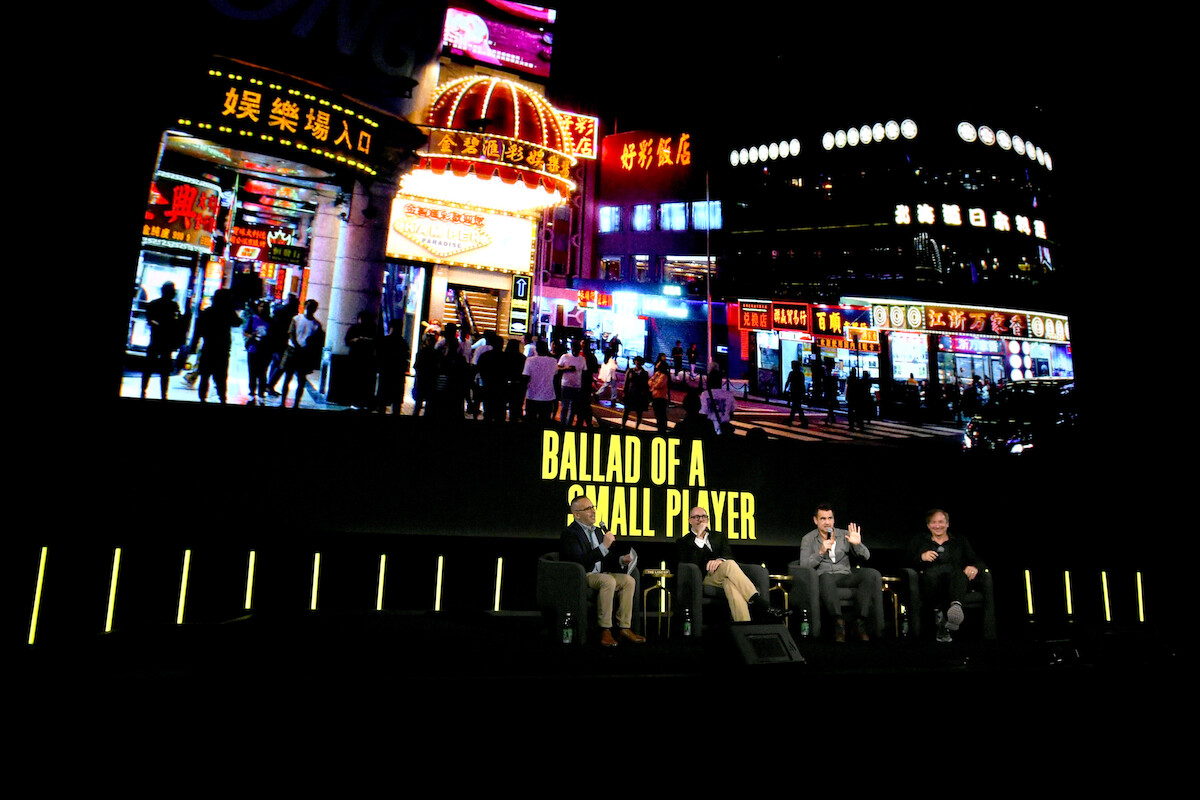
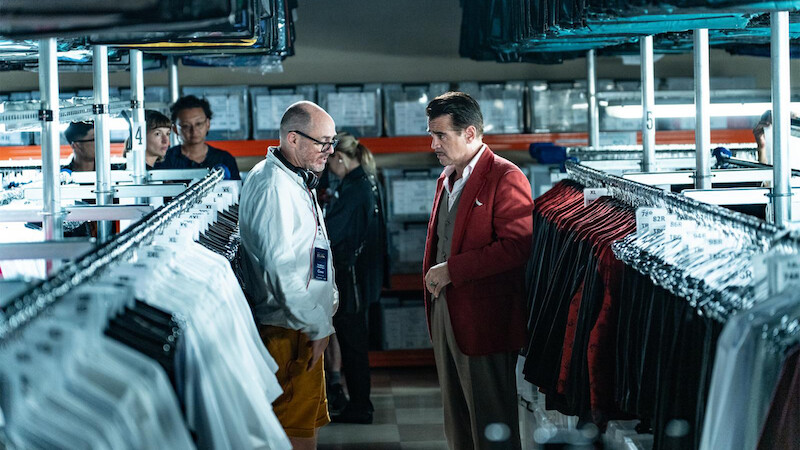
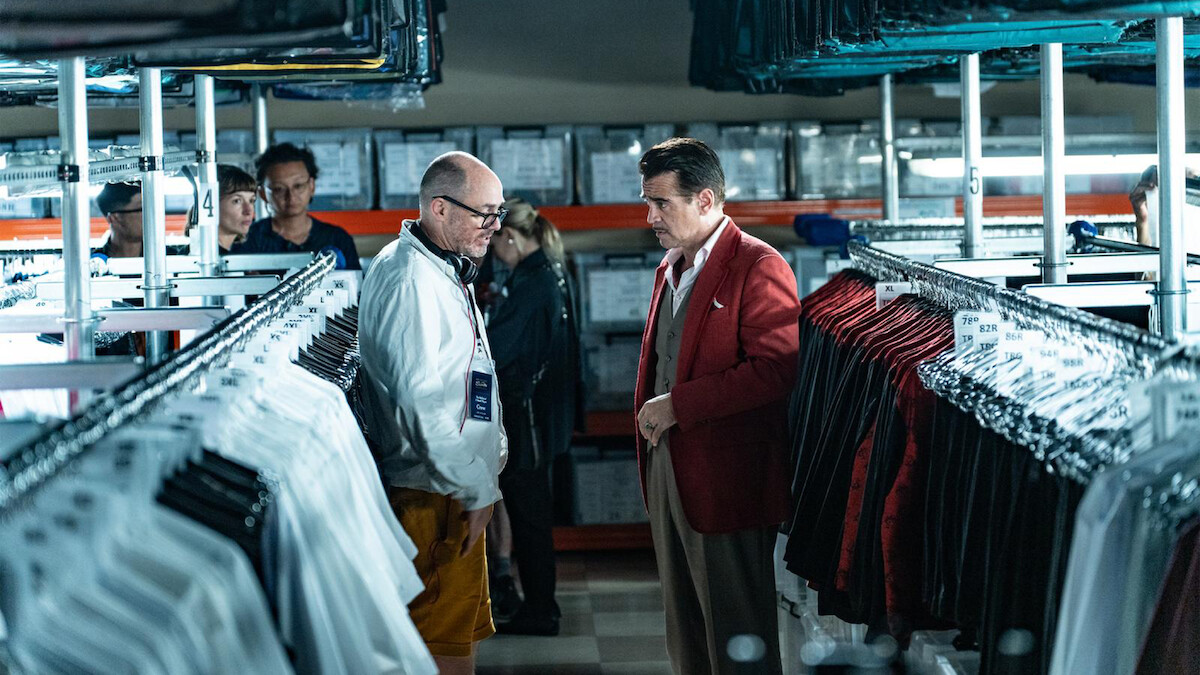
Henry Goldblatt, Edward Berger, Colin Farrell and Volker Bertelmann
Colin, when you read the script, what drew you to it? What made you think, “I want to be a part of this movie”?
Colin Farrell: I loved it. I loved the script. I loved the pandemonium of it. I loved the sense of chaos. I loved that it was [about] a man who was adrift from himself and also the world, who went to a place that was as far as anywhere he could imagine going to reinvent himself — and the reinvention doesn’t really work out. It was a very anxious read for me. The film was quite angst-ridden. I’d already seen Ed direct Patrick Melrose with Benedict Cumberbatch about eight years ago, and I thought that was an extraordinary piece of work. I just really wanted to work with Ed. It was a no-brainer.
Tell us about how you met for the first time and what your first impressions were of each other.
Berger: We had lunch here in LA, and we had a wonderful lunch. Talked about the script and he said, “Yeah, that sounds good.” But we were trying to find our window and the right time. I was busy still making Conclave. And then, incidentally, I ran into him in the sauna again at the BAFTAs in London. We were staying at the same hotel.
Farrell: The idea of [telling a] story in the future got us excited. So we were primed to be in a really fortunate position to do these kinds of things — to think about a story that we wanted to invest in.
Volker, tell us about what’s made your partnership with Edward so fruitful.
Volker Bertelmann: [This is] our sixth project together. We started with Patrick Melrose. That was the first series. Since then, we love working with each other. What is wonderful for a composer is when you have no restrictions in the first place, when you feel there’s a kind of exchange. When he and I work together, it’s more like an uplift, in terms of finding challenges and working on those. You can get very quickly upset when you get comments like, “Oh no, this doesn’t work and this doesn’t work.” With Edward, when he’s not happy with something, it’s much more [like] digging deeper. And that’s wonderful. I always love this process so much.
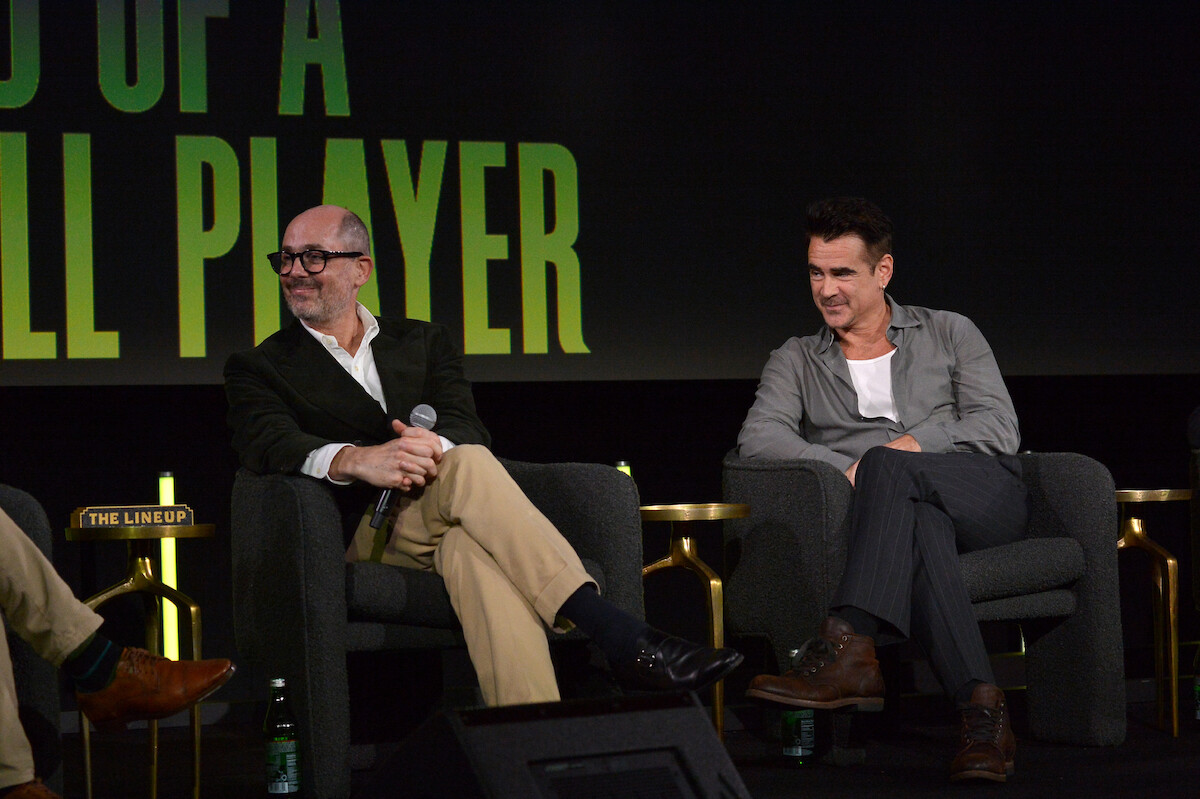
Berger and Farrell
Had you been to Macau before? What was it like when you got there? What were your first impressions?
Berger: Our wonderful producer, Mike Goodridge, ran the Macau Film Festival. He tried to invite me to several juries, and I never could make it because I had to make a movie. So I eventually went to location scout, about two or three years before we started shooting. And I was overwhelmed. A little bit like what you just saw. It’s really an attack on the senses: the colors, the lights, the music, the sound — everything. It’s so rich and colorful, but there’s also a wonderful sort of old-town world, quite like a little fishing village. I really loved the contrast of that, or the richness — the multitude of impressions. That all found its way into the movie.
Farrell: It was my first time there. I arrived about two weeks before we started shooting, and I had no expectations. I had seen pictures, images of the place, and most of the images I had seen of Macau painted a portrait of this gambling mecca, which is where we lived and shot. Most of the picture was around various casino floors and various incredibly elaborate hotels, like The Londoner that had a scale [model] of Big Ben, and there was The Parisian that obviously had a scale [model] of the Eiffel Tower.
But the contrast I found most interesting, and the most peaceful and the richest cultural experience I had in Macau, was the older part of it — the more colonial part of it. There was a place called Coloane. Coloane was this little, as Ed said, fishing village with small, windy streets and weeping willow trees. And the humidity was very extreme, and I really felt like I was immersed in another world. There was nobody or nowhere I could turn in Macau that wasn’t a part of our picture. So I felt like I was immersed in this world for the 8 or 10 weeks that we were there.
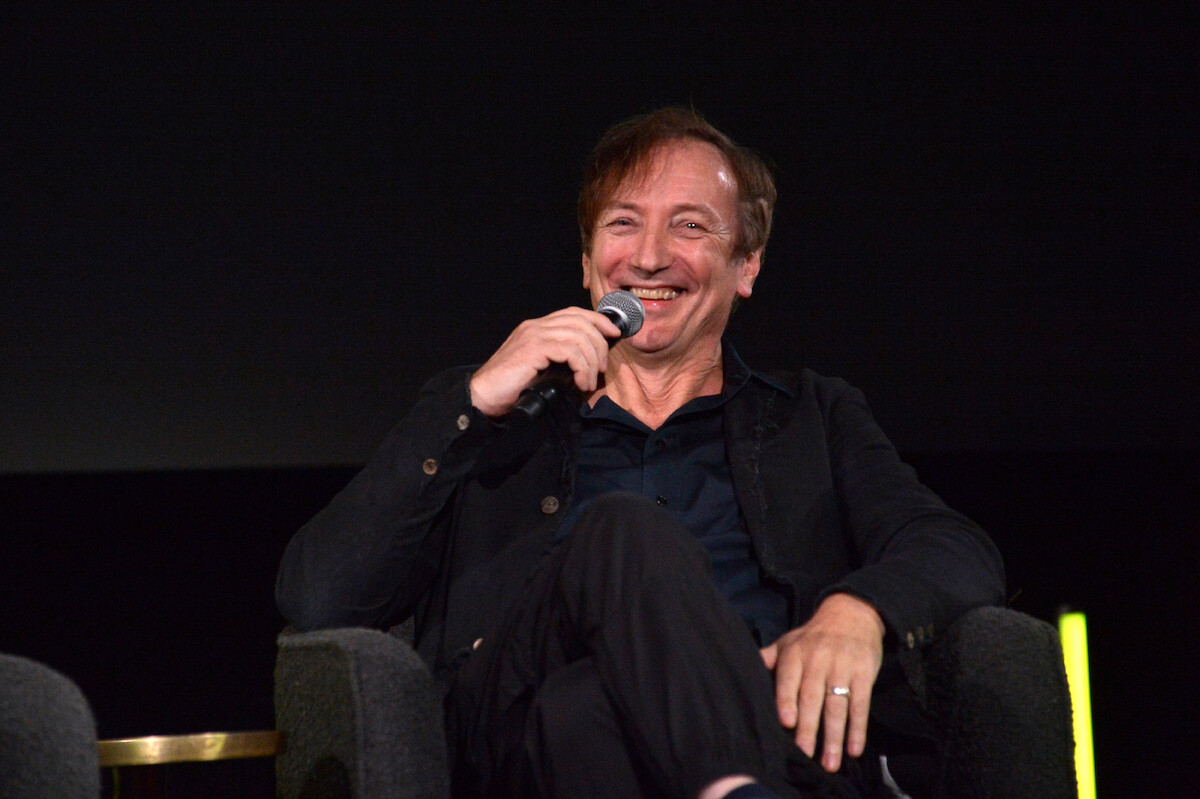
Bertelmann
Ed, the film’s visuals are stunning — the color palette in particular is spectacular and unique. You see that in the filmmaking and also in Lord Doyle’s wardrobe. Can you talk about how you drew inspiration from Macau?
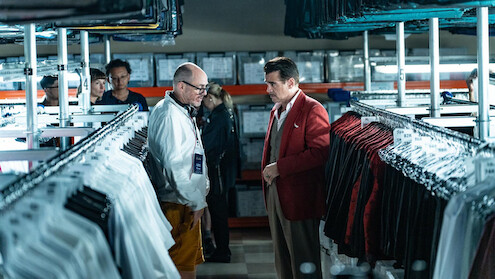
Berger: The visual inspiration really came from the architecture of the city. My crew, especially my cinematographer and I, when we first went there, decided that it had to be an extroverted movie with a very introverted, fragile soul at its center. So we coined the term, or the phrase, pop opera. Let’s make a pop opera. That was, sort of, the directive to the costume designer.
But it found its way into everything — into the wardrobe, into the production design. We shot a lot on casino floors and in hotel suites. They are a little bit gaudy. They are a bit operatic. There’s a copy of marble and gold everywhere. So it’s part of the movie. It found its way into every department.
Colin, I want to talk to you a little bit about one of the most memorable scenes in the movie, which is when Lord Doyle is in the hotel room scarfing down all that food with his insatiable appetite. Can you talk about what it was like to film that scene and the technicalities of the performance?
Farrell: The technicalities of a binge. The first take was cool and then...
Berger: Then you had to do it 27 times.
Farrell: No, it was fine. I understood it was a very explicit articulation of a sense of loss and a sense of emptiness that the character is feeling and also a dawning horror that he may already be dead. He may already be a ghost, a hungry ghost. It was an articulation of that. When I read that again in the script, it was somewhat astonishing and kind of upsetting. Although, you were pretty kind that day, man. You didn’t do as many takes.
Berger: That day.
Farrell: [Laughs] It was good. We just went for it. I mean it was quite a banquet. I was about 10,000 calories in by lunch that day. It was an extraordinary banquet of food that I utterly destroyed. But one of the most extraordinary things about Edward, apart from his fundamental curiosity, is that his curiosity leads into the curiosity in the artistry of others as well. We had an extraordinary team of people on this, like Danny Bishop, the camera operator, and Phil Harding, the focus puller.
A lot of my [performance] was really a personal experience of dancing with Danny Bishop. Everything I went through in this film, he was really in step with me, and I was in step with him. It got to the stage where I didn’t know who was leading whom at a certain point. My most distinct memory of it was Danny being right there in my face for a whole day. We spent the day in that suite. It was pretty cool. It was messy and cool.
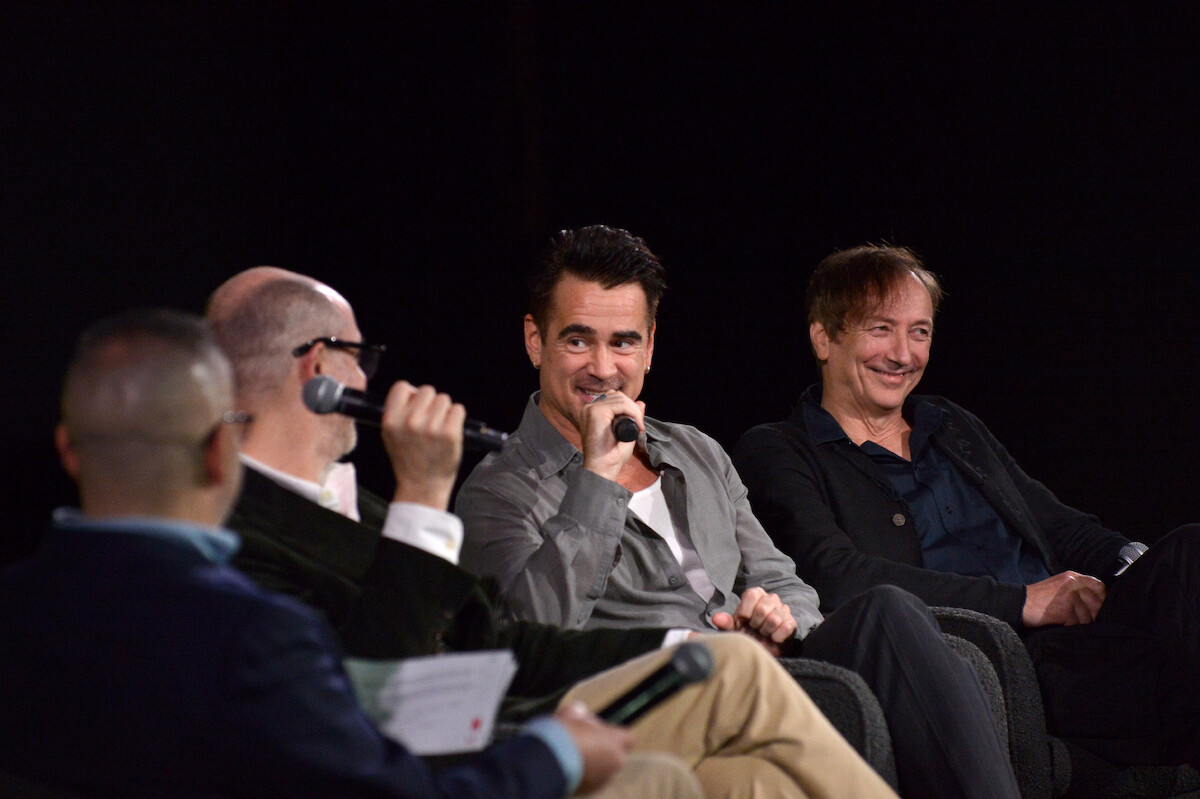
Berger, Farrell and Bertelmann
Berger: I want to say, on the page, maybe the scene was half a minute, half a page long. So it’s not very substantial. There was no dialogue, so there was a danger of breezing right through that scene. And Colin made it a centerpiece of the movie. Colin made it an expression of the movie. Colin made his performance — his utter sort of immersion into that state of mind. On top of it, the only piece of music that is not by Volker in this movie came through Colin, because he started listening to a song in between takes to get him into the mood.
And I was thinking, “Bloody Macao, music everywhere. I want to film this scene quietly.” Until I realized it was my main guy who was blasting his music into his ear. So I went up to him and said, “What is it? Can you please give me the song because it’s perfect.”
It ended up in the film. It’s a Bach organ piece. It just goes to show how much in sync we were. There’s a tonality to the rhythm.
Farrell: And let it be known, I did not use my eating double!
Volker, what was the most challenging scene for you to score?
Bertelmann: The most challenging part was maybe the opening because Edward gave me a piece from Dvořák, Symphony No. 9. The last piece in that symphony is quite opulent and very powerful and [has] big brass chords. So I wanted to find something that was in that vein, but also had a little bit of modernity. I think we worked on that quite a long time just to get the hits right. Working with Edward is so nice because he’s so musical. He plays drums, he knows exactly where the beats are sitting. That’s, for communication, very wonderful.