The artisans behind the nuclear crisis film share their processes.

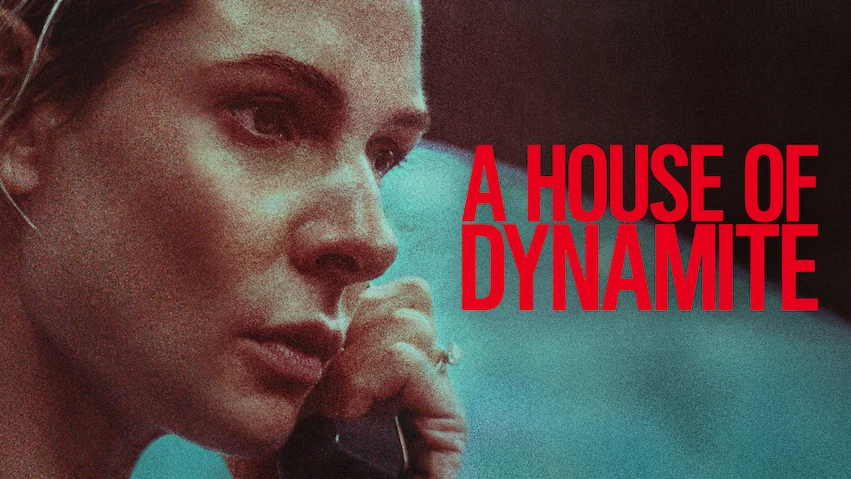
Academy Award–winning filmmaker Kathryn Bigelow sought to start a much-needed conversation in A HOUSE OF DYNAMITE. Her latest movie follows in real-time what happens when a single, unattributed missile is launched at the United States, and government officials race to determine who is responsible and how to respond. It continues her pursuit of a “journalistic approach to storytelling,” as the drama’s screenwriter, Noah Oppenheim, puts it — a way to broach urgent issues with both extreme accuracy and bold-faced humanity.
Joining Bigelow and Oppenheim in this pursuit is a top-notch team behind and in front of the camera, including Pulitzer Prize and Tony Award winner Tracy Letts, casting director Susanne Scheel, Academy Award–winning editor Kirk Baxter, Academy Award–winning composer Volker Bertelmann, and Emmy–nominated production designer and co-producer Jeremy Hindle. Here, they reflect on their commitment to truth, the film’s extensive research process, and bringing A HOUSE OF DYNAMITE’s sheer intensity to life.
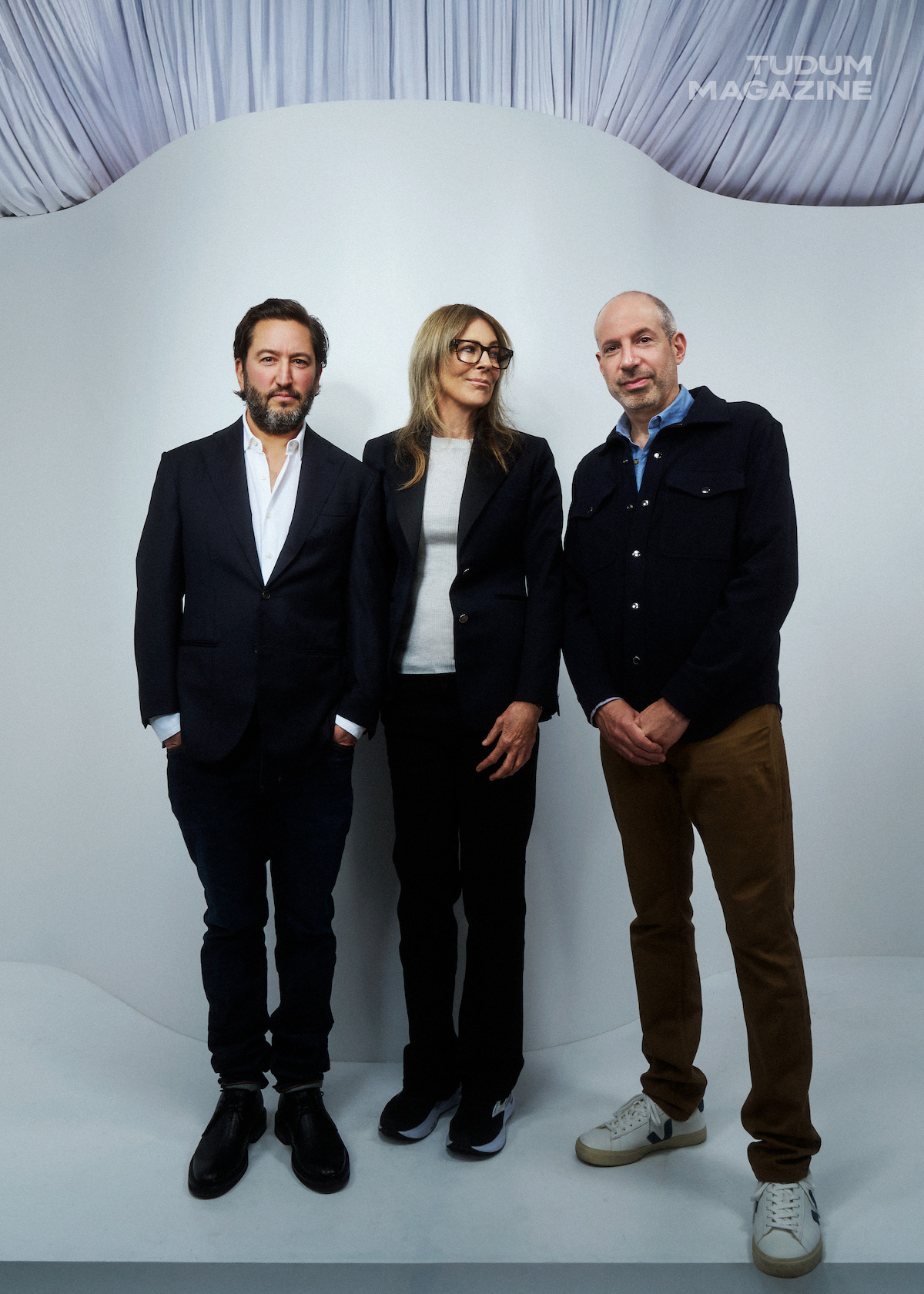
Anthony Breznican: This film really … gets people talking and discussing and debating. They theorize about where it’s going, what the story means. Kathryn, I wondered if you had an ideal response from somebody who sees A HOUSE OF DYNAMITE? What makes you go, “Yes, that’s what I was going for”?
Kathryn Bigelow: Well, if you’re saying ideal, it would be that we decide to denuclearize the world. It would be that it’d be thought-provoking and perhaps begin a conversation that’s meaningful toward that end.
I think one of your trademarks is that you tell stories on a large scale with a lot of different characters, but there’s also an intense intimacy about them, which I think makes those characters really stick with us. Can you discuss that balance in this particular film?
Bigelow: It was really baked into the script by Noah Oppenheim, who just, in my opinion, wrote this meticulous and extremely precise document. And it had these great moments of humanity, because humanity is in fact what’s at stake. That was really important to us. Between that and the casting that Susanne Scheel did, we found these characters who just so embodied and owned those moments, and they really expanded it. And then Kirk Baxter, putting it together with this kind of gem-cutting-like precision — I mean, it was there really from the beginning through Noah.
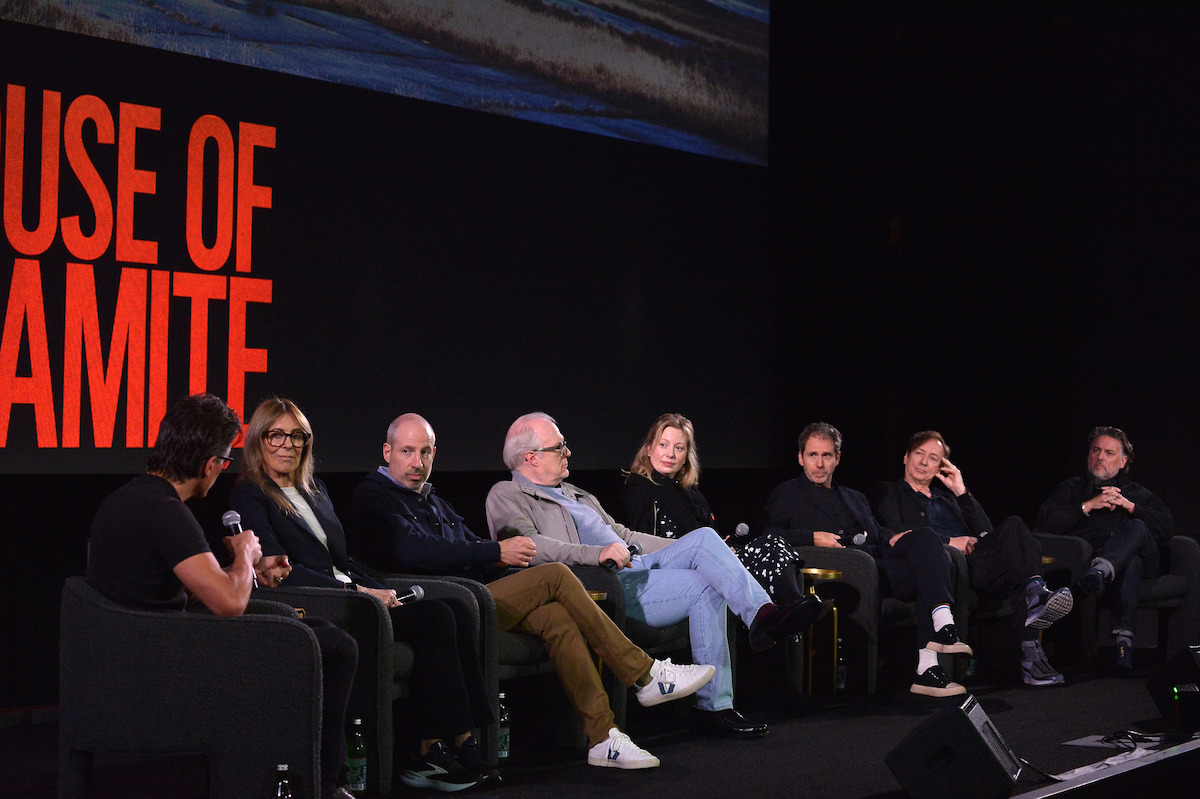
Bigelow, Oppenheim, Tracy Letts, Susanne Scheel, Kirk Baxter, Volker Bertelmann, and Jeremy Hindle.
Noah, you spent the first half of your life in journalism. Tell us about how that served the creation of this story. You’re not making up fiction here. I assume you did a tremendous amount of research before diving into this. Where did you start, and what did you find?
Noah Oppenheim: One of the things that makes Kathryn such an extraordinary filmmaker is her commitment to authenticity and realism and her choice to focus her incredible talents on real-world issues that we’re all confronting. So we kind of share this journalistic approach to storytelling. When we began working on it, it was a matter of getting on the phone with people who had worked in the White House Situation Room, in Strategic Command, at Fort Greely, and asking them very carefully, “What are the steps that you would all follow if we were ever attacked in this way?” and [then] building the story from the ground up, as if you were reporting a newspaper piece almost. And at the end of those conversations, we would ask each person, “Who else should we speak to? What else should we read?”
Was there anything that you didn’t know starting out that made you go, “Oh, no”?
Oppenheim: I think there were two staggering moments. One was learning how short a period of time an event like this would unfold in, the idea that it’s less than 30 minutes from the Pacific Theater to impact in the United States, 10 to 12 minutes if a submarine ever launched [a missile] off our coast. And then the second was a conversation we had with a gentleman who was a former chief of staff, who was Secretary of Defense. And we asked, “How often does the president of the United States prepare for a moment like this?” And as you see in the movie, the president has the sole authority to make this decision, so how prepped is he? And the response from our source was, “He never practices, ever.”
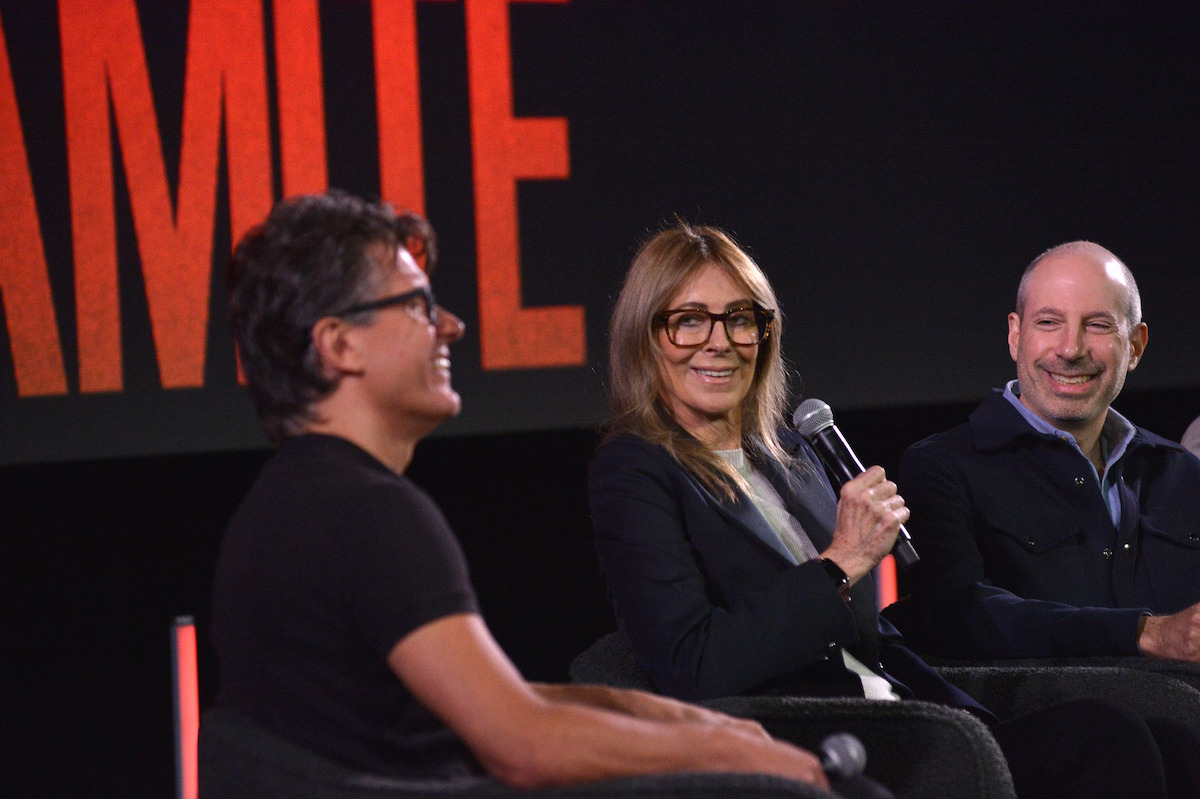
Moderator Anthony Breznican, Bigelow, and Oppenheim.
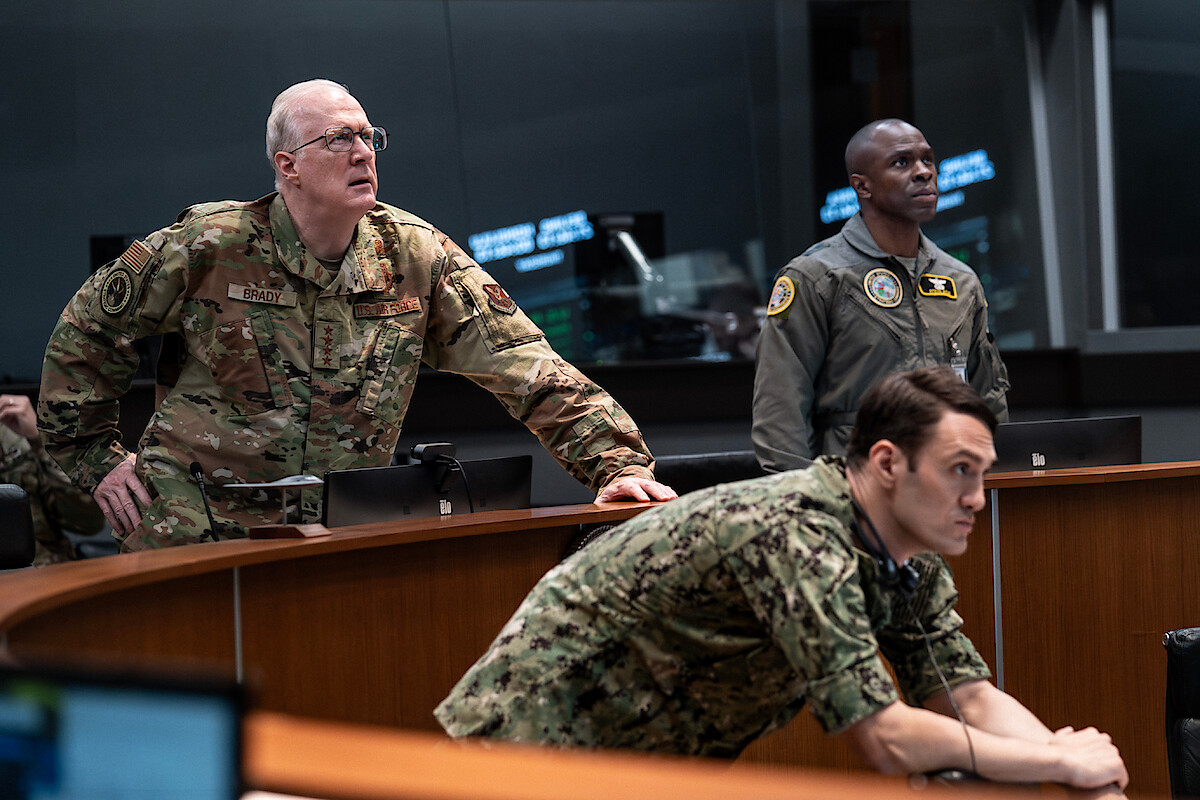
Tracy, your General Brady, he’s a fascinating guy. And I wondered if you could share your own take on this guy, giving him those moments of humanity that we were talking about. What were your approaches to make sure we understood who this guy was?
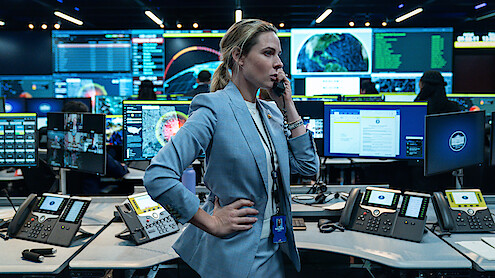
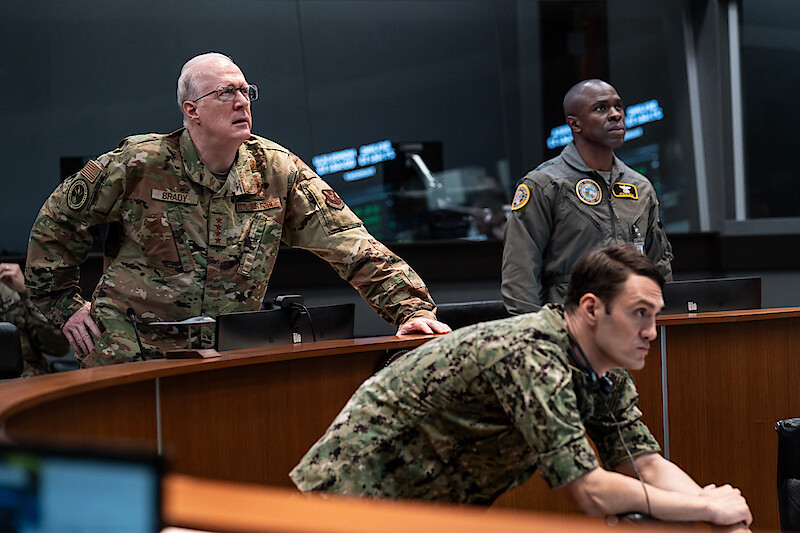
Tracy Letts: The truth is that the job entailed finding those moments in between the lines to just create a person, to fill in a person, to bring some humanity to bear. It’s a reminder that there are people who do these jobs. And it’s also a way in for the audience. In a script that is largely procedural, the idea that we get to see the human beings behind the job seemed really important. And these guys, a couple of technical advisors, three- and four-star generals were on the set with me. They’re in uniform. They’re background players. And they spent most of their career in Strat Com. I mean, almost all of my performance is contained on that set.
So I have them as a constant resource to know, “What would I be doing? What kind of leeway do I have here?” To which they said, “You’re the general: You can do whatever you want. And you can put as much sugar in your coffee as you want. You can talk about the ballgame all you want.” They had that kind of attitude. So [Brady’s] a guy going to work. These guys in Strat Com, they do simulations. They do exercises, simulations of these scenarios 400 times a year. So as a guy showing up to work, the job then becomes, what’s different about this day, and how do you perform [that], the heightened circumstances?
Those guys who were helping me, they impressed all of us with their professionalism, [the] seriousness with which they take this job. And so yeah, if you feel like crawling under the couch, you could at least lean on that a little bit. …
Susanne, as the casting director, you have a huge canvas you have to fill with all of these different actors, often isolated within their Zoom windows. Tell us where you started putting pieces together for this cast.
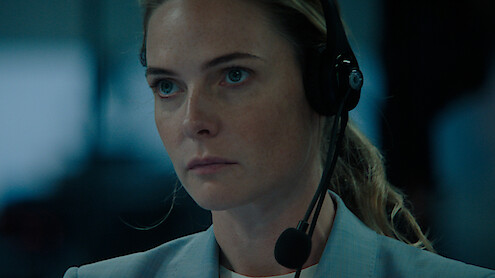
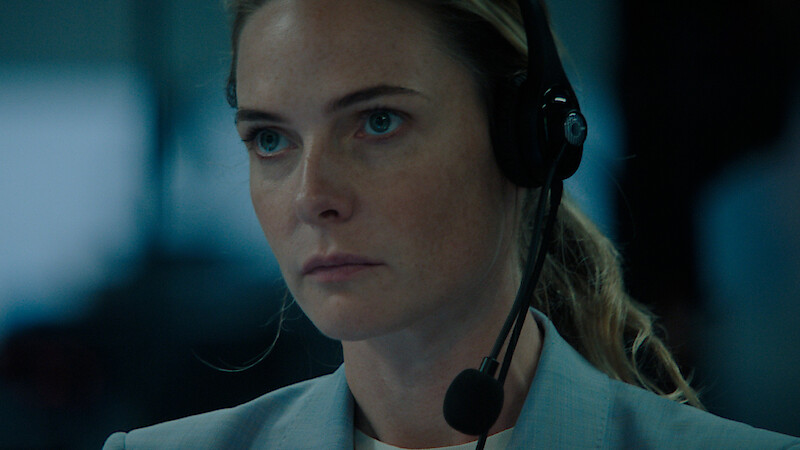
Susanne Scheel: We started with the leads in each set, so Idris [Elba], Rebecca [Ferguson], Tracy, Jared [Harris], Anthony [Ramos], and then [we] just built out from there — so, who sat next to them — and just build on the way out. And then [there’s] almost a cross-examination, but then everyone talks to each other at some point, so they’re cutting between each scene; or, if they don’t talk to each other, they’re being cut between the scenes right next to each other. So [we’re] making sure that [at] no point the audience had a moment [of], “Wait, who is that? And where are we?” Because the pace of the film just didn’t allow for it. So that was our hyperfocus, to make sure that each [actor] was so distinct and so specific and so credible to the place that we put them.
Kirk, editors often talk about having a handful of moments in a film that they know are crucial: This has to hit the audience in a certain way for the whole film to work. What were some of those moments for you?
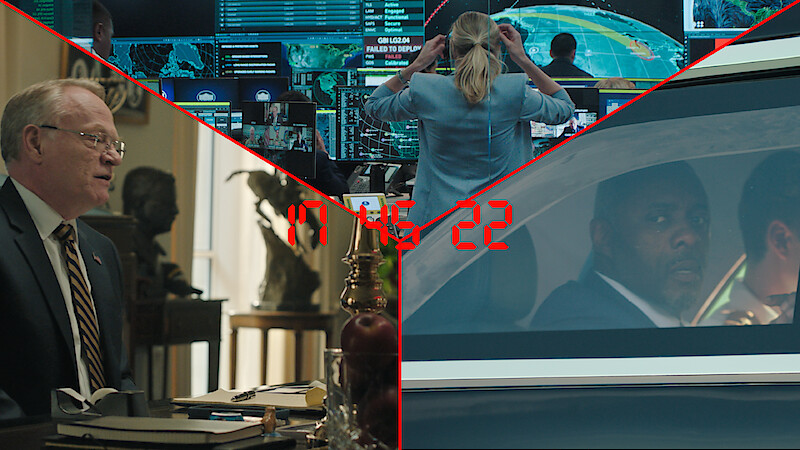
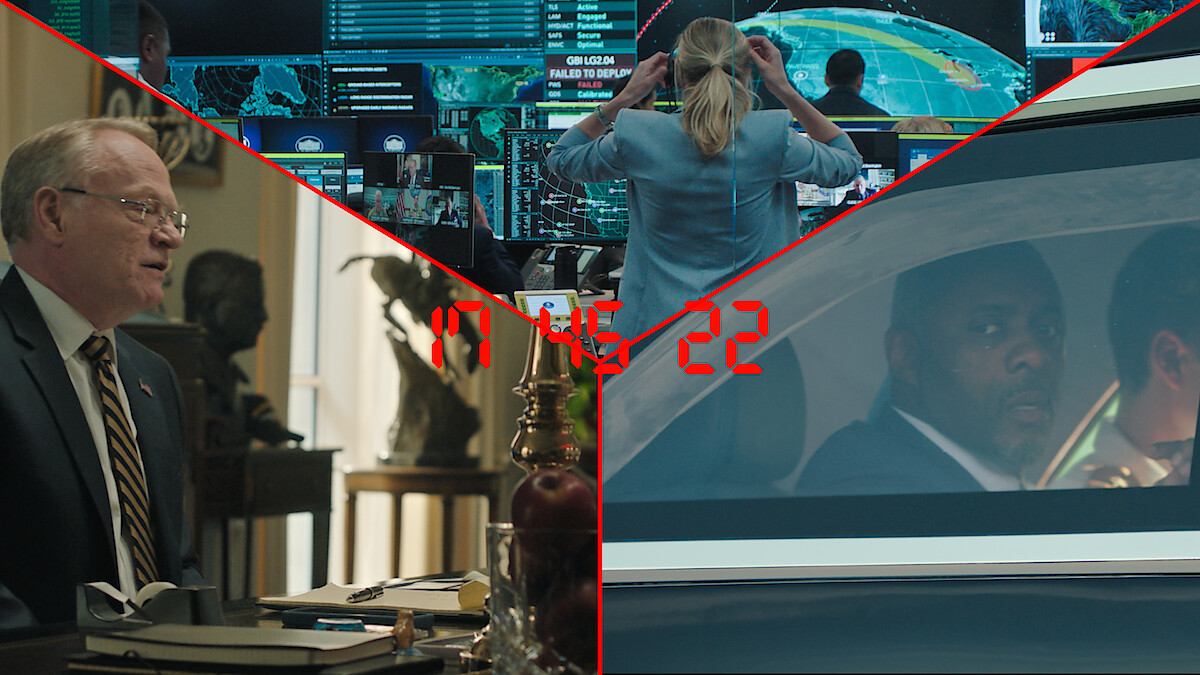
Kirk Baxter: I think the whole movie had that sort of frame. It was all very precise, because it’s about picking up a bit of dialogue from here, and then repeating it there. But the thing that excited me the most was the mix — the countdown. The first time we put the countdown together in Act 1, and it was before we were doing any kind of temp score or score, it was done in silence. It felt so effective to Kathryn and [me], because the oxygen all got sucked out of the room. And all of the different faces you’d go to, and that devastation of dispelling this lethargic myth that we’re safe.
And then getting the gift [of] a film editor to take that same information and retell it with a new group of people using the same metronome of everyone we just experienced, but now hearing their dialogue and then adding more layers to it, with Jason Clarke now going, “What did he say? What did he say?” And by the time you reach the executive branch, you’ve got more voices but now [fewer] faces. So you start using what’s around you, with portraits. And you’ve got this gift of getting to give the same information three different ways, with the strange belief as an audience member that it’s going to improve. I just relished all of that.
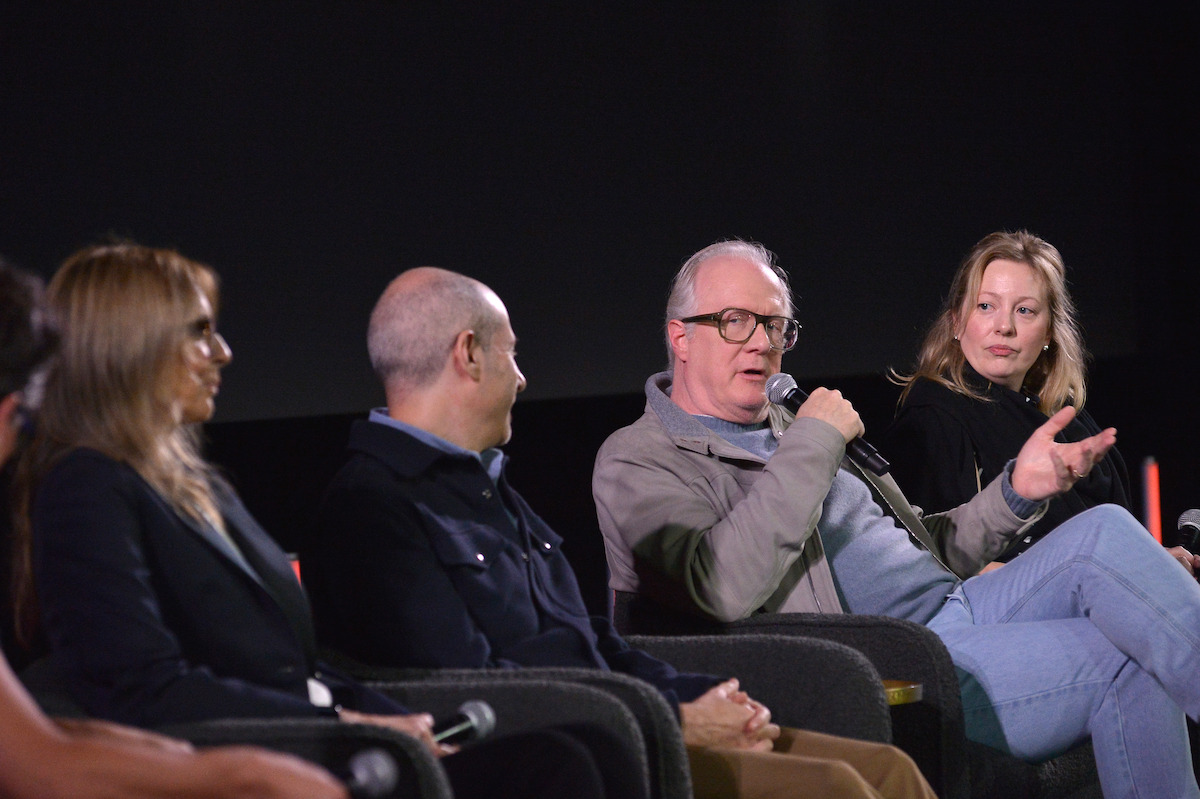
Bigelow, Oppenheim, Letts, and Scheel.
And Volker, your score [has] traditional elements, instrumentation and so forth. But especially in the closing credits, it has this rumbling and these unusual sonic textures. Tell us about creating unconventional sounds in the score [and] the effect that has on the emotions of the viewer.
Volker Bertelmann: I was experimenting a lot with the low instruments like woodwinds, the woodwinds where people were singing or humming into their instruments while they were playing low sounds. And also, I doubled that with low contrabasses, with low baritone saxophones. So I made layers of moaning sounds. And then I, in a way, muted every moaning sound, one section. So they’re changing constantly, but they’re creating this sound that is under the earth to create a kind of uncertainty, which I think for a film that has so much dialogue and that’s so realistic, it’s important that it’s not overpowering the story. So it needed little moments of score here and there; for the emotional heft, I invented or created those string arrangements to give more humanity.
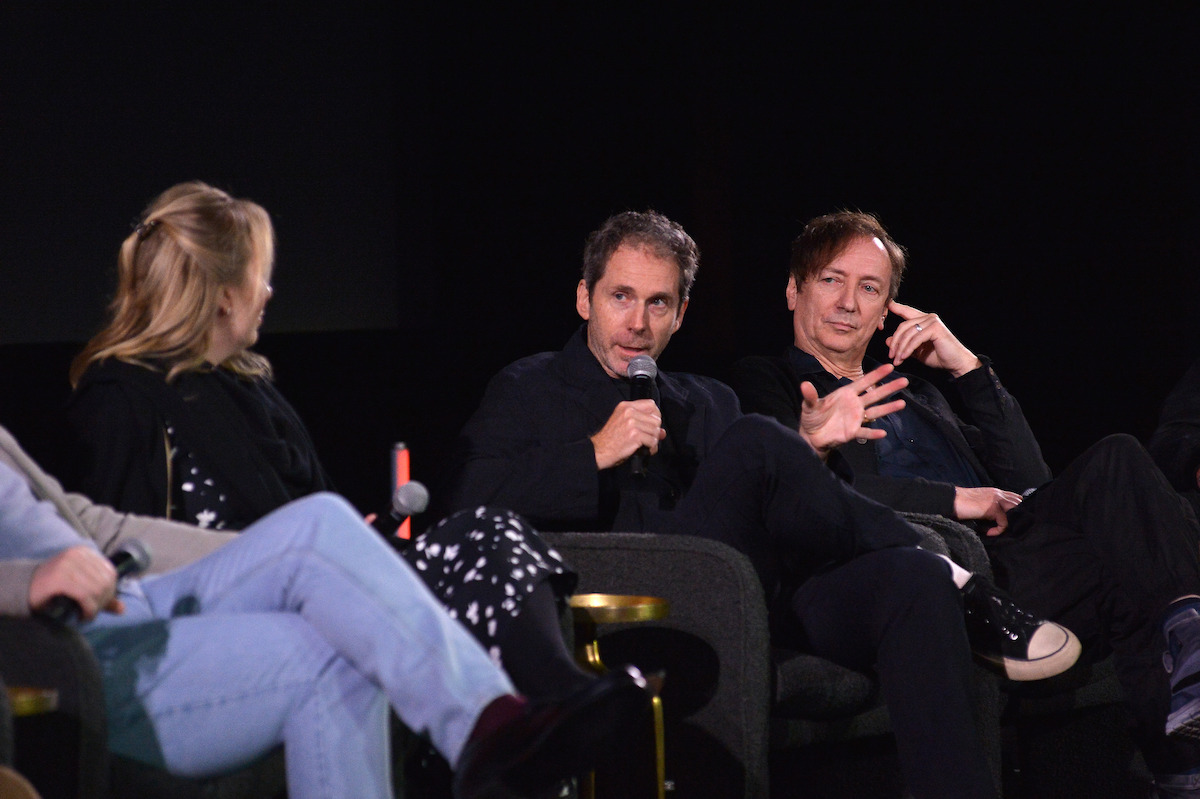
Scheel, Baxter, and Bertelmann.
And Jeremy, the world you’ve created, the environments that this film plays out in, a lot of the virtual environments: What was your approach to creating the stage, as the production designer, for these scenes to play out, for these characters to interact?
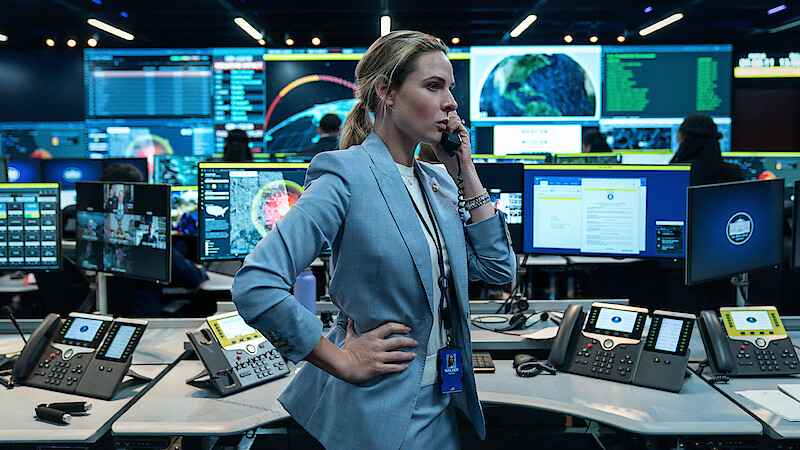
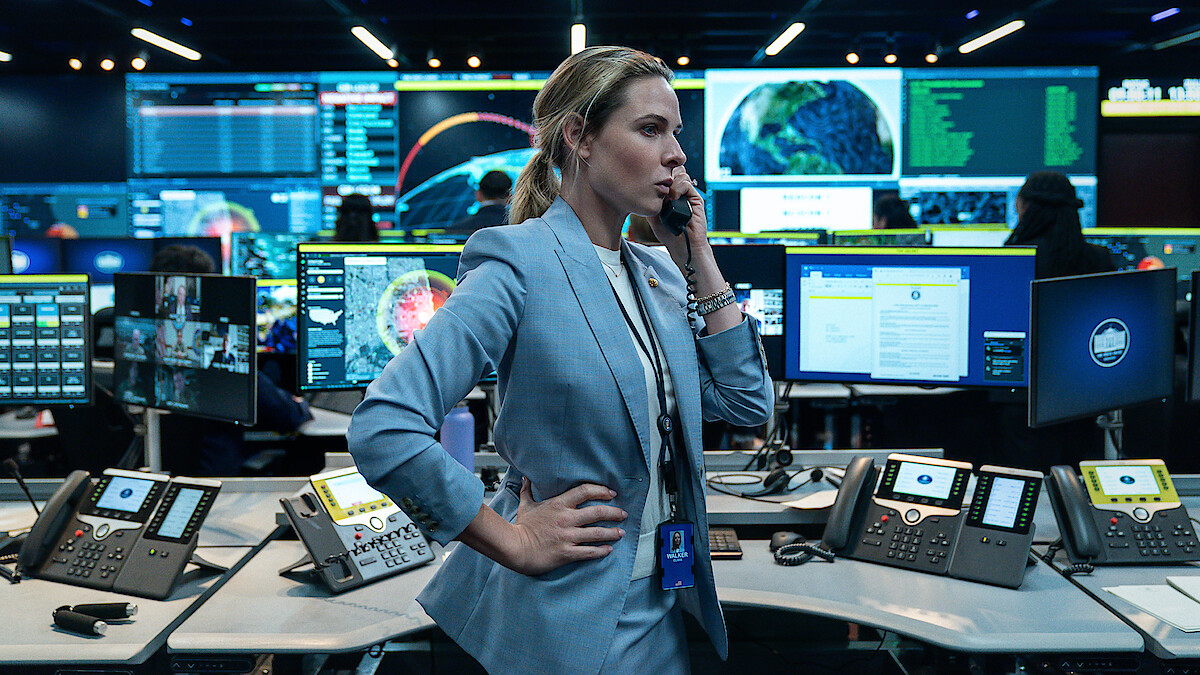
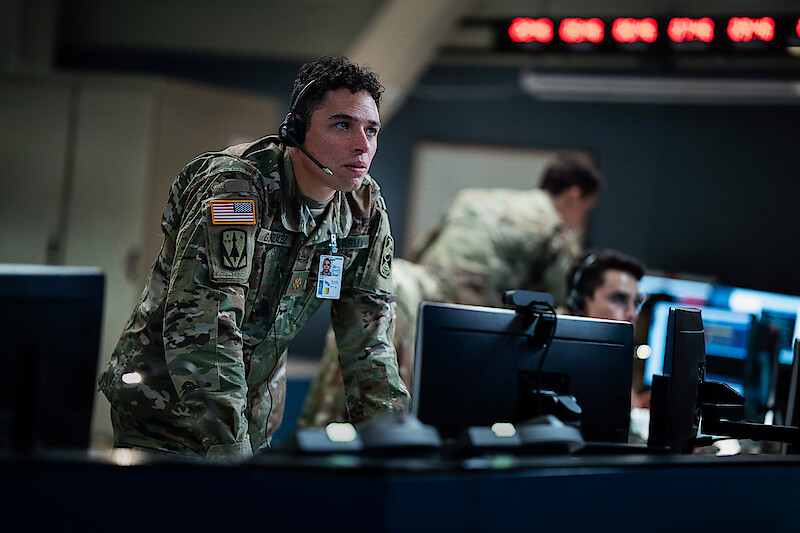
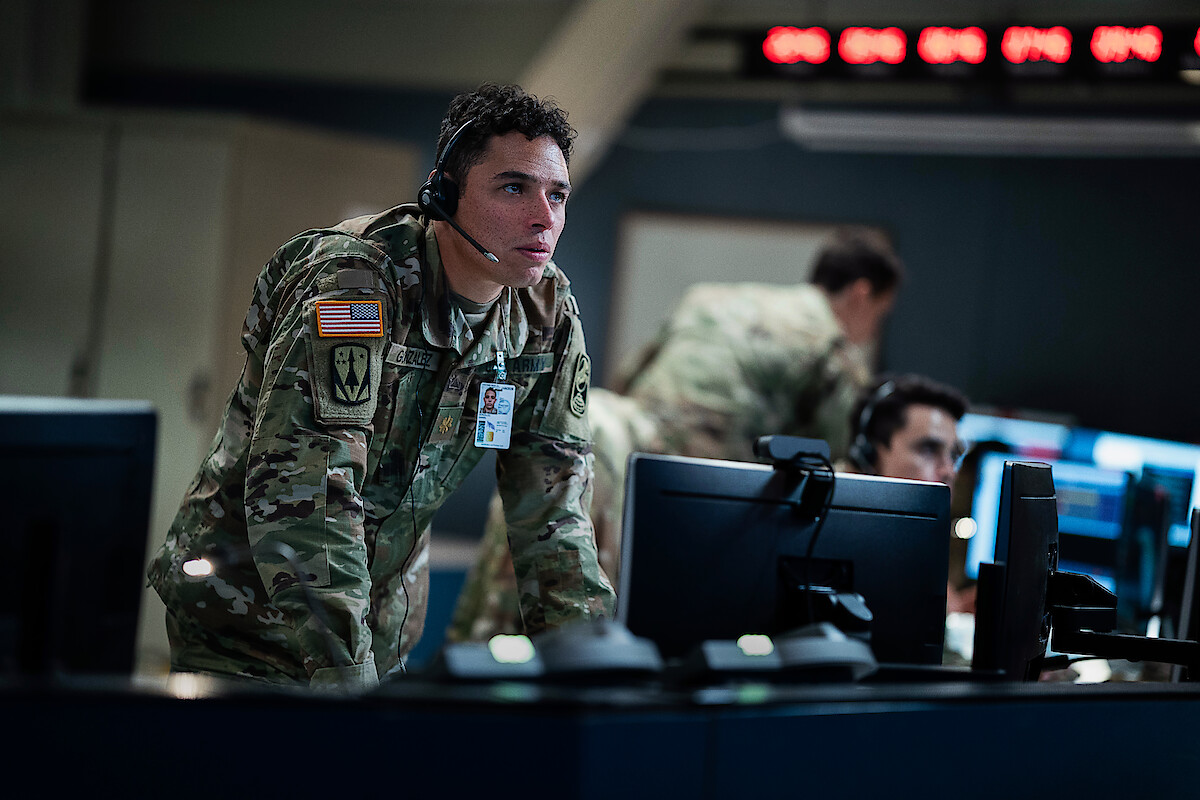
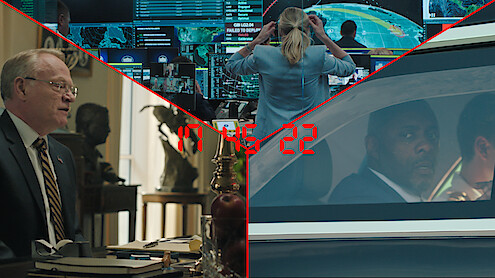
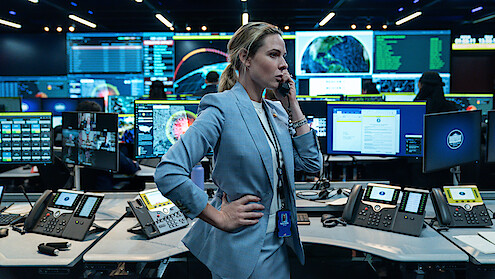
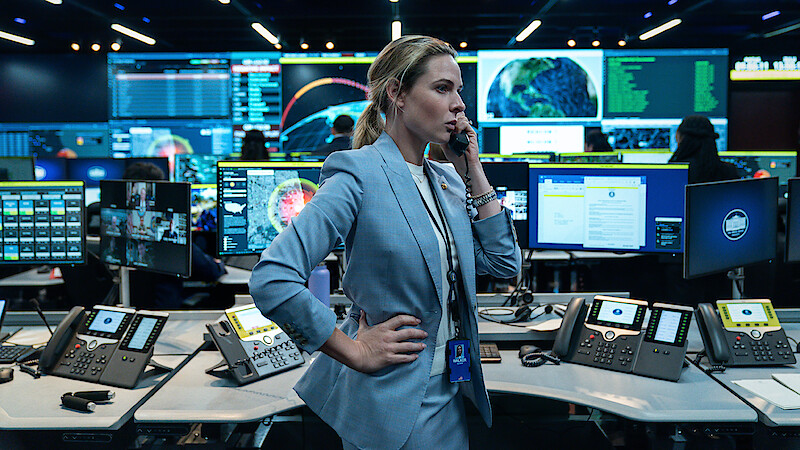
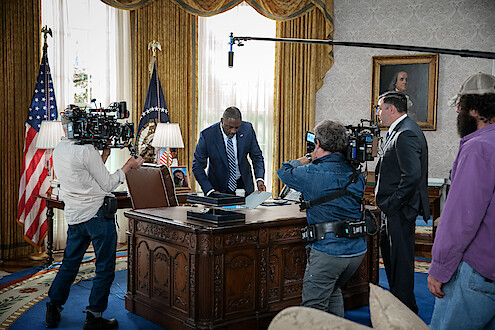
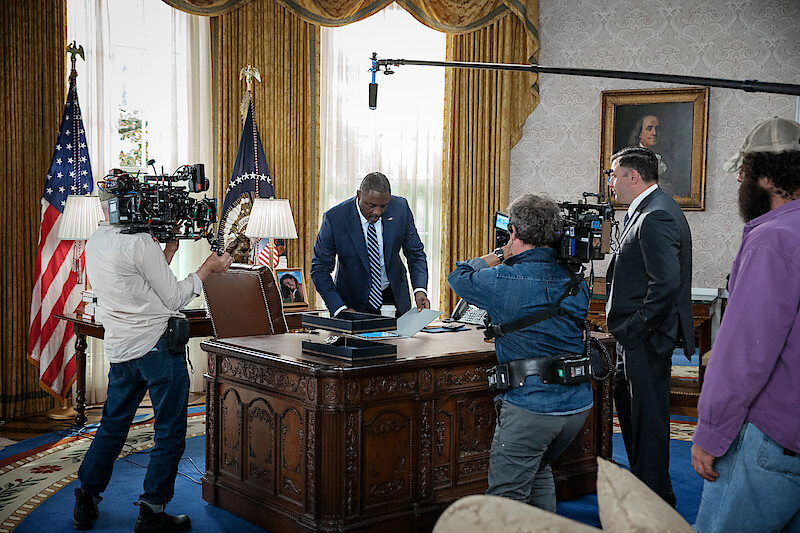
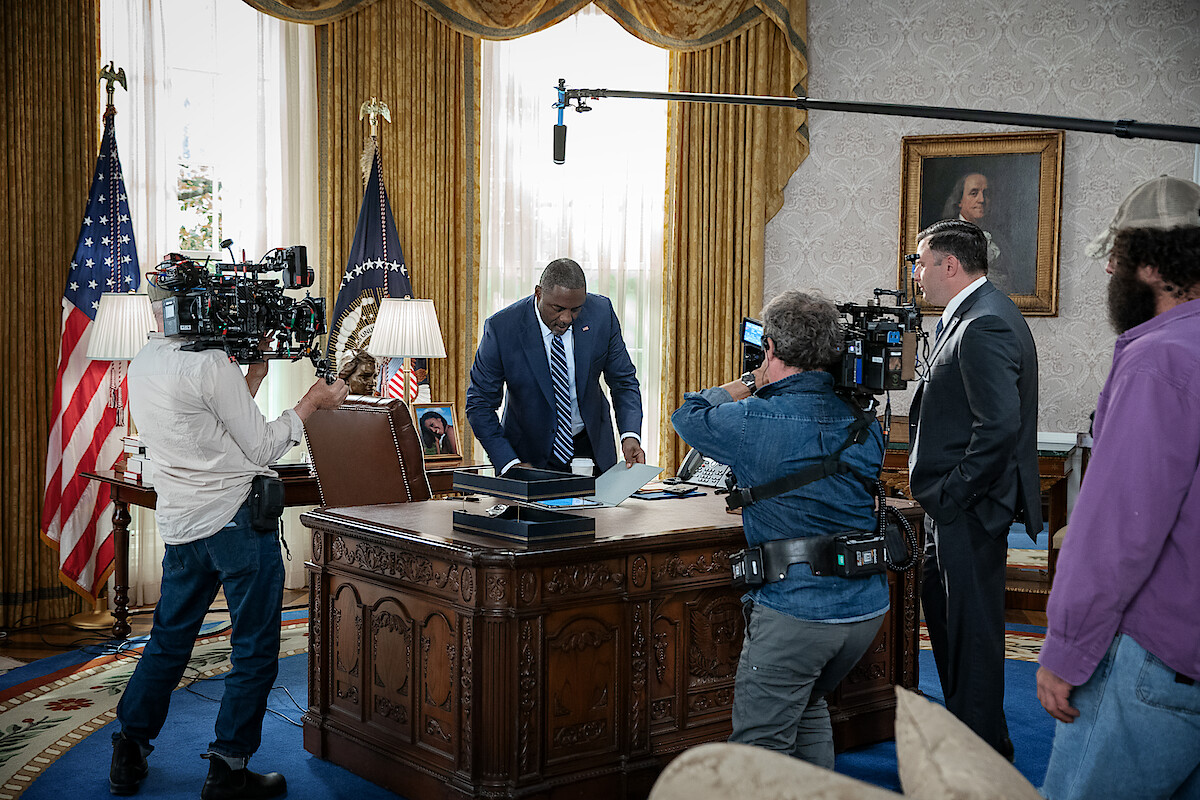
Jeremy Hindle: The details in this film were so important. This film can’t be scrutinized for how it looks. It needs to feel so real, like you’re on [a character’s] shoulder watching it. And this is such an important story that [you don’t want it to] get dismissed as filmmaking in any way, that its precision is so accurate. So we just knew the only way to do this is on the stage — build it as real as possible. Every environment, every scene doesn’t really have an introduction. You’re in the middle of a moment. So it’s got to just feel really real.
We shot it like a play. Most of the sets had to be ready for day one, with multiple cameras in every set, and every actor [could] act with other people on other screens, and they [could] pick up phones. And everything was interlinked, all the stages, all the sets, so that we could really feel like Tracy can talk to a screen and it’s a human being on the screen. It had to be as real as possible so that we didn’t lose the faith in this film, that people would be able to scrutinize it, because the movie’s too important to get lost.