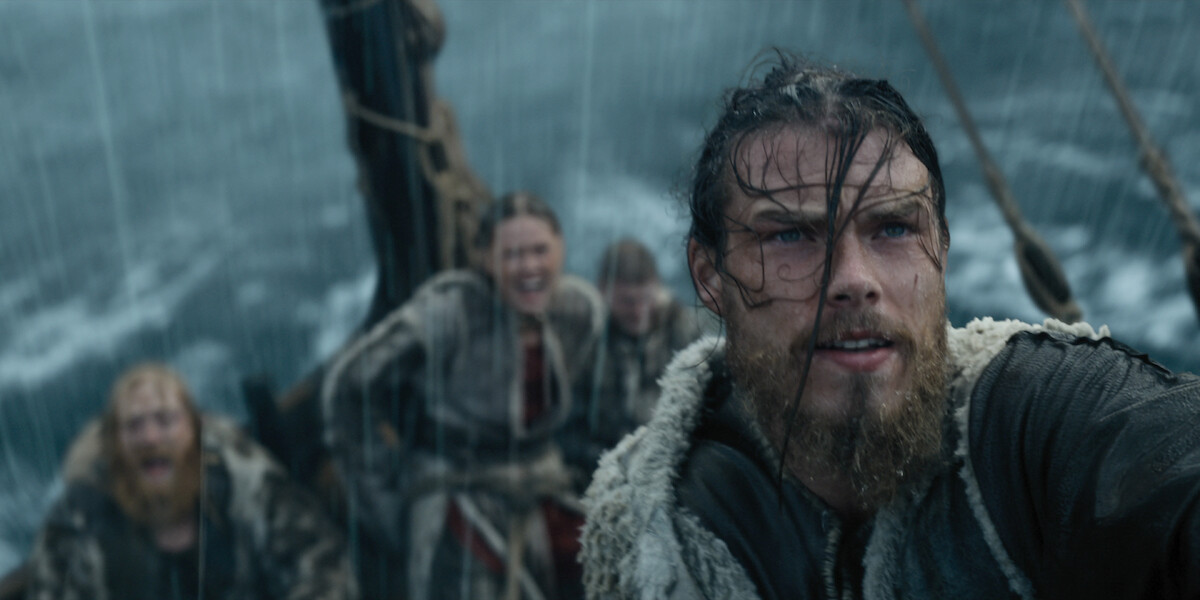
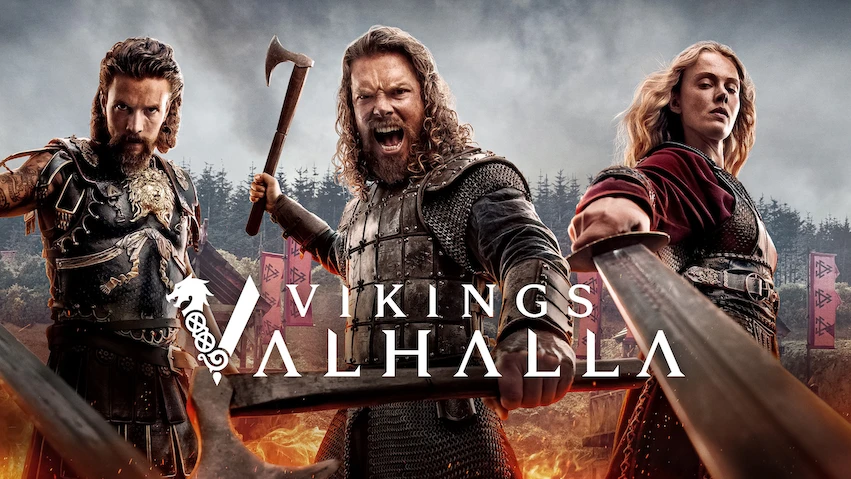
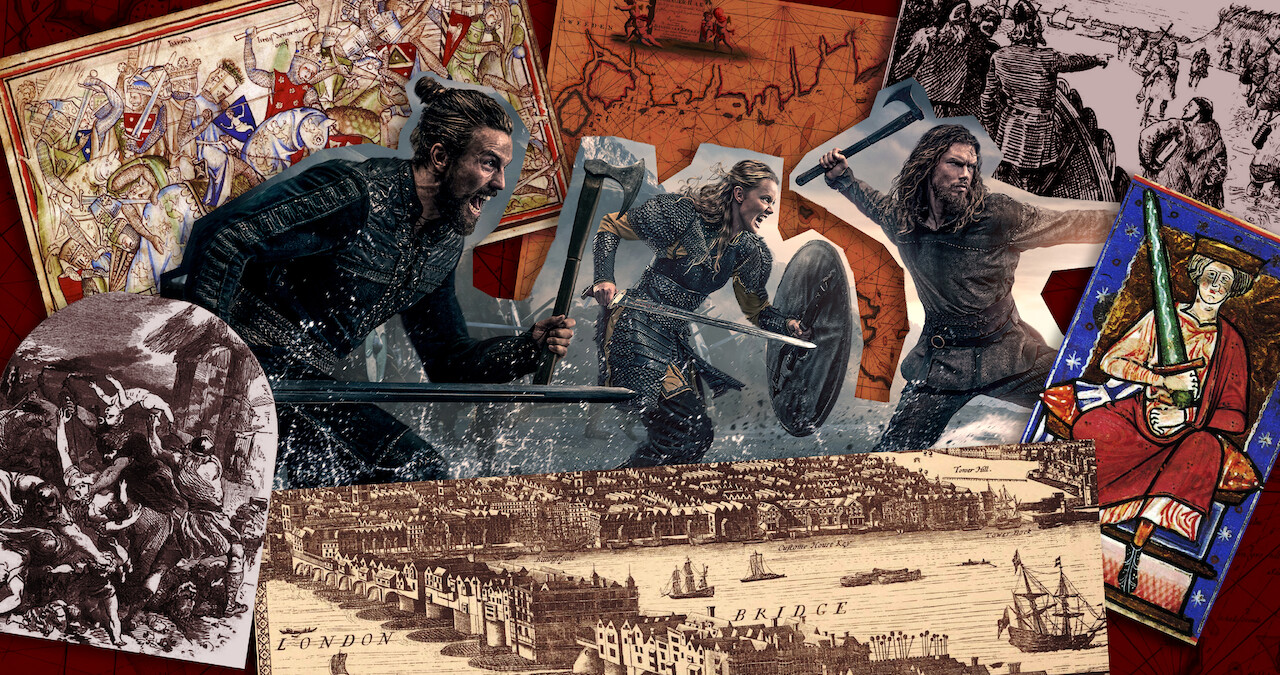
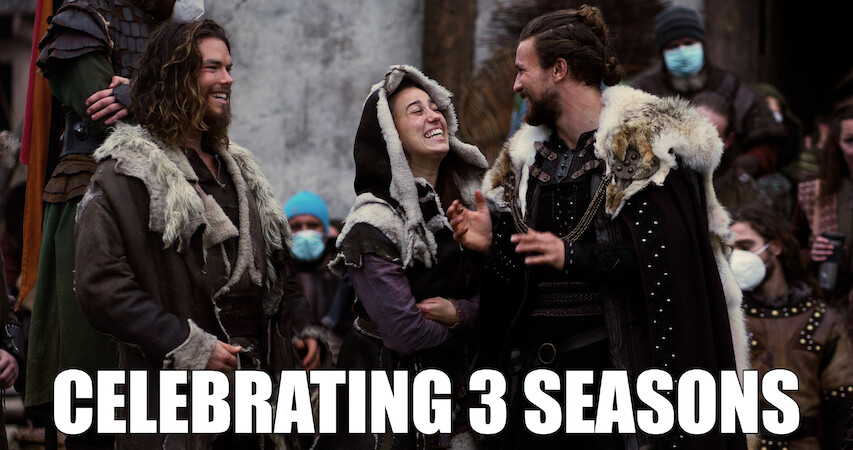
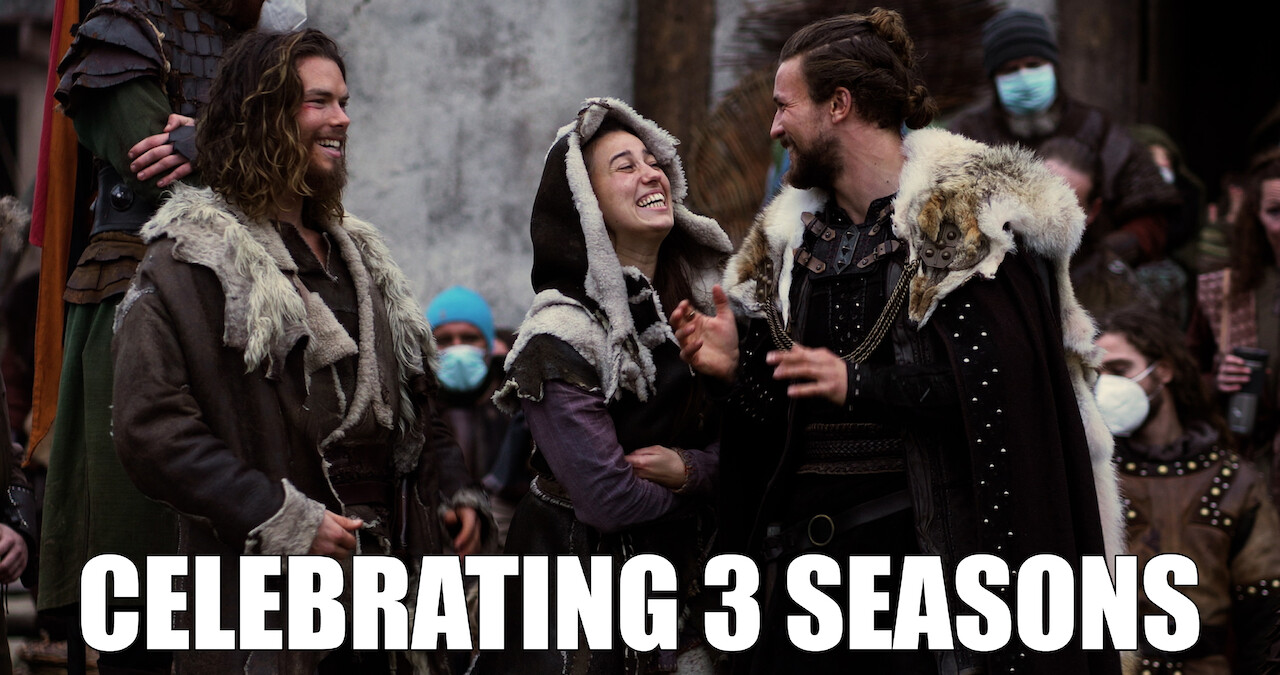
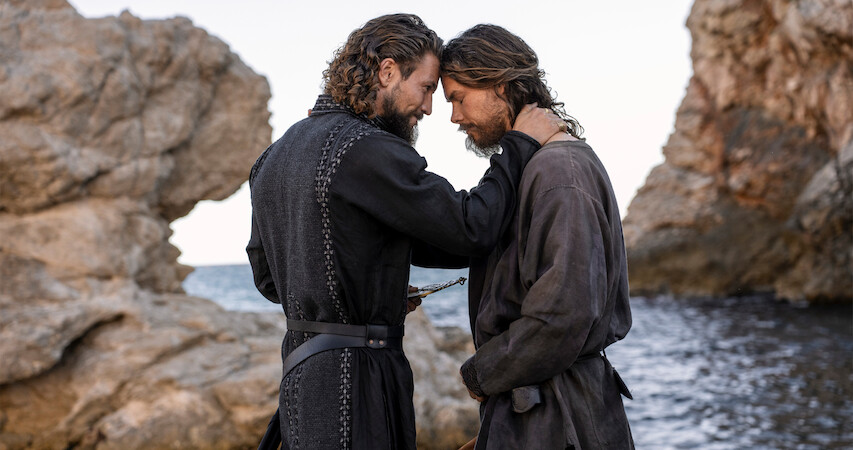
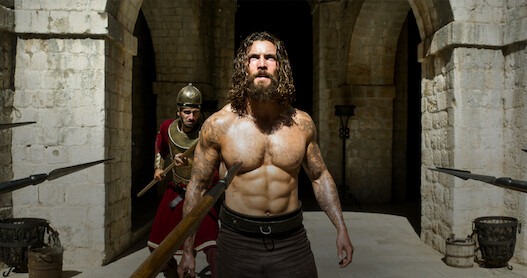
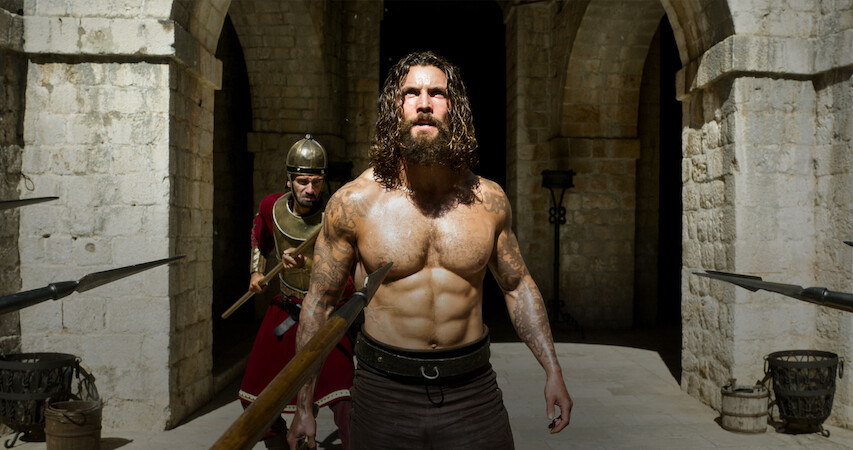
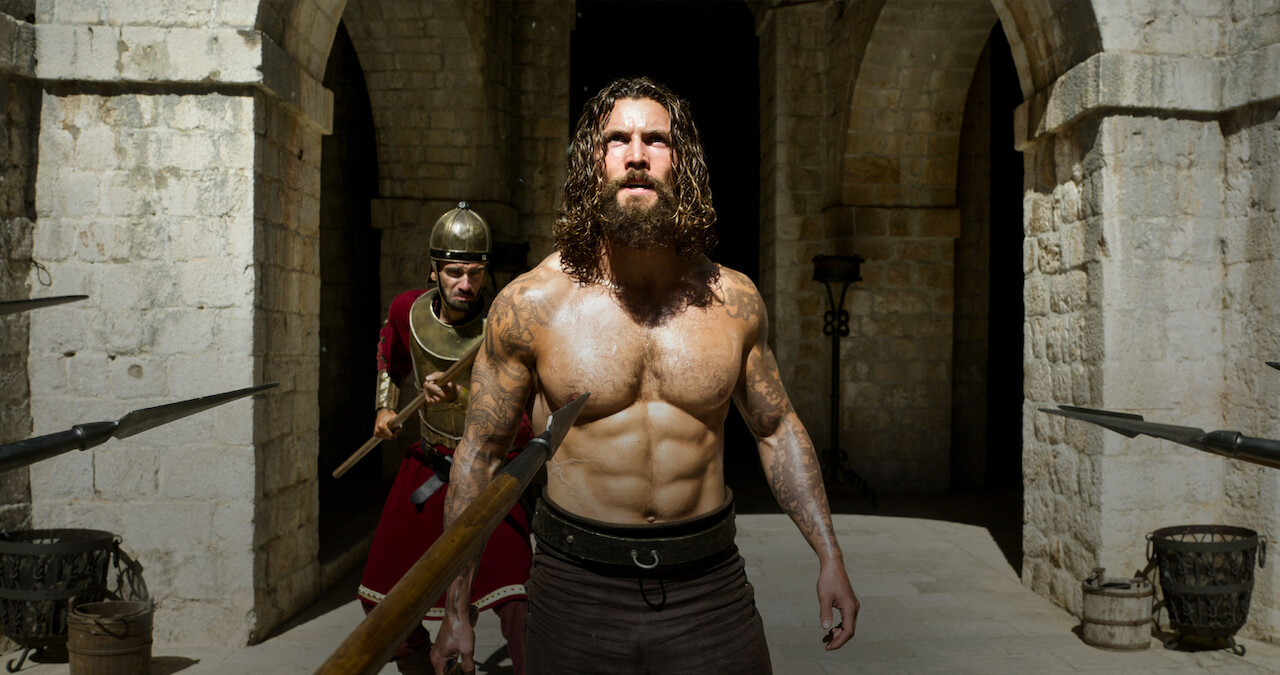
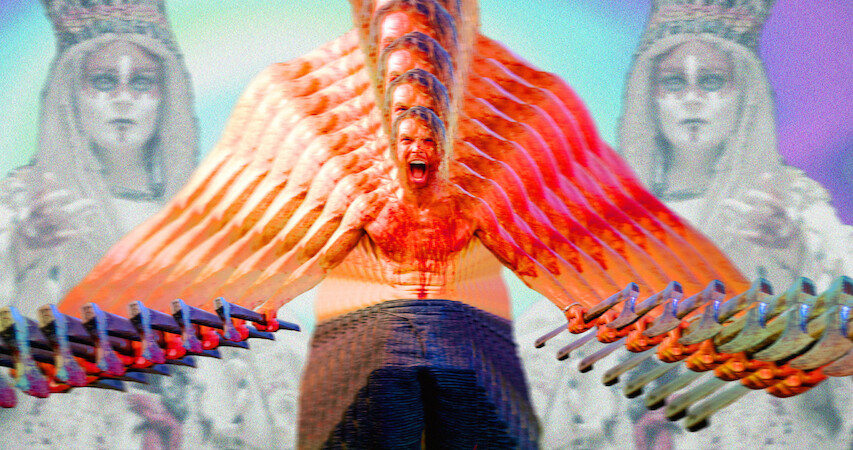
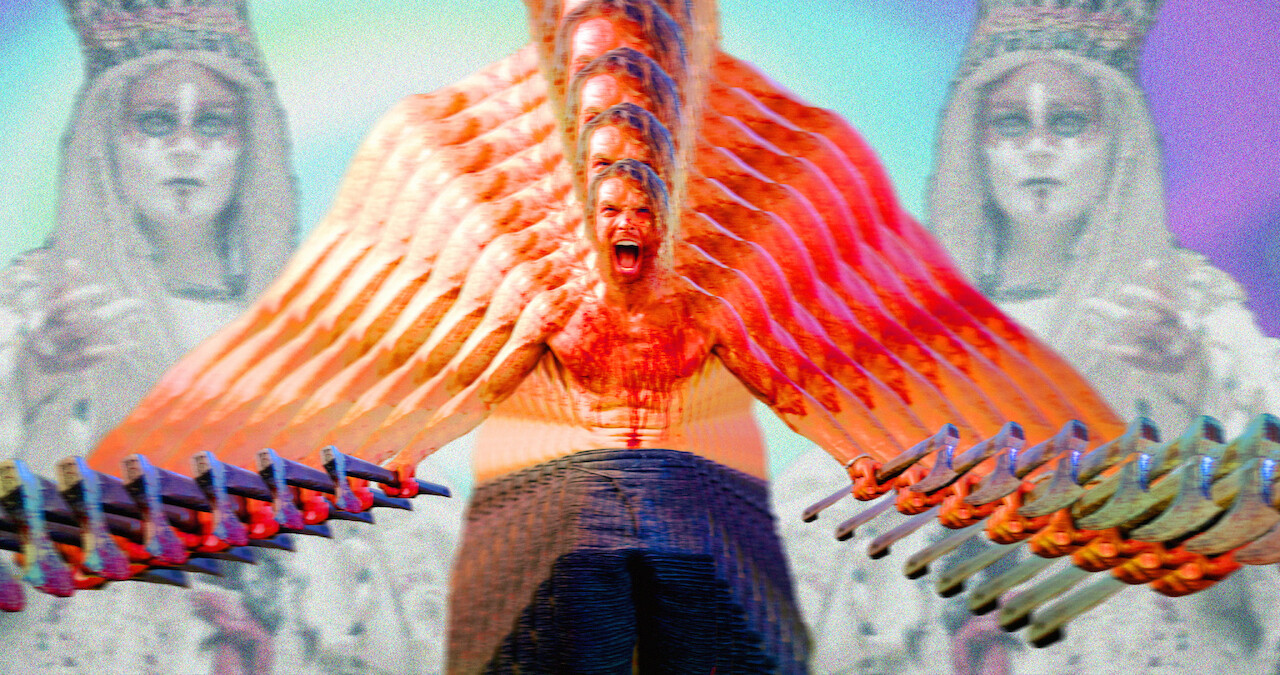
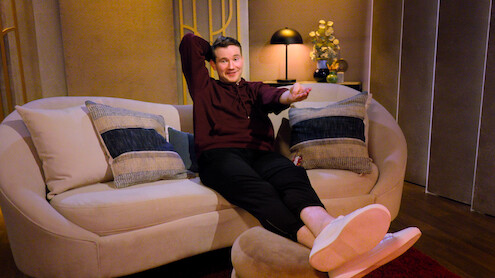
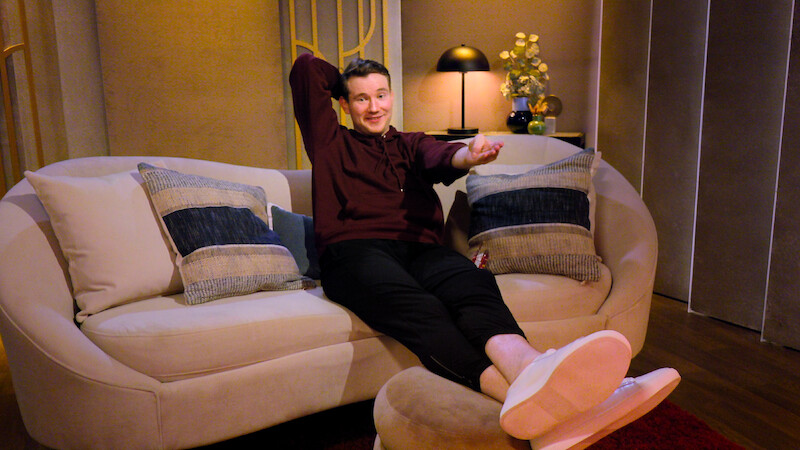
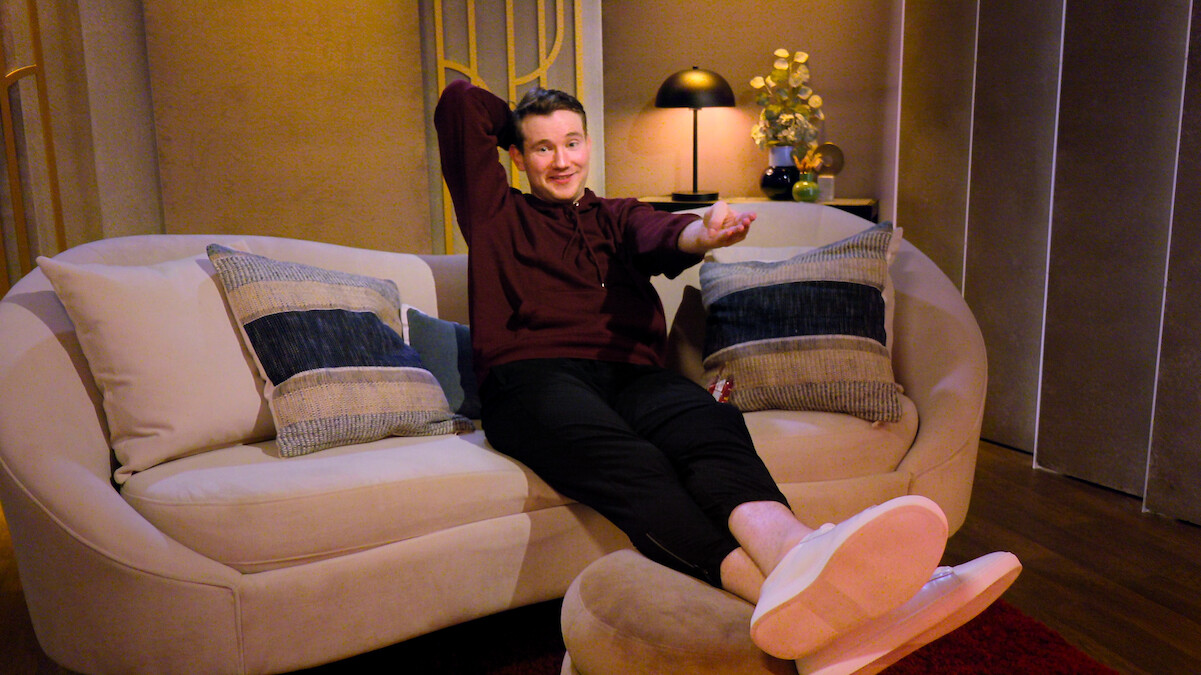
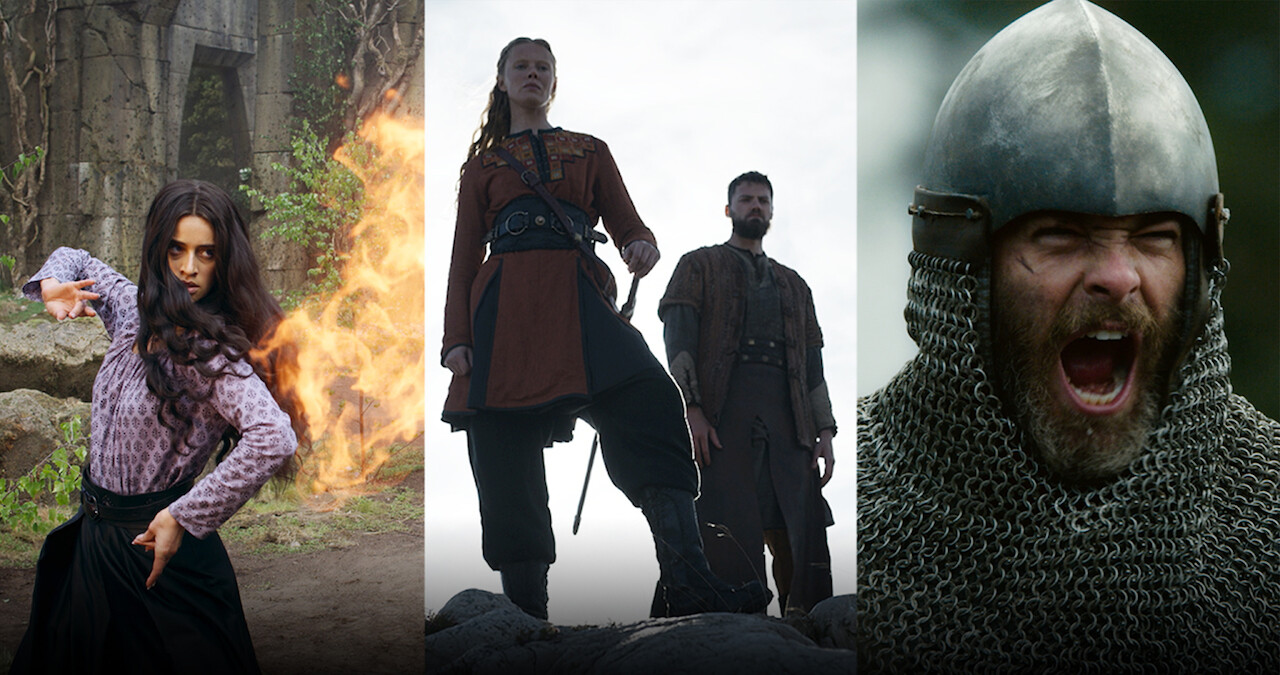
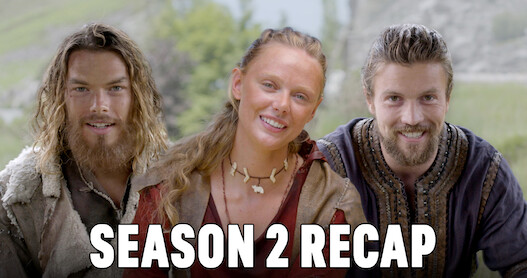
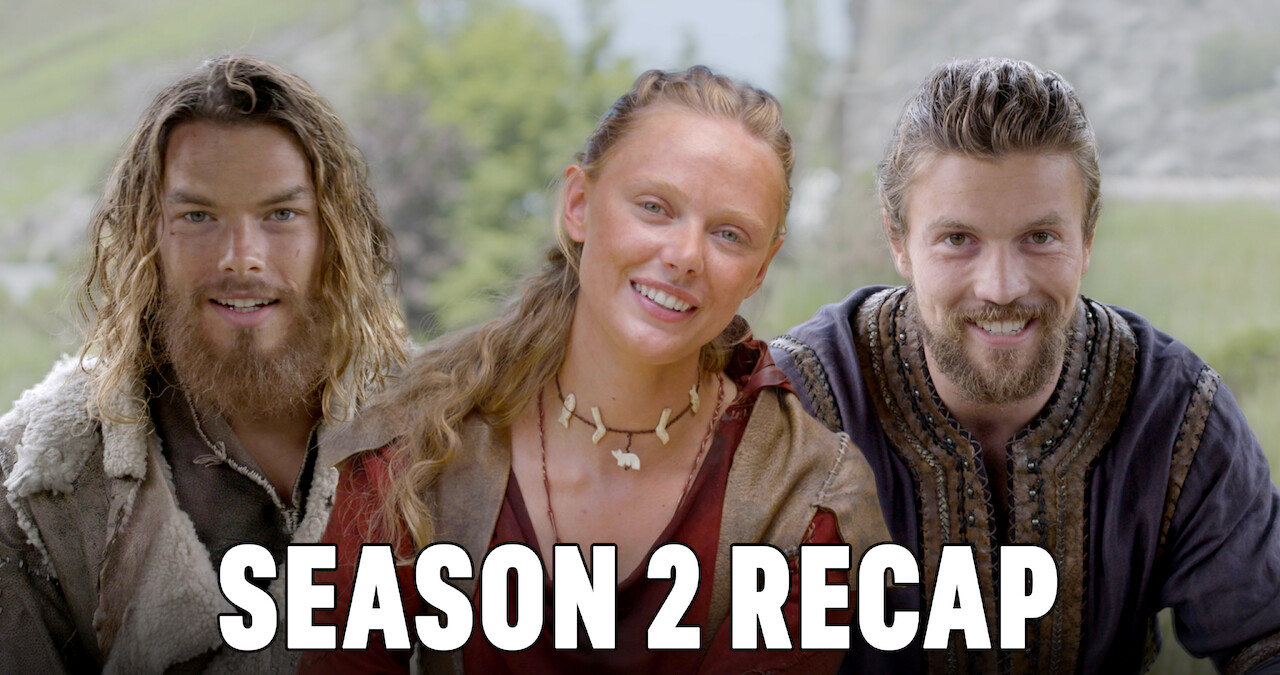
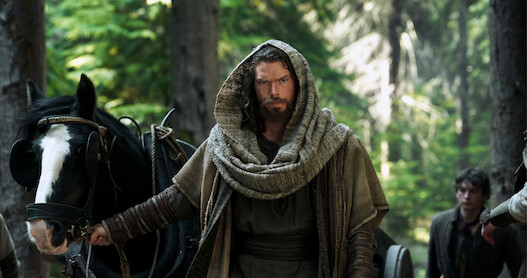
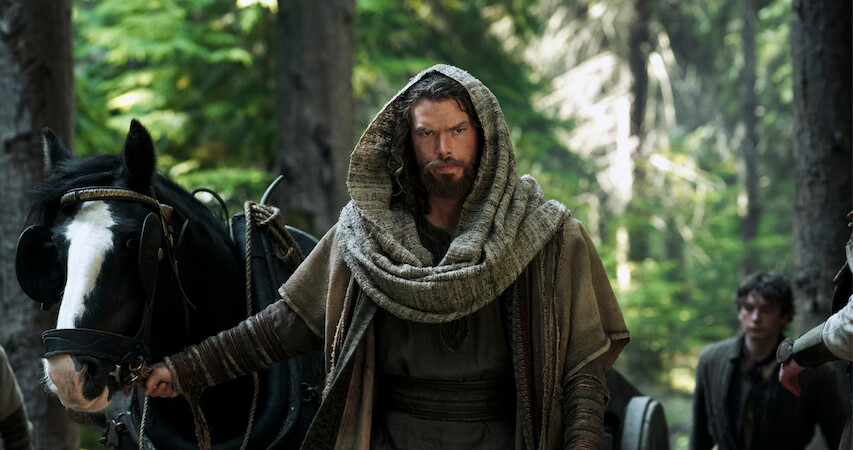
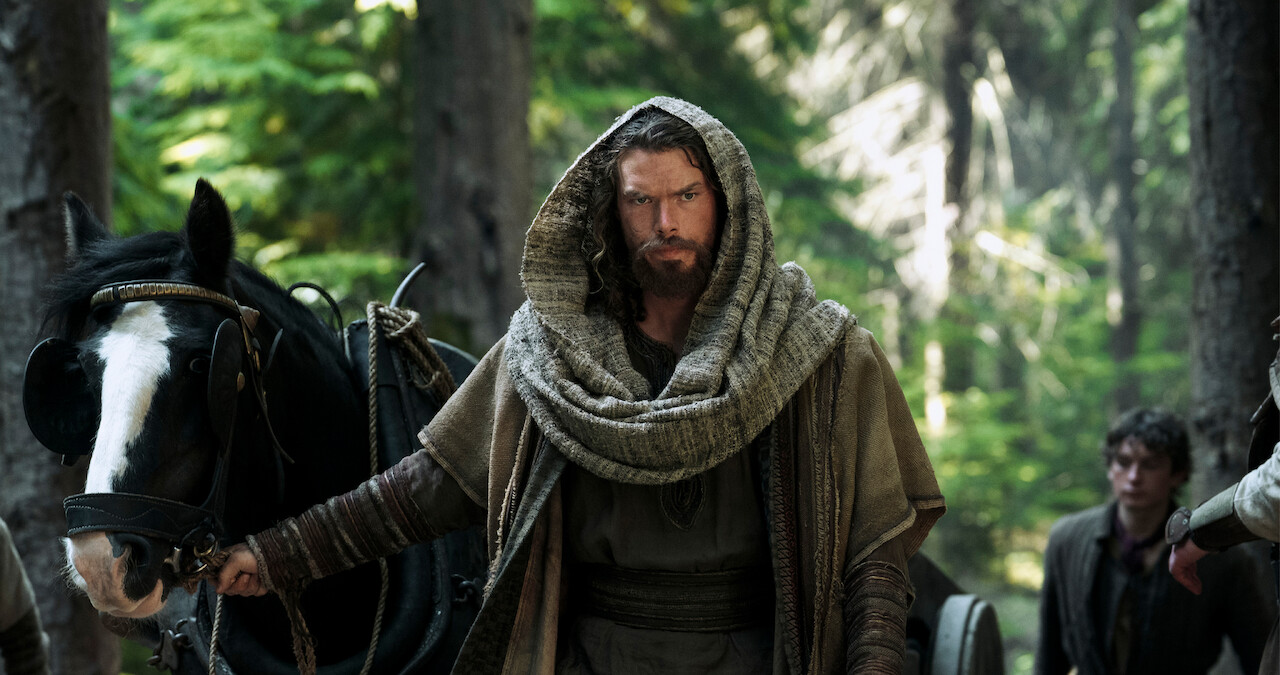
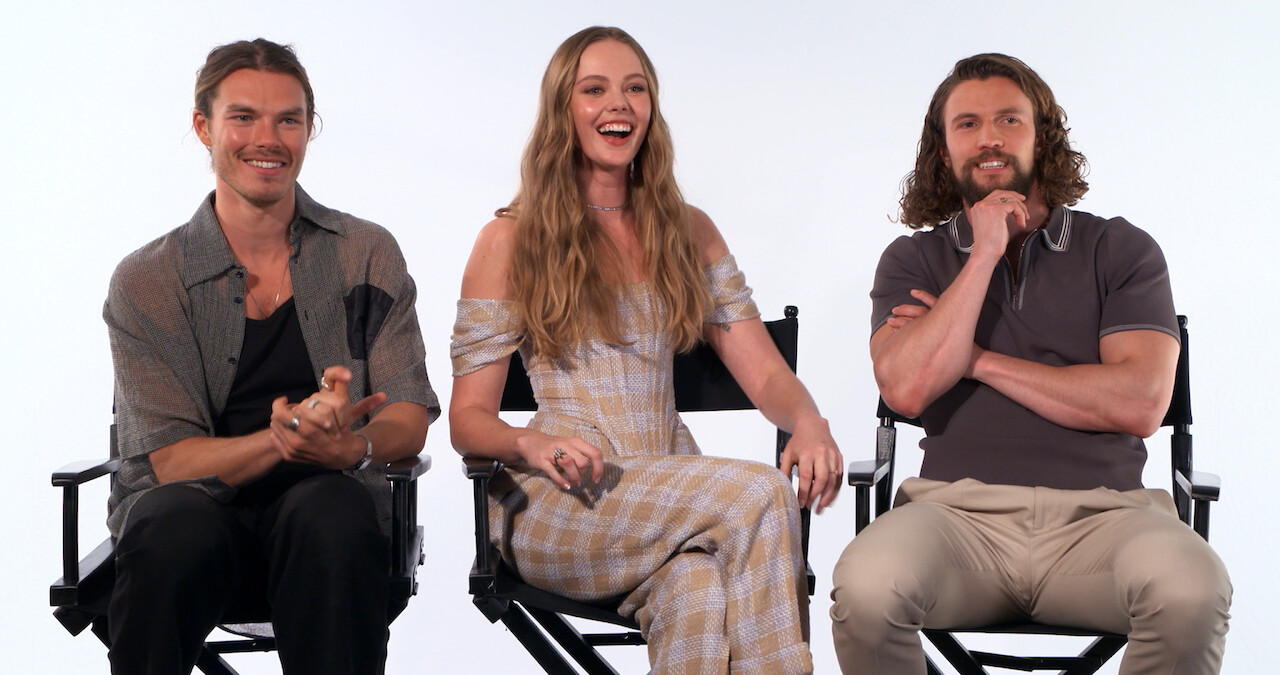
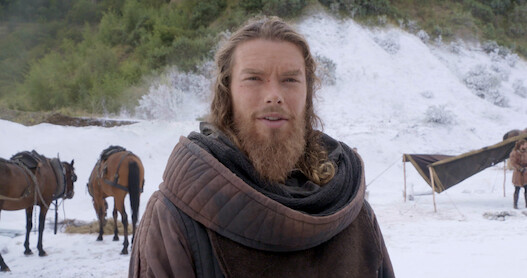
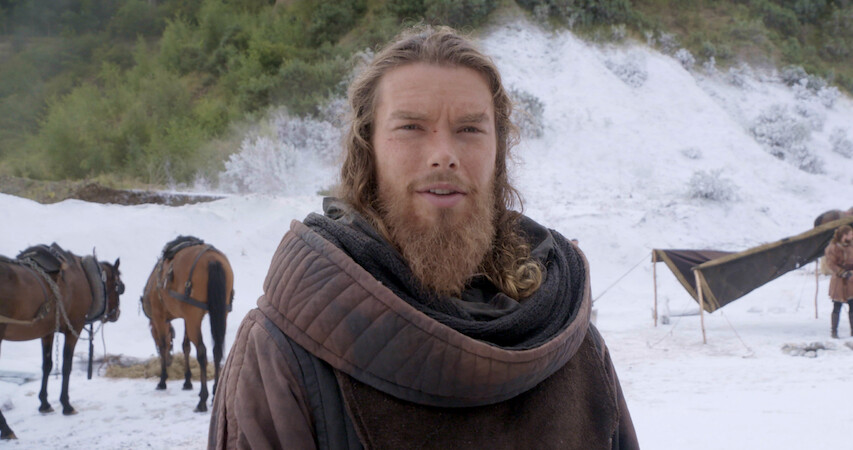
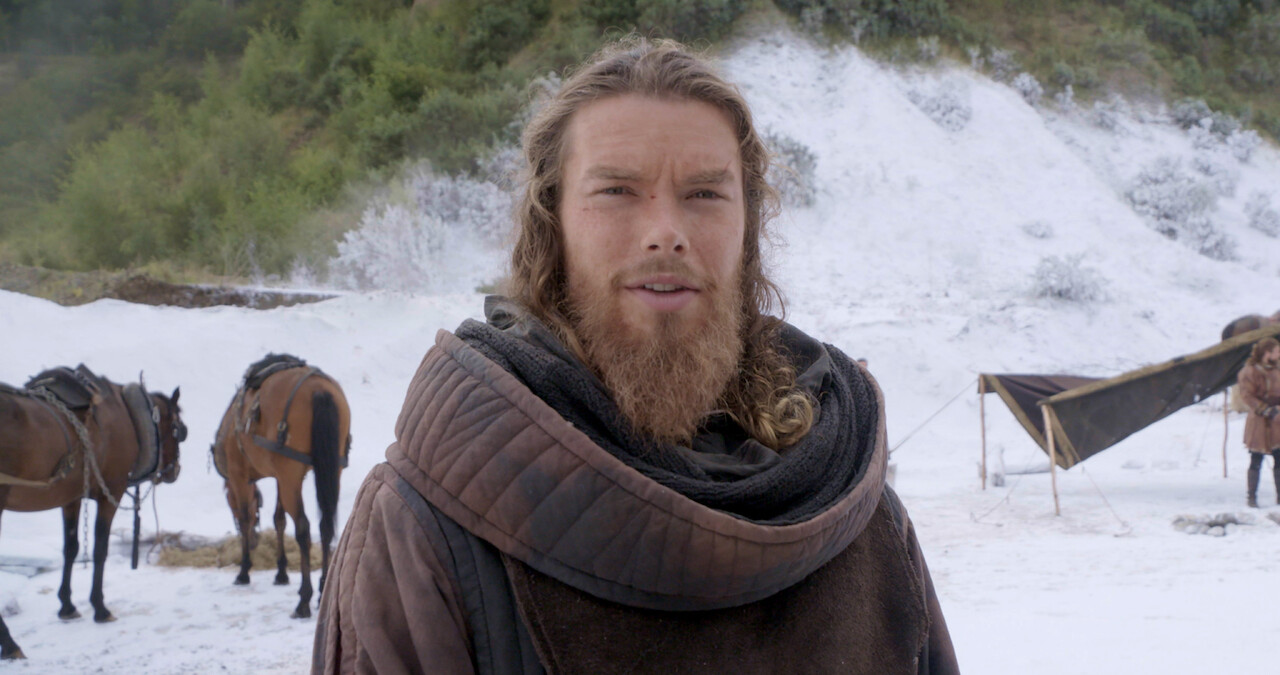
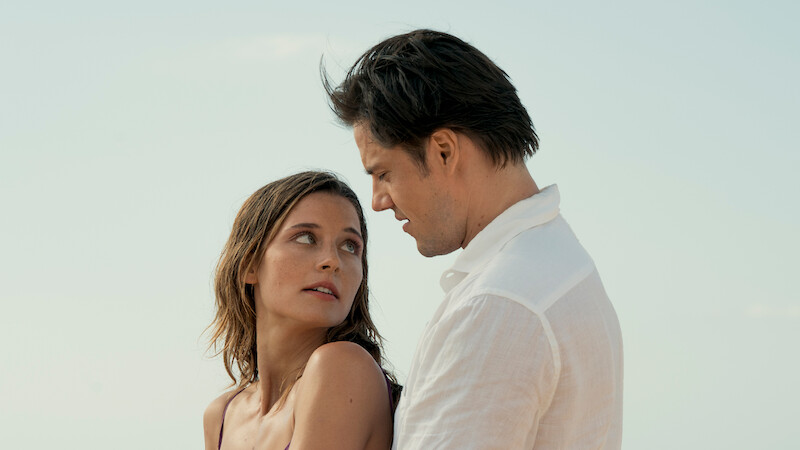
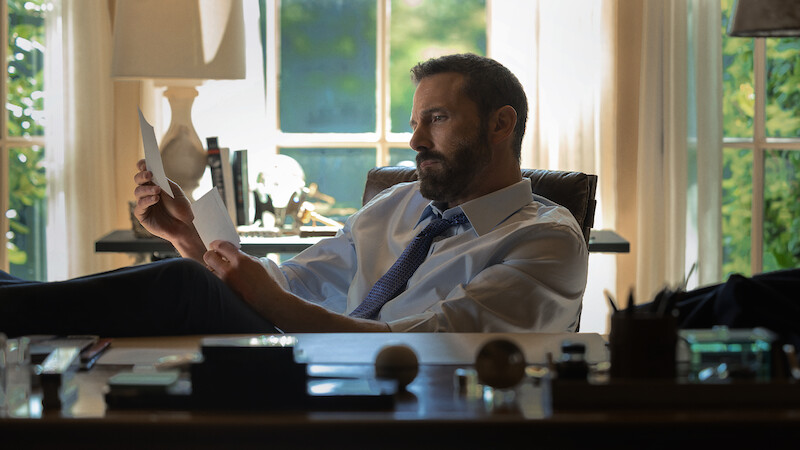
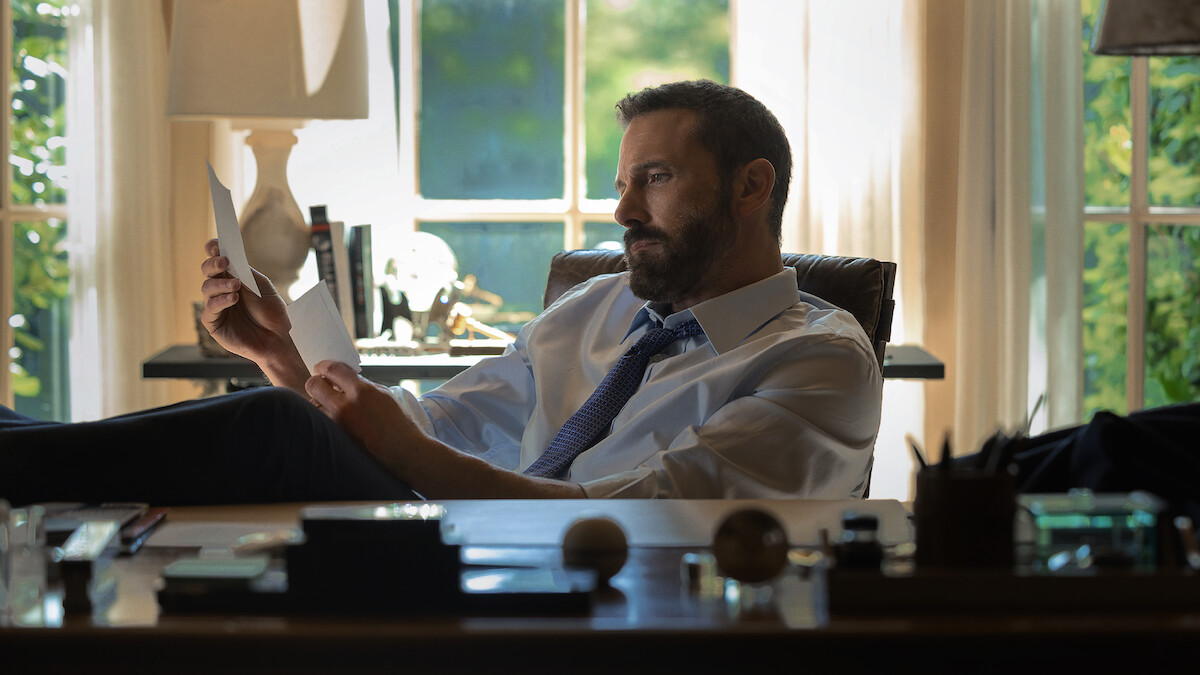
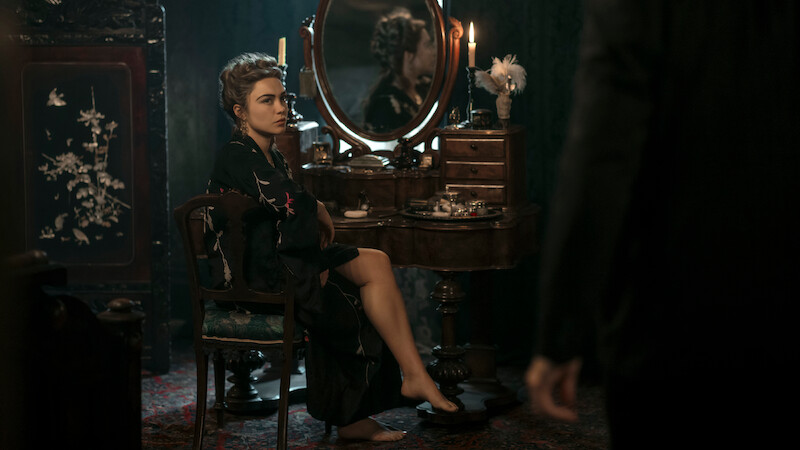
Sam Corlett remembers exactly where he was sitting in history class when he first learned about Leif Eriksson. A decade later, the Australian actor is putting that knowledge to use playing the historical hero in Netflix’s epic drama Vikings: Valhalla.
“I think that exam was one of the only exams I got an A in that year,” he tells Tudum. Of course, Corlett dived deep into Viking lore once he was cast in the series, expanding on that high school research — and creating a Viking-approved workout and meal plan that would befit the most famous Viking warrior. Corlett also appears on Netflix as Caliban, the Prince of Hell, in Chilling Adventures of Sabrina. Here, he discusses his Viking training regimen, befriending co-stars Frida Gustavsson (Freydís Eríksdótter, Leif’s sister) and Leo Suter (Harald Sigurdsson, prince of Norway), and his flowing Viking hair.
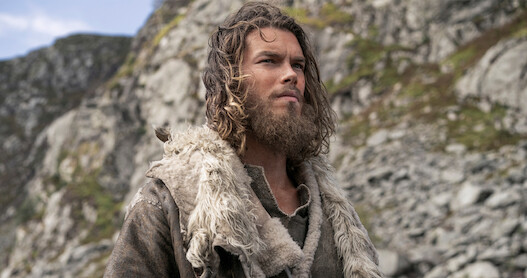
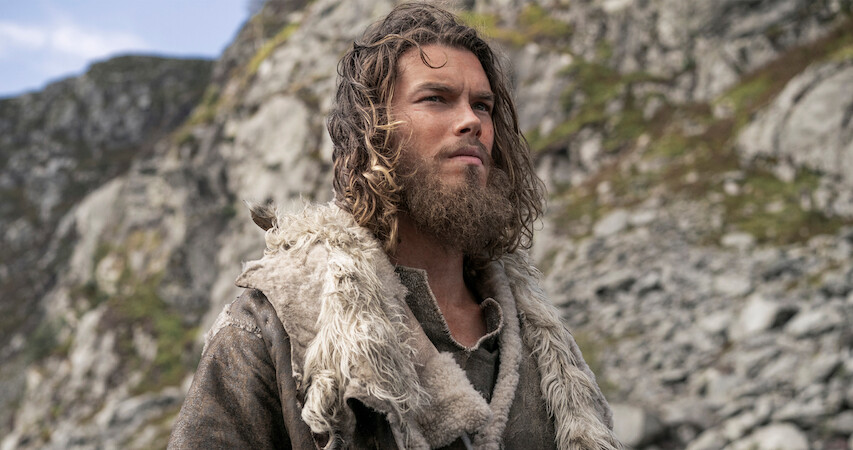
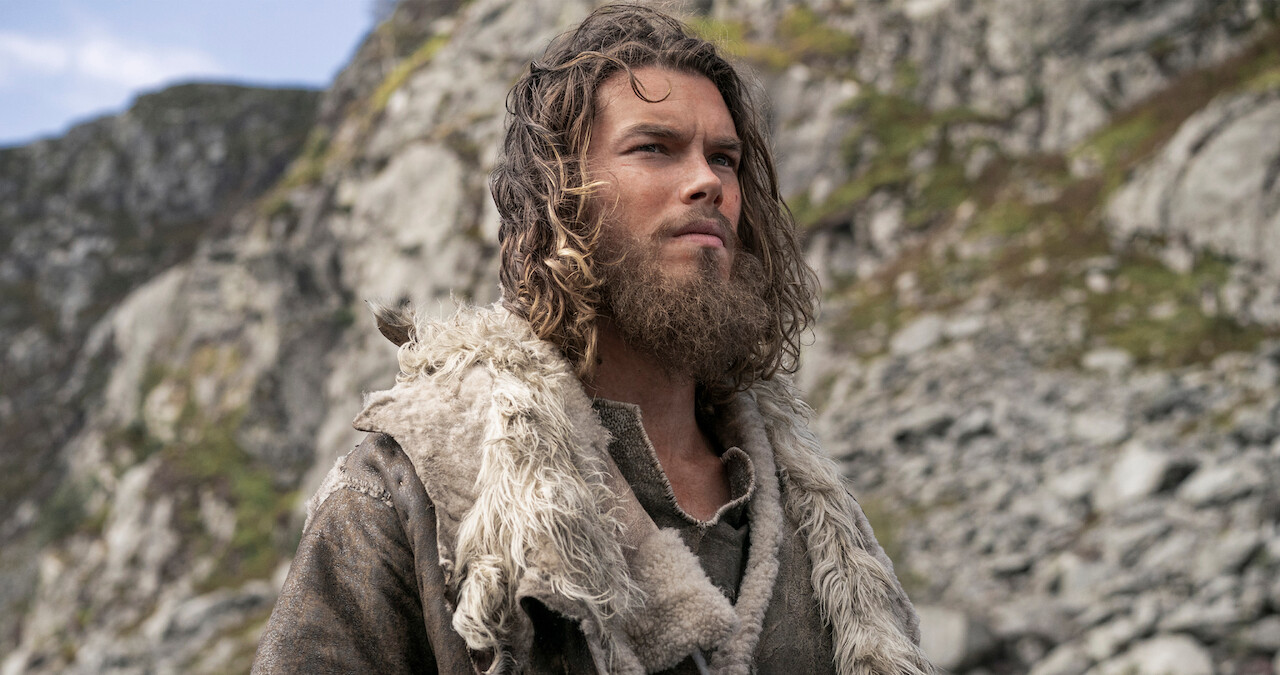
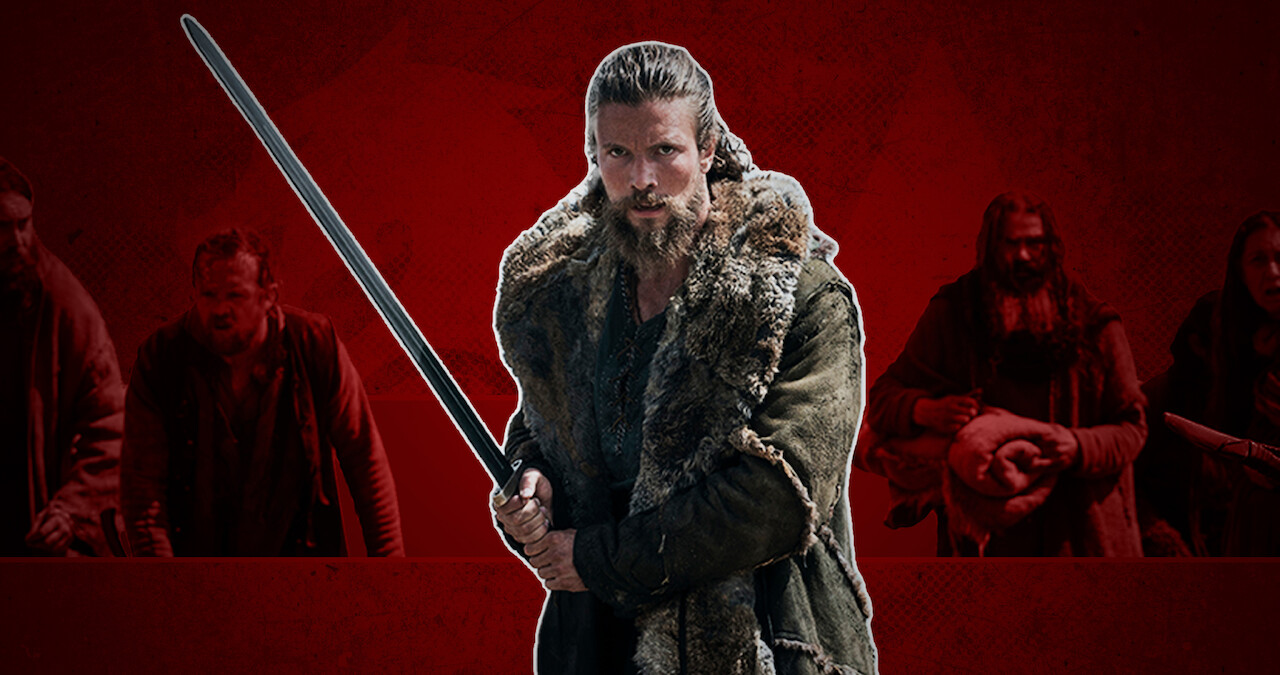
We need to ask you about the most important part of your character first, because we can see your luscious locks right now and want to know about Leif Eriksson’s hair.
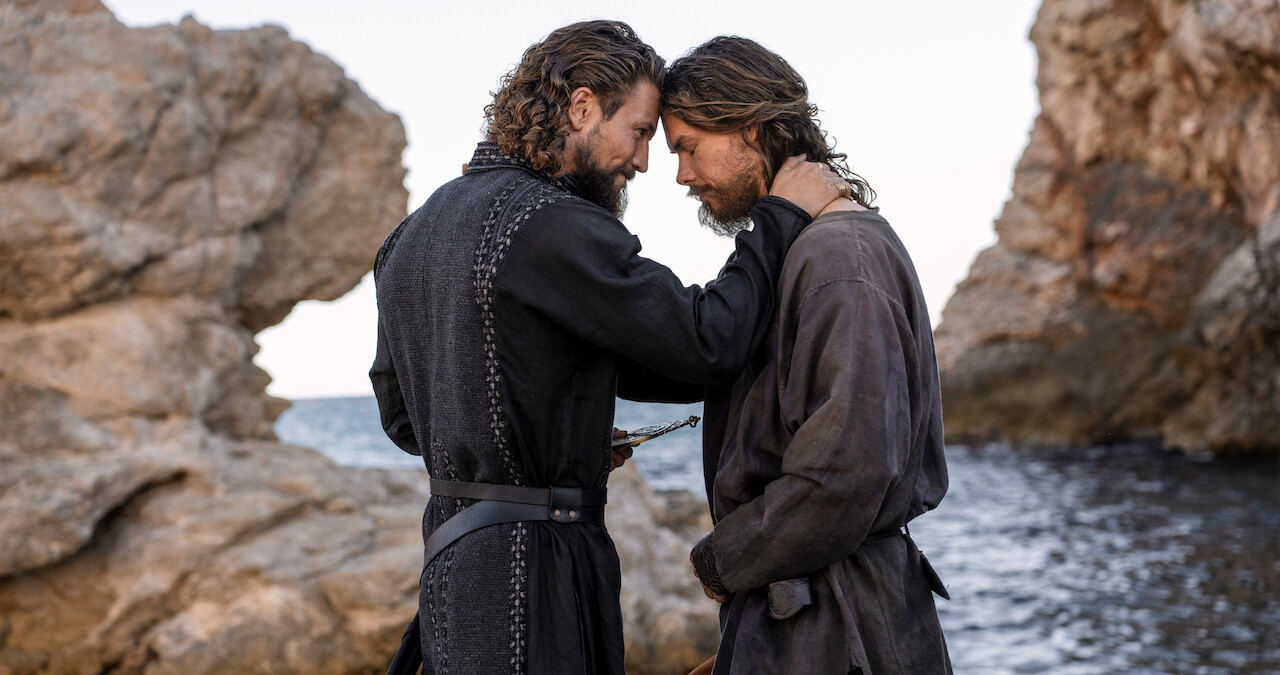
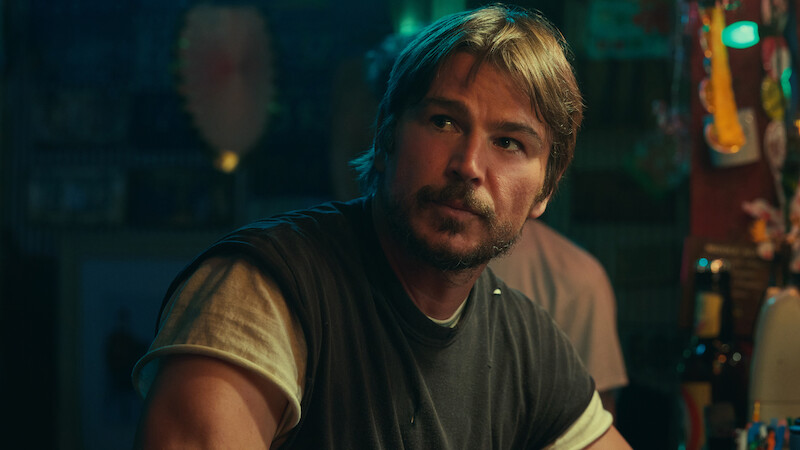
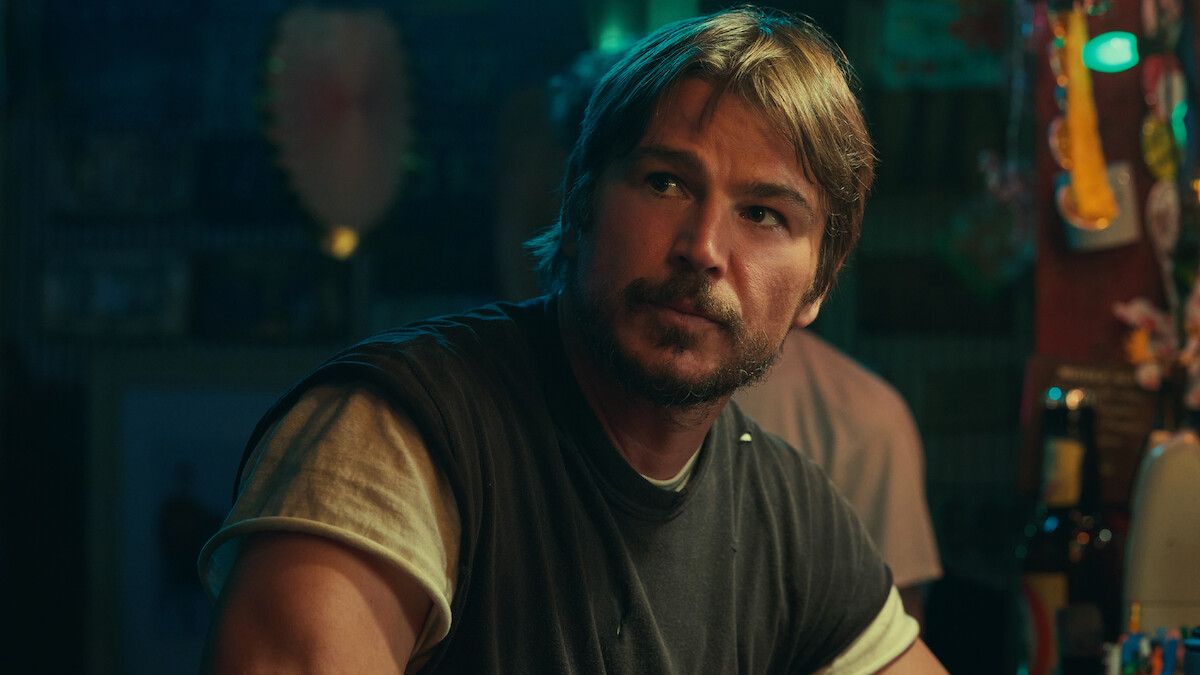
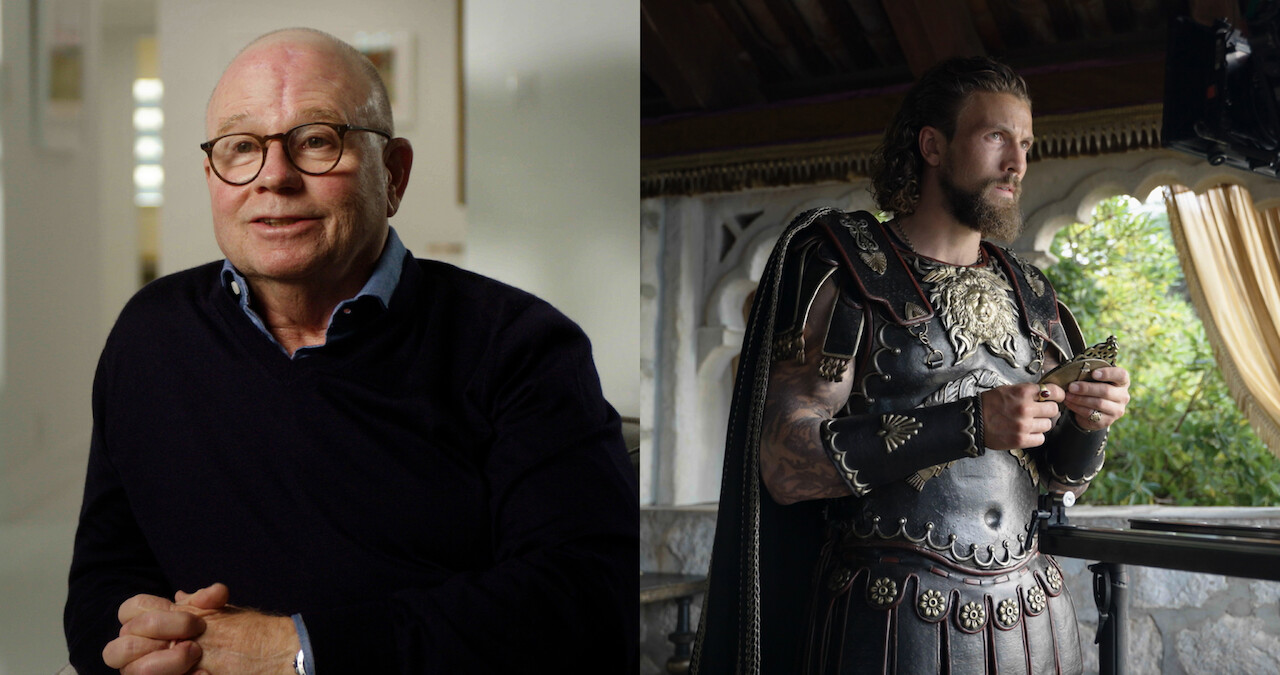
Sincerely, it was a bit of a process in the makeup chair each morning, in particular the beard situation. I’m a little prepubescent in that department, so I had the help of Tom McInerney, who did an amazing job every morning. We were there for about an hour and a half putting on a fake beard. The luscious locks were taken care of by Dee Corcoran. I have dark hair naturally, but since I’m Australian and spend a lot of time in salt water and the sun, blond comes through — which is what, apparently, the Vikings loved. They used to dye their hair blond.
We were going to ask about Leif’s highlights. They’re very nice. Basically, we’re jealous.
They’re all natural.
OK, one more hair question: Is that a Viking scrunchie in your hair?
That’s a Viking scrunchie. It’s a rope but, yeah, scrunchie-esque in nature. Dee made this thing out of a really cool fabric and just tied it together. It was meant to be just a quick thing.
How much did you know about Leif Eriksson before you got the role, and how much did you read up on him after?
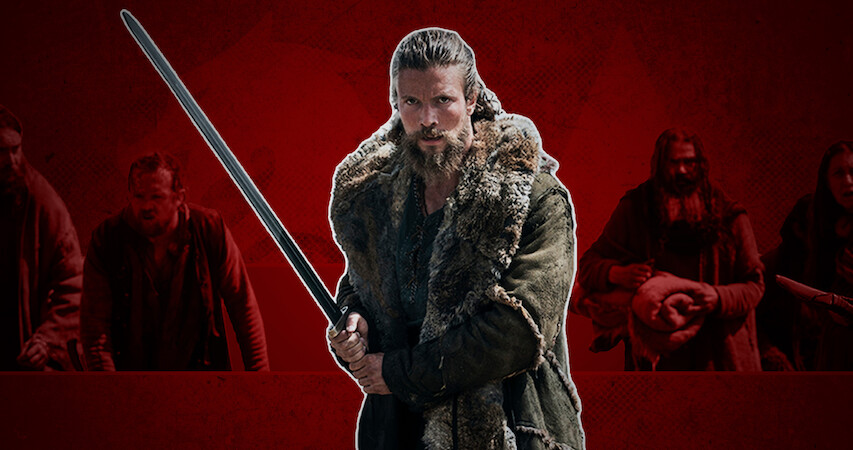
I obviously knew of him. I remember exactly where I was sitting in Mr. Gill’s history class while I was reading about Erik the Red and Leif Eriksson, and about Berserkers and Valhalla. So my research started early. From there, I dived into the sagas and then all the mythology and the context of the time. I’d watched the original series with my dad while I was growing up. But there comes a time where you need to release all that and realize you’re just telling a very human story about a man trying to make his way in the world. Although all these three characters — Freydís, Harald and Leif — are getting on in their lives, it still feels like a coming-of-age story, trying to make their way in a very tumultuous, rapidly changing world. I can certainly relate to that. After doing all that, it was about making it human. What were the nuances and the human nature of the character that I related to? And what didn’t I relate to, and where can I expand myself to feel empathetic of his circumstances and hopefully embody them?
What is the most surprising thing you learned about Viking culture in your research process?
There’s so much. My fascination is always with the spiritual nature, the mythology of the pagan world. I really loved how they saw that the gods could have been speaking to them through a tree, or through a branch, or through an animal. There’s a spiritual teacher called Ram Dass, who said, “Treat everyone like they’re God in drag.” And I think that’s what pagans were doing. I really love that, and I think there’s a lot to be learned there.
What physical transformation did you require? Did you eat like a Viking? Is there a Viking workout plan?
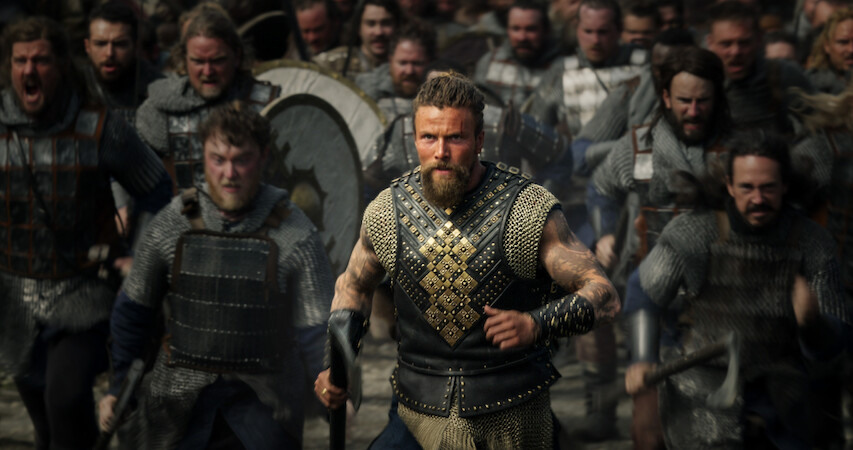
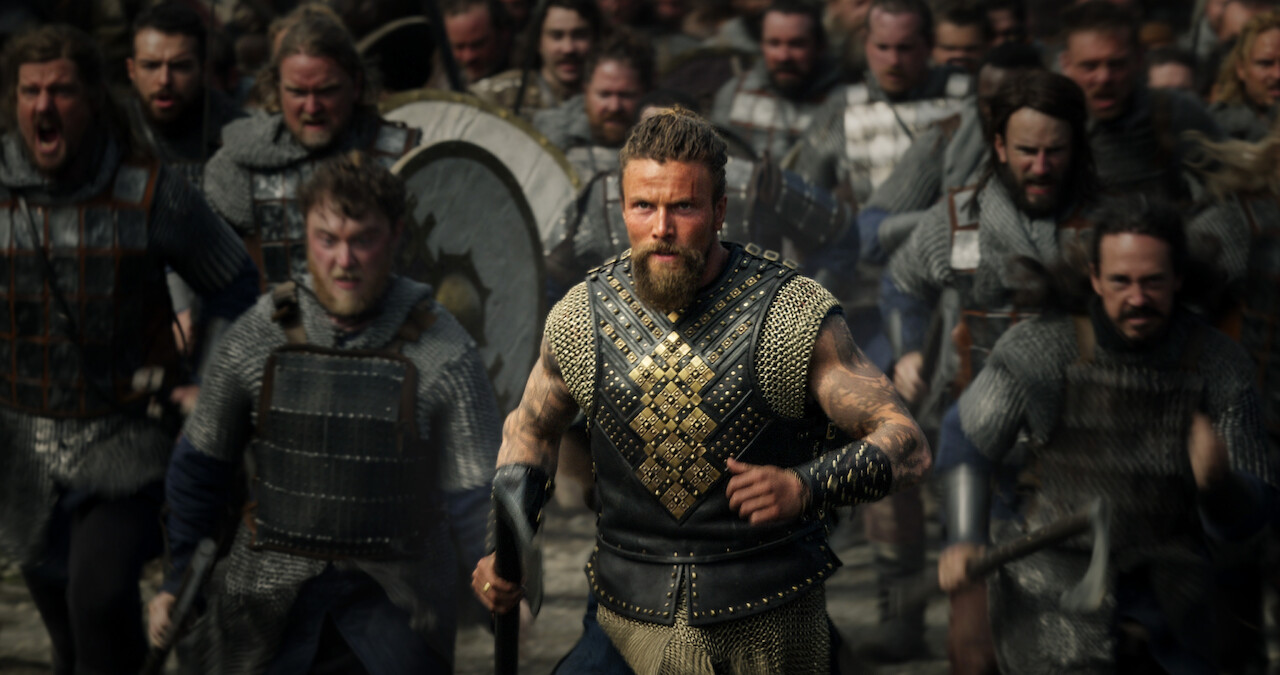
Food-wise, I’m plant-based, so I just ate a lot of food. I was about 82 kilos [180 pounds] when I finished Sabrina, and they wanted me to put on weight, so I just ate a lot and put on about 10 kilos [22 pounds] in a couple months and was working out a lot. I’ve got an athletic background. To really dive into it, the days consisted of, on set, I was waking up at about 3:30, getting my meditation on, going for a 7K run, doing a little yoga. I jumped into the ocean, just a little dip to get rid of inflammation and feel a bit more primal, and then get picked up and go to the set. Do all the work, and then come back home, and it was more of a lift in the afternoon. I did a lot of animal work, a lot of crawling, a lot of primal holding sequences. As it comes to the later half of shooting, it becomes an endurance feat. You don’t want to go past that exhaustion, especially when we’re getting six hours of sleep.
What is your athletic background? What sports did you play growing up?
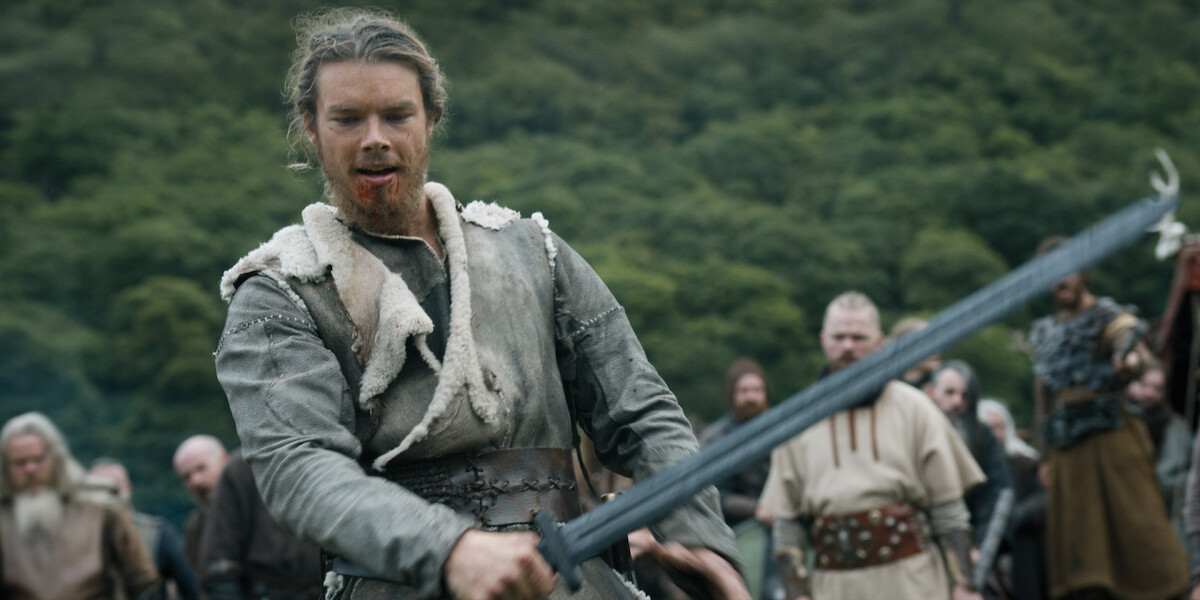
I played a lot of rugby growing up and basketball. I was captain of both at school, and they were certainly my passions. I played the fly half, which I guess you can equate to the quarterback role in rugby — the playmaker. I think the spatial awareness that you find in basketball, knowing that you pass the ball that way and that the opponent looks that way, that’s very helpful when you’re being spatially aware of where the camera is and where the other fighters are. We choreograph these fights like a violent dance, but we’re so in tune with each other. There’s always eye contact; it’s very safe. And then a camera becomes involved, and it’s all over the place, and you have to readjust the whole thing. The stunt coordinators are used to that, but I was still pretty green in that aspect. So I’m grateful that the stunt team were really rigorous on me — and I was really asking them to be. I accidentally gave someone a black eye. A few weeks later, that same person gave me a black eye. There’s a lot of nicks and scratches that you get all over your hands a few times. There was one X-ray that I had to get. But it’s all part of it, and it’s exciting.
How long before filming did you start training? How different was Vikings training from your regular workout routine?
I was meant to start shooting two weeks after Sabrina finished. I was going to have a week at home, a week in Ireland and then start shooting, but due to lockdown it was postponed a few months. So we had three or four months, although the gyms were closed, so we had to make do with what we had. It was certainly an elevation from what I did, but I also craved that demand upon my body and myself. I knew that each rep was not only building me physically, but it also felt like I was pushing through boundaries of endurance that these warriors in the time would’ve gone through.
It was really cool to do some group workouts as well with some mates. I think team workouts are really important, and we did a few boot camps in prep when we arrived in Ireland. I like to be as able and physical as possible, whether that be lifting, whether that be yoga or whether that be running. You’re doing these fight scenes that’ll go for two or three minutes, and you have to do that 20 times. And they call you whenever they’re ready. Not when you’re ready — when they’re ready.
There’s one scene where you’re surfing on a wooden board, basically Viking surfing. Did you grow up surfing? We assume all Australians do grow up surfing.
I surfed when I was a kid. I stopped throughout middle school and high school, because of rugby and basketball, but then I picked it up again, in the last five years especially. It’s become a bit of a passion of mine. I did teach people how to paddle a bit better, because there was a bit of two-hand paddling going on that didn’t quite look as commanding as could be. But that was quite funny.
You came from Sabrina straight to this. The shows are different, but it feels like there are some similarities — except you wear more shirts in Vikings.
[Laughs and nods] Well, Sabrina, there’s a lot of levity on that set. Its such a fun and hilarious group of people with Luke Cook, Lucy Davis, Gavin Leatherwood, and I also have dear friends for life from that show. The themes that I got to dive in as a character were a bit lighter, whereas there’s certainly a lot more depth with this character and a lot more responsibility being the lead of it. Caliban was inspired by Jim Morrison from The Doors — so, leading from the hips, and having the shoulders back, and owning the space with his sexuality and his sexual energy. I don’t think there’s much of that in Leif. Leif was more hunched over and a bit more of a wolf, and looking through his eyebrows, and a bit more animalistic and primal in his nature. I’ll leave whether there are similarities or not up to other people. I can’t particularly see or feel them. I’m the same person!
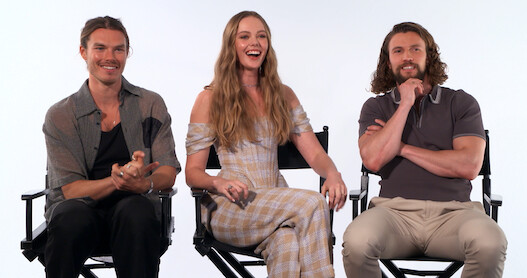
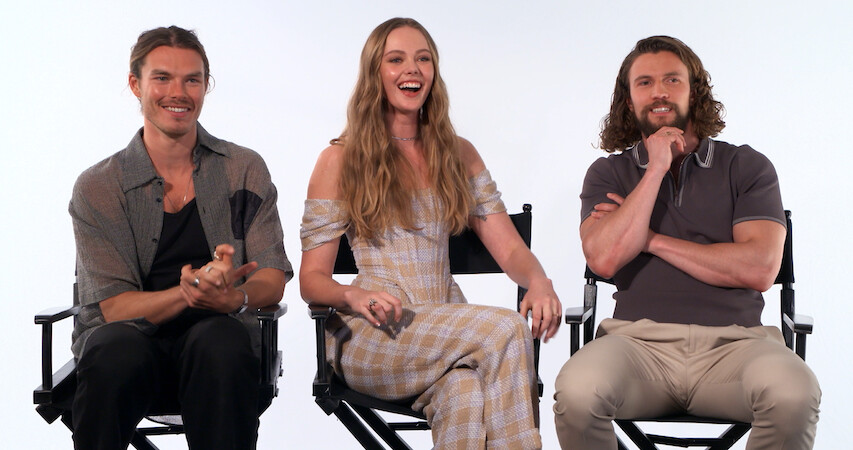
Yes, you do have the same face. We understand you, Leo and Frida got really close while filming in Ireland. What was your group chat called? Is it still active?
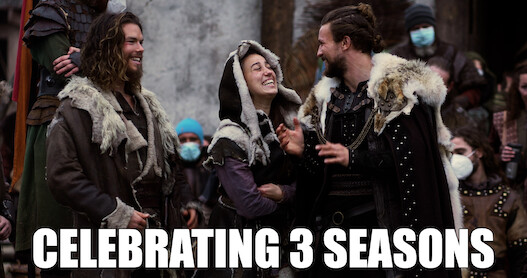
There’s a few different ones. Where we were living was called Greystone, so we were Greystonians. And then there was Valhallalalalalala. And then, right now, we’re all in LA, so it’s LaLa.
This interview has been edited and condensed for clarity.