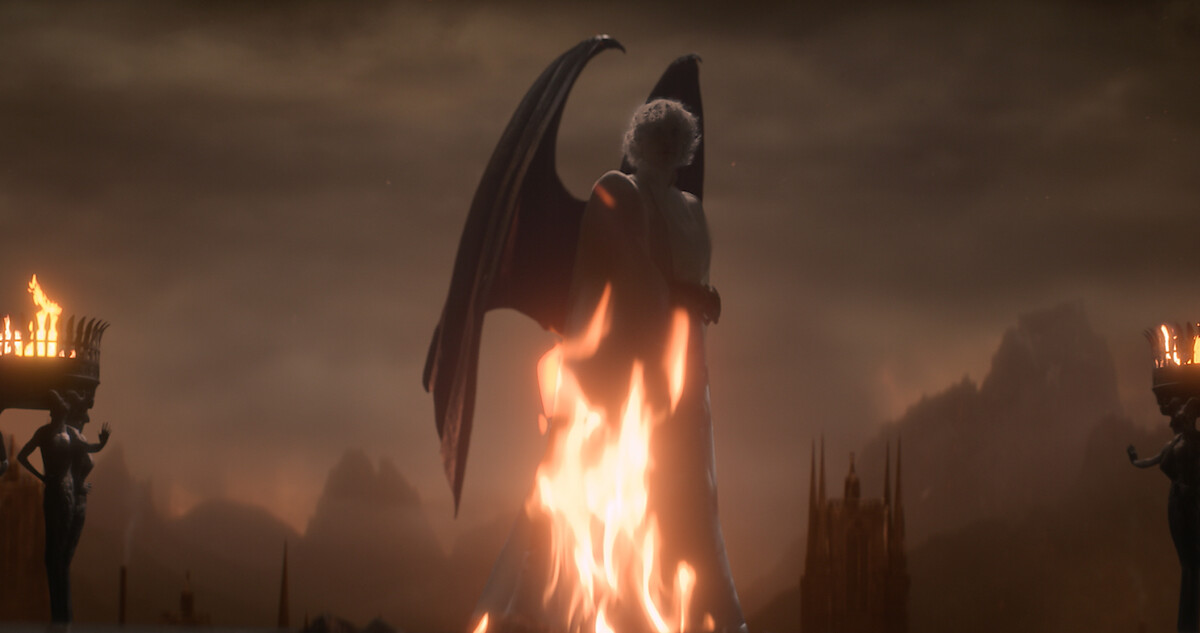
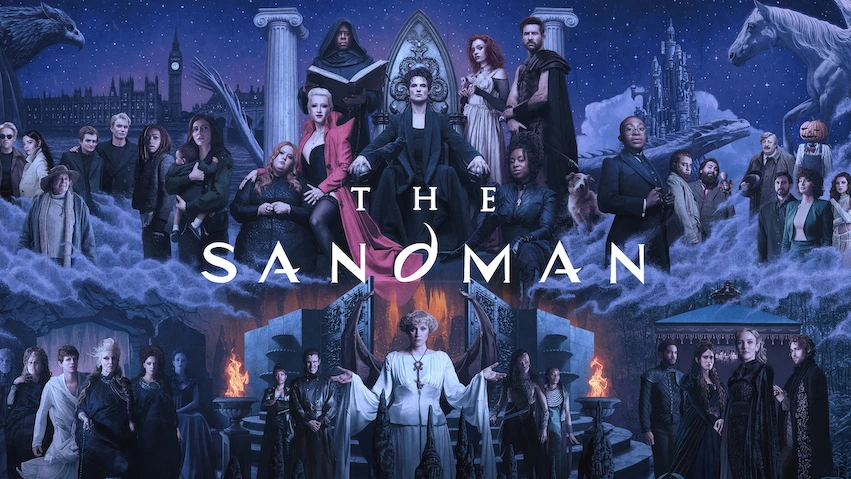
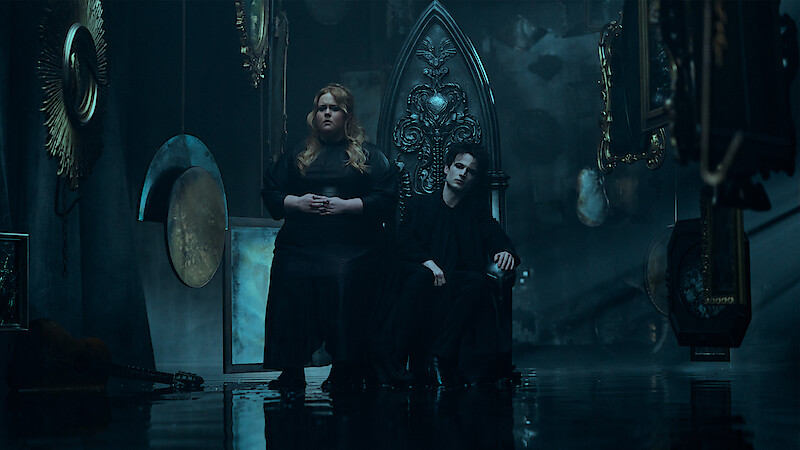
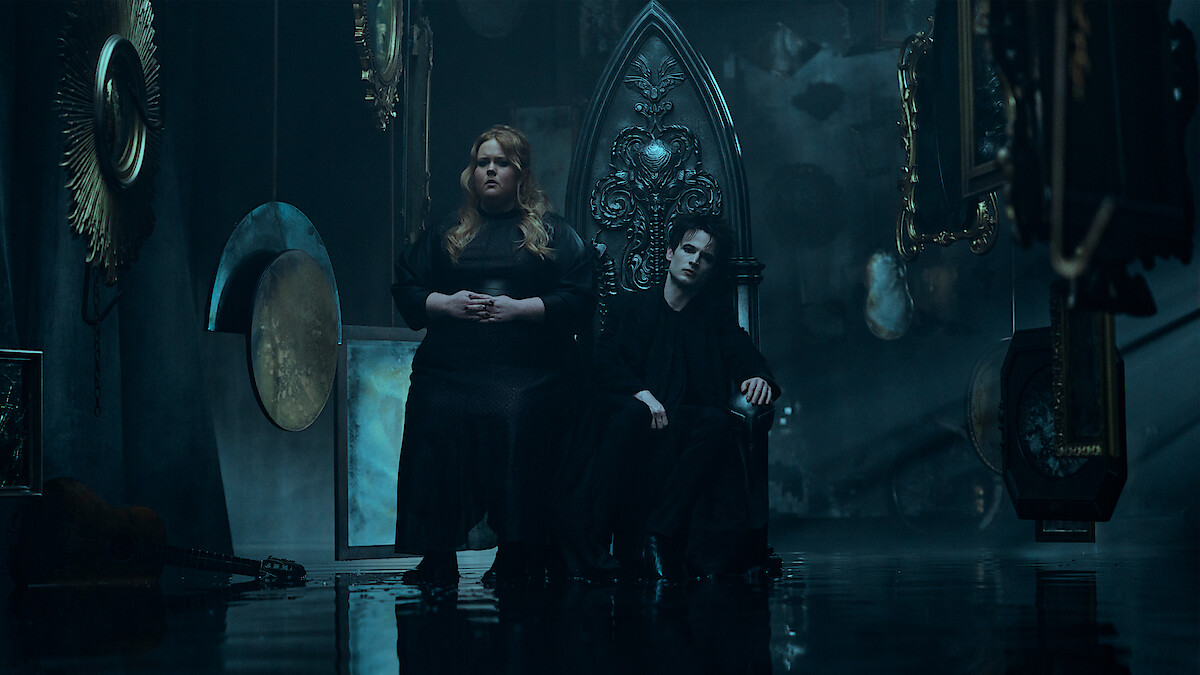
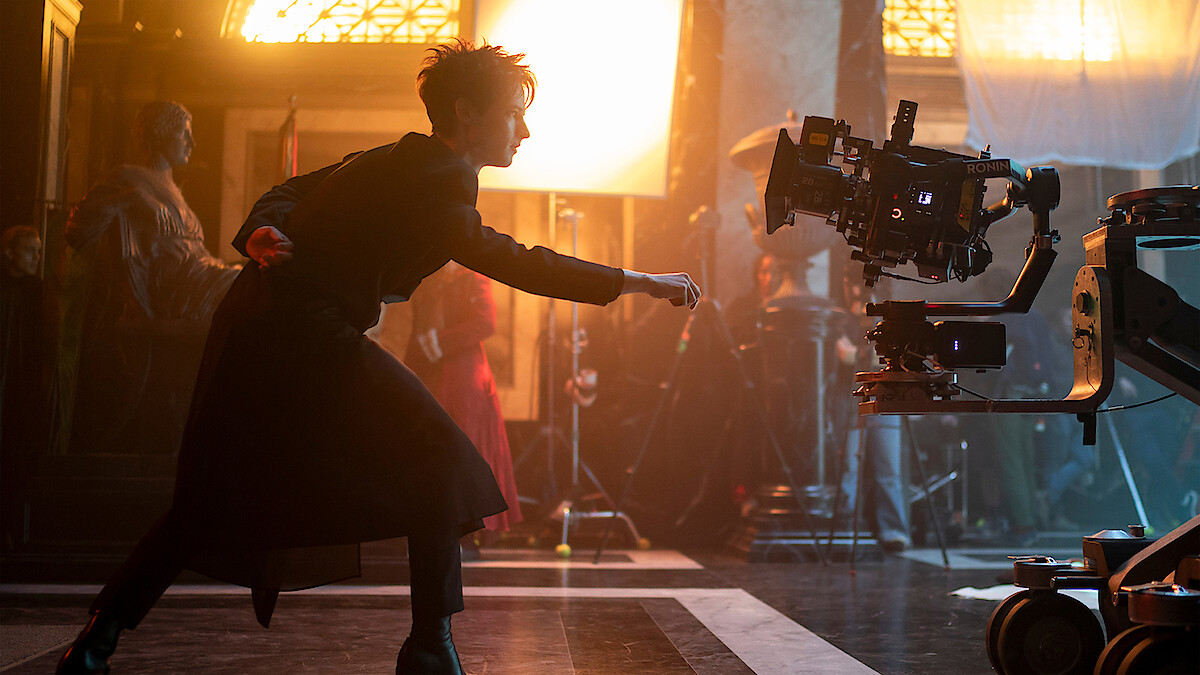
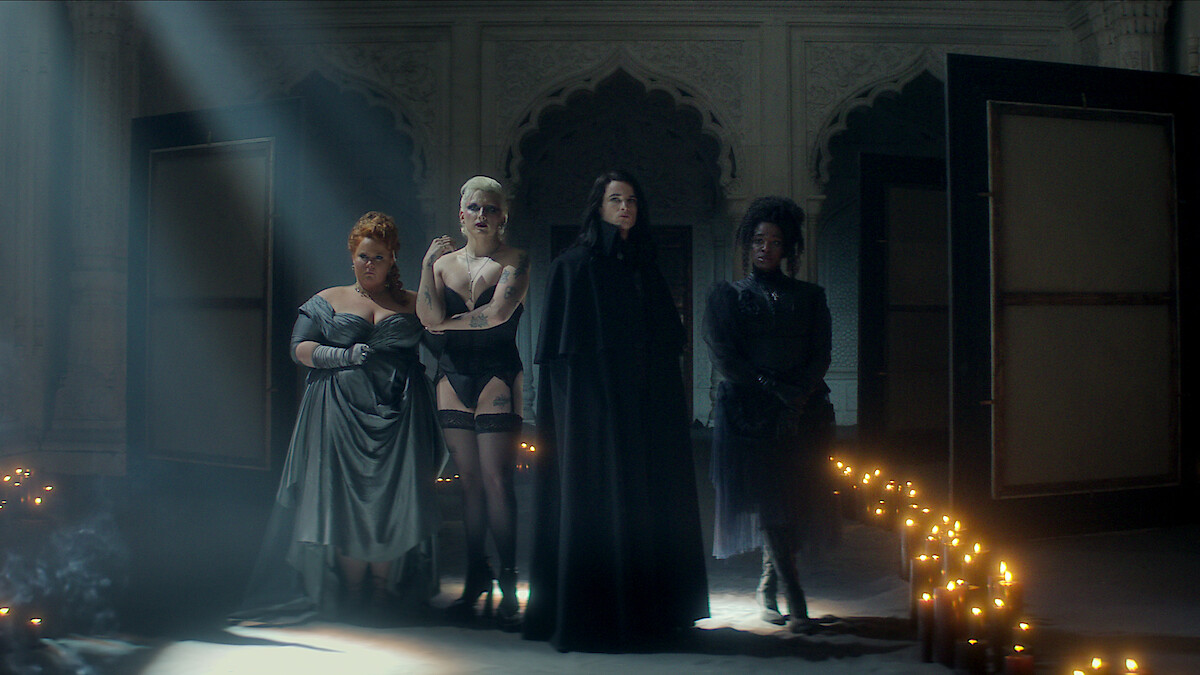
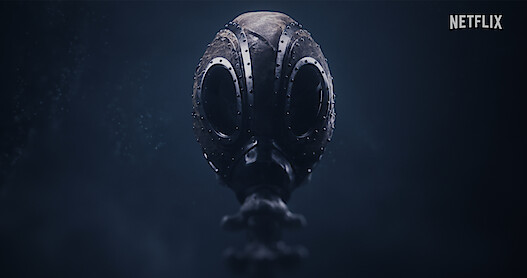
In the cold depths of The Sandman’s hell, you bring your own fire.
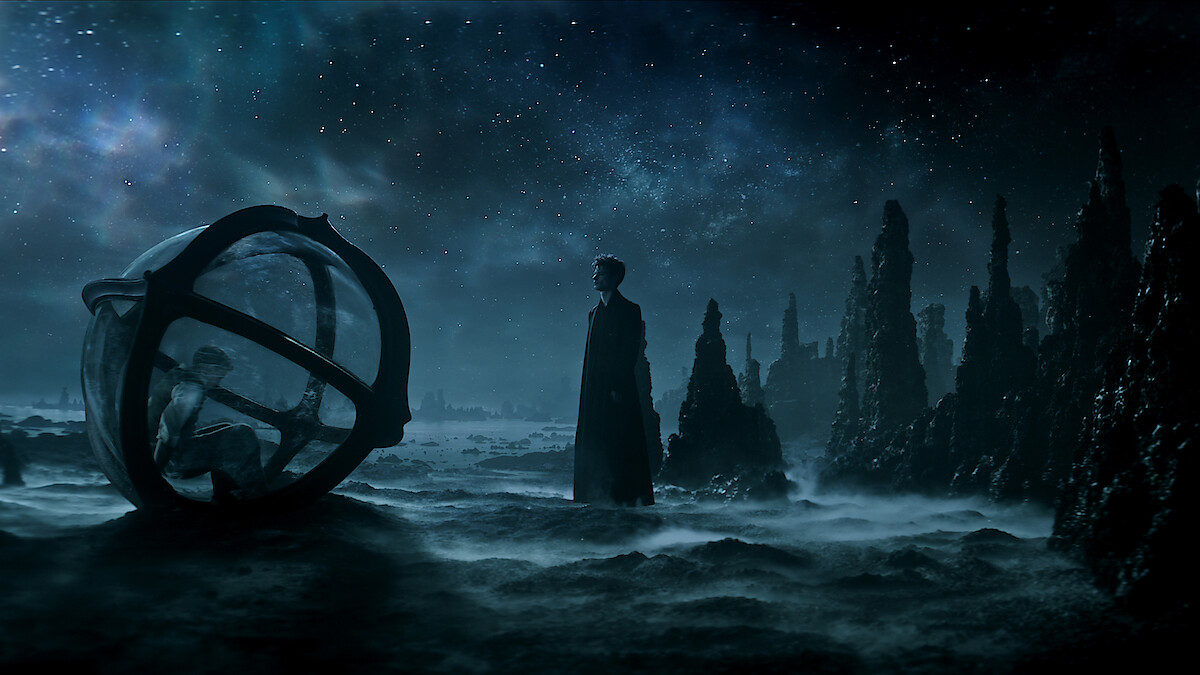
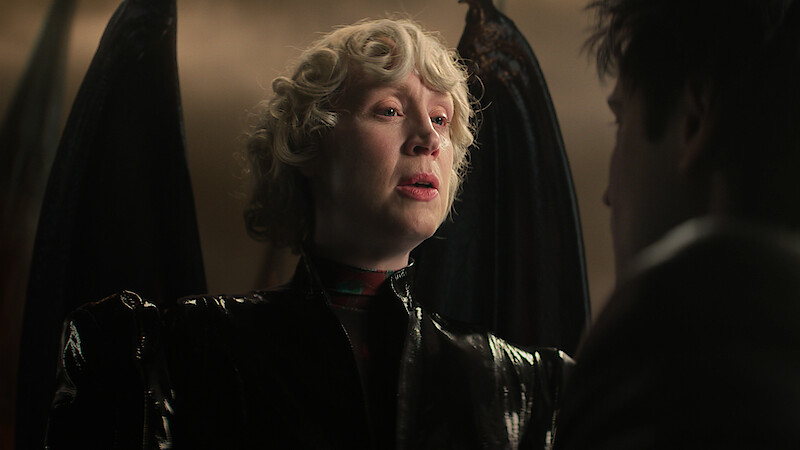
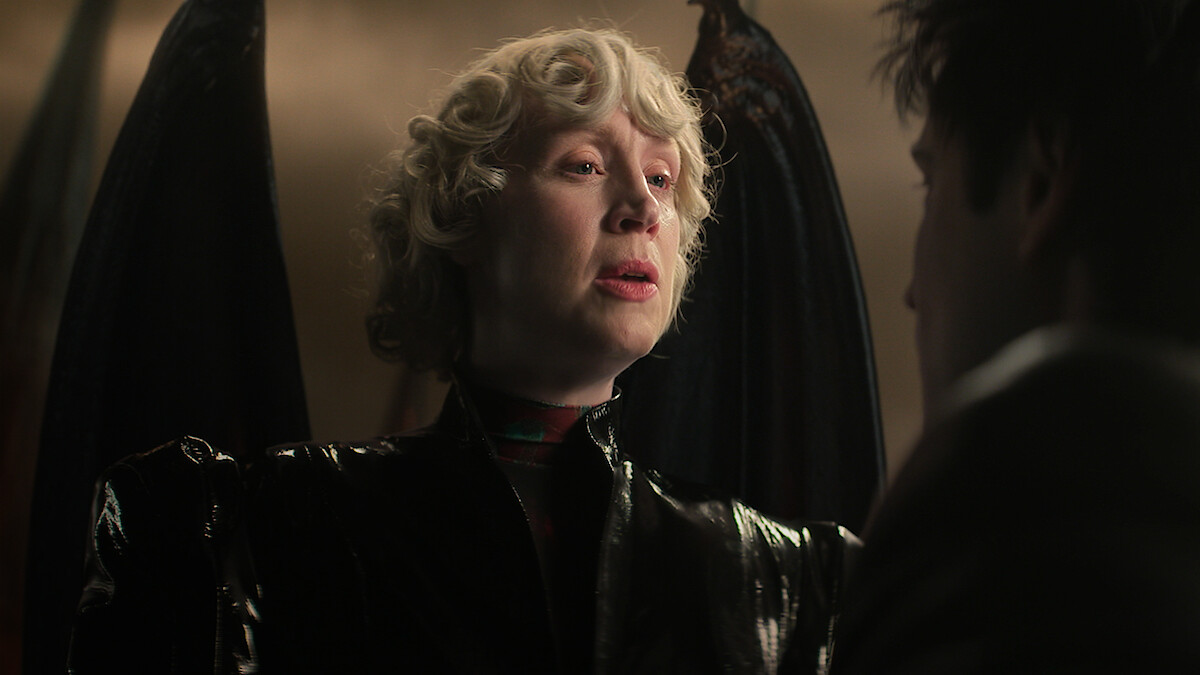
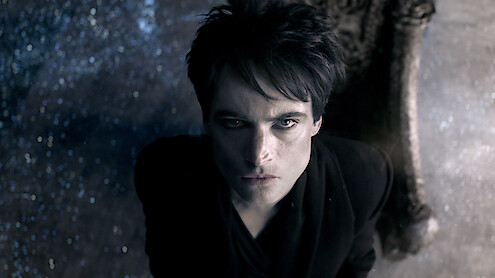
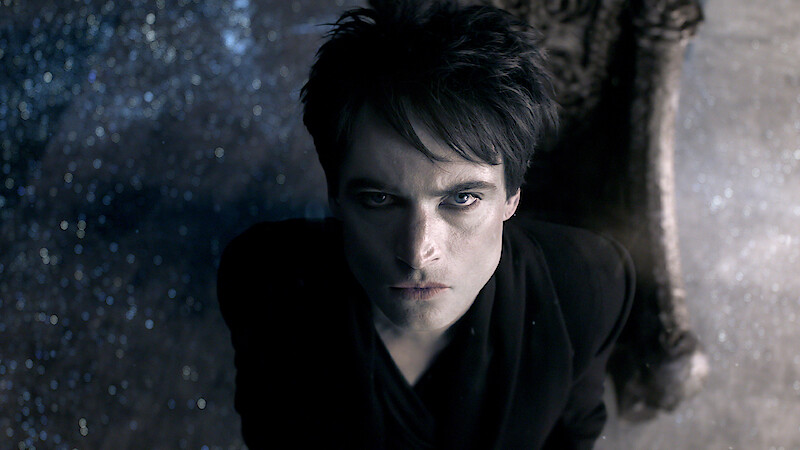
It’s the first thing Matthew the Raven, voiced by Patton Oswalt, notices when he ventures into the hellscape with Morpheus. But the queen of the damned, Lucifer, dresses for the weather.
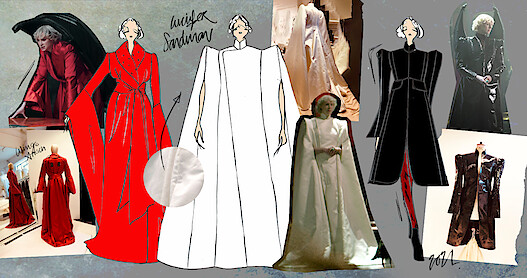
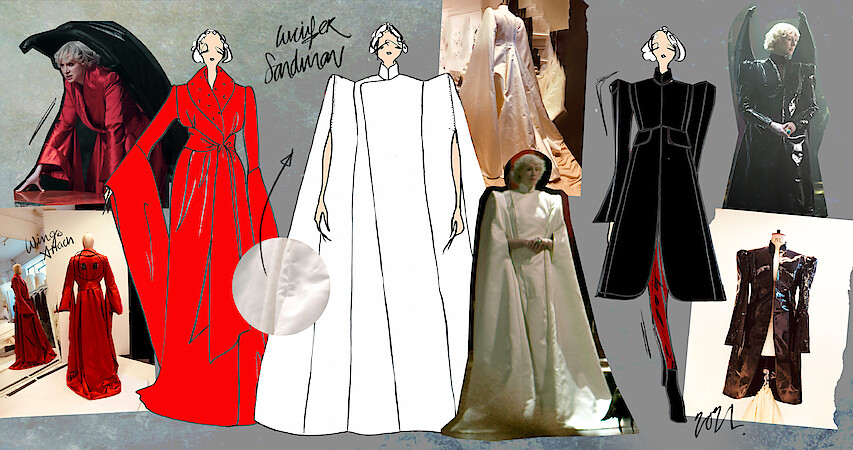
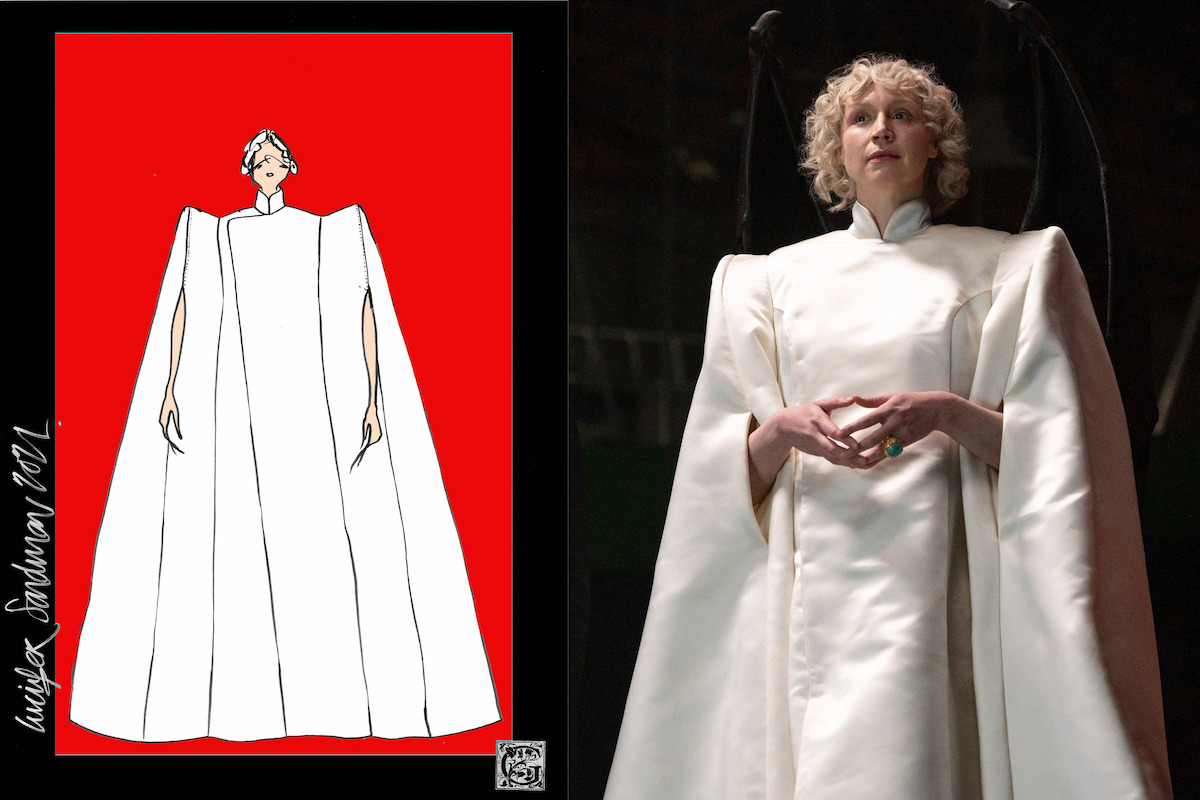
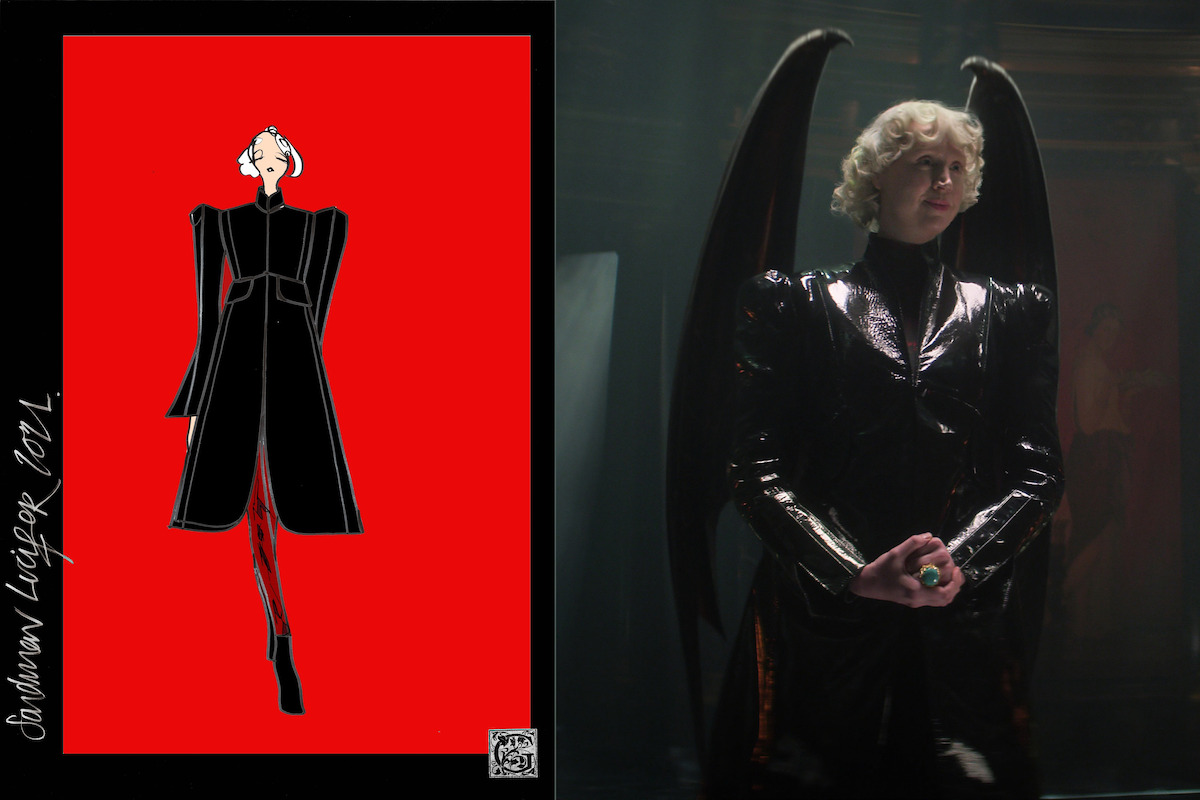
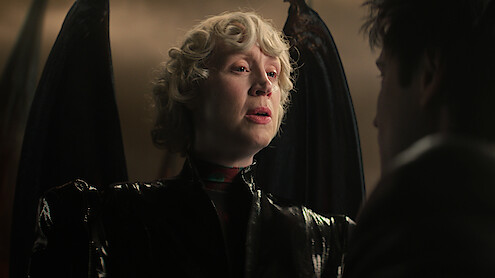
Gwendoline Christie is a glamorous and ominous Satan, whether she’s clad in punkish black leather and vinyl or a flowing gown, white as a Japanese funeral robe. And it’s all by design.
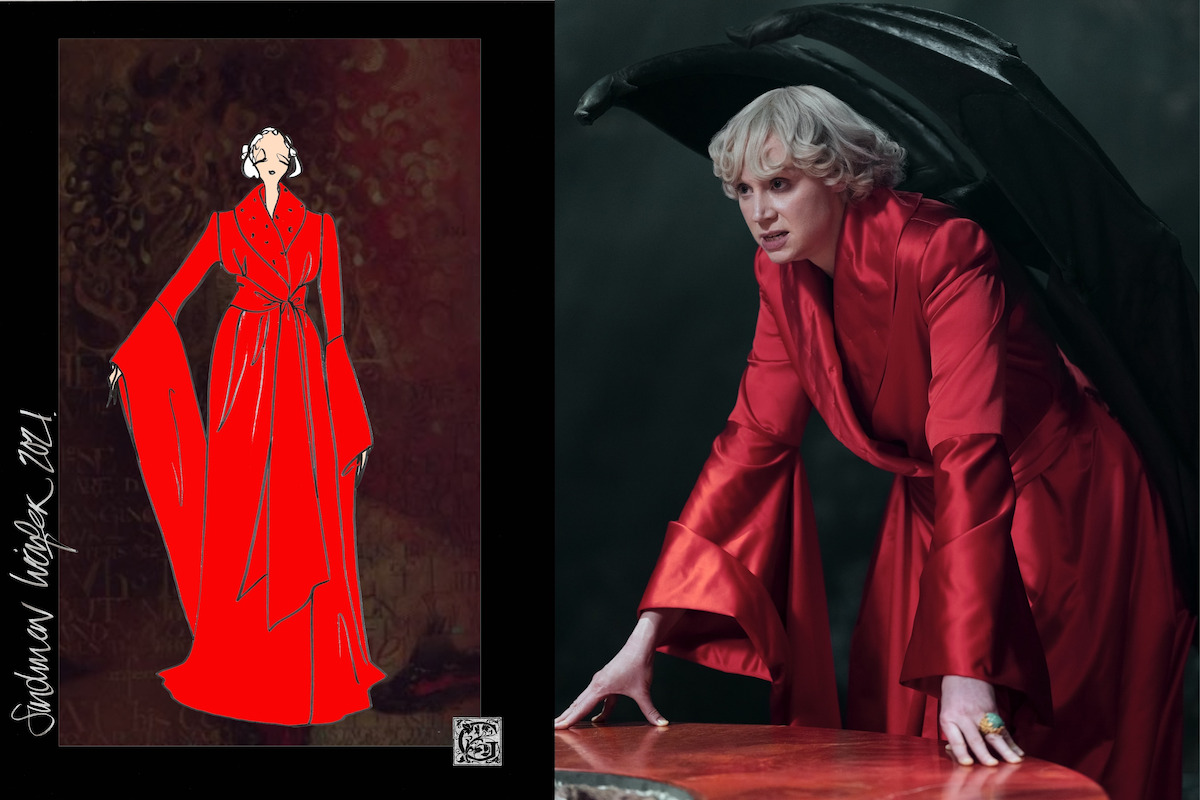
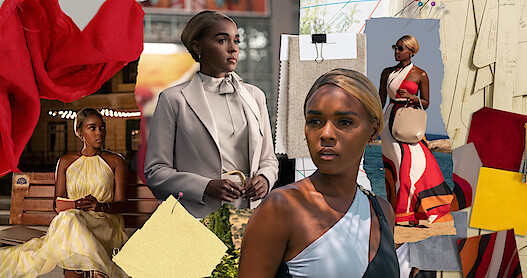
Fashion designer Giles Deacon created her entire wardrobe with artful sketches, quick line drawings that trace her silhouette with an imaginative expertise. After all, Deacon knows his subject well; he and Christie are longtime partners (and excellently dressed partiers, if their perfect red carpet photos are to be believed).
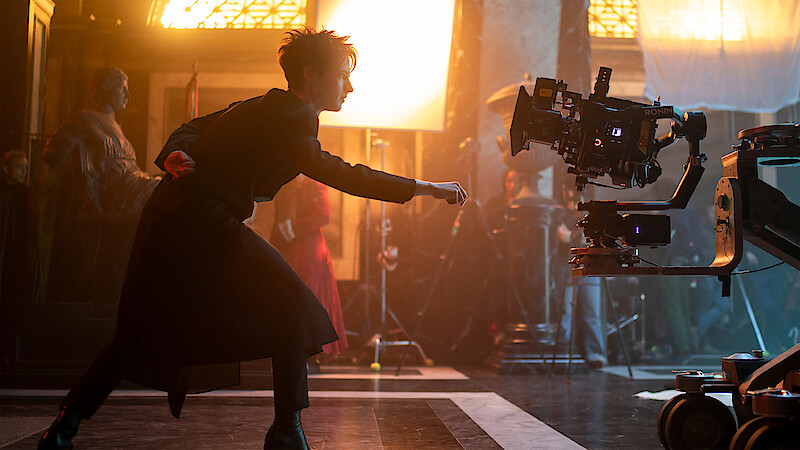
To showcase how they styled Satan, Deacon graciously shared with Tudum his artistic inspirations, behind-the-scenes photos and sketches for his sartorial collaborations with Christie.
How did you and Gwendoline collaborate on the look of Lucifer?
After the initial conversation with Neil Gaiman, Allan Heinberg, Sara Arthur and Gwendoline, from a creative and story perspective, I had a good idea of where I wanted the pieces designed to land creatively.
Gwendoline provided me with great insight into her vision of the character from a sense of action, poise and what her Lucifer was about and was about to undertake. This really helped to galvanize the sense of silhouette, graphicness, color choices, fabrications and overall direction of the costumes.
How did you first encounter Neil Gaiman and The Sandman?
I first encountered The Sandman when it was released in 1989. I was in my first year at Central St. Martin’s School of Art, and a few of us used to go to an “alternative” bookstore in Camden that had underground books, art, photography and comic books, [everything] from publishers like DC to independent fanzines and anime.
I remember looking at the cover of Sandman and it had a sensibility of my favorite record covers of that time from the label 4AD (the Cocteau twins, This Mortal Coil, etc.), so I was instantly drawn in. The art inside looked great also.
Why do you think The Sandman still resonates today?
The Sandman resonates so strongly today as it’s a truly unique body of work that was, and still is, seminal in the modern alternative comic movement and will continue to attract new audiences as the formats develop. As the series is released, many will go to the graphic novels for the first time. Imagination always wins.
Which pieces of art did you turn to for influence when you were sketching ideas for costumes?
At the beginning of the research and development stage of the costume design process, I was drawn to a number of artists who’ve dealt with the supernatural, dreams and, of course, Satan/Lucifer specifically.
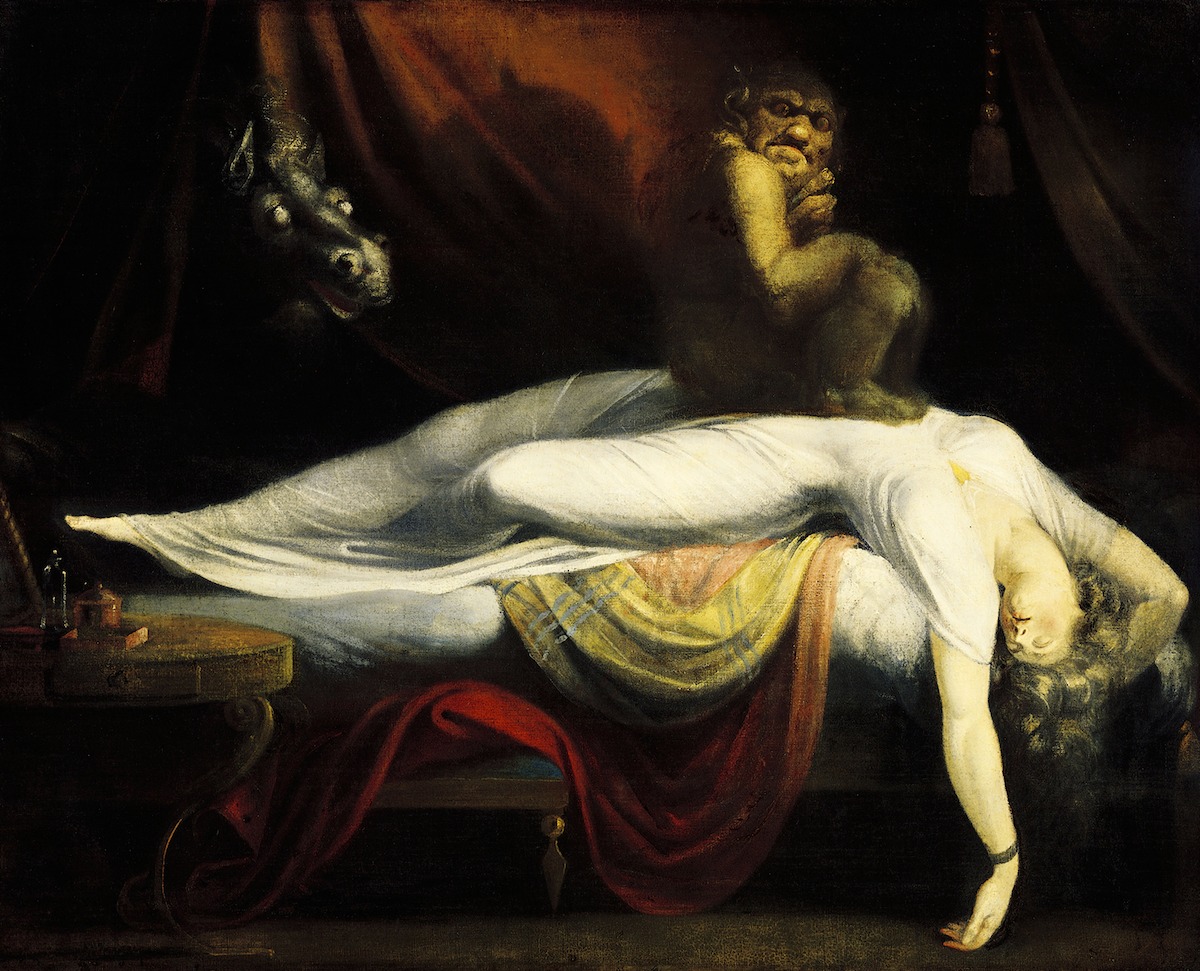
Universal History Archive/Getty Images
Henry Fuseli’s The Nightmare, with its incredible portrayal of his waking dreams, set a brilliant tone from an ambience and drama perspective.
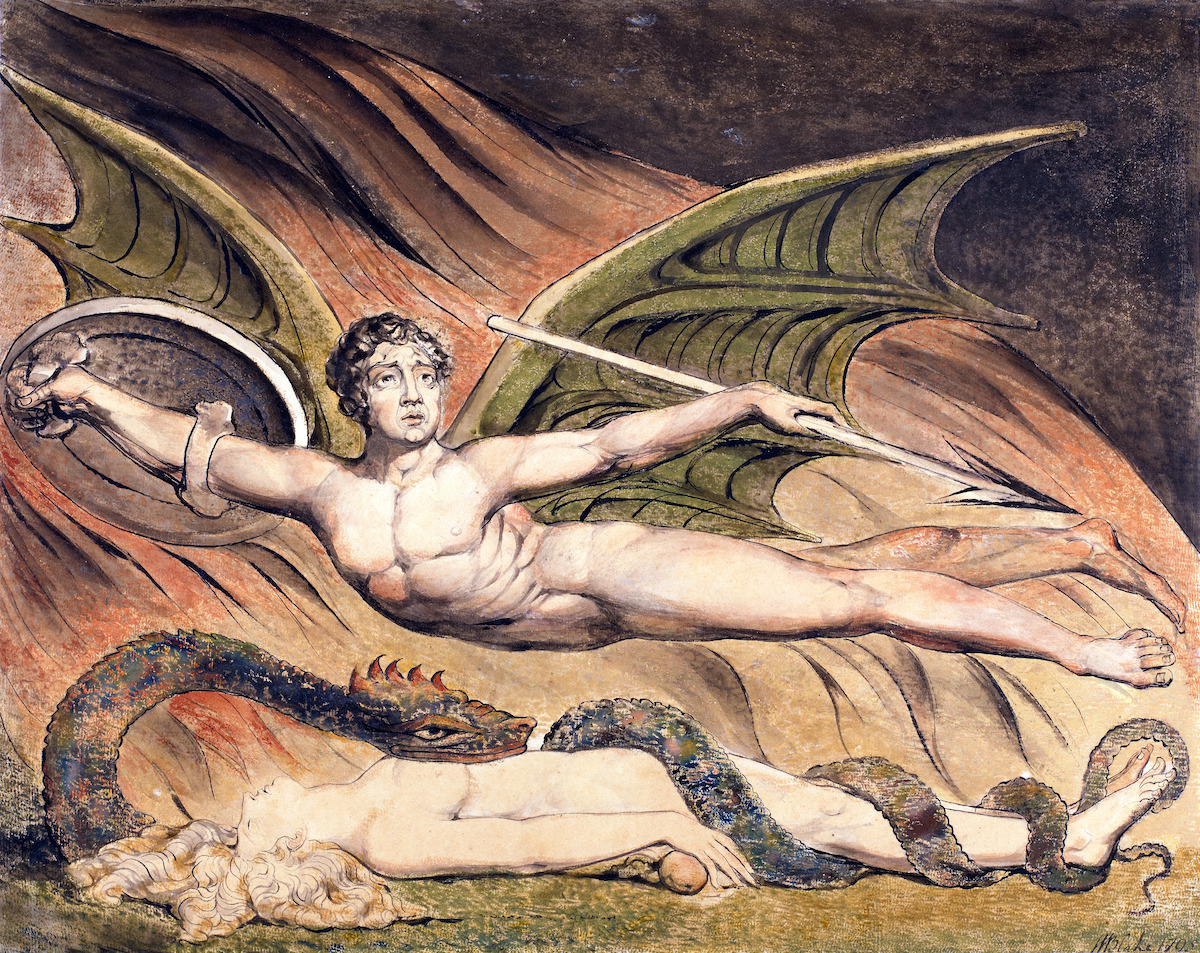
CG Wilson/Corbis via Getty Images
William Blake’s work such as Satan Exulting Over Eve, circa 1795, which exemplifies his diverse and symbolically rich vision that embraces imagination as human existence itself.
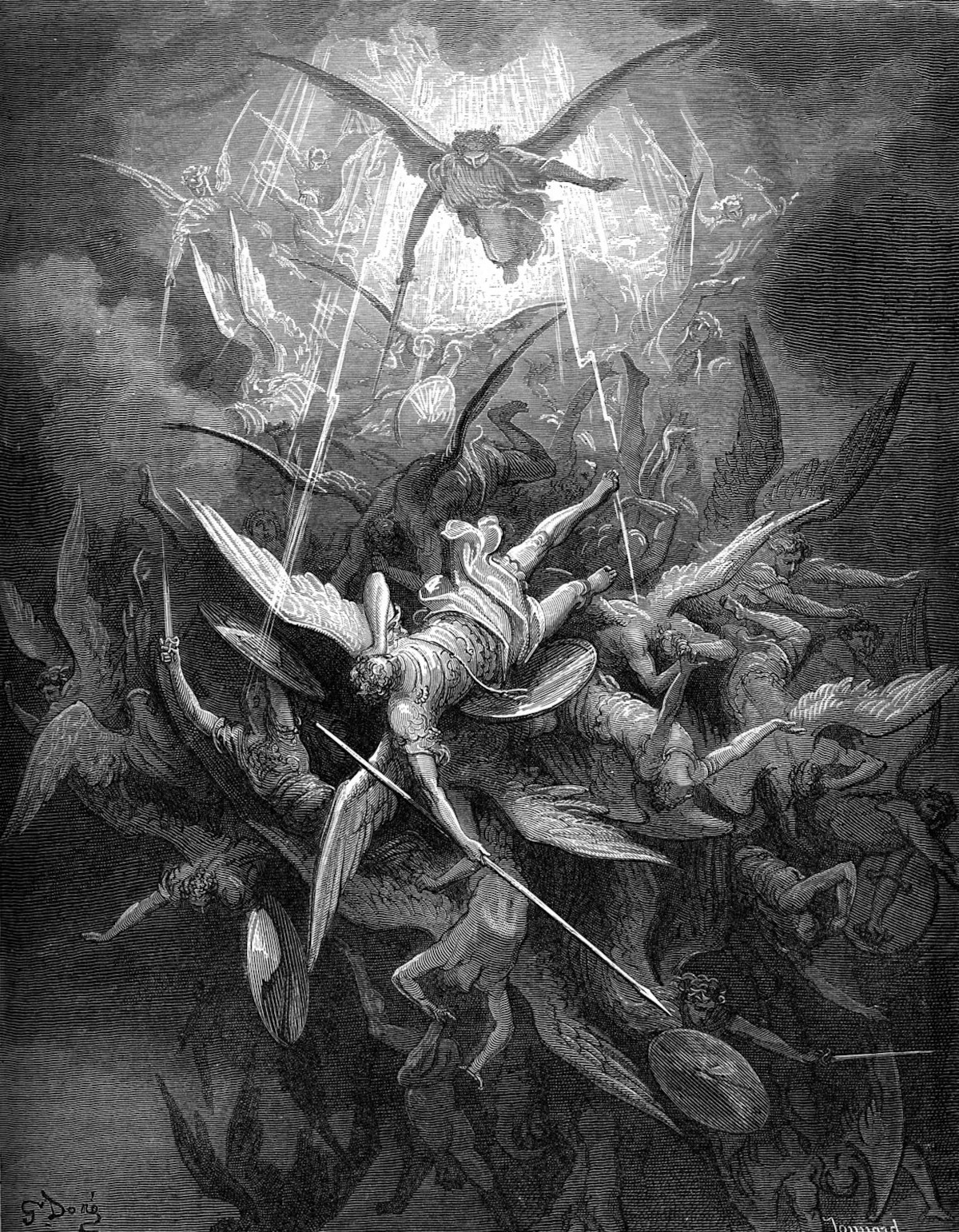
Culture Club/Getty Images
Gustave Doré’s engravings and drawings such as Demon and Angel and The Fall of Lucifer, from Paradise Lost by John Milton, proved to be an incredible point to start developing ideas from.
Dave McKean’s fantastical cover art, which we were lucky enough to manipulate into a printed bodysuit.
Which other Satans in film history do you think were the best dressed? And who was the worst?
There are so many wonderful idiosyncratic visions of Satan in film; here are my favorites are in no particular order:
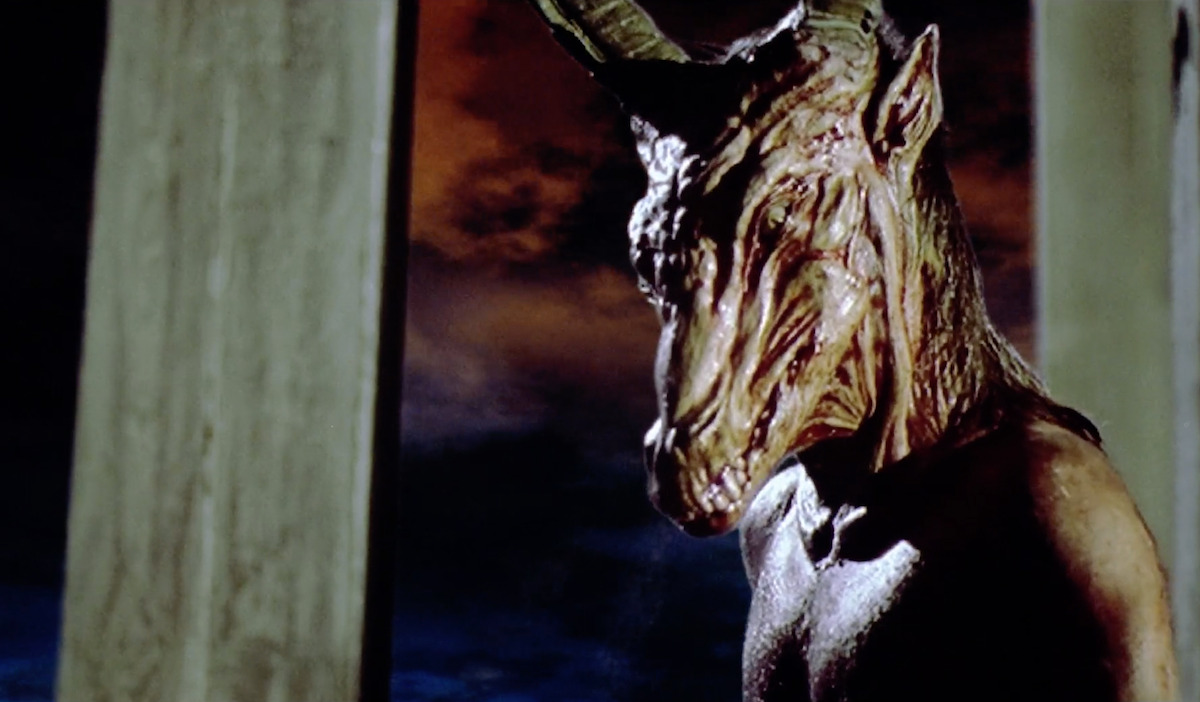
The classic hooved and horned monster in The Day of the Beast.
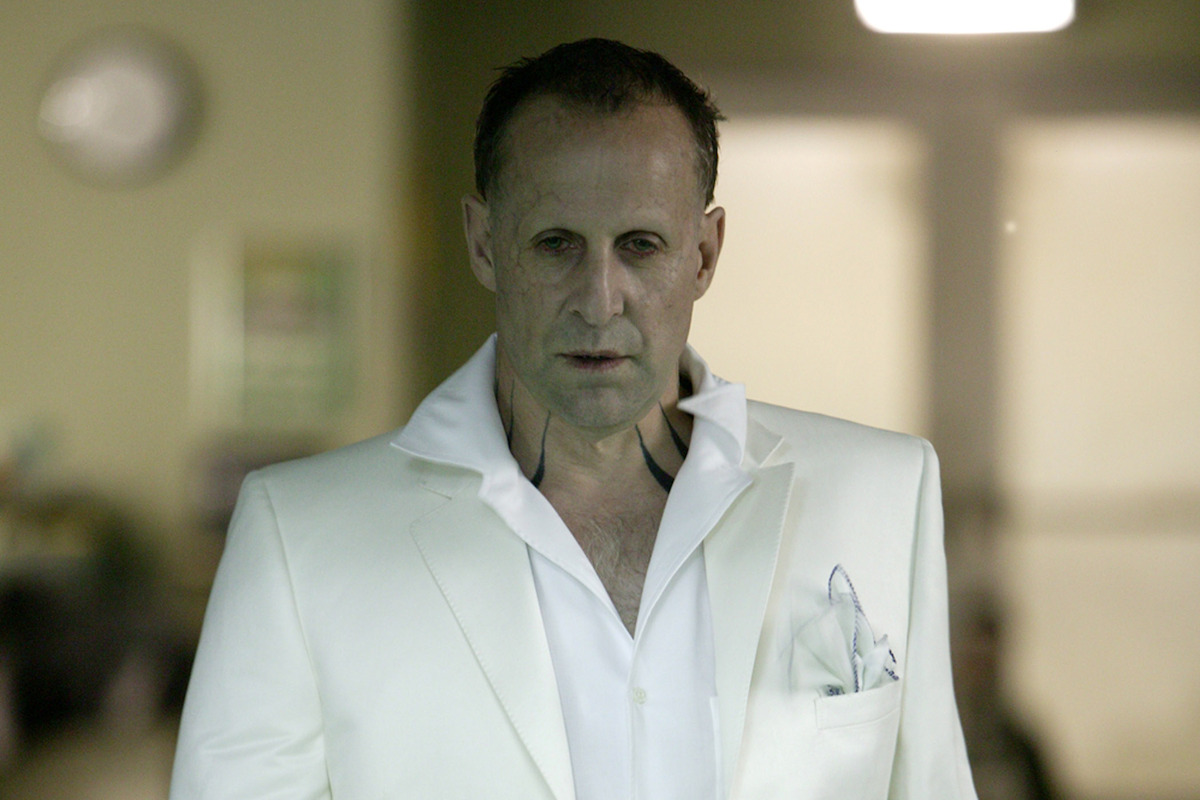
Everett Collection
Peter Stormare in Constantine.
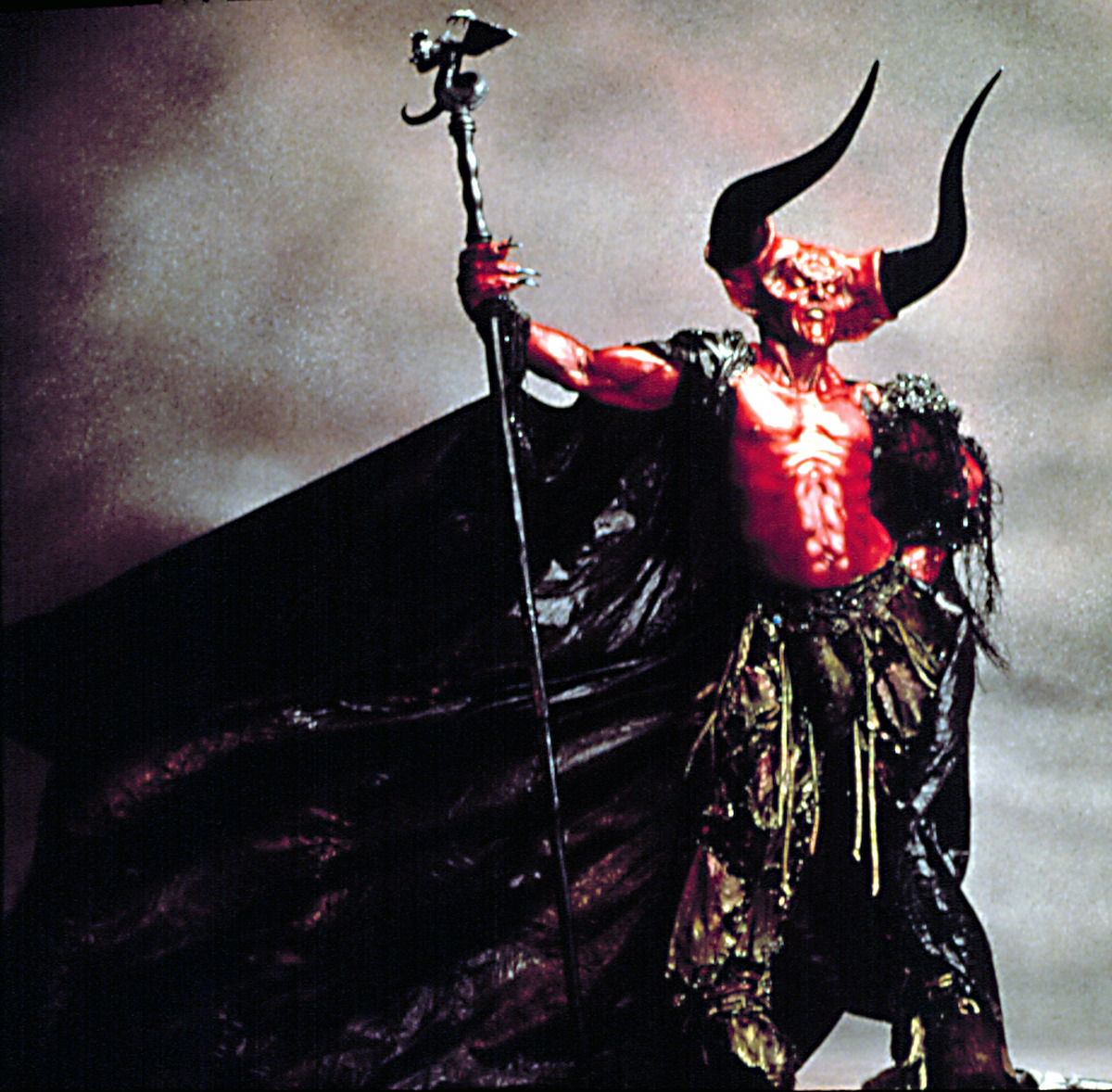
Everett Collection
Tim Curry in Legend.
Everett Collection
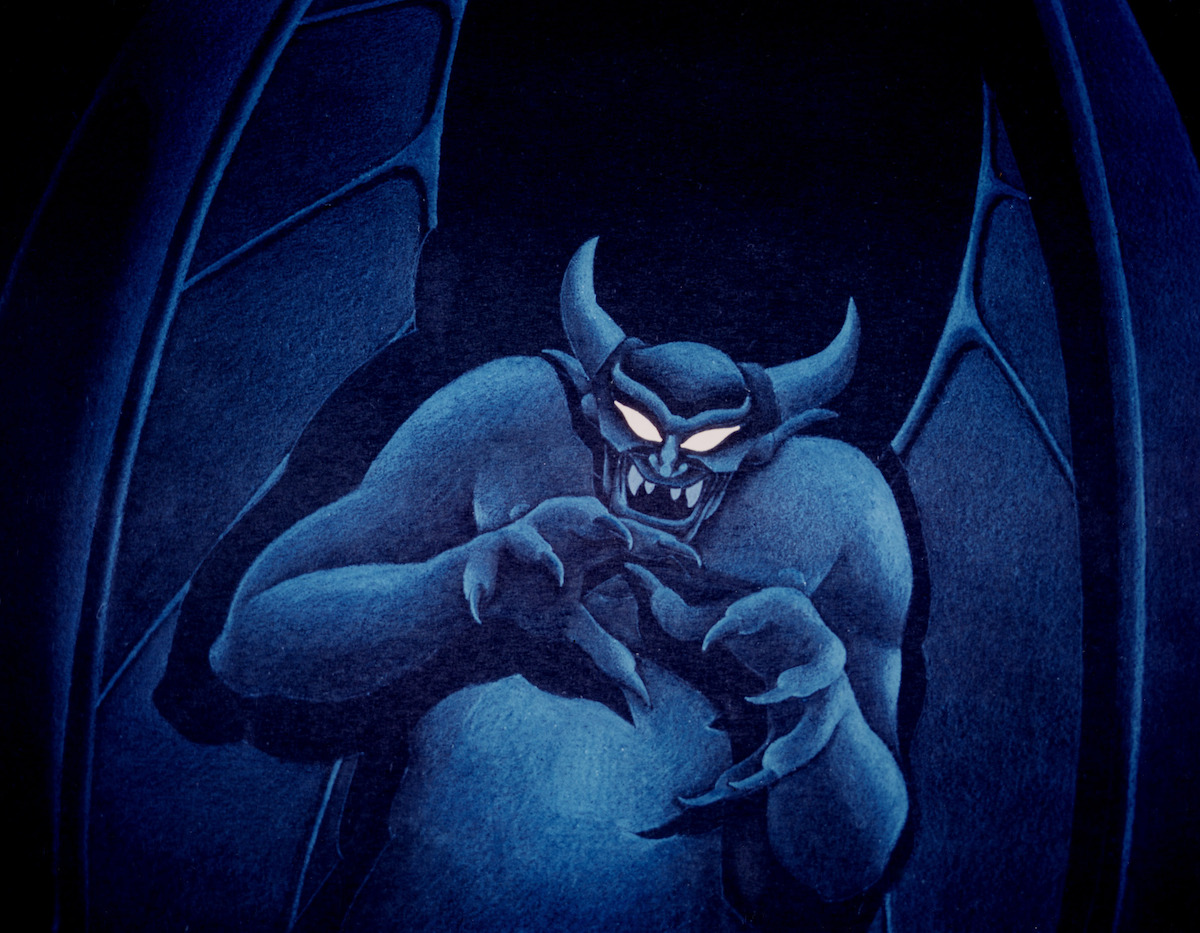
Chernabog in Fantasia.
Everett Collection
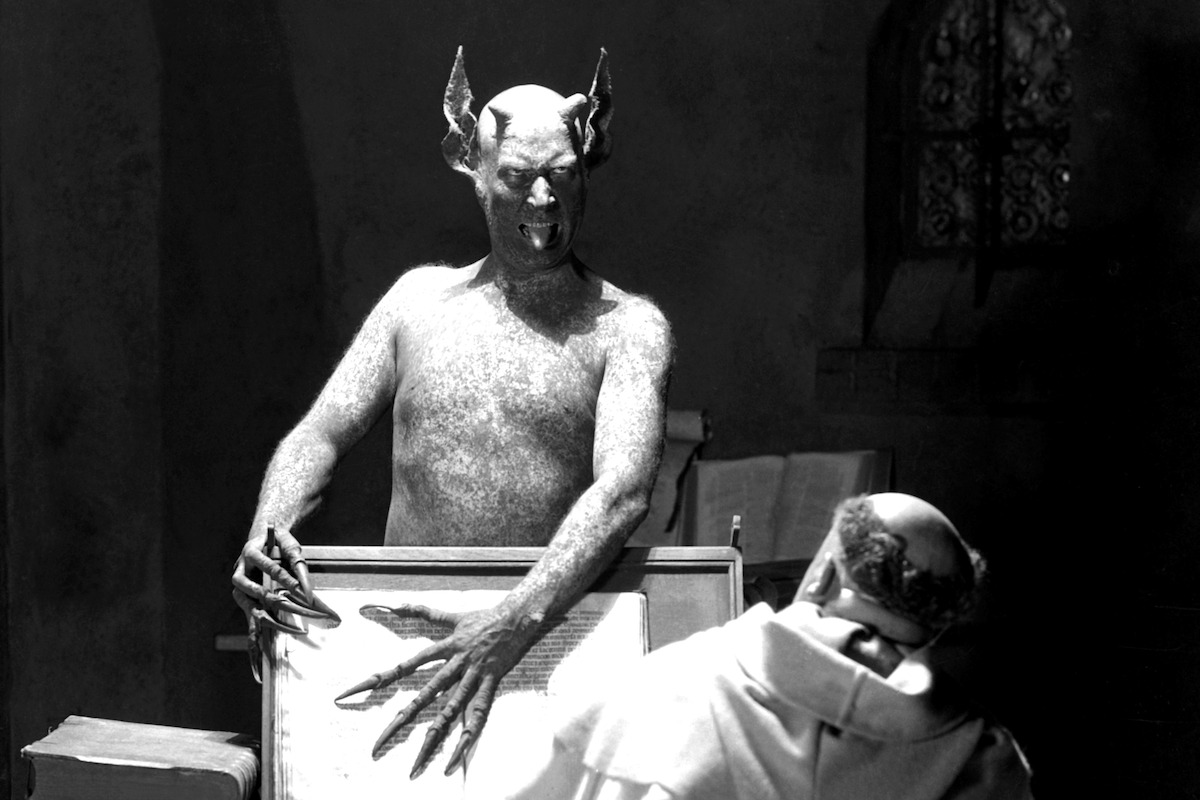
The unkempt and bestial Satan in the 1922 [silent Swedish film] Häxan.
Rather than a “worst,” the funniest has to go to Jack Nicholson in The Witches of Eastwick, which I’ve watched at least once a year since its release.
What were Neil Gaiman’s instructions on what Lucifer’s fashion preferences would be?
Neil was fantastic in his openness from a design perspective, but gave wonderful and insightful guidance into the fluid androgyny of his fallen angel and threw in a touch of louche Bowie-ness in the mix.