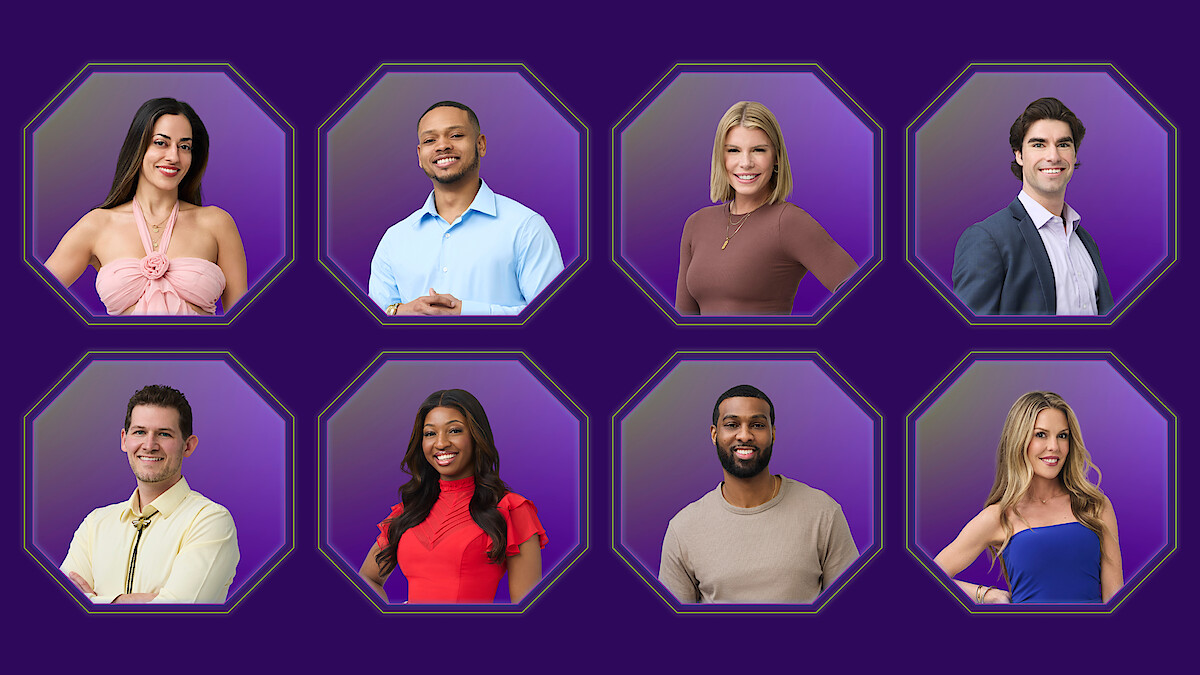
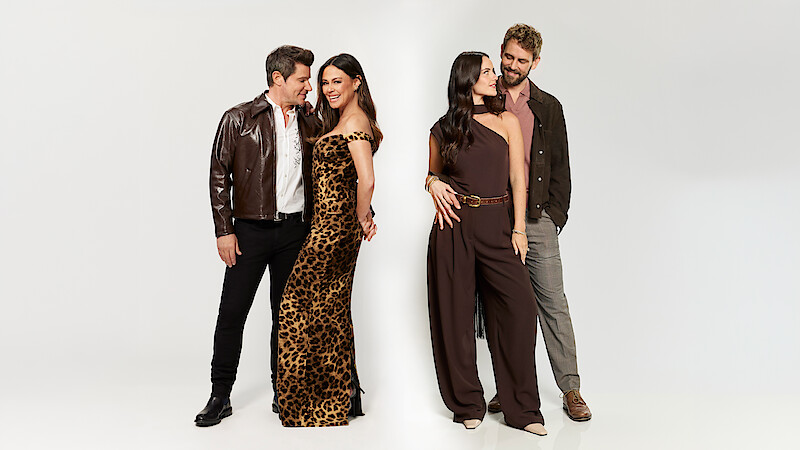
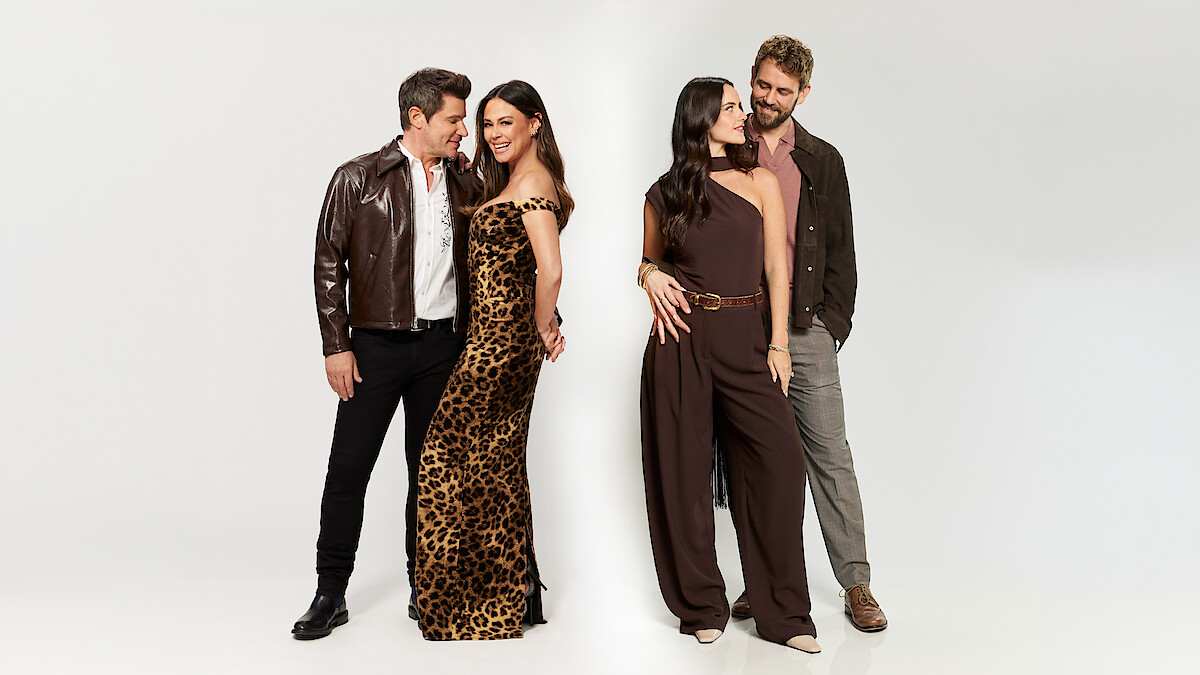
In today’s dating landscape, making a connection is as easy as downloading an app. But on Love Is Blind, singles are asked to take a huge leap of faith in testing the show’s central question: Can you really fall in love without seeing the other person first?
The show’s first round of couples (notably Amber and Barnett and Lauren and Cameron) seemed to prove that yes, you can fall in love with someone based on emotional intimacy. Season 2 introduces us to a new group of men and women, all looking for The One. But this time around in the pods isn’t without its challenges. These couples have arguably an even rockier road to the altar.
Dr. Kirk Honda, a Seattle-based family and marriage therapist, doesn’t claim to have the definitive diagnosis on all the hopefuls of Love Is Blind, but he does have special insight into the show’s broader discussions about love, relationships and intimacy. Honda, who’s also been a professor at Antioch University since 1998, has become an unexpected voice of reason for fans of reality TV shows like 90 Day Fiancé and Married at First Sight. On his podcast and web show Psychology in Seattle, Honda shares his reactions and translates psychology into layman’s terms. His wide range of pop culture-related material helped cultivate a steady following, but his reactions to Love Is Blind Season 1 brought increased visibility to his work. Ahead of the final episodes of Love Is Blind Season 2, Honda spoke with Tudum about the prospective couples and the nuances of attraction and attachment styles. If there’s anything we’ve learned from the show, it’s that while love may or may not be blind, it definitely is complicated.
Love Is Blind asks the singles to fall in love based on an emotional connection. However, Shake particularly seems to struggle with reconciling physical intimacy with emotional intimacy with Deepti. While both say they had specific dating preferences, Shake has a hard time cultivating a physical attraction to her. If a person forms a strong emotional attraction to someone at first, but they’re not physically attracted to them, can physical intimacy ever be built? Or are emotional attraction and physical attraction two separate feelings?
When it comes to the difference between emotional and physical attraction, the show really highlights that it’s not very often that people are given a chance to experience both in different timeframes. Usually, we experience physical and emotional [attraction] all at the same time or very close together. On Tinder, it’s physical, and then the first date, it’s physical and emotional, whereas on the show, people are seemingly falling in love or at least being extremely attracted to someone — like, “Yes, that’s the one for me,” and then they set eyes on them, like with Mallory.
I don’t know where she ends up, but at the end of Episode 3 when she meets Sal, she’s like, “There’s nothing wrong with him, but something’s wrong here.” All of us understand that sometimes it’s just the way someone looks. Could be a pheromone thing, could be that they remind them of someone in their past, could be just not your type in terms of various different markers. Attraction is a very particular, almost magical thing.
Like you said, it seemed as though Sal was a bit more into Mallory than she was into him. Could a relationship or a marriage work long-term if one person has stronger feelings or a deeper attachment to their partner than the other person does?
The way that I put it and in the [psychology] literature, it’s about satisfaction in a relationship. In that word, there’s not a lot of passion, right? It’s just like, “Are you satisfied? Do you want to stay with this person? Is this worth it to you?” Especially when we’re talking about 5, 10, 25 years into a relationship, it’s not the same as it is in the beginning typically. It’s one of respect, one of mutual support, deep companionship, best friends.
Of course, there’s not going to be poems and love songs written along these lines, right? So people get confused because they want to believe in the rom-com princess ideal. I’m not saying that you can’t strive for that. Some people achieve that, but it’s not necessarily the way that humans work. When we look at people all over the planet, the Western ideal of falling in love is actually not valued in other cultures. It’s more about family, dedication, loyalty, bringing your two families together and building a life for your kids. It’s not about passion and lust and attraction, necessarily. Not that they don’t have those things, but it’s not the focus.
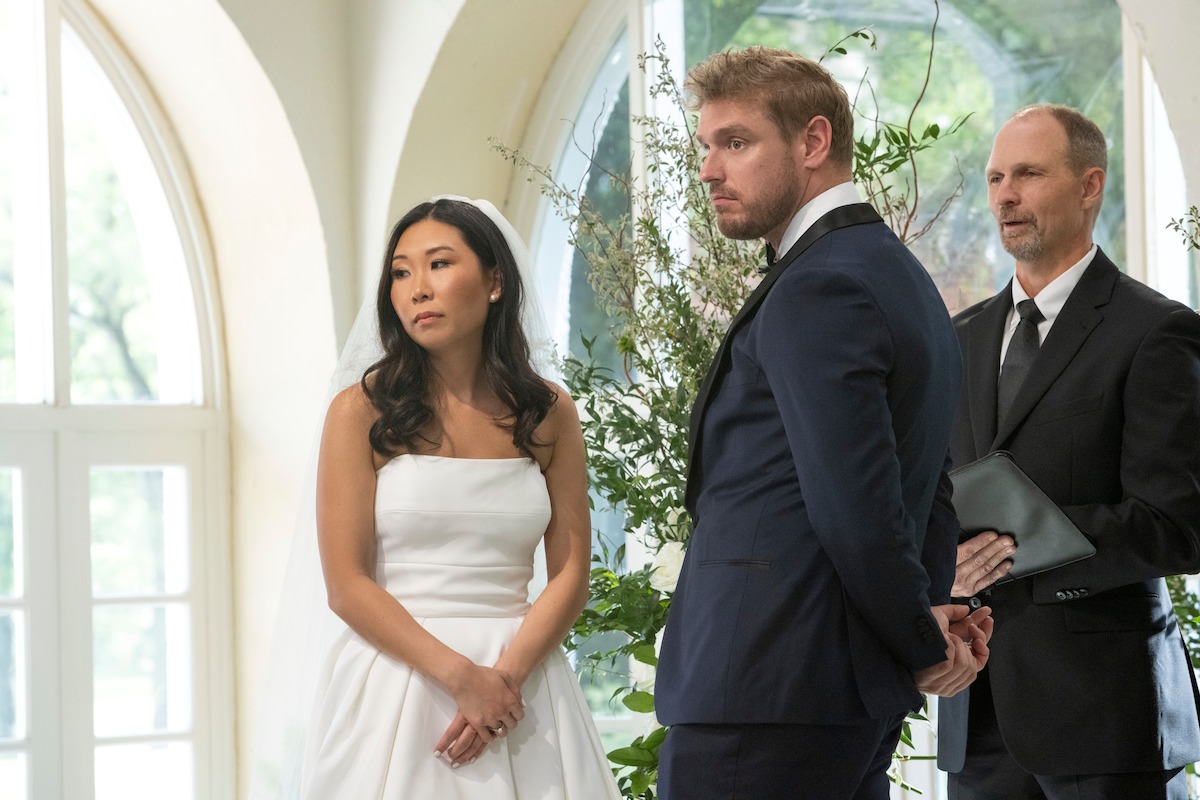
Adrian S. Burrows Sr./Netflix
Let’s talk about Natalie and Shayne. Shayne says that people think of him as a “tool,” and he’s aware of it. When we meet Natalie, she doesn’t seem as high energy as Shayne, at least in the sense that she doesn’t seem that extroverted. But they both seem like they’re very into each other. What would you say to couples who have those sorts of personality differences, where one is an introvert and one is an extrovert? How would you help them have a healthy relationship?
Generally speaking, when we discuss this topic, we’re talking about “complementary relationships,” meaning that two people will complement each other well. Their traits enhance each other, and instead of trying to make two people the same, you try to understand how these two complementary traits work together. Where it can go wrong is... it can obviously exacerbate [and] once it starts to begin, without couples therapy to help, it can get worse. Before long, you resent the other person and then your love erodes, and then you dissolve a relationship.
In the case of Danielle and Nick, Danielle talks about her past and how she’s still overcoming her insecurities. How do self-esteem issues lead to a tendency to self-sabotage?
The way that [insecurity] can sabotage us — really any of us — is that, say you’re in a relationship and things are going okay. You’re getting close, and suddenly there’s more at stake. You’re starting to hope that maybe this is the one. Now you’re more vulnerable because if you get rejected on day two, that’ll hurt, but being rejected after being engaged will hurt much, much more. So the fear starts to come out. The questions start to emerge: “Do they really love me?” “Are they going to be a good partner to me?” “Do they think about me? Do they care?” All of us have these questions, but if you’ve had those questions answered in a very negative way throughout your life, then you get much more convinced that there’s a negative possibility there, even if there’s no direct evidence.
So you start asking questions or you start looking for signs. Eventually, it’s a self-fulfilling prophecy of sabotage, if you will, that pushes them away.
Speaking of attachment styles, let’s discuss Iyanna and Jarrette. Early on, they both share that they underwent trauma: Iyanna’s home life wasn’t too great — especially with her parents — and Jarrette was in the hospital for major surgery. How would you describe their bond?
There’s a new trend on the internet of lay people bastardizing terms from my field, which was initially upsetting, and over time, I’ve just gotten used to it. People using narcissistic personality disorder, gaslighting [and] sociopath in ways that are disconnected to the clinical literature, and trauma bonding is the new thing. The clinical definition of trauma bonding is essentially Stockholm syndrome, where you bond with your traumatizer. So you are an ongoing victim of a perpetrator of sexual or physical or emotional abuse, and you bond with your abuser because you don’t know what else to do. There’s a human tendency to bond with that person, both as trying to please them so you can incur less abuse and also because the abuser might have isolated you from all of their attachments.
Are there other psychological terms from your field that are misused when people talk about Love Is Blind and other reality dating shows?
I’ve never seen gaslighting occur on a reality TV show. If someone wants to send me an example, I’d be happy to review it, but it’s not like the word just emerged on the internet last year. We’ve been using this in the clinical literature for decades, and it was always used in an ongoing relationship in which the person literally stops believing in their ability to evaluate reality in general. It’s not just someone denying something. It’s like this person goes on a campaign to erode your ability to gauge reality, and it’s insidious. It is massively abusive.
Narcissistic personality disorder is something that, according to research, most clinicians don’t understand because it’s so complex. So the idea that uneducated people who aren’t in the field would understand it is not likely. When I hear someone say, “Shaina’s a narcissist,” what I’m interpreting that they really mean is, “I don’t like this person, and I don’t think they have consideration towards other people.” If you said that, that’s not a clinical sentence; that’s just an opinion.
In Episode 3, Shaina accepts Kyle’s proposal, but she’s very reluctant to do so. Why would she go with Kyle when it seems that Shayne was her first choice?
Whoever we’re with now is, in a certain narrative, second choice to whoever dumped you before. So it’s not a terrible thing. The thing that I think we have to remember is that they probably were demoralized around dating prior to coming here, and so for some of them, this could feel like a final chance.
Another [possible factor] is feeling like, “I don’t want to go home empty-handed. I want to have some fun. I want to date someone. I want to go to Mexico. I want to be on this show a little bit longer.” I think we just have to recognize that could be a factor in some of these, and it could be unconscious, right? It could be something that’s quietly nagging them in the back of their mind that kind of convinces them that they should do this.
Another question I had about Shaina was, does she think, “We’re all going to end up in Mexico, so Shayne’s going to be there. And I tend to get some good responses from men when they see me. So maybe if I can interact with Shayne in person — but I won’t have that chance if I don’t get engaged.” Or, like I said, it might not be a conscious thing.
For people who go on shows like Love Is Blind and decide to get married, what would you say is the top thing that they can do to have a lasting, successful marriage after the cameras stop rolling?
Therapy, therapy, therapy, to work on what I talked about in terms of understanding one’s attachment needs and attachment reactivity. And the only thing that I’ll say in closing is that these people are human beings and deserve our care and compassion. No one’s perfect, and these people deserve our grace.
This interview was edited and condensed for clarity.