Louis Theroux Goes Inside the Manosphere Documentary: Interview and What to Know - Netflix Tudum
Deep Dive
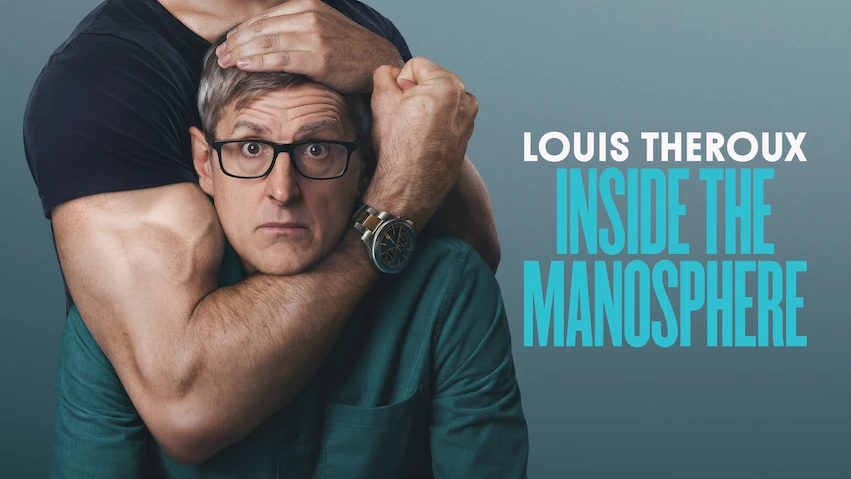
Louis Theroux Goes Inside the Manosphere in His Latest Documentary
The film unpacks the growing cultural influence of extremist influencers on young boys.
By Tudum Staff
March 11, 2026
British American documentarian Louis Theroux has long tackled subjects many people find uncomfortable to confront. From his early work on Michael Moore’s TV Nation series to Louis Theroux’s Weird Weekends to The Most Hated Family in America and beyond, he’s spent time with religious extremists, neo-Nazis, and — in his most recent documentary — influencers on the fringe of the manosphere.
“The manosphere describes a group of almost exclusively male influencers who provide content about fitness, business, and self-improvement,” says the filmmaker of his subject in Louis Theroux: Inside the Manosphere. “Many of them are relatively mainstream, but at the edge is a community of figures whose views are much more extreme, and that’s the focus of the documentary.”
Theroux interviews some of the leading social media influencers and podcasters who profit from and spread controversial ideas from the most extreme fringes of the manosphere. “Those in the manosphere embody a swaggering machismo,” says Theroux, “that is at turns misogynistic, homophobic, antisemitic, and racist… Increasingly, these aren’t figures on the margins — anyone who’s got kids, and especially boys, will know that they are making inroads into the culture. Their influence is being felt in schools, in the workplace, and all across the internet.”
Here, the BAFTA-winning presenter reflects on his experience probing into the world of the manosphere and discusses its impact on culture.
Why do you think this movement has risen? What unmet need is it feeding?
Louis Theroux: I think there are a lot of lonely men out there, and there’s now a whole industry dedicated to them. There are millions of hours of podcasts that talk about the masculinity crisis — how we’ve seen a decline in manufacturing jobs in the West and how there have been efforts to correct the patriarchal skew in society that has in turn triggered a backlash. As the saying goes, “If you’ve previously been privileged, then losing that privilege can feel like an assault” — and that’s maybe how it’s been perceived by certain groups of men. I think a lot of boys and men are lost, and when they see easy answers — when they see a muscular guy who seems to be very rich, telling them it’s not their fault and here’s who’s to blame — then that’s massively appealing. Perhaps most especially when you’re only 15, 16, 17 years old — I think it can’t be underestimated how young a lot of this audience is. It’s being marketed at kids, and sometimes for them it’s hard not to take it at face value.
You mention in the documentary that the people you’re meeting are deeply mistrustful of mainstream media. Why do you think they agreed to take part?
Theroux: A few things were helpful. One was the fact that the programs that I’ve made are quite liked by young people. I think they can see there’s a sort of free-spirited, open-minded, fun, slightly cheeky view of life that’s enjoyable to be around and isn’t pious or pearl-clutching. I also think I’ve got enough of a heterodox outlook that I’m simpatico with the parts of internet culture that are provocative and outrageous and cheeky. The other thing is that they genuinely don’t give a shit about being canceled, so I think it was low risk for them.
How do you balance giving people a platform to explain their position versus amplifying potentially harmful ideologies?
Theroux: My view is always I’m not trying to embarrass them or trick them in any way. I am trying to tell the truth, and I will confront them appropriately. I’m not trying to pick a fight. I’m just trying to understand them, get my questions answered, and then challenge and push back on the parts that don’t make sense to me or strike me as dangerous. At the end of the day, I’m trying to make TV that engages people — so a few fireworks don’t go amiss and some raised voices or a sense of menace is actually quite helpful.
I’m just trying to understand them, get my questions answered, and then challenge and push back on the parts that don’t make sense to me or strike me as dangerous.
Is it fair to say the individuals you meet share a drive for money, power, and influence over others?
Theroux: Yes, there are three key aspects to this part of the manosphere: wealth, fitness, and sexual prowess, which is very reductive. It’s almost like primate behavior — you need to be an alpha who gets all the women and all the food. If you happen to be a skinny, bespectacled older primate, who’s maybe not handy in a scrap, well, then you may as well wither away and die. Thankfully, we live in a civilization where there’s more to life than how tall you are or what your body count is.
As a parent to three boys yourself, what concerns you most about the subject?
Theroux: As a parent, you hope that your influence will outweigh whatever they’re being fed online. But truthfully, they spend many more hours on their phones than they do with us, and we don’t always know what they’re looking at. It would be easy to say, “Oh well, they don’t take it too seriously,” which a lot of the time I think they don’t. But at a certain point, a joke is no longer a joke, especially when it’s unchallenged and repeated. So we try to stay on top of what they’re watching and have conversations with them about it, but it’s hard.
You touch upon the notion of unprocessed trauma in a few of the men you interview, whether that’s from abuse or absent fathers. Do you think that plays a part in why they’re involved in the manosphere?
Theroux: Absolutely. What they’re doing is evangelizing an outlook they’ve created as a survival strategy for themselves. If you’ve grown up in something horrific and have created a suit of armor or a set of tools to cope, then when you come out the other side you’ll value that. I think that’s why they so often present this warrior ethos, this kind of “ruthless, take-no-prisoners, you-against-the-world” mentality. I’ve been the beneficiary of a happy, loving upbringing, and I’m going to blandly announce that it’s not you against the world — rather, we’re all in it together. That sort of mindset of “no one’s going to help you, and you can’t trust anyone” is not really reflective of the world that most of us live in, nor would want to live in.
Dive Deeper into Documentaries on TudumFrom in-depth filmmaker interviews to the latest-breaking news, stay in-the-know about your favorite true stories on Tudum.