Guide
Everything You Need To Know About Last Samurai Standing
The way of the warrior is now a fight to stay alive.
By Olivia Harrison
Dec. 19, 2025
The era of swords has come to an end, but the battle for survival is just beginning.
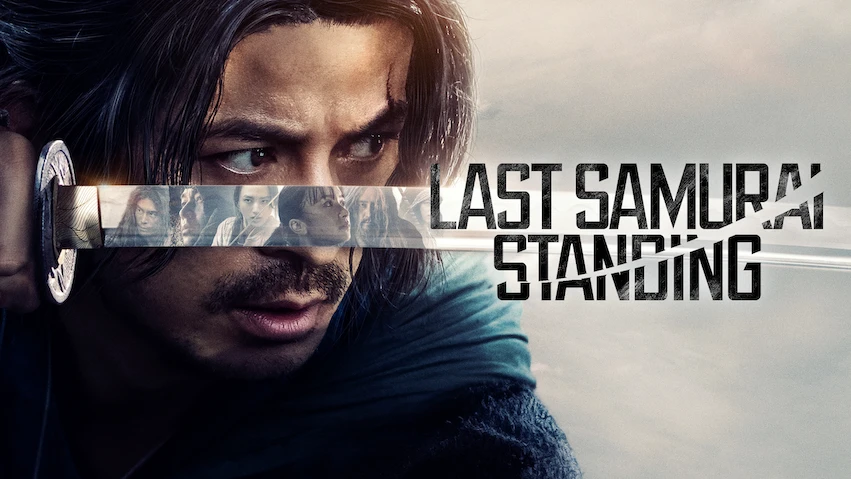
In Last Samurai Standing, 292 fallen samurai — facing poverty, a pandemic, and a new regime that has rendered them relics — are lured into a violent game called Kodoku, in which the last competitor left alive will claim a life-changing cash prize. Infused with a spirit and aesthetic unique to Japanese cinema, the series brings an emotional and thrilling chapter of history to life.
Producer, lead actor, and action choreographer Junichi Okada says he and screenwriter and director Michihito Fujii set out to “reimagine” the typical period piece. “My hidden goal was to create a new kind of period drama, one that’s also an action drama. ... Something made entirely in Japan, but made for the world,” he says. “It’s grounded in serious themes, but the characters are sharply drawn, and the story is truly entertaining.”
Keep reading for everything you need to know about Last Samurai Standing, which is streaming now and will return for a second season.
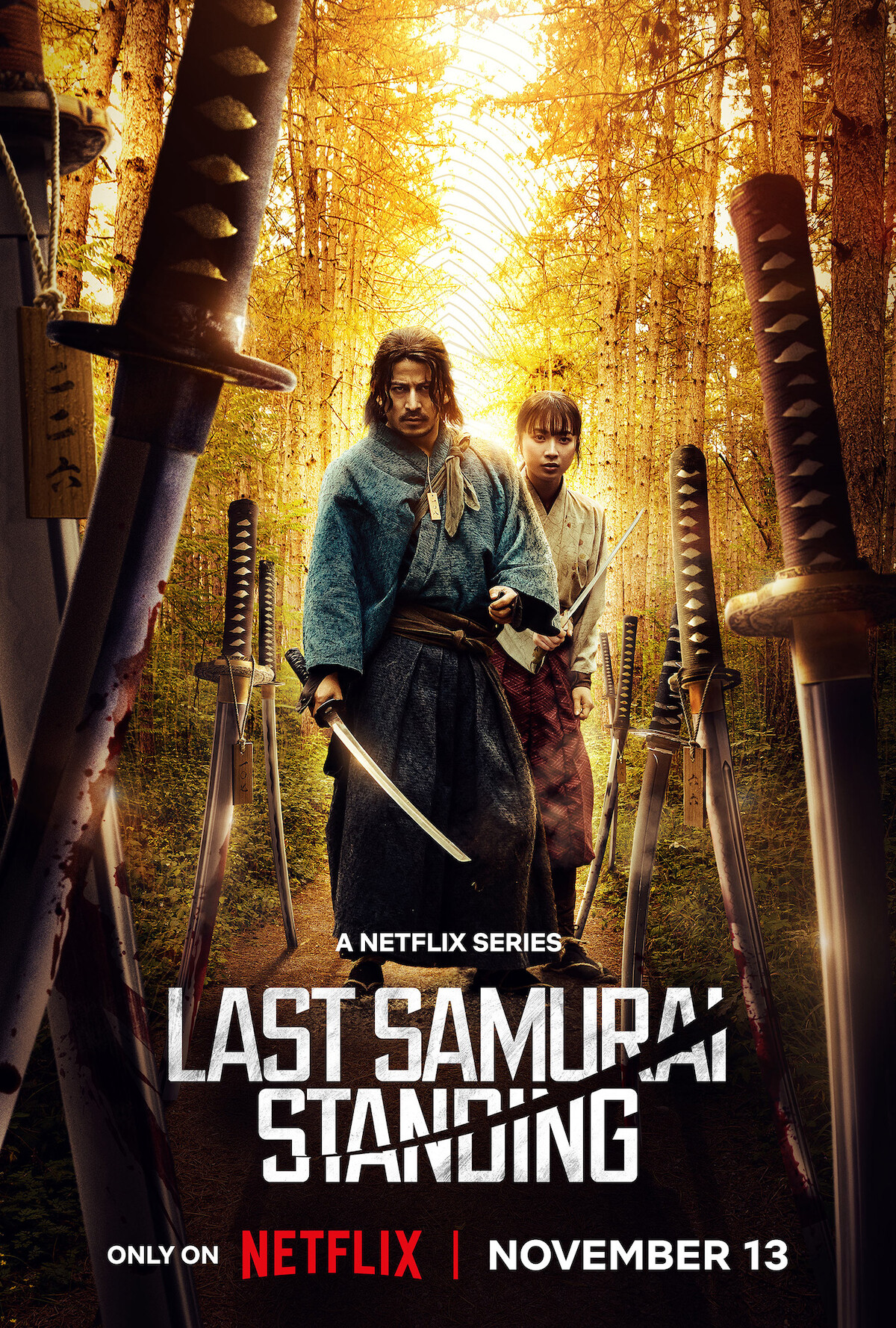
The story begins in Japan in 1878, 10 years after the glory days of the samurai. Stripped of their identity and status and no longer permitted even to carry swords, the samurai struggle to survive in this new era. As the wealth gap widens and a deadly cholera outbreak spreads, a chance at salvation arrives: an invitation to participate in a tournament for 100 billion yen. The battle begins in Kyoto and ends in Tokyo, but the catch is that only one player will survive. Who will endure the brutal journey, and who is the mastermind behind this mysterious and murderous game?
Unsheathe all six episodes of the series now.
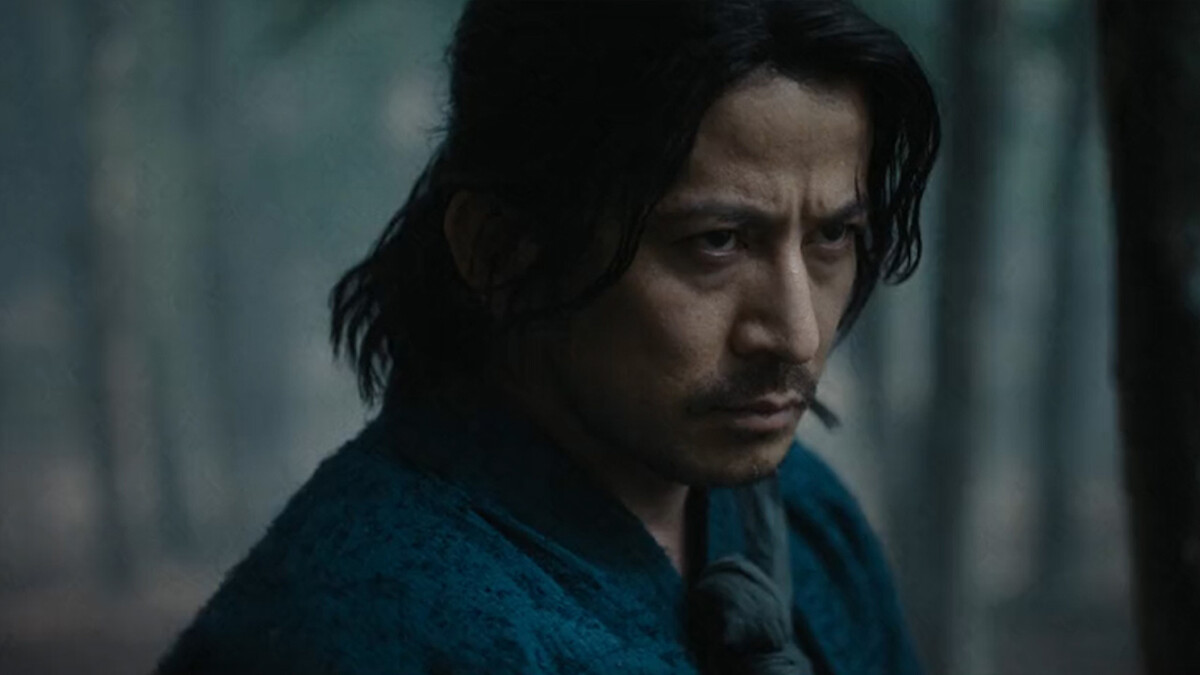
Press play on the trailer at the top of this page to see Shujiro Saga fight in a battle royal against brave warriors out of their prime and looking for any way to get by.
Yes. Last Samurai Standing is based on Ikusagami, a best-selling historical fiction novel written by Naoki Prize–winning author Shogo Imamura and illustrated by Katsumi Tatsuzawa. Starting in December 2022, the novel was serialized in Morning, a seinen manga — a type of Japanese comic — magazine published by Kodansha over four volumes. The forthcoming live-action adaptation, which has been in development at Netflix since December 2022, has received Imamura’s stamp of approval. “Even the parts that were changed added suspense and visual excitement that only film can offer,” he says of the series.
A fan of the source material, Shinichi Takahashi, director of live action creative at Netflix Japan, approached Junichi Okada with an offer to produce and star in this adaptation. Okada brought on Japan Academy Prize–winning writer and director Michihito Fujii to helm the project alongside him. The two previously collaborated on 2023’s Hard Days.
Reading Imamura’s novel, Fujii was struck by how much the period piece reflected the modern human struggle. “It felt unexpectedly close to our own experience with Covid-19,” he says. “It’s a story about ideology and one’s destiny, yet it was entertaining and had a gamelike quality. I remember thinking I could never have come up with this myself.”
In addition to his role as producer and action choreographer, Junichi Okada also stars as this story’s protagonist, Shujiro Saga, a once-feared samurai who joins the Kodoku tournament seeking prize money to save his cholera-stricken wife and son. Okada is one of Japan’s most acclaimed actors, known for his roles in Kisarazu Cat’s Eye, Hell Dogs, Tiger and Dragon, and The Fable.
Okada is joined by other big names, including Hideaki Itô, who starred in the legendary Japanese action-drama Umizaru and the Netflix original miniseries Age of Samurai: Battle for Japan, as well as Kazunari Ninomiya, a member of beloved J-Pop boy band Arashi. Check out the full cast, as well as their character names, below.
With its action-packed fight sequences, stunning visual motifs, and timeless tale of desperation in an age of uncertainty, Last Samurai Standing is a compelling watch for fans of many genres. However, it is also very much a period piece. To familiarize yourself with post-samurai era Japan, here’s a high-level history lesson. Reference these key historical, cultural, and geographical terms while streaming the series.
Edo Period: An era of Japanese history (1603–1868) when the country was ruled by the Tokugawa shogunate and feudal lords. It came to an end after the Boshin War, which gave way to the Meiji Restoration.
Boshin War: The first major clash between the shogunate and imperial forces fought from 1868 to 1869, which ended the Edo period and ushered in the Meiji Restoration. Shujiro, Last Samurai Standing’s protagonist, fought in the Battle of Toba–Fushimi during the civil conflict.
Kodoku: The term refers to a ritual from Japanese folklore, in which insects are sealed in a jar to fight to the death; the surviving insect, believed to carry toxic power, is then used in dark magic. It’s also the name of the deadly game at the heart of this story. To win it, participants must travel from Kyoto to Tokyo within a month, passing through seven checkpoints. At each, they must present a specific number of wooden tags, earned by killing others.
Meiji Restoration: The restoration of imperial control in 1868, which marked the end of the Tokugawa shogunate’s 265-year rule. The new Meiji government launched rapid modernization reforms, abolishing the feudal system and stripping samurai of their privileges. Unable to adapt, many former samurai fell into poverty. This is the historical period in which Last Samurai Standing is set.
Tenryu-ji: A historic Zen temple in Kyoto and now a UNESCO World Heritage Site. In the late 1800s, it was used as a military base by the Chōshū Domain during its conflict with Tokugawa forces, a pivotal moment in the fall of the shogunate and a symbolic starting point of the Meiji Restoration. Kodoku kicks off at this significant site.
Tōkaidō route: The most important of the five routes of the Edo period, connecting Kyoto to what is now Tokyo. In Kodoku, players follow this path, reporting to checkpoints in historic post towns (or shukuba) with the required number of tags to proceed.
Tokugawa shogunate: The military government of Japan during the Edo period (1603–1868), which ended with the Meiji Restoration.
Shukuba: Post towns located along Japan’s major travel routes. During the Edo period, they were hubs of civilian and samurai travel and offered lodging, food, and courier services. The Tōkaidō route alone included 53 such towns across roughly 300 miles.
Samurai: The ruling military class of feudal Japan. The samurai served feudal lords in exchange for stipends, social status, and opportunities to hold administrative and bureaucratic roles during the Edo period. Their status was eliminated under Meiji reforms, and by 1878, sword-carrying was outlawed.
Yes! Following the global success of Season 1 — the Japanese series reached No. 1 on the Netflix Weekly Global Top 10 for Non-English Series and charted in the Top 10 in 88 countries — Last Samurai Standing has officially been renewed for a second season. “I’m excited to get back into this wild world and once again charge into battle with the production team,” says Okada. “We hope to make the next season even more energetic and action-packed. We’d love to have you along for the ride, so please stay tuned for Season 2.”