

Interview
How Single All the Way and Love Hard Flip the Fake Relationship Trope
Directors Michael Mayer and Hernán Jiménez spill all.
By Maria Sherman
March 5, 2024
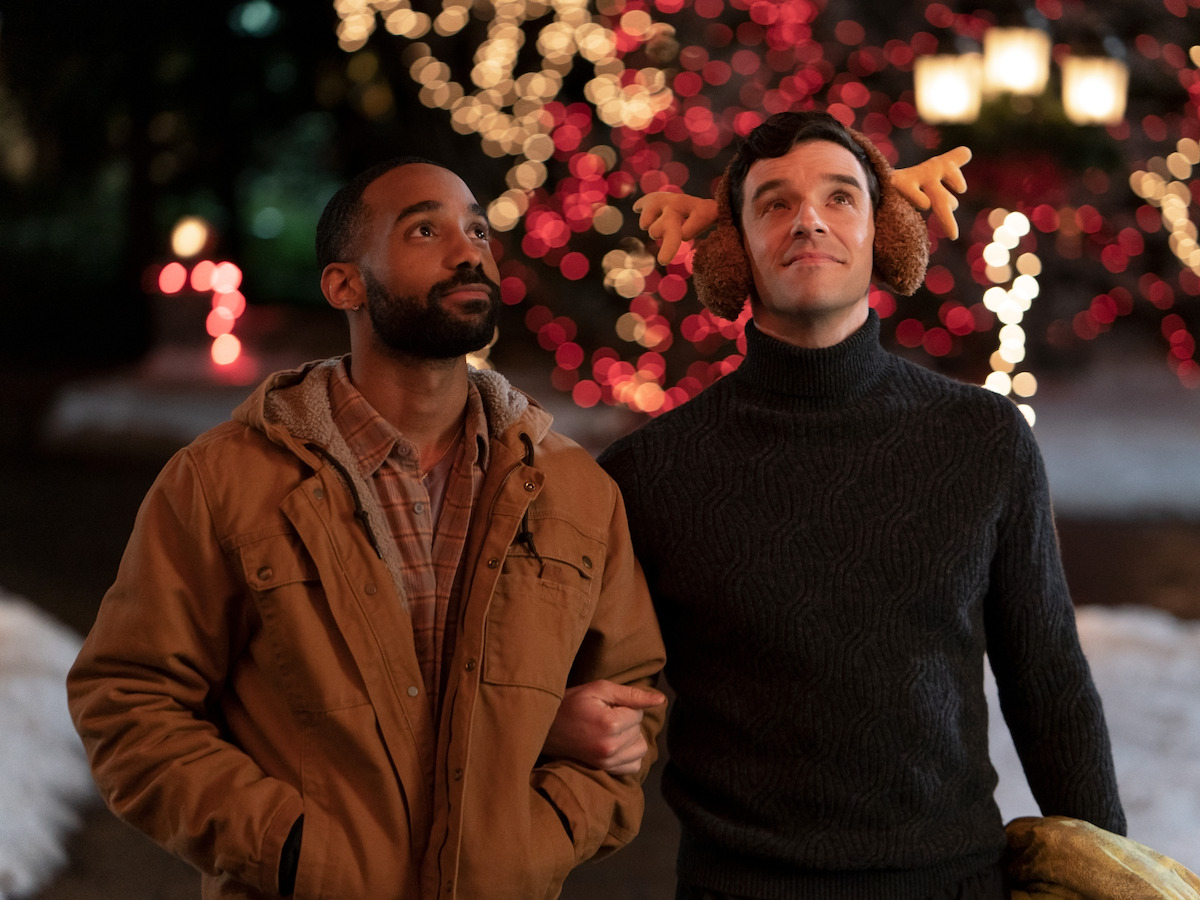
There is no shortage of progressive, original holiday programming on Netflix this year (you’re welcome). Case in point: Single All the Way, Netflix’s first original gay Christmas movie, stars Michael Urie as Peter, an unlucky-in-love Los Angeles single whose family back home in New Hampshire decides to play matchmaker. The film is actually kind of revelatory, bypassing predictable (read: tired) coming-out narratives and instead illuminating what it’s like to be queer in a supportive family. (Maybe even too supportive? Watch it before reading any further.)
In another new holiday flick, Love Hard, a dating and relationship columnist thinks she has finally met her match; he just happens to live 3,000 miles away. Hijinks ensue, but, most importantly, the movie remixes/flips traditional rom-com tropes by making catfishing seem like a good idea. Both films are a total joy — you’ll laugh, you’ll cry, you’ll definitely call your mom. But they’re also diverse and forward-thinking, which is why we spoke with the directors of both movies, Single All the Way’s Michael Mayer and Love Hard’s Hernán Jiménez, to learn all about progressing the holiday rom-com formula into fresh territory. Turns out, making a compelling Christmas movie isn’t easy!
What’s your relationship with the holiday film genre, and how did you come to these films?
Michael Mayer: I loved Jimmy Stewart’s It’s a Wonderful Life. Meet Me in St. Louis. A Christmas Story is fun. And this project came to me really out of the blue. Once I got the gig, I watched all the holiday films [on Netflix], and I got addicted to them. There’s something inevitable about how the plot turns out that’s deeply satisfying. You let go of any anxiety. It's not like, “Oh, is it going to work out? Are they going to get together?” You know they’re going to, and the fun of it is how each [film] does it in its own way. That’s something I learned working on this project: Rom-coms are great. Holiday rom-coms have this extra, built-in sweetness to them — this feeling that there’s a guardian angel over the couple that is going to make [love] happen [for them] because of the little spiritual nature of the holiday.
Hernán Jiménez: That’s such a beautiful image — a guardian angel accompanying these couples and taking them through all those hurdles and obstacles. I’m in the same boat as Michael. I’m now a fan [of holiday rom-coms], but I was never well versed in the specific genre. I wasn’t aware of the formula. I do think there’s a recipe that has been followed time and time again. Like Michael was saying, the beauty is seeing how each movie does it differently. I felt like I was diving into a territory I had never specifically explored before, and it’s part of the reason why I’m so thankful. It’s always nice when you’re pulling yourself out of your comfort zone and going somewhere a little different.
Mayer: Hernán, when you were making the movie, were you aware of [the specific tropes people expect you to check off when making a holiday movie]? Those boxes?
Jiménez: I was highly aware of [them] going in. For better or for worse, I just tried to focus on the story without allowing myself to get too concerned or too distracted by things I needed to hit. At a certain point, you finesse the script as much as you possibly can. I let myself go and put myself in the arms of that same guardian angel.
Mayer: Right, because at the end of the day, we’re filmmakers and we have to fulfill that destiny of the film, irrespective of the genre.
Both of your films subvert the rom-com fake relationship trope. Michael, in Single All the Way, we have this moment where it seems like the narrative arc is going to be that Peter (Urie) and Nick (Philemon Chambers) will fall in love after faking a relationship. But that’s quickly abandoned.
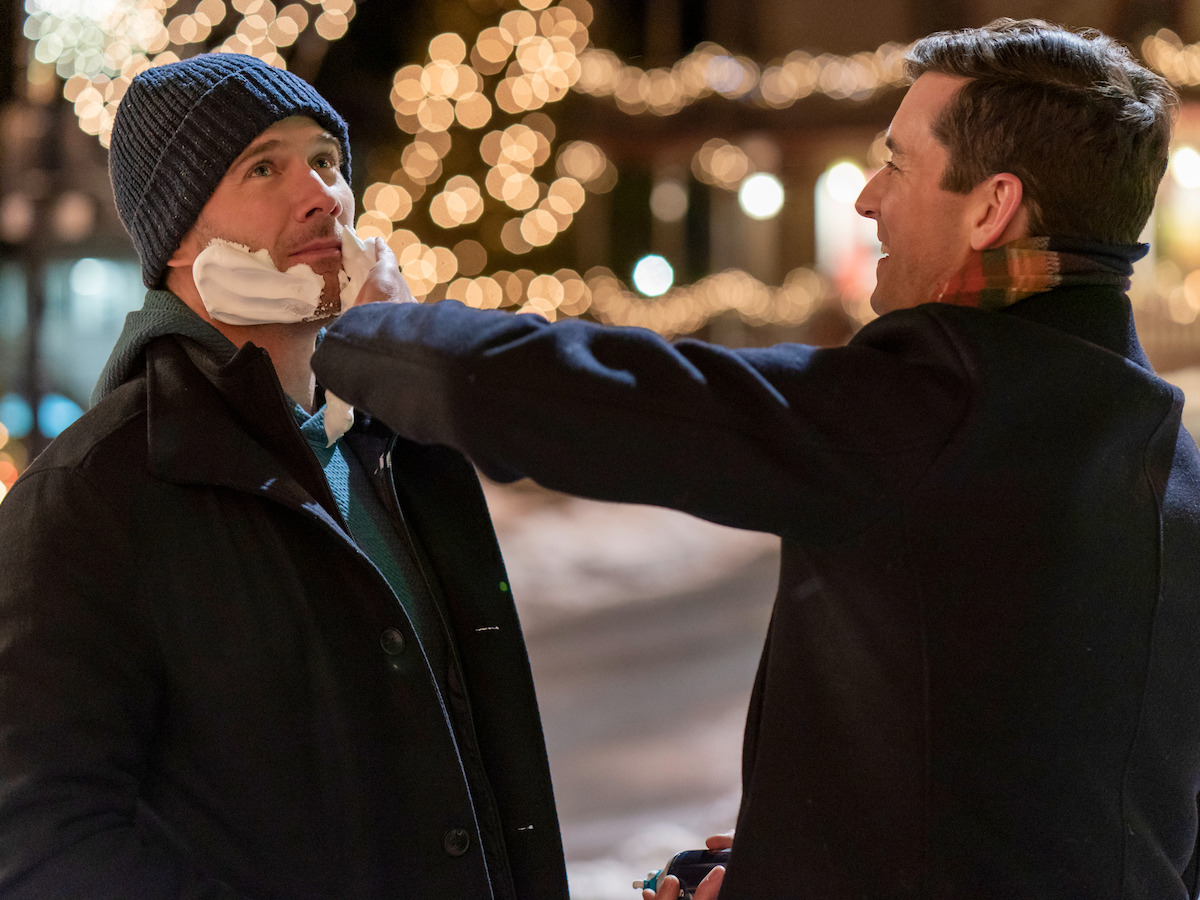
Mayer: The minute Nick says “I'll go with you,” we know they’re going to end up together. But casting Luke Macfarlane [as James, the third part of the love triangle] was such a genius move because he’s so appealing. There’s nothing bad about him. He’s got this incredible body, this beautiful smile, and you really want [Peter and James] to be together because they’ve got such great chemistry. Michael Urie and Luke went to Juilliard together. They've known each other for 20 years. They’re friends, so they already have credible, easy chemistry. In making the film, you try not to lean so much into it that the audience actually starts really rooting for that [relationship to happen].

We want Michael Urie to date both of them.
Mayer: We thought maybe there could be a sequel where it’s a throuple. That’d be the next frontier of the gay Christmas rom-com.
Hernán, in Love Hard, I feel like the fake relationship narrative is subverted through catfishing — first with Josh [played by Jimmy O. Yang] and Natalie [Nina Dobrev] and then with Natalie and Tag [Darren Barnet] — revealing some of the reasons why people hide behind personas to protect themselves and to curb insecurity or anxiety.
Jiménez: It was obviously one of my first concerns. Whenever you’re dealing with a character that’s not necessarily unlikable but is doing something that would be universally reprehensible, you worry: “Am I going to be able to redeem him or her? Is this going to play against me in the story that I’m trying to tell?” Other than [the] fine-tuning you do in the writing and in the editing, the reason people are able to digest it is that, at the end of the day, we see [Love Hard] as an extreme, over-the-top movie version of what we all do anyway on social media and in online dating.
People are willing to give [the catfishing] a pass both because of the tone of the movie, which doesn’t really invite you to take that too seriously, but also because the real theme is not so much catfishing; it is how much we alter our real selves and our identity when we try to get out there. We all want to be loved. We all want to be liked. We’re all guilty of tweaking our public persona, whether you are a public figure or you simply happen to have an Instagram account. And I suspect that is ultimately the reason why people give [Josh] a pass or, at least, hold judgment long enough because he’s cute and a good person at heart.
Mayer: The thing that struck me [about Love Hard] was the Cyrano de Bergerac of it all — that classic idea of the guy who isn’t going to get the girl, who’s in love with the girl, who’s helping through another person who does have the physical attributes that she’s looking for. It was really smart to take that classic story and graft this catfishing thing on top of it, which makes it feel contemporary.
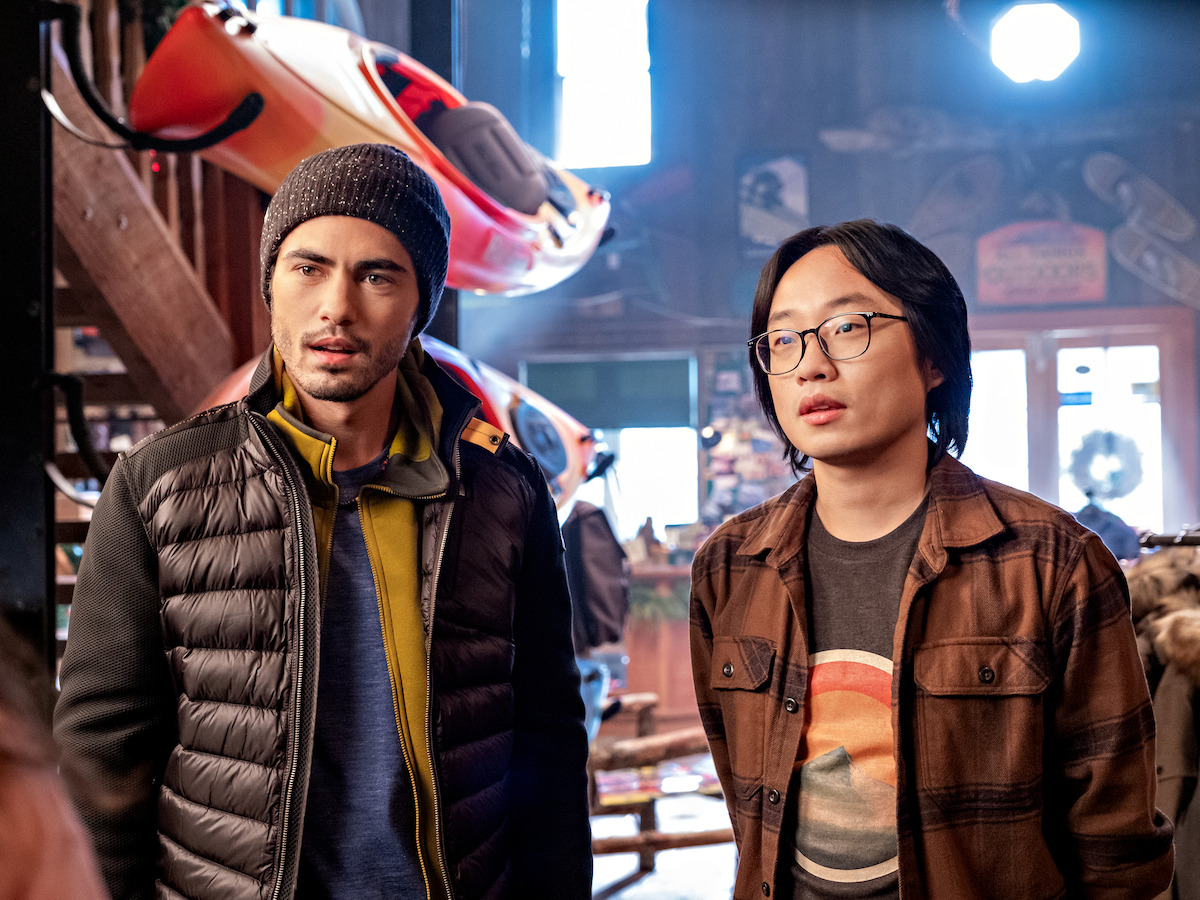
Jiménez: Thank you. That was definitely one of the things that attracted me to the story. And I’m afraid to say I’ve been there — not necessarily with catfishing, [but] with online dating. I had never really read anything that got the mess and the anxiety of that world. I was definitely interested in tapping into that a little bit.
And here we thought you were about to reveal that you’ve flown across the country to surprise a catfish for Christmas.
Mayer: Who had a kiwi allergy.
Jiménez: None of that stuff, but I’ve definitely gotten on planes for people that I might as well have met the night before. I’ve done some crazy things in my life for the possibility of love.
Mayer: That makes you a true romantic.
Both of your films do something really important in terms of representation. Single All the Way is Netflix’s first original gay Christmas movie. At no point does it feel like you made a queer movie for straight viewers. How did you approach that responsibility? How did you avoid flattening characters into stereotypes, even though this is a pretty formulaic genre?
Mayer: It’s a completely formulaic genre, and that’s part of its charm. What Chad Hodge, the writer, did was very smart. He wanted to tell a story that wasn’t about coming out. We’re in a world where Peter’s family absolutely accepts him for who he is, and they want him to find love. Most gay films, in general, have been about the difficult process of coming out to your family and hoping for acceptance. So many of the gay stories that I grew up with ended with suicide or some kind of violence, death from AIDS, disease, and so much shame.
[Single All the Way] was a beautiful idea not only for [Netflix’s] first gay Christmas rom-com, but for a gay movie. As we were working on the script and then in production, we found all sorts of tiny ways where we could eliminate moments that started to feel like they were pandering to a straight audience. We don’t have to worry about how palatable it is, how comfortable we have to make people with this story. If we’re all accepting it, and the family is accepting it, and the community is accepting it, great. That’s the image we want to put out there. Then other people can see themselves in that or aspire to that. The aspirational nature of this felt very politically powerful to me, frankly.
Jiménez: There was one moment that I thought was really powerful, when [Nick] meets [Peter’s] father [Harold, played by Barry Bostwick] in the garage. Dad, because of the way he looks, was maybe the one character that embodies this tiny little bit of fear of, like, “Oh, God, is he going to be the proxy for someone who’s not yet accepting?” But the thing is, it just was a non-issue for him. He was concerned for his son’s love life. Period. I thought that [choice] was subversive, really beautiful and very refreshing to see — even more powerful than some didactic approach. That’s what puts the movie on a different plane, in my opinion.

Hernán, in Love Hard, both of your love interests are Asian men. Historically, Asian men are the least swiped demographic. They are also rarely portrayed as heartthrobs in films and television. How did you approach telling that story?
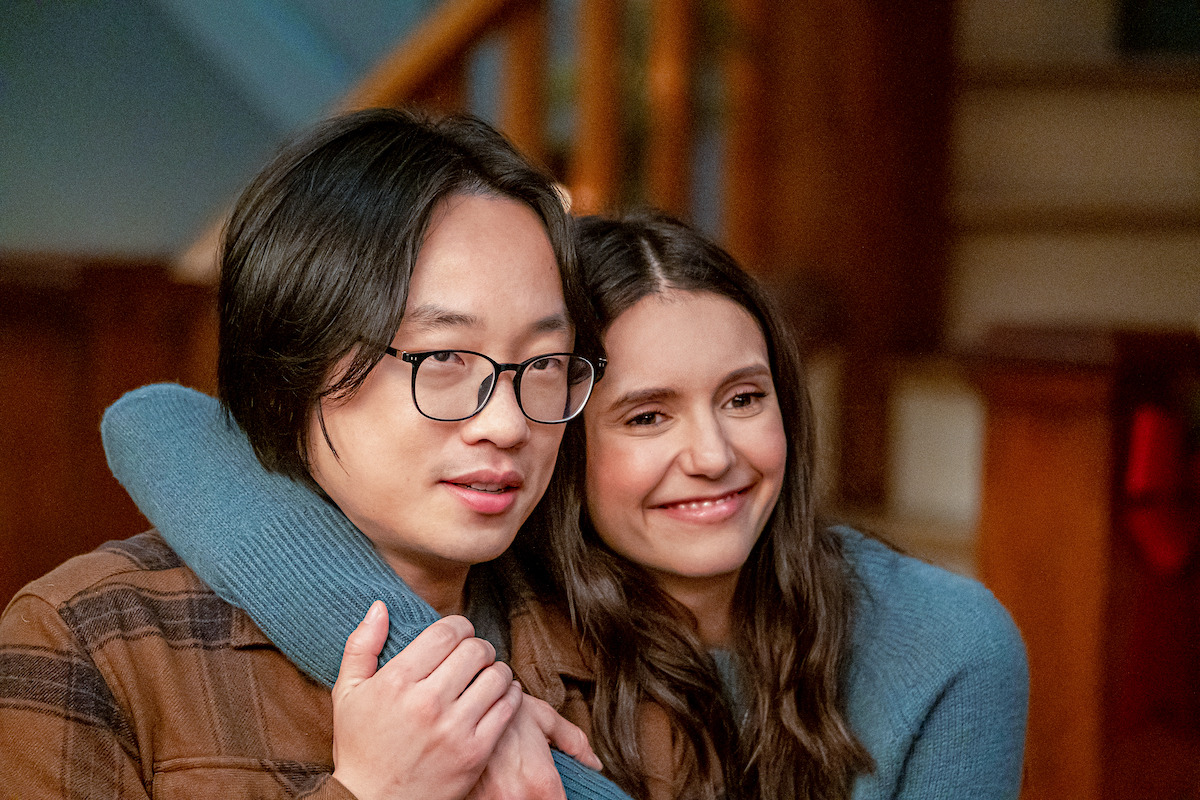
Jiménez: It became a really direct and ongoing conversation, especially with Jimmy [O. Yang,] who was going to be presented initially as the guy who was catfishing, or the guy who was less desirable for Natalie because she had fallen in love with someone else. Those issues had to be handled with care. I’m not of Asian descent. That was, needless to say, a very important conversation for me to have with Jimmy so that he could also help guide me through that process and how we were going to portray that family. I tried to bring him into the fold even in regards to who else was going to be playing characters that were close to him in his family, the fact that his stepmother was going to be white, what his house was going to look like, how that background was going to be represented, even if that wasn’t an overt through line for the movie.
Because, in all honesty, we wanted it to not be an explicit issue to discuss with words in the movie. We just wanted this guy to be who he was. I am actually very grateful to both Jimmy and Harry [Shum Jr., who plays Josh’s brother, Owen] and James [Saito, who plays Josh and Owen’s dad, Bob] and the entire cast of the Lin family. I felt very protected by their guidance. And I tried to also think of my own background, and how I would like a Hispanic family to be portrayed in a movie for it to feel real but not go overboard as to make them a caricature of what an immigrant family should or shouldn’t look like in America.
Is there anything you hope people take away from your films?
Mayer: Love is love is love. The usual thing you can’t hear too much of, and that [you should] support the people in your family, but maybe you don’t have to push quite so much. Trust your kids to find their mate.
Jiménez: I hope Love Hard echoes everything Michael just said. In a slightly different context, it’s ultimately about that: Love and being loved, regardless of who you are, what you look like and what your gender is. There’s definitely an added layer in our movie in regards to identity and how we present ourselves, and the acceptance of who we are in a world that is constantly pushing us to be something better, something different, and in that process making us very unhappy. The beauty of accepting others and ourselves — that’s the takeaway.