Every holiday season there comes a time — call it the most wonderful time — when all else falls away. Perhaps you’re in a satisfied post-meal stupor, tree lights twinkling, snow falling, or in some extremely temperate zone dreaming of a cozy, noncarcinogenic Christmas. Perhaps you and yours have exhausted all the titles on this holiday list, and you’re ready for the one thing every single human (and animal) of every demographic in the house can agree on: the golden glow and ambient roar of Fireplace for Your Home.
That’s right: Simply watch fire, essential viewing since Homo erectus first manipulated fire in the Stone Age. An instant classic since its 2011 Netflix debut, the trio of fireplace episodes, created by George Ford, can now be viewed in vivid 4K Ultra HD. So gather around the television again, friends, and don’t get too close to the flame, as we tell you the tale of how Fireplace for Your Home came to illuminate your screen.
But first, what is Fireplace for Your Home? And what happens in it?
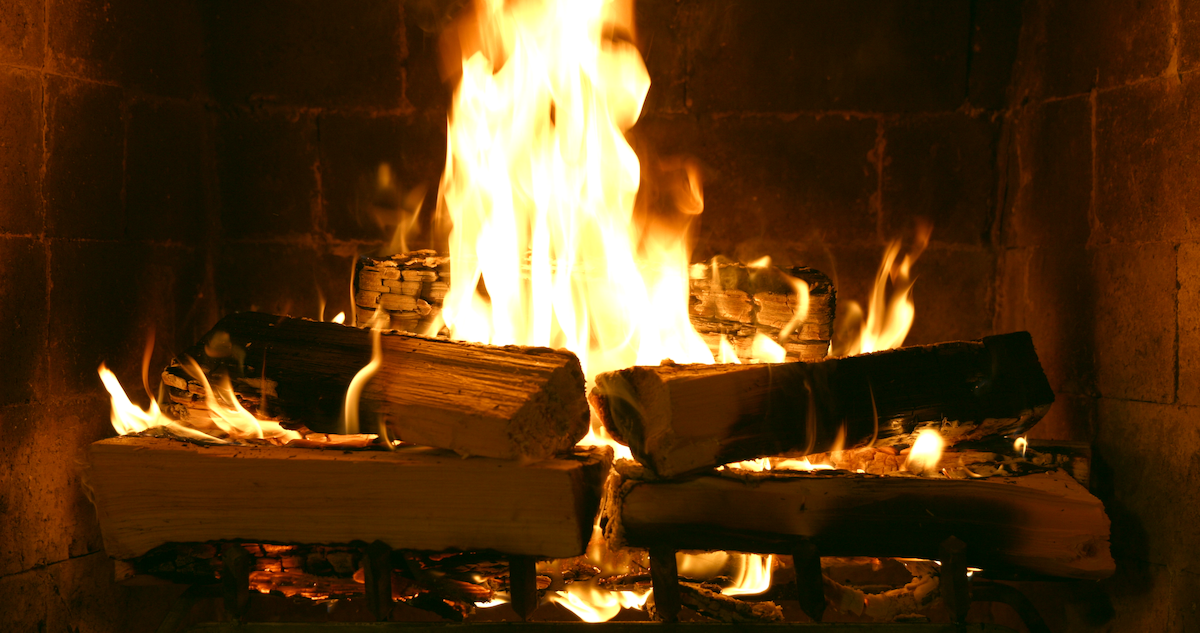
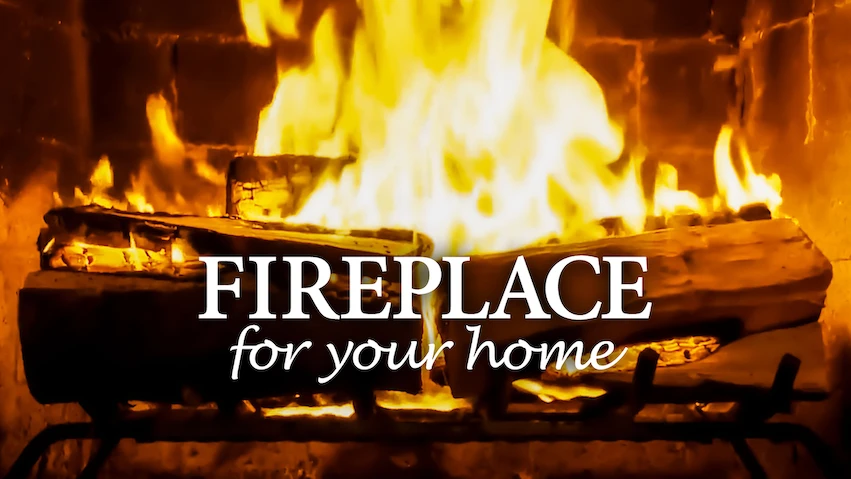
Each episode of Fireplace for Your Home is just that: an hour-long fire doing its thing, burning away inside a fireplace, crescendoing over time and slowly smoldering, but — spoiler alert — still burning at the end. The effect is oddly pacifying, downright hypnotic. There are no words (save for the extremely occasional [CRACKLING] or [POPPING] subtitle). Even when there is music (Christmas instrumentals accompanying “Crackling Yule Log Fireplace,” a jazzy soundtrack alongside “Crackling Fireplace with Music”), it’s low enough in the mix that the crackling fireplace of the title remains the star. In fact, the loudest sound of all may be your own deep thoughts that emerge as you watch.
And curiously, there are no hands visible in the frame, no poker tending the flames. Meanwhile, as you ponder this mystery, gazing more intently, you’ll notice tiny, subtle dramas flickering across your screen. As one blurb puts it in the official trailer: “I cried when the fire spread to the other log.”
Tune in, zone out, and stare into the clarifying virtual blaze.
How do I watch Fireplace for Your Home?
Fire up all three 60-minute episodes right here.
What if I just want to watch the Fireplace for Your Home trailer first?
Sure, check it out at the top of this article. But beware its foreboding nature. “When a pile of wood meets its destiny,” a narrator intones.
Is Fireplace for Your Home the original Yule log video?
While Fireplace for Your Home has been stoking away since its Netflix debut in 2011, it was inspired by the WPIX Yule Log, a three-hour-long loop of a 17-second-long film of a roaring fireplace at Gracie Mansion, the New York City mayor’s residence. When it first aired on Christmas Eve 1966 on WPIX Channel 11, it was meant to deliver virtual warmth to hearthless New Yorkers — in the form of a sort of public-access avant-garde film. (Perhaps New York was already primed for marathon ambience: A year earlier, Andy Warhol made Empire, his eight-hour slow-motion silent film of the exterior of the Empire State Building.)
The WPIX Yule Log was so popular that the the station made it an annual tradition to broadcast the loop on Christmas Eve or Christmas morning. But in 2004, when an HD version of the WPIX Yule was made, the blaze got a little too out of control, according to some critics. The New York Times dubbed it “alarmingly feverish,” adding that the flames “looked frighteningly fierce and fast in high definition, less like Miracle on 34th Street and more like Fahrenheit 451.” Who you gonna call? Enter an independent filmmaker to the rescue.
Who created Fireplace for Your Home?
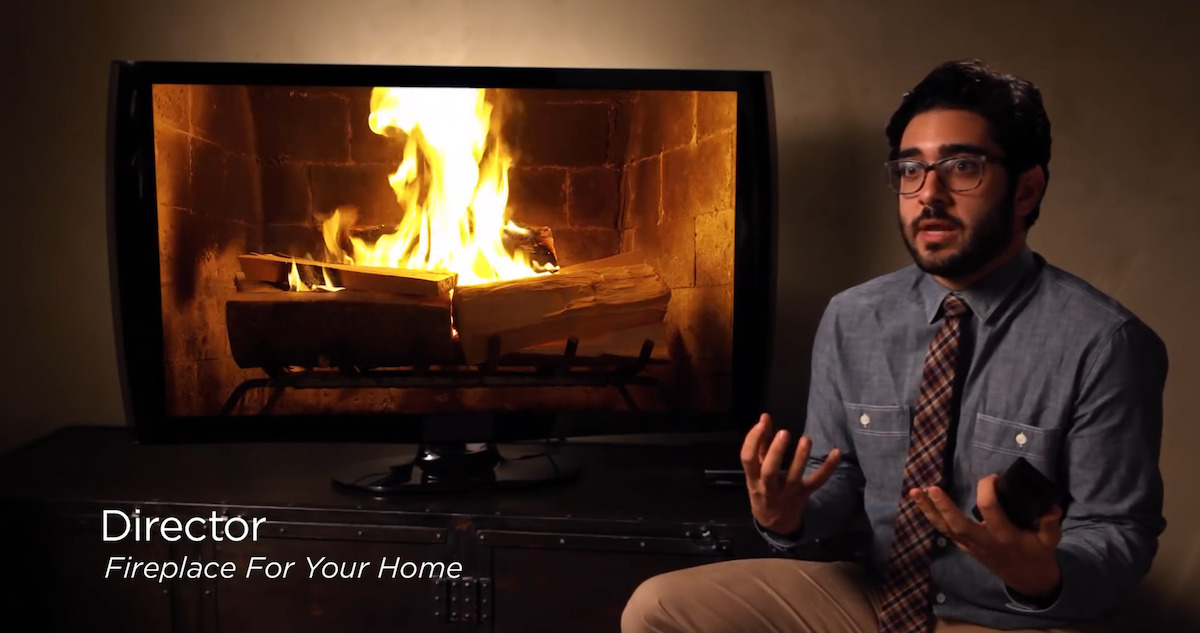
Granted, the WPIX Yule Log has spawned legions of imitations, but none as picture-perfect as the work of George Ford, the Pacific Northwest director whose lone credit you see at the start of Fireplace for Your Home. Ford was no stranger to the art of atmospheric filmmaking: His company Pet Media Plus specializes in videos designed to teach birds to speak, and he was in the midst of making a video for cats when the inspiration to make the fireplace film first struck him. Ford’s kids were always after him to build them a fire, especially during the holidays. But why chop wood, the director reasoned, when you can make a film instead? “I thought it would be much easier to just place a television inside our fireplace hearth than keep making a real fire,” he told The Independent. Plus, Ford was familiar with the 1966 WPIX Yule Log and thought it was due for an update — a pleasant, cheerful blaze.
Try pitching that one to 21st-century studios. At first, Ford said, “Netflix and a few other streaming services thought I had completely lost it by offering them what I called ‘the best fireplace you have ever seen.’ ” But two years later, he delivered with “Classic Crackling Fire” and the sequels that make up Fireplace for Your Home, whose holiday and year-round popularity surprised Ford just as much as anyone else. “Who would want a fake fireplace in the summer? Well, it looks like just about everyone,” he said. (Ford is also a fan of filming water: He’s gone on to make Aquarium for Your Home: Saltwater Reef and Mountain Stream: A Mountain Stream Background for Your Home.)
How did they film Fireplace for Your Home? Where was it filmed?
“It took two years and 200 fires. Everyone thought I was crazy,” says Ford in this segment on CBC. To eliminate all background noise, he preferred silent nights for filming, staying up after everyone else in the house had gone to bed. Growing up in the Pacific Northwest, he’d learned the art of building fires early on: “You want a fire that burns bright and nice — and crackles,” he said. But, he discovered, even the most seemingly perfect fire had a tendency to go off script: The logs would burn in the wrong direction, or different colored flames would play tricks on the camera lenses. “I had to make the logs kind of roll in on themselves... I had to make all of the stuff just look so natural, and it was so hard,” Ford said.
To make the final version, he enlisted the collaboration of a production company with specialized cameras, and, yes, the crew came to Ford’s own home in Longview, Washington. That’s his family’s fireplace you see on your screen. Canadian fir — the filmmaker’s favorite — was used for “Crackling Fireplace,” and birchwood was shipped from halfway across the US for “Crackling Fireplace with Music.”
Can that fire burning on your screen possibly live up to the real thing?
“Sitting in front of a fire is mesmerizing. It’s magical. I feel the same way about electricity. And smoke. And flickering lights,” David Lynch (Twin Peaks: Fire Walk with Me) writes in Catching the Big Fish, his bestselling book about meditation, consciousness, and creativity.
But can a virtual fire help ignite creativity too? In 2014, three years after Fireplace in Your Home debuted on Netflix, the journal Evolutionary Psychology published the results of a three-year University of Alabama study in which scientists tested more than 200 volunteers. The researchers found that even watching a filmed fire can significantly lower blood pressure and produce other relaxing effects in viewers.
Watch the Fireplace for Your Home “behind-the-scenes” video below, and decide for yourself whether Ford — or is it? — is serious when he says: “In order for the log to become something else, it has to destroy itself in the process, to be born again.”
Stream all three episodes of Fireplace for Your Home on Netflix now. And when you’re done, loop them all over again.