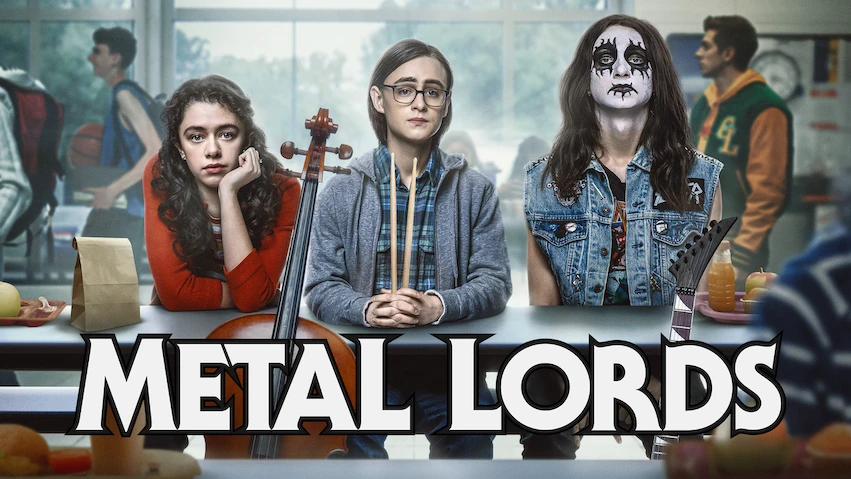
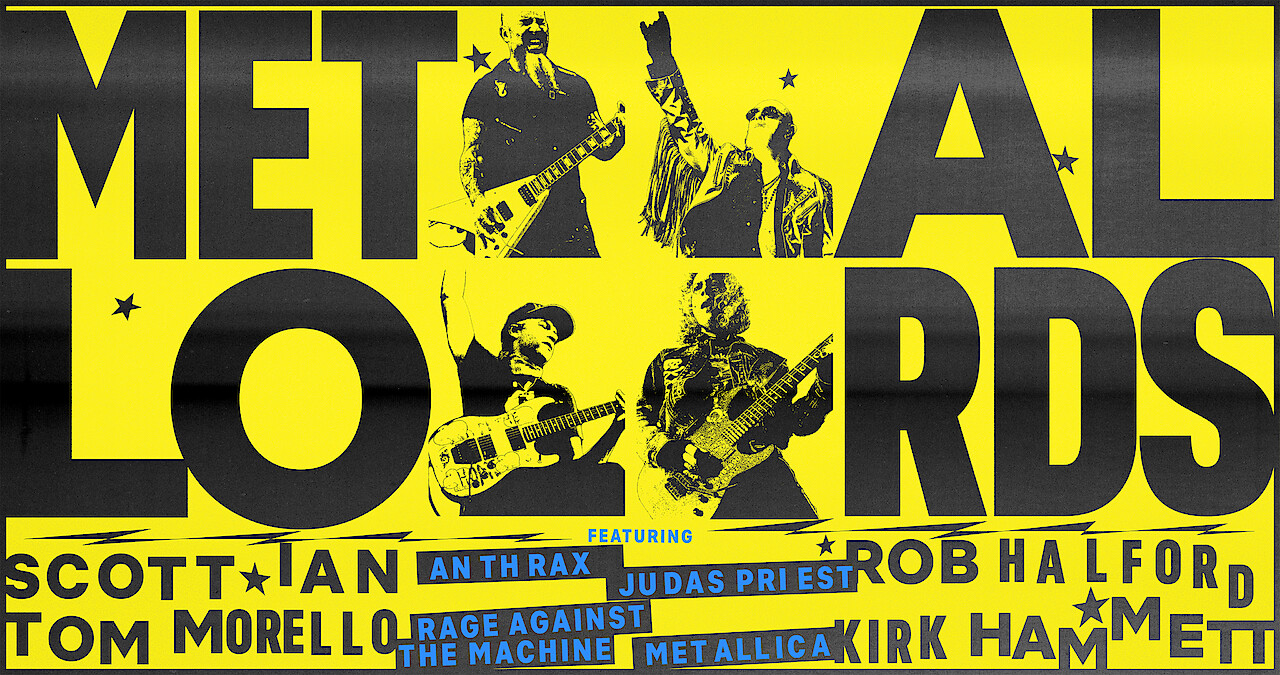
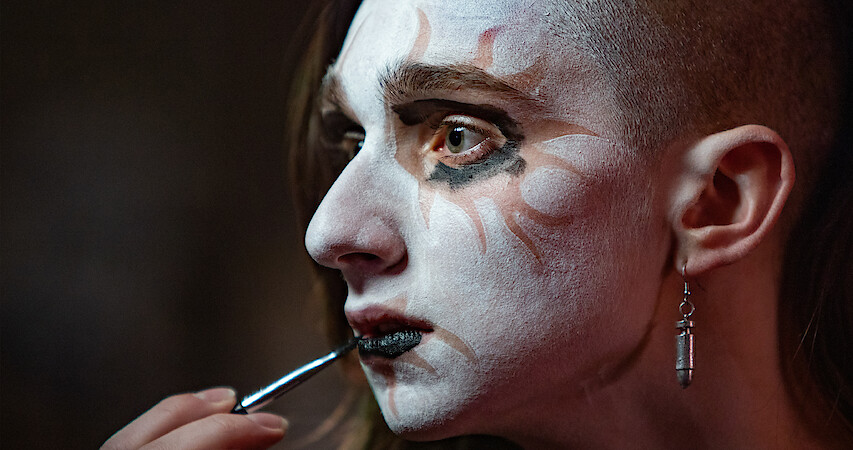
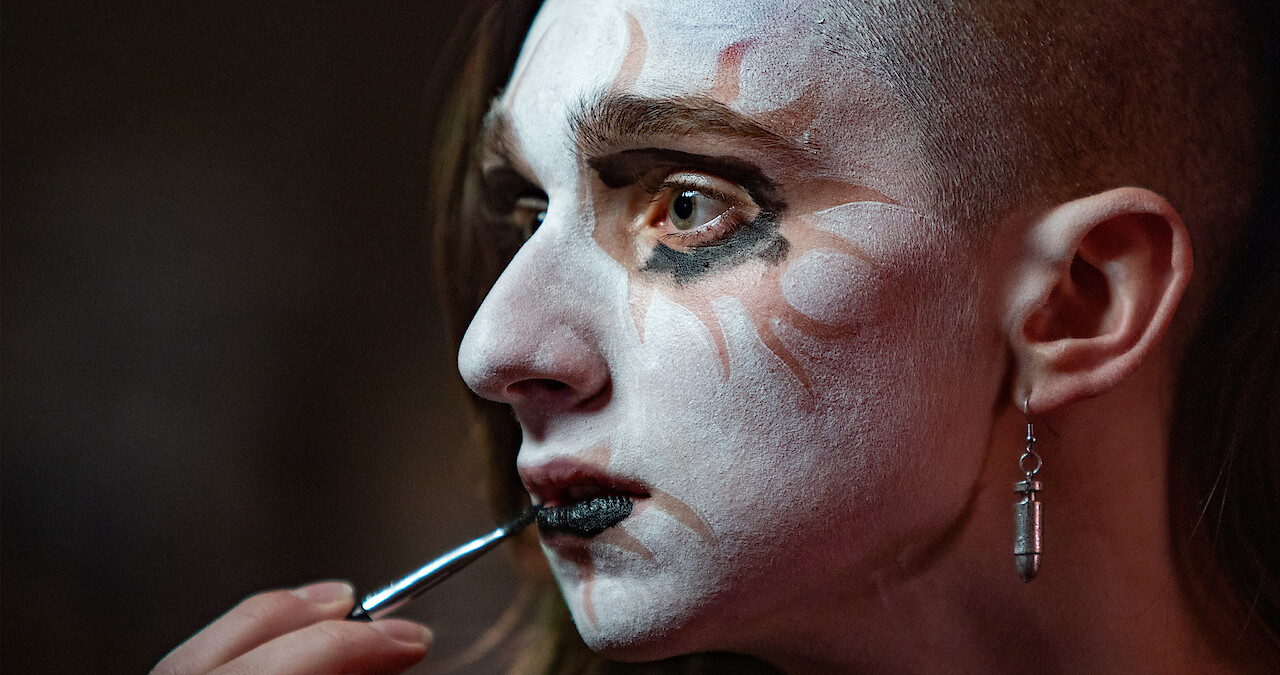
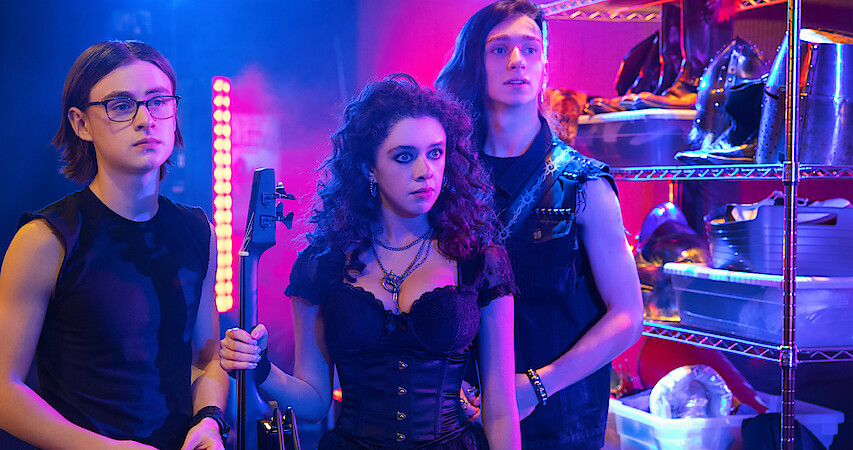
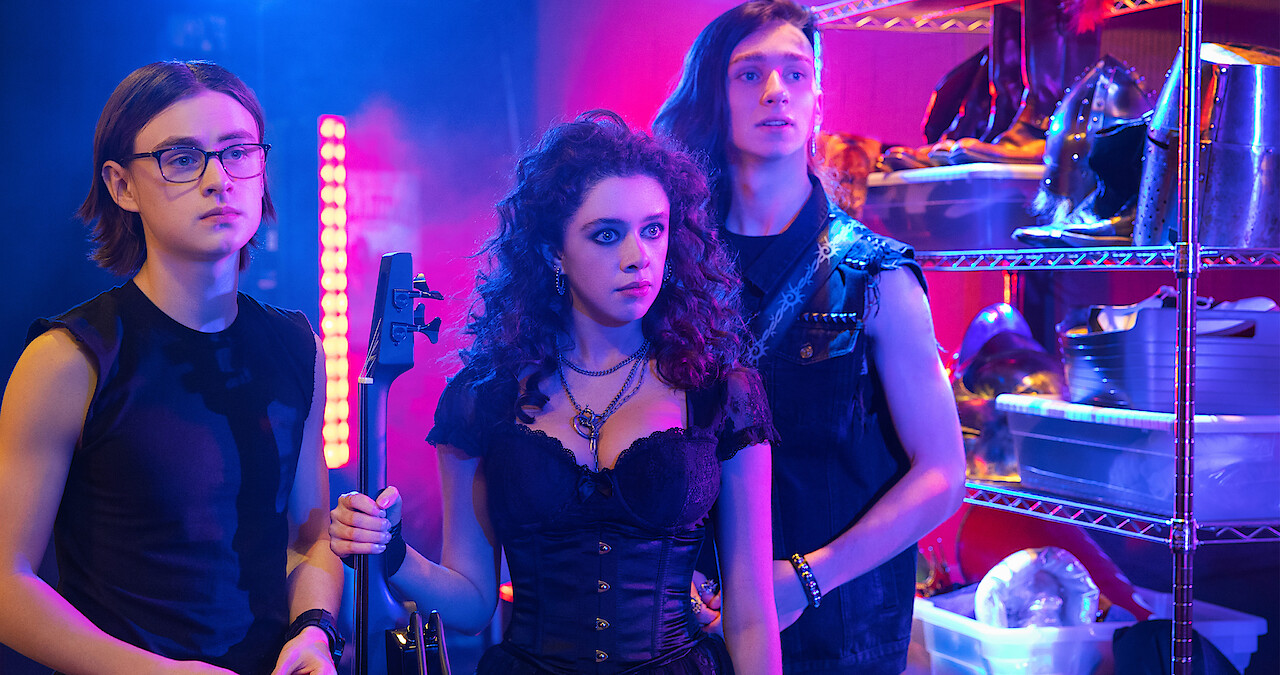
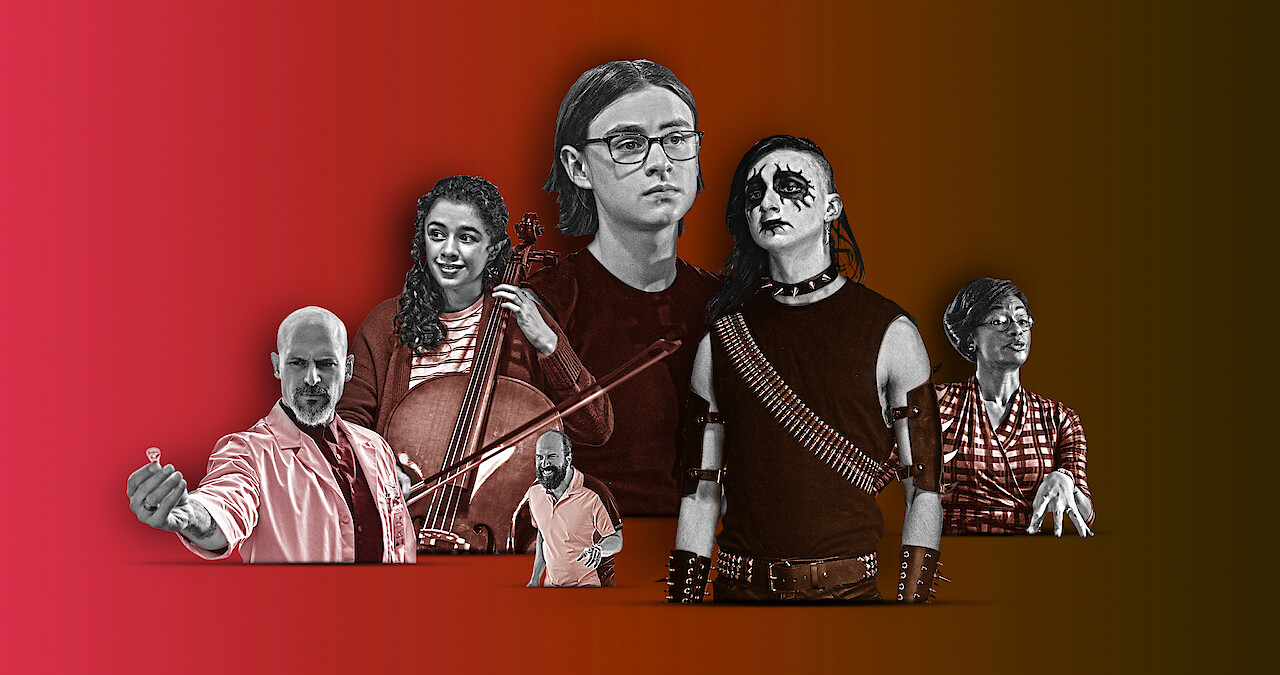
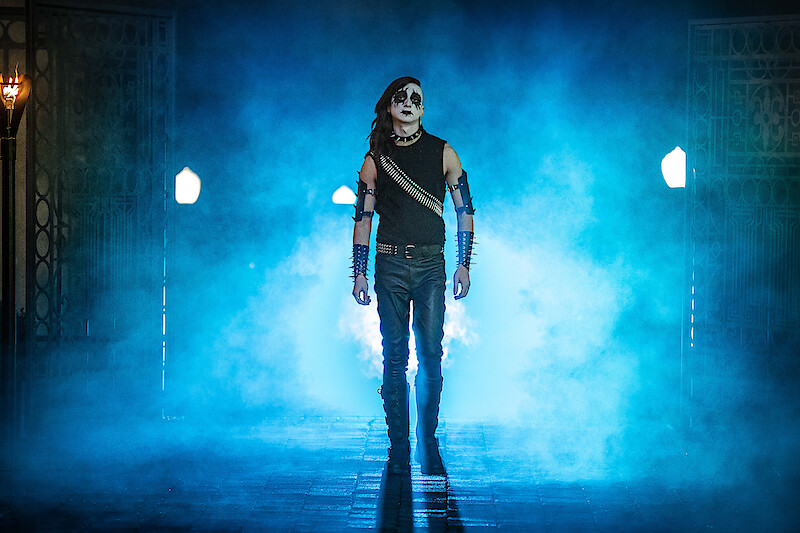
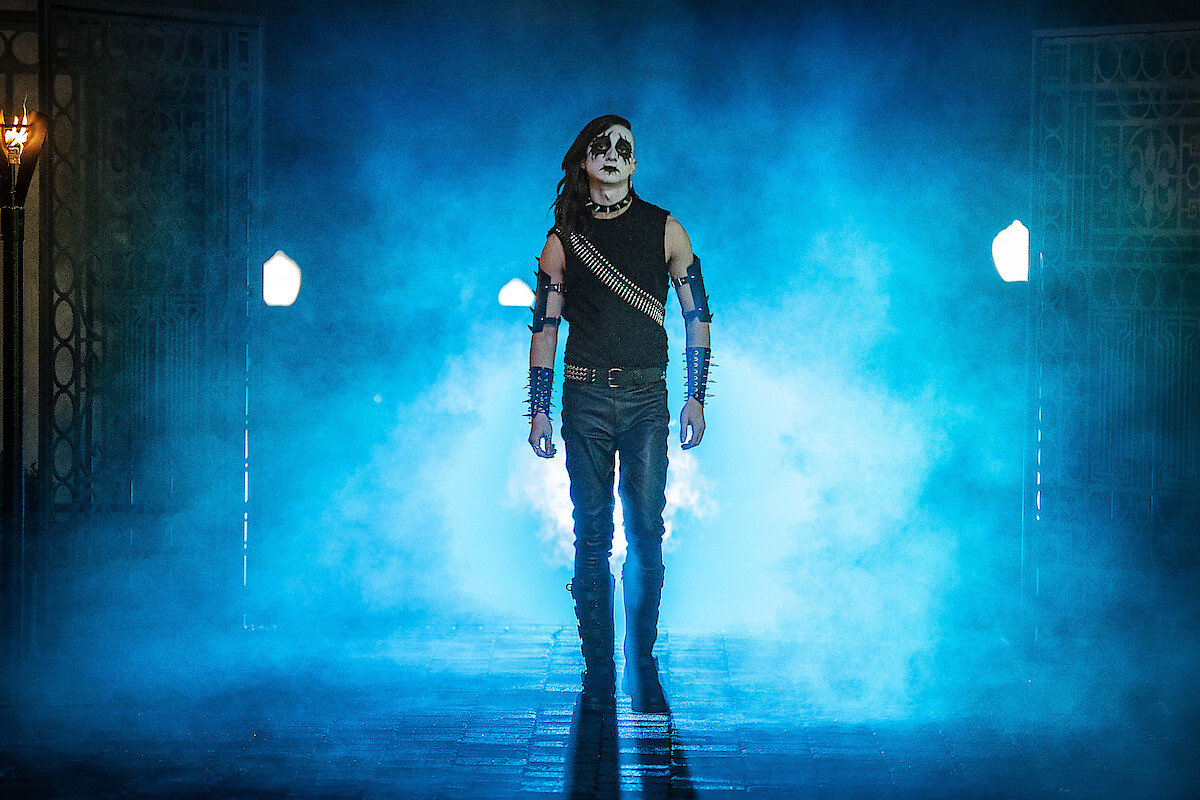
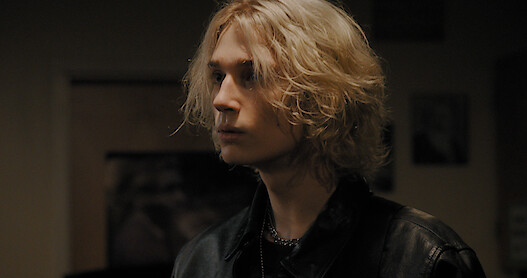
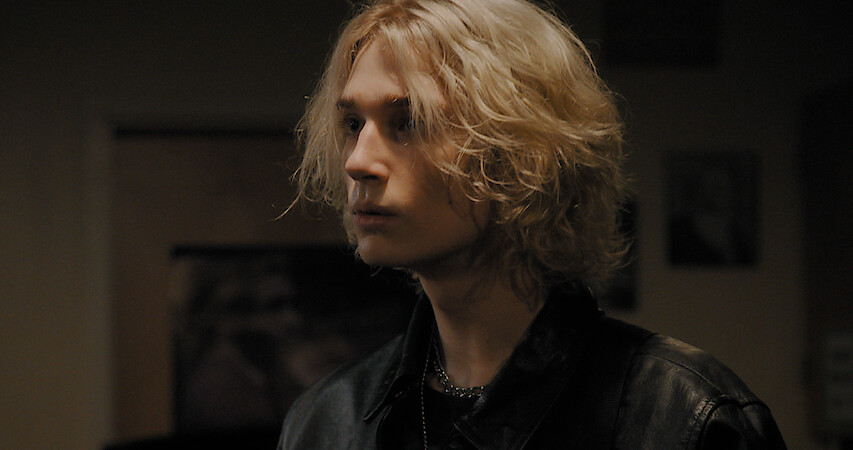
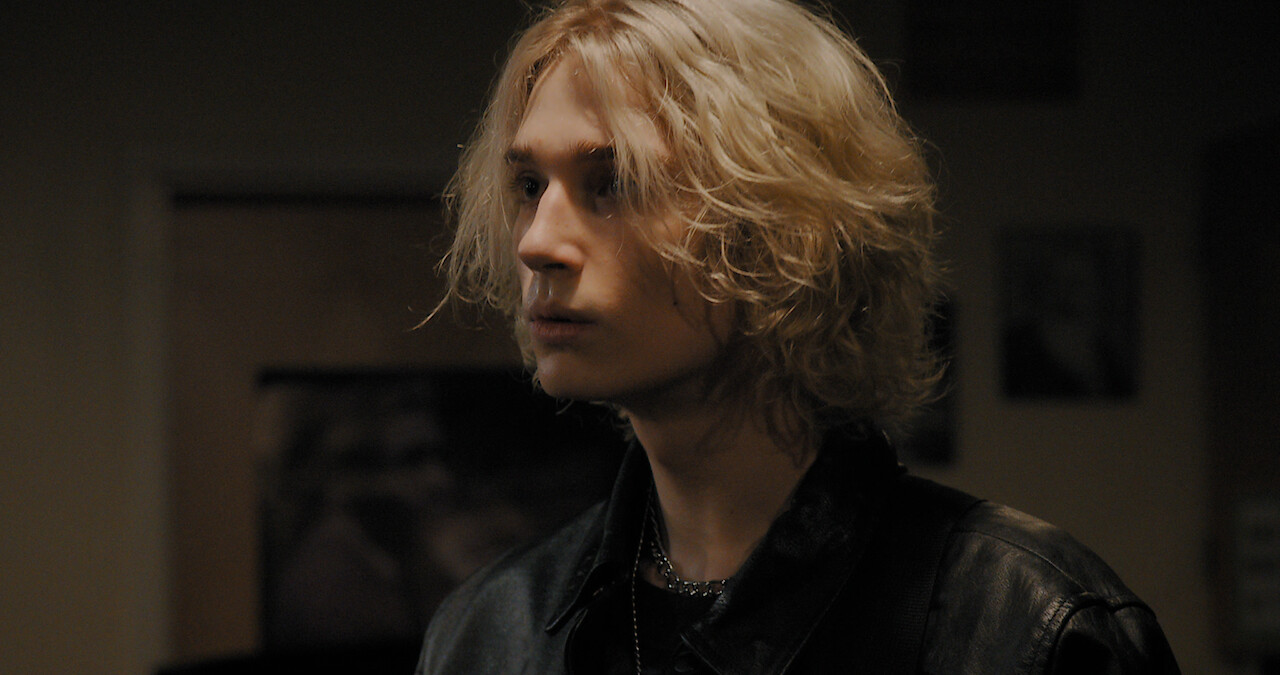
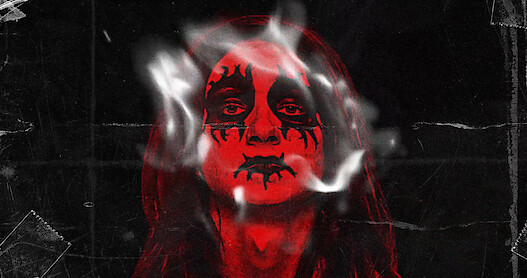
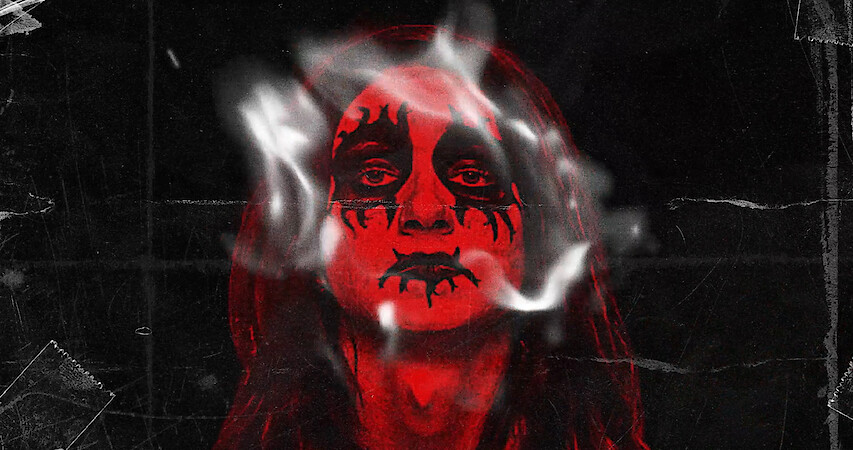
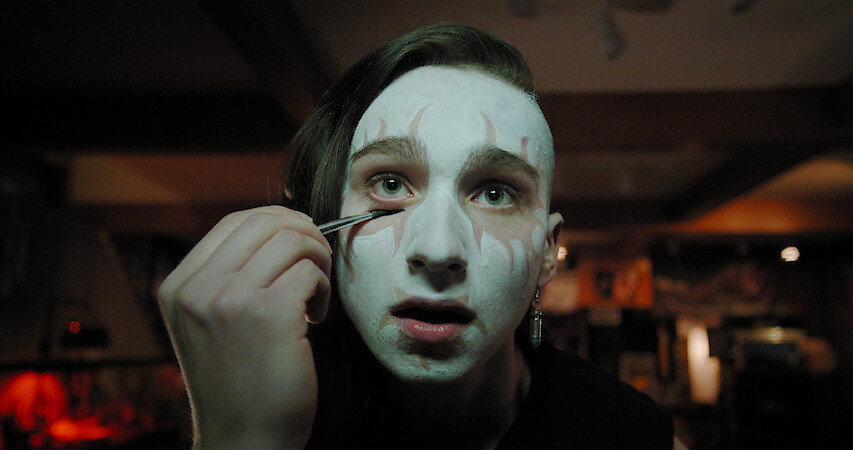
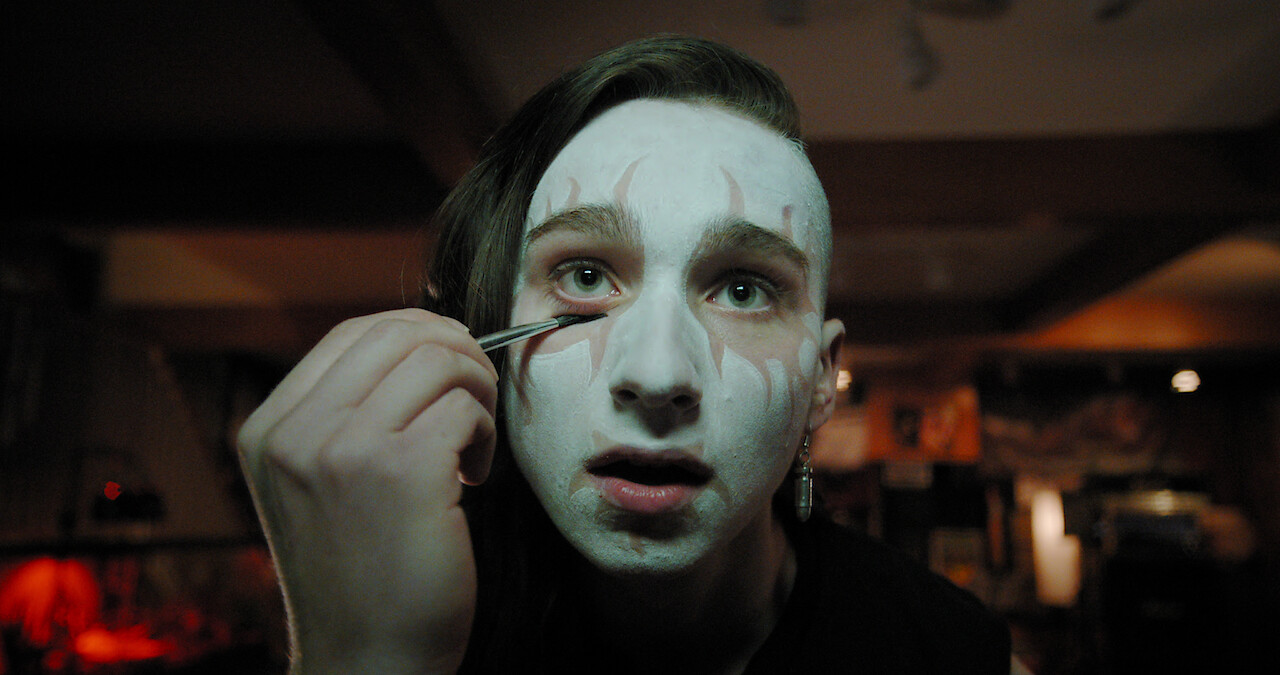
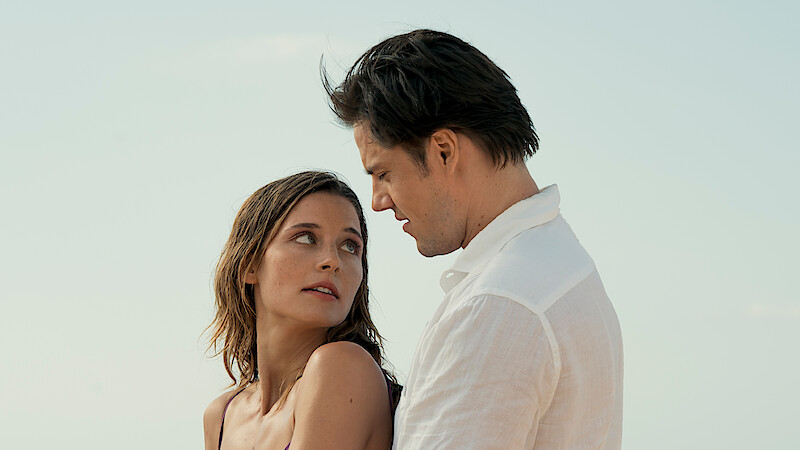
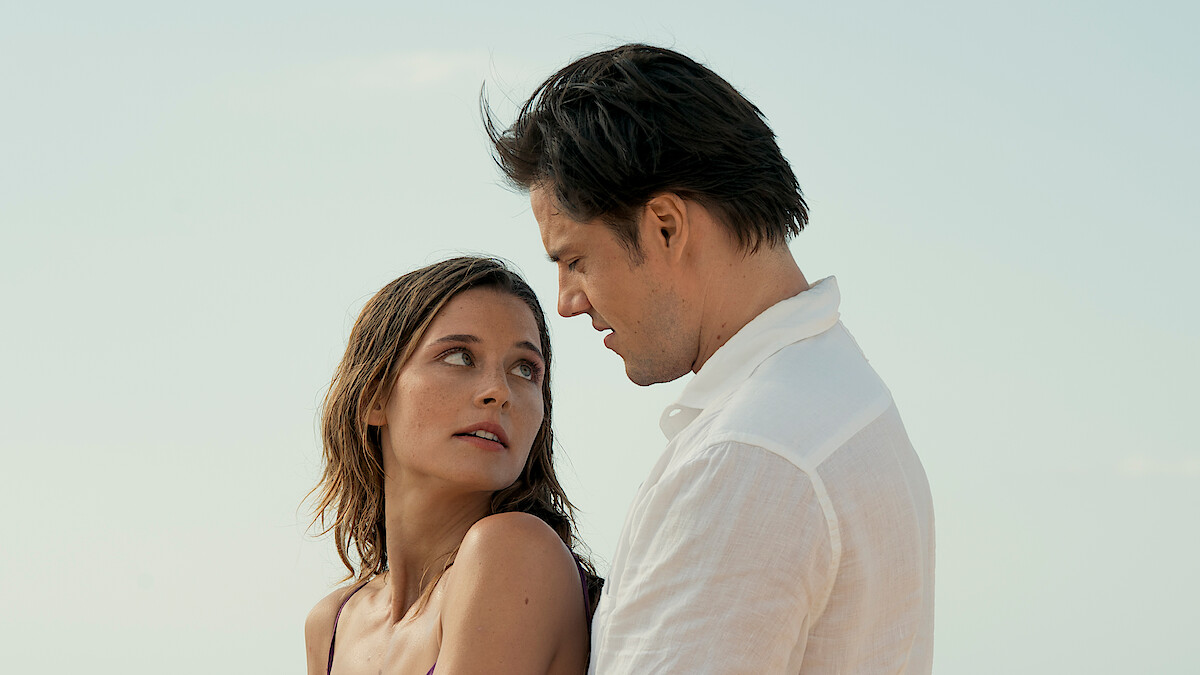
Metal Lords isn’t an ordinary coming-of-age comedy. When was the last time you saw a high school movie with copious references to Metallica, Judas Priest and Iron Maiden? The film follows two best friends, Hunter (Adrian Greensmith) and Kevin (Jaeden Martell), who are otherwise loners because of their all-encompassing love for heavy metal. Generally ignored or at most tolerated by their peers who prefer Ed Sheeran to Ozzy Osbourne, Hunter and Kevin try to win respect by entering the Battle of the Bands. When Kevin recruits Emily (Isis Hainsworth), a Scottish classical cellist, to join the band instead of a rock bassist like Hunter wants, their friendship and musical collaboration are tested. It’s a film about growing up, maintaining relationships, the thrill of loving metal and feeling misunderstood for that passion.
Directed by Peter Sollett (Nick and Norah’s Infinite Playlist), Metal Lords is the brainchild of writer D.B. Weiss, who wrote the original script in the early 2000s well before his tenure as co-showrunner and co–lead writer on HBO’s Game of Thrones. Weiss, a longtime metalhead from Highland Park, Illinois, grew up obsessed with ’70s horror films like The Omen, playing Dungeons & Dragons with his friends and listening to albums like Black Sabbath’s Master of Reality, Metallica’s Ride the Lightning and Judas Priest’s Screaming for Vengeance. For the film, he enlisted fellow Lake County native Tom Morello, the legendary guitarist for Rage Against the Machine and Audioslave, to serve as executive music producer.
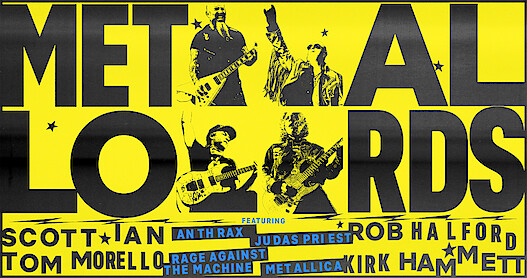
Because of their Chicago-area roots and their palpable chemistry in interviews, you might imagine the two have been lifelong friends. However, they actually met later in life while taking their kids to school in California. “It was metal that we bonded on,” Weiss tells Tudum. “I would wear the band T-shirts and he would wear the T-shirts and there was that ‘eyes across the crowded room’ [dynamic].” As the two got to know each other, they collaborated on special-edition Game of Thrones Fender guitars, and became immersed in a pandemic Dungeons & Dragons campaign with Metal Lords co-star Joe Manganiello, Vince Vaughn and many more. But it’s this film that made their friendship really flourish. While Weiss provided the script, Morello wrote the music for Hunter, Kevin and Emily’s band, including the song “Machinery of Torment,” and Morello even makes a cameo alongside metal legends like Kirk Hammett, Scott Ian and Rob Halford.
Here, the two discuss their friendship, how metal can unite people from disparate backgrounds, and how to teach actors who couldn’t tell the difference between Iron Maiden and AC/DC how to become metal lords.

(L-R) Scott Ian, D.B. Weiss, Kirk Hammett and Tom Morello.
Katrina Marcinowski/Netflix
As you two got to know each other, what made you decide to collaborate on this film?
D.B. Weiss: This is a film that has been kind of brewing in me for a long time. And finally, once we came over to Netflix, the opportunity presented itself. Greg Shapiro, our fellow producer, was very excited about it. But at this point, Tom and I knew each other well, so I asked Tom if he would do us the honor of guiding the music and the spirit of this film as somebody who knows more about it in his bones than anybody I know on earth. He was good enough to agree, take part in it, be the executive music producer and write the song “Machinery of Torment” for the film.
Tom, how was composing “Machinery of Torment” for the film? Metal is such an eclectic genre; how did you imagine Skullflower sounding in your head?
Tom Morello: I’ve been waiting and waiting to do something like this because that’s the music that made me first pick up a guitar. Metal is the kind of music that I tried to play first, and 20 or 30 of my first shows were metal shows at Alpine Valley or the Rosemont Horizon or the Aragon. Over the course of 22 records in my career, I’ve done a lot of splicing metal with rap and splicing metal with alternative and splicing metal with EDM. But to be able to kind of go back to being heavy metal patient zero and remember why I liked music to begin with was so great. It was with riffs like this and an aggression like this and beats like this that made me feel like that in the first place. When Dan said to me that the song’s going to be called “Machinery of Torment,” you’ve never seen me run to my studio so fast to begin cranking out the riffs for that one.
Dan, I wanted to ask you about the earlier script. In a Billboard interview, you said the initial ideas were much different than what ended up at Netflix. Can you divulge what those differences were?
Weiss: It’s funny. Things change bit by bit over time. I don’t remember all the details from when the script was written. Initially, the world was a very different world. The world of being a teenager was very different. And obviously the script needed to be updated somewhat to not feel like a period piece. It’s one of the happy accidents of waiting to do this film is that, 15 years later, I can sort of believe that the kid who’s a hardcore heavy metal kid in the high school is the only hardcore heavy metal kid in the high school. That may have been a bit of a stretch 15 years ago, but I don’t think it is now. I could see it being the case now, especially in some suburb like the one I grew up in.
I’m 30. I was in high school in the aughts, and I was basically the kid who was the only one really into heavy music. So who would you say is the ideal audience for the film — the kid picking up the guitar and feeling misunderstood for liking heavy music or the popular kids who don’t understand why someone would like metal?
Morello: To me, it feels a little bit like Fast Times at Ridgemont High with metal. It’s about a community sort of finding belonging, and in this case, the conduit is heavy metal. But the relationships and the adversity between some of our heroes and the community they’re in — it feels like it’s more universal to me.
Weiss: It’s a bit of a tightrope walk. You definitely want the movie to be true to the people it’s about. And you also want the movie to make sense to people who aren’t from that world and to serve as kind of a door into the kinds of people that they haven’t given much thought about. Hopefully it gives some understanding into how that person over there looks weird and standoffish and what might be going on with them in their lives that I could connect to. Ideally, people who come from the other side of those tracks could watch the movie and then start to see a bit of themselves and their own experience in the experiences of these people who, on the surface, seem very different from them.
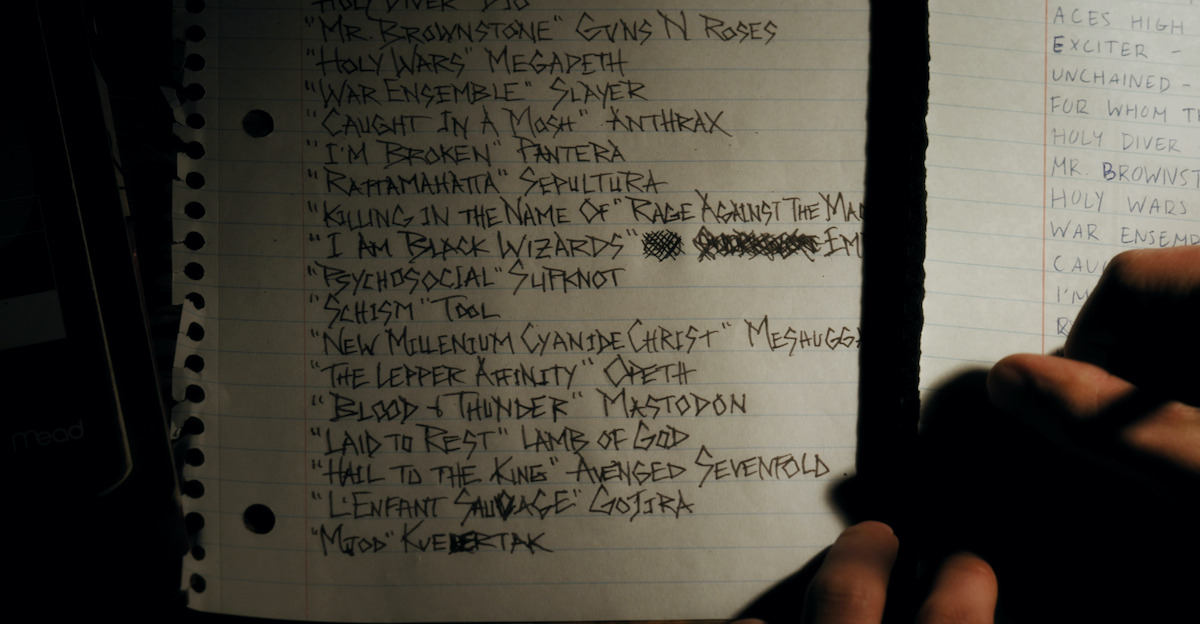
One of my favorite things about the film is the scene where Hunter gives Kevin homework and it’s just this kick-ass playlist. It went with some deeper cuts, which was cool since metal fans can be pretty contentious about canon. One, congrats on finding a more precious fanbase than Game of Thrones obsessives, and two, how was creating that playlist?
Weiss: I just kind of tried to channel who this kid would be today. He didn’t grow up in any of these subcultures when they were being created, because he’s a kid now. He’s not a kid 25 years ago. So he has access to the whole range of the genre from beginning to the present day. I wanted to come up with a list of what would seem canonical to this kid. I did my best and made some guesses, and it had to fit on one page. I like [that] there were some selective misspellings [in some of the song titles] that Joe Rynearson from the props department introduced to the list for realism.
How familiar were the actors with metal as you started working with them?
Weiss: It would be zero across the board. They’re all music people, into a lot of different kinds of music, and Adrian is an accomplished jazz guitar player, but none of them were familiar with this music until they started the process. Tom was their Chief Metal Counselor.
Morello: They were not metalheads, but it was very important for all of them to play the music correctly. They really did a great job as actors learning how to make it look exactly like they’re playing the songs. When they were doing sort of the penultimate scene, I thought, “Well, they need to forget all of that. We need to throw all that out the window.” They were putting all their fingers in the right place and doing the work, but I’ve made like 114 different videos, and my fingers were never in the right place. You have to be inhabited by the holy spirit of heavy metal, and you have to go ape from beginning to end. When you think you’re doing it enough, you’re nowhere near doing it right. You have to go much further.
Weiss: After a take, the kids were like, “How was that?” And I said, “Tom, what do you think?” So, he sent a picture of James Hetfield screaming, a picture of a jaguar roaring and a picture of a guy who looked like he just smashed a beer bottle over his head. He replied, “It should feel like that.” At one point, he sent Jaeden a text about how hard you had to hit the drums. I’m paraphrasing it, but it was, “hitting the drums so hard that it hurts and hitting the drums so hard that you’re happy how much it hurts.” It was this perfect encapsulation of how you need to play the drums to actually feel like a metal drummer. If you feel like a metal drummer, you’re going to look like a metal drummer.
Hunter had all of this incredibly expensive and amazing gear, and he was still the most angsty character by far. Why did you guys decide to go that route instead of giving all these kids Squires and Line 6 amps?
Weiss: There’s a kind of economics of the situation. Obviously Kevin’s dad is not present ’cause he works two jobs, and they’ve got one crappy car that Kevin can only use if he takes his little brother to his swimming lesson. Hunter, his friend, is from the other side of that world and lives in that amazing house. I didn’t want to make the whole movie about that, but it was a very conscious choice to make them kind of from the opposite sides of the world and brought together in this way, through their friendship and through this music. In that movie Y Tu Mamá También, I thought it accomplished that better than any movie ever made, where these two kids are best friends and one of them has a lot and one of them has very little. It’s there — it informs their relationship, and the whole of everything about who they are makes sense in light of that. The movie is not a cultural commentary on class. It’s something that goes into making people who they are, which is honest and true. I wanted there to be a mix there. I didn’t want it to seem like this music only speaks to one kind of person, ’cause I don’t think that’s the case. Lots of people come to it from all over the map for different reasons, with people they wouldn’t have come together with otherwise.
Metal does bring people together in surprising ways. In fact, the last person I interviewed, Bubba Wallace — the only Black NASCAR driver in the Cup Series — is a huge metalhead. We talked about music the whole time instead of racing. Who has been the most surprising metalhead you’ve come across?
Morello: That is a great question. There are a lot of athletes who are metalheads who’ll surprise you. The one who is still surprising to me is my mom, Mary Morello. Her uncle Carlo Morello played violin in the Chicago Symphony Orchestra for 40 years, so there was classical music around the house, but my mom was not sort of a big music person. When I began bringing home nonstop metal, the only band that she wouldn’t let me play in the car was AC/DC. I could be playing “Number of the Beast” by Iron Maiden, and she was totally down with it all. She’s 98 years old now and still comments on the metal that’s played in my studios in her basement. But with AC/DC, she was like, “It’s screechy!” Other than her not liking Brian Johnson, she’s surprised me with her continued decades of support and love of metal.
This interview has been edited and condensed for clarity.