Guide
The ‘Trust No One’ Guide to Cryptocurrency Lingo
Now you’ll know the secret word.
By Peter A. Berry
April 1, 2022
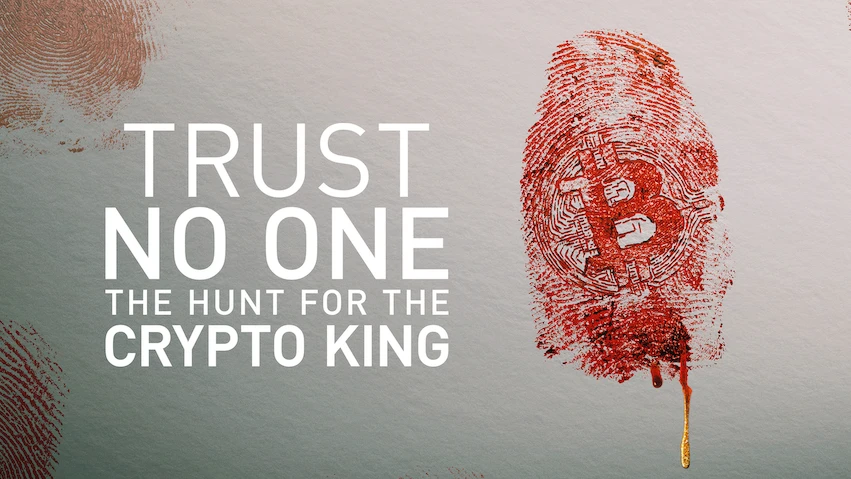
Cryptocurrency is a hot topic. It’s the subject of news, memes and now a Netflix documentary. Trust No One: The Hunt for the Crypto King explores the death of crypto superstar Gerald “Gerry” Cotten and the investors who struggle to recover the money they invested in his QuadrigaCX coin.
Filled with mystery and suspense, Trust No One is a gripping watch. It’s also filled with hyper-niche crypto jargon and a labyrinth of financial concepts that will leave you scratching your head. So with that in mind, here’s a quick starter’s guide for the most important cryptocurrency terms.
cryptocurrency: Cryptocurrency is a digital currency that exists only in the virtual world. What differentiates it from physical currency is the fact that it’s not regulated by any central authority, as it uses cryptography to help prevent fraud instead.
Bitcoin: Launched as the world’s first cryptocurrency all the way back in 2009, Bitcoin is a crypto OG. It’s also the most valuable coin around.
token: A token is a single unit of digital currency.
Ethereum: Co-founded by Gavin Wood and Vitalik Buterin (among others), Ethereum is the second-biggest cryptocurrency in the world.
block: A block is a record of cryptocurrency transactions. As the transactions pile up, they stack upon each other to form a thing called — you guessed it — “the blockchain.”
blockchain: A blockchain is a digital ledger made up of all the various aforementioned blocks of crypto transactions.
altcoin: An altcoin is any crypto coin that isn’t Bitcoin, the first-ever cryptocurrency.
QuadrigaCX: QuadrigaCX was at the center of the Gerald “Gerry” Cotten mystery. Founded by Cotten in 2013, the cryptocurrency exchange had become the largest in Canada before his death of Crohn’s disease in 2018. In 2019, the exchange ceased operations and filed for bankruptcy. At the time, there were more than $215 million in liabilities that were owed to legions of customers, and some of those customers belonged to The Committee, a group of investors-turned-investigators in search of their missing money in Trust No One.
cold wallet: In a treacherous world where cyber-thieves roam the web like pirates, some crypto users opt to store their digital currency off the internet. When they want to do so, a cold wallet is often their storage option of choice. The cold wallet is a physical item not unlike a hard drive.
private key: A private key is a set of numbers that allows you — or anyone that has it — to access your cryptocurrency. As with any other valuable passwords, you don’t want to lose track of this one.
operations security (OPSEC): OPSEC is a process for making sure any and all sensitive information in a private operation is kept away from those who would try to take advantage of the data involved. In Trust No One, QCXINT explains that the largely unregulated nature of cryptocurrency makes OPSEC a necessity.
exit scam: An exit scam is when a web vendor stops providing the service or item they previously offered. In the case of Trust No One, members of The Committee suspect that Cotten had conducted an exit scam with their money.
non-fungible tokens (NFTs): If you’ve spent any time on social media, you’ve seen plenty of memes and breaking stories about NFTs. But that doesn’t mean you’re sure, exactly, what they are. Basically, they’re unique units that represent tangible items like pieces of artwork or any other collectibles. They’re typically stored on the Ethereum blockchain.

mining: When you “mine” in cryptocurrency, you solve complicated mathematical equations, and in return, you earn crypto.
proof of work (POW): POW is a complex vetting system designed to help fight off things like spam and other malicious digital stuff. It requires users to solve complicated but manageable math problems. It’s used a lot in mining.
rekt: An intentionally misspelled version of wrecked, this term is used when you’ve taken a significant financial loss.
distributed ledger: Designed to maintain transparency in the crypto world, distributed ledgers are digital databases that are synchronized with other sites. Multiple people can access them, and Bitcoin uses the blockchain as its distributed ledger.
hot wallet: The hot wallet is a cryptocurrency option that allows you to store your crypto in an online software. This doesn’t offer you the full protection that a cold wallet does because it’s online, but at least your cryptocurrency is stored somewhere. If you lose your cold wallet, it might be game over.
initial coin offering (ICO): ICOs are like initial public offerings (IPOs) for cryptocurrency. For ICOs, a company is looking to launch a new coin, app or service.
shill: Shilling is when someone disingenuously promotes a cryptocurrency and inflates its value in order to lure investors.
no-coiner: A no-coiner is a person who doesn’t believe that cryptocurrency will ultimately be successful. These people don’t have any cryptocurrency.
Bitcoin Cash: Founded in August 2017, Bitcoin Cash is a peer-to-peer cash system that originates from Bitcoin itself. It uses smaller blocks to make transactions faster.
fork: Think of a “fork” as a spin-off for a type of cryptocurrency. For instance, Bitcoin Cash is a fork derived from Bitcoin.
decentralized app (dApp): Another slangy crypto term, dApp is short for decentralized app, which is a term that describes an app that uses the blockchain independently.
proof of authority (POA): POA is a system and concept that’s related to proof of work. For this blockchain system, nodes give someone authorization to make a block.
public ledger: Blockchains all have corresponding databases where you can see every transaction that’s gone down. Some are public, some are private.