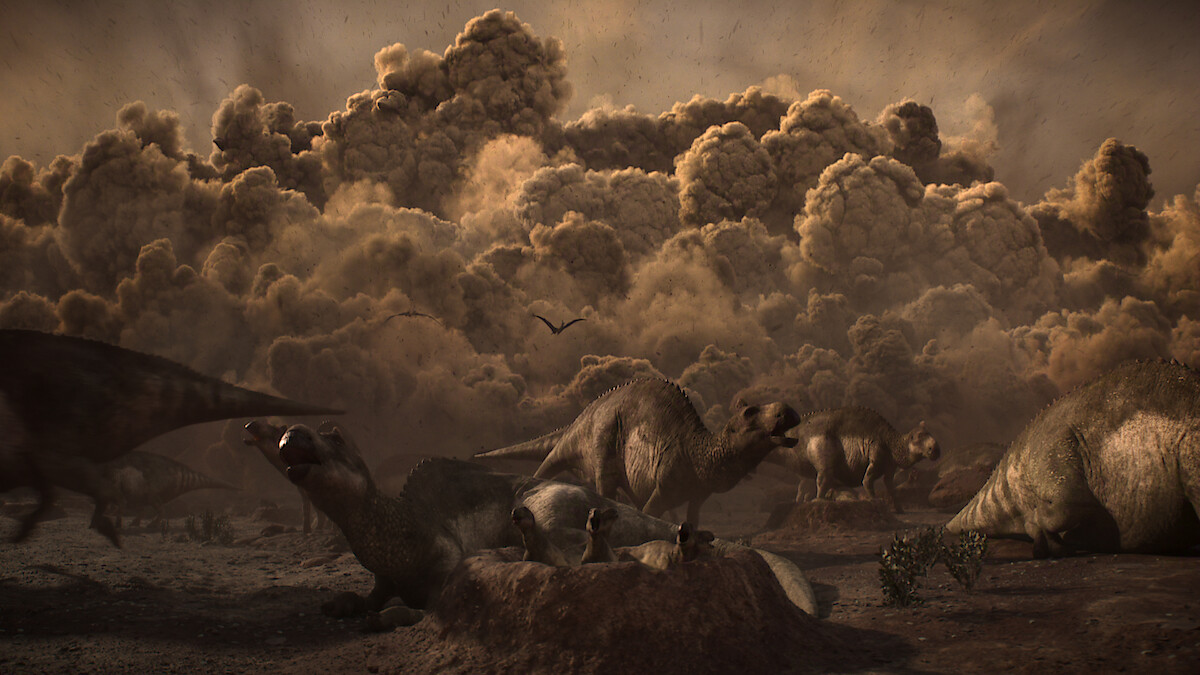
[narrator] In Chapter 4 of The Dinosaurs, two icons of the past go head-to-head. Ankylosaurus versus T. rex. T. rex ultimately takes the crown, but the morning after, we see her dragging her kill through the forest to her waiting hatchlings. A scene which let the team shoot things a little differently.
[Darren] We wanted to see the ankylosaur close-up, getting caught in tree roots, on rocks, through rivers. And that's so difficult to do with visual effects. It's nearly impossible. So to pull it off, we had to build a model. A full life-size prop ankylosaur. And this is how we did it.
[man] Right!
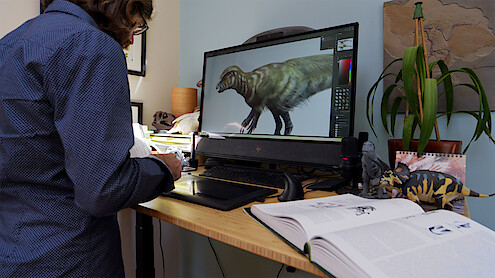
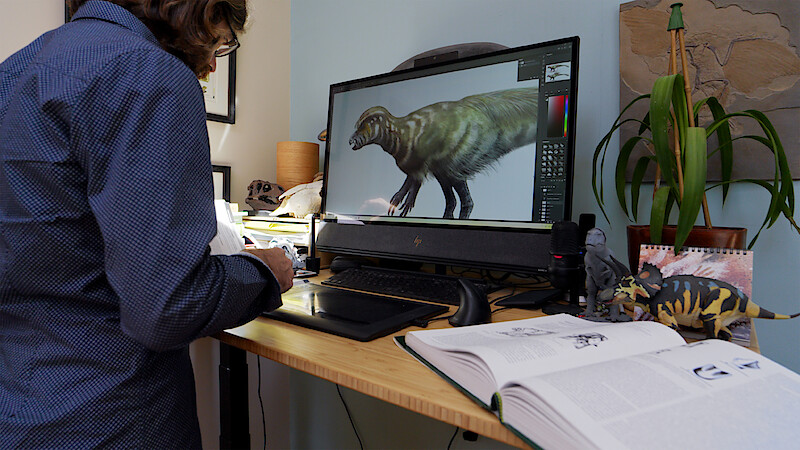
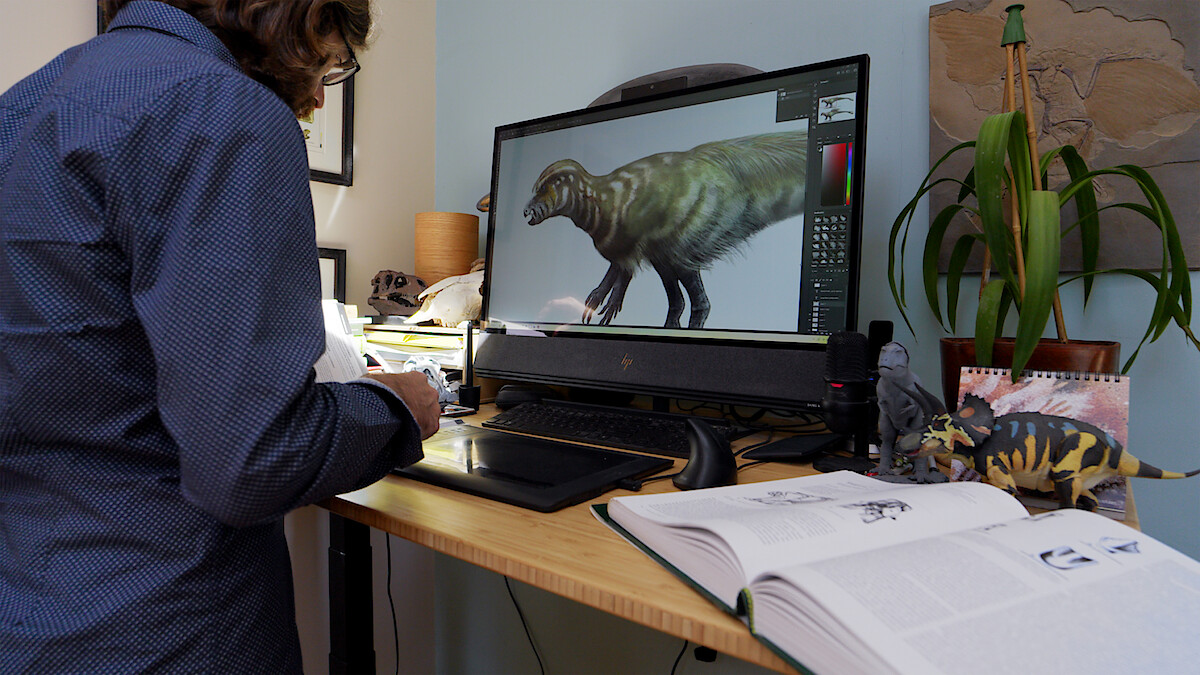
[Darren] So this is a start of what is probably everyone's childhood dream, of the day we get to build an ankylosaur. The man who's gonna bring this creature to life is Matthew here. Hello. The first step in building this prop is to build a VFX one. So the magicians at ILM design their digital asset first, which I then craft into a posed maquette. Once I've got that, I welded up a steel frame. I then did a very rough polystyrene sculpt over the top of that, which was then wrapped in hessian. Then I cover it in slurry and then start to lay the clay on.
[dramatic music playing]
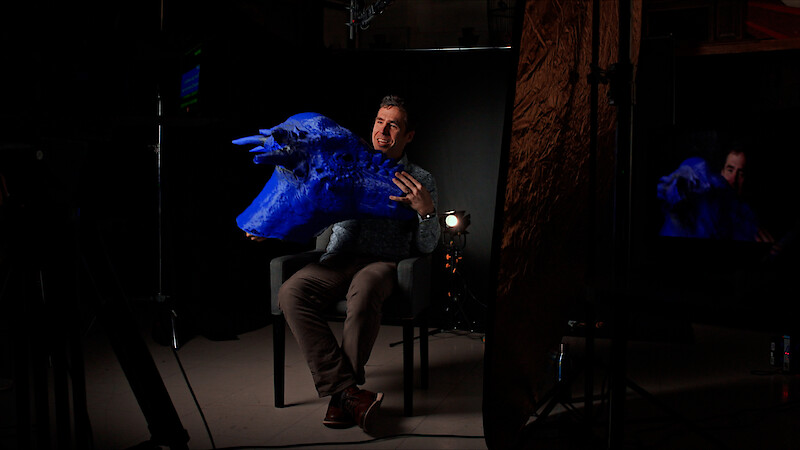
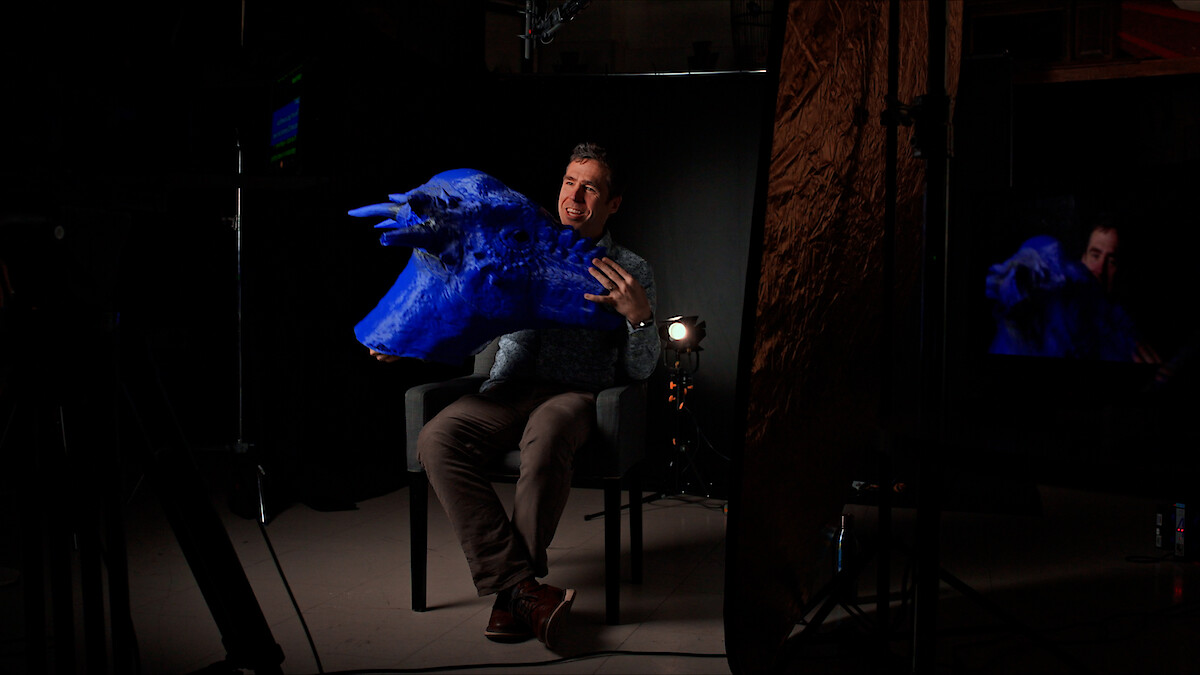
[slapping loudly] I'm gonna keep changing things. Very happy with the wound. All the osteoderms went on nicely. I just needed to get them on to make sure I'd got the scale right, and then I can start to work into them in more detail. No, it's-it's going well. The great irony with this process is that every time you see it, it's a little bit more formed, it's got a little bit more detail. It looks a little more dead, which also brings it to life. But with that, we have to do constant reviewing. The scales, muscles, even the nose. We're doing a nose job on a dinosaur in real time, like this. As the show's resident paleontologist, I'm normally advising ILM on the intricacies of their assets. But to actually see a real physical specimen coming to life was kind of amazing. Someone also has to point out all the errors between the two models and ensure they match. Uh, that guy is me. That's wonderful, all of this. It looks like real flesh. It's absolutely identical.
Brilliant.
[laughing] Yes! Absolutely brilliant. All of the actual scales need to be actually individually drawn round. A real-world model is kind of unbeatable.
[Darren] With the clay sculpt signed off, we had three weeks left before shooting, which didn't give us a great deal of time to do all the casting, the molding, then breaking it out of the mold, setting its new silicone skin free, and to test it was tough enough.
[Matthew] Three, four. That's it. T. rex, let's go. The model was actually a tank, definitely ready to take on a T. rex. All it needed was then the final touches, an amazing paint job to match ILM's model. And just like that, we had a dinosaur that looked the part. The blood rig. When I press this, you can see the blood start to run through the… The arteries.
[indistinct chatter]
[Tom] Oh, it's so good. Oh, and that should have reached the outside there.
That heavy weight there.
That's great. Finally, it was time for rubber to hit the road, and to get the anki in the forest.
[insects chirruping]
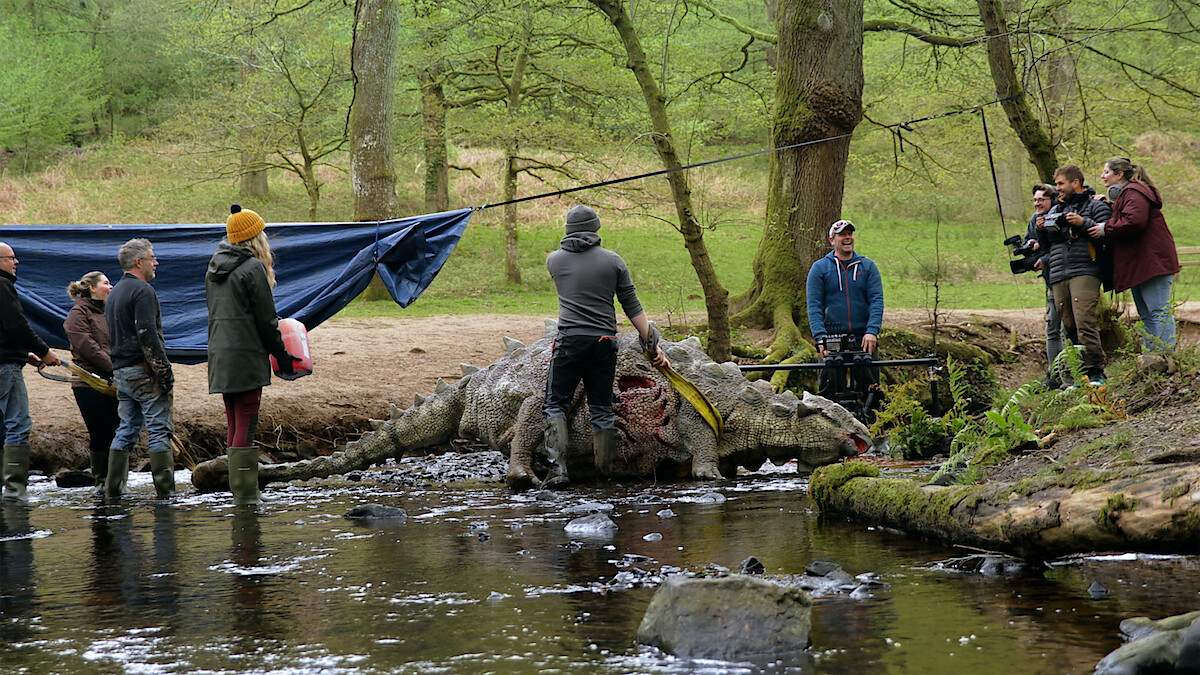
[dramatic music playing] Shooting on location was really a tale of two halves. We captured all of the VFX plates initially, shooting this amazing mossy forest, where later ILM would then add in our visual effects T. rex and ankylosaur. And then our focus could turn to using the model. We're the practical effect. We're the essential glue to make the scene work. To capture the shots where the level of interaction is basically impossible to do any other way. The start of the shoot was a case of quick-fire setups, quick turnaround filming. We had the digger, which helped, and we picked up great shots. The ankylosaur being dropped and dragged through the forest, which gave us a bank of interaction which we'd used in the edit, helping seamlessly stitch together all the CGI wides. With this all in the can, we could finally tackle our most critical part of the sequence. So today, we're gonna get some shots to cut into what we shot in Canada, this amazing waterfall, of the ankylosaur being dragged into the river. So we're gonna hopefully film along it scoots as it hits the riverbed, as it crashes in. Which was as challenging as it sounds.
[man 1] One, two, three, go. One, two, three. One more. One, two, three.
[man 2] Stop, stop, stop, stop.
[man 1] This is insane. This is a lot of work.
[Darren] A little bit enthusiastic with our first attempt, but at least we knew the rig was working. That was, until it got stuck on the riverbed.
[grunting]
[Matthew] We're gonna have to tip it a wee bit.
[man 1] No, we can't.
[man 2] Go free.
[Darren] As we captured more and more takes, we knew we were close, but we hadn't quite got the shot that we needed. And with the light starting to fade, we went for one more shot. It's heave, feet, go. Heave, stop, go. Okay, blood. Boom.
[uplifting music playing]
[Matthew] That should be [bleep] brilliant, that.
[woman laughs] Oh, that is actually brilliant.
[Darren] Oh.
[Matthew] Boy, that's lovely. That is absolutely brilliant. Yeah, I'm very happy. That's the shot that I was thinking about as soon as water was mentioned, that's what I wanted to see, and that nailed it perfectly. We've got VFX versus practical effects. And we've got a sign-off on both, which is great. Oh.
[woman laughing]
[roaring]