


The writer and co-showrunner on staying true to Steinbeck while bringing herself to it.

Screenwriter James Graham on the real story behind Danny Boyle’s Fleet Street saga.
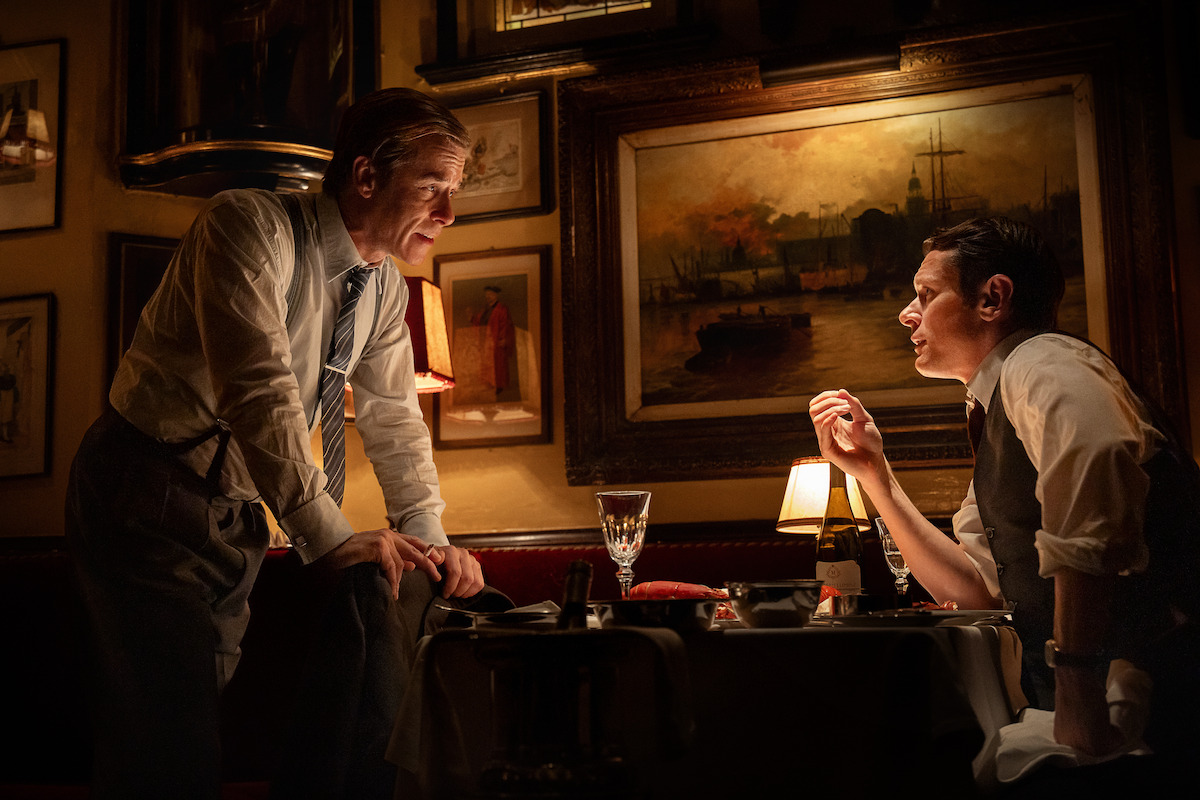
In the first scene of Ink, editor Larry Lamb describes the five W’s that make the perfect news story — who, what, when, where, and why — to businessman Rupert Murdoch over dinner. These are the exact questions that screenwriter James Graham set out to tackle in the drama directed by Academy Award winner Danny Boyle and adapted from Graham’s Laurence Olivier– and Tony Award–winning play of the same name. “We shot in the actual Rules restaurant, which is the actual place where the actual Rupert Murdoch actually sat down and decided he was going to change news forever — over actual lobster,” Graham says.
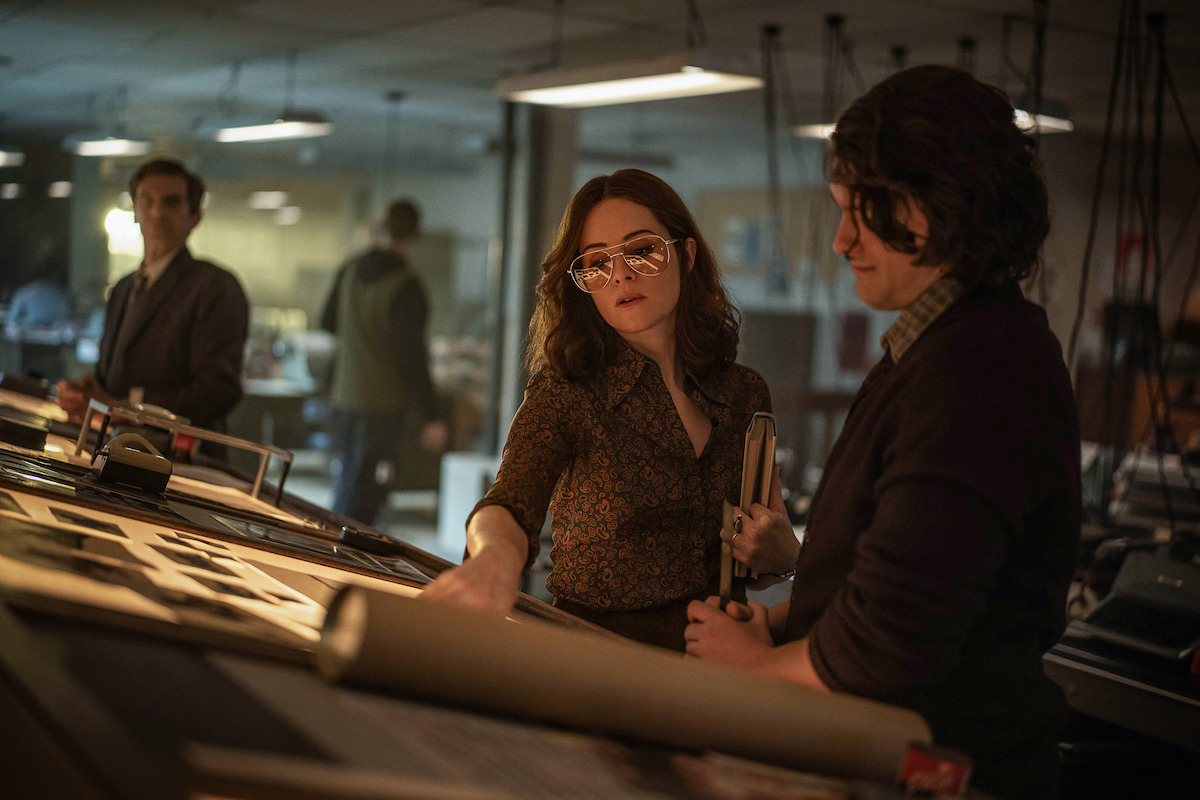
Ink charts the combustible origins of British newspaper The Sun and the mavericks who disrupted convention to build it. It’s the fall of 1969 on Fleet Street, London’s historic newspaper hub, when Yorkshire-born editor Lamb (Jack O’Connell) is approached by Murdoch (Academy Award nominee Guy Pearce). Murdoch reveals his plans to buy fledgling imprint The Sun from current publisher the Daily Mirror and says he’d like Lamb to run it. Lamb’s ambitions (his career at The Mirror has stalled) supersede his reservations (Murdoch’s vision of news is unorthodox), so he accepts the challenge. With a group of editorial renegades at his side, including close confidant Jules Davies (Golden Globe winner Claire Foy), Lamb sprints to create a new product that upends the staid British media’s rules.

For Graham, the story started with its setting. “I’ve done a lot of plays, TV dramas, and films set in the world of our institutions, and there was something about Fleet Street [that] completely seduced me,” the writer says. “Almost no other country in the world has their newspapers entirely in one self-contained community.”
Against that backdrop, Lamb and Murdoch fiercely debate the tension between serving readers broccoli and dessert — that is, giving them news they need to know versus appealing to their baser instincts. “I always quite like the idea of two different ideologies battling. This rivalry between The Sun and The Mirror got incredibly intense — sabotage, betrayal, underhand tactics,” Graham says. “The Mirror represents the old world — news that should educate and enlighten and improve. And The Sun was a more populist, radical, questionable vehicle in its tone and its mood, but it captured something in the British people that was incredible.”
At the center of the upheaval is Lamb, who’s “a gift as a protagonist,” according to Graham. “It’s almost Shakespearean, or I guess you might say Faustian. Here’s someone who really wanted to be on the inside of Fleet Street — he was very talented, [with] working-class origins — and was neglected often by the main papers.” One of those insiders who was unwilling to give Lamb a shot was Mirror chairman Hugh Cudlipp, played by Bertie Carvel in the film. (Carvel originated the role of Murdoch on the West End.) “[Lamb] always felt like he should have been given a chair editing his own paper and wasn’t,” says Graham. “It was Murdoch who took this rejected soul and said, ‘I’ll give you everything that you want.’” That relationship propels the story of Ink. “As a writer, to tell relationships of that scale — complete trust, complete agreement, some sense of betrayal. That’s epic stuff.”
Graham approached the journey from stage to screen with humility and enthusiasm. Luckily, the time between the two productions was an asset. “We did the play eight years ago now, so I did my first batch of research then. But the great thing about doing a play is people come, and you talk to them in the bar afterward, and you get their number,” says Graham. “So when we did the film, we had this really glorious few weeks with Danny [Boyle] and the team, production designers, researchers — meeting all these people from the golden age of Fleet Street.”
Boyle’s collaboration was another crucial element. “I basically needed one of the greatest British directors of all time, his brain, to help me those final few miles into making what I think is going to be a really extraordinary film.” The director was a clear fit for the project, according to the screenwriter. “Danny feels perfect for this because he’s such a director of integrity. He could be off telling all sorts of Hollywood stories, but he has those social, political strands to him. He really wants to understand the world and people,” says Graham. Some of Boyle’s boundary-pushing work includes Trainspotting, the 28 Days Later universe, Slumdog Millionaire, and Steve Jobs. “Ink is [about] a moment in our past that might seem insignificant, but in its kernel is something so significant about our national character — what it changed about the character of the news, how we receive information, the anxieties we all have as a society. What is truth? [Boyle] recognized that.”