Fashion
Why Flowing Fabrics Are Everywhere In 'The Harder They Fall'
These textiles speak volumes — literally.
By Olivia Harrison
Nov. 23, 2021
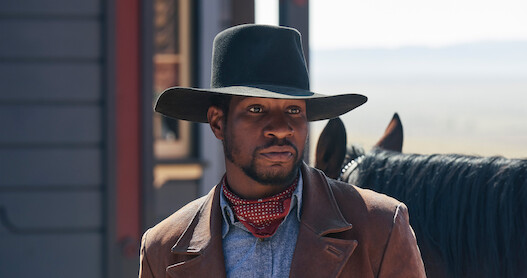
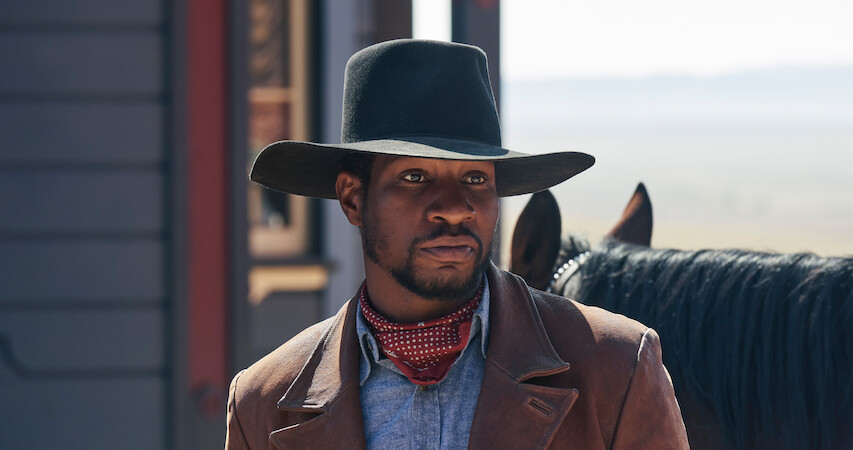
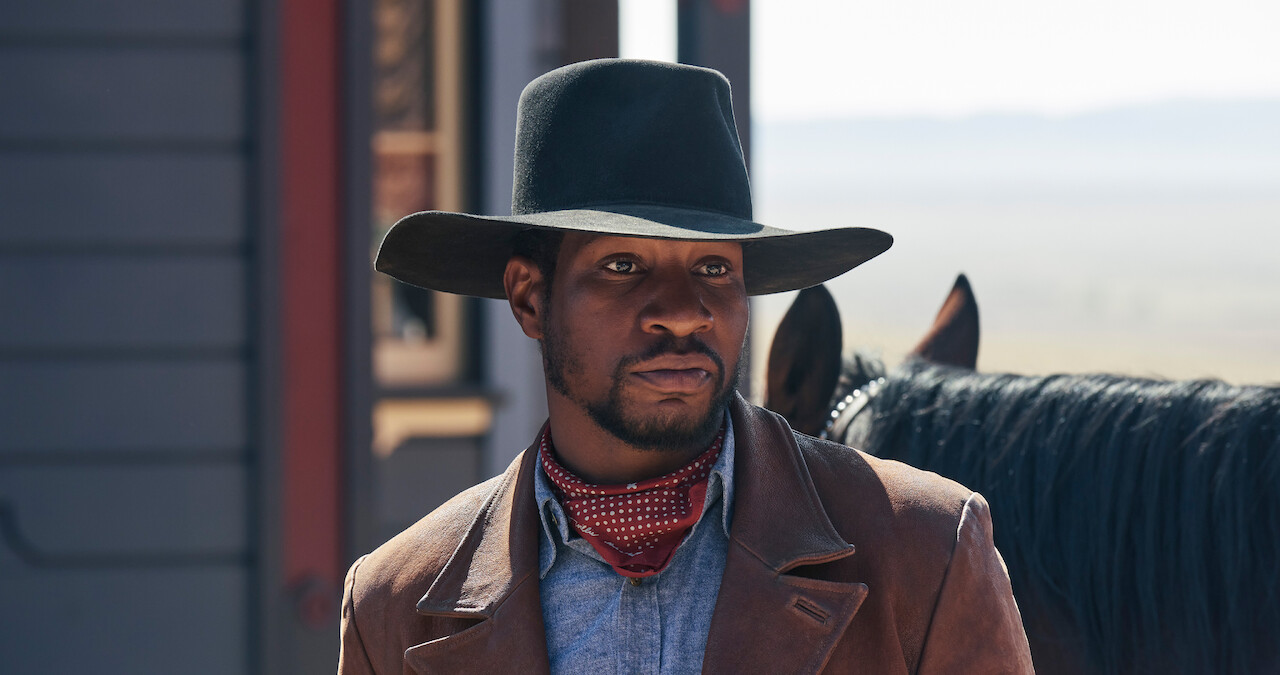
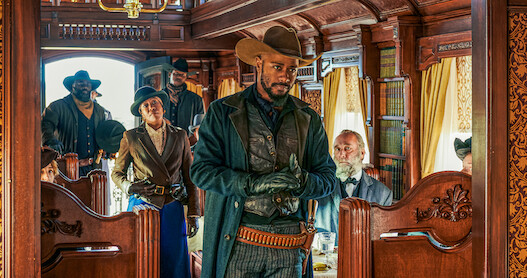
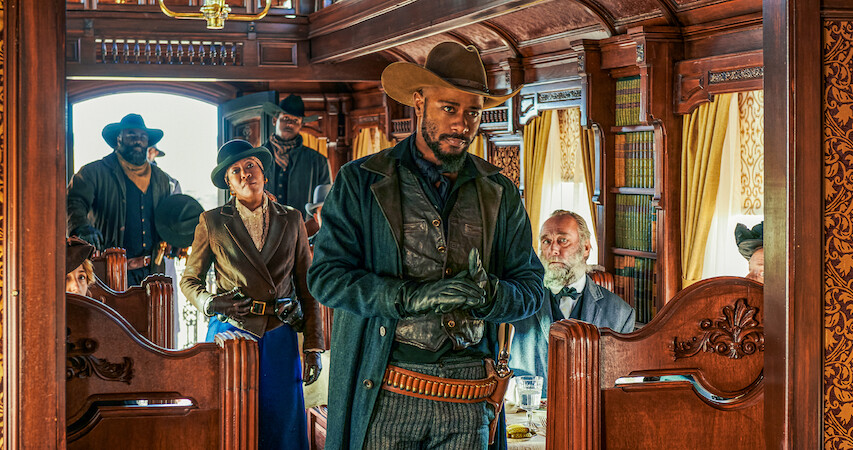
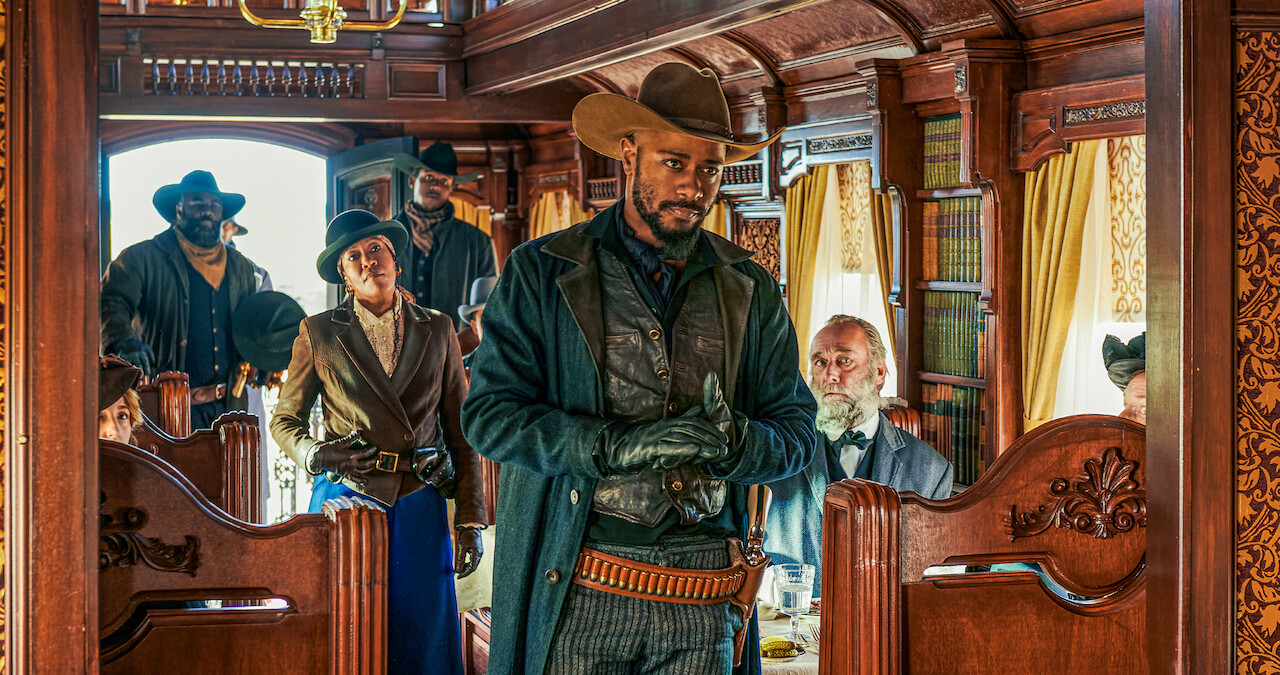
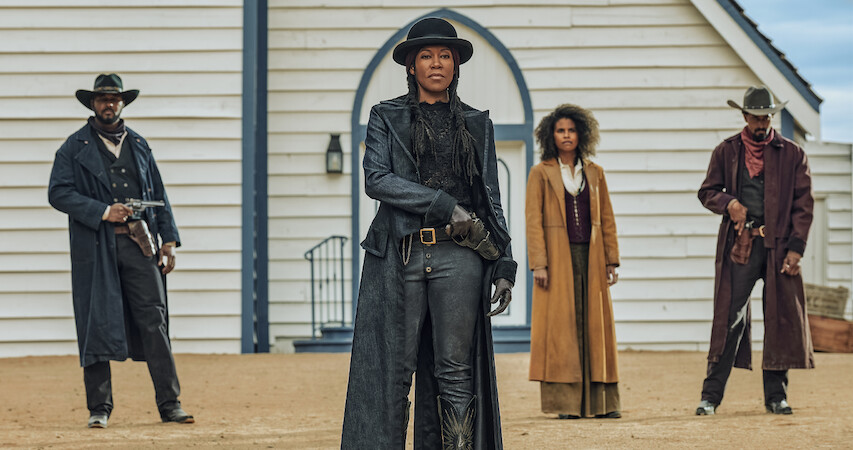
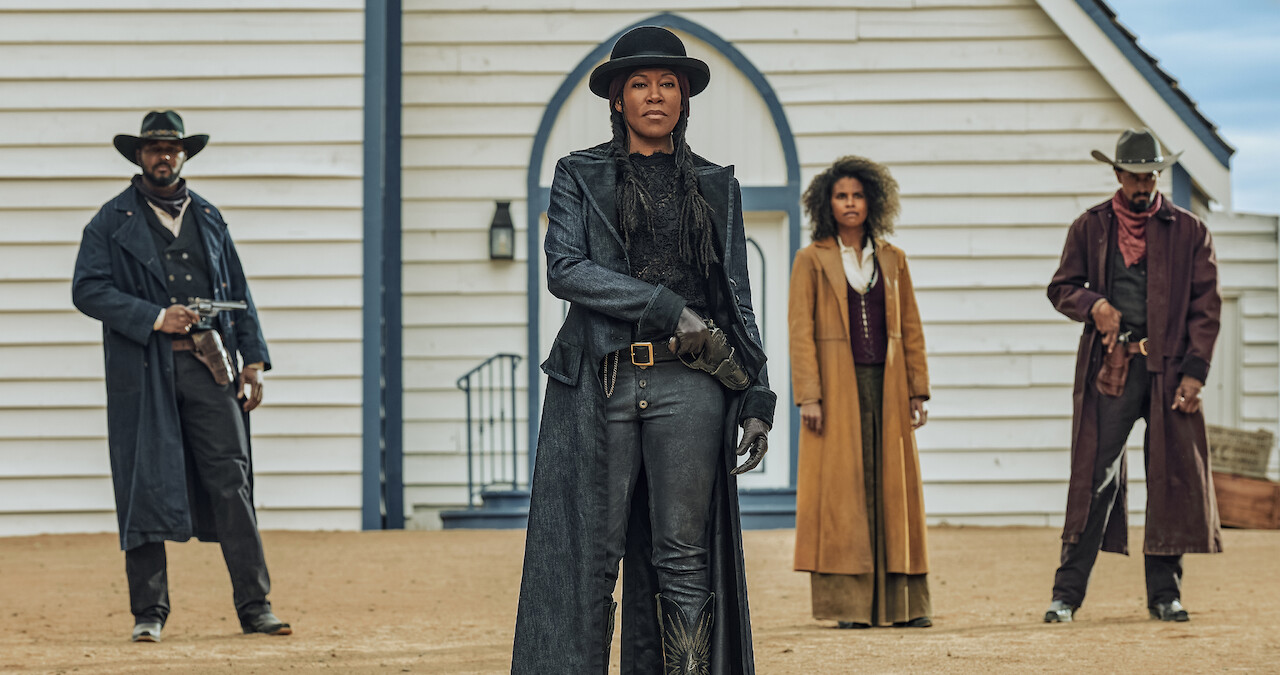
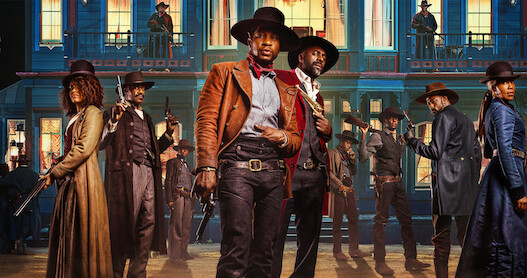
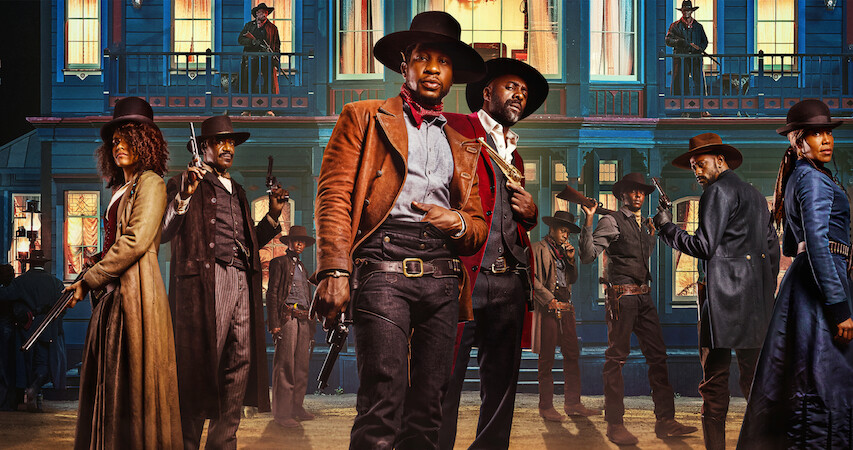
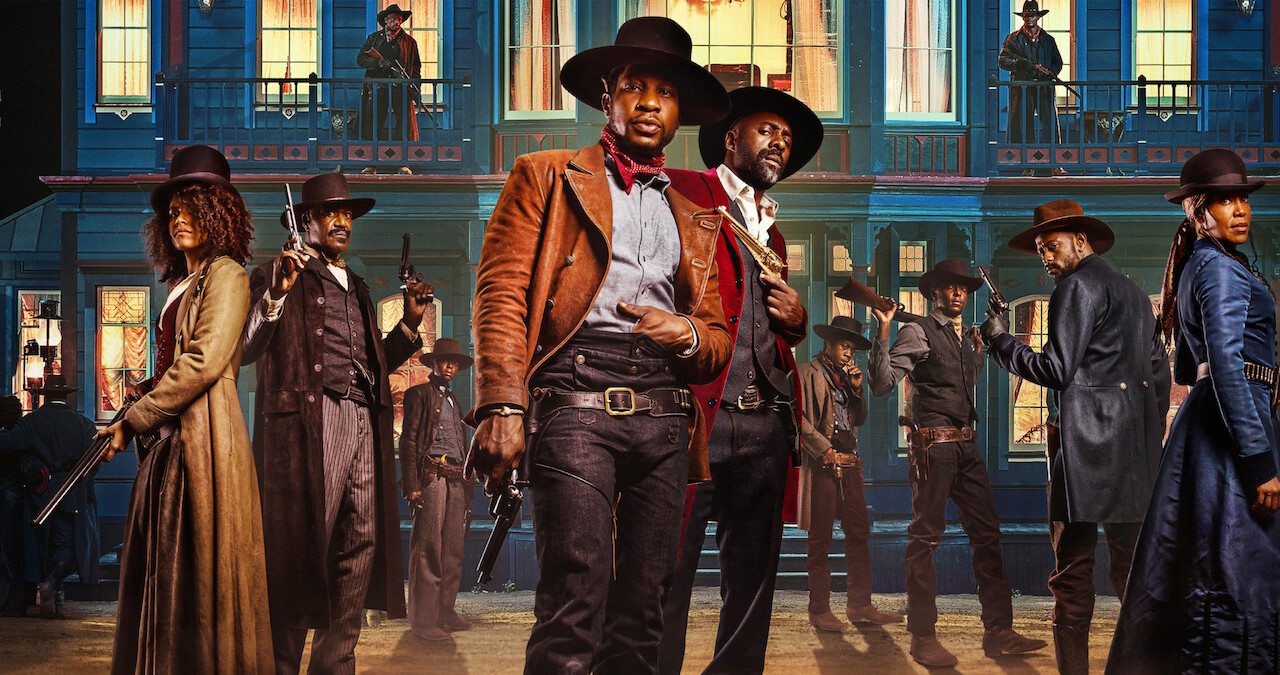
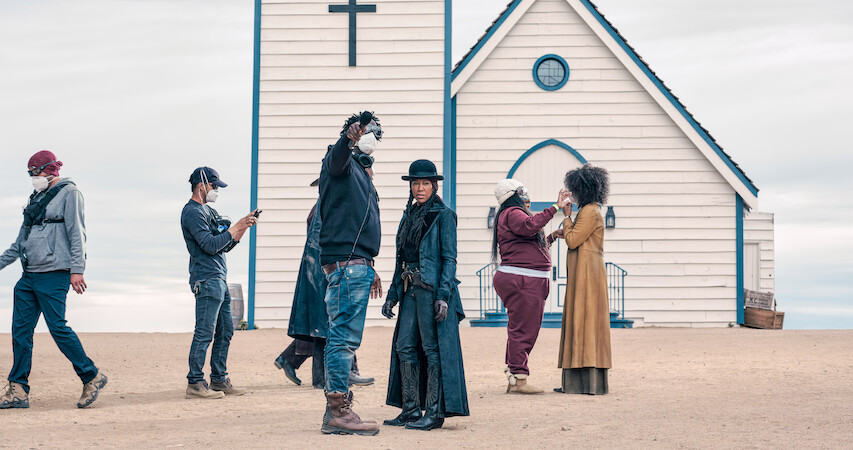
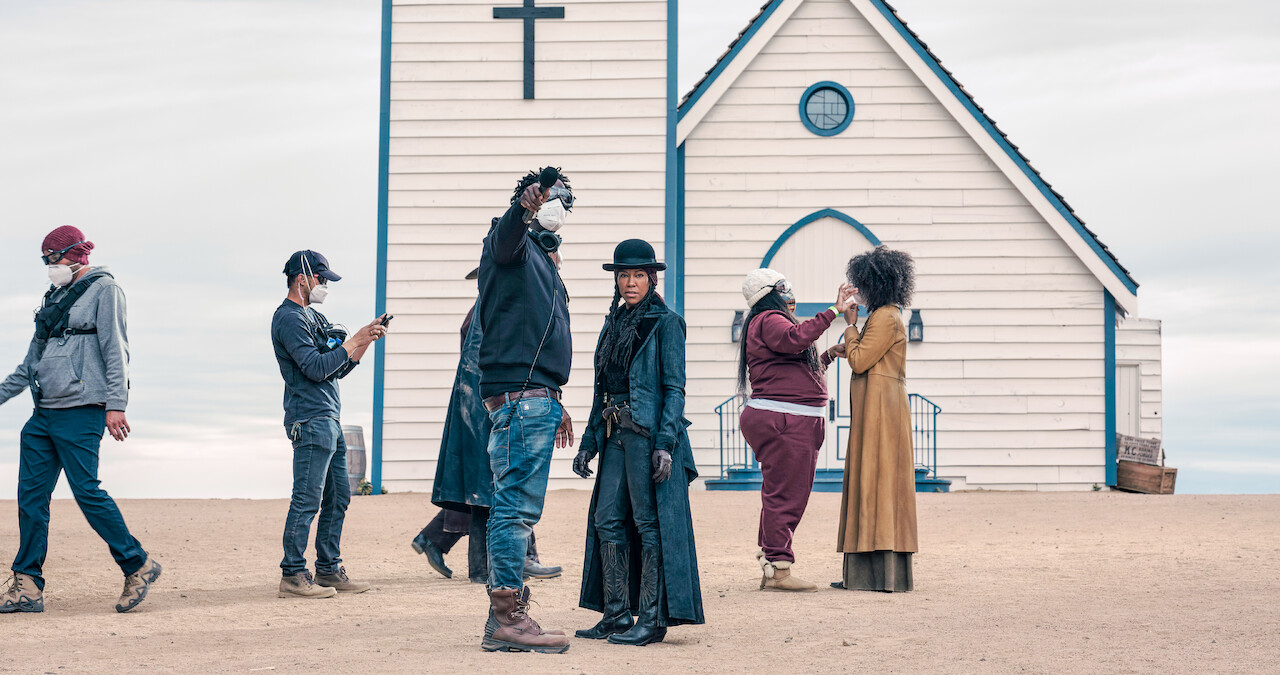
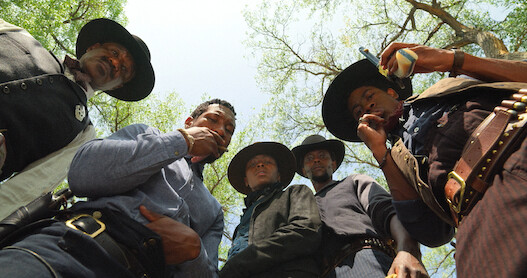
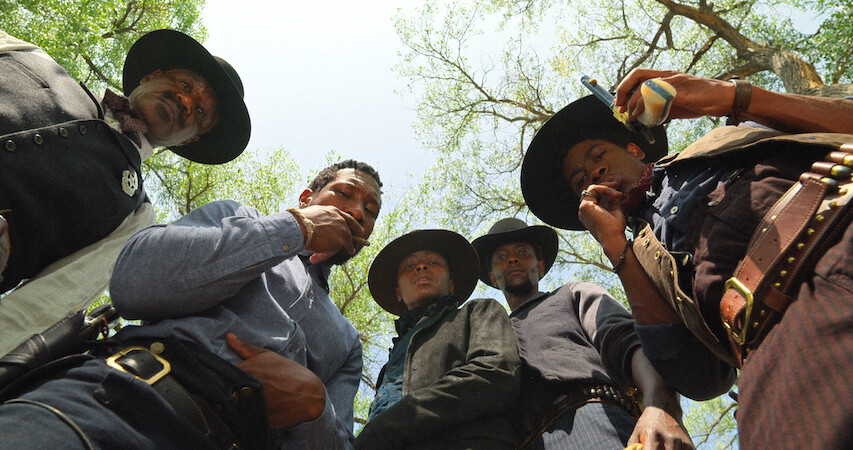
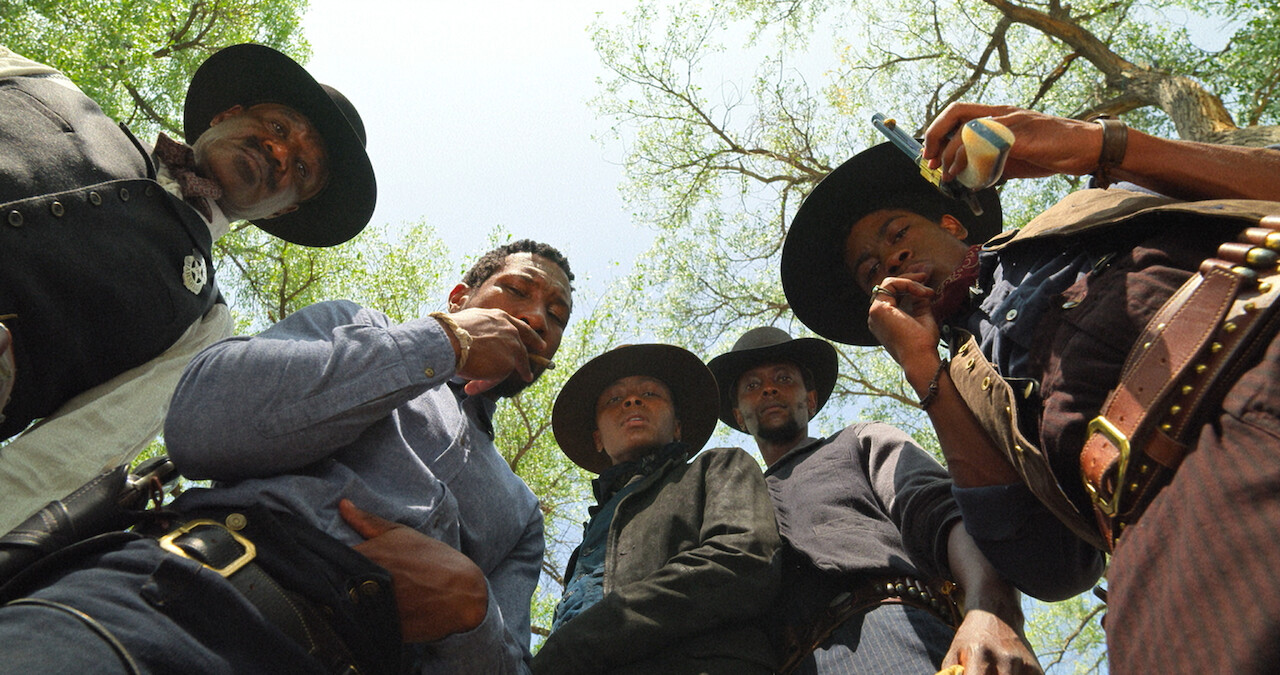
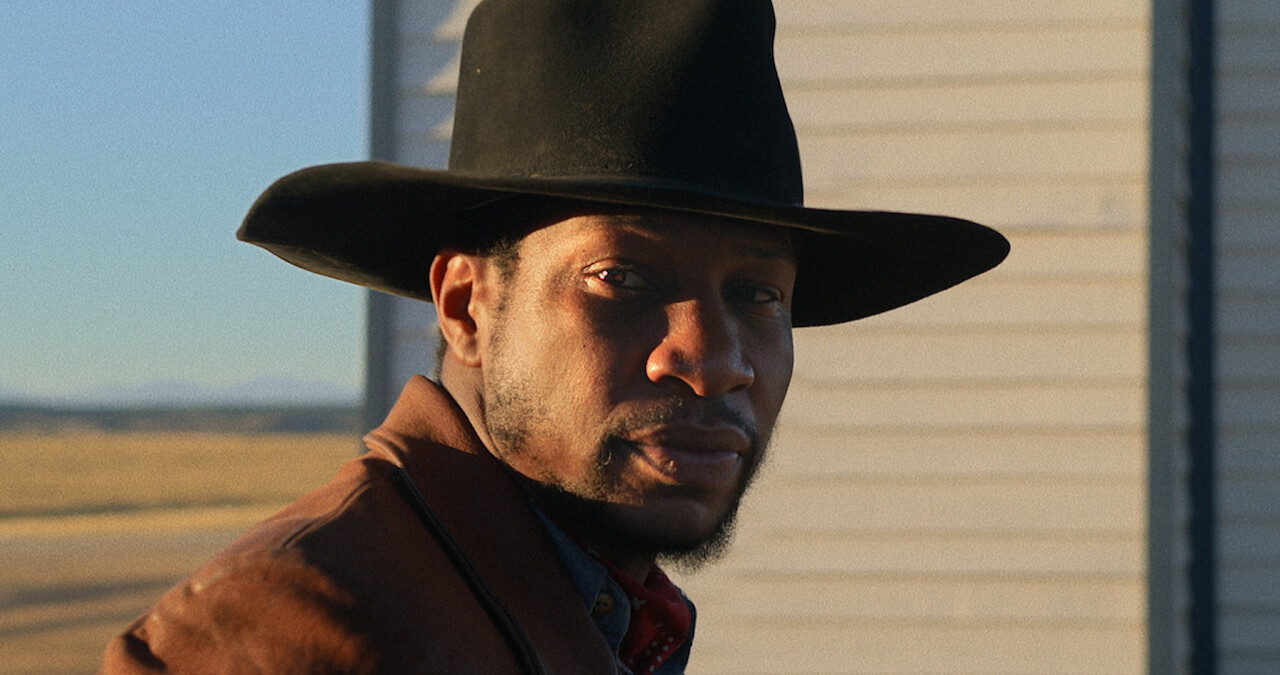
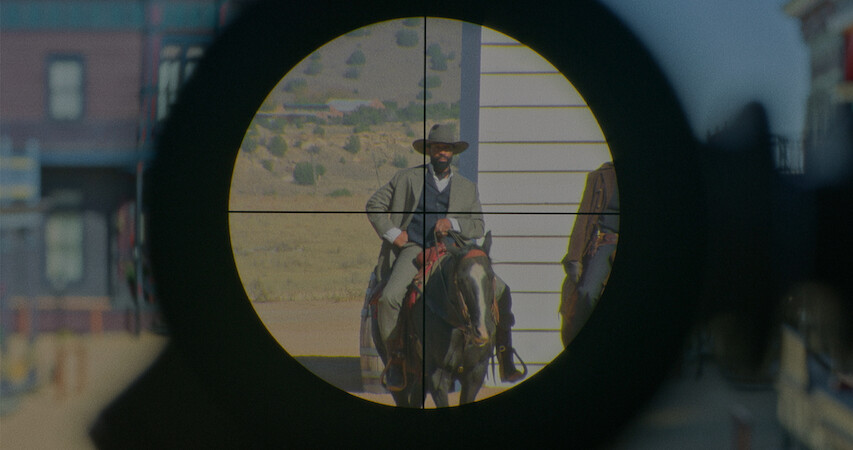
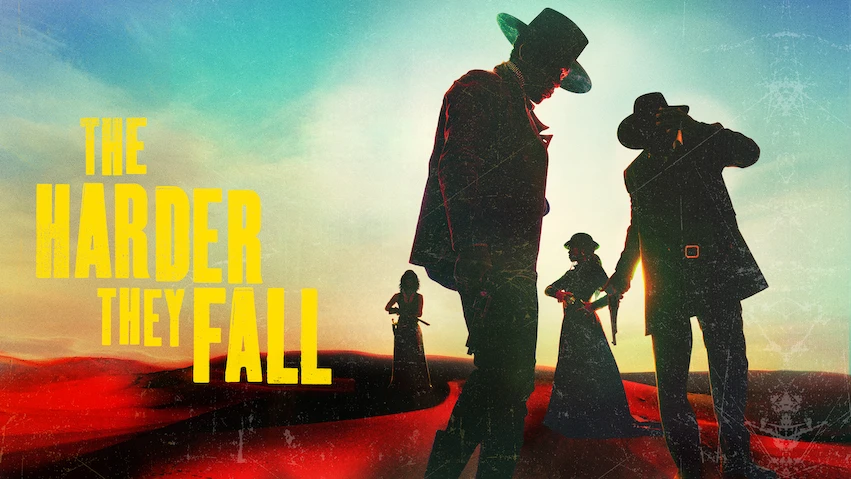
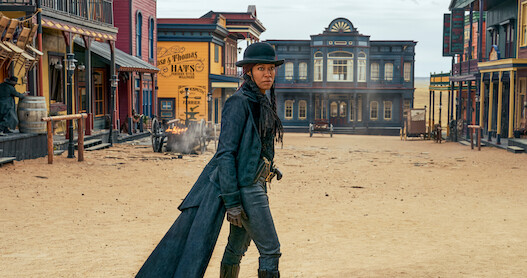
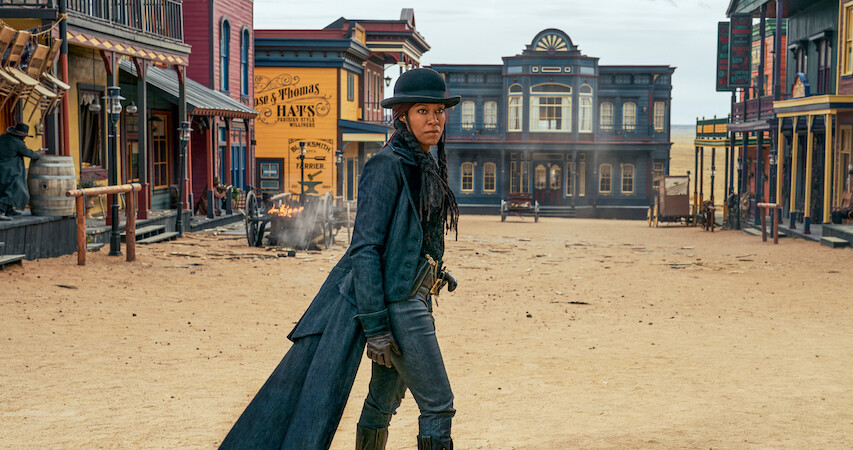
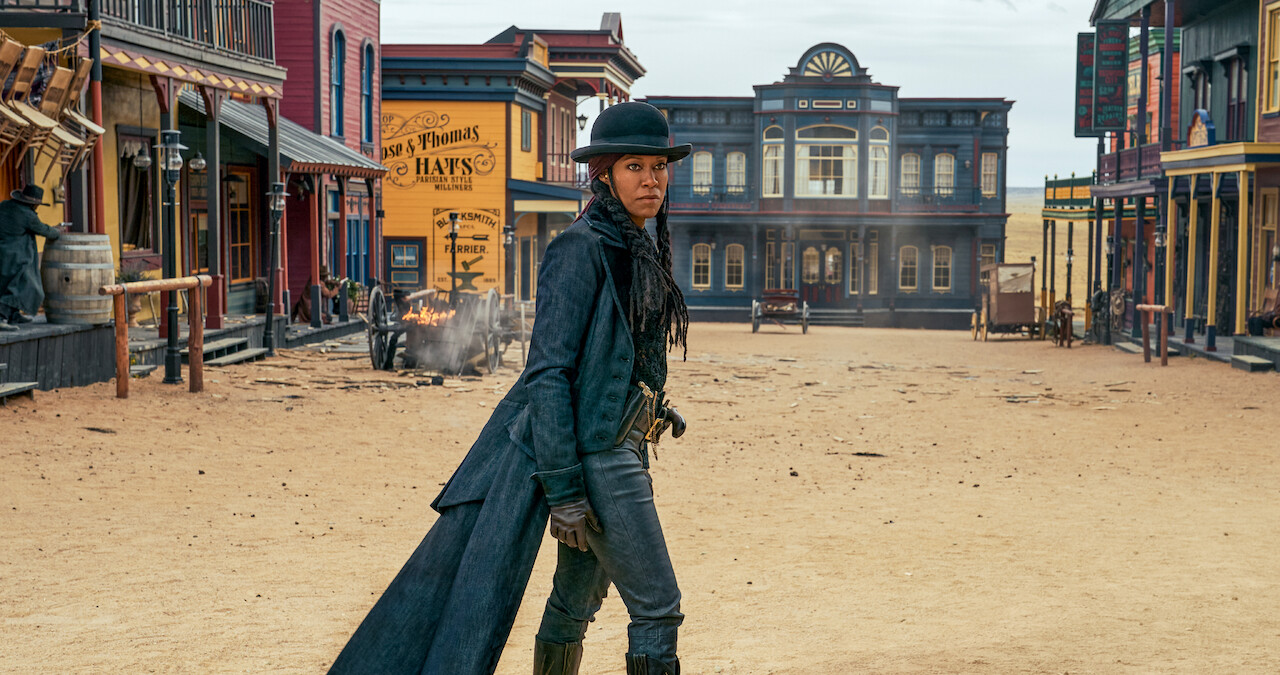
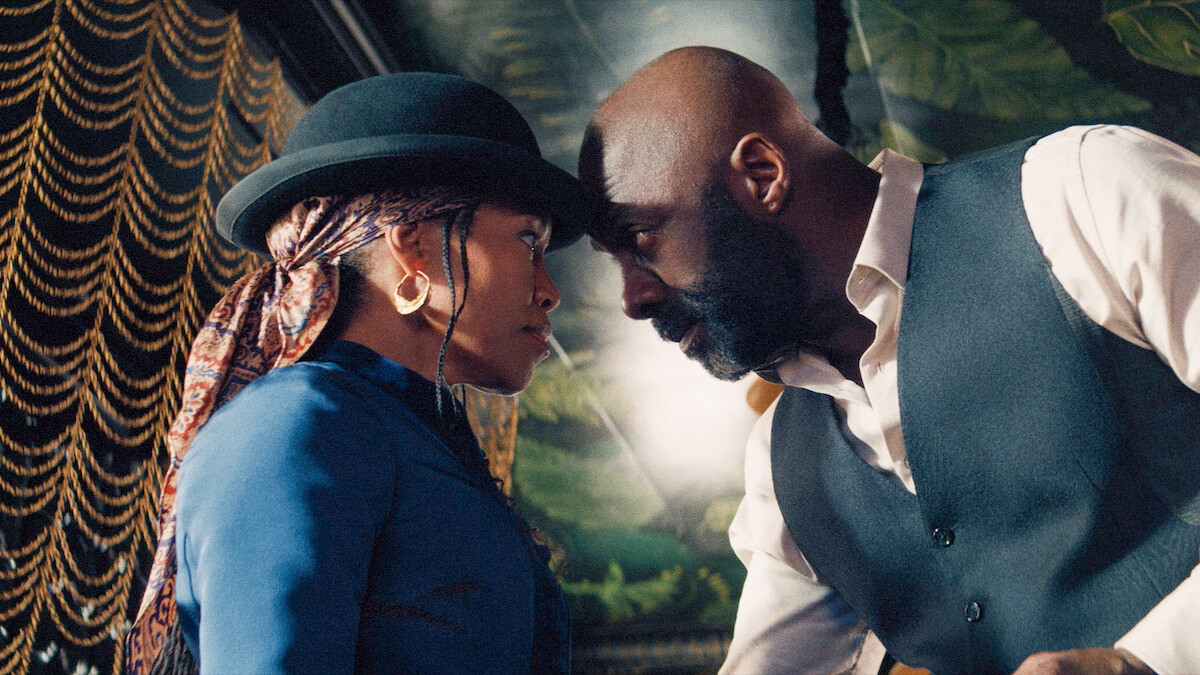
Flowing fabrics stand out in The Harder They Fall, whether it’s the indigo draping wrapped around the shoulders of Stagecoach Mary (Zazie Beetz) shoulders, the printed headscarf tucked under the bowler hat donned by Treacherous Trudy (Regina King) or the long coats worn by nearly all the characters. According to Antoinette Messam, the film’s lead costume designer, these fabrics were intentionally prominent onscreen.
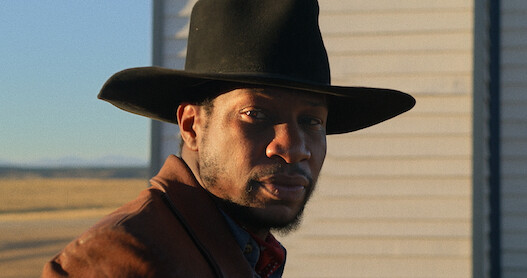
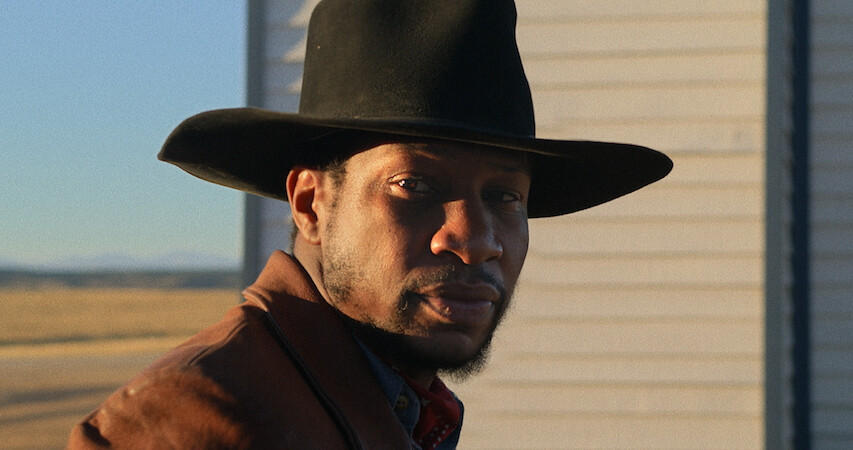
“Our cast had very few costumes so what they [wore] needed to make a statement,” Messam tells Tudum. She made sure that happened by choosing textiles with movement and texture. “The sets were quite colorful and ornate with lots of detail, and I needed to be able to shine within that world with costuming. I did that with velvets and silks and leathers.” The lush and voluminous cloth also served to make characters pop in the New Mexican terrain where many pivotal scenes were filmed. “When they get to the open plains, you really see the indigo fabric billowing in the wind and the richness of the russet leather against that landscape.”
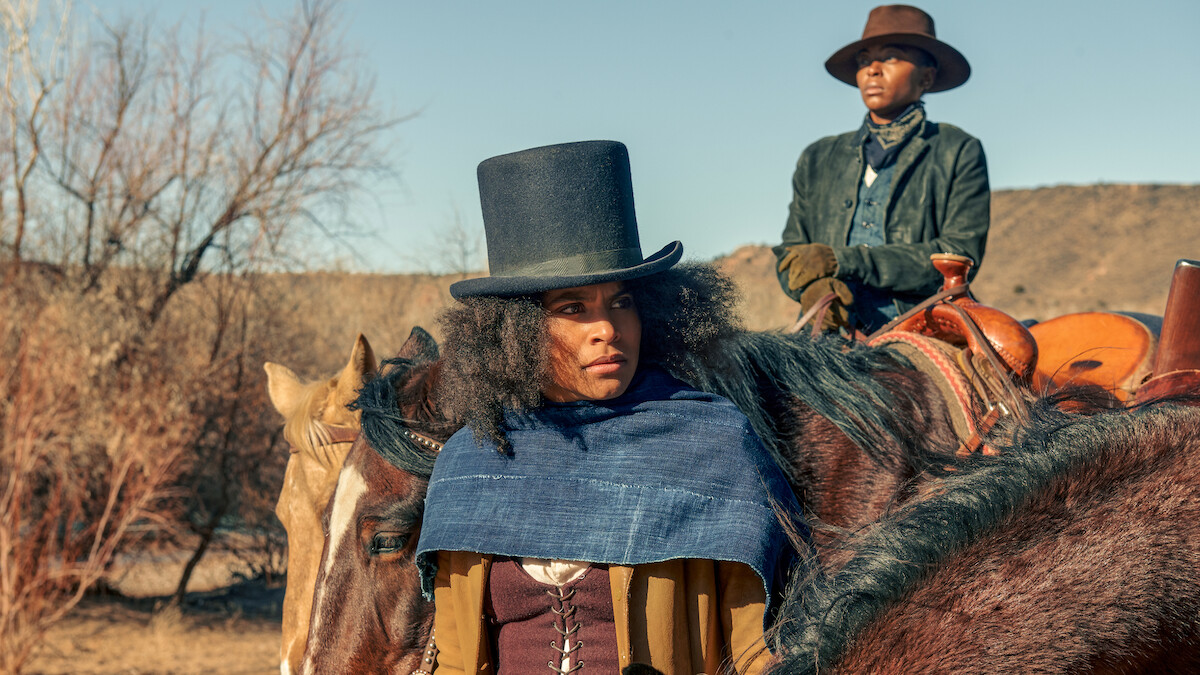
Of course, the costume designer was also concerned with being historically accurate, so she started by researching the importance of abundant fabric during that time period and in that location. Dusters and neckerchiefs served as protective wear against elements like the sun, dust and sand. Headscarves were also a way for Black Americans of that time to protect their hair. “African Americans had natural hair, and it was easier and culturally correct to wrap their heads,” Messam explains. While historical accuracy was important, The Harder They Fall is a decidedly modern interpretation of the classic American western, so the costume designer worked to balance history with pops of contemporary Black culture. “What is modern about it is the aesthetic,” she says. “The silhouettes are period and the functionality of the costumes are specific to the period, but I wanted to infuse heritage subtly with denims and African fabrics for hair accessories.”
To source these fabrics, Messam looked far and wide. Before the COVID-19 pandemic began, finding material was much more straightforward, but by the time the crew got to work in New Mexico, the process was a bit more complicated. The designer had to get creative and tap local sources, which turned out to be very fruitful. “Vintage flea markets were a treasure trove for finding fabrics. We even asked some vintage flea markets that were closed if they could look in their warehouses or storage to find fabric for us,” Messam shares. “The Santa Fe Opera saved my life on this film. They weren’t open, but they allowed us to buy their ends and some of their scraps, and we needed it because we were still prepping the Douglastown wardrobes post-COVID. Luckily, that was a more rustic town, which really lent itself to using materials sourced in New Mexico.”
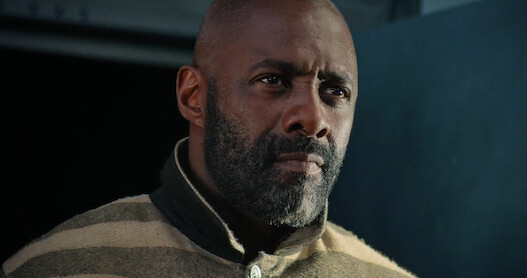
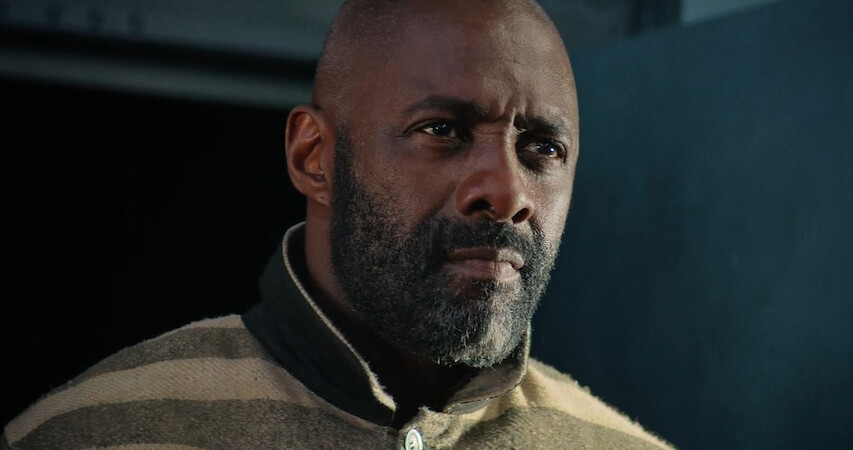
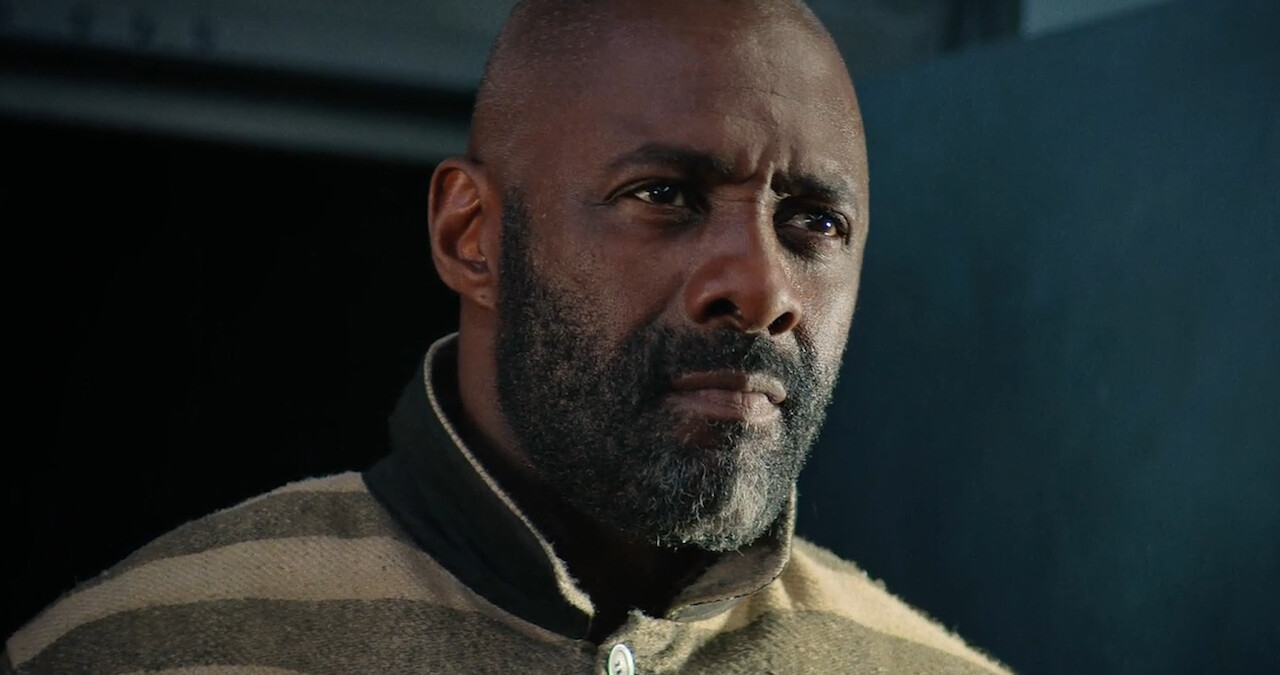
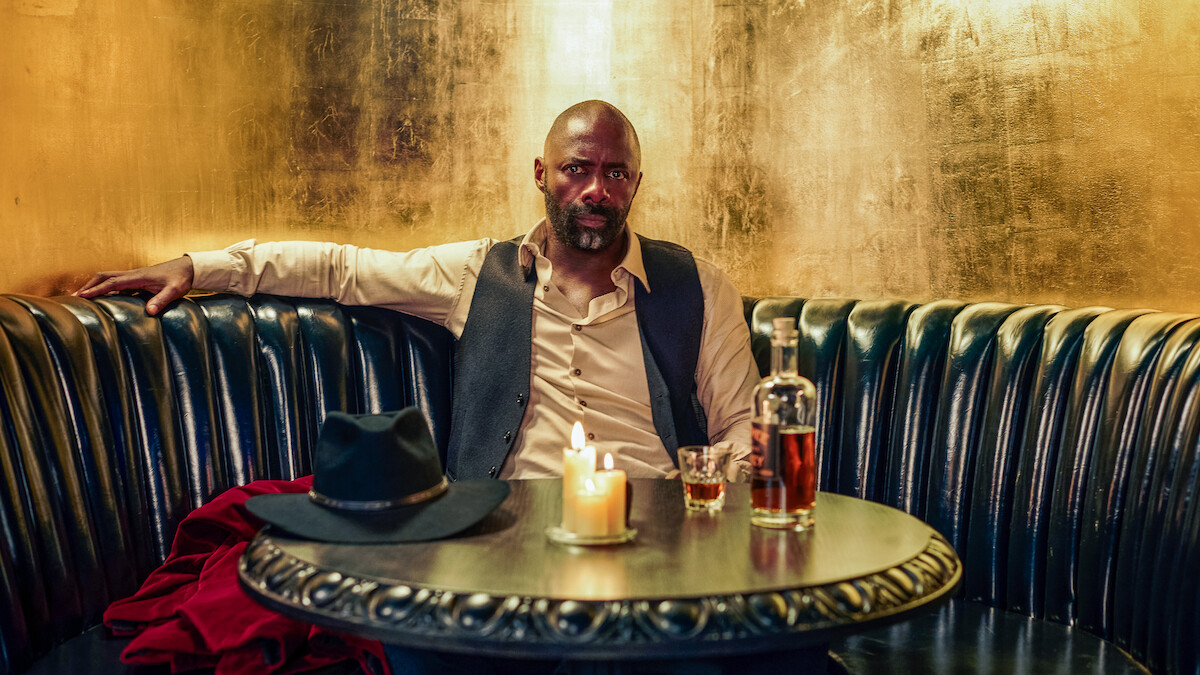
Redwood, another town that serves as a key setting in the film, is much less rustic than Douglastown, and its status as a more affluent place is also communicated through fabric. According to Messam, the intense scene that shows Trudy and Mary violently fighting through strips of dyed fabric tells us a lot about the town of Redwood and the reason why Rufus Buck (Idris Elba) is there. “First and foremost, Redwood was a textile town. That was their base industry and that scene with the dye bins shows where the fabrics were done,” she shares. “It was important to show the industry because it explains that this was a town that was prosperous, that had business. They had their own mills, they manufactured their own fabrics. It was a statement of wealth and prosperity.” Trudy’s deep blue dress and Rufus’ red velvet jacket also speak to the status the pair looked to occupy in this affluent community. “Their colors are much richer there,” Messam says. “The town’s colors are much richer, and much more opulent and luxurious.”
Messam seems to have considered every plot point, every piece of historical and cultural context and every bit of backdrop when designing the wardrobes for The Harder They Fall. The result is a brilliant collection of flowing fabrics that deepen everyone’s understanding of the story and almost steal the show. Who knew pieces of simple cloth could accomplish so much?