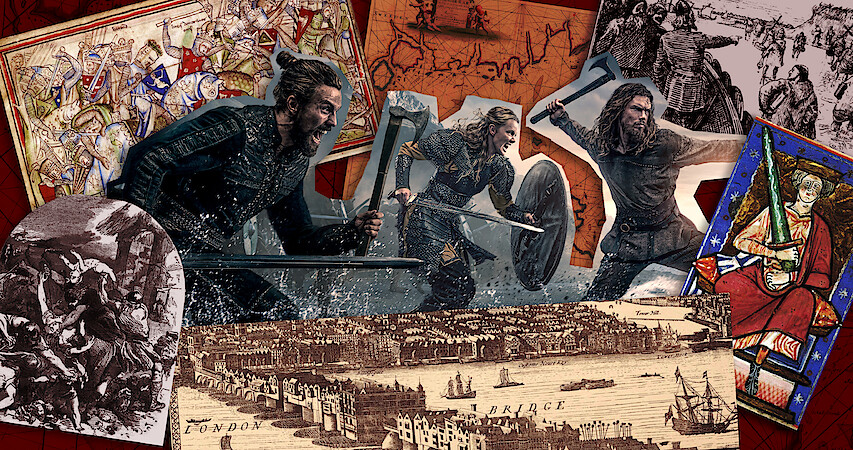
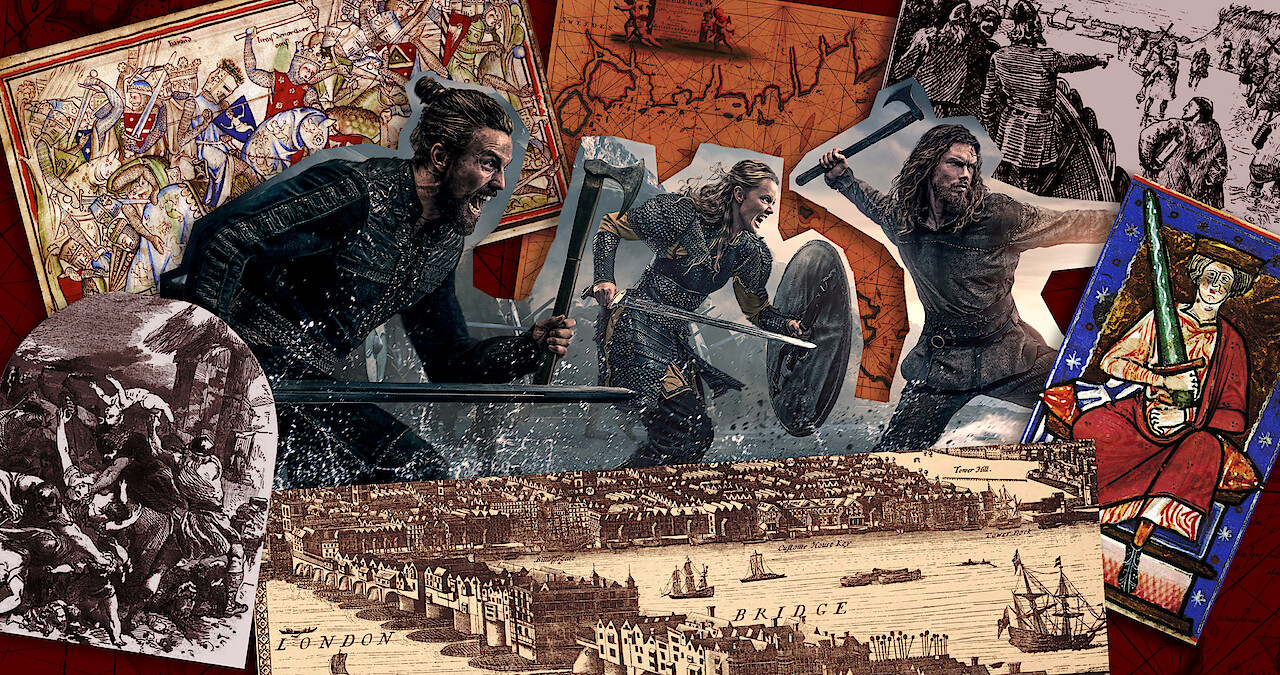
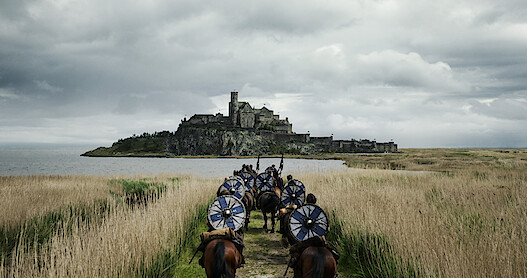
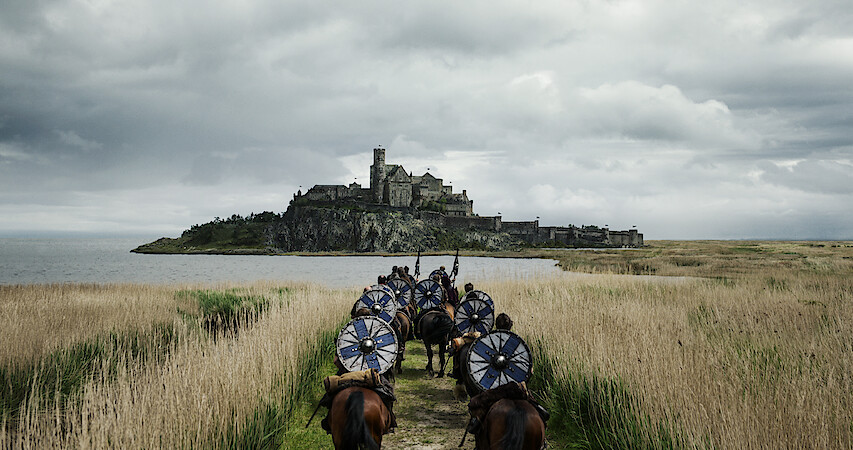
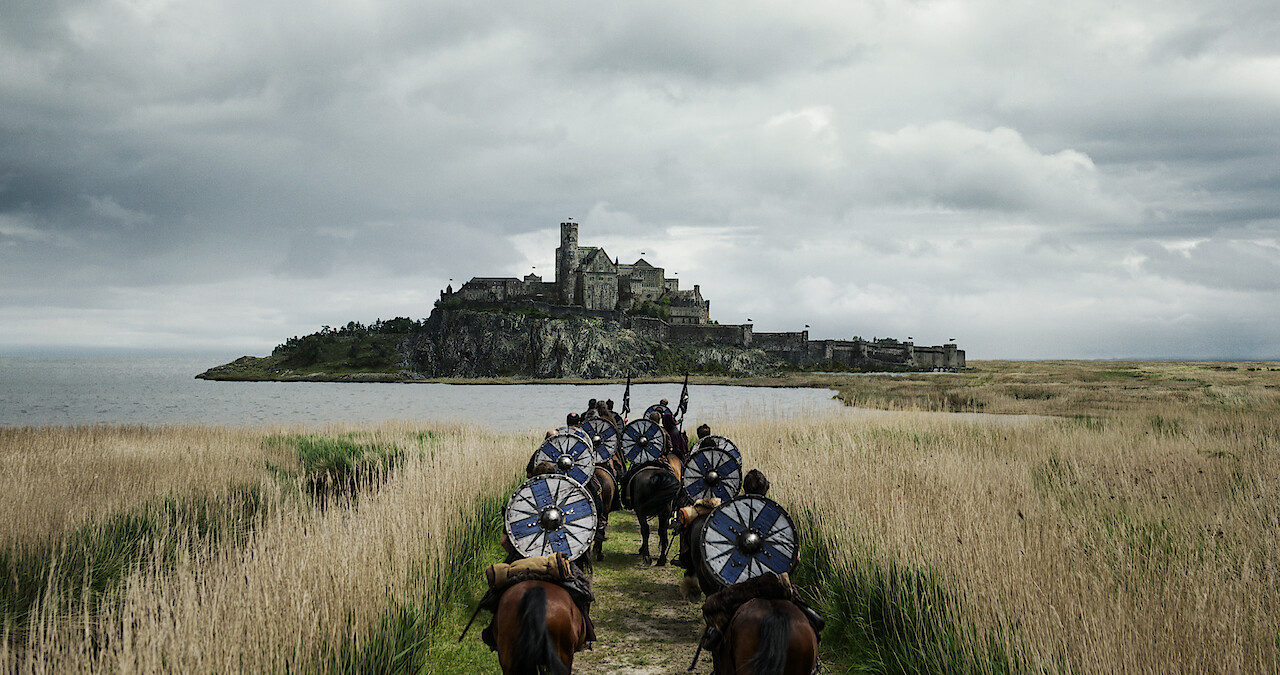
Some people need a double espresso at sunrise. Others need a quadruple shot to get them moving. Then there are those high-octane humans for whom maximum caffeination can’t compare to a morning dose of metal.
For us, there’s Amon Amarth, the legendary Viking metal band who for almost 30 years have brought their berserk and melodious riffage, thunderous drums and odes to Odin to audiences around the universe.
Amon Amarth’s music isn’t your mother’s metal, with simple blast beats and guttural groans barfing unintelligible lyrics. Instead, an Amon Amarth song is a cinematic experience in itself, relaying vivid stories of brotherhood on the battlefield, historical moments championing the underdog and epic, fugue-like anthems as the soundtrack to each tale.
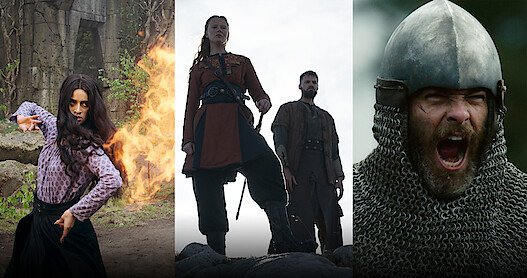
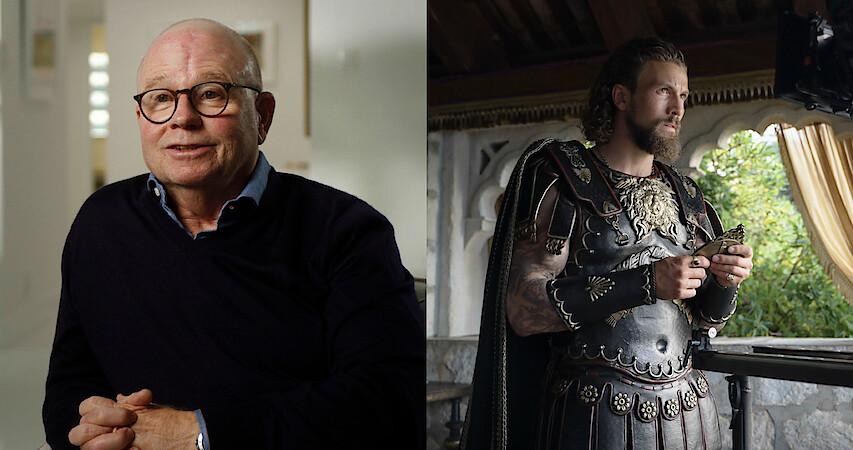
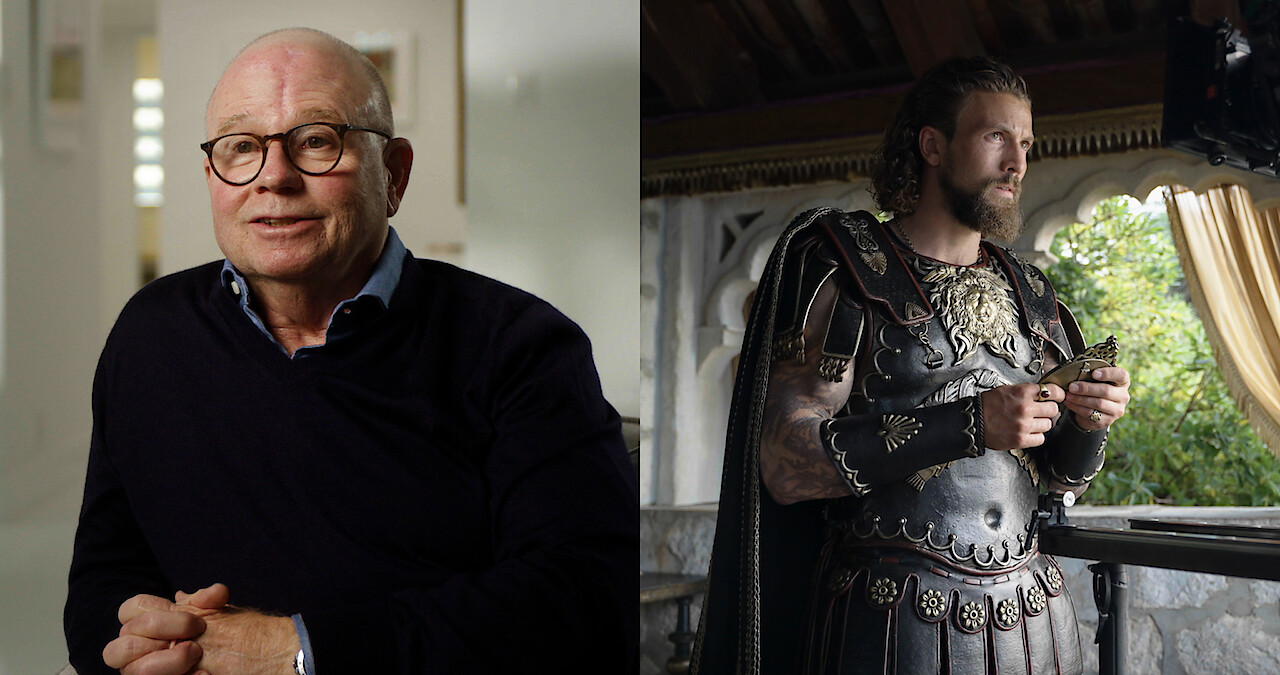
It’s no wonder that when the original Vikings series launched, the band’s chieftain Johan Hegg was one of the few people invited to witness the production. “It was pretty cool,” Hegg tells Tudum. “We saw that way before anybody else.”
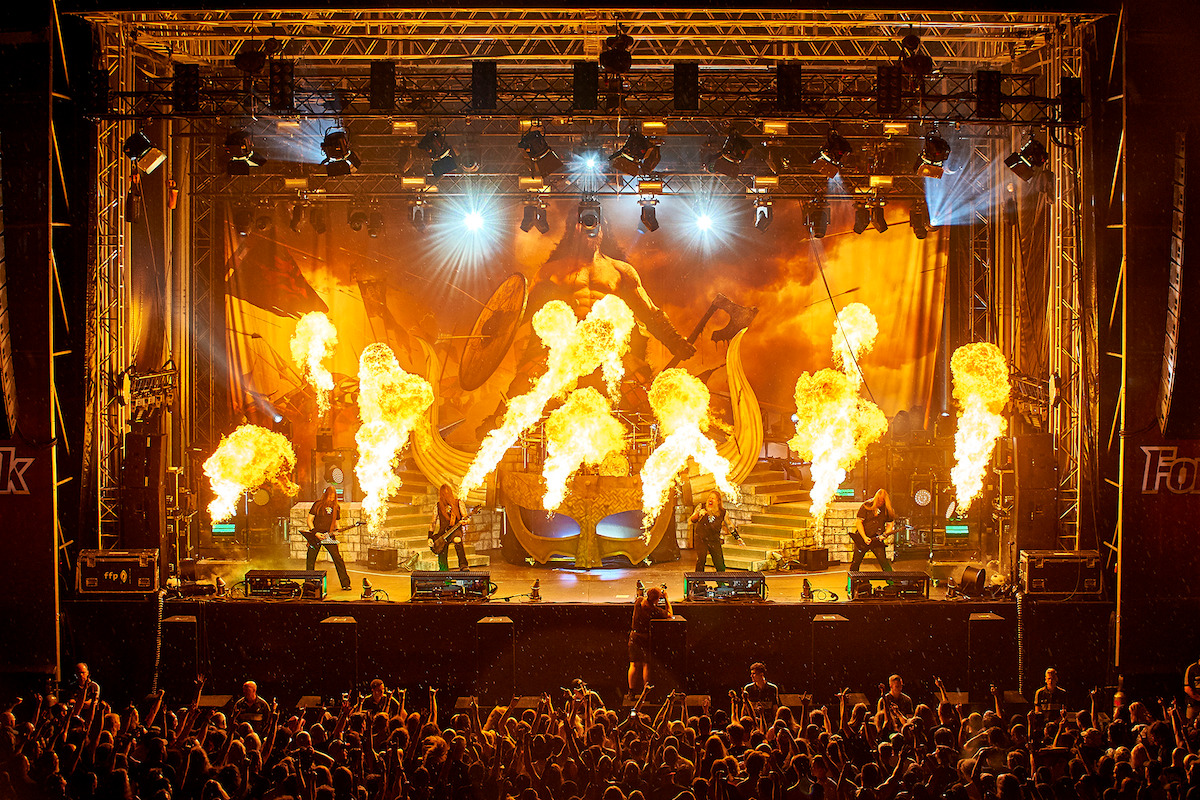
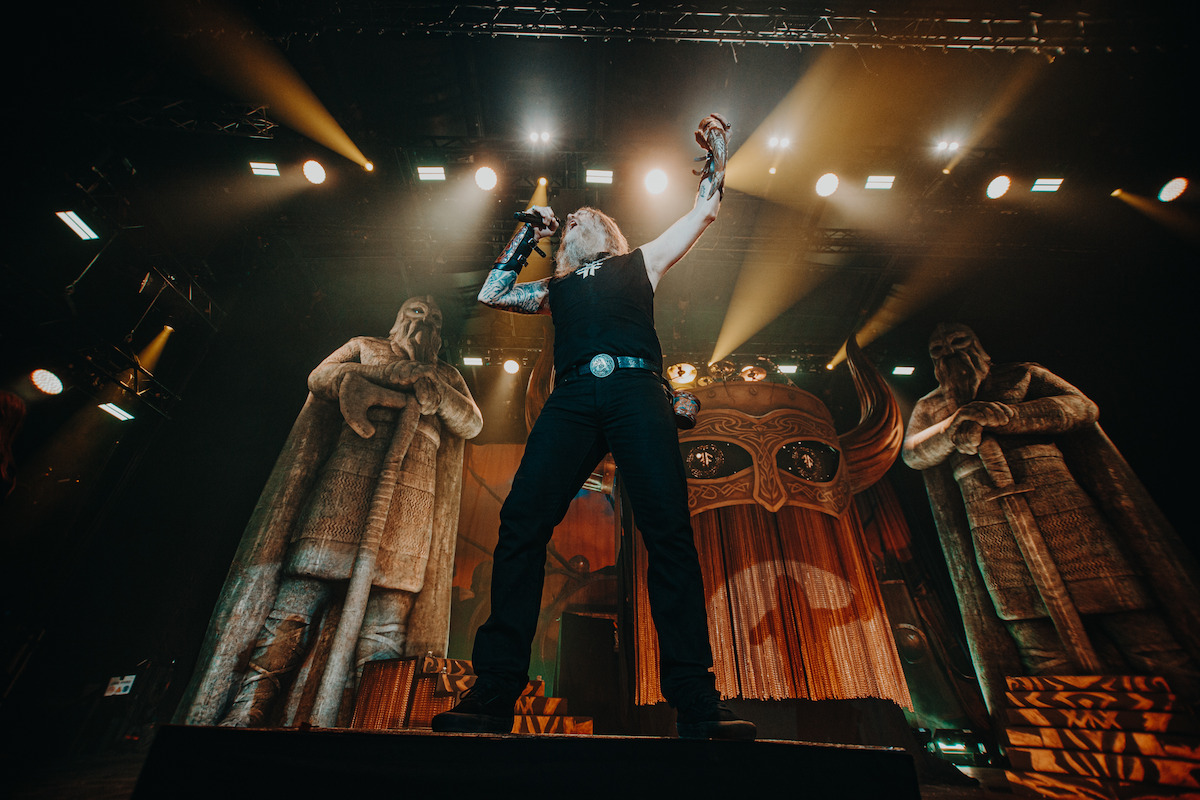
The stage ablaze at an Amon Amarth show in 2019 in Nijmegen, Netherlands.
Axel Jusseit
Hegg has been the band’s front man since 1992, crafting fist-pumping albums that have a sense of history; he also writes screenplays and stories that push the boundaries of the Nordic legends. “Shows like Vikings have helped to give a different perspective on Vikings. It has really helped to show that Vikings were human beings, with a very sophisticated society, who were just people trying to survive.”
And while the pillaging was real, many accounts were written by the people they conquered, so the visions of Berserkers and marauders overshadow the real story of Scandinavian life in the Late Iron Age.
“To be a Viking was technically a job description, and the Vikings didn’t really call themselves Vikings,” Hegg says. “Not all people in Scandinavia were Vikings. So it’s a mindset of how to behave with each other, and how to behave towards friends and enemies, and towards people in general.”
Everyone on the planet is in the same boat right now; we have the same problem. So we have to start rowing, and everybody has to put their back into the oar.
Being a Viking was also a standard for conducting business in the extensive trade routes that stretched into Constantinople, North Africa, and even the Spice Road that connected Europe and the Middle East with Asia.
“Vikings were world citizens,” Hegg continues. “They were definitely multicultural in that sense. They would accept the traditions from the country where they came to, especially if they came to trade and work.”
Tudum caught up with Hegg on a slightly pixelated video call from his remote home outside Arbrå, Sweden, a midsize city a few hours west of Stockholm (“I have open fields all around me, and mountains in the distance. Well, they’re hills, but we call them mountains”).
For more, Hegg graciously geeked out with Tudum about the misconceptions about Vikings, how he found metal as a teen and why Amon Amarth’s music finds audiences far from his tiny Swedish home.
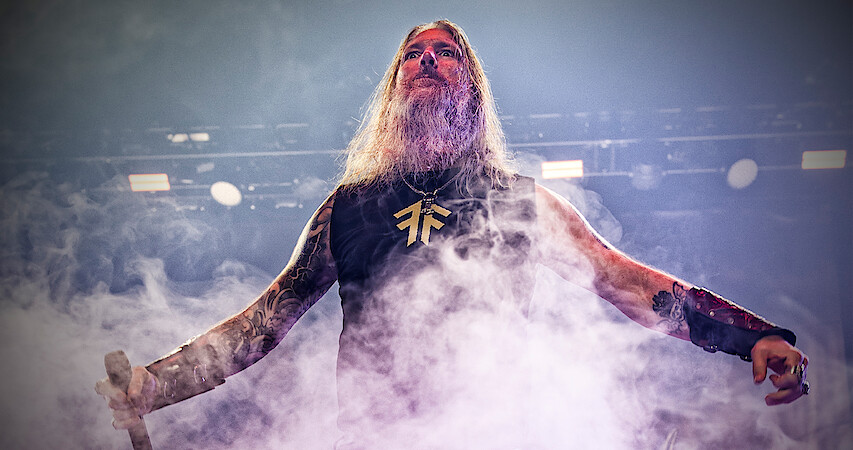
Jonathan Weiner
Back in the day I used to turn down the sound on the show Planet Earth and put on Amon Amarth as a new epic soundtrack as whales breached. It was legendary. I know you have more than 25 years of music, but what are three recommendations of Amon Amarth songs to listen to before, after — or during — Vikings: Valhalla?
One that comes to mind instantly is “Twilight of the Thunder God,” because Thor, obviously, is one of the most important Viking gods. And that song is just epic; it’s one of the classics. I think it’s the most listened-to song that we have.
I also would like to throw a punch for a song on the previous album, Berserker, and it’s actually the title track, “The Berserker at Stamford Bridge,” which is a fascinating story. The 3,000-man Viking army of Harald Hardrada were surprised at Stamford Bridge when an English army of 15,000 attacked them, so they had to retreat over this bridge.
In order to hold the advance of the English army, so that the rest of the Vikings can get to their ships, they send one guy out on the bridge — one man with a Dane ax. And he kills, I think it’s 70 men, before the English army figures out that they need to send people out on the river. So they build a raft, and they send people out on the river to get him from underneath, because they can’t get to him otherwise. So it’s like they kill him with spears from under the bridge. So that’s a real cool story: one against 15,000.
One song that I always felt was a bit overlooked is “Back on Northern Shores,” on Jomsviking. It’s such a cool story. It’s this epic naval battle, where they tie the ships together and just go at each other with axes and swords at sea. And it’s just — it’s pretty brutal.
I've been thinking about your new song, “Put Your Back into the Oar,” and how, during a really difficult experience, you can focus on a single task that can get you through. Could you talk about that a little bit?
The “put your back into the oar” thing is such a big concept, really. I often try to write in metaphors. But one part of this is, basically, just to write a song for the fans, because they enjoy going into the row pits at the show, right? Where a thousand people sit down and start rowing.
Wait, wait — what’s the row pit? I’ve never heard of this. I’ve been in plenty of mosh pits...
Imagine that the mosh pit stops, and everybody sits down and pretends they’re rowing. It’s crazy. It’s hilarious. Anyway, people do that at our shows, so we kind of wanted to do a song about that.
Also, in the situation that we’re in, with the pandemic and everything, you have a feeling that we’re all in the same boat; literally everyone on the planet right now. We have the same problem. So we have to start rowing, and everybody has to put their back into the oar.
That’s also something that is very interesting about the Viking community: how people would pitch in. Because if you look at the Viking ship, obviously you would have the chieftain, right? And you would think that the chieftain would sit in the back of the ship and just lean back and be rowed. Nope. When it was his time at the oar, he’d better chip in as well. So everybody had to row.
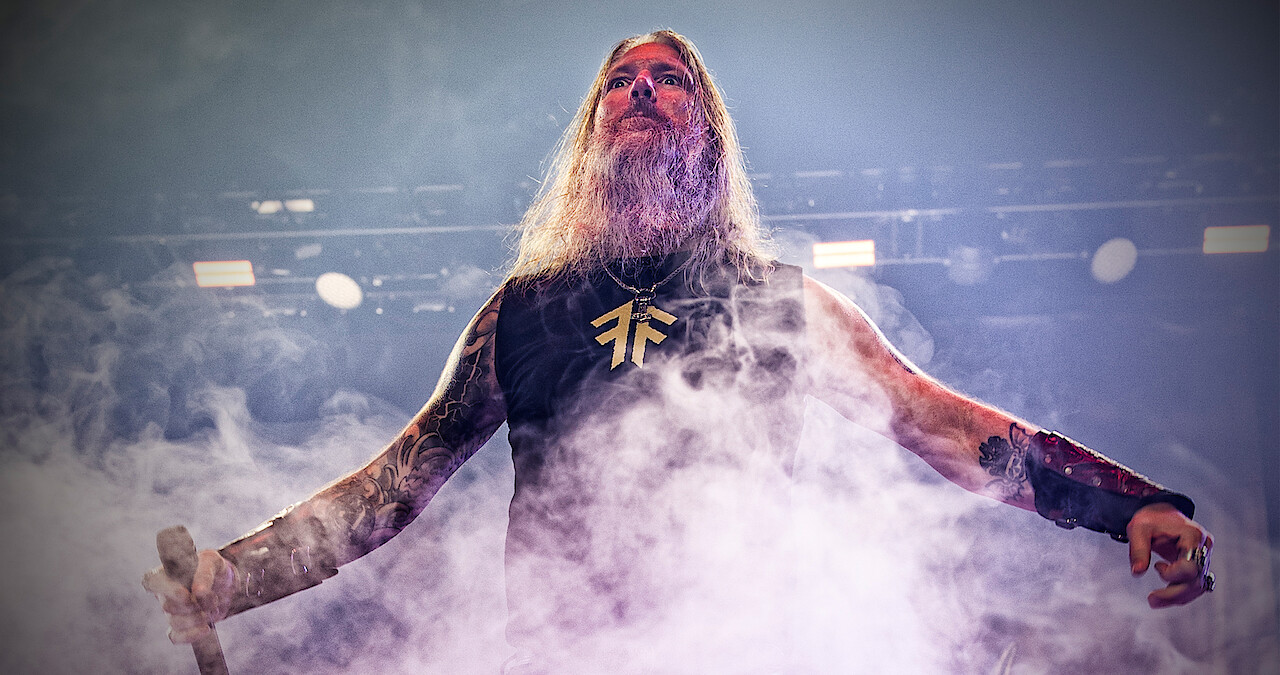
Johan Hegg at a 2019 show in Vienna, Austria.
Daniel Barnes @volcamedia
Also, a third thing which is mentioned in the song is each man builds his own fate. And I think that’s important for everyone — not just men, obviously, women as well — that you’re in charge of your own fate. You make your own choices and, win or lose, at least you learn something.
Because people are just sitting back and not really taking action in their own lives. And I know it’s easy to fall into that crap; I’ve done it myself. You’re just stuck, and you don’t know how to get out of it. But if you can have that in mind, that you’re in charge of your own life, and you can do whatever you want, if you put your mind to it.
You’re in charge of your own fate. You make your own choices and, win or lose, at least you learn something.
What does it mean to have this relationship to Vikings today? And how has your own personal connection to Vikings changed over the years?
I got into the whole Viking culture and everything when I was very young — I would say around 7 or 8 years old. We first read about Vikings in school, in history. And then I found a series of comic books, really thick comic books, called Valhalla. And they’re basically the Scandinavian mythology in comic form, made by a Danish duo, Peter Madsen and Hans Rancke-Madsen. They’re really, really amazing books, and super funny as well.
I was also a history buff when I was a kid, so I found more stuff like the Icelandic sagas, and The Poetic Edda, and all the mythology in text. And it’s been with me for a long time, and it is definitely something very inspiring.
And I always felt that the mindset of the people of that age really spoke to me. Obviously, you hear about Vikings being violent and brutal. Yeah, that’s one aspect of it. But that goes for almost any person of the day, really. Especially when it comes to warriors, because the Vikings were warriors, but not all people in Scandinavia were Vikings. So it’s a mindset of how to behave with each other, and how to behave towards friends and enemies, and towards people in general. It’s way deeper than you would think.
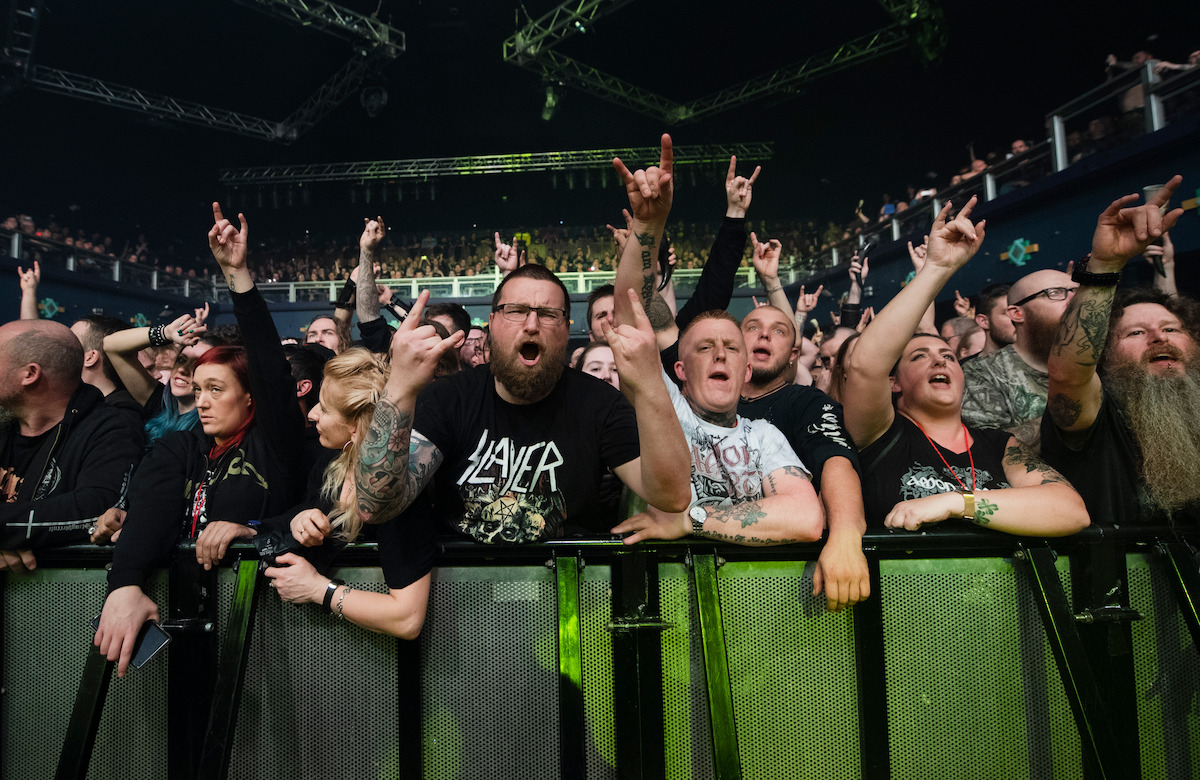
The Amon Amarth faithful at a 2019 show in Birmingham, England.
Katja Ogrin/Redferns, via Getty Images
You mentioned being young and finding this stuff, because it was the same for me as a teenager Discovering those mythological stories and finding men that you could look up to — especially for me, my dad wasn’t really around when I was a teenager. So having these characters where you can really connect with them is really important. As you tour the world, I’m sure you find young men and women with that same story. Could you talk about that?
Yeah, my parents were separated, but my dad was there; he still lived in the same little village that I lived in. It was tough because where I grew up, I was the only kid who had parents who were divorced. So, obviously, I was the odd kid out there, and you know how kids can be when somebody has a difficult time with something. Viking mythology was something that gave me an escape into something else. I think, growing up, you look for role models everywhere. And it could be music, movies, literature, history, you name it, sports, and that’s where you escape to even if you have family, and you’ll look for other role models as well. For me, history and Viking mythology provided that.
I think a lot about the idea of brotherhood and friendship in your music. Especially the song about two men who are locked in battle, but they’re really best friends. I love that image.
I wrote the script, actually, for a movie, which then became the album Jomsviking. And in this story, the protagonist winds up joining the Jomsvikings, who were basically a group of missionaries. Anybody could join if they knew how to fight. You didn’t necessarily have to be Scandinavian or anything; you could join. And he joins them, and he becomes best friends with the guy there. The Jomsvikings’ existence has been debated, because there are literally very few historical accounts of them. But the idea here is that they were an elite force of Vikings, and they trained very hard, they fought very hard, and they were brutal.
But even if there were people from all over the place, they were a strong brotherhood, and they had this really strong sense of belonging to each other, and the integrity of the group.
The one thing that goes through the mythology in general is that you should be strong and brave and do everything to the best of your ability. But you should also be generous towards friends and family. So it is kind of describing that as well — that they do this and they fight really hard, but at the end of the day, they’re still friends.
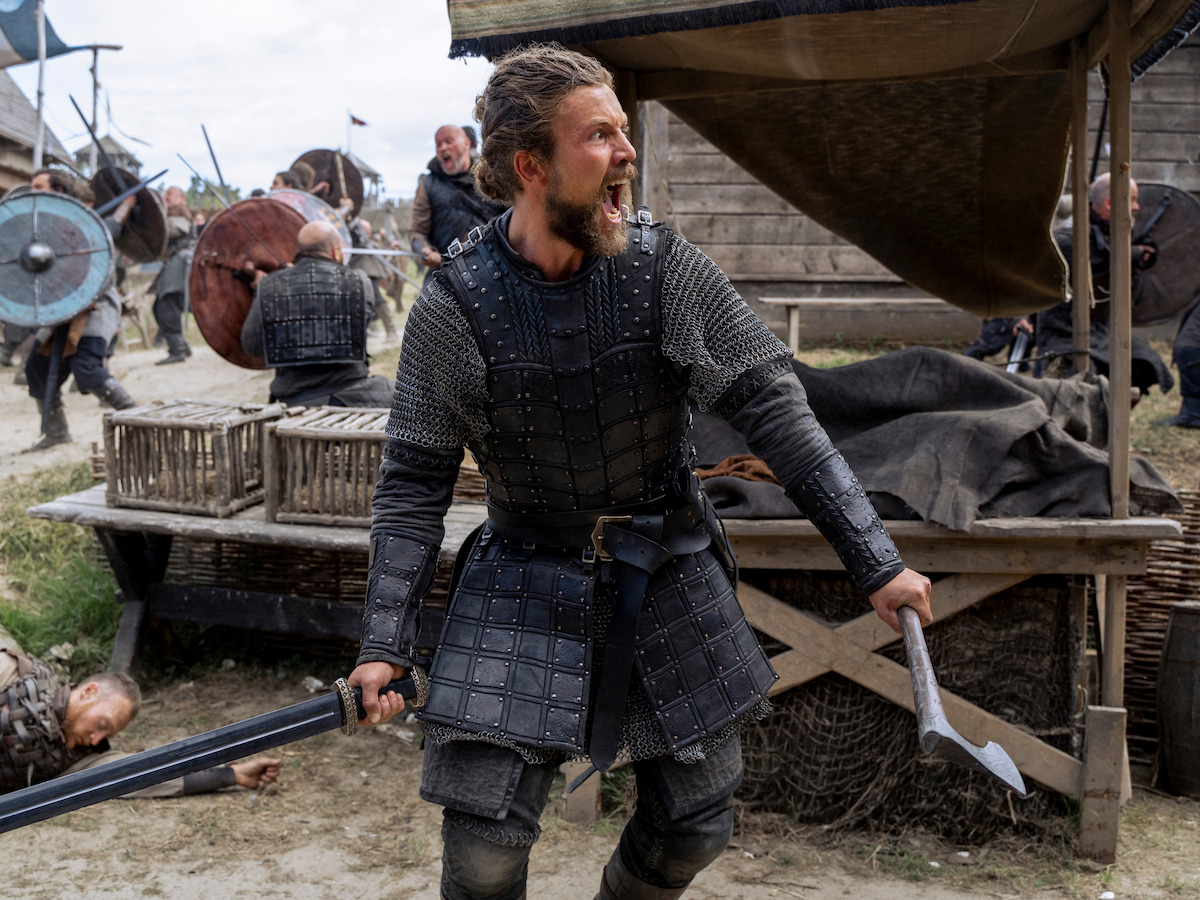
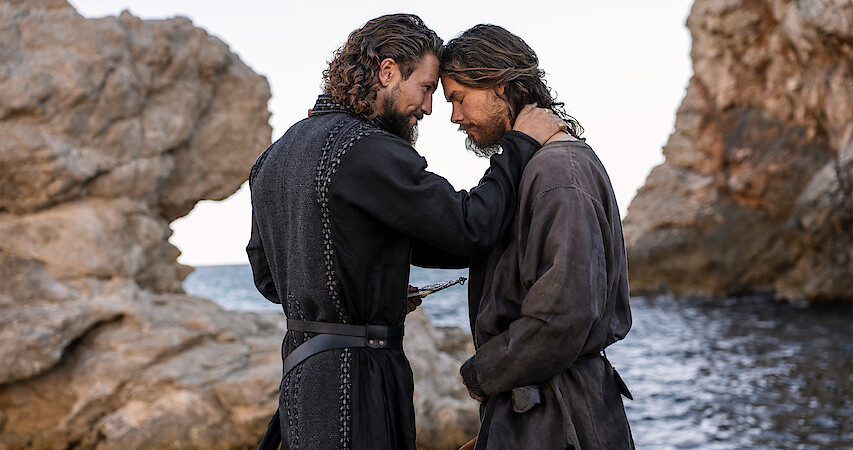
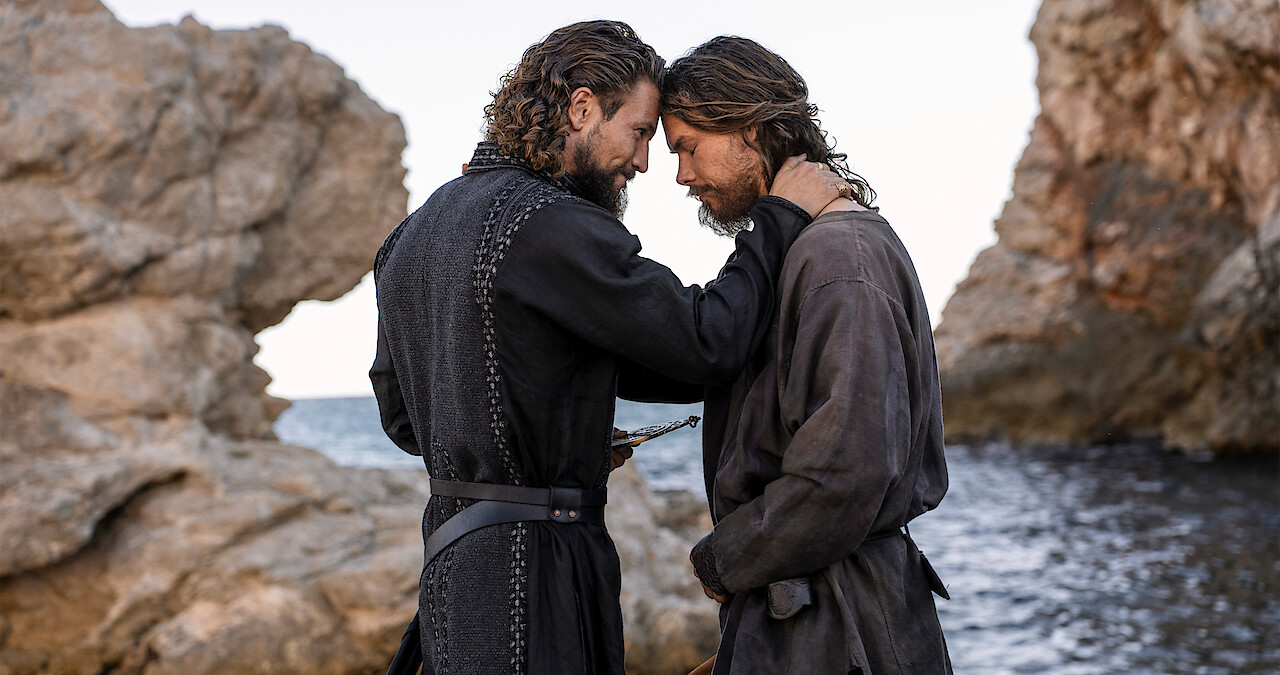
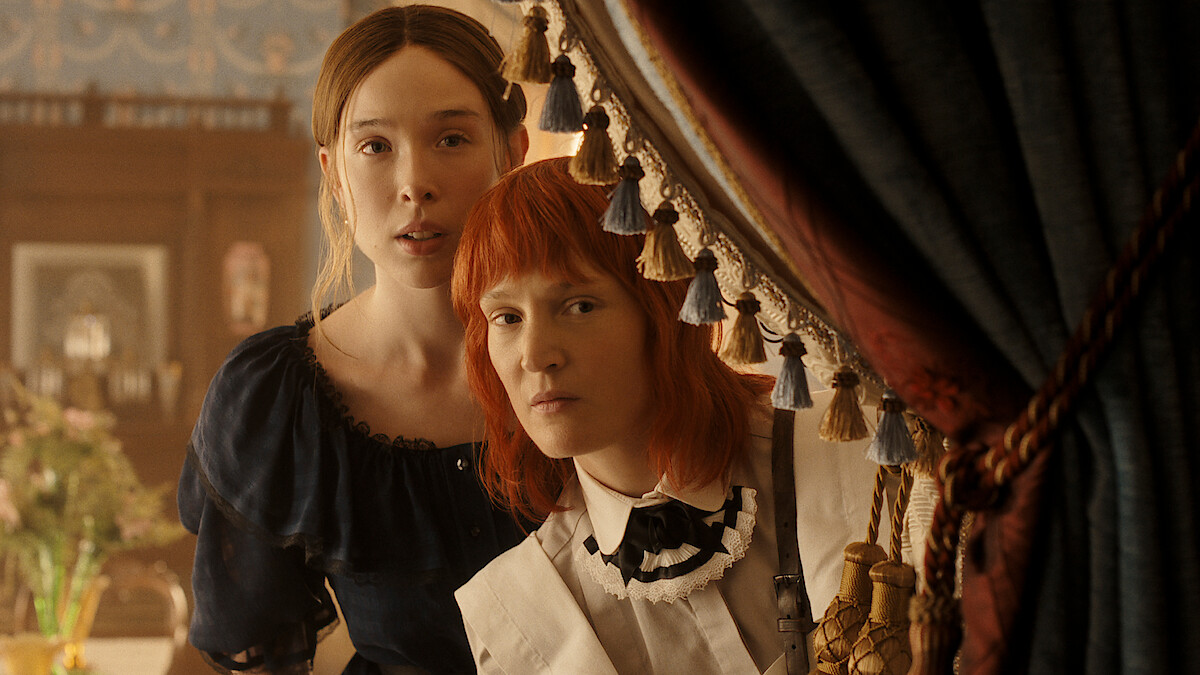
Bernard Walsh/Netflix
Since there’s very little writing — and the sagas have a little bit of mythology woven throughout — it’s hard to really know the truth about the Vikings. So Vikings could be anything you want them to be, right?
One interesting thing about Vikings, generally: When you say Vikings, and the Viking Age, what you really mean is the Late Iron Age. Because obviously not everybody from Scandinavia was a Viking. And because to be a Viking was technically a job description, and the Vikings didn’t really call themselves Vikings; it’s actually from the Anglo-Saxon Chronicle. So probably it has something to do with sailing, or something like that; I forget now where the word Viking — they don’t know where it comes from. But it comes from somewhere, and it got attached to them. So to be a Viking was, technically, to be someone who would sail away from home to A, trade, B, raid.
Trading and raiding.
Yeah, trading and raiding. And that was it. And then they started migrating, especially to the east. And then they traveled west to the British Isles and Northern France, and settled there, and intermingled with people. They also had claims to the throne of England. They were free as warriors.
They were really kind of an economic system, too. Right? As they went into the Middle East, North Africa, they brought Islamic coins back to the city, like the Varangian Guard, who protected the Byzantine emperor in Constantinople. A Viking, just like you said, is a job description, instead of an ethnicity like Norsemen, so they probably were pretty multicultural in a lot of ways.
There is proof that they made it as far as the Caspian Sea, which is in the middle of Russia. The Silk Road goes just south of it, so they probably traded with the Chinese as well. And one reason why we believe that is that in a grave, close to Stockholm, in a grave mound, they found a Buddha statue. It was a rich grave, so it did have a significant value for the person buried with it. So in all probability, Buddhism was definitely something that the Vikings got in touch with, and possibly even practiced at some point. Because Vikings, when they traveled to different places — like in the Varangian Guard, for instance — they would be Christians there, but when they came back home, they would go back to the old ways. Same in the Arabic countries. With the Arabs, they would adopt Islam as their religion, when they were in Islam and serving there, and come back home, and they would go back to their old gods. So they were very pragmatic in that sense.
They were definitely multicultural in that sense, that they would accept the traditions from the country where they came to, especially if they came to trade and work. An example is a pendant called the Wolf’s Cross. When you hang it, it looks a bit like a hammer. But it also looks like an upside-down cross. In certain places, if you went as a pagan, you could trade with Christians. So they would come there, and they would just turn the pendant upside down, and then — whoops, look, a Christian.
I love that they had a really savvy, pragmatic business culture.
Definitely so, and they were explorers, and businessmen, and raiders, and warriors. So in many ways, it’s hard to imagine all the stuff that they actually accomplished in open ships that crossed the North Atlantic.
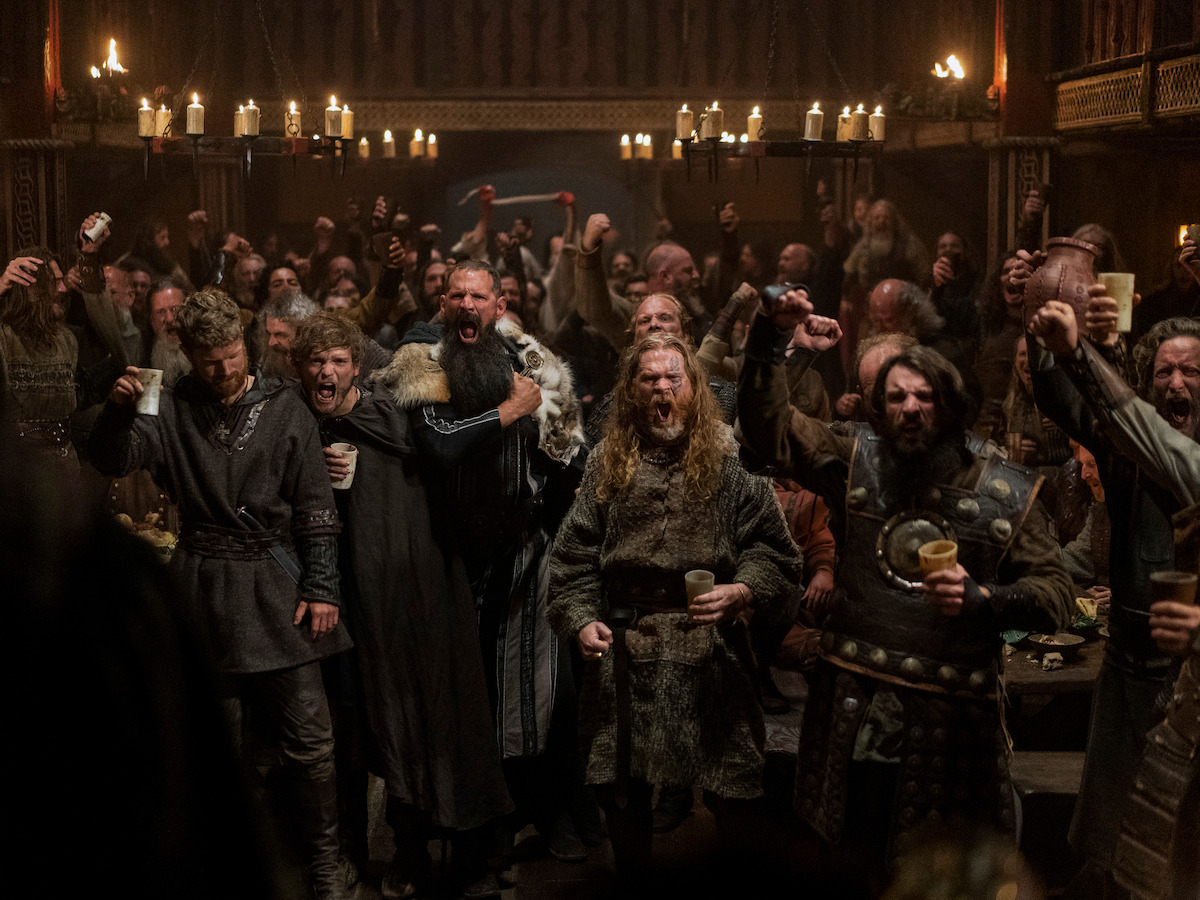
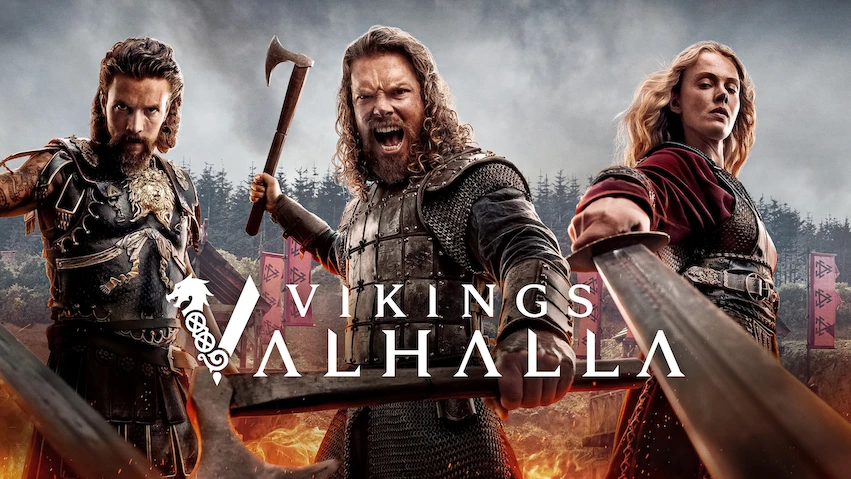
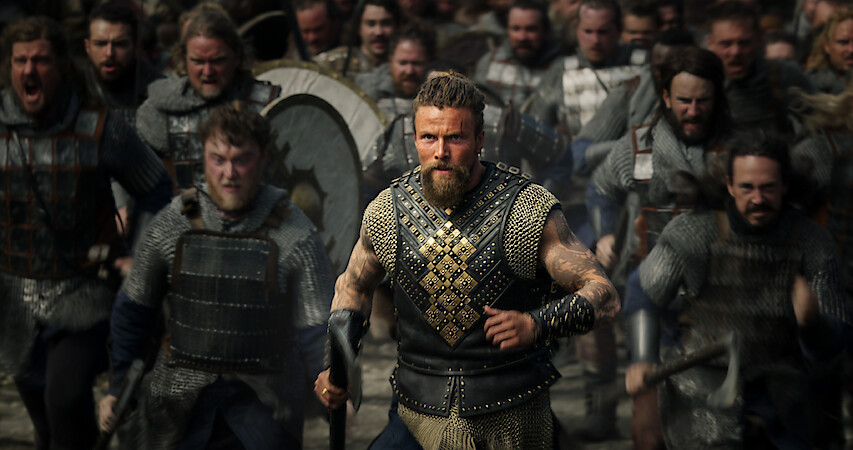
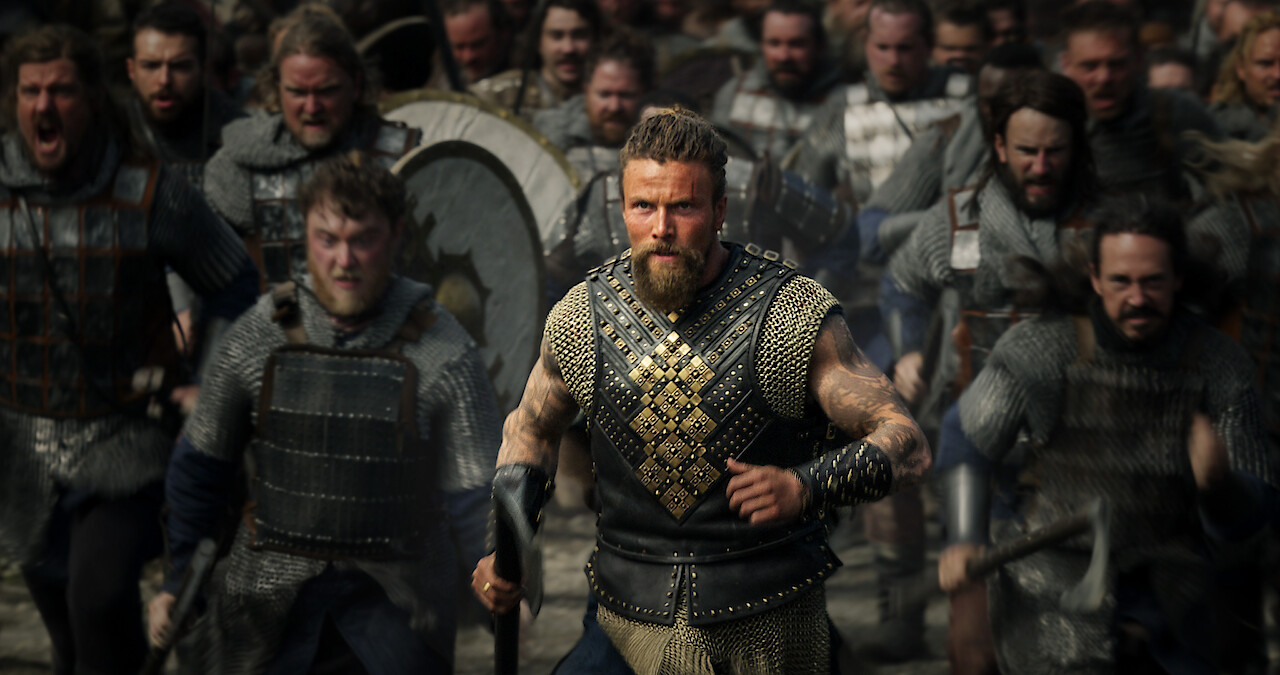
Bernard Walsh/Netflix
Going back to what you were saying about the Silk Road: As a band, you guys are kind of on your own Silk Road, where you travel around and share your imagination of what the Vikings were, but also your own Scandinavian story, your history. Where are your biggest audiences outside Scandinavia, and what do folks in places like Latin America say about your band and what Vikings mean to them?
The biggest audience that we have is probably Central Europe. On the last tour we played the [13,000-seat] König-Pilsener-Arena, in Oberhausen, Germany, which we sold out, right? Europe and the United States and Canada are on par, audience-wise. I think that the last tour we did in South America was really successful. Unfortunately, we had to cut it short, but that was also, the shows were getting bigger, and now we’re able to play Mexico, big festivals, and bring a good production.
And from what I can tell, people love the Viking mentality and attitude, and they love the stories and the history and the mythology. And I can’t blame them, because it’s kind of a real-life fantasy story. I mean, there’s a reason why Tolkien borrowed so much from Scandinavian mythology and Finnish Kalevala. Obviously there’s Greek mythology and Roman mythology, but from places as distant, and as scarcely populated as Scandinavia, that’s rare.
In Mexico, they have such a deep history with Aztecs, warriors, vast kingdoms and fantastical stories from so many Indigenous cultures.
And I think that’s one of the reasons why it resonates so much. If you look at the Viking history and culture, you can find similarities with Native Americans, with Aztecs and Mayans, and with the Romans, and Greek, and even Egyptians, and all that stuff. So all these religions are trying to answer the same questions.
I think what makes the Vikings special is that some of the accounts of them and their accomplishments — even if they were written down centuries afterwards, archaeologists have been able to verify those accounts.
Bassist Ted Lundström.
Katja Ogrin/Redferns, via Getty Images
That’s really fascinating. It feels like mythology, and then all of a sudden it’s real. And that’s also the cool thing about Vikings; they go beyond the stereotypes. They’re not all dudes with horned helmets. They’re not homogenous. And they’re not Nazis. What’s your reaction to that?
To me, it’s a bit tiresome. I think that anybody who knows anything about Vikings knows that they, obviously, were not Nazis. And if you know the first thing about Vikings, it’s that they were world-citizens in a way. They would adopt a culture in the country where they would go and live for a while, and then they would come home. But there’s nothing to suggest that Vikings, in any way, saw themselves as supreme or anything. They saw opportunities, maybe, to gain riches.
I think it’s sad as well that our culture is being used in that way. But I think we have ourselves to blame as well because, I know here in Scandinavia, for instance, when I grew up, they didn’t teach us a lot about Viking history in school.
Most of the stuff that I actually learned about it was through literature classes, where you kind of touched on the Edda, and some of the Viking sagas, and all that stuff. Otherwise, most of the stuff I had to figure out myself, by finding books and reading. So I think if people had the knowledge, they wouldn’t assume these things.
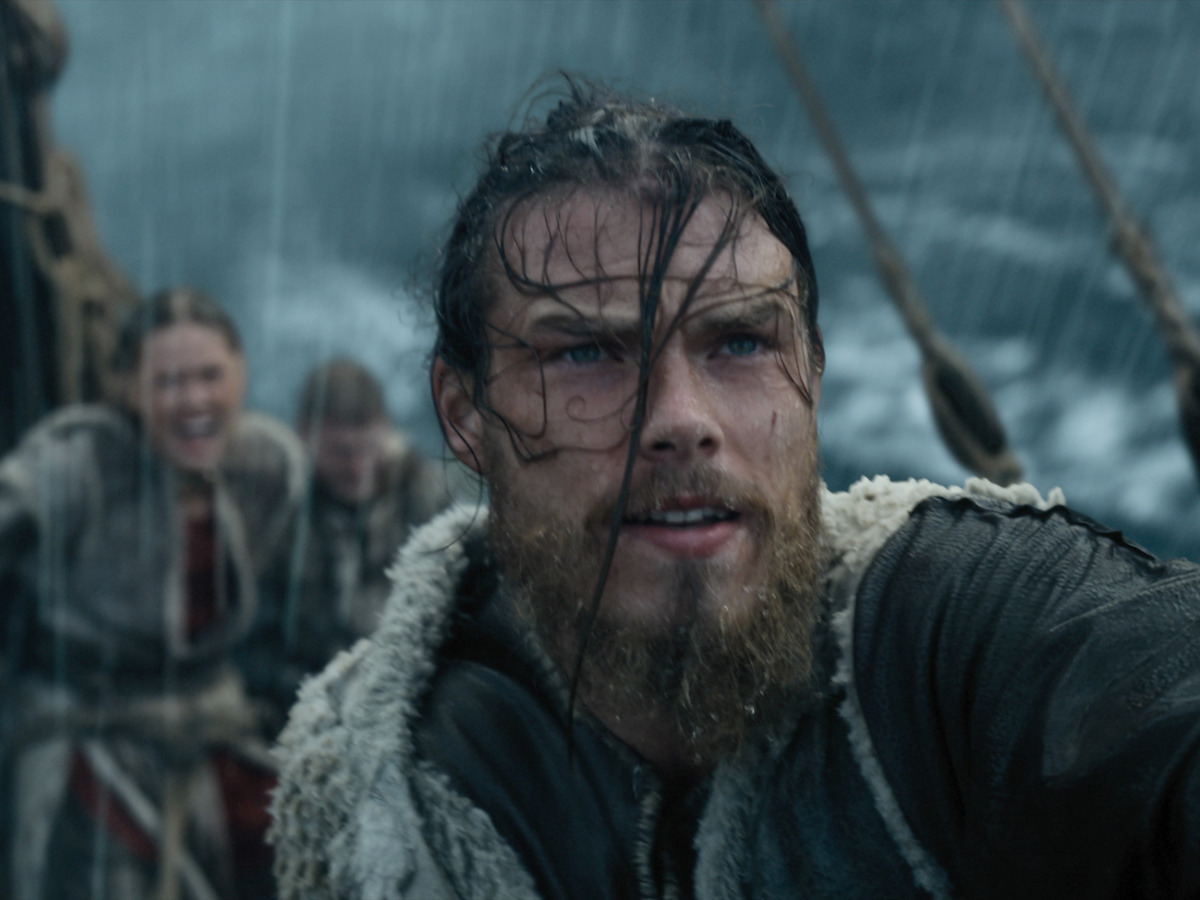
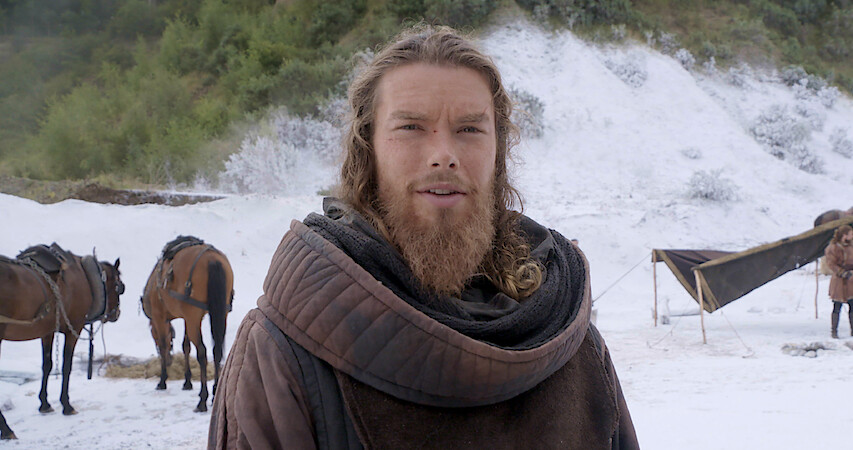
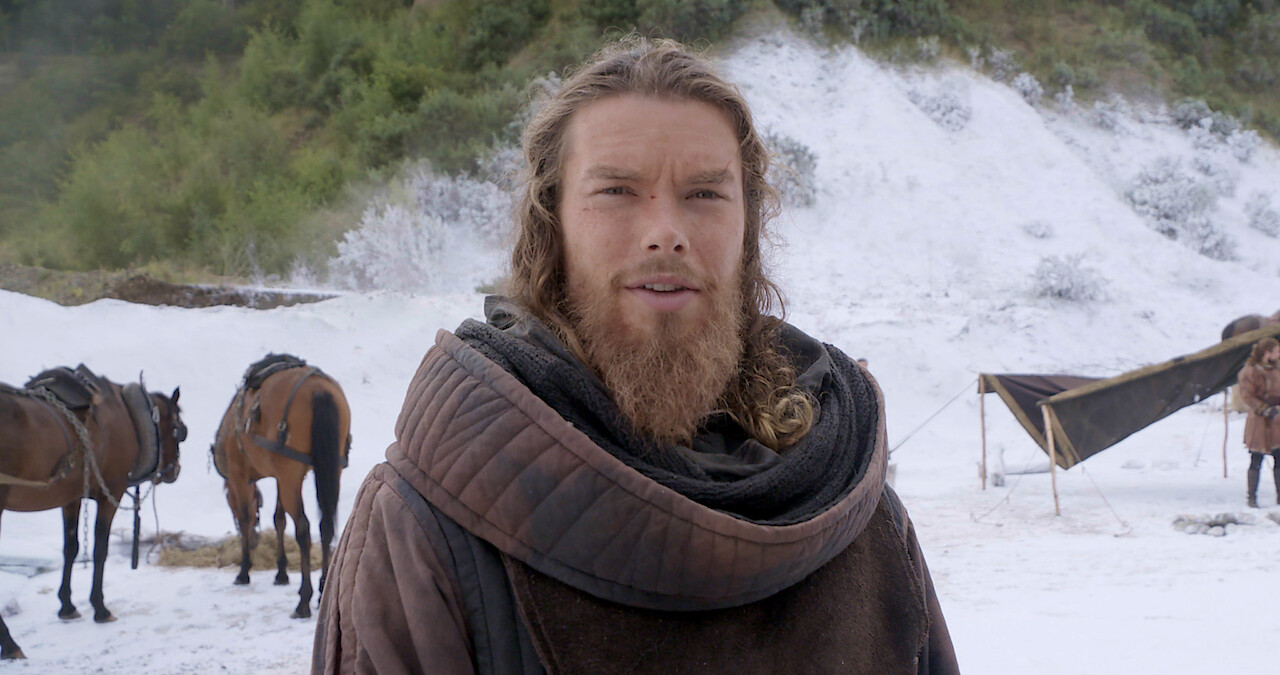
But I think that shows like Vikings, the first seasons — and I hope that the new series of Valhalla will continue this — they have helped to give a different perspective on Vikings. They’ve done it really well. And I think it has really helped to show that Vikings were human beings with a very sophisticated society, who were just people trying to survive. I think shows like Vikings really fill a purpose in that sense.
This interview has been edited and condensed for clarity.