It all begins with the crash of a wave and the rumble of thunder.
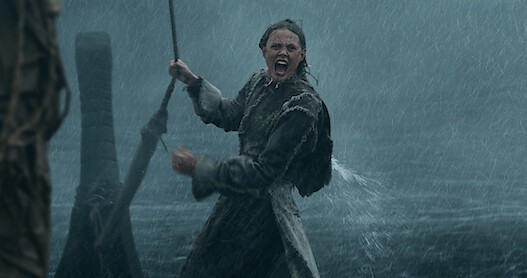
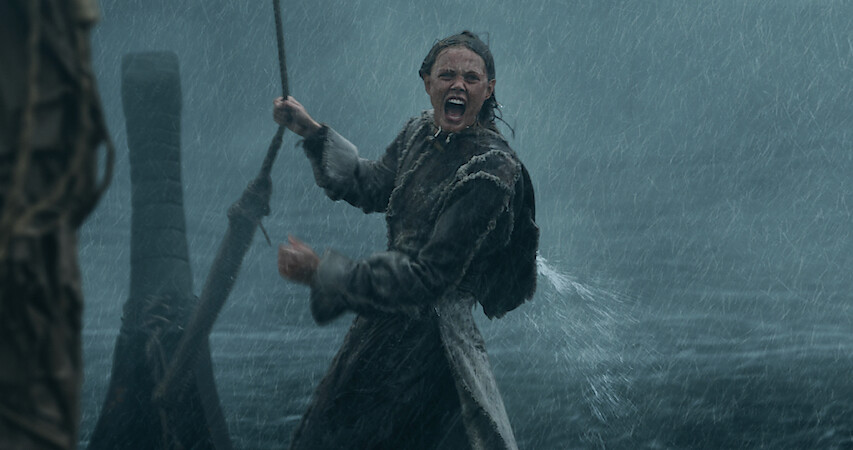
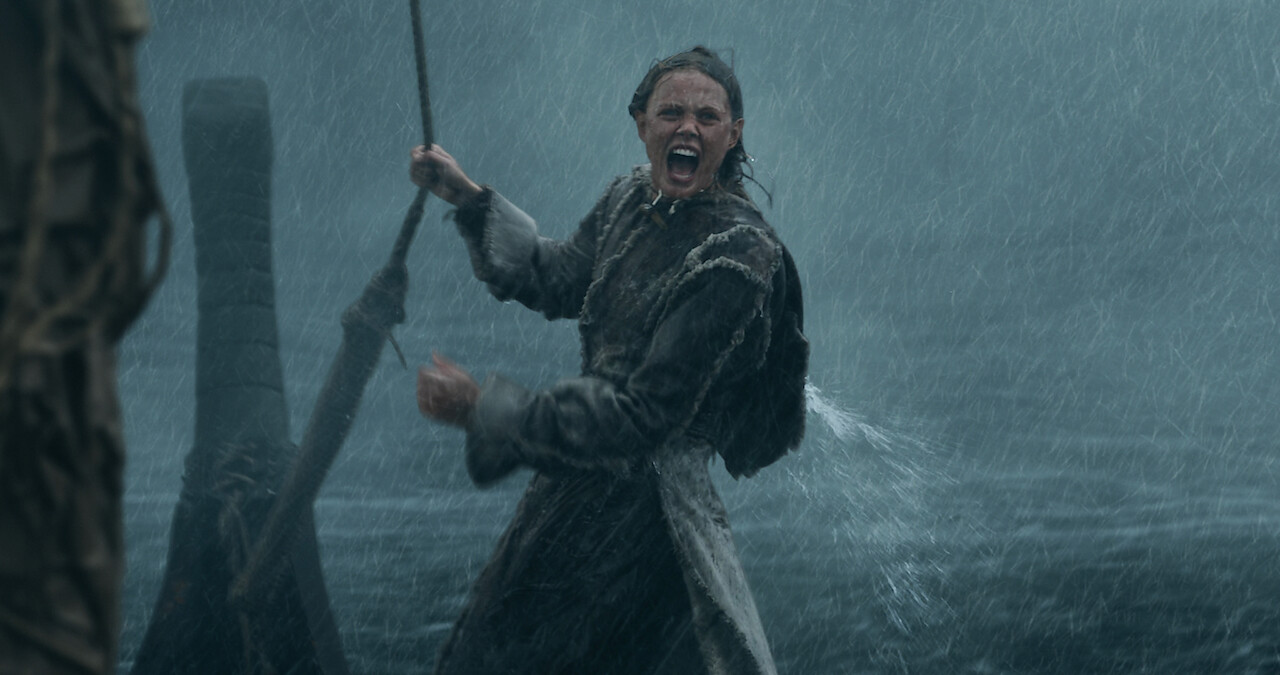
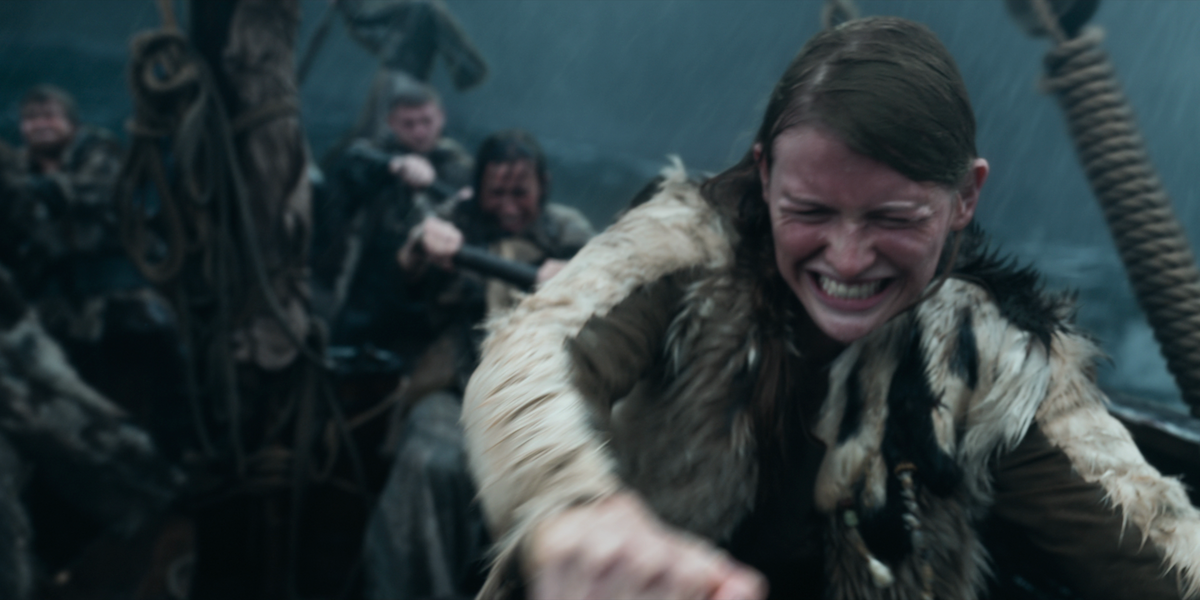
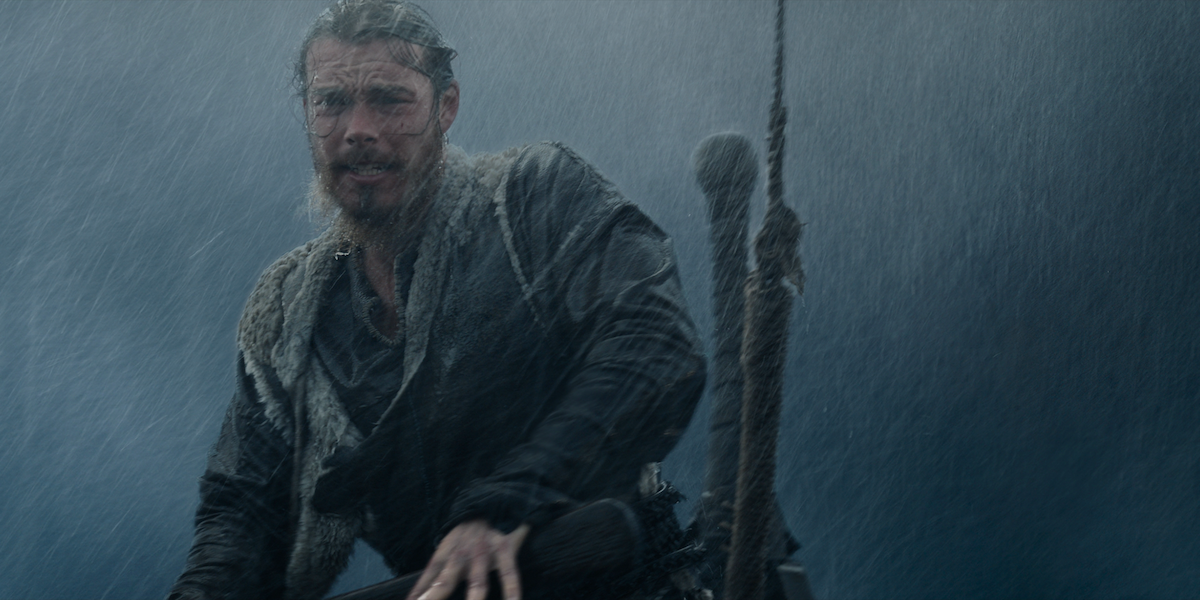
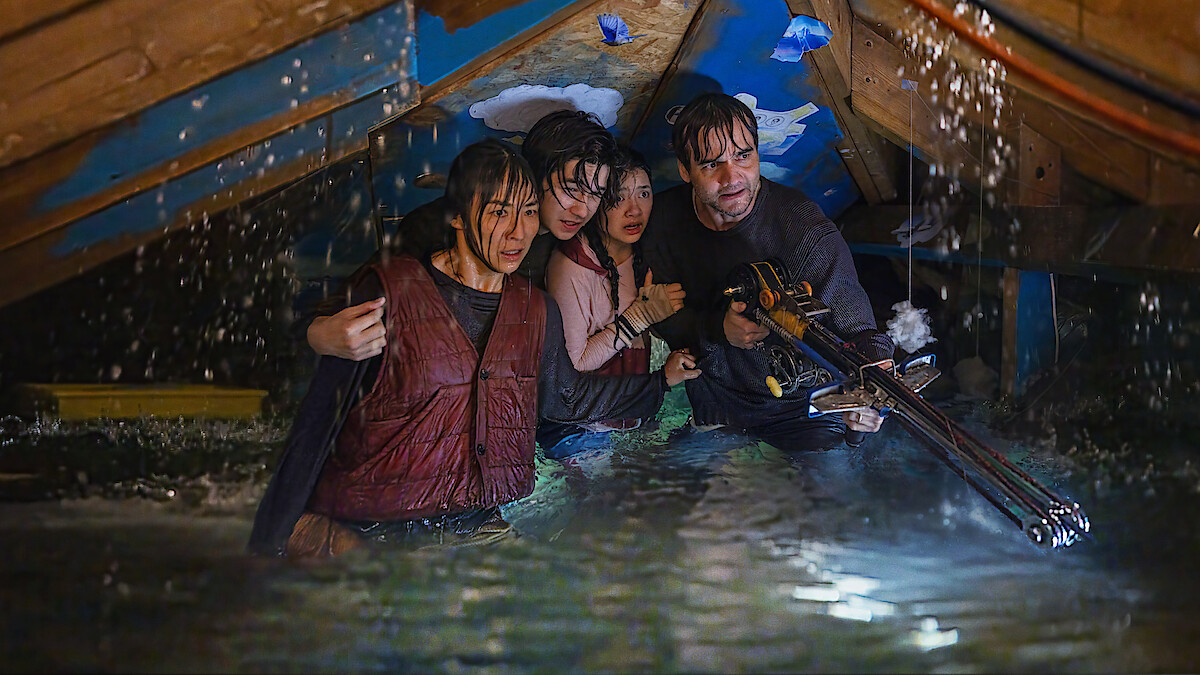
Rain whips across the North Sea, slashing a small fleet of Greenlander ships tumbling through a tempest, the massive swells tossing them around like olive leaves riding a tsunami. At a boat’s bow, a woman in armor holds tight to the wooden dragon jutting from the ship as she commands her comrades to row hard, each oar a leg of a centipede, pulling the craft forward against the impossible inertia of the ocean.
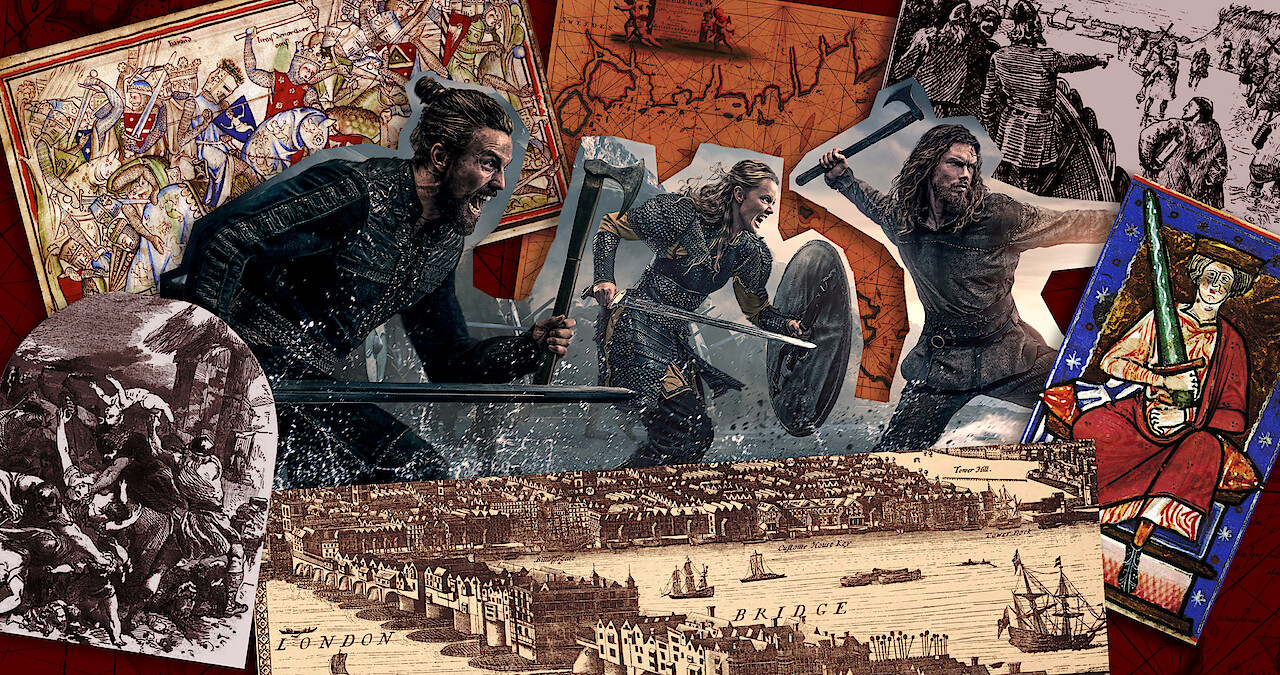
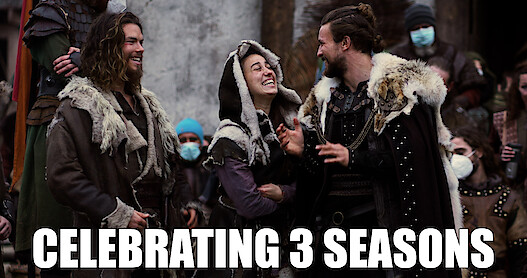
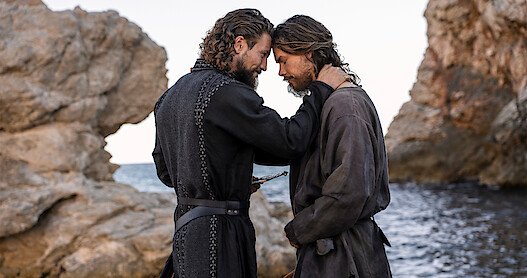
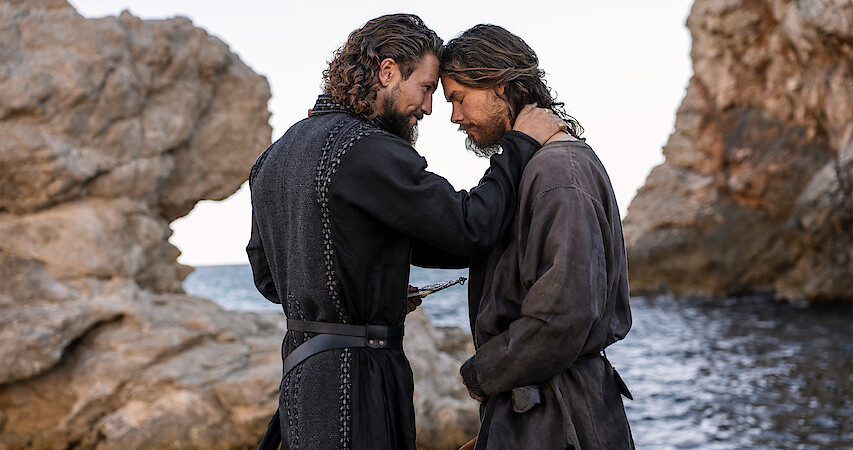
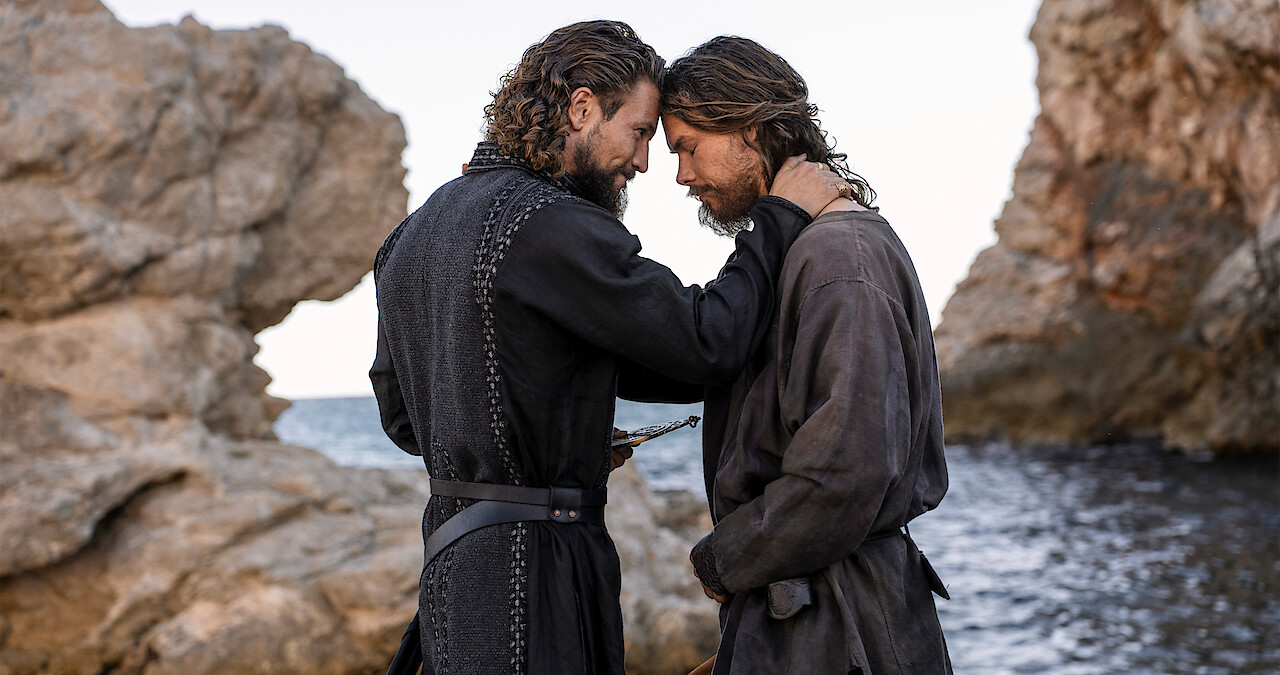
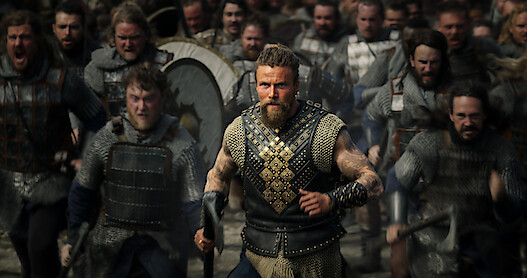
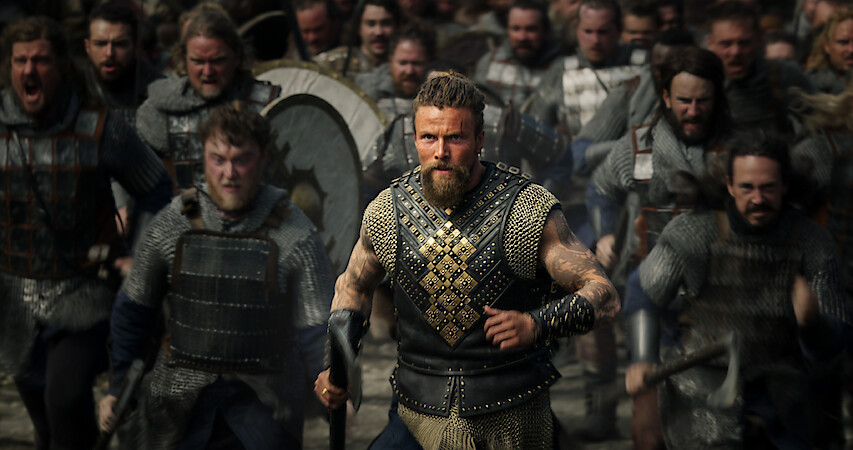
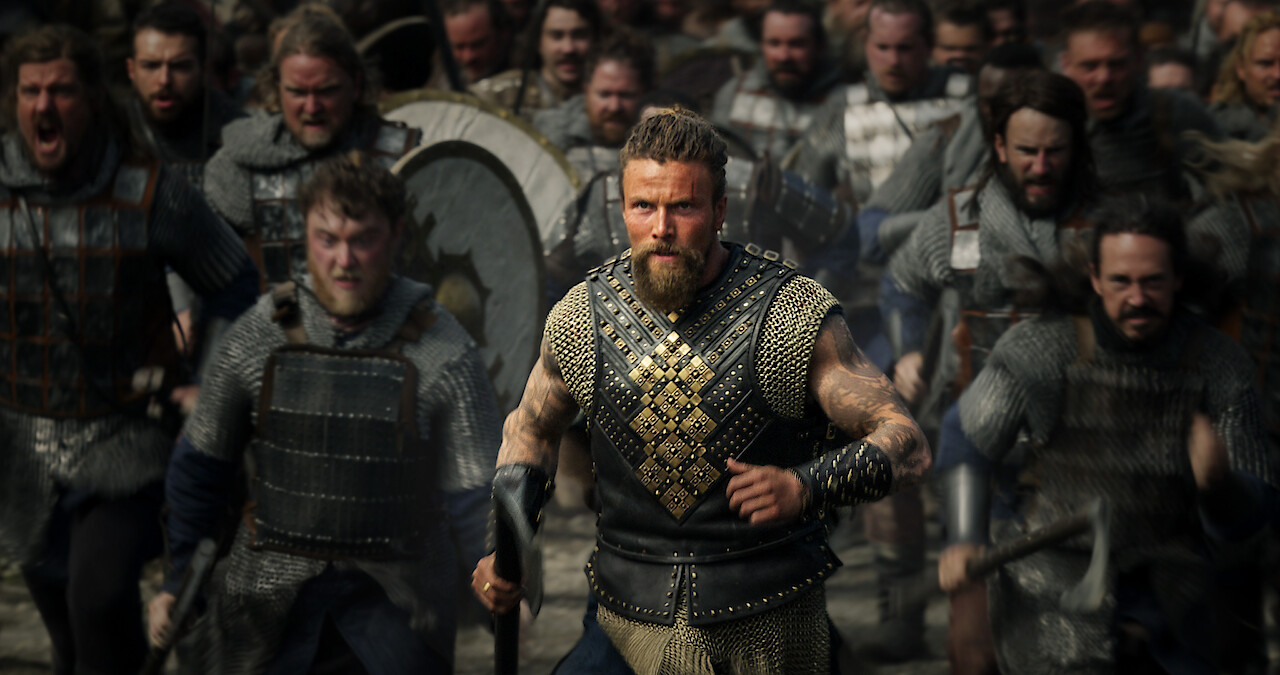
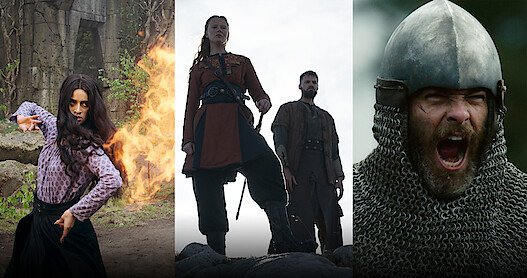
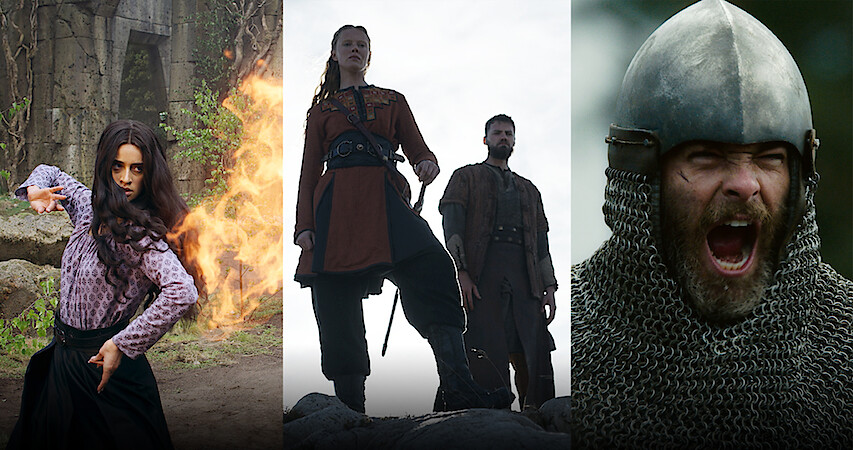
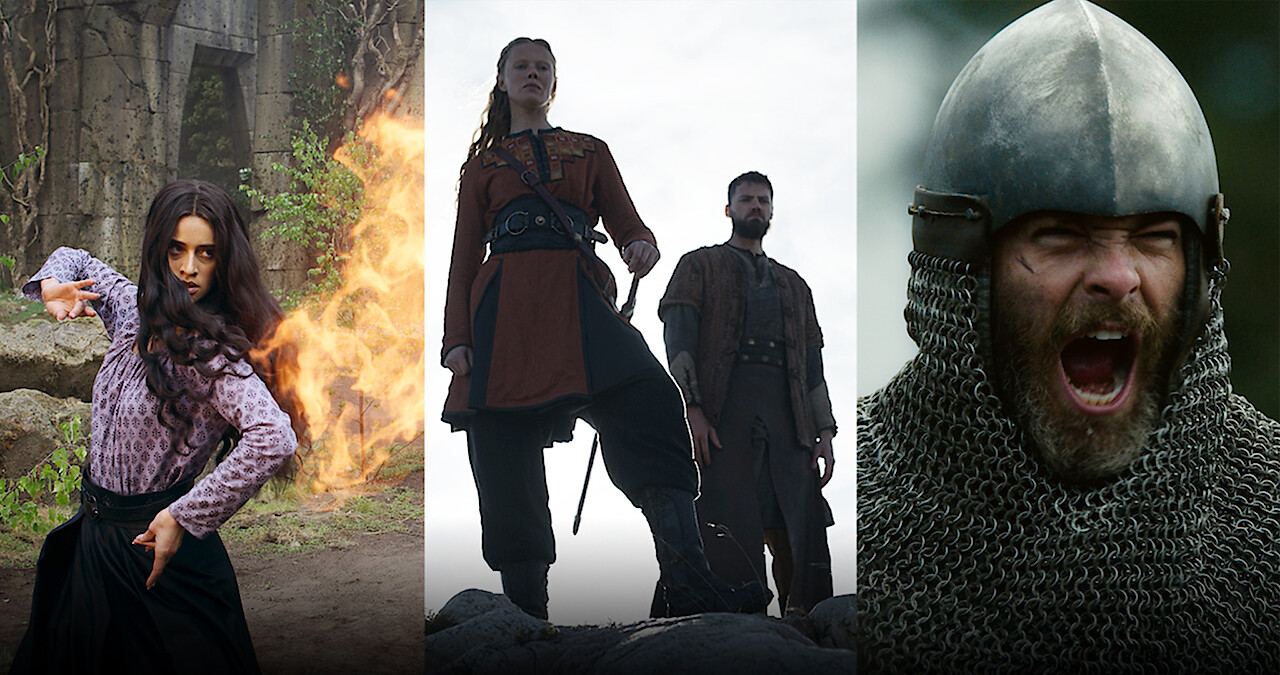
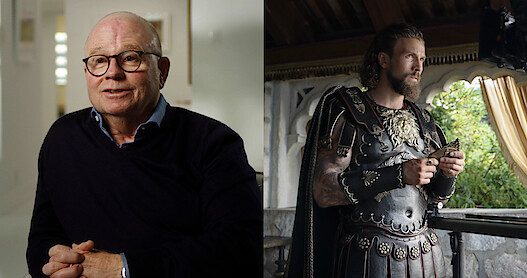
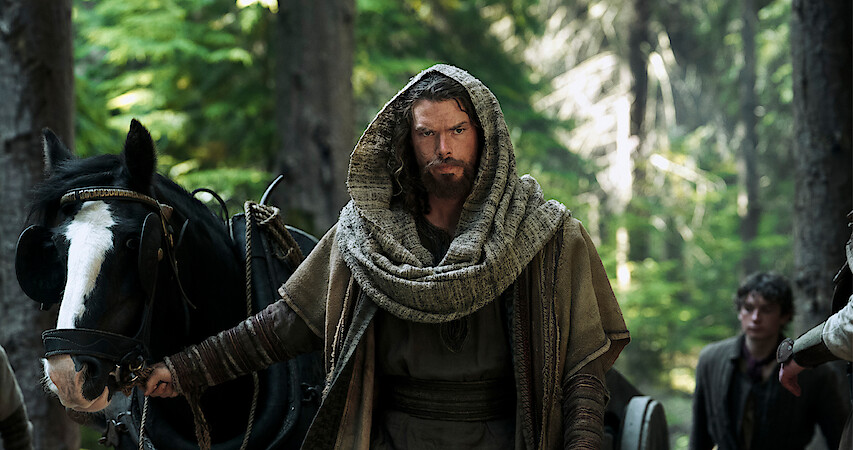
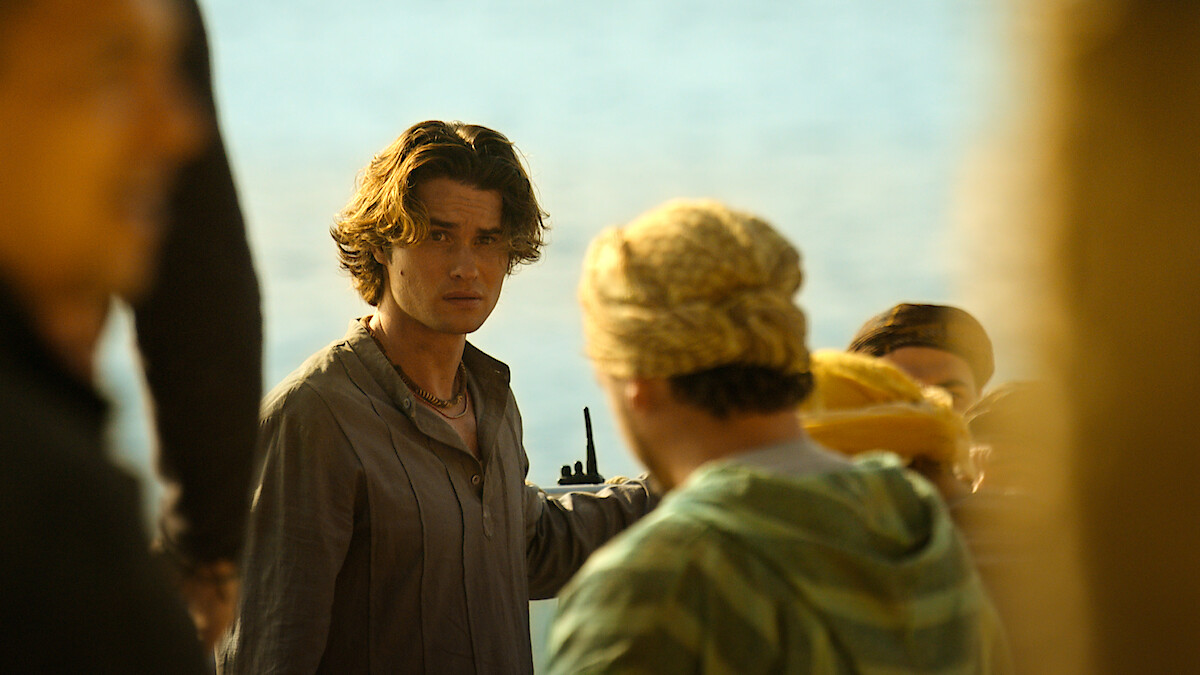
It’s here on the frigid sea that we meet Freydís Eiríksdóttir, the legendary daughter of infamous Erik the Red, and sister to explorer Leif Eriksson, who joins her on this rough journey to the port town of Kattegat. The siblings — played by Frida Gustavsson and Sam Corlett — helm the new Netflix historical-fiction series Viking: Valhalla, which weaves meticulous facts from 1,000 years ago with the compelling storytelling tropes of today.
“You have to filter what we know about the Vikings from the written word,” says series creator Jeb Stuart about crafting a story reflecting a culture that left virtually no original written accounts. “But as they say, the shovel doesn’t lie. We’re really learning a lot more about the Vikings from archeological evidence now than we ever did before; we’re pulling up ships from bog peats and discovering them from all sorts of ways.”
And with each boat that’s unearthed, we learn more about how the ingenious design of these quick ships that enabled the Norsemen — and the Viking raiders — to travel thousands of miles to distant locations, down Russia’s Volga River to the Spice Road and Constantinople, throughout North Africa and even to Canada (sorry, Columbus!).
Tríona Sørensen, a curator at the Viking Ship Museum in Roskilde, Denmark, knows these ships better than most. She even journeyed on a reconstructed longboat from Denmark to Ireland with a crew of 66. Tudum caught up with her to learn everything about Viking ships and culture, from how longships were built to where you go to the bathroom on an open-air boat. (Spoiler alert: Peeing in a storm sounds... not ideal.)
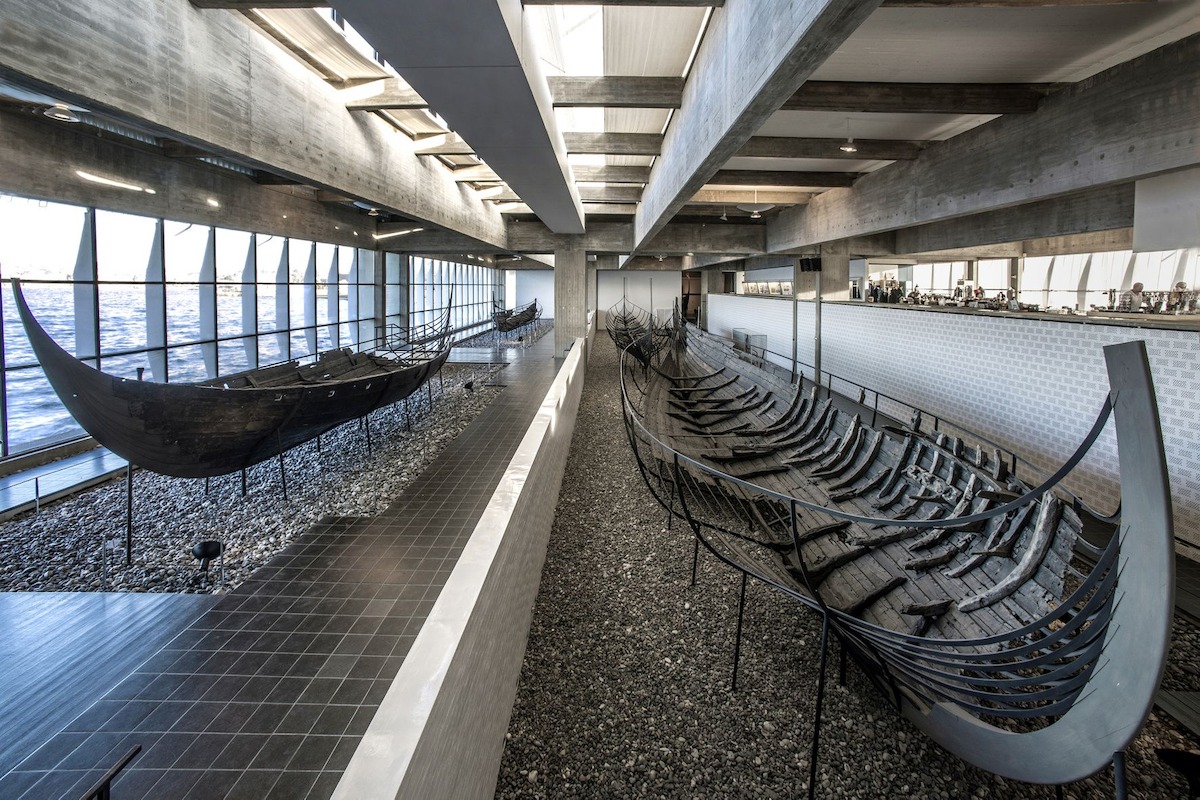
The Viking Ship Museum in Roskilde, Denmark, displays remnants of real longships.
Courtesy The Viking Ship Museum in Roskilde.
What role did the Viking ships play in the rapid expansion of their empire?
Here at the Viking Ship Museum in Roskilde, we tend to say that if it hadn’t been for Viking ships, there wouldn’t have been a Viking Age. Ships and sailing were absolutely central to their expansion beyond Scandinavia. The maritime technology of the Vikings was light-years ahead of the types of vessels present in the rest of northwestern Europe at the time. They were fast, maneuverable, highly-seaworthy, allowing the Vikings to carry out the rapid hit-and-run raids that characterize the early part of the Viking Age and later developing into specialized ship-types for warfare, trade and fishing.
But having ships is no use to you if you don’t know how to sail them. The Vikings were masters of shipbuilding, but they were also incredibly skilled seafarers, having honed their skills through many generations along the Scandinavian coastlines. Travel over water was often quicker and safer than journeying overland, as there were few established road networks and the terrain was often challenging.
Explorer Leif Eriksson traveled long distances from his native Greenland, even traveling to North America. What made the viking ships he used so effective at traveling long distances?
During Leif Eriksson’s time — spanning the end of the 10th and the start of the 11th centuries — Viking ship design had become highly specialized, with different types of ships being used for different purposes. Everyone is familiar with the longships used in warfare — those iconic long, narrow vessels made for transporting warriors as quickly as possible — but the type of ships that would have plied the waters of the North Atlantic would have been those known as knarr. These are large, ocean-going cargo vessels with a very different type of hull to the sleek warships. Knarr are much broader and have much higher sides, so they are better able to cope with the extreme weather conditions on the North Atlantic. They also have a large capacity for cargo, so crews could bring plenty of provisions for long voyages, where they might have been at sea for many days at a time.
There are accounts of Leif Eriksson’s sister Freydís Eiríksdóttir traveling with him to Vinland/North America. How did women participate in these long Viking journeys?
You know, 15 years ago I was part of a crew that sailed a reconstruction of a Viking Age longship from Denmark to Ireland. There were 65 of us on board, 11 of us were women. And without fail, in every harbor we visited — and I mean every harbor — people would ask us what it was like to be a woman on board. After a few weeks of that same question, you get tempted to just start saying, “Much the same as it is for the men — cold,” but for me as an archaeologist, it really hammered home just how poorly represented women were in popular perceptions of the Vikings. That for most people, Vikings equals men.
In many ways, this was probably down to how Vikings have been portrayed in popular culture — that the weapon-wielding men had dominated the picture for so long. So while there’s been generations raised on the image of Tony Curtis and Kurt Russell as Vikings, that popular image is beginning to change. Perhaps in a large part due to shows like [the original History Channel series] Vikings, with characters like Lagertha. And while [they] might take the narrative to the other extreme in terms of how they depict women’s involvement in warfare, politics and so on, they do help to make women more present in people’s view of the Viking Age.
Because they were most certainly present on Viking voyages. The simple fact that settlements were established on Iceland and Greenland is indisputable proof of this — the men weren’t reproducing on their own! That Freydís is described as taking part in a voyage to Vinland just underlines this. The descriptions of her in the saga texts are also interesting, that she’s depicted as taking part in the enterprise on her own right and making business deals about how to divide the profits of the endeavor. It tells us something about the role that women — those with high status, at least — might have played during the late Viking Age.
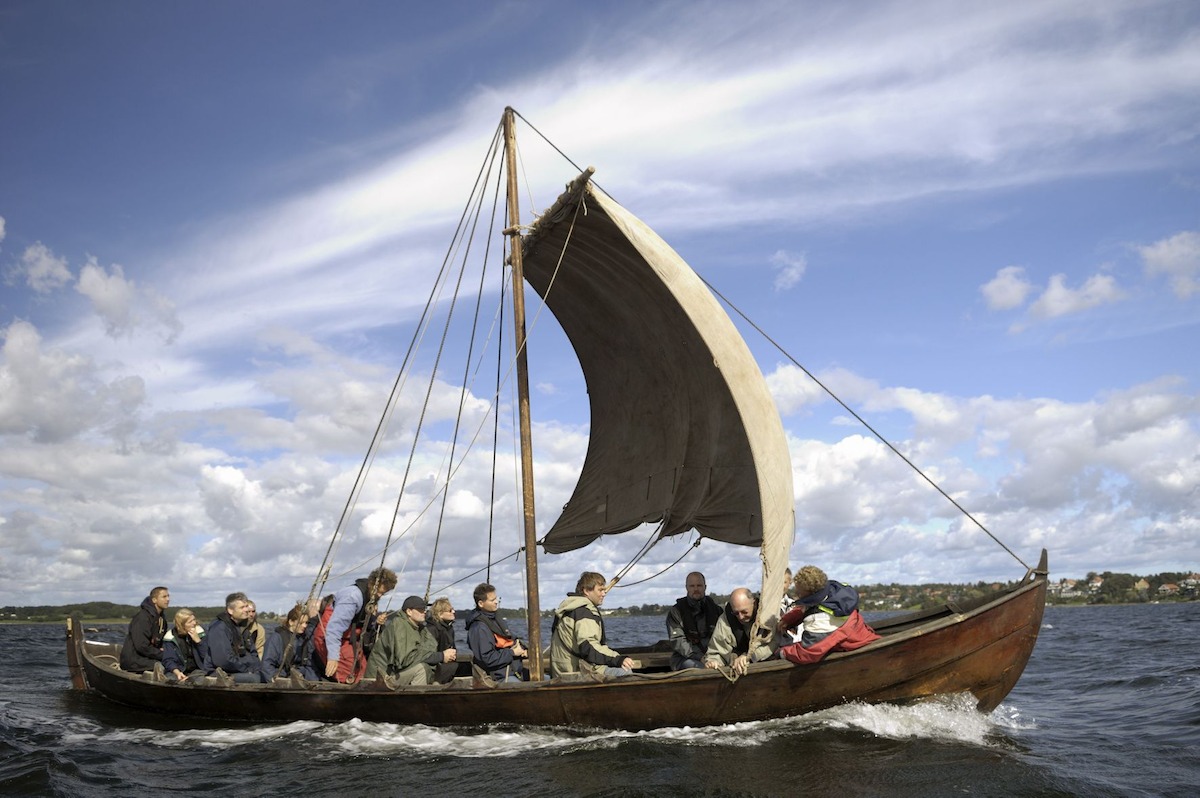
Museum visitors take a journey on a reconstructed Viking ship.
Courtesy The Viking Ship Museum in Roskilde.
What was daily life like for Vikings on the boats for many weeks? Where did they sleep, eat (and go to the bathroom!)?
Having crossed the North Sea in a reconstructed longship, the shortest answer is: cold and wet! There are no cabins on Viking ships. At best, you might be able to take shelter under a tent canvas or tarp, but most of the time, you’re exposed to the mercy of the elements. So if it rains — which it tends to do here in Northwestern Europe — or if waves break over the low ship sides, you get wet. Vikings would have used lanolin-rich wool, which is naturally water-repellent and has the advantage of retaining heat even when wet. They might also have used leather “waterproofs,” which had been treated with animal fat.
Life on board shifts between periods of relative inactivity and short, sharp bursts of adrenaline-fuelled action, so daily life would have followed the rhythms of sailing and the conditions defined by the wind and waves. People would have told stories, sung songs and played games to pass the time. Long voyages could also have instilled a special bond between the sailors on board. On a warship, for example, there’s very little room, so you live cheek-by-jowl with your shipmates and very quickly get to know each other, for better or worse...
Vikings would have sailed along coastlines as much as possible, only undertaking long sea crossings when necessary. By hugging the coast, you have the option of going ashore to replenish supplies and cook a hot meal, and historical texts tell us that this was the favored approach at the time.
As for the bathroom, strangely enough, accounts of this don’t feature widely in historical texts, so you can use your imagination... Or you can hear [about] what we do, when sailing Viking ship reconstructions. When weather allows it, the quickest and easiest method is just to go “over the side.” In rough seas, you use a bucket which is also emptied over the side. Needless to say, when wearing survival suits, life jackets... The whole process is far easier for men than for women. When you’re cold, sailing through bad weather and pouring rain in the middle of the night and knowing that peeing is going to involve you removing most of your clothes, you develop a formidable capacity to wait!
Vikings traveled throughout the world, even to North Africa and the Middle East. How did their travels bring the influences of other cultures into their own society? Were Vikings ethnically diverse beyond their roots in Northern Europe?
Ships and sea routes brought the Vikings into contact with a global network of trade and exchange. While we know from historical sources that they made it far afield themselves — to the Mediterranean, Constantinople, across the North Atlantic and so on — you have to remember that each of these trading centers or cities they reached were themselves connected to other far-flung destinations. So you have to imagine a kind of web of sailing routes stretching across the globe, allowing for the exchange of trade goods but also ideas, as different cultural encounters took place in maritime trading centers.
You see this clearly in the archaeological record here in Scandinavia — in silver coins from Arab lands, precious metalwork from Ireland and Britain, silks from the east — all items that made their way to Scandinavia via maritime trade networks.
Ethnicity is always a thorny subject, but I think one thing that typified the Viking expansion was their ability to adapt when they settled outside of Scandinavia. We see their influence in the DNA of modern populations, in place names and Old Norse loanwords that creep into various different languages around Europe. But perhaps the most telling aspect of that diversity is seen in what comes after the end of the Viking Age in parts of northwestern Europe, particularly in France, Britain and Ireland: That the maritime culture of the Vikings becomes replaced by the feudal society of the Normans — themselves descendants of Scandinavians who had settled in Northern France. So this dynamic, vibrant culture that burst onto the pages of history at the end of the eighth century doesn’t just disappear. It evolves, it adapts and turns into something new.
What were some of the decorations and symbols that typically adorned the ships? Were there any religious or spiritual meanings to those images?
We find strong evidence for the decoration of ships both archaeologically and historically. The most famous is probably the Norwegian Oseberg Ship, which has wonderful carved decorations on the stems. There are also written accounts such as the Encomium Emmae [Reginae], which describe the fleet of Sweyn Forkbeard as being decorated with lions, dolphins, men and birds. The most famous motif though is probably the dragon heads, which are depicted as being set on the stem posts, such as in the Bayeux Tapestry’s panels showing ships traveling to and from Normandy.
It’s difficult to say exactly what meaning these carvings may have had. They may have been intended to strike fear, to provide some kind of protection or something else entirely. The Vikings were a highly decorative culture, and we see this in everything from their clothing and jewelry to their weapons, so it makes sense that something as essential to their daily life as ships would also have been decorated in the same styles.
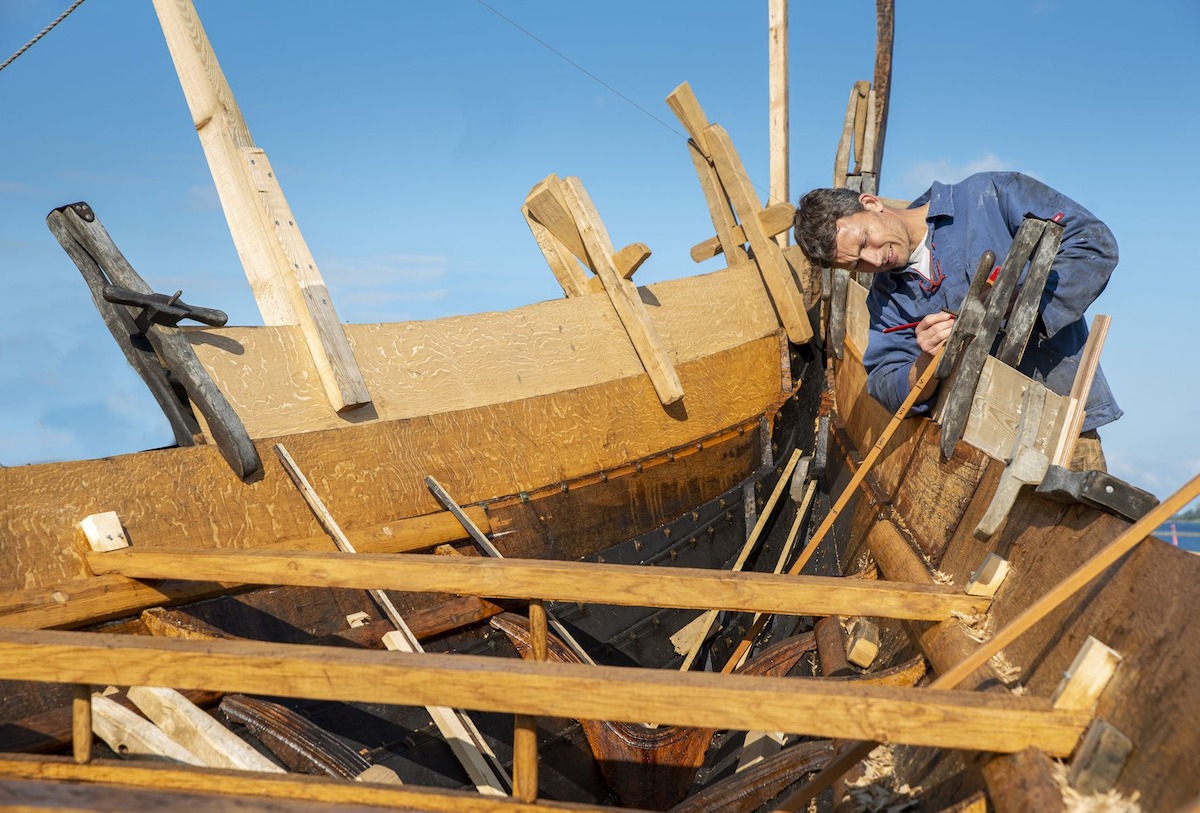
At the Viking Boat museum in Roskilde, Denmark, reconstructed Viking longships are on display.
Courtesy of The Viking Ship Museum in Roskilde.
What are some of the technical aspects of the boats: What were the boats made out of and how big were they? How many people could they hold? How long did it take for them to be built?
Viking ships are clinker built. This means that the planks that make up the ship sides overlap each other and that [construction of] the shell, or the outside of the hull, is begun first while the frames, or ribs of the ship, if you like, come second. Oak and pine were used, depending on what was available in the local area. The ships were built using timber that had been cleaved out. We have no evidence whatsoever for the use of saws in Viking Age shipbuilding, so planks were manufactured by splitting lots radially — imagine cutting a circular pie into triangular sections — using mallets and wedges. Each of these slices were then hewn down into planks using axes. This method of splitting the wood allows you to make planks that are incredibly flexible and thin yet also very strong. When you cleave the wood, it splits along the run of the log’s fibers, preserving the strength of the wood. For the internal timbers, the frames, knees and other reinforcing elements, they chose logs and branches that had grown with a curve that matched the desired lines of each piece, again ensuring maximum strength for minimum weight. So this meant the Vikings could build these extremely elegant-looking, light and flexible ships that were also highly seaworthy.
The term Viking ship is also something of a misnomer. When we hear it, we all think of longships — those iconic warships with the high stem and stern — but really, boats and ships during the Viking Age came in a myriad of shapes and sizes, from small two-man boats for fishing to the great warships like the 37-meter-long ship known as Roskilde 6 and the great cargo vessels like Skuldelev 1. Different ships were used for different purposes. The warships were intended to carry as many people as possible while on the trading ships, the more room you had for cargo and the fewer crew required to sail the ship, the higher the profits.
Here at the Viking Ship Museum, we’ve built reconstructions of everything from the small Gokstad boats to the 30-meter-long warship Skuldelev 2, so we have a fair idea of how long it takes to build a ship. Sea Stallion — our reconstruction of Skuldelev 2 — took approximately 27,000 hours to build, and this is excluding all the extra work required to make the sail, ropes, produce iron for the rivets... Saga texts such as the Saga of St. Olaf tell how a longship could be built during a single winter and other texts describe the many specialists that could be involved in the process, from stem smiths and master builders to woodsmen and boatbuilders. The shipbuilding scenes from the Bayeux Tapestry also give a sense of the flurry of activity involved, with different craftsmen dealing with specific stages of the building process.
What do movies tend to get right — and wrong — about Viking ships?
Oh, this is a tough one. I think most archaeologists — and I’m probably just as guilty of this as anyone — have a really annoying tendency to nitpick the details when watching historical drama. But you know what? That’s exactly what it is: drama. It’s meant to be bombastic and entertaining, and yes, sometimes authenticity gets lost along the way. And that’s where museums come into the picture. If shows like Vikings ignite a spark of interest that makes someone decide to come visit a Museum to learn more, then I’m happy — it’s our job to tell accurate and authentic stories.
That said, it’s kind of hard not to nitpick when you work at a museum that focuses on Viking ships. My biggest bugbear is one which seems to invariably show up at some point in nearly every Viking-related film or TV series. And it’s the inevitable storm scene — big waves, howling winds, a ship getting tossed about, and eventually, someone will always yell, “There’s too much wind! We’ll have to take down the sail!”
So the sail is whipped down, it’s out with the oars (spoiler alert: you can’t row in really big waves), and this is where the sailors start muttering self-righteously to themselves. Because a Viking ship can be compared to a bicycle in that it’s most stable when under propulsion. When you take away a sailing ship’s main method of propulsion by lowering the sail, the ship stops and the power of the waves will start to force the ship to turn so that it meets the waves side-on. You might survive a few breakers in this scenario, but unless you can get the sail back up, get the wind behind you and run from the storm, the ship will be swamped and it’ll sink.
What they do get right, though, is that kind of reverence you see for ships and sailing. Vikings were above all else a maritime culture, and I think that often shines through in the way they depict how comfortable and at-home they are when at sea.
This interview has been edited and condensed for clarity.