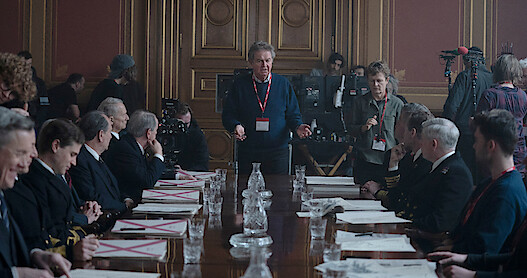
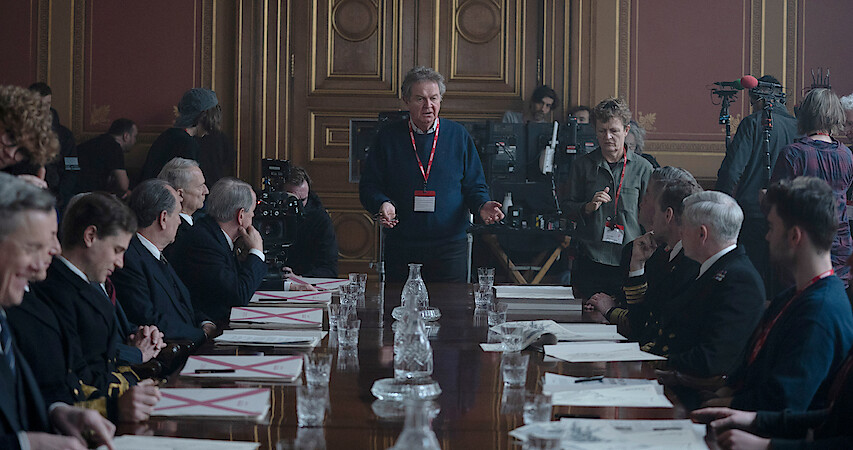
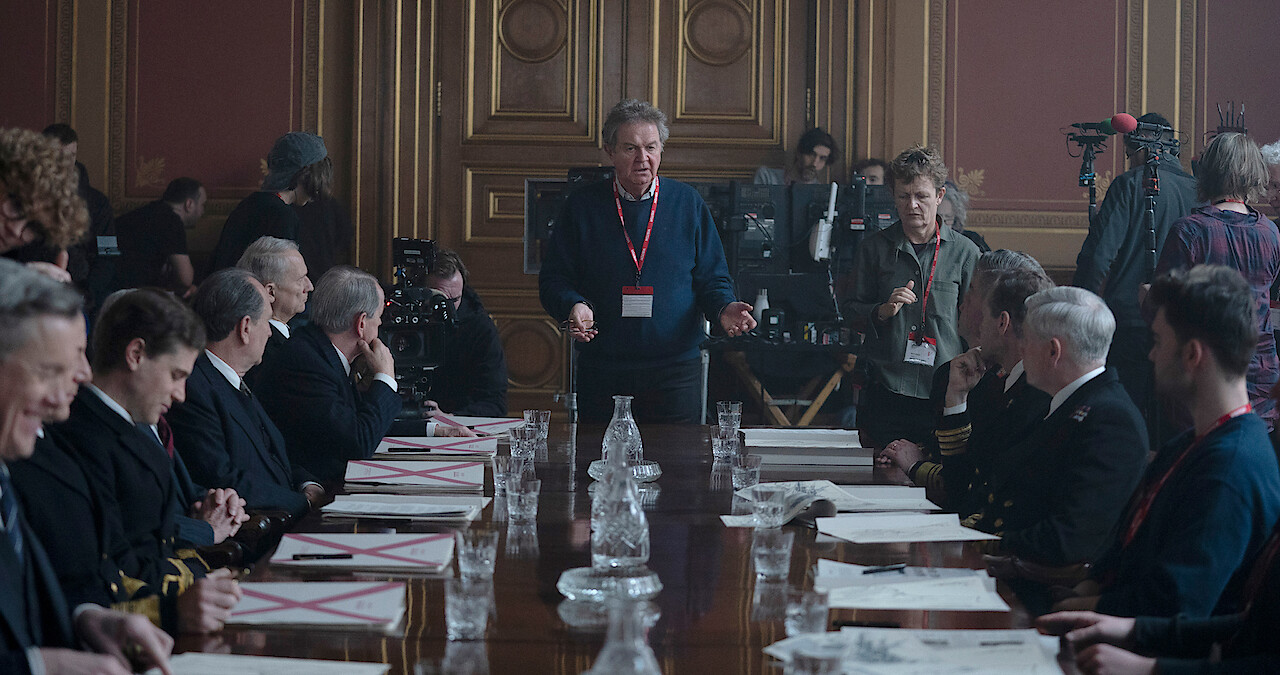
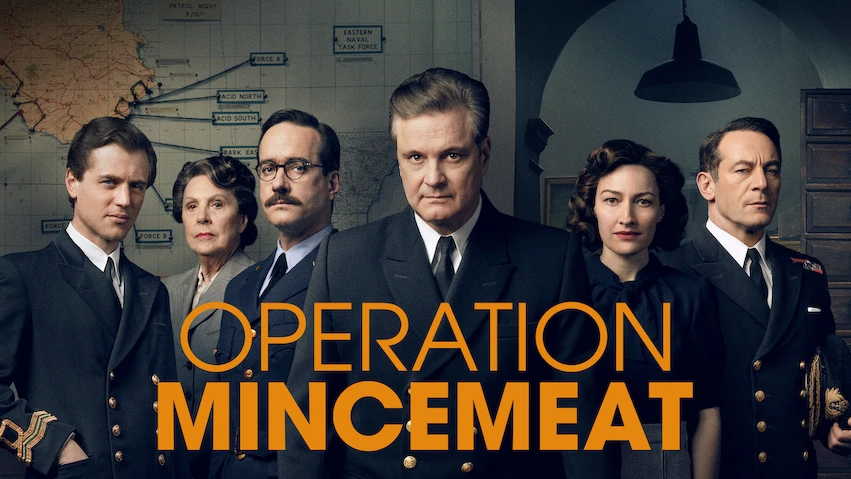
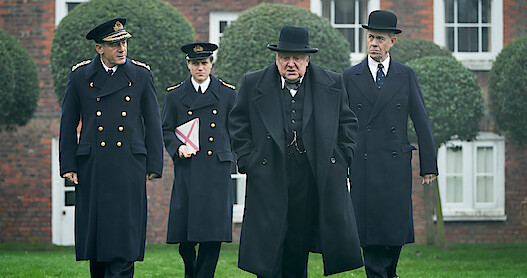
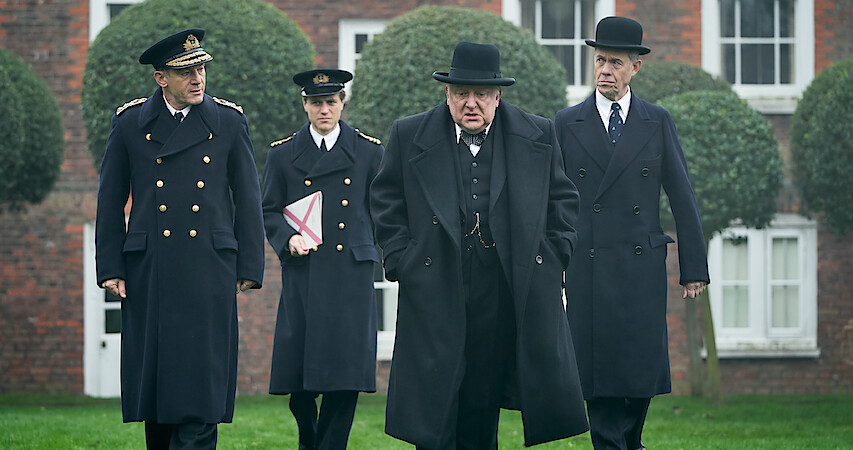
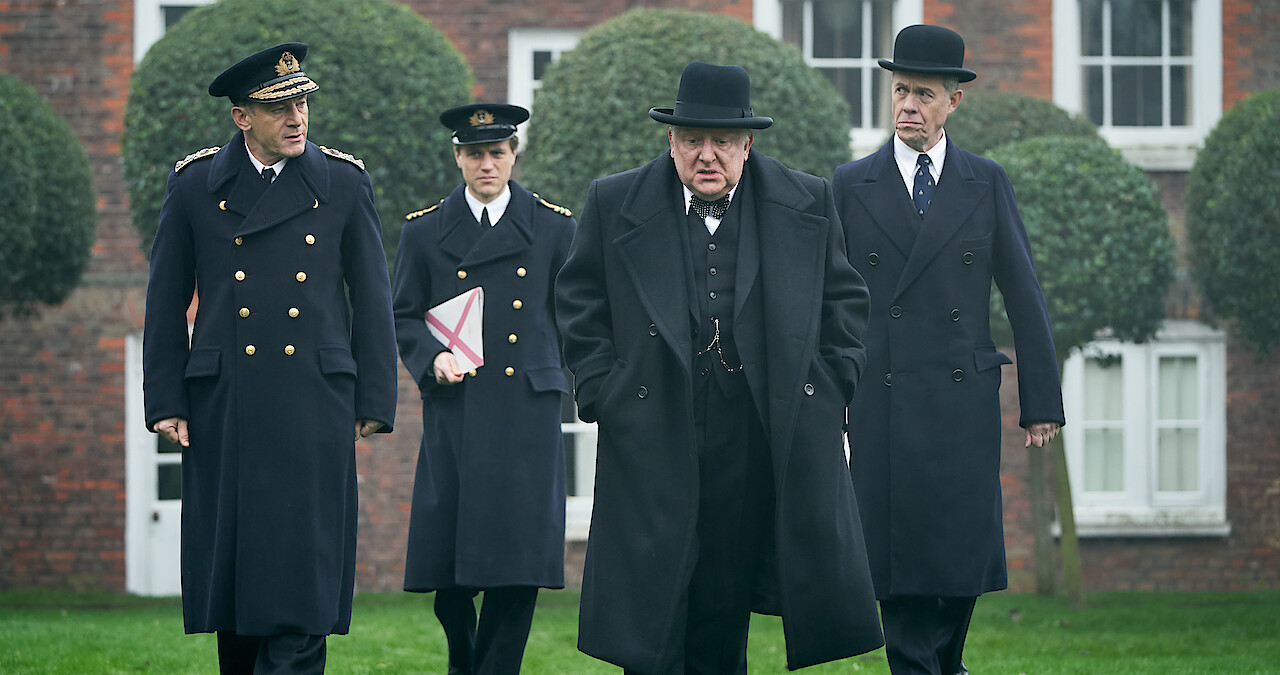
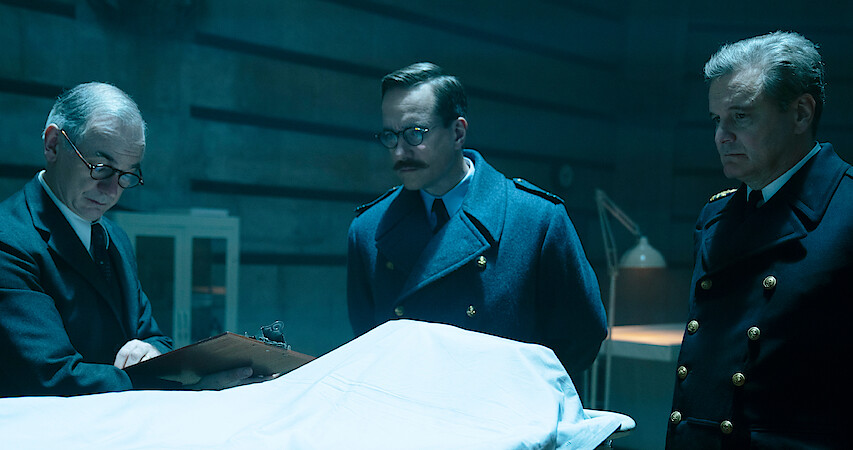
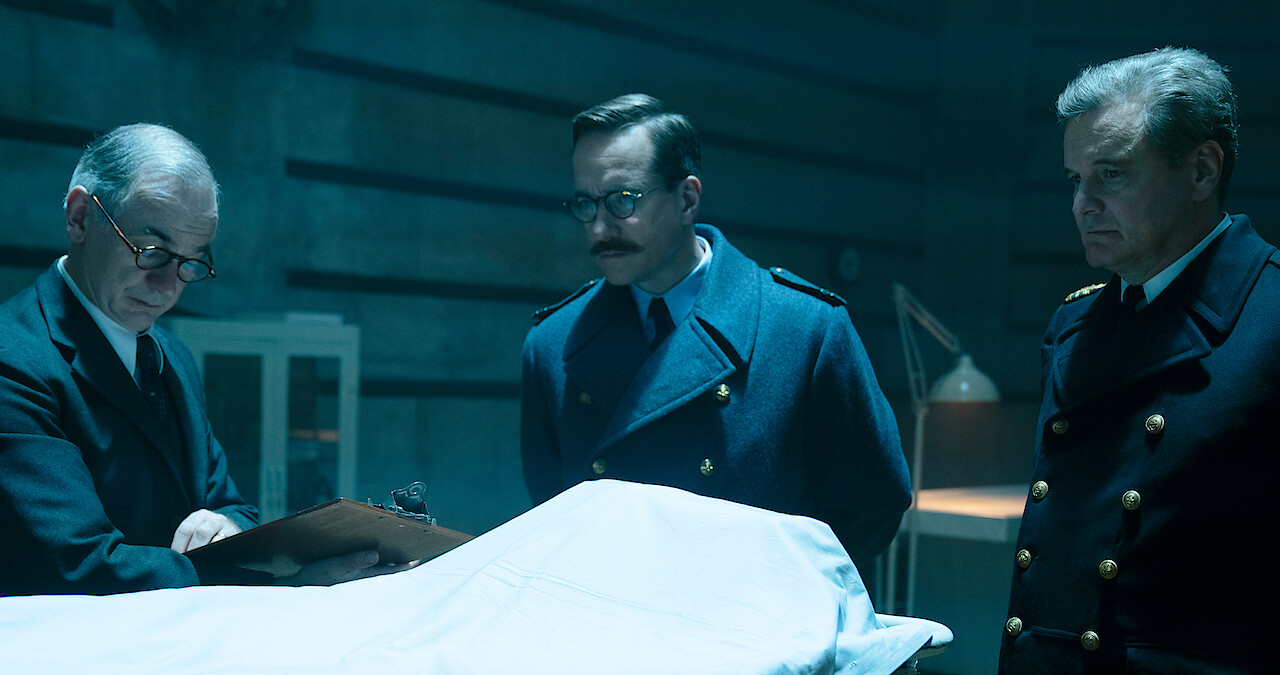
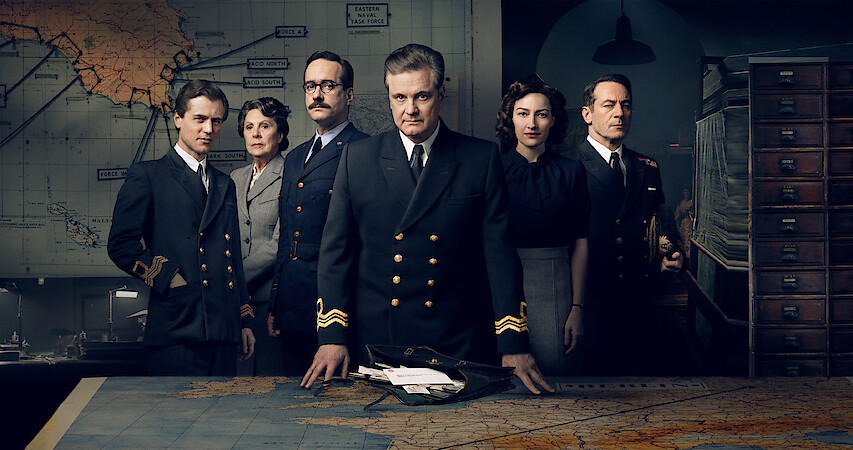
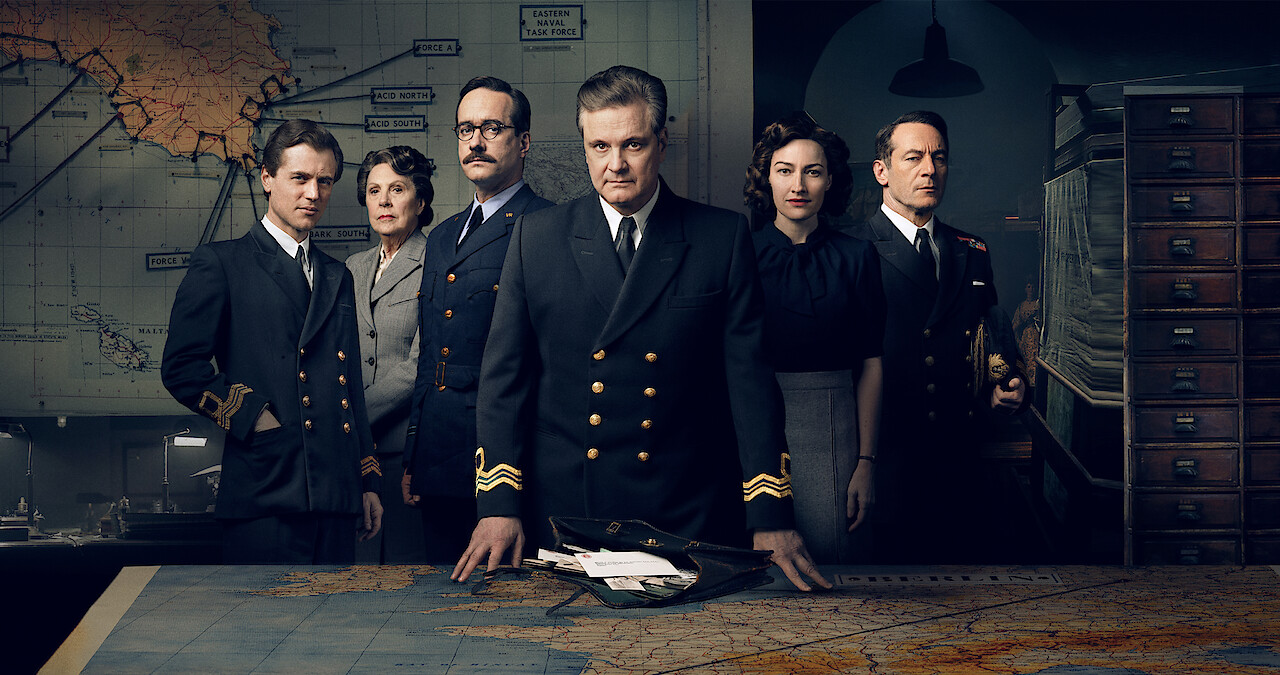
Operation Mincemeat isn’t your average World War II movie. Sure, it features its fair share of smoky boardroom meetings and delicate code-breaking sessions, but it’s also the story of a team of people trying to make a dead body a convincing character in the deadliest conflict in European history. The film depicts the real-life, top secret MI5 operation that distracted the Nazis from the Allied invasion of Sicily, a desperate effort to fool the Nazi high command by planting falsified documents on a recovered corpse. It’s a serious matter, but also one so occasionally absurd that even the characters are taken aback. “It has a natural humor about it just because of the preposterousness of what they’re trying to do, which is animate a dead body,” Operation Mincemeat director John Madden tells Tudum. “[That’s] sort of a Monty Python sketch of its own, really.”
We spoke to Madden to find out more about the delicate tonal balance required to infuse World War II with some Weekend at Bernie’s energy. Below, you’ll find his musings on everything from the role of women in the film to the story’s postmodernist streak.
On how he learned the full story of Operation Mincemeat:
It was certainly something I was aware of because an account of it was written by Ewen Montagu, who was one of the two people involved in the creation of the plan. He wrote his own account of it, heavily, heavily vetted by the intelligence services. It really amounts to a piece of fiction in its own right. And then that subsequently was made into a film of the same name, called The Man Who Never Was. And so the idea of the dead body floating up was in the realm of, I would say, urban myth at a certain point in my childhood. But I hadn’t thought about it in the meantime. And it’s only when Ben’s book came out, which was an event — well, not an event. I mean, it was just a story that hit people mostly for the first time. But because of the declassification of the MI5 files, you suddenly had access to everything that was involved in the creation of it.
On how the movie juggles tones:
I love that because I like movies of mixed tones. It’s a great pleasure, I think, to be laughing and then, suddenly, finding your laughter sticking in your throat or becoming something else. But the way to navigate that is to follow the truth of what’s happening. And, of course, they were instinctively aware that this was an impossible task, as Churchill says, “Anybody with a bloody atlas will know it’s going to be Sicily.” That’s the task they had, how do you persuade the enemy that that’s not what you’re going to do. But that’s the theoretical idea. The more they got into it, the more the importance of what they were doing started to dawn on them. And the more fragile the plot starts to seem. So, that actually takes care of what’s going on emotionally, because it becomes more important, more intense. The fiction starts to outweigh the reality of what’s going on because the fiction is the most important thing to create. And, therefore, you navigate your way through. It evolves for them, as for an audience I think, to the point where when they actually have to launch the idea they’ve created, give birth to this fictional man, it sails out of their control.
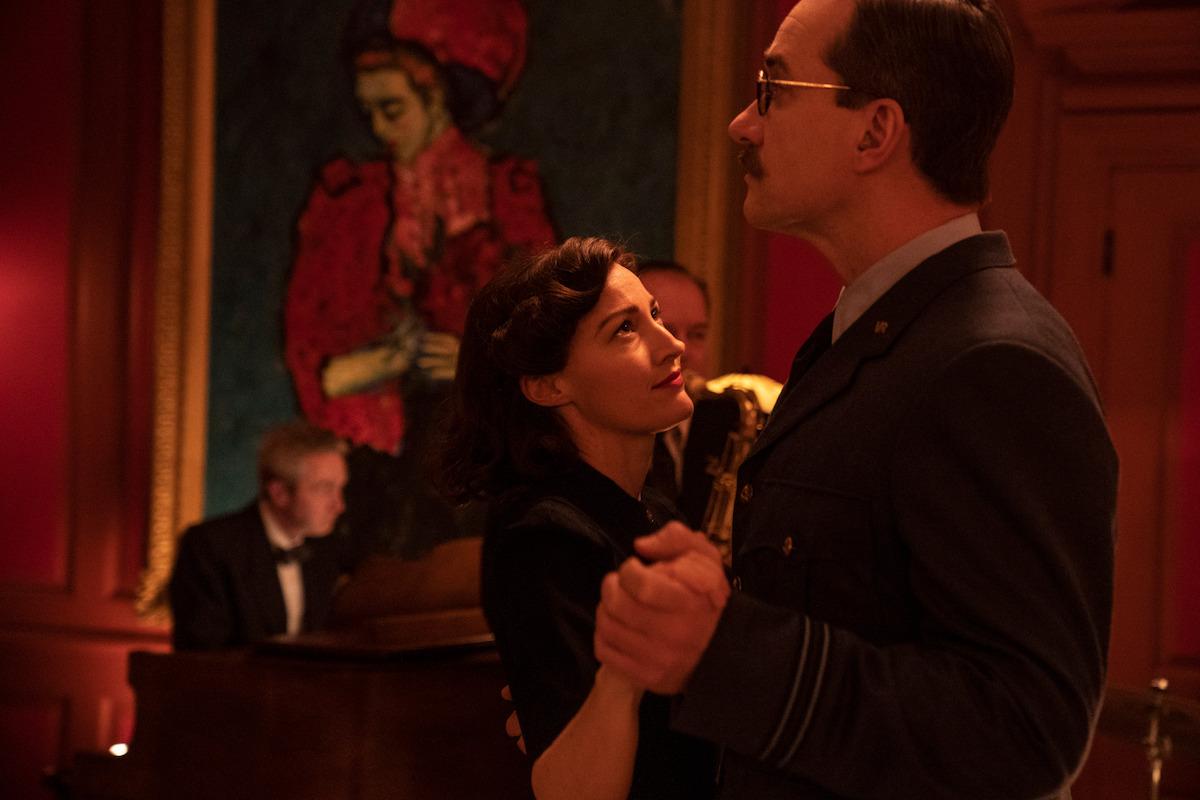
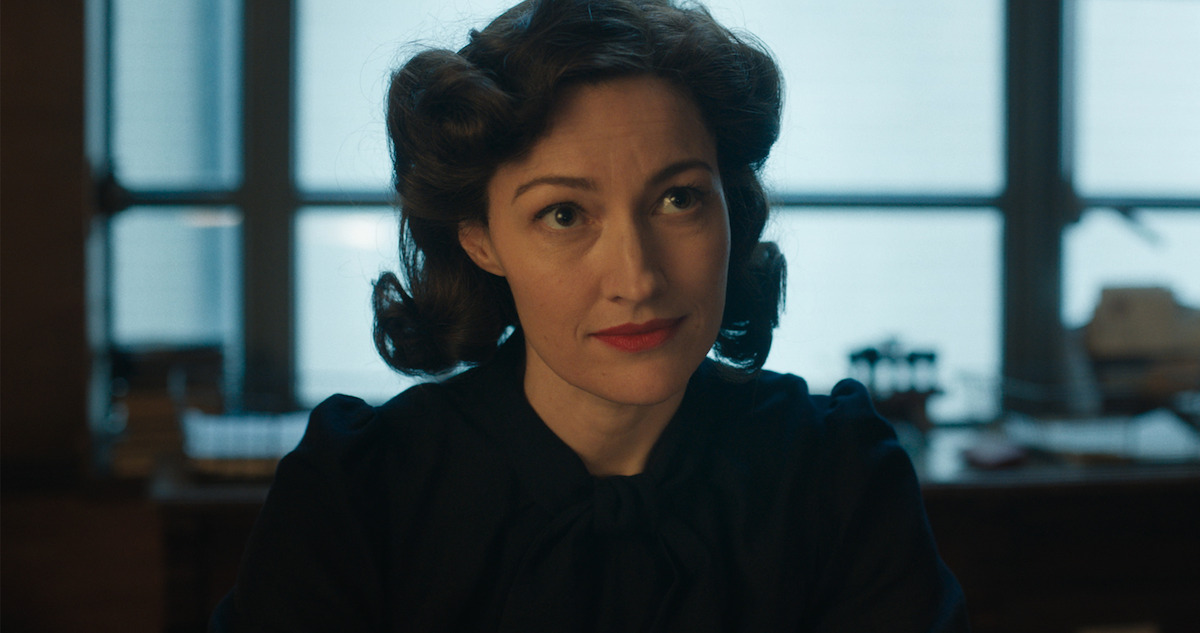
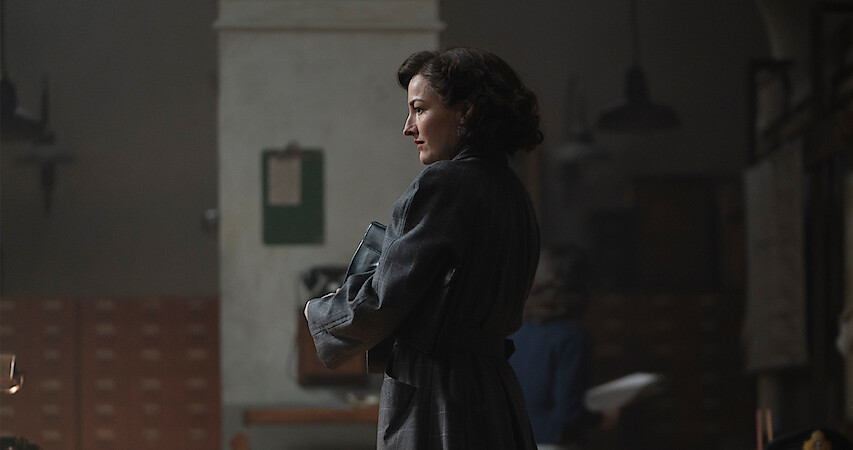
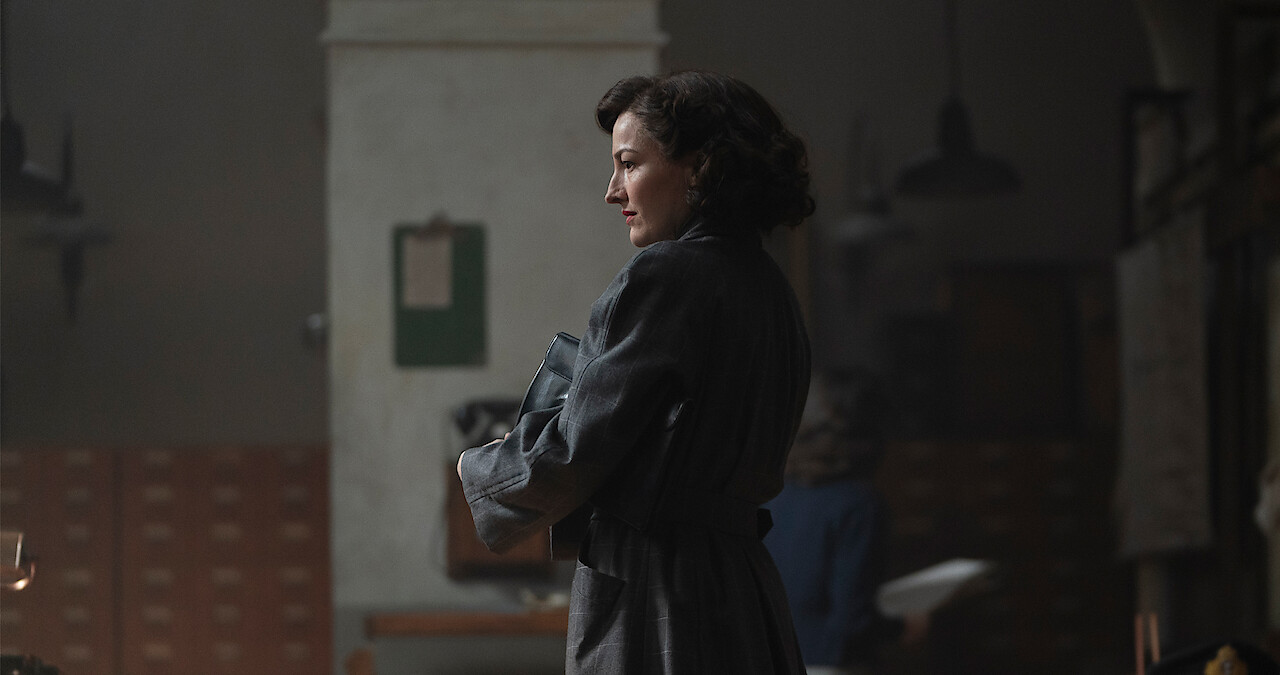
Charles Cholmondeley (Matthew Macfadyen) and Jean Leslie (Kelly Macdonald) share a moment of calm during the tense operation.
On the film’s similarities with Shakespeare in Love:
Not that I was trying to do that, but certainly it was both on Michelle Ashford [the film’s screenwriter] and my mind to a certain degree in one specific respect, which is that both those films are about the creation of a fiction. And, very specifically, about people who become immersed in and lost in the fiction, that end up of course validating the fiction, because of its own reality. So, that was interesting. And of course what that does, and, this is where the postmodernism comes in I suppose, is that that’s very much what happens to an audience, who become enveloped in the fiction that they’re watching as well and become part of the intoxication. They partake in the intoxication of that process. That’s a very pleasurable thing. Shakespeare in Love obviously was a comedic-romantic world. In this case, it’s comedic to a degree and there’s a romantic element because that was such a feature of life during the war, that people’s own lives were upended in some way and they started to find themselves half in a kind of alternative emotional reality. So, that takes care of itself and audiences instinctively understand that. The creation of a masterpiece in Shakespeare in Love was one result. In this case, it’s the creation of an idea that the characters desperately hoped would change the course of a massive world conflict.
On how the Mincemeat team becomes a surrogate for the audience:
The stakes suddenly deepen and get stronger and stronger and stronger. And I think that maps the way an audience — or, at least, this is what my hope is — maps the way an audience responds to the material. Because it’s pleasurable to go deeper and deeper into a story. You judge a story as a good one that you want to stay in if, in fact, it engages you at a deeper level and you can’t climb out of it. If you end up getting lost in the story, then I think the story has exercised its grip in the right way. So, we could put the postmodernist label to one side, but, yeah, that was definitely a part of it. And you know, it’s kind of enjoyable anyway.
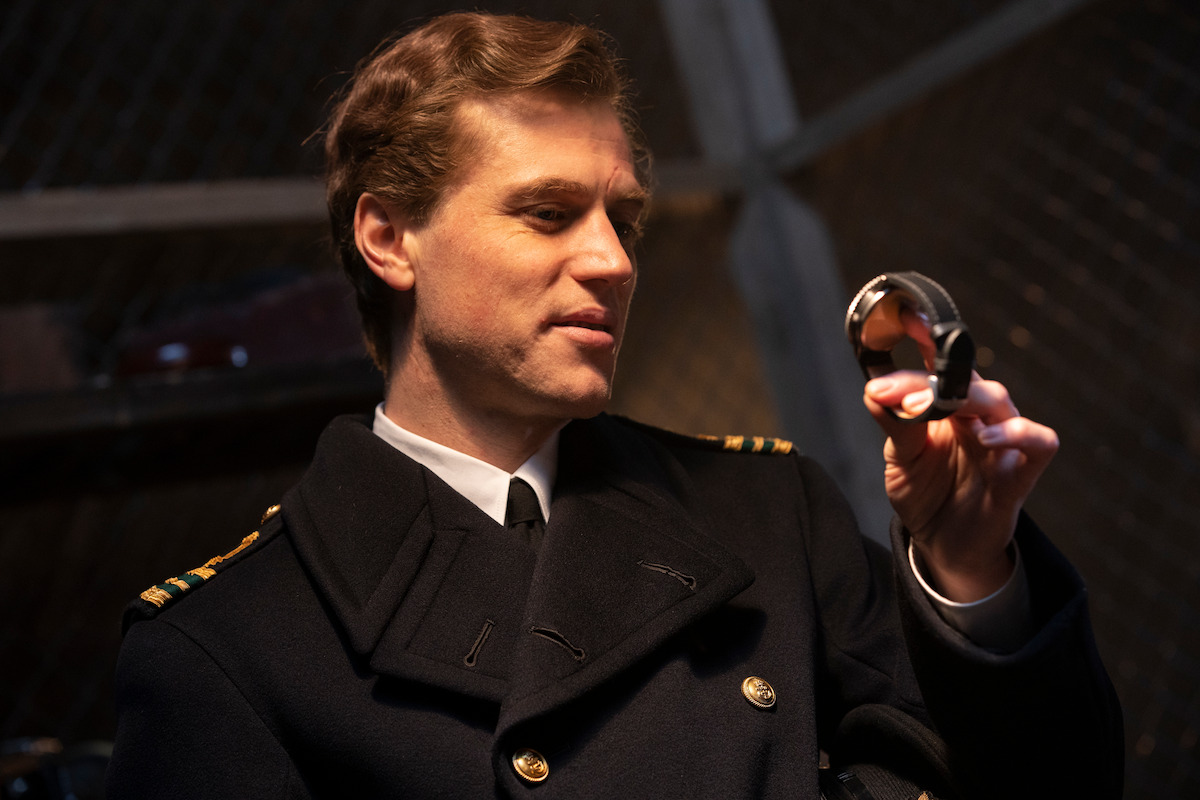
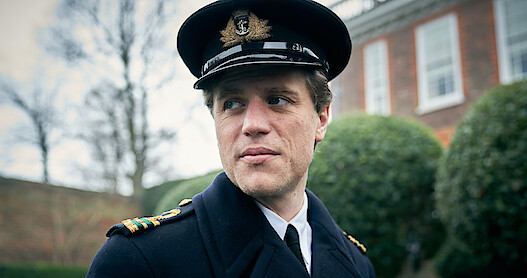
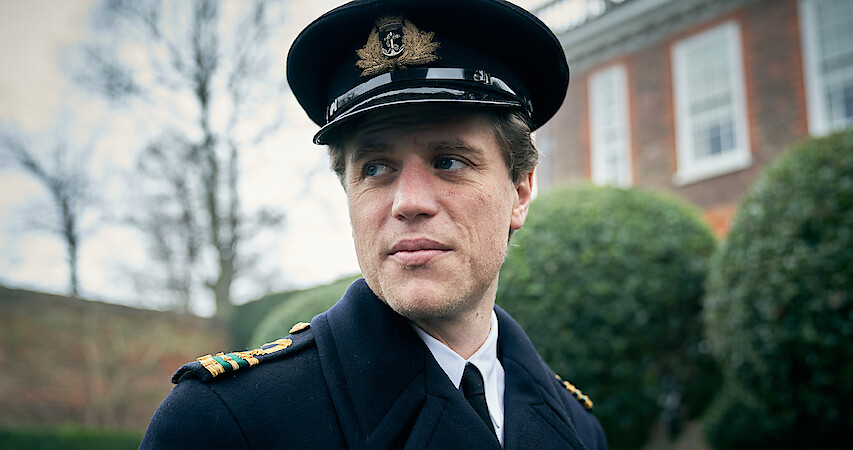
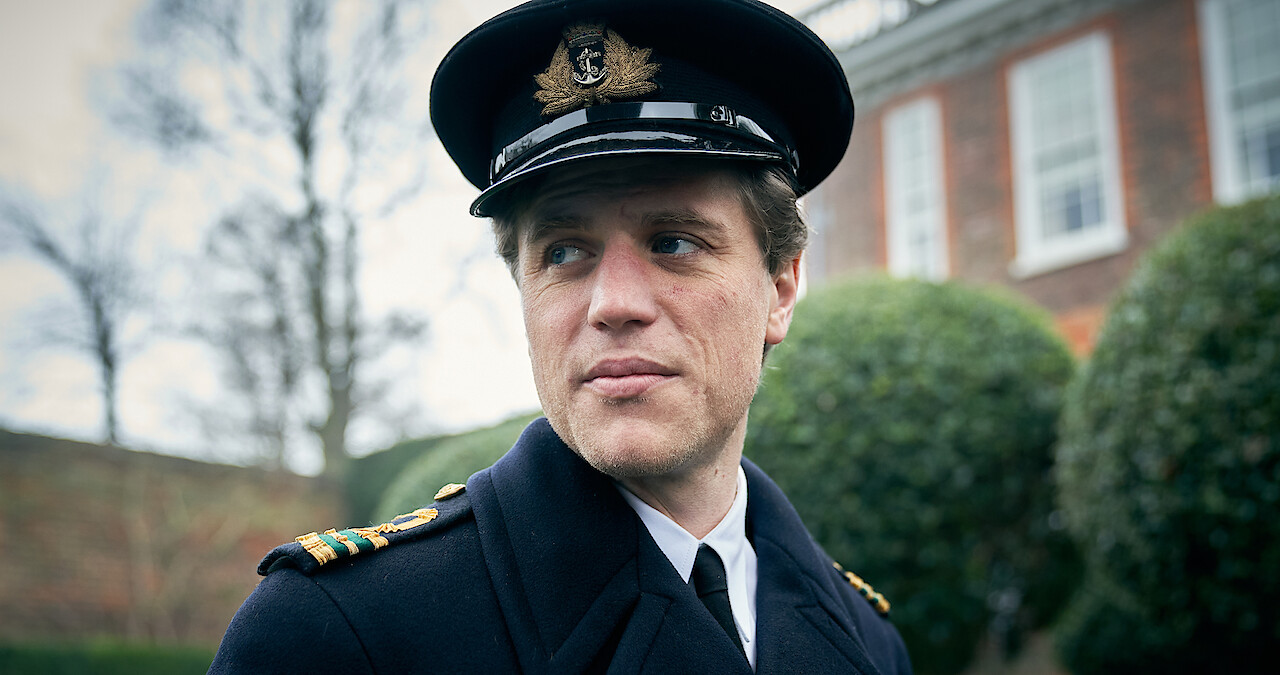
Actor Johnny Flynn plays James Bond author, Ian Fleming
On the inclusion of Ian Fleming:
The idea that Ian Fleming should be sitting, if not plum center of it, he’s not the major participant of it, but he does engender the idea or at least enable it. And it enabled us, in turn, to put the frame around the story of this man who, 10 years later, was going to create the most famous body of work about espionage, of a certain kind, of course, a rather playful, theatrical kind. But, actually, to frame our own story within that shape as well, as if he’s writing a story, hasn’t yet become a writer, but writing a story that we’re watching unfold and, therefore, you’re understanding the act of writing and dramatization because he doesn’t know how it ends. He ends up in the present tense with everybody else, who have no idea what the result of the fiction is, what the last page is. I thought that was all terrific, I don’t want to push that so hard that it overwhelms the film, but I think it’s a richness there to be had. In the end, any film like this relies on emotional engagement, and Michelle and I both felt the story had the capacity to engage people strongly emotionally, without adding things to the story that weren’t necessarily there just because of what’s involved.
On how the film takes some liberties with history:
Historically, the roles that they actually played in it are very close to reality. And what happened, to a degree, emotionally, is also close to reality. I don’t make any apologies for the fact that, in terms of managing the story and how it unfolded, you do that in such a way as to give the story its greatest impact. You’re dealing with a story anyway that is all about speculation, disinformation, embellishment of fiction and so on and so forth. To Cholmondeley’s fury, there isn’t anybody he comes across who isn’t writing a novel. There’s almost an invitation really. This part of the piece is partly about speculation. I think we trod the line carefully between not changing things gratuitously or exaggerating things because that would be something people would find interesting from a modern perspective. I think you certainly had to be aware of the fact that modern optics are very different. It’s not a postmodern World War II story in that sense. But it does give us a different perspective, I suppose, because you’re dealing with an inverted world, aren’t you?
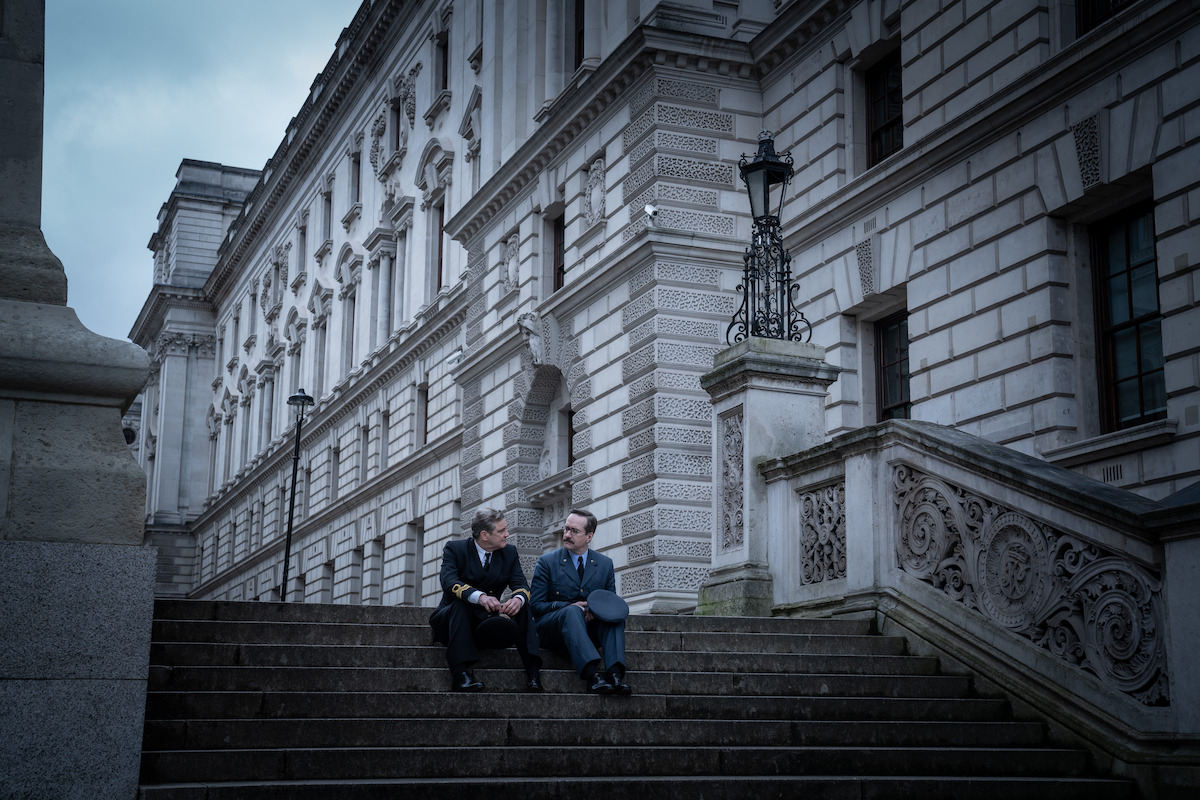
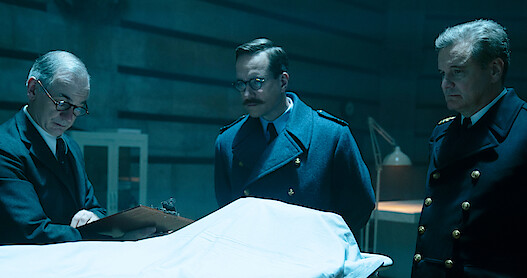
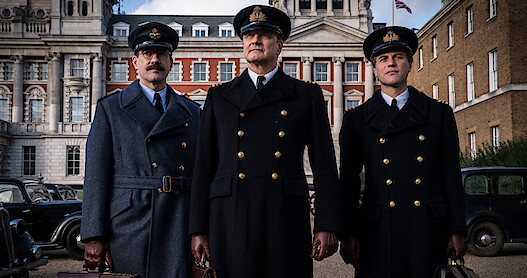
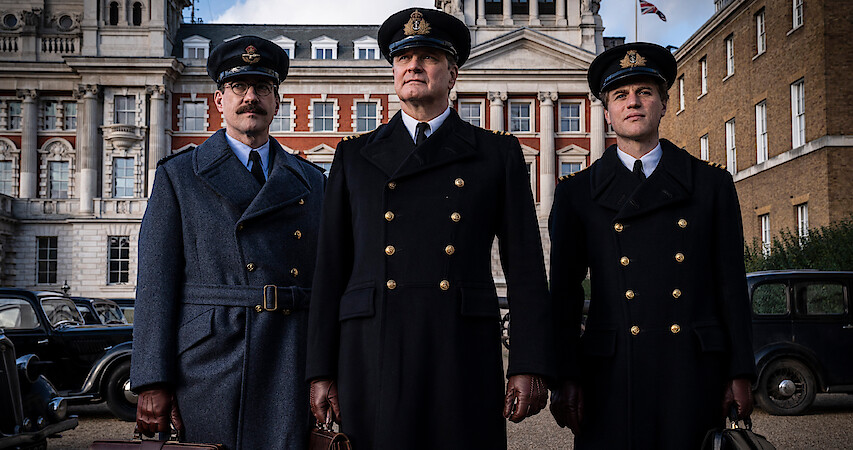
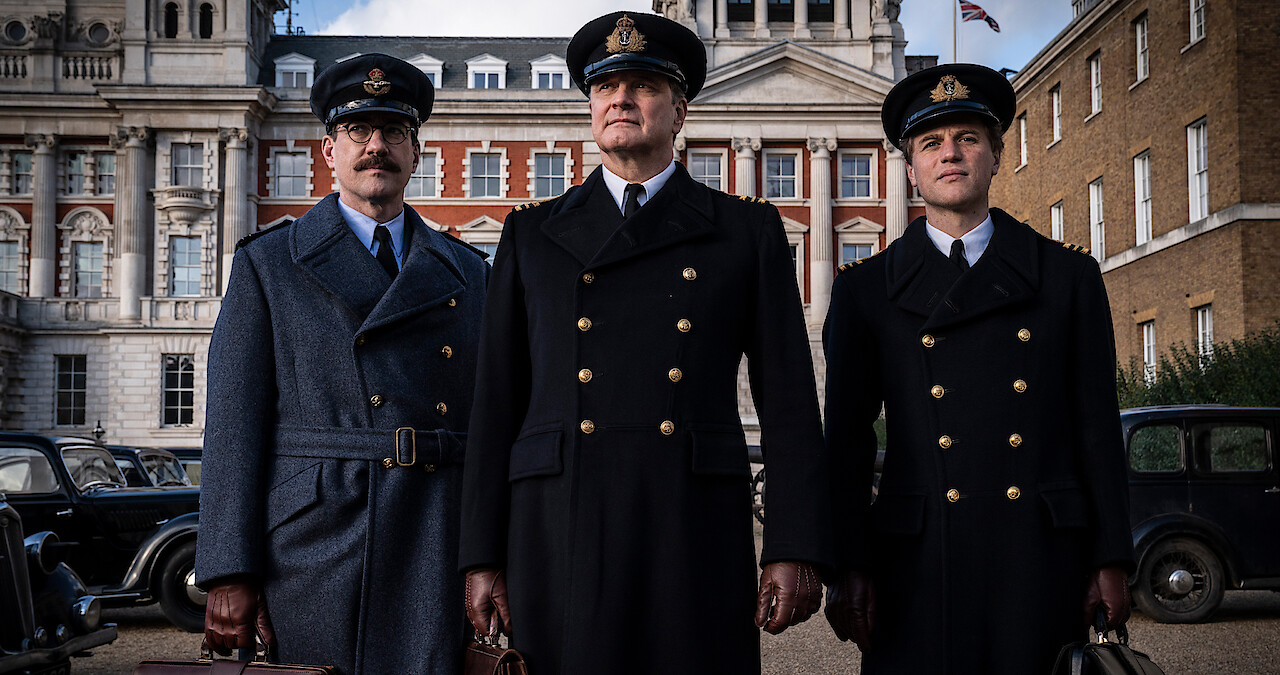
Ewen Montagu (Colin Firth) and Charles Cholmondeley (Matthew Macfadyen) discuss the top secret mission.
On the ending:
It evolves over the course of the story into something quite different than you might have imagined when it starts, which is a very good map to me for a movie. It’s a war story, yes, and it’s about heroes of a sort. But heroes that don’t feel like heroes in any way by the end of the story, who are hollowed out by it and feel strangely as if they’re sort of observers of something that happened to other people who really took the real risks and so forth. And yet, they’re the people we’ve been watching. That’s a very interesting place, I think, to be with a story.