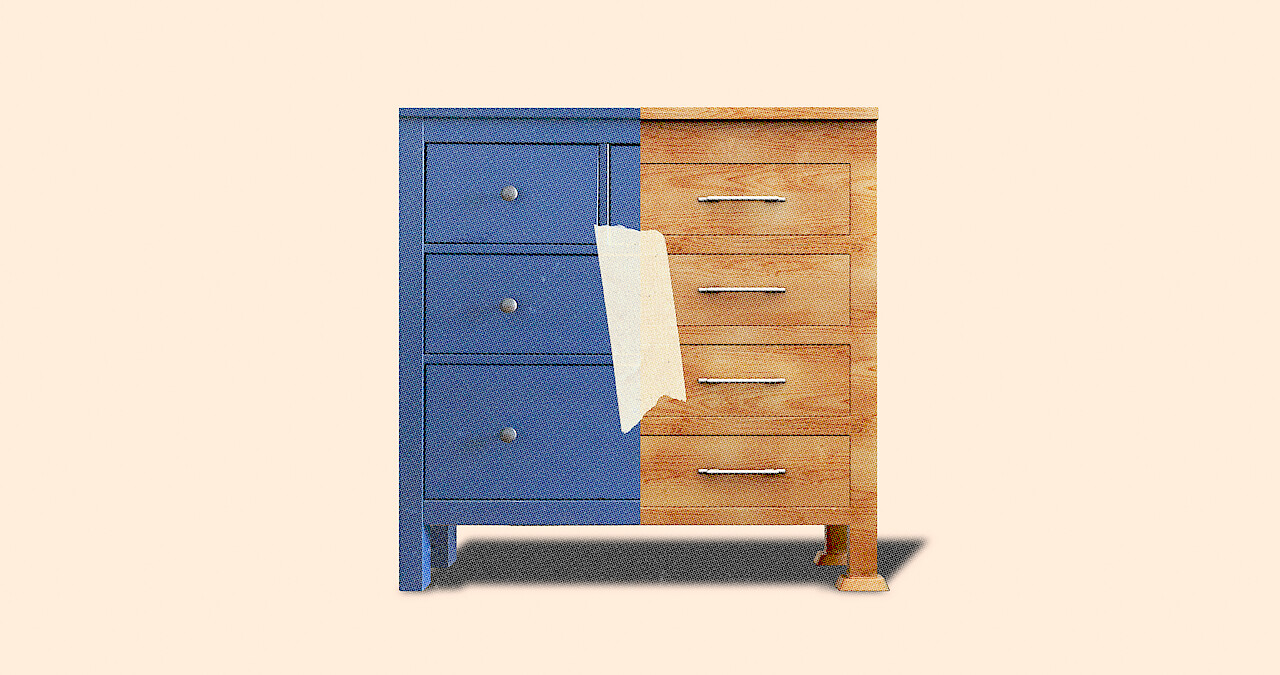
Love might be blind, but, when it comes to moving in with your partner, there are some things that are too visible to ignore. Namely, when the two of you are about to combine lifestyles, you might want to take a few things into consideration. Like, for example, how you’re going to make room for your table-breaking fiancé’s Rock Band video game stuff. (Yes, we’re talking to you, Nick and Danielle).
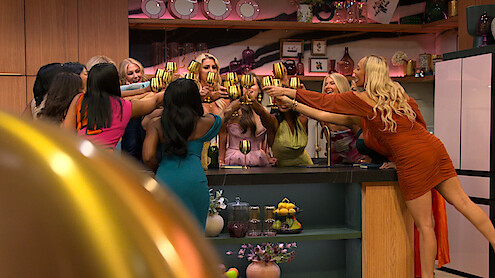
One of the biggest things that the couples in Love Is Blind Season 2 have to figure out once they leave the pods is bringing their lives together into their new Chicago homes. While compromise might be the name of the game here, there are just a few things that partners should consider after moving in together, according to Clea Shearer and Joanna Teplin from The Home Edit (who are both married and have kids of their own).
Whether you’re contemplating moving into your future husband’s bachelor pad (Deepti has some serious redecorating to do) or looking to finally get rid of that corn costume you’ve been holding onto for years (we can relate, Danielle), the team from The Home Edit has tips for making this process as easy and as conflict-free as possible.
Tip #1: Edit, edit, edit.
The Home Edit team runs on a simple four-step philosophy: edit, categorize, contain and maintain. The same applies when combining households. Edit your items (no one household needs four wine bottle openers), separate those items into categories, put those categories into organized containers where they are easy to find and maintain this process with your partner as you continue to build your new life together.
The key is to start small before tackling something much more personal, like the newly shared pantry, which houses your favorite cereal and protein powder. “It’s all about getting your organizing feet wet with something like a junk drawer,” Shearer and Teplin tell Tudum over email. “You’ll both be getting used to following a system, and as we always say, ‘if you can manage a drawer, you can manage so much more.’”
Tip #2: Be realistic.
Starting this process is the hardest part, so it’s important for couples to be realistic about what to expect. This still applies, even if you are still learning about your likes and dislikes in the wake of getting engaged 10 days after knowing one another. Ask yourself what is realistic to expect from your partner and yourself, the team at The Home Edit advises. “It helps to think of things as a ME issue, a WE issue or a THEM issue. Work together to decide on systems that feel second nature to you both.”
This also applies to the items you end up keeping from each respective household. “If you don’t want it, need it or find it sentimental, it’s got to go,” Shearer and Teplin say. “You have to be honest with yourself though.”
Tip #3: Compromising is harder than it sounds.
Finding a happy middle ground isn’t easy, especially when discussing which items to get rid of that you’ve had for years. While Shearer and Teplin aren’t therapists and can’t help you with the arguments that come with combining closets, they do note that living with someone else — whether it’s your mom, kids or fiancé of 10 days — will always take some kind of compromise.
“We all do things differently and there is a reason for that. It can stem from our upbringing, our innate personalities or our habits from our daily routines. No one is perfect, there is always room for improvement. Discussing your motivations behind certain things paves the way for systems that become second nature and make life easier.”
This comes into play in Episodes 6 and 7, when Nick and Danielle visit each other’s homes for the first time. Danielle balks at Nick’s alphabetized DVD collection (complete with a season of Dawson’s Creek), while Nick expresses his hesitancy over her Rock Band instruments being out in the open. According to Shearer and Teplin, these things are a give and take. “Everyone is entitled to keep that one thing they love but their partner hates. So if that’s DVDs in alphabetical order for Nick and Rock Band for Danielle, then so be it.”
Tip #4: Never ever keep an item from an ex.
There are some things that you might have to let go of, however. Shearer and Teplin advise that you should probably rethink those gifts from your exes — like the watch holder that Iyanna finds in Jarrette’s bedroom in Episode 6 — and make a personal edit, even if they do serve a purpose.
“Certain items can carry emotional weight and it can be freeing to rid yourself of that,” they say. “If you must keep something from an ex, store it in a box for safekeeping, but in a space you rarely access. Revisit the box after a period of time to decide whether it’s something you need to keep. Basically, an emotional edit.”
Tip #5: Not everything has to be a bonding experience.
Although you might want to have your partner on hand for the whole process, editing your home doesn’t have to be something that you do together. There are tasks that can be done alone, and one of those things should be editing your closets. Shearer and Teplin advise couples to do this separately, since clothes are a personal thing. “Do the first pass separately,” they say. “This is your time to really think about what you own without other people’s input.”
But, they advise, be ready to let go. “Hold each other accountable and have your donation bags on hand.”
Tip #6: Invest in pieces that will make your life easier.
Getting used to your partner’s habits might not be easy but developing new habits together can be. This is why Shearer and Teplin advise on investing in clear bins to get organized with your new partner. “Couples that store items in clear bins together never have to search for items together,” they say. “Bins are one of the most versatile and user-friendly items out there.”
“Not only do they offer an easy way to get (and stay) organized, but they also hold you accountable when you start exceeding your space.”
Tip #7: Embrace your differences.
Not every couple is going to have the same style of cleaning and organizing, and that’s OK. According to Shearer and Teplin, it’s important to embrace your differences with your partner, especially when it comes to cleaning and loving one another. “It’s important in any relationship to recognize the strength in your differences so you can balance out your independent weaknesses.”
“You have to compromise where it counts. Don’t pick every single battle. Our husbands don’t hang things on hangers correctly, but they literally raise our children while we’re traveling non-stop for work. Enough said.”
This interview has been edited and condensed for clarity.