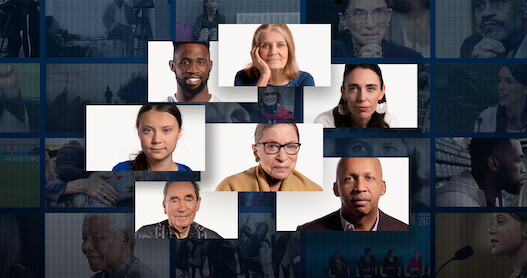
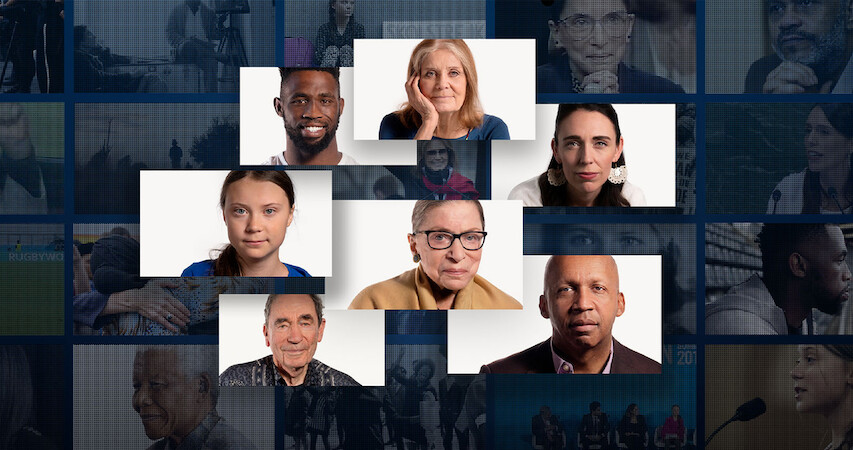
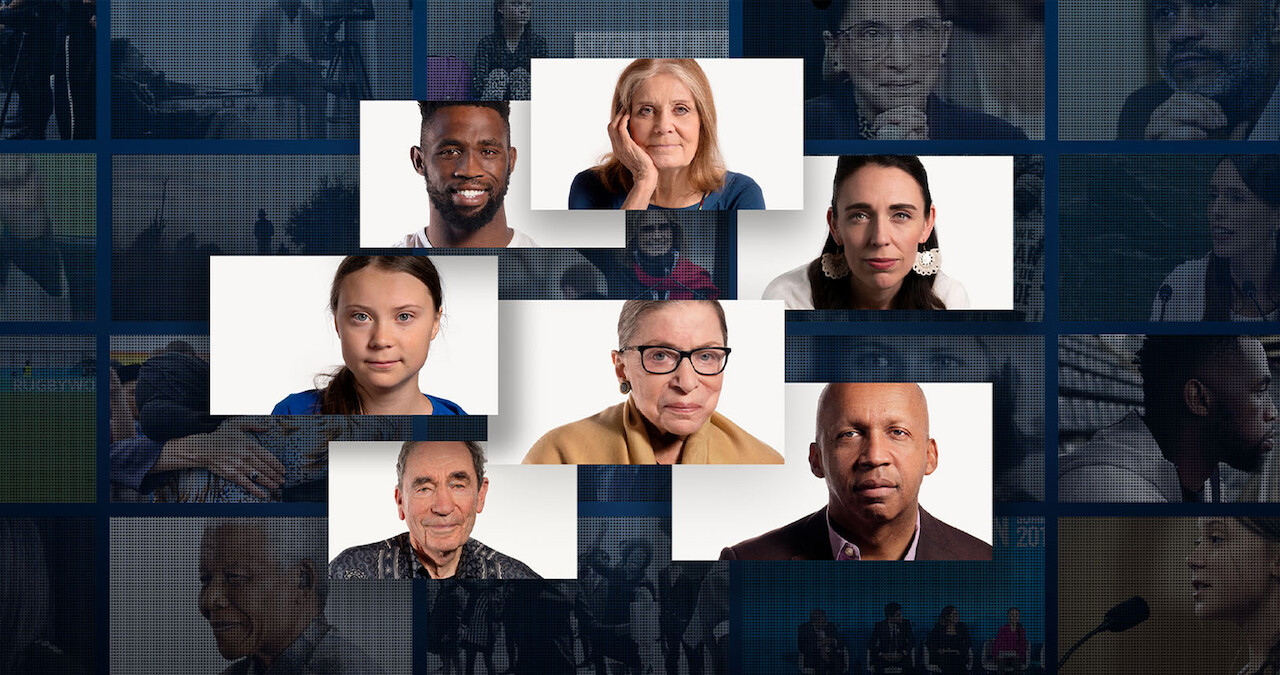
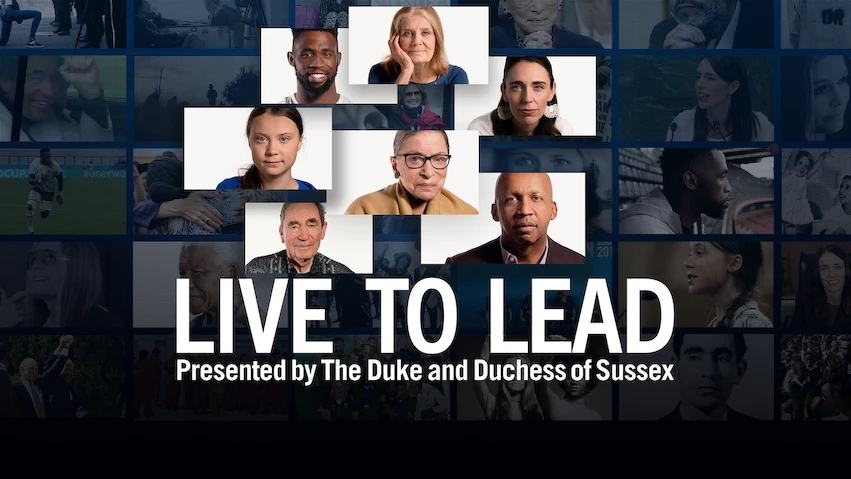
Prince Harry and Meghan, Duchess of Sussex, put the spotlight on seven global activists in Live to Lead. The documentary series, which Harry says was inspired by Nelson Mandela, interviews change agents like climate activist Greta Thunberg and Supreme Court Justice Ruth Bader Ginsburg, featured in one of her last appearances before her death in September 2020. The show, produced in part by the Duke and Duchess of Sussex’s Archewell Productions, premieres on Netflix Dec. 31.
Bryan Stevenson
A leading voice for criminal justice reform, Bryan Stevenson has devoted his legal career to exonerating prisoners who’ve been unjustly sentenced. Given the disproportionate number of people of color facing wrongful convictions and death sentences in the US, Stevenson views his work as a means to change the national narrative around racial inequality.
You can follow Stevenson at the Equal Justice Initiative on Instagram.
Greta Thunberg
Swedish teen Greta Thunberg reignited the fight against climate change by inspiring students worldwide to join her 2018 school strike. Even though the bleak state of the environment plunged her into a depression, Thunberg found her way out through her activism, including her famous international trip via sailboat in 2019.
You can follow Thunberg on Instagram.
Ruth Bader Ginsburg
In one of her last interviews, the late Supreme Court Justice Ruth Bader Ginsburg recounts how her pursuit of gender equality began in the 1960s at the start of her career in the male-dominated legal field. Appointed to the Supreme Court in 1993, Ginsburg continued her advocacy for the next 27 years.
Jacinda Ardern
New Zealand Prime Minister Jacinda Ardern’s governing values rest on empathy, kindness and equality. She maintained that philosophy after the 2019 mosque shootings in New Zealand, promoting solidarity with migrants and enacting strict gun laws. When COVID-19 hit, Ardern’s swift protective actions kept New Zealand virus-free during the early days of the pandemic.
You can follow Ardern on Instagram.
Albie Sachs
South African lawyer Albie Sachs joined the fight against apartheid as a teen in the 1950s. Despite facing imprisonment, exile and an assassination attempt, Sachs remained committed to peace and equality. In 1994, after the end of apartheid, Nelson Mandela appointed Sachs to South Africa’s newly formed Constitutional Court.
Siya Kolisi
Philanthropist and athlete Siya Kolisi rose from poverty to become the captain of the Springboks national rugby team, leading them to the 2019 Rugby World Cup victory. As a Black player in a sport inextricably linked to the racist history of apartheid, Kolisi wants to inspire kids in underserved communities to dream big.
You can follow Kolisi on Instagram.
Gloria Steinem
Growing up in the mid-20th century, feminist sociopolitical activist and journalist Gloria Steinem knew early on that her desire to pursue a career was revolutionary. Meeting like-minded women during the social justice movements of the 1960s helped crystalize her sense of purpose and informed her writing. For Steinem, women’s rights are human rights.
You can follow Steinem on Instagram.