Guide
Breaking Down the Legalese in ‘The Lincoln Lawyer’
From jury tampering to voluntary manslaughter, here’s a very Lincoln Lawyer glossary.
May 13, 2022
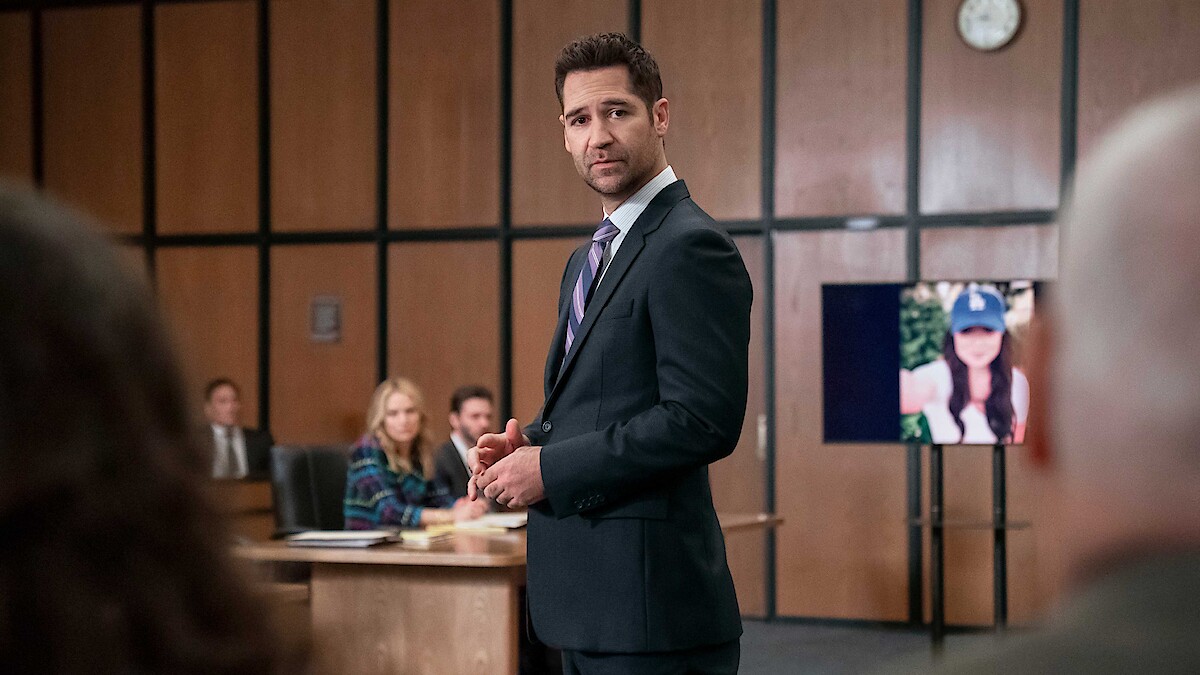
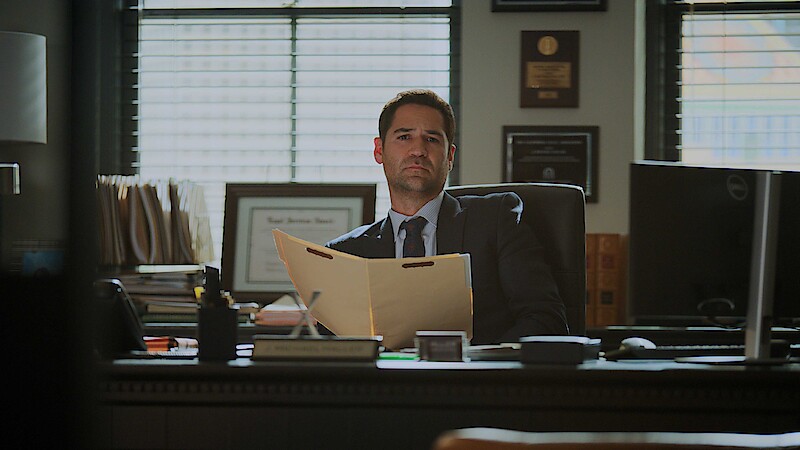
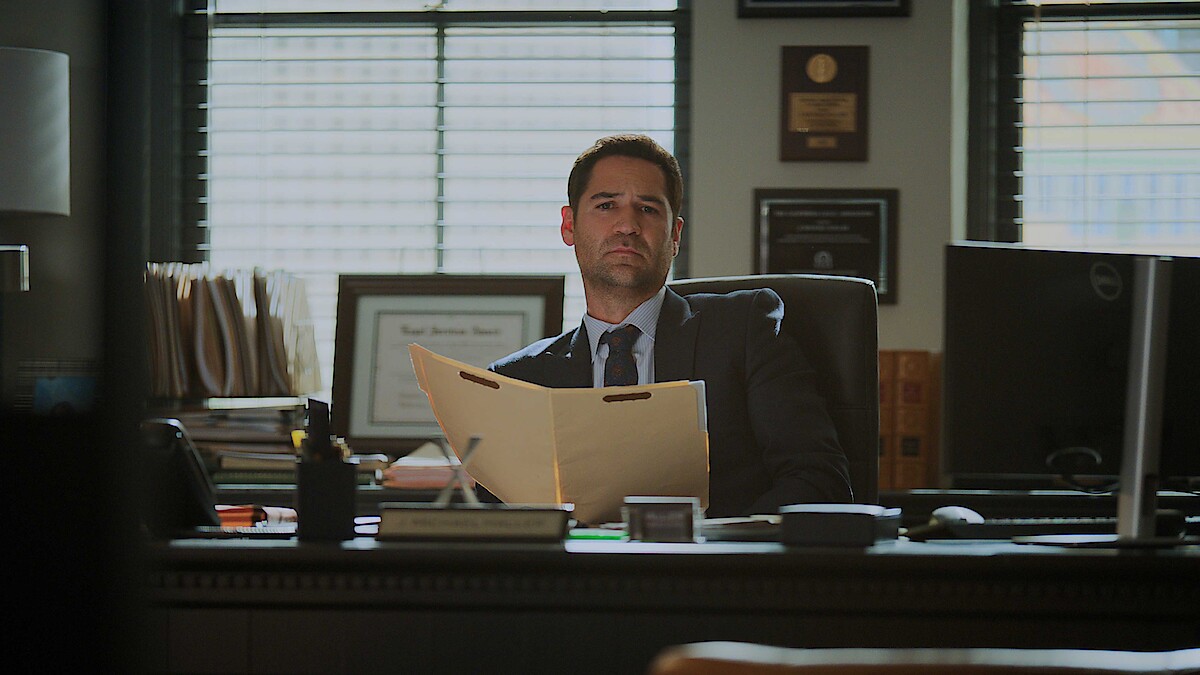
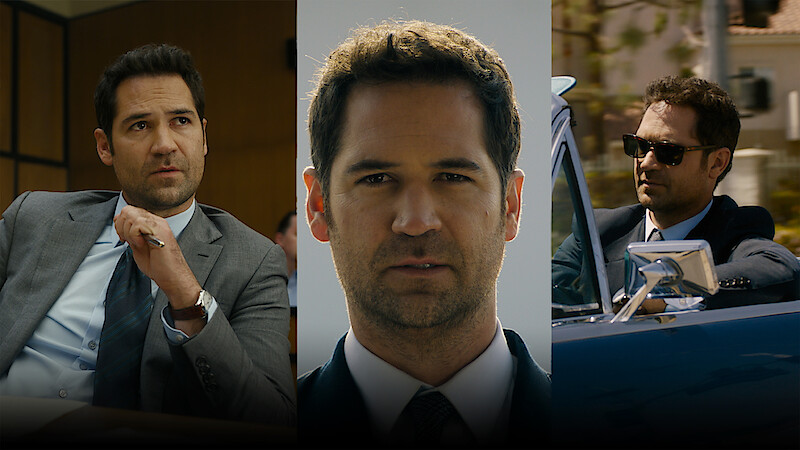
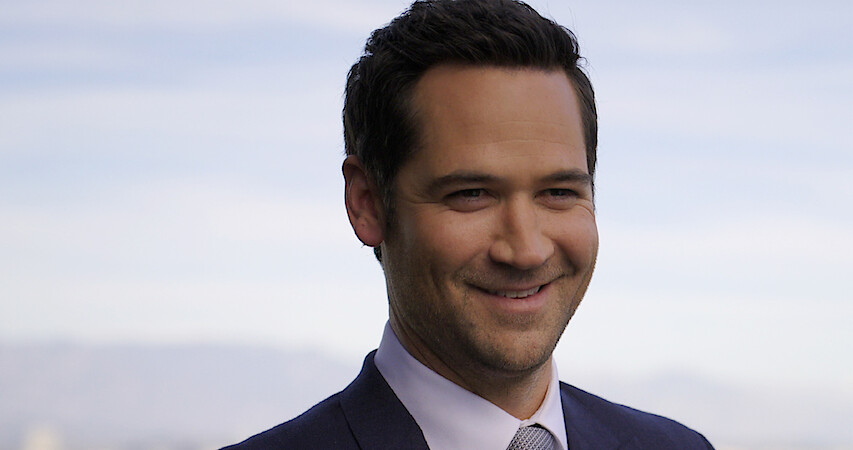
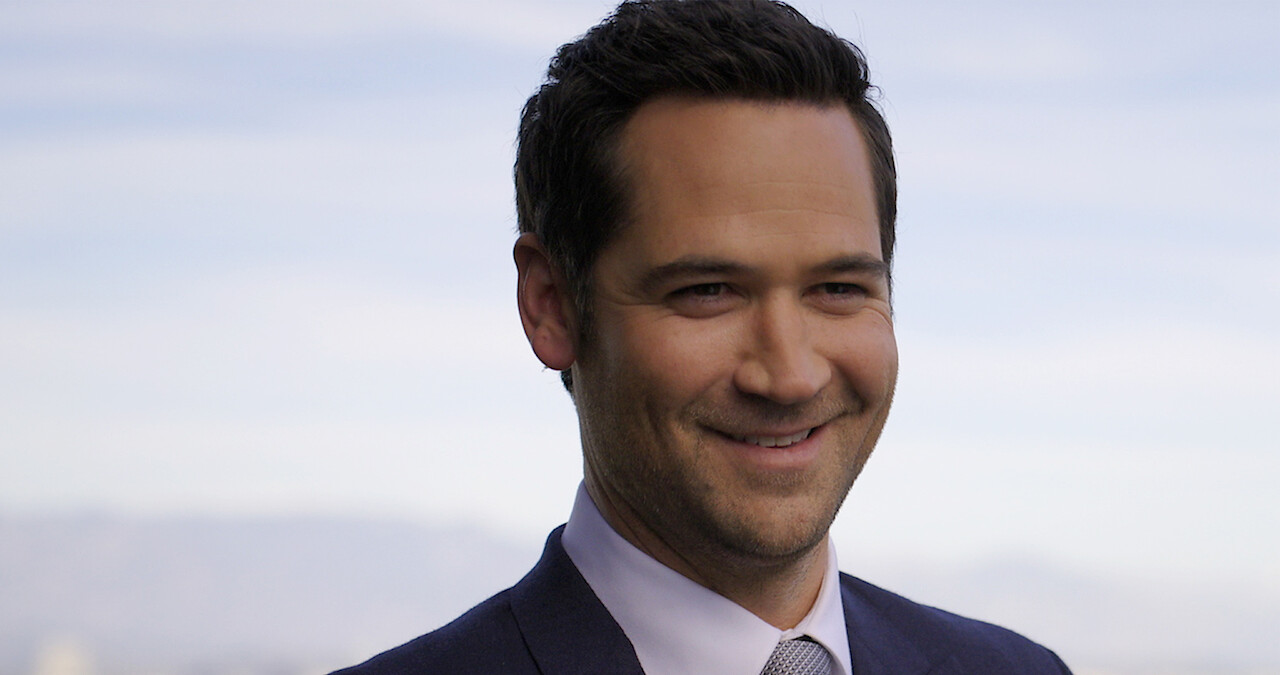
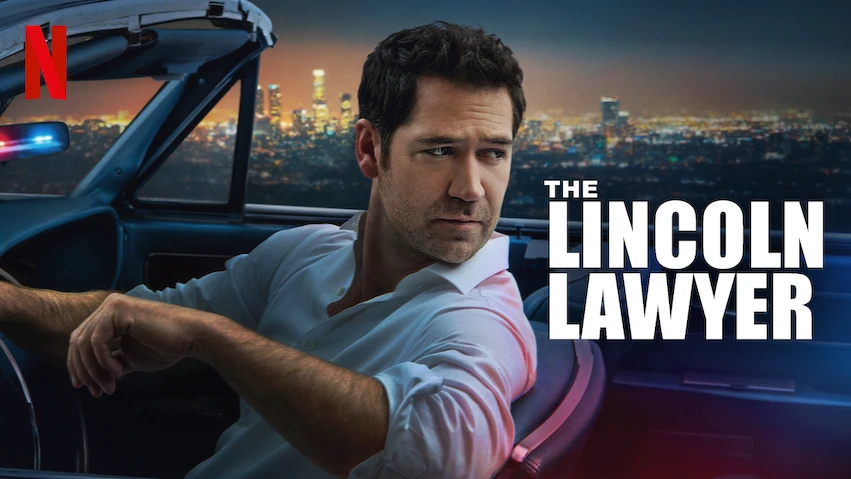
In nearly every episode of The Lincoln Lawyer, Mickey Haller (Manuel Garcia-Rulfo) sits in the back seat of his mobile office and shares the tricks of the trade with his chauffeur, Izzy (Jazz Raycole). He runs through strategies, pitfalls and psychology — but it seems he doesn’t bother to cover Courtroom Vocabulary 101. How, one might ask, is Izzy supposed to navigate his sun-filtered rants about courtroom operations without ever actually knowing the basics? We didn’t all pass the bar, Mickey!
Someone else involved in the production did pass the bar: Showrunner Ted Humphrey, who practiced law in Washington, DC, before pivoting to screenwriting. His former career came in handy. “[T]he basics are the same,” Humphrey tells us. “So if you have a legal background, if you were a lawyer for some period of time, you’ve got a pretty good grounding in all that.”
But let’s face it: Very few of us have ever been a lawyer. That’s where we come in: We’re here to present you with a handy guide to the ins and outs of the legal world of The Lincoln Lawyer.
affidavit: a declaration of facts, usually a signed document made under oath, that affirms a statement to a courtroom case. Trevor Elliott submitted a signed affidavit informing the court what he remembered about the day of his wife’s death.
attorney-client privilege: the legal protection that an attorney is able to grant a client regarding information they share. Any information Trevor told Mickey was protected under attorney-client privilege.
circumstantial: describing evidence that suggests a suspect’s guilt but is not definitive. According to Mickey, the evidence against Trevor Elliott was circumstantial and could be overcome.
continuance: a postponement of court proceedings, typically made at the request of an attorney. When Mickey takes on a load of new cases, he asks for a continuance for more prep time.
count: each separate crime alleged in an indictment. Mickey’s client was brought up on one count of first-degree murder.
discovery: the process preceding a trial during which the prosecution and defense teams prepare by sharing information about the case. Mickey submitted security footage of a police incident during discovery.
file a motion: to request an order or ruling from the court in writing. Mickey filed a motion to strike a witness’ testimony from the record.
first-degree murder: a premeditated and intentional murder. If Trevor Elliott planned his wife’s murder, then he could be charged with first-degree murder.
jury selection: the process by which the prosecution and defense teams select an unbiased jury for a trial. The process of jury selection decided who could be an objective voice on Trevor Elliott’s jury.
jury tampering: an attempt by an attorney, defendant, plaintiff, etc. to influence a juror’s judgment in a trial. Mickey was accused of jury tampering when Trevor bumped into a juror in the parking garage.
objection: a lawyer’s formal request to strike a line of testimony or evidence from the record in a trial setting due to a perceived violation of procedural law. “Your honor, objection! What’s the relevance?” Mickey asked when the prosecution questioned Trevor about his infidelity.
overruled: a judge’s rejection of an attorney’s objection. “Overruled!” the judge told Mickey, and the trial proceeded.”
plea bargain: an agreement between the prosecution and defense in which a defendant agrees to confess guilt in exchange for concessions to their sentence. Mickey refused to take a plea bargain that would mean Elliott had to spend time in prison.
pro bono case: a case a lawyer voluntarily takes on for “the public good,” as for a client who cannot afford legal representation. Mickey took on a pro bono case out of the goodness of his heart.
retainer: a payment a client makes to their attorney, typically before legal proceedings have begun, for advice or services. Mickey was paid a hefty retainer by Trevor Elliott.
sidebar: an area near the judge’s bench in a courtroom where attorneys may privately discuss trial proceedings with a judge; also used as a request to enter said area. “Your honor, may we approach the bench for a sidebar?” Mickey asked the judge when he needed a moment alone.
subpoena: an order requiring a potential witness to attend a court hearing. Many of Trevor Elliott’s friends may have received a subpoena requiring them to testify at his trial.
sustained: a judge’s acceptance of an attorney’s objection. “Sustained! Tread lightly, counselor,” the judge told Mickey after a successful objection from prosecution.
third-party culpability: a line of defense that directs attention to evidence or a confession from another party. To defend Trevor Elliott, Mickey invoked third-party culpability and shifted blame to another person.
voluntary manslaughter: a killing that a court rules is a crime of passion, without premeditation. If Trevor Elliott did kill his wife, was it planned or was it voluntary manslaughter?