Images: Brook Rushton/Netflix
Up Close
What Went into the Kicks and Flips of ‘Interceptor’?
Star Elsa Pataky breaks down the stunts that made the movie.
July 7, 2022
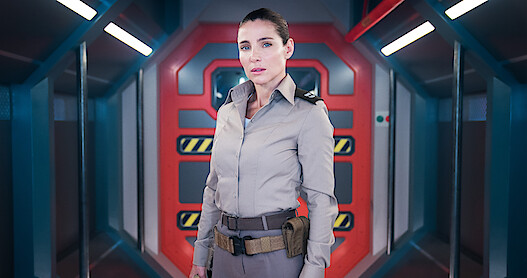
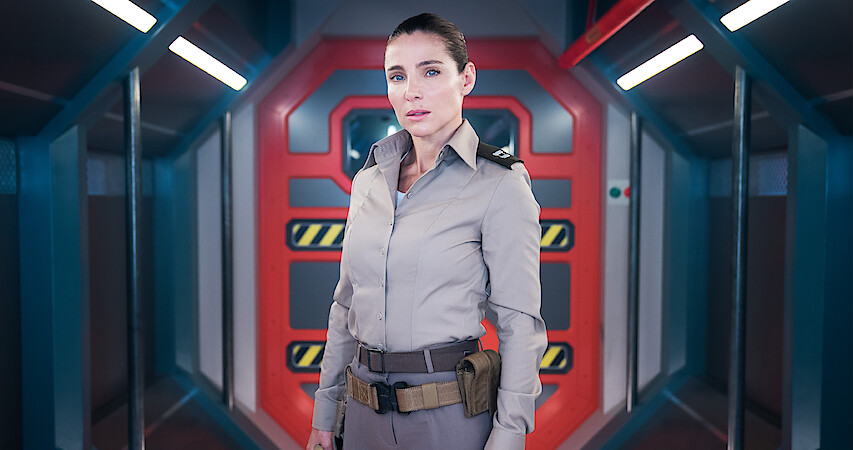
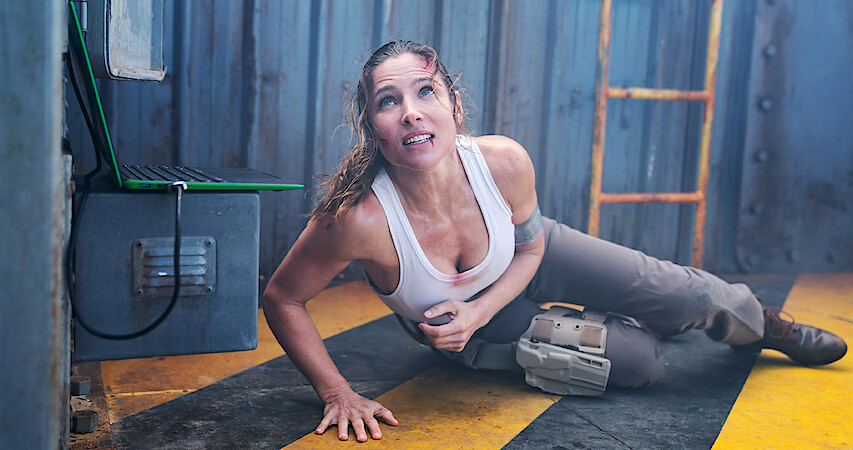
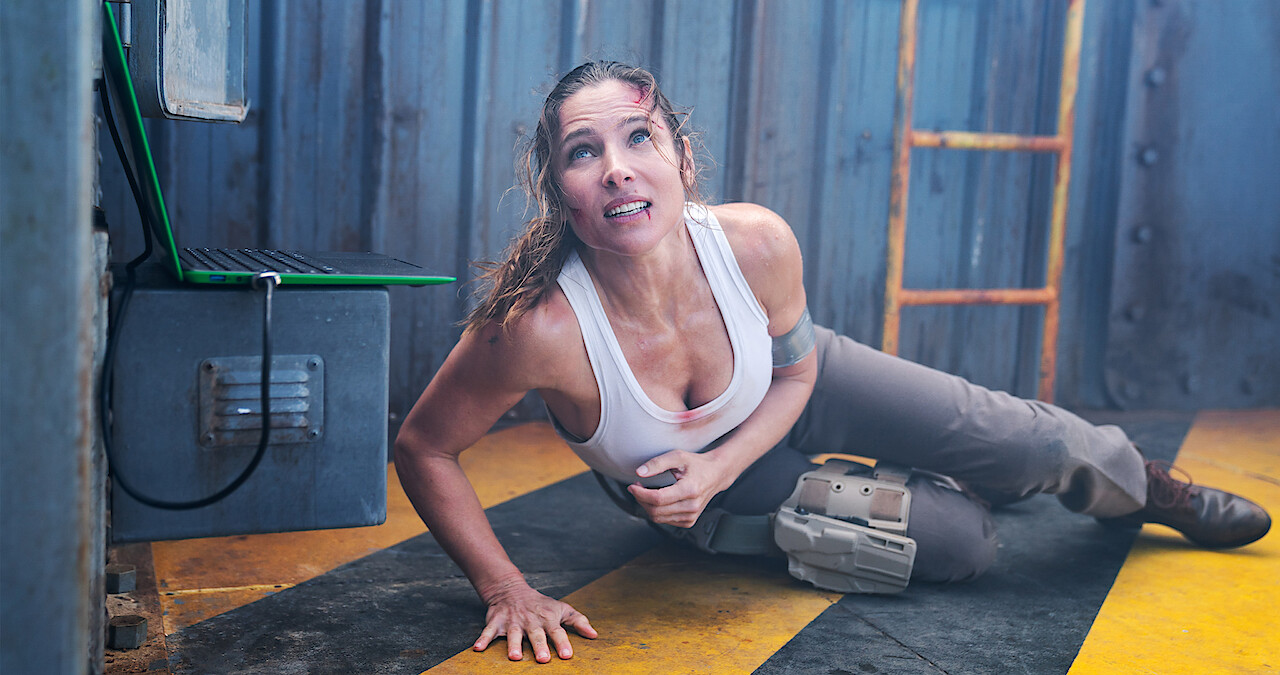
In one of the most memorable scenes in the new action thriller Interceptor, Captain JJ Collins must make her way across a makeshift series of monkey bars to stop a nuclear missile payload from reaching the United States. Sounds simple, right? Any elementary schooler can make their way across a set of monkey bars. The catch? Collins is working with only one arm, the other having been wounded in an earlier fight. Behind the scenes, the sequence was almost as difficult.
“We [had to rehearse] a lot because some of the times you will miss it and we wanted to do it right,” Pataky says in conversation with Tudum. “And you don’t have, you know, the strength to do that many times ’cause you [have] only one arm.” To make things even more complicated, the Interceptor team had a little more than a month to capture an entire film’s worth of this kind of stunt. And with a female lead in Fast Five star Pataky, they also had to conform to a realistic understanding of how a woman would perform the film’s stunts. Fortunately, the team was more than prepared.
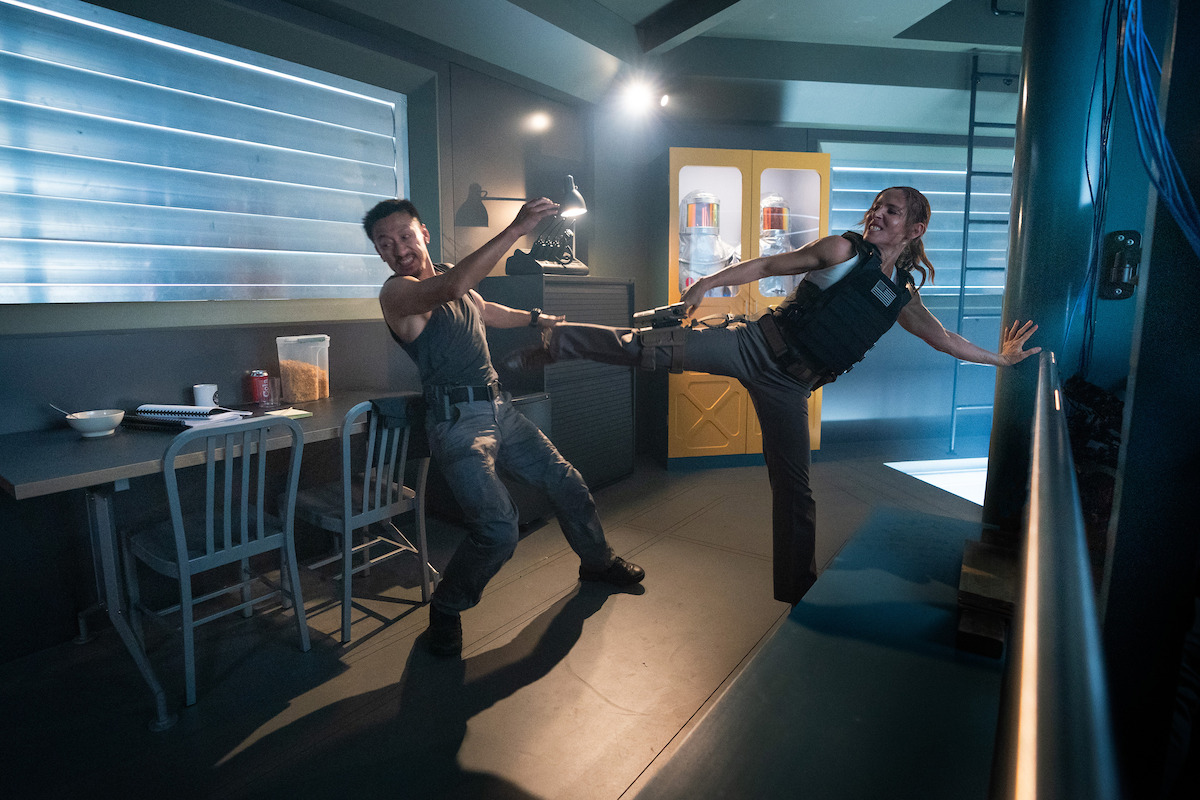
In designing the film’s many action sequences, Pataky was passionate about bringing in a female stunt coordinator to aid the process. “The very first conversation we had... about the stunts was [how] to get a woman to design these fights because women move differently from men,” co-writer and producer Stuart Beattie says. Stunt coordinator Ingrid Kleinig, who had previously performed stunts on films like Mad Max: Fury Road and The Suicide Squad, was the perfect partner for the production. “I described the movie as Die Hard with a woman at an interceptor missile facility,” director Matthew Reilly recalls. “And Ingrid said, ‘I’m in.’”
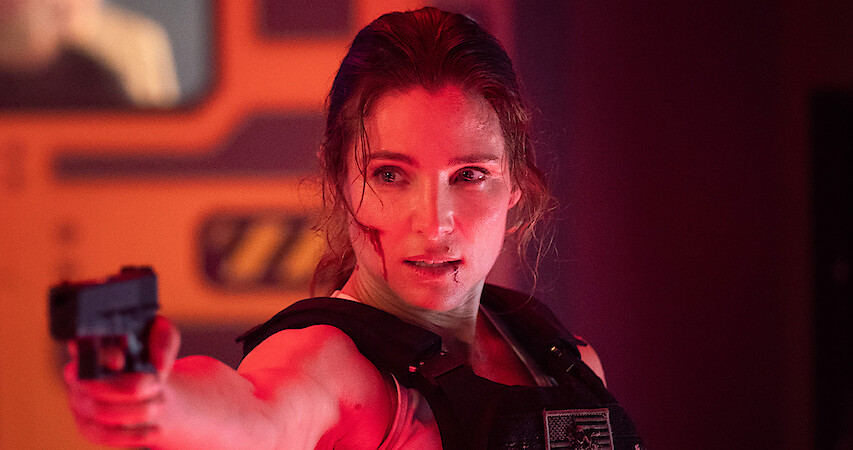
For Pataky, having a female stunt coordinator meant having someone on set who understood how a woman really fights. “She thinks women fight different than men,” Pataky says. “We actually have [a] different center of gravity.” The women on the stunt team also helped build the film’s fights around a realistic sense of scale, with Pataky taking on men who are often larger and more powerful than her. “Having a team of women that know... how you think and how agile you can be, you know, you have to [outsmart] your opponent in a way,” Pataky says.
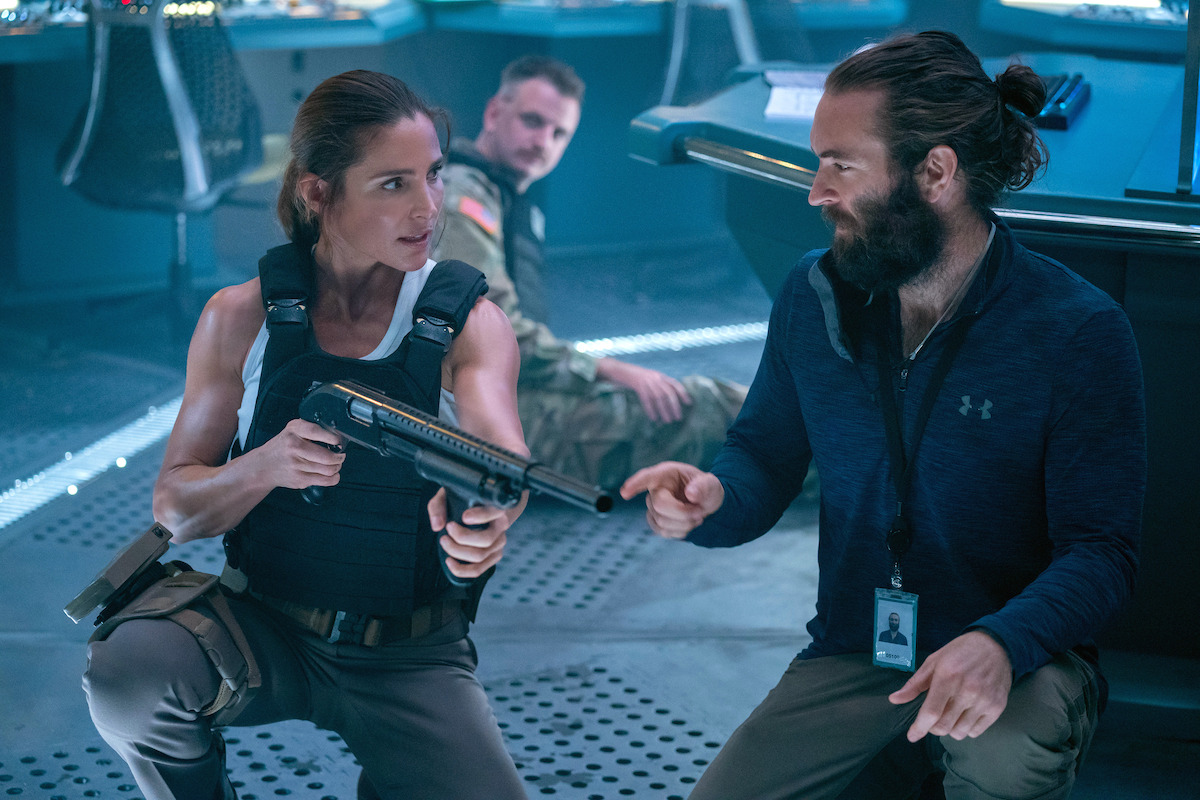
To enhance that part of the film’s action storytelling, the team also brought in action consultant Sam Hargrave, a veteran of hit films like Extraction and Avengers: Endgame. “Sam has a real sense for the story in individual fights,” Reilly says. “[T]here’s one fight in the movie where Elsa finishes the fight by stabbing a guy in the eye with part of her gun. And it was Sam who said that’s the end of the fight. There’s nothing more there. Let’s just make that the exclamation point.”
For Beattie, those exclamation points helped keep the film’s action clean and easy to understand. “One of the things I love about our fights is that all of them have very clear goals,” Beattie says. “Like, you know what each character is trying to get, and that makes it like a dialogue, the button for the door or the missile launch... They’re always goals that they’re trying to reach. So, it’s not just people fighting, you know?”
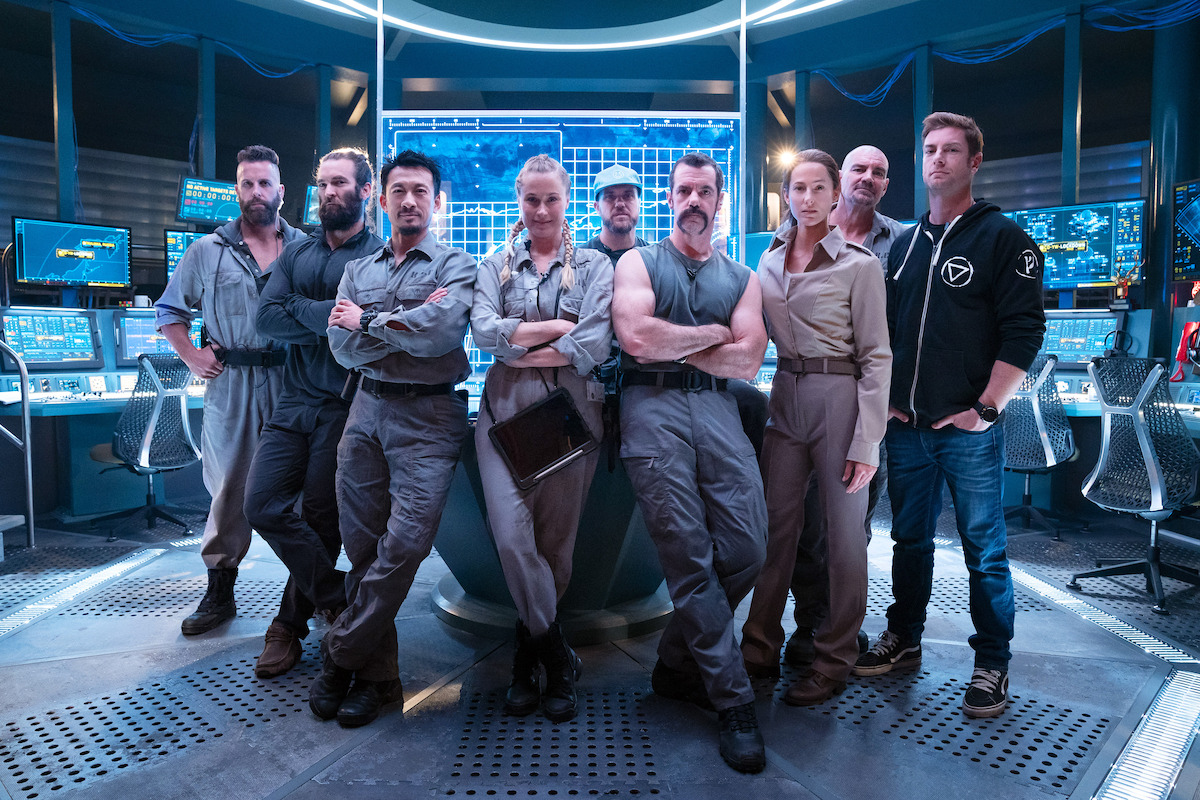
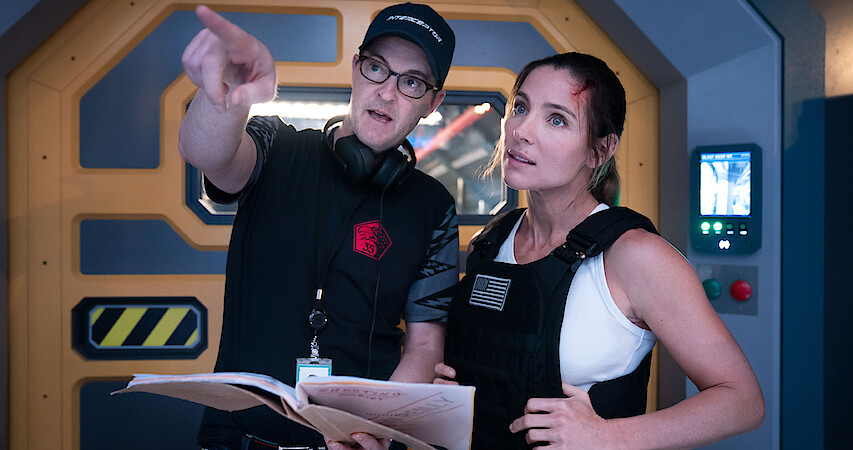
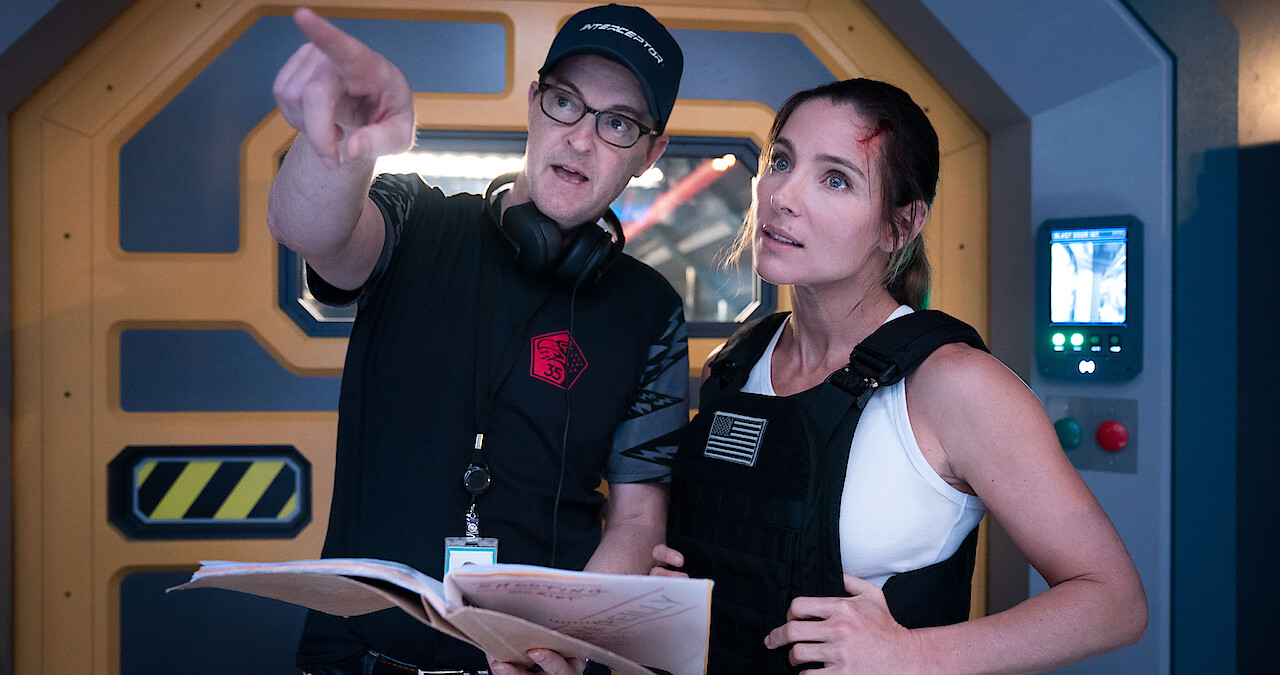
Once the stunt team had been brought onboard and fights had been designed, the production turned to training for the shoot. “To get what we got done in 33 days, we had to do a lot of preparation,” Reilly says. “Elsa was working with the stunt team for months before any cameras rolled, and they were getting beat up and bruised.” And it wasn’t a free-for-all training session: The team was preparing to film stunts in the very specific environment of a cramped military facility. “We had a whole mock-up of the set in the actual size of the setup in a helicopter hanger,” Reilly says. “And so, they were practicing in the exact dimensions of the set for months before we shot.”
Meanwhile, Pataky was working on building a convincing physicality for JJ Collins. “I [started] training for, like, I think five months before the movie started,” she recalls. Pataky wanted to truly capture the physicality of a soldier with a regimen that would mimic real military training. “I was just running hills, like lots of weights, coming up ropes,” she says. “All [kinds] of ways that... they actually train.”
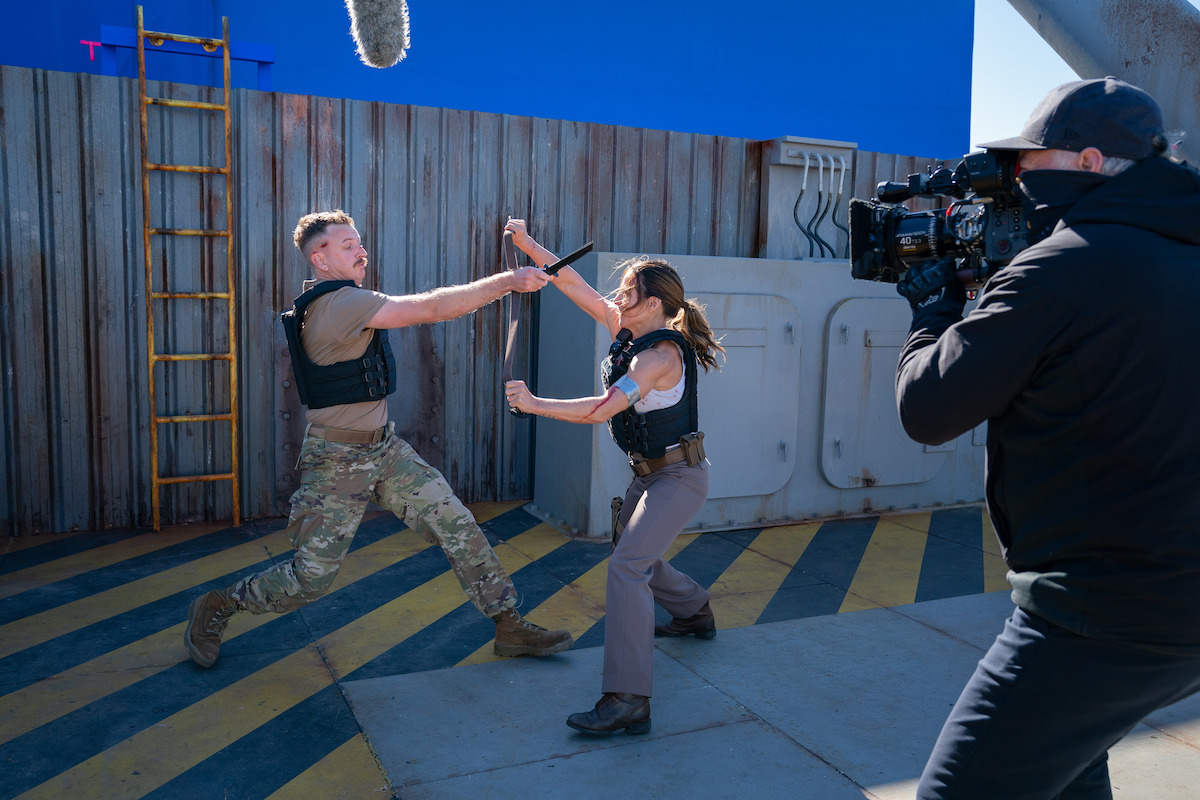
On top of that, Pataky had to work with the stunt team on learning the film’s choreography. Stunt coordinator Kleinig was impressed with her commitment. “She was wholeheartedly committed to the physicality of the character and her dedication to the stunt training regime allowed us to achieve some pretty lofty action-oriented goals,” she says. “Throughout the rehearsal period she absorbed over 800 individual fight beats in intricate sequences that she was able to execute safely and repeatedly during filming, take after take.”
Part of that safety came from Pataky’s comfort with the stunt team. Pataky and her stunt double Hayley Wright worked closely on the choreography. “I really wanted to do almost all the fights, and I really wanted to learn it,” Pataky says. “So, she had all the patience to be with me, like, doing it again and again and again.” The actor wound up doing many of her own stunts, with Wright’s committed assistance. “She had the weekends and I had the week, like I was shooting,” she says. “So, we would pass to each other.”
That seamless interplay between star and stunt crew helped Interceptor finish out its shoot on time — and with room for everyone to contribute. On many Hollywood productions, stunt work is nearly invisible, but here, even stunt coordinator Kleinig had an on-screen role. “She’s the woman in the big fight with Elsa who gets thrown through the glass display screen,” Reilly reveals. “Actually most of the villains are played by our stunt team.” That’s nothing personal, of course. Without them, where would the cast and crew of Interceptor be?