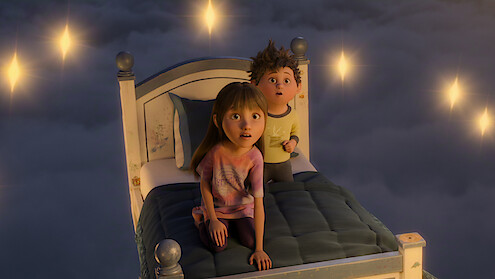
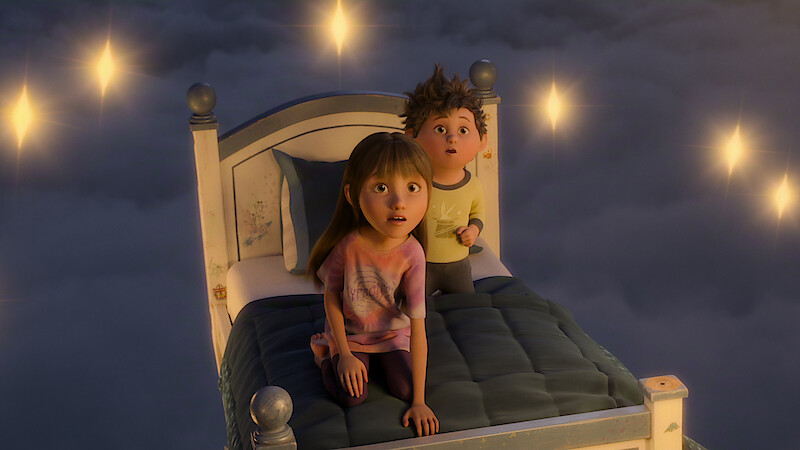
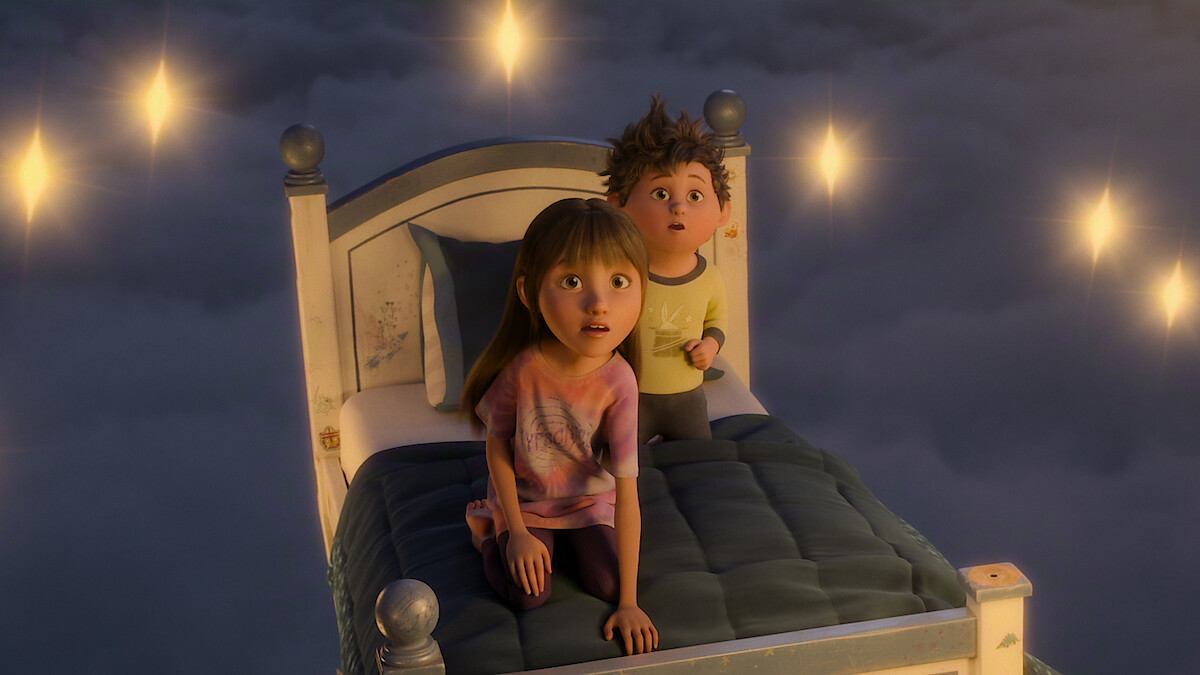
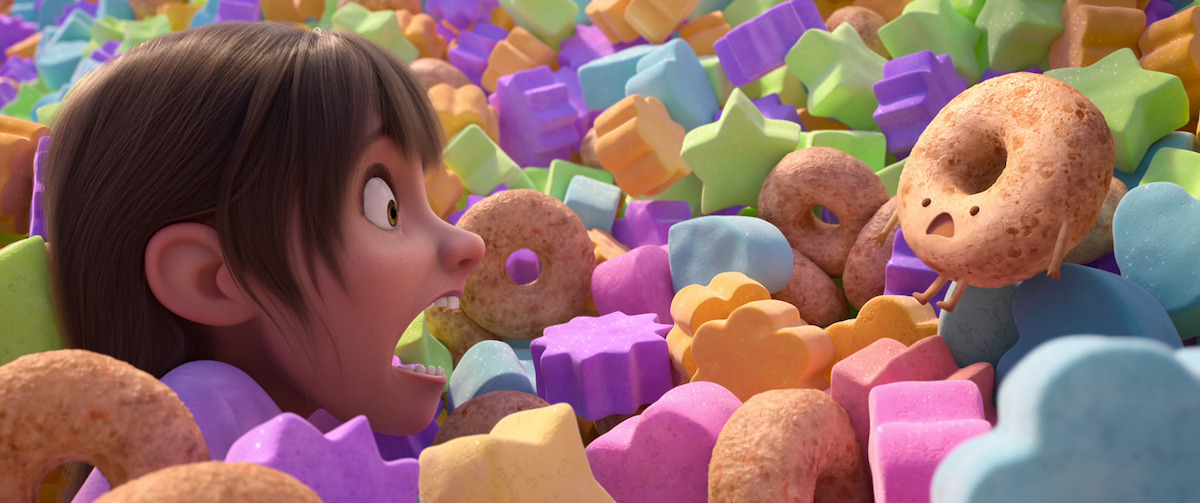
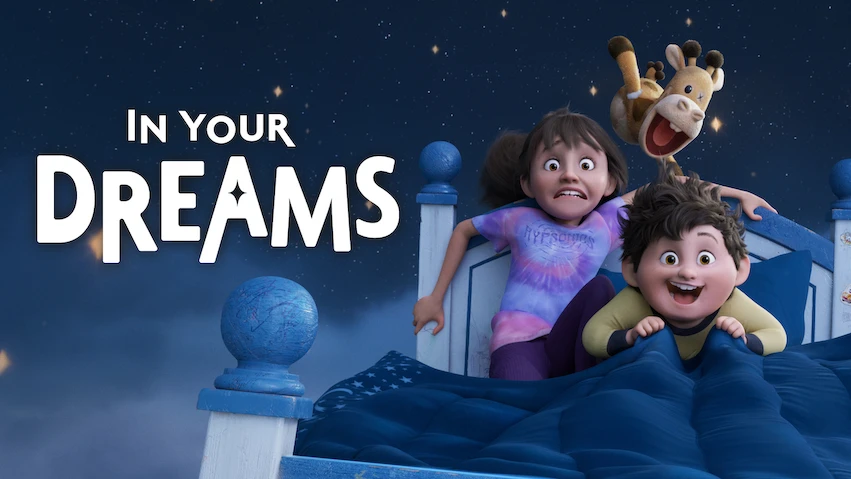
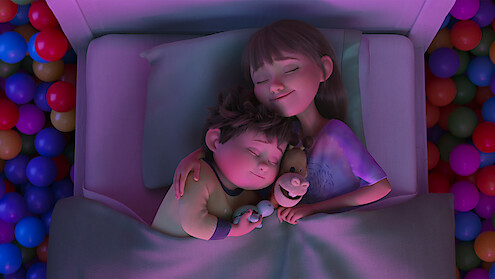
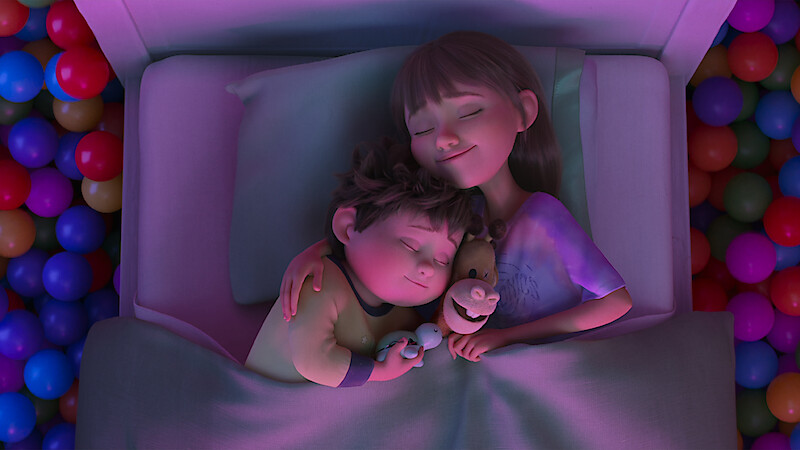
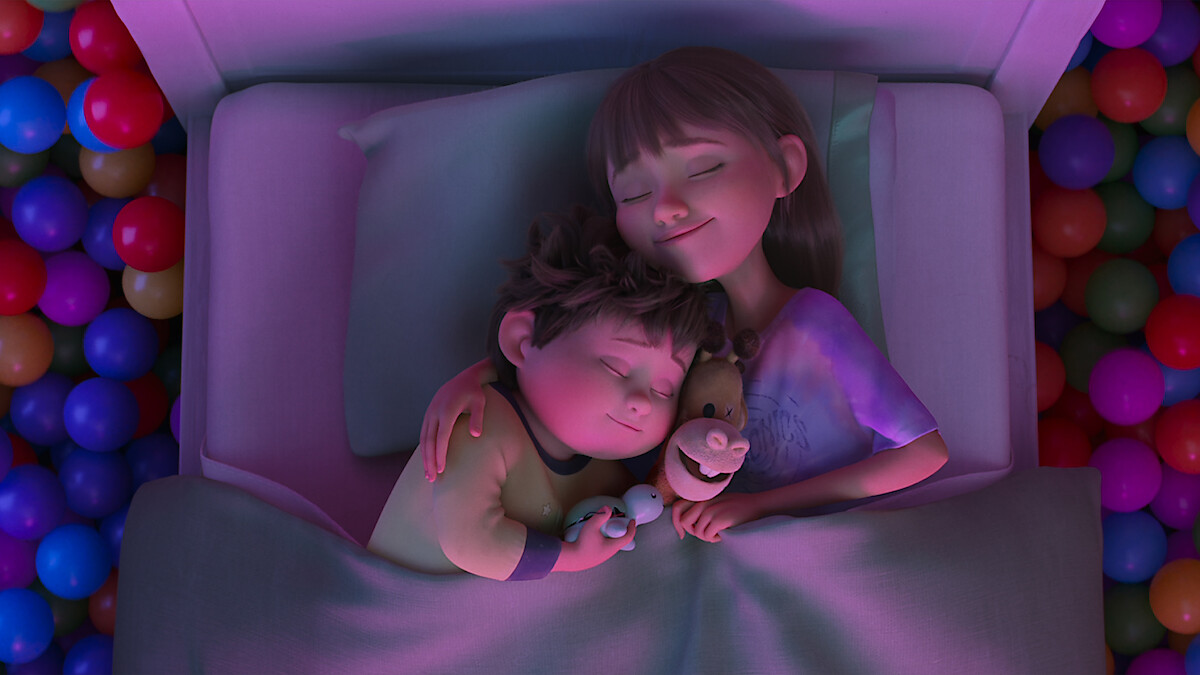
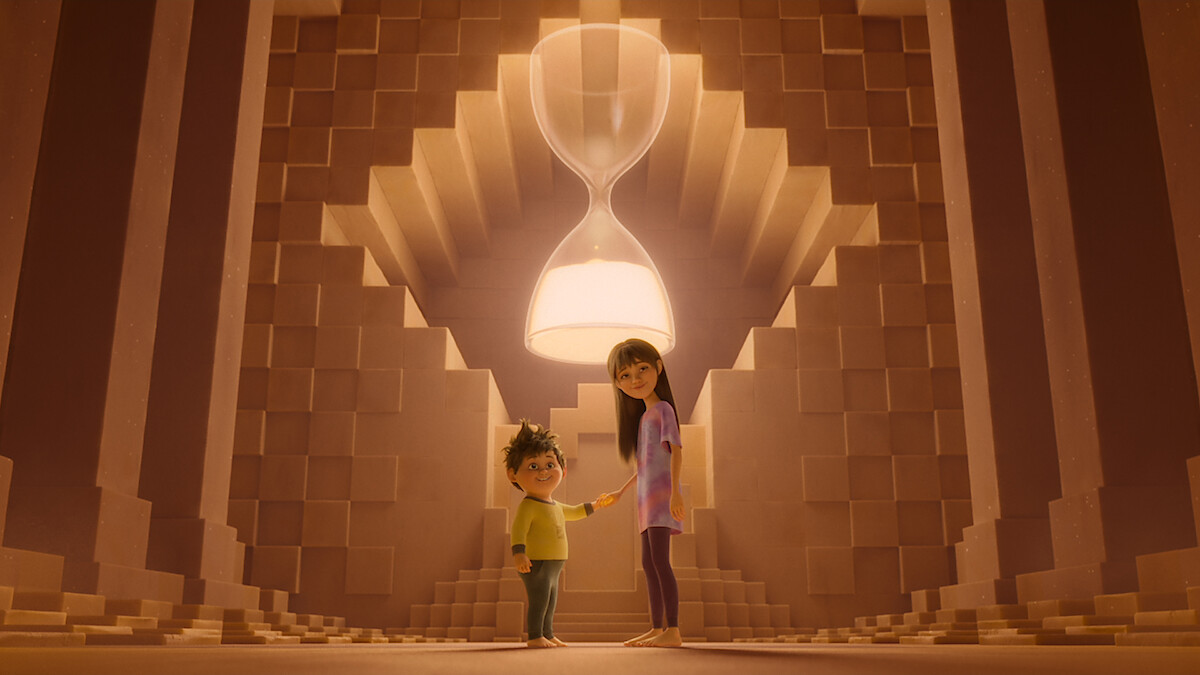
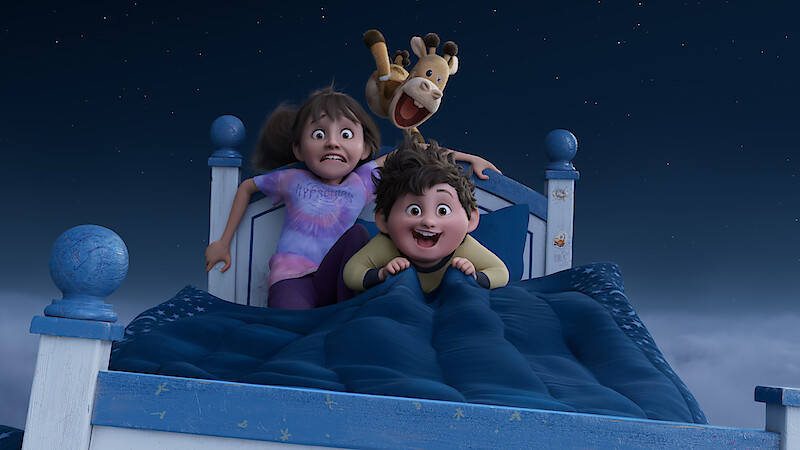
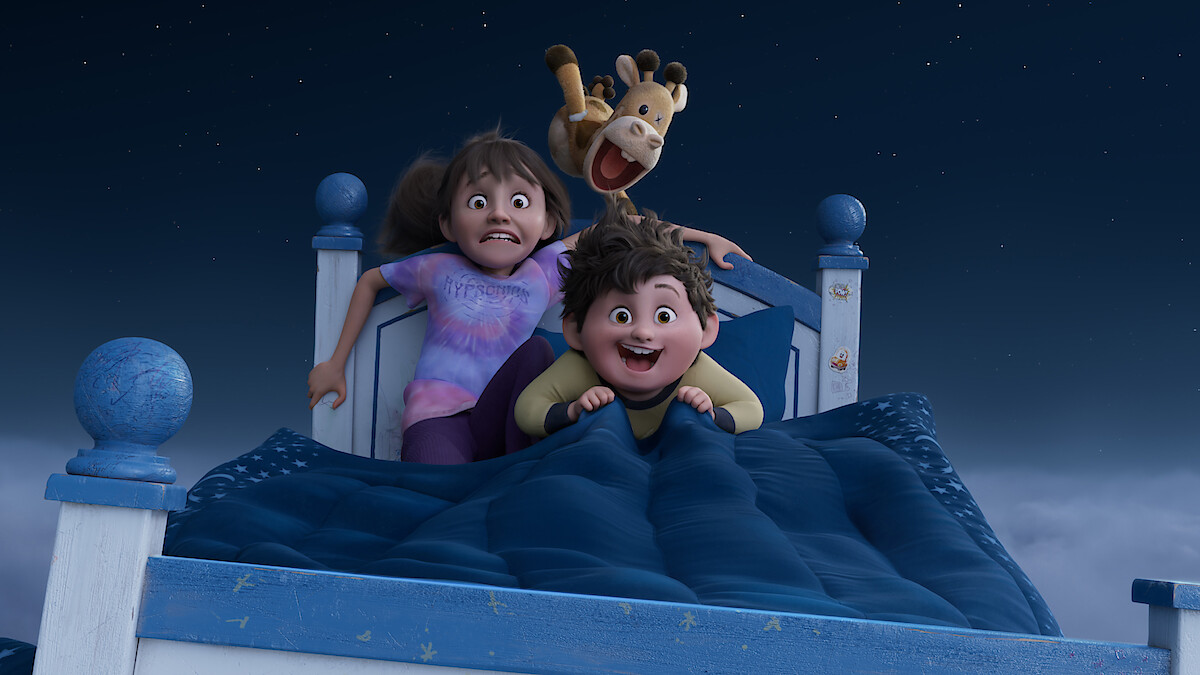
In dreams, anything is possible: Kids can fly, avocados can dance, and pacifiers can rain down like hail. Welcome to In Your Dreams, a new animated feature that leaps in and out of REM-cycle wonderlands. One moment you’re lying safely in bed, and the next, eyes fully closed, you’re immersed in a giant bowl of cereal, battling a colossal teddy bear, and drifting along a river of plastic balls.
“Dreams often feel real, and sometimes you don’t know you’re dreaming. We wanted to play with that and make it hard to tell if you’re in a dream or reality at times, and then contrast that with hyper-stylized parts of the dream world,” says director Alex Woo, who is also the creator and executive producer of the Emmy-winning Netflix original series Go! Go! Cory Carson. “It let us play with the audience’s expectations and create a sense of purposeful disorientation.”
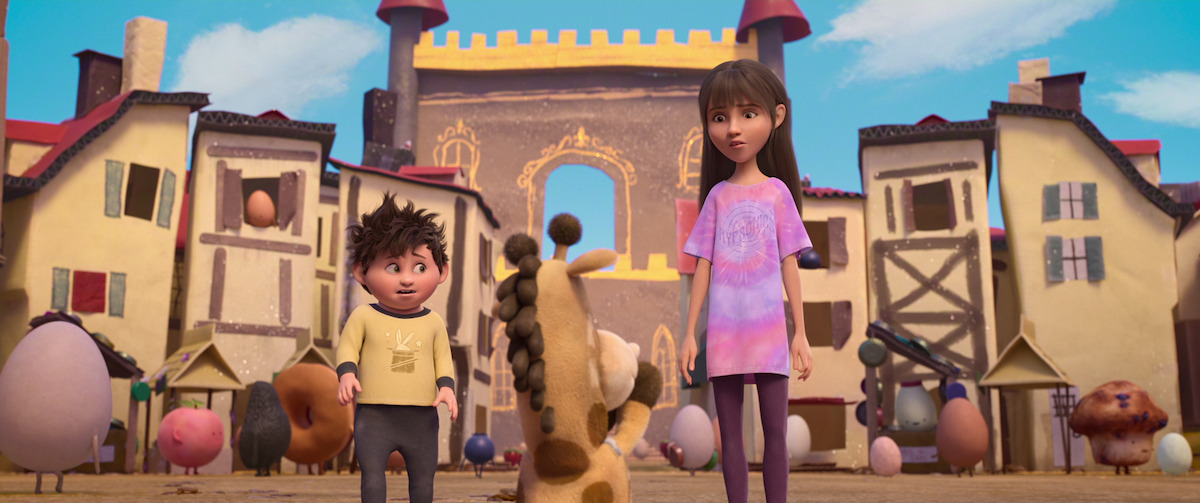
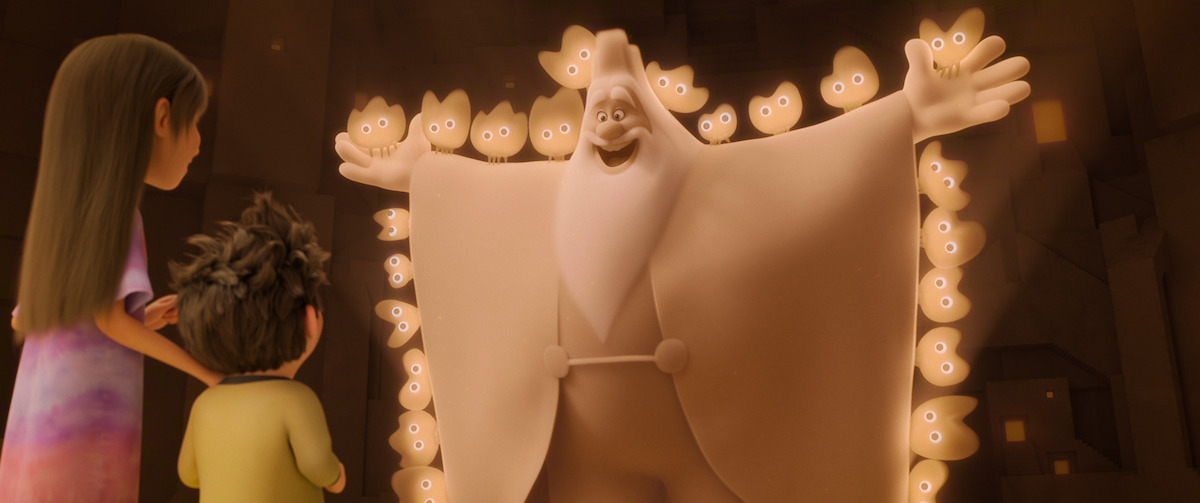
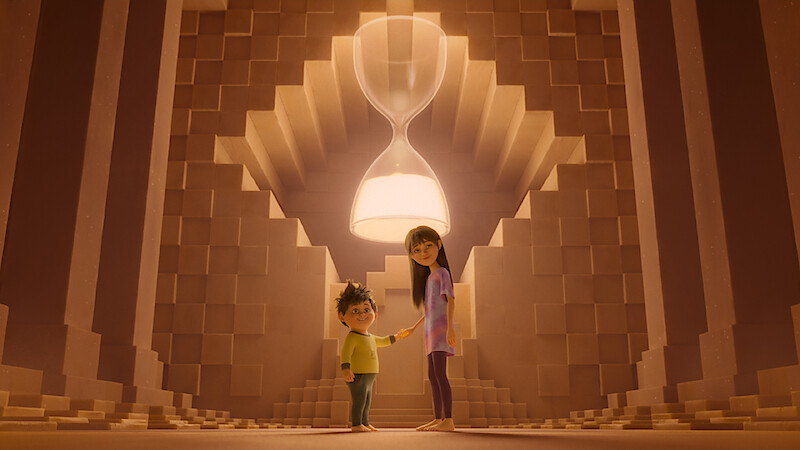
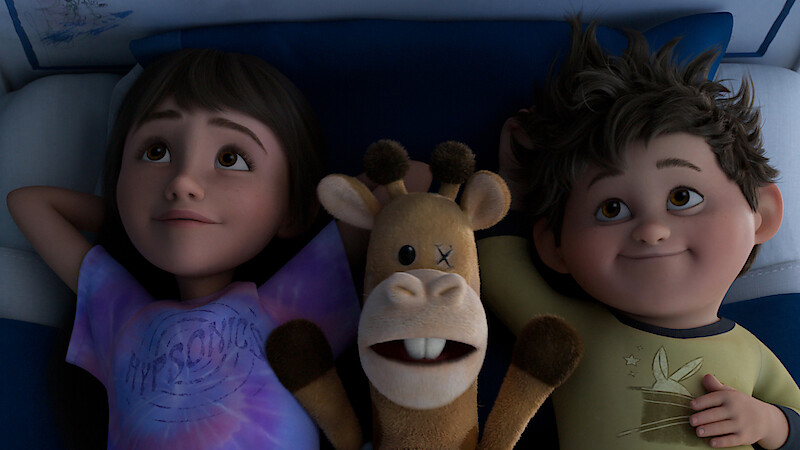
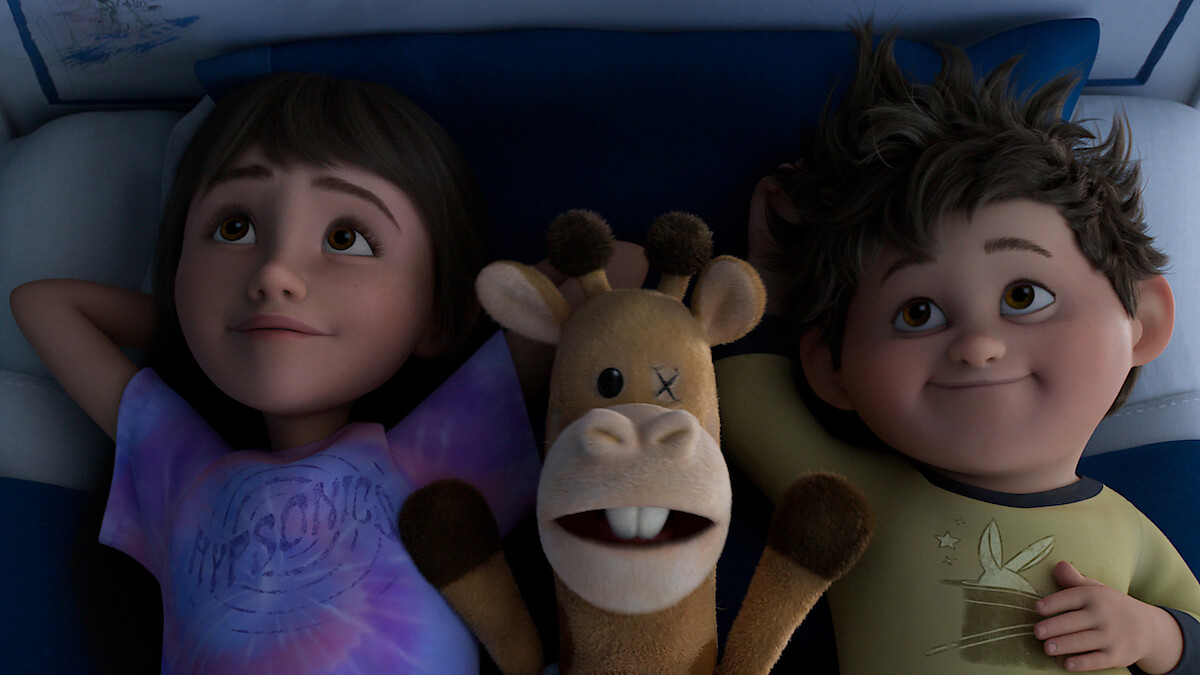
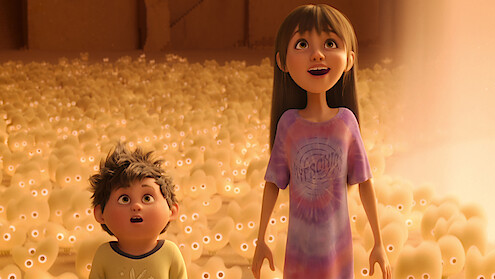
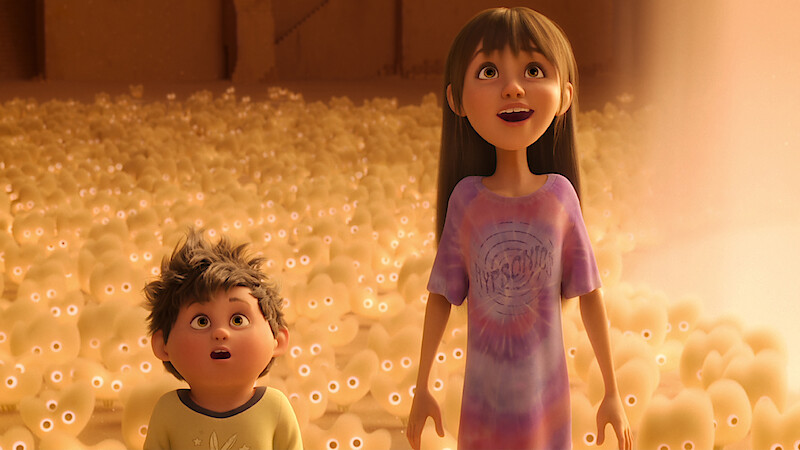
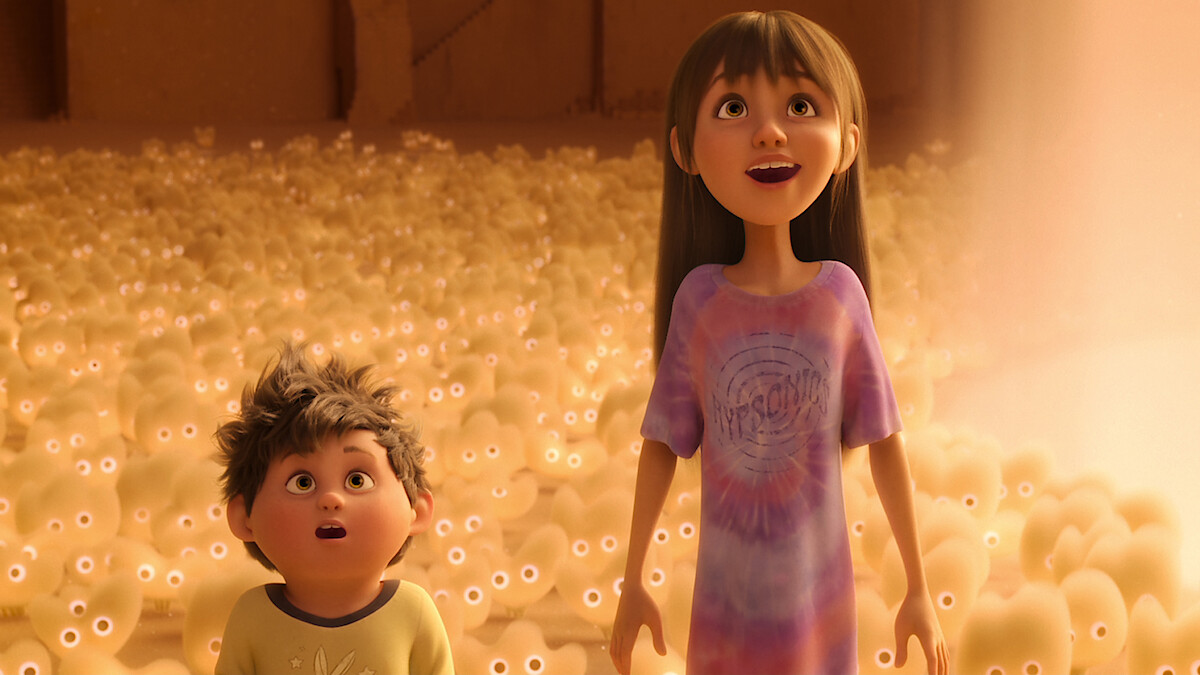
In Your Dreams, Woo’s feature directorial debut film and the first feature of Kuku Studios, the animation studio he cofounded, tells the story of siblings Stevie (Jolie Hoang-Rappaport) and Elliot (Elias Janssen), who, upon learning their parents are about to separate, turn to the dream world for answers about how to keep their rapidly changing real life intact. In their quest to find the magical being known as the Sandman, they experience some wild encounters, including a scene in which breakfast becomes a psychedelic galaxy unto itself.
“We decided the food would be alive. The characters themselves are the food, like strawberries and blueberries,” says production designer Steve Pilcher. “Instead of making the buildings out of food, which has been done before, we created a craft world from things like popsicle sticks and milk cartons to reflect Stevie’s playtime.” This gave Stevie and Elliot’s dream world a clear structure, Pilcher continues, “and gave the sequence its own unique, imaginative rules. I believe in creating specific rules for each fantasy world, so it feels consistent and fun, and once we did that, everything just clicked together.”
Woo — who worked on Ratatouille and WALL-E in his previous role at Pixar Animation Studios — knew this would be a challenge. “I’ve always wanted to see an animated movie about dreams. It’s sort of been the white whale in animation,” he says. “Every major studio has probably tried to develop an animated feature about dreams, but the challenge is bringing real stakes to a dream world, because whatever happens in a dream doesn’t always have consequences in the real world.”
Woo drew inspiration from Matthew Walker’s book Why We Sleep: Unlocking the Power of Sleep and Dreams and the mystical world of Hayao Miyazaki’s anime landmark Spirited Away. He also turned to live-action explorations of dreaming such as Inception, as well as ’80s adventure classics in the vein of The Goonies and E.T. the Extra-Terrestrial. Woo wanted scenes that shifted dynamically between animation styles as the dreams twist and unfold.
“That’s what really pulled me in,” says Sebastian Kapijimpanga, head of character animation. “When we were first looking at doing this movie, the pitch had a lot of 2D art and showed the range of environments. We’re dealing with a dream world, so the possibilities are endless. It really felt like making 10 movies in one. That challenge was a real draw for me.”
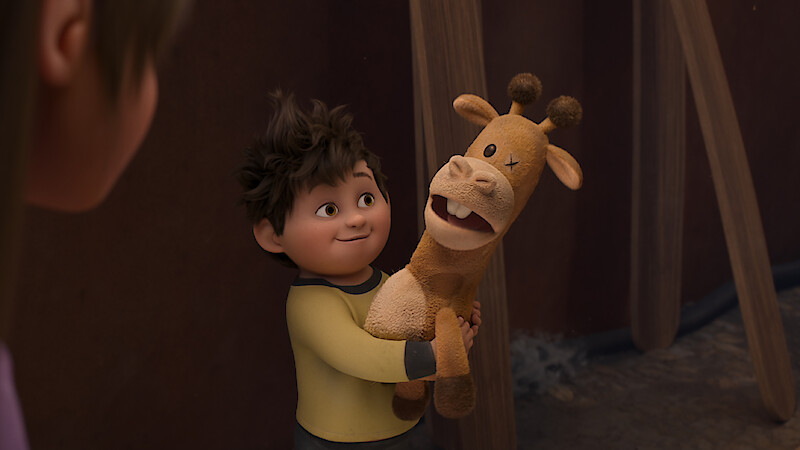
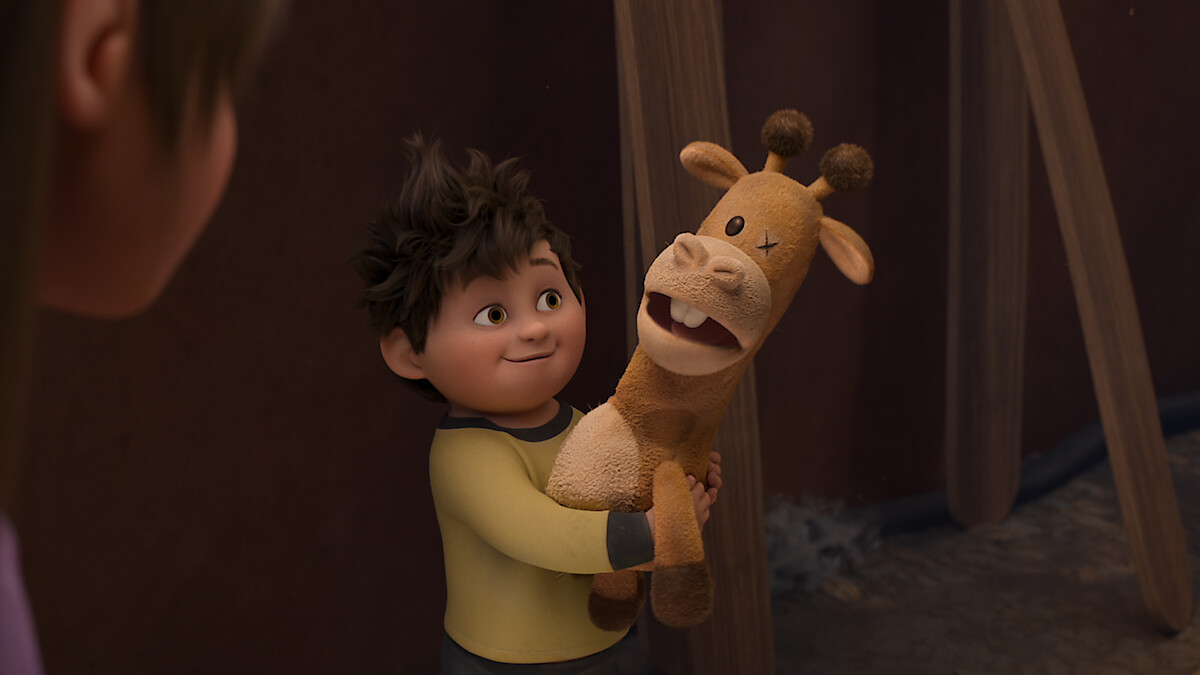
Of course, the film doesn’t take place only in fantasyland — it’s rooted in the story of a real family, including Stevie and Elliot’s mom and dad, voiced by Simu Liu and and recent Emmy winner Cristin Milioti. For a film that has moments of profound surreality, it’s some of the human touches, from the pain of a lost stuffed animal to the pang of a first crush, that stand out the most. “It can be completely absurd and hilarious,” says Woo, “but also grounded and emotional.” While the film is fiction, for Woo, its narrative comes from someplace very real.
“At its heart, it’s a story about two siblings finding their way through a world that doesn’t always make sense,” says Woo. “When I was six years old, on a cold Minnesota morning, I woke up to find my mom at the front door with her bags packed. She gently told my brother and me that she needed some time away to figure things out for our family … The alarm of that morning woke me up to the reality that life is far from perfect.”
A sense of authenticity had to be resonant in the animation styles as well. “We wanted depth and history in all the characters, environments, and props. Even the characters’ bedrooms are full of little details that bring the sets and characters to life and give them history,” says VFX supervisor Nicola Lavender. “We also brought in little bits of ourselves. The mom character’s hairstyle was based on our senior producer, Carey Smith. We took lots of pictures of her and used her as the reference. And because I have long hair, we did some tests with my hair to figure out how Stevie’s should move realistically. Alex would say, ‘Kind of like Nicky’s hair,’ so I’d have to do a little hair whipping for the team. There are personal touches from the whole team throughout.”
Woo knew that, at the end of the day, the animation could only be as compelling as the story it was tasked with bringing to life. No matter how inventive the visuals or how fluid the movement, the audience’s connection would hinge on whether the narrative itself resonated — whether Stevie and Elliot, their dreams, and the realities they faced felt real and urgent amid the spectacle. “We rooted everything in story,” says Woo. “In Your Dreams is about dreams, both in the literal sense of when we sleep and in the metaphorical sense of what we aspire to and long for. At its core, the movie is about the power of dreams — especially the power of dreaming together.”
In Your Dreams is streaming now, only on Netflix.
This feature originally appeared in Issue 22 of Tudum Magazine.