Forrest Fenn's Treasure Hunt Documentary: Trailer, Who Found Forrest's Treasure, Justin Posey Interview - Netflix Tudum
Deep Dive
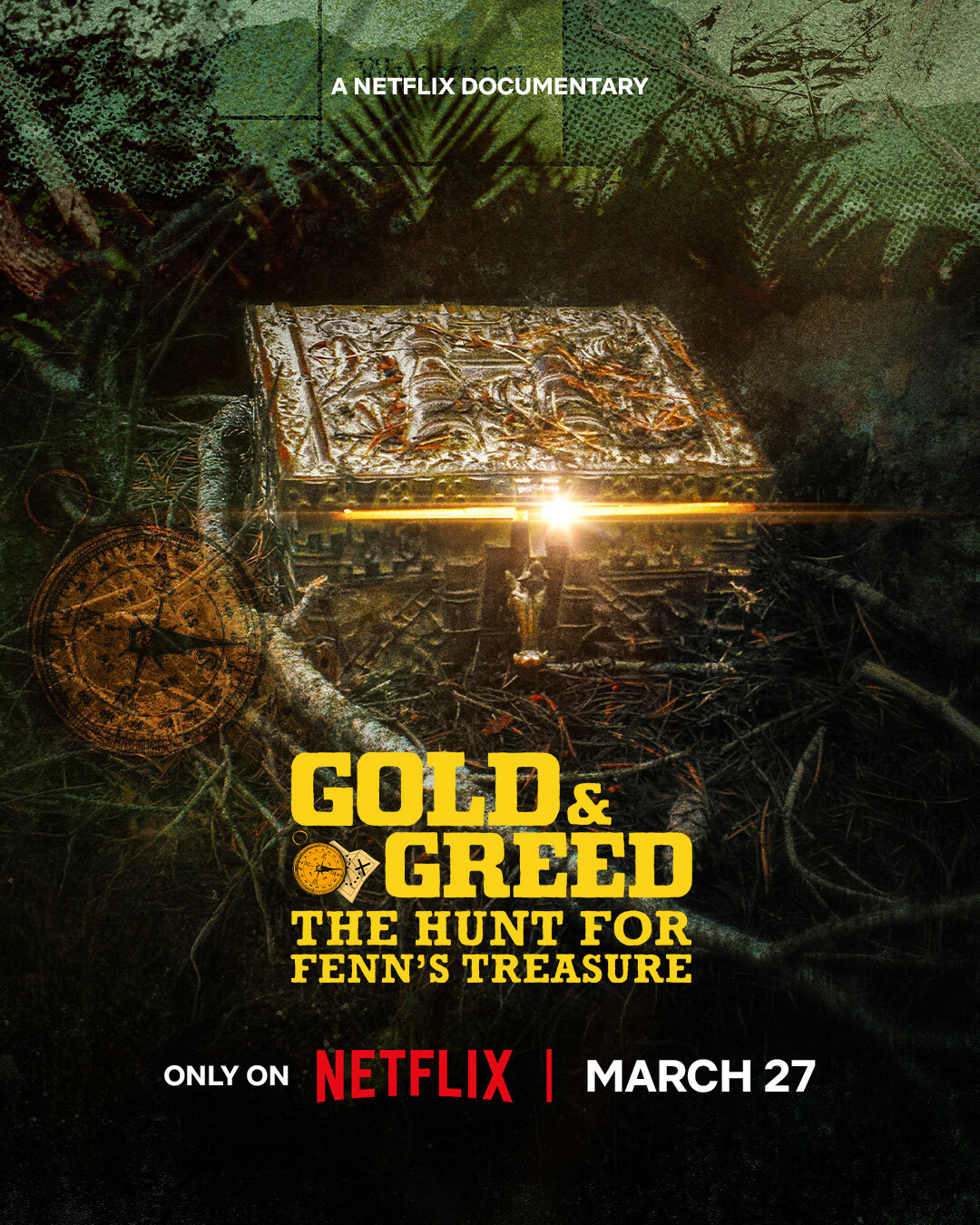
Revisit Forrest Fenn’s Real-Life Treasure Hunt in Gold & Greed
The docuseries follows the everyday people who risked their lives chasing Fenn’s fortune.
By Natalie Morin & Troy Pozirekides
March 28, 2025
In 2010, enigmatic art dealer and author Forrest Fenn orchestrated a treasure hunt for the 21st century. At 80 years old, Fenn hid a chest filled with gold and jewels in the mountains north of Santa Fe, leaving only a cryptic 24-line poem for fortune seekers to divine its location. The audacious act ignited a decade-long quest for which a ragtag band of adventurers abandoned their jobs, families, and in some cases even their lives in pursuit of Fenn’s hidden fortune.
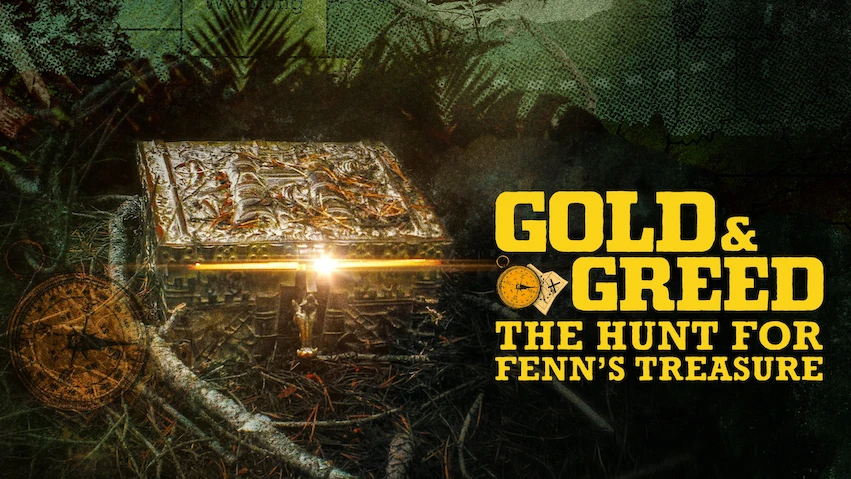
The thrilling and perilous journey of these treasure hunters unfolds in the docuseries Gold & Greed: The Hunt for Fenn’s Treasure, directed by Jared McGilliard. Over three parts, it offers a rare glimpse into a quest for a prize that was not only real but actually found — and the mystery of its future hiding spot remains tantalizingly uncertain. Produced by Vox Media Studios and Nomadica Films, with executive producers McGilliard, Max Heckman, Chad Mumm, Mark W. Olsen, David Clawson, John Collin Jr., Kurt Tondorf, James Campbell, Dean King, and James Haygood, Gold & Greed unveils the secrets of a captivating modern-day odyssey.
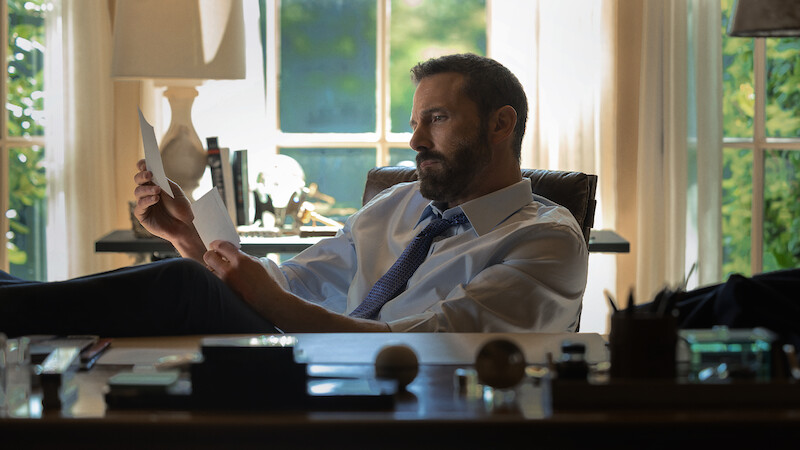
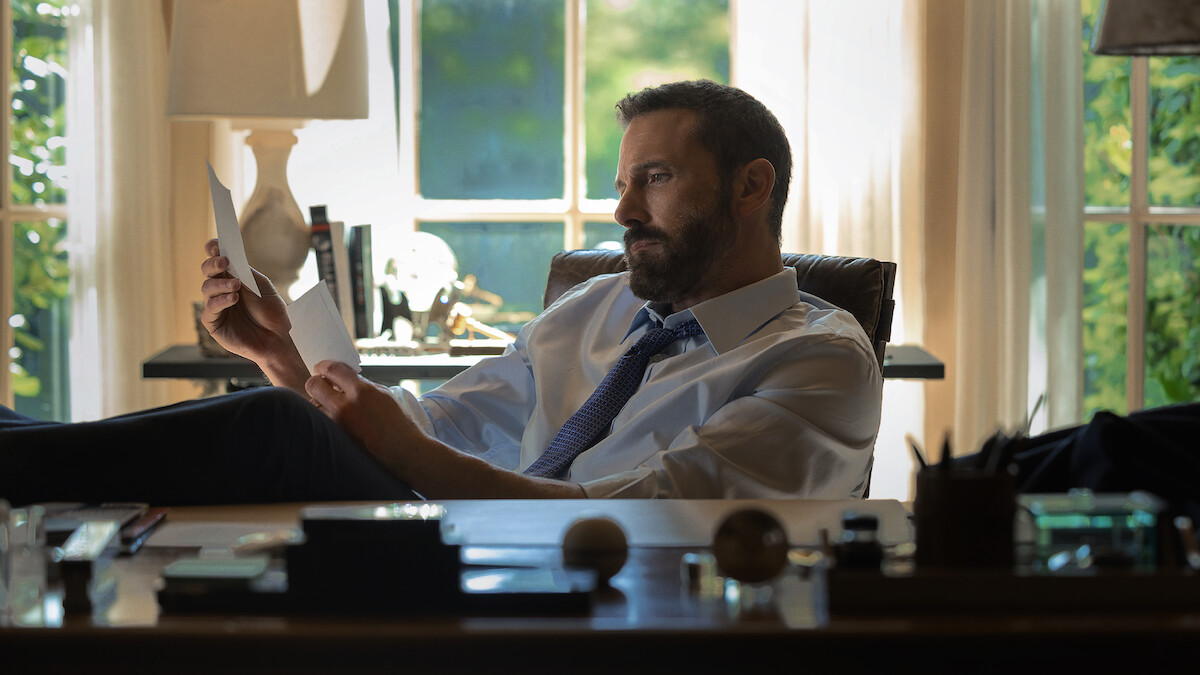
Forrest Fenn in Gold & Greed: The Hunt for Fenn’s Treasure
Who was Forrest Fenn?
Forrest Fenn was a decorated Air Force pilot who flew more than 300 combat missions in the Vietnam War and was shot down twice, surviving both times. After the military, he became a notable art dealer in Santa Fe, New Mexico, with clients like Suzanne Somers, Ralph Lauren, and Michael Douglas. Fenn’s life took a dramatic turn when he was given a diagnosis of kidney cancer with a slim chance of survival. His illness and subsequent recovery inspired him to hide a treasure chest in the Rocky Mountains and publish a poem in his memoir with clues to its location. By throwing down this gauntlet, he hoped to create a lasting legacy and give the gift of the thrill of adventure.
To hear more from director and co-executive producer McGilliard on Fenn’s life and the legendary treasure hunt he kicked off, head over to the You Can’t Make This Up podcast. “Fenn was born from a storybook,” McGilliard told host Rebecca Lavoie. “He was a Vietnam fighter pilot, an art dealer to the stars, and a man who left behind a legacy that got people outdoors.”
What was in Forrest Fenn’s treasure?
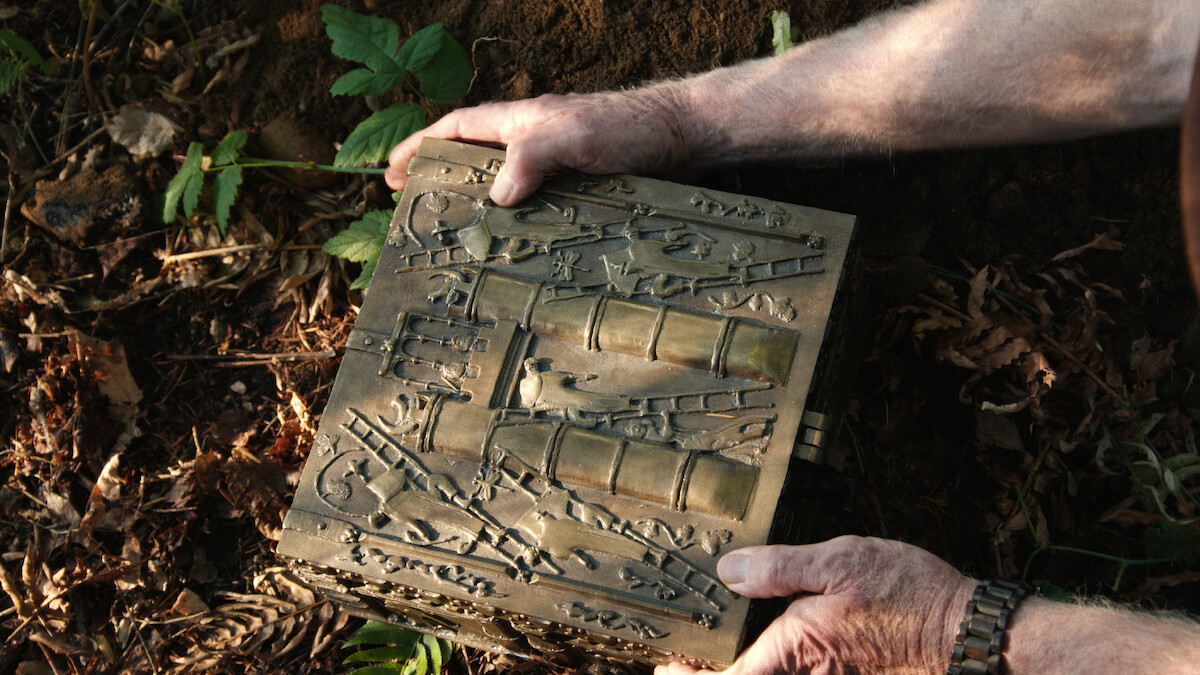
The treasure chest was filled with items worth more than a million dollars — approximately 476 gold pieces, coins, jewelry, and other precious artifacts.
Justin Posey in Gold & Greed: The Hunt for Fenn’s Treasure
How dangerous was Forrest Fenn’s treasure hunt?
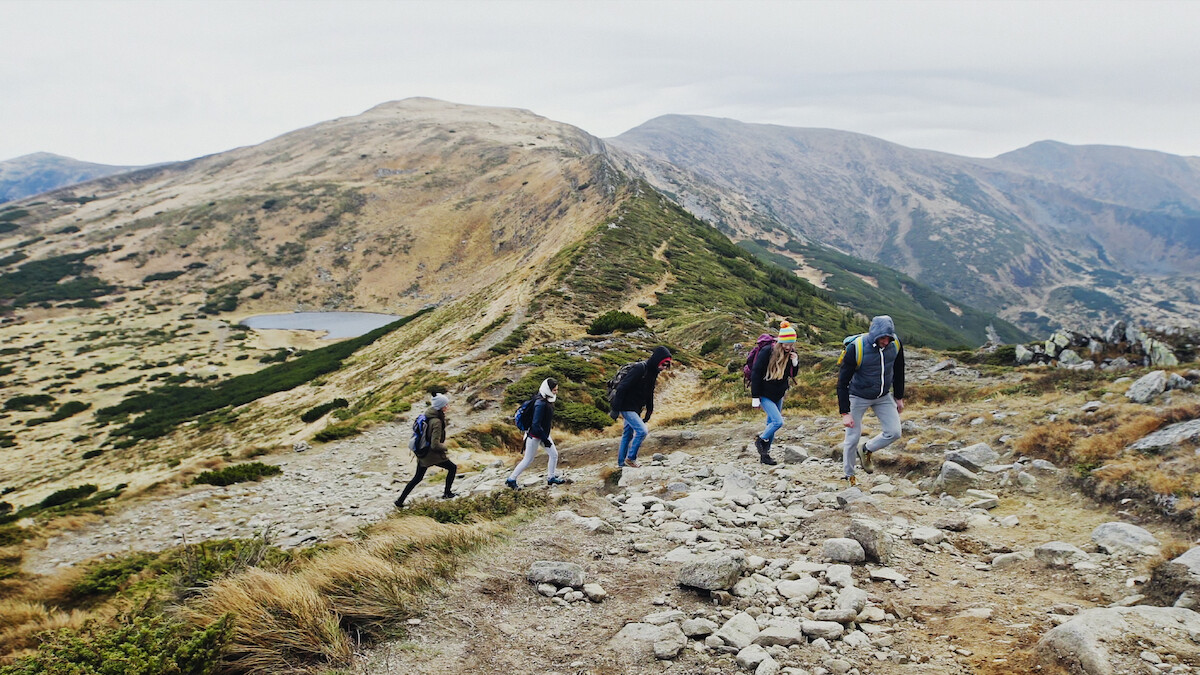
Though Fenn said that anyone could solve the poem by keeping their search relatively simple and imagining places an elderly man could go, the hunt for Fenn’s treasure became extremely dangerous, taking amateur searchers into rugged and perilous terrain. The ambiguity of the poem’s clues caused many unprepared searchers to venture into hazardous locations with whitewater rapids, sheer cliffs, and dangerous wildlife.
“I didn’t think anybody would solve it for the next 50 to 100 years,” treasure hunter Justin Posey, who is interviewed in the documentary, tells Tudum about the poem. “It’s very approachable, there’s simple verbiage in the poem itself, but it could [fit] a plethora of locations. And so it turned out that the key to solving this was understanding the person who hid it and what was important to [him]. I and many others glossed over that a little bit too much, and maybe we didn’t spend enough time trying to understand the person who hid it.”
There were people, myself included, who went too far. But maybe that’s the nature of obsession: You feed it or it feeds on you. You don’t really have a choice.
Justin Posey
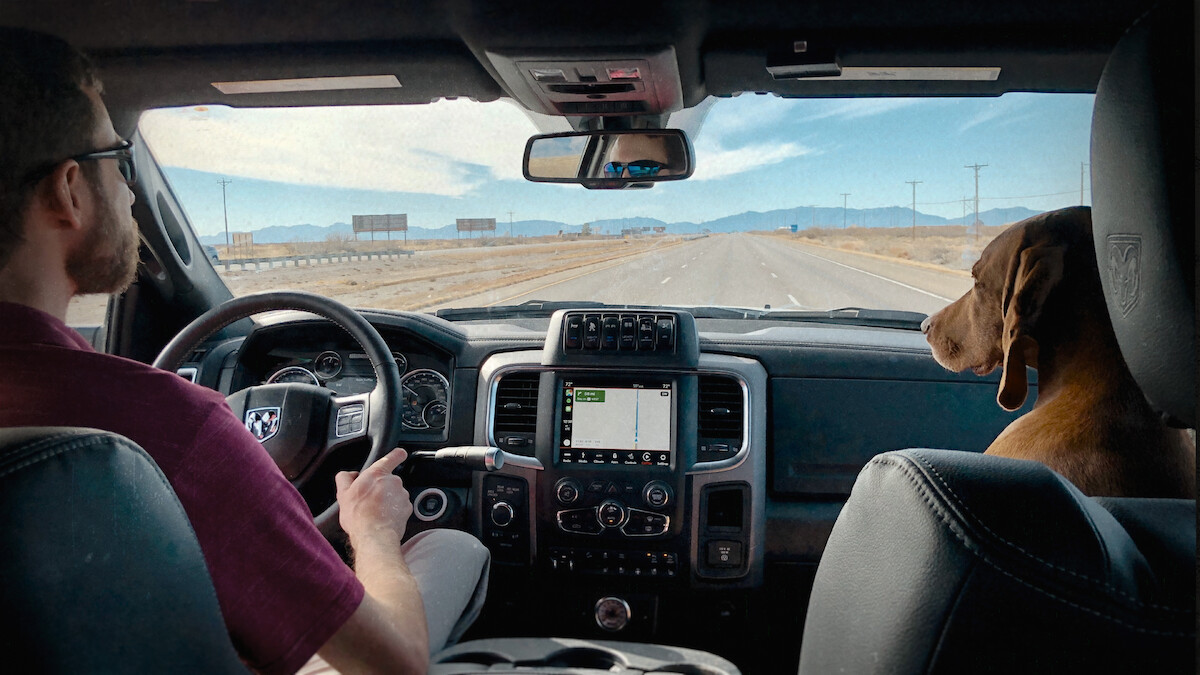
Justin Posey and his dog in Gold & Greed: The Hunt for Fenn’s Treasure
To what lengths did people go to find Forrest Fenn’s treasure?
Many treasure seekers quit their jobs, ventured into restricted areas, spent thousands of dollars and, in some cases, many years chasing Fenn’s prize. Posey, a software engineer and treasure hunter from Tucson, Arizona, says he spent more than 700 days searching, trying to think as creatively as possible. In the docuseries, he explains how he trained his dog to sniff out bronze — the treasure chest was made out of it — and even used his tech skills to run an analysis of all existing videos of Forrest to read his facial expressions when he talked about potential clues.
However, there was one tactic he ultimately couldn’t go through with. “A friend of mine and I had discussed … less scrupulous ways to track this down,” Posey says. “[One idea] was that you can insert very small tracking images into an email. If you were to send Forrest a collection of emails around the same time, each with hard-hitting titles like, ‘I found it in Montana,’ ‘I found it in Wyoming,’ and so on, odds are he’s going to open the email that includes the state where it’s hidden first, and we can note that.
“There [were] a lot of out-of-the-box, unscrupulous methods that could have been employed to track it down, but from my perspective, that’s far from fair and not reasonable to do,” he adds. He also admits that his energy to pursue the hunt had its limits. “I have a full-time job and so on, so there is a balance to be had there. Clearly there were people, myself included, who went too far. But maybe that’s the nature of obsession: You feed it or it feeds on you. You don’t really have a choice.”
Did anybody die during the hunt?
Yes, several people lost their lives in pursuit of the treasure. These deaths caused significant controversy and led to calls for Fenn to end the treasure hunt, including a plea from Pete Kassetas, then-head of the New Mexico State Police, who went on Good Morning America to implore Fenn to call off the hunt. This triggered a wave of backlash, and Kassetas even received death threats.
What happened to the treasure?
The treasure was eventually found by a 32-year-old medical student named Jack Stuef. He discovered it in the Rocky Mountains and later confirmed the find to Fenn. Once hunters learned where the treasure had been hidden for a decade, some felt the solution had been devastatingly simple. “The term is apophenia: the human tendency to find patterns where they might not necessarily exist,” Posey adds. “Forrest injected enough noise or variables into the treasure hunt so [that] it was very easy to read too deeply into them. The winning solution here was a person who did the opposite and said, ‘I’m not going to read too deeply into anything unless there is overwhelming evidence that requires me to do so.’ ”
However, Posey also believes a few other factors kept it from being found for so long. “I think it was a combination of two things. One was that it was extremely well hidden in the general area where it was found. And then the other was, as fate would have it, it’s my understanding that the [marked tree] ‘blaze’ that was supposed to point to where the treasure was had suffered a natural disaster of sorts and was no longer recognizable. If that had been recognizable, there’s a great chance that this treasure hunt would’ve been over within a couple of years, as opposed to the decade-plus that it spanned.”
After its discovery, the treasure was put up for auction, so others might acquire the legendary cache. Posey put in an offer, but it was ultimately won by an anonymous buyer for more than $1.3 million. He did, however, manage to gain ownership of a few items of Fenn’s original treasure.
What was the point of Forrest Fenn’s treasure hunt?
“I recently wrote and published a memoir, and … I really reflected on what I gathered after 10 years of searching,” Posey says. “Adventures don’t create themselves. You have to go out and make them yourself, and it requires effort. And to a large degree, life begins where routine ends, and it’s in everybody’s best interest to get off the beaten path every now and then and do something different.”
Where can I watch the trailer for Gold & Greed: The Hunt for Fenn’s Treasure?
For a glimpse at the epic search sparked by Forrest Fenn’s hidden treasure, check out the trailer at the top of the page.