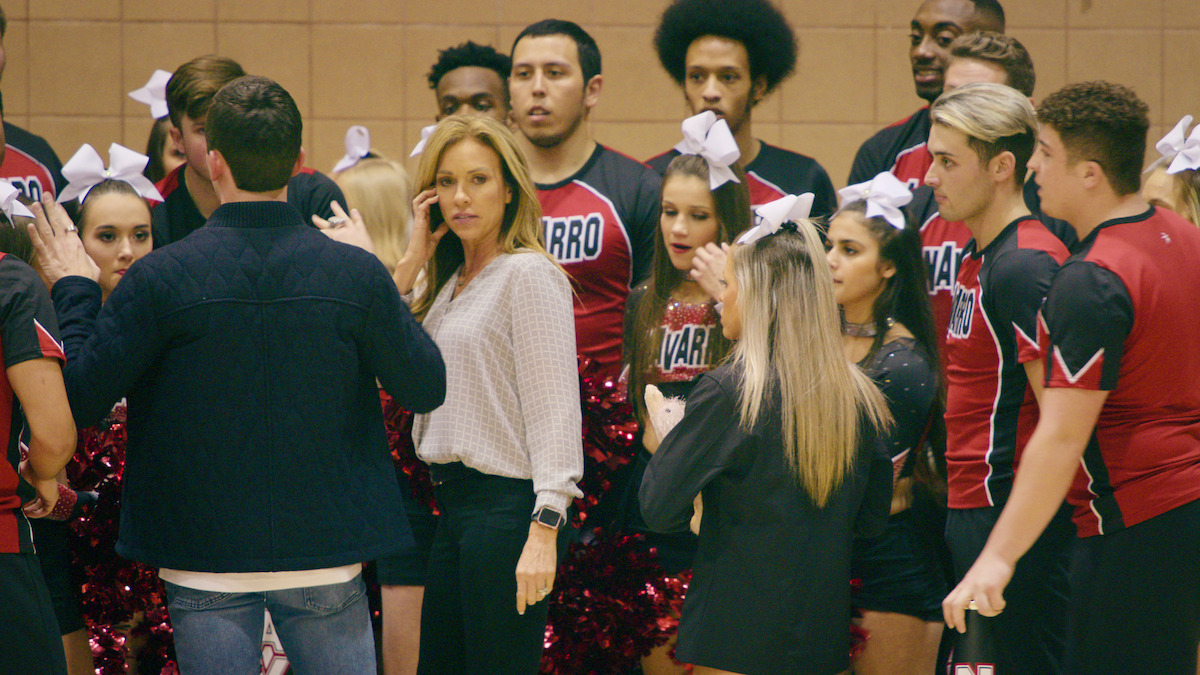
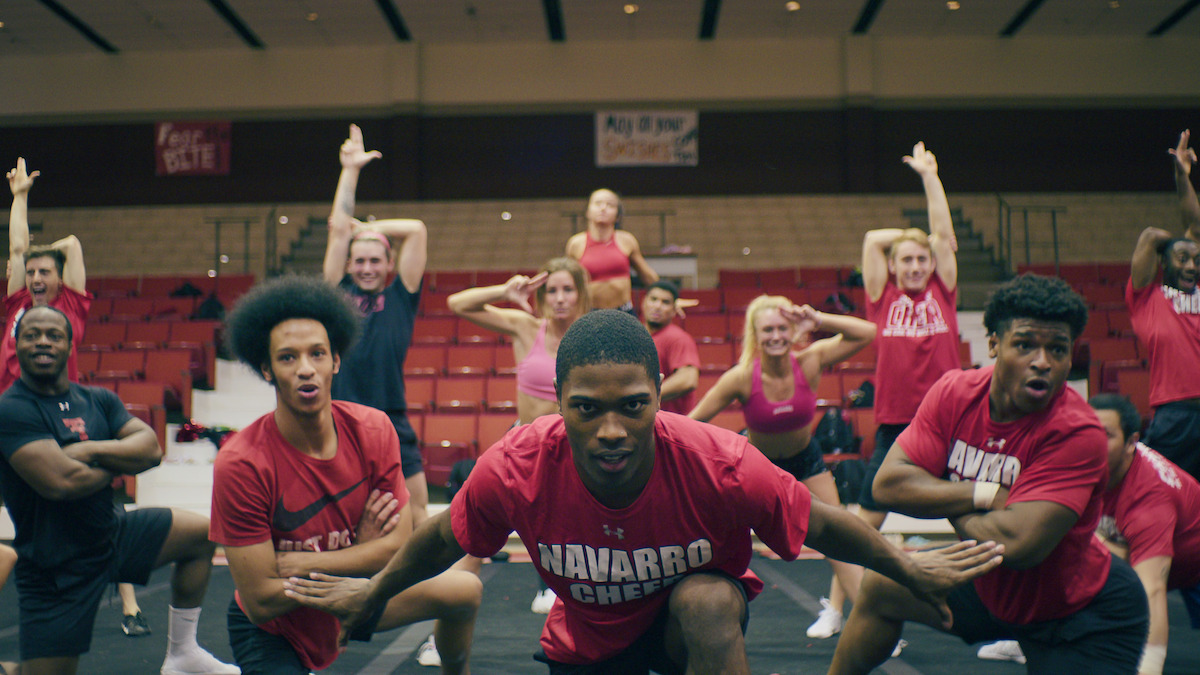
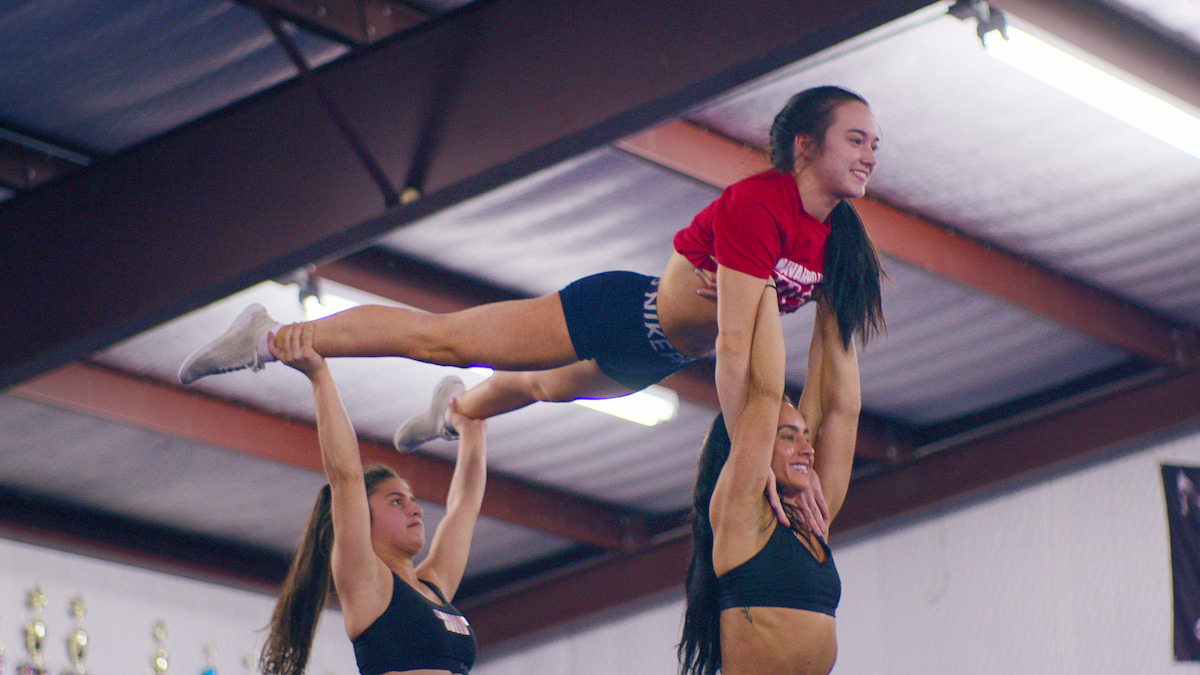
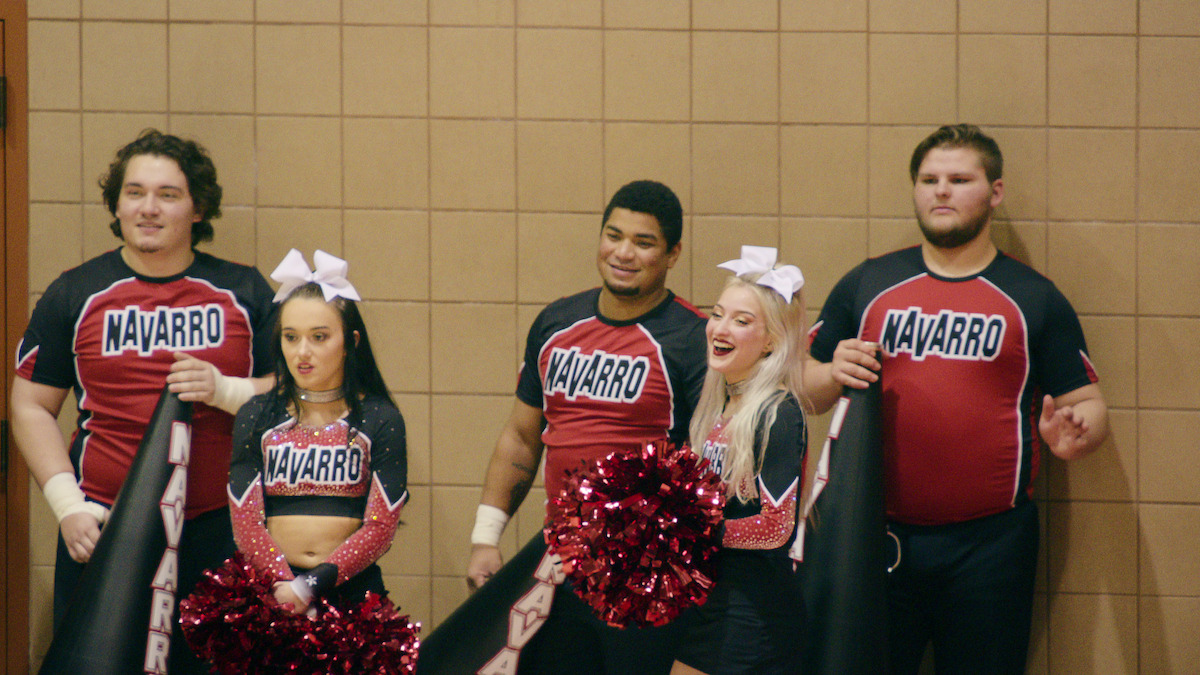
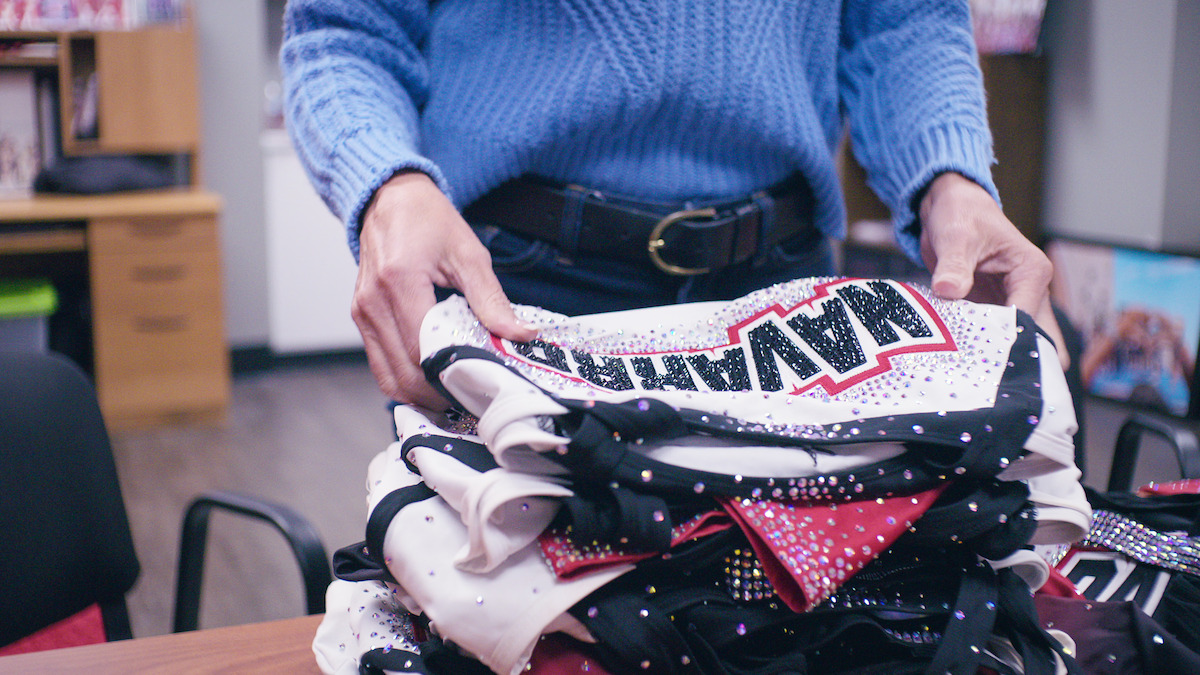
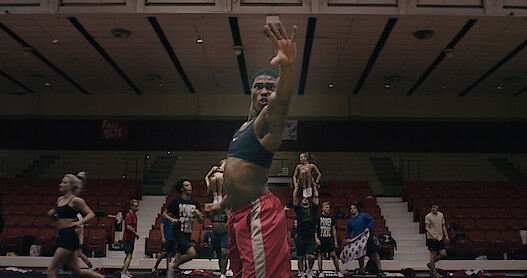
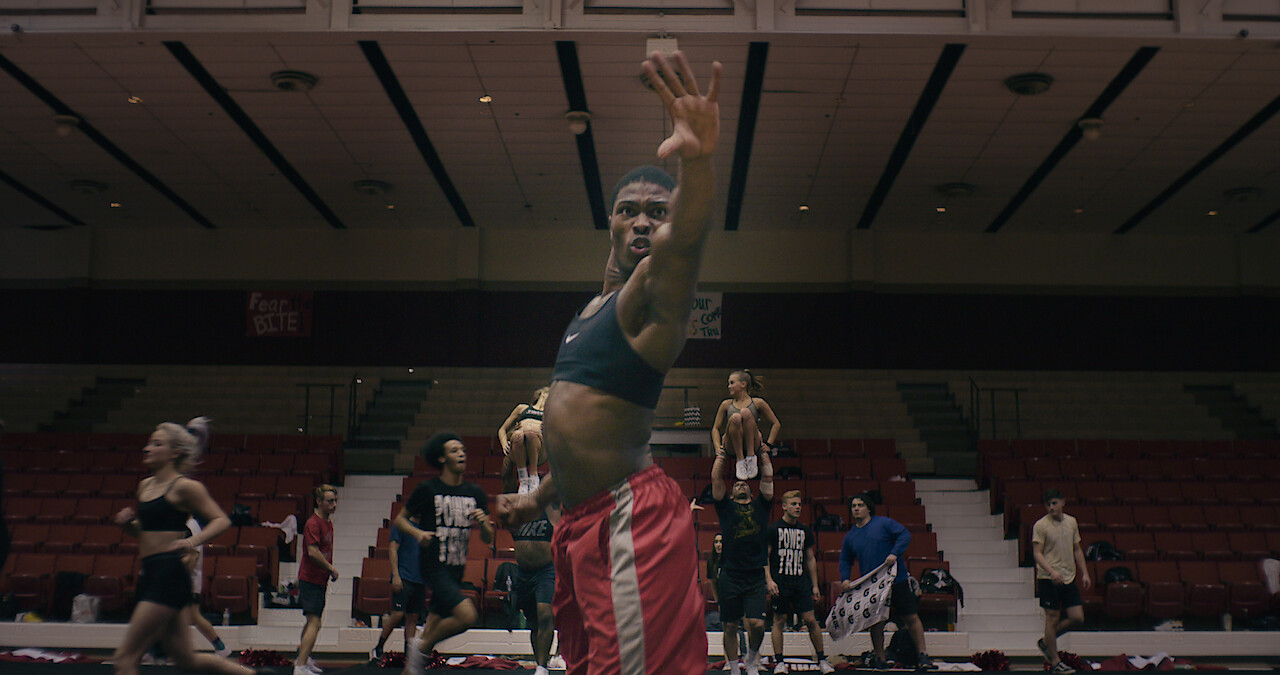
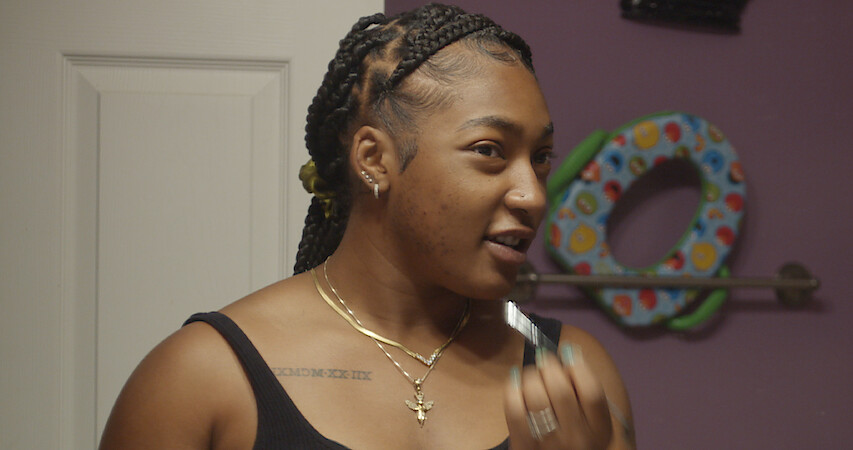
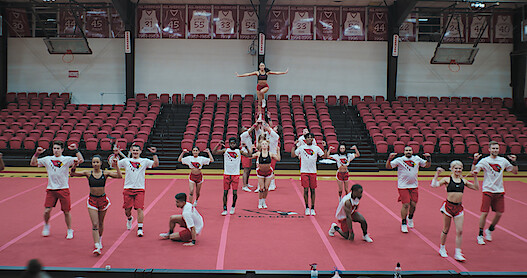
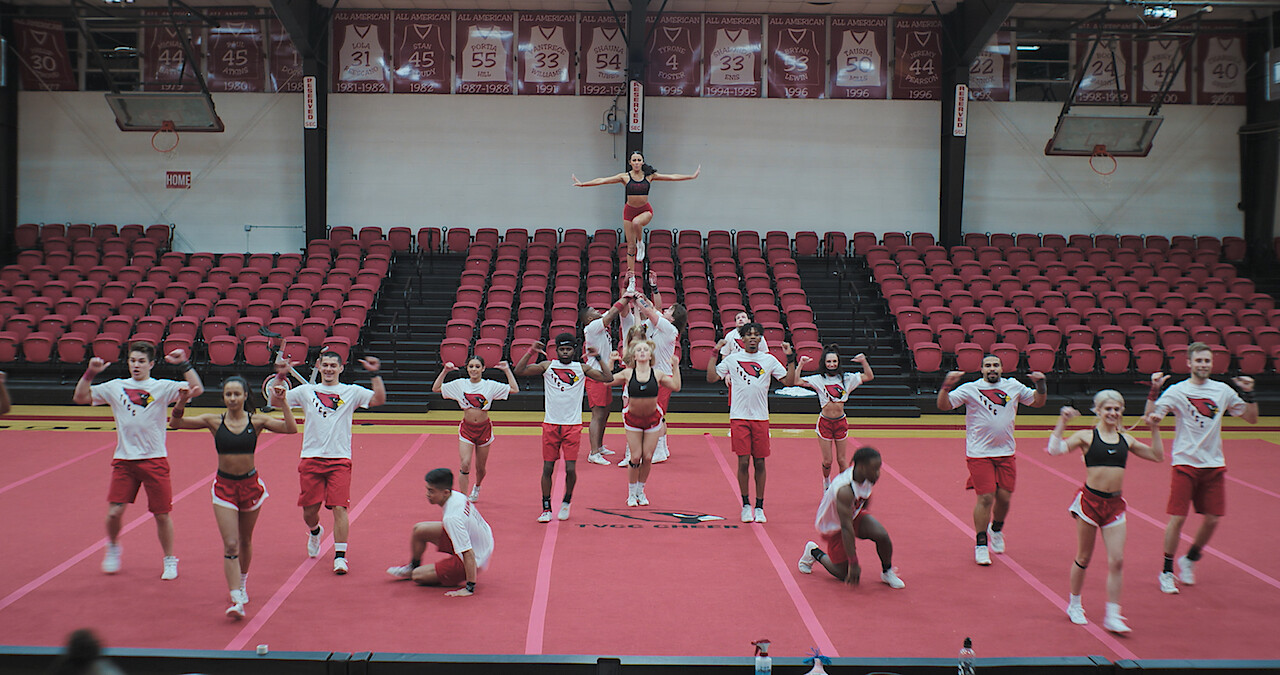
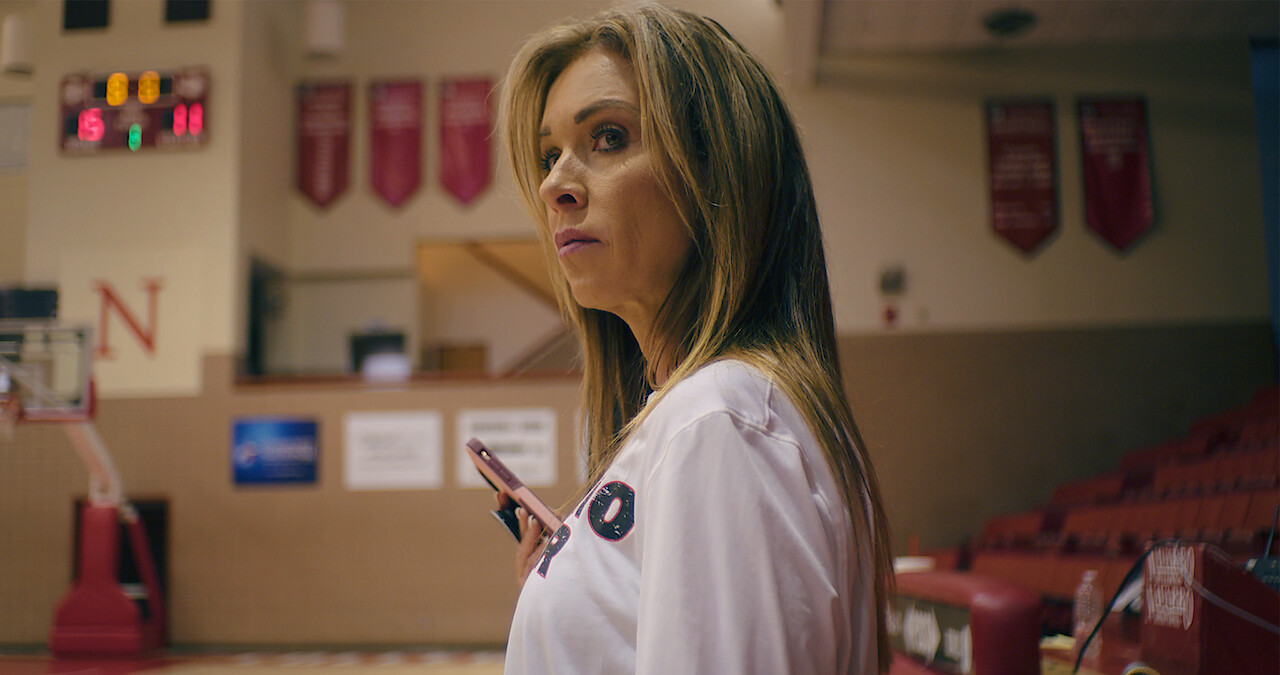
In Cheer, Navarro College head coach Monica Aldama works with her team for months to get ready for nationals. But how does such a talented and dynamic group get put together in the first place?
It’s no question that trying out for the world’s most famous cheerleading squad can be scary, to say the least — especially since only 40 people, a lot of whom are returning members, make the team each year. But Aldama tries to make the process as comfortable as possible. “I've always been very big on trying to make the tryouts feel very laid-back so that the person that is trying out can be more relaxed,” Aldama says. “A lot of times, they're very nervous and sometimes even intimidated, because they're coming into this college environment and into a team that's really good.”
And “really good” is an understatement. The Navarro Bulldogs are a beast in the cheerleading world, winning 13 championships over 18 years. But the Cheer docuseries has catapulted the team’s fame and prestige to new heights, making the team members bona fide celebrities, landing them partnerships from brands like Savage X Fenty and Conair and even giving Aldama a chance to compete on a different world stage: Dancing with the Stars.
But fame can only get you so far — each year, the team has to prove that they have the skills to back up their star power. And Aldama has the daunting task of putting together a cohesive team to compete at Daytona. So what is it like trying out for a powerhouse like Navarro? Aldama herself breaks down the process, from what skills are necessary to what makes for an instant no.
Putting a world-class team together seems like a rigorous process. How do you usually conduct tryouts?
We’ve changed our cheer tryout process. We used to do it very old-school, like back in the day where you actually had a date to do your tryouts, and that one day out of the year, people would come in and physically do a structured tryout. But it was getting to the point where, with technology and everything, we were having more and more people try out by video. Especially with people's schedules and competitive All Star cheerleading, it was harder for people to come one day out of the year to try out. It also can get expensive to fly in and all of that if you don't live in Texas — so we just try to make it available for everyone. I also decided to have an in-person tryout at every clinic that we had throughout the year, which is usually four or five.
We try to keep it as least intimidating as possible. You mess up, go again — it's not that big of a deal, and we encourage them through that. And if you aren't happy with your tryout or maybe you gain some new skills between the first clinic and the last, you could always try out again and come back.
What happens at the tryout portion of the in-person clinic?
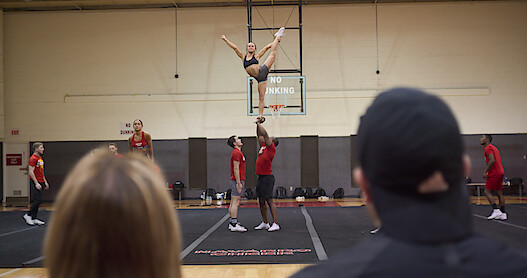
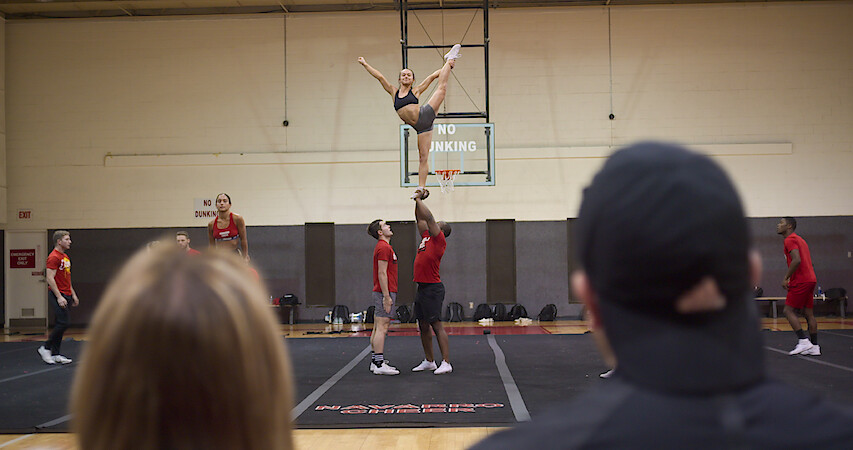
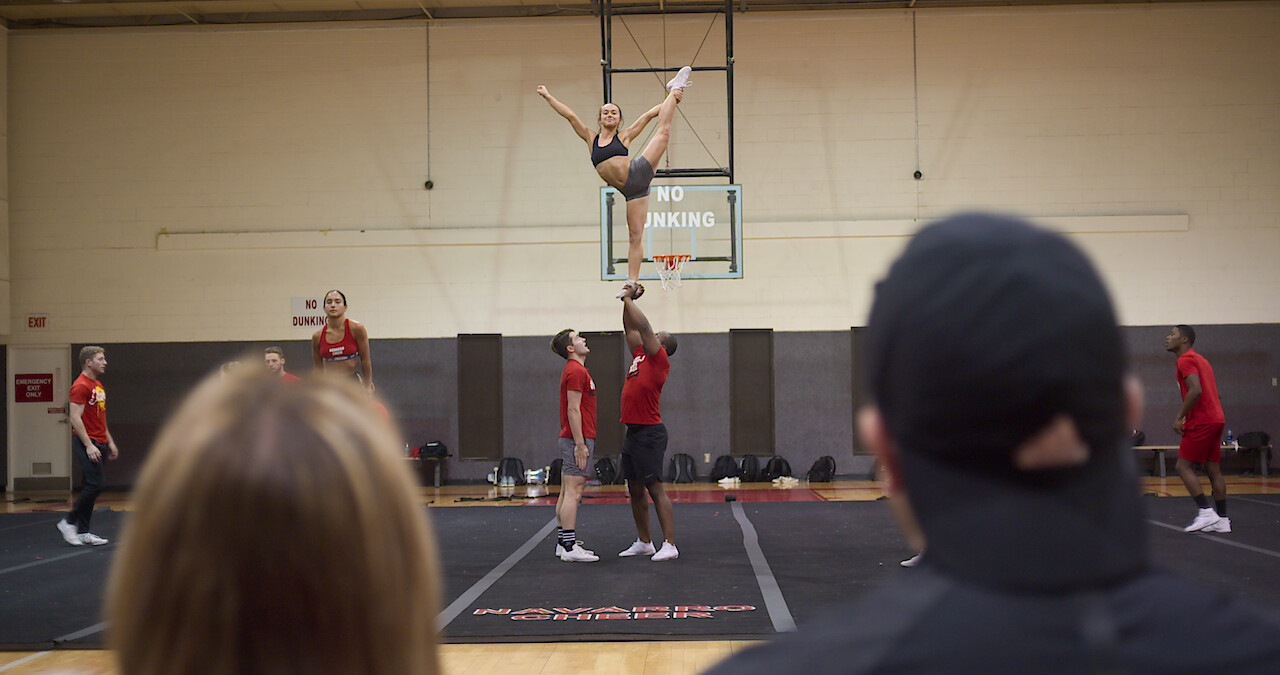
We used to teach a chant and do a dance and all these very rigid things, and we took that out. Now, we’re just watching you throughout the clinic already and just seeing what you can do. Then at the end of the clinic, we'll have you come do your best standing tumbling pass, your best running tumbling pass and then a couple of stunts to show us what you have. And we'll video it so that we've got a reference to go back to — especially if it's an early-on clinic and we're trying to decide between some people. We've got a video, and we can go back and do some comparisons and see what you have — make sure our memories are real good!
Do you ever go out of your way to recruit cheerleaders?
Obviously, things evolve. Tryouts look way different, and recruiting [cheerleaders] is way different in 2022 than it was 10 or even really 5 years ago, and we have changed with the times. Social media is such a great tool to have, because I can find someone with really great talent, and then quickly DM them and see what their interest is in a clinic. So social media has been fantastic for exposure and the ability to communicate with someone quickly and identify potential recruits.
Is anyone allowed to try out?
Oh yeah! Anyone can try out. We put the “minimum requirements” online, but we have people try out that don't have those and that's fine too. We welcome anyone to come and try out. Sometimes you just see some potential in someone that maybe is not up to par with everybody else yet. And we definitely have people that have made the team based on that potential.
So what makes someone stand out from the crowd?
Obviously, it comes down to skills for sure, but I think it's always nice to put your best foot forward with your appearance. So look nice and clean and collegiate. We do have you wear a certain color if you're a senior and older and a different color if you're younger... but I like to see that you've taken some effort. If you're a woman, maybe you have your hair pulled back nice and clean — it's not falling in your face, and you've taken the time to just look presentable. And same for the men, you're just cleaned up and your attire looks good on you. It's not crazy baggy. You look like you're ready to go out there and compete. I think that it’s always good to show up, because your first impression is your biggest impression. Make sure your body language is good when you come in and that you're working hard. And then of course, like I said, you don't always have to have the best skills. Sometimes we take people based on potential. So just be coachable, have a great attitude and show that you're eager to learn.
What do you look for in a video tryout, compared to an in-person clinic?
Once again, we'll always go back to skills, but I do have a form that describes the way your video should look. It should have an introduction [about] why you want to try out and then [show] certain skills. It's so nice when we get videos that actually follow those directions — once again, putting their best foot forward. That just says to me a lot about, not only what kind of athlete you're going to be, but what kind of student you're going to be. It is a college, and it is a hard job for me to make sure I'm on top of everyone, [that team members are] doing their studies, keeping up with their grades, on top of all of our cheer responsibilities too. So your first impression says a lot.
So it’s clear what you like to see from potential recruits. What don’t you like to see?
I can give you an example. One time at the end of a recruit clinic, someone came up to me and said, “I didn't get to stunt as much as I thought I was going to get to.” And I was like, “Okay, no,” because it's not the way you would want to present yourself and speak to someone when you're trying to say, “Hey, I'm a great athlete and I'm a good representation of your program.”
The thing about it is, our clinics are free. They’re open to people that sign up and register, and you have to go in with that mindset. You're not going in and getting a private lesson — those are things you do outside of clinics where you're actually paying for someone's time to teach you one-on-one and you're getting every single minute of their time. But I think a definite “no” is something more like that than [lack of] skills. It turns me off, let's just say that.
Do impressive tryouts mean a better shot at the national title?
I don't think that the talent that you put together is going to give you an idea of how cohesive your team is — that comes with the way the team interacts and works together. And sometimes not everybody makes it through — they don't fit in or maybe they're really talented, but they don't really have the work ethic or they're not really a team player. You don't really know that just at a trial based on the few minutes that you get or the little bit of time that you get to know this person. If I'm being real honest, it takes actually getting in and getting into those practices, because sometimes there's someone that I teetered back and forth on whether or not I was going to put them on the team, and then they ended up being a standout in leadership or the amount of skills that they picked up. And then sometimes the most talented person at trials was the person that brought the least. So it's hard to know at tryouts. You do your best in picking the talent that you think is going to be great. Then it really comes down to coaching and figuring out how to work with all the different personalities to make sure the right people stay on the team.
This interview has been edited for length and clarity.