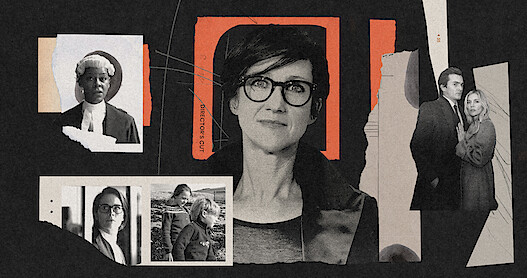
Illustration by Mark Harris
Director S.J. Clarkson Reveals the Hidden Scandal in ‘Anatomy of a Scandal’
All your gut-punch questions, answered.
April 20, 2022
In 2018, S.J. Clarkson received a copy of a new novel: Sarah Vaughan’s Anatomy of a Scandal. And she couldn’t put it down. “It was this psychological thriller meets courtroom meets character [study],” Clarkson, who directed all six episodes of Netflix’s newly released adaptation tells Tudum. “All these characters were so rich, and I loved how the narrative shifted from one character to the next. It was constantly questioning who these characters were as you learn more information.”
Showrunner Melissa James Gibson had a similarly visceral reaction. Having just wrapped the last season of House of Cards, the writer and producer was drawn to Vaughan’s tale of British power and politics. “It was a page-turner with a really juicy plot twist and a lot of interesting psychological terrain to mine,” she tells Tudum.
Together with executive producer David E. Kelley, known for legal dramas like Boston Legal and Ally Mcbeal, as well as prestige ensemble drama Big Little Lies, Clarkson and Gibson embarked on a multi-year journey to bring Anatomy of a Scandal to the screen — through pandemic lockdowns and across two continents, no less.
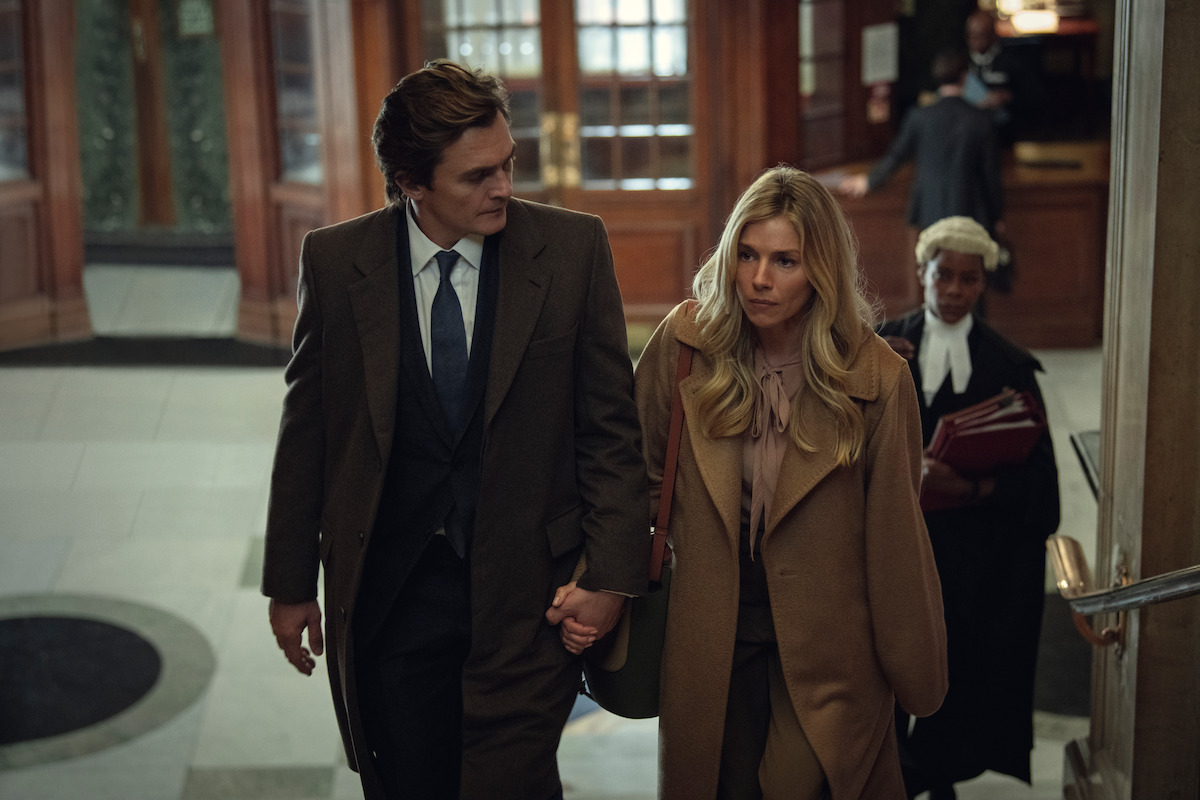
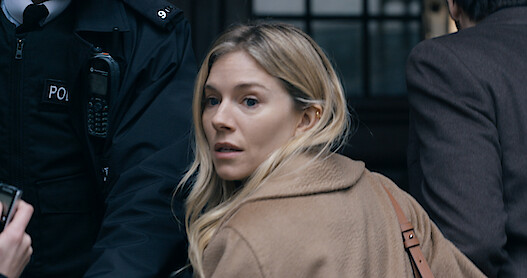
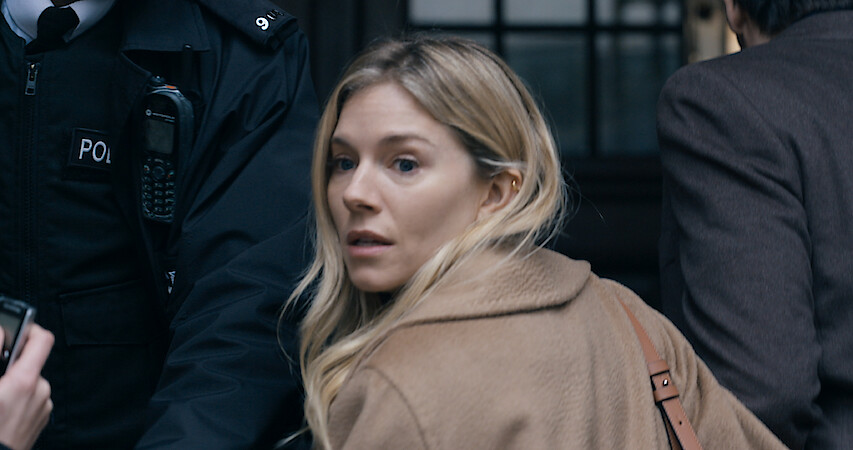
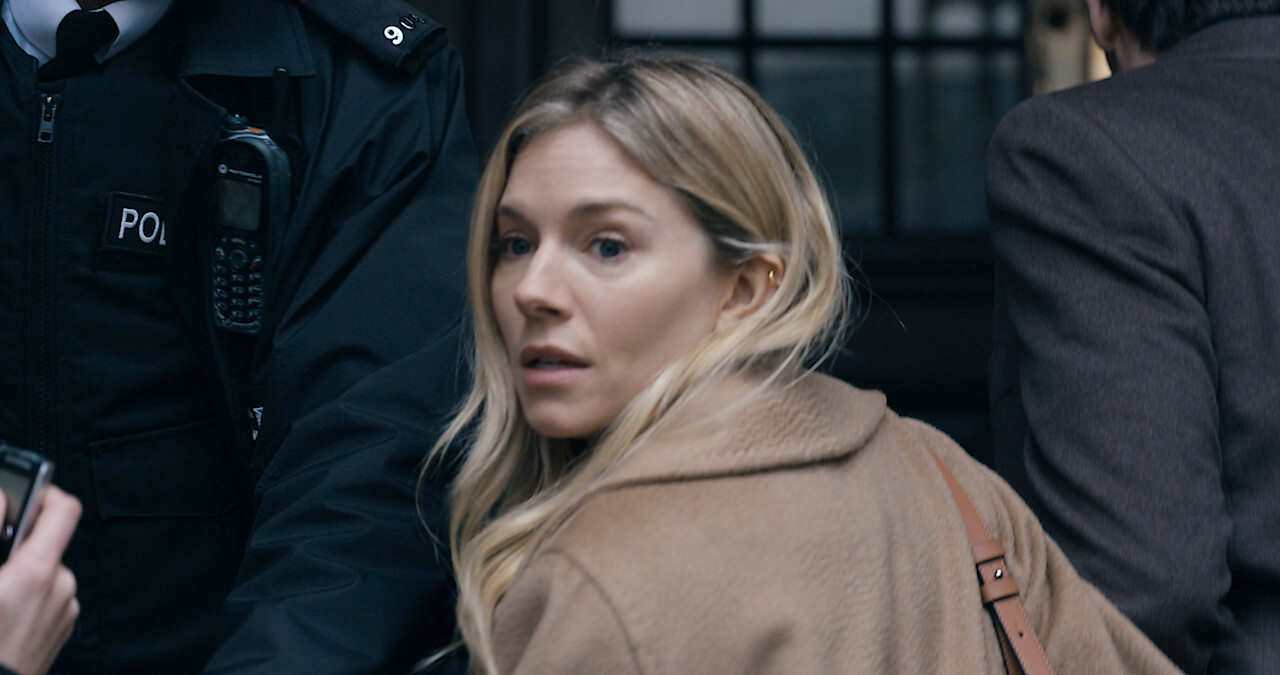
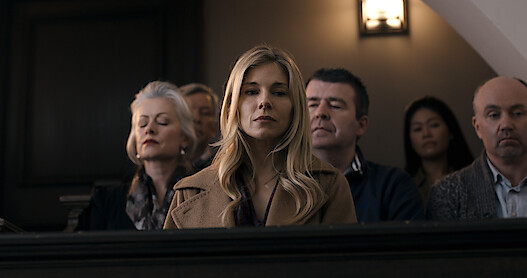
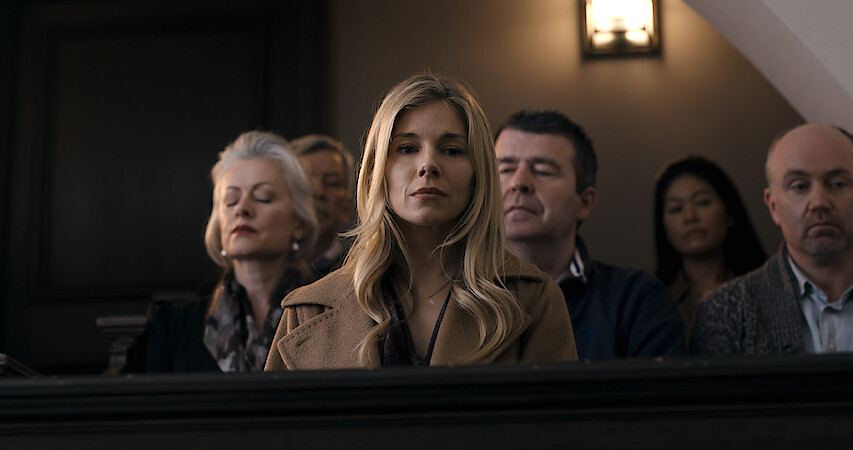
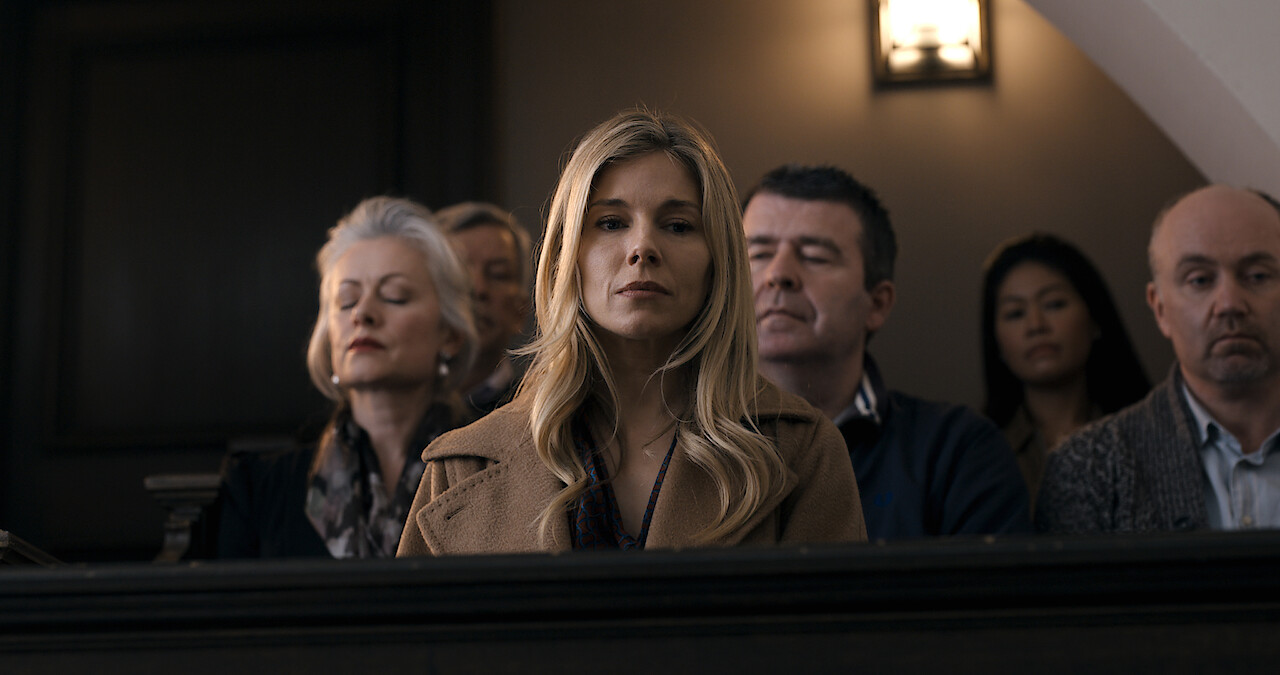
James (Rupert Friend) and Sophie Whitehouse (Sienna Miller) arrive in court in Anatomy of a Scandal.
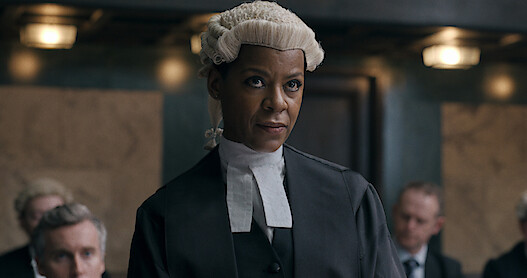
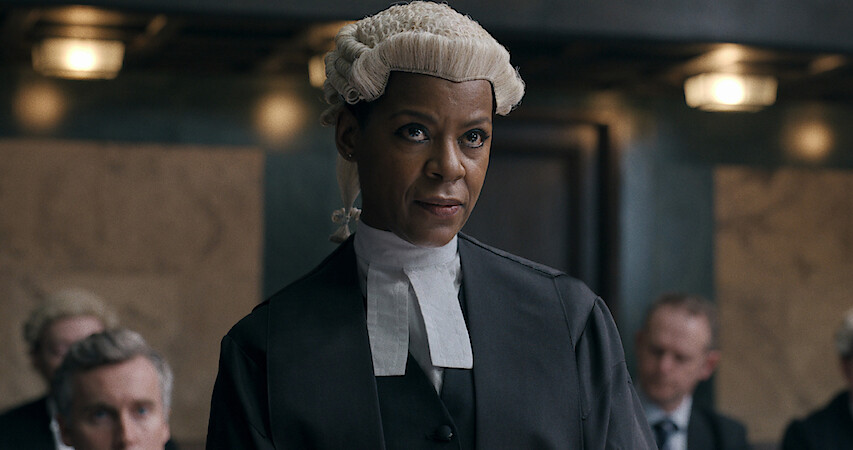
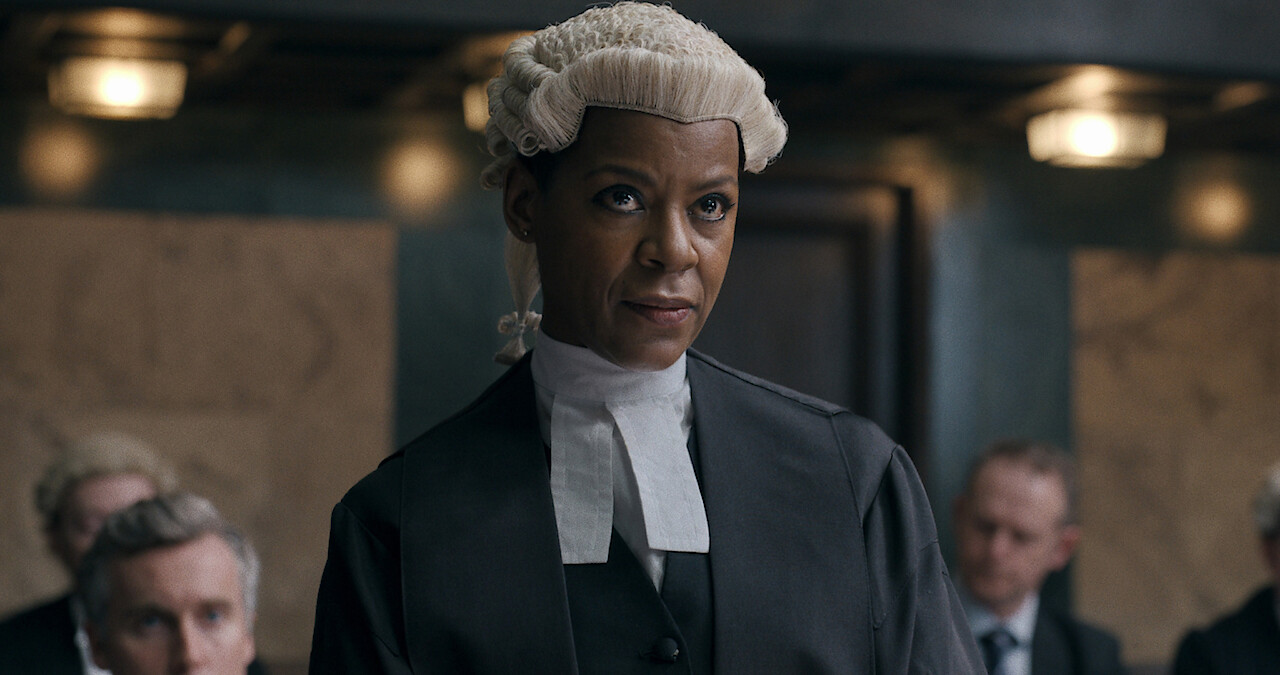
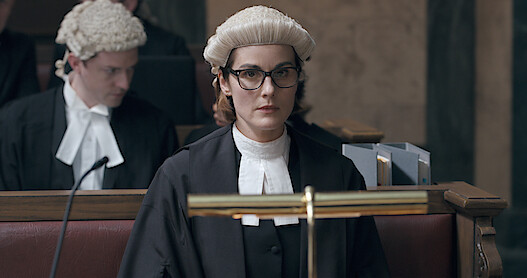
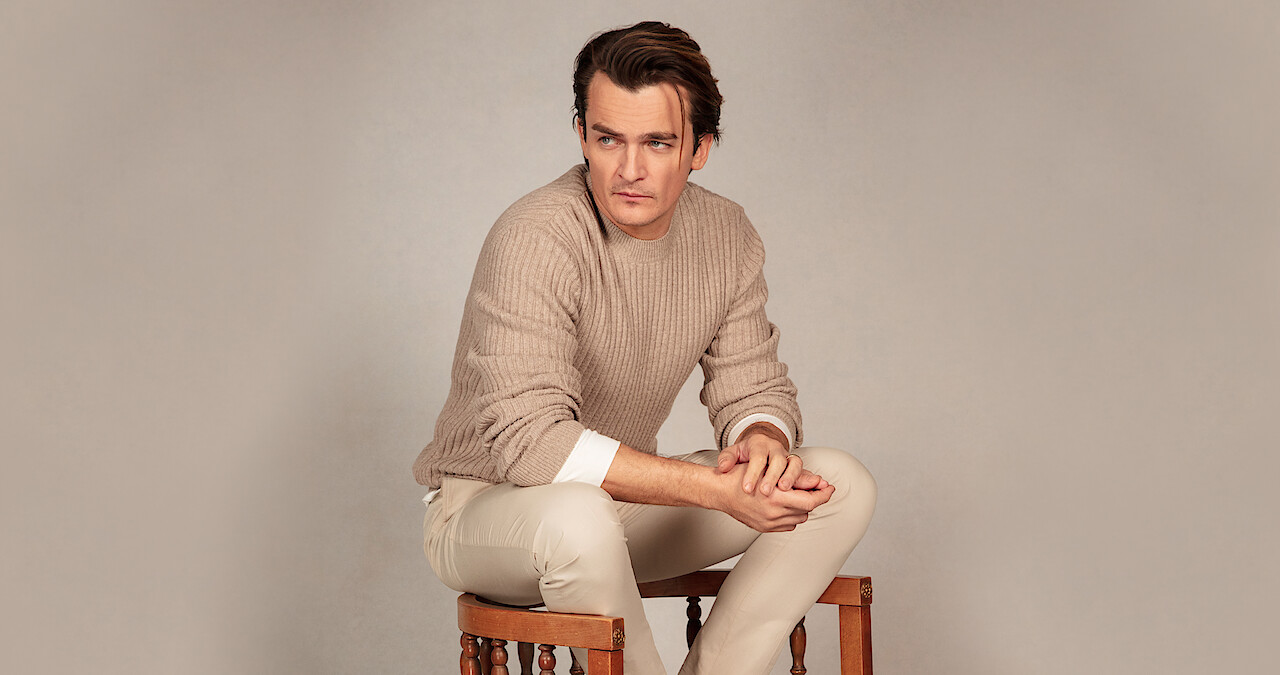
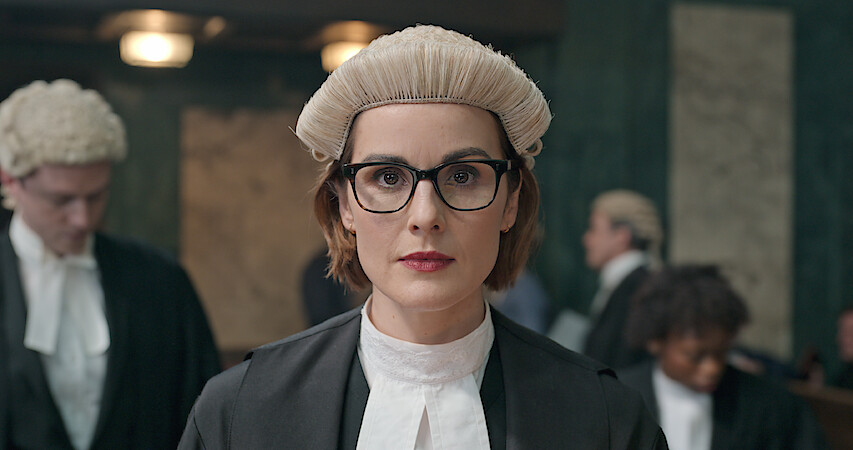
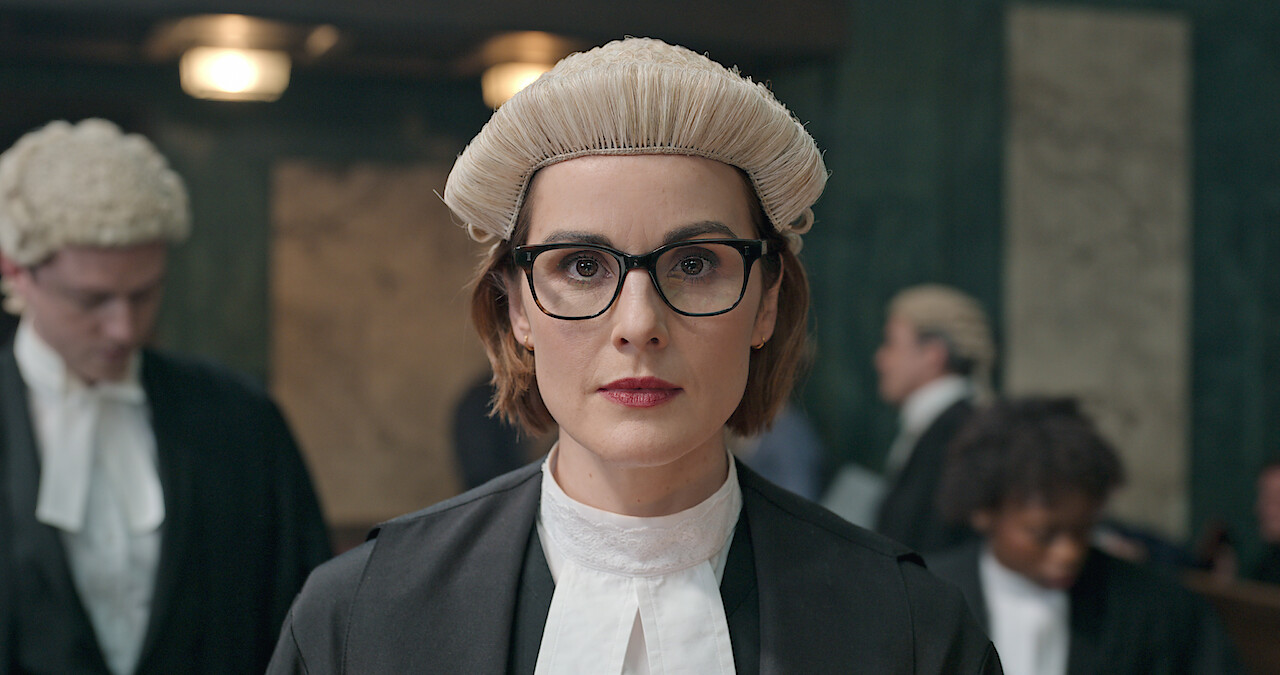
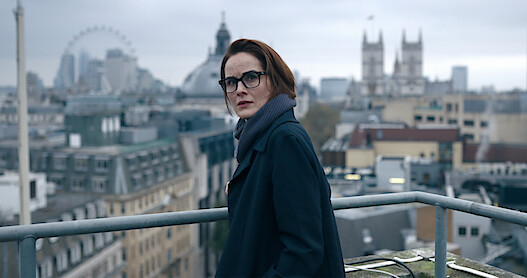
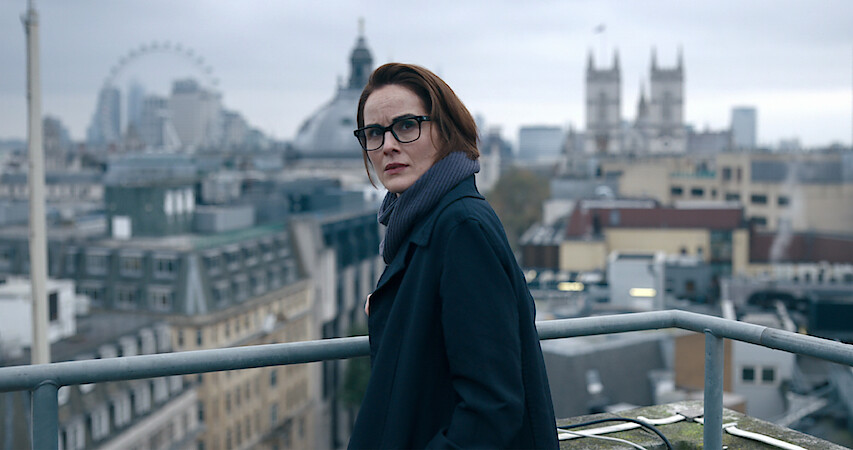
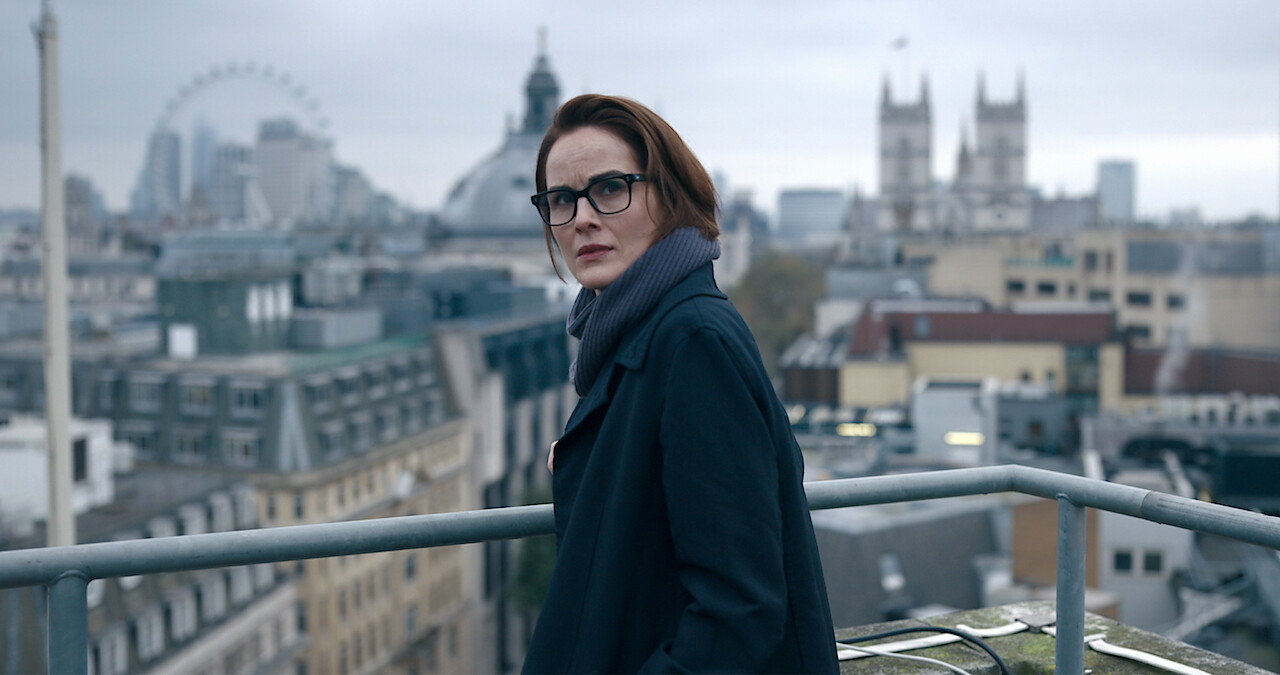
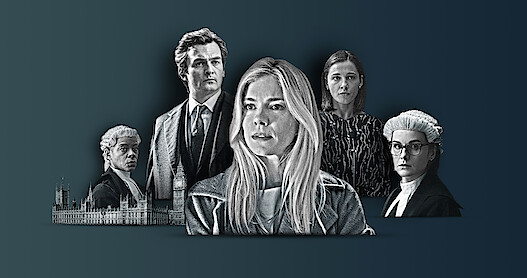
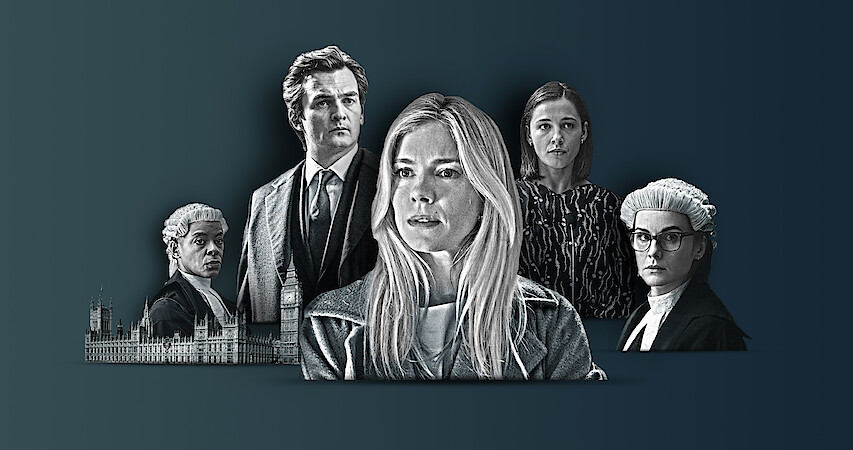
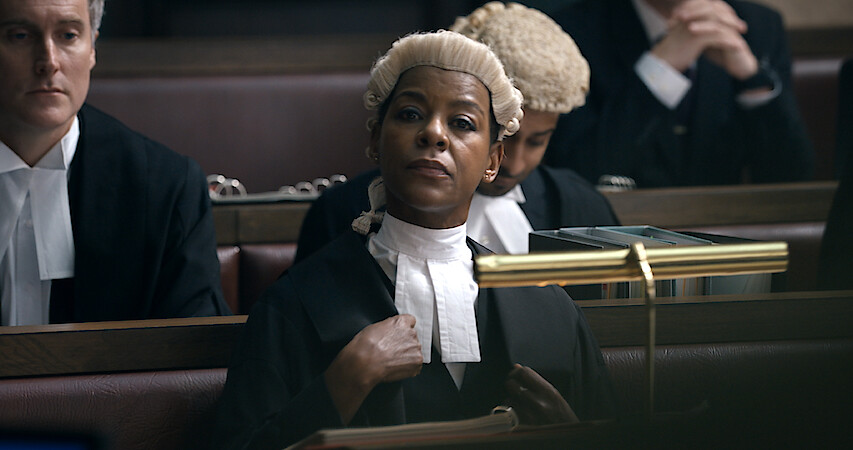
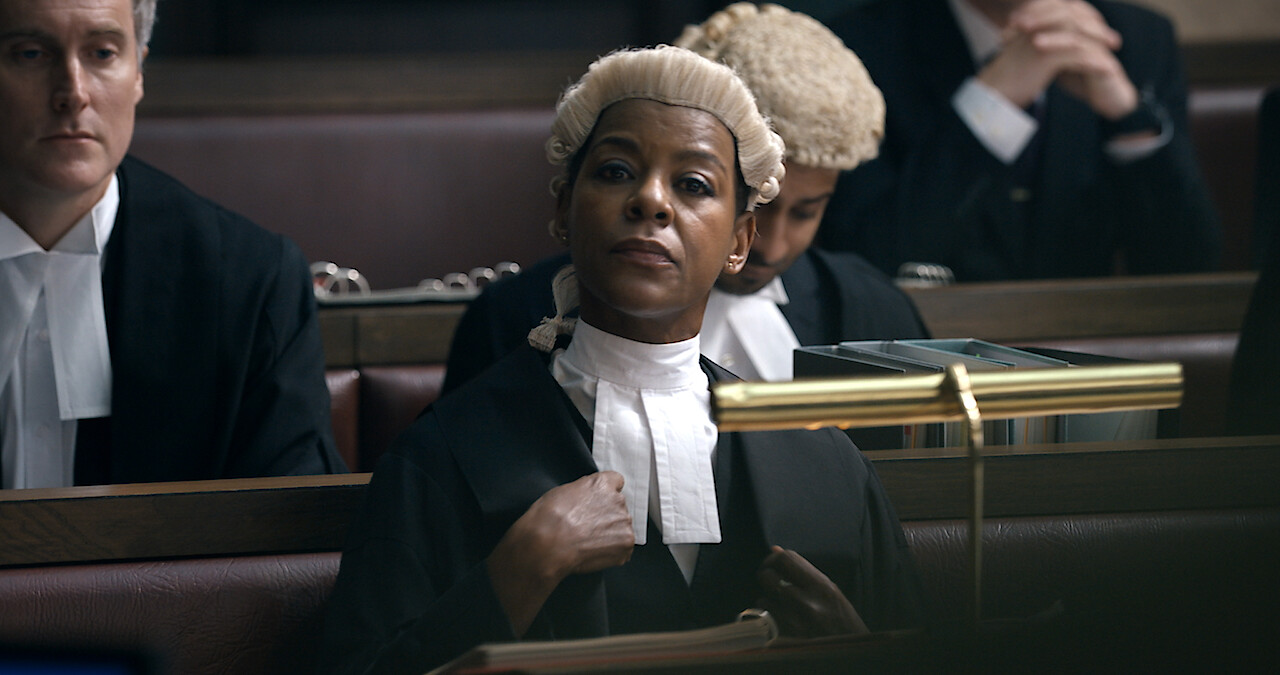
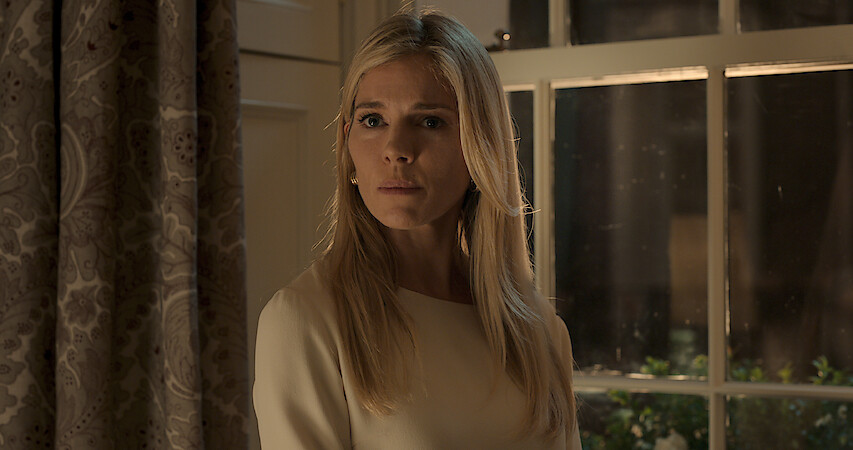
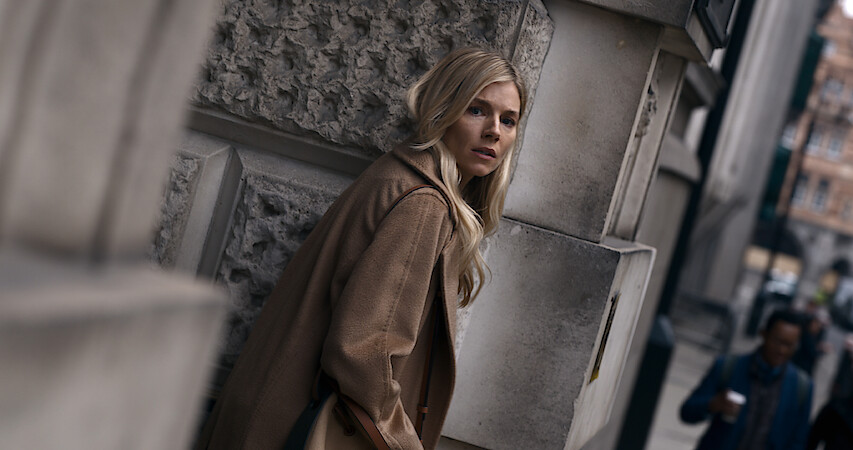
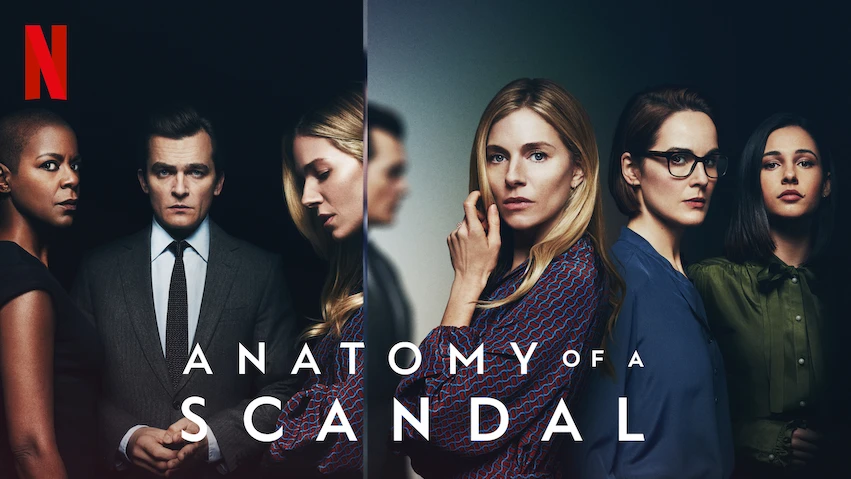
Anatomy of a Scandal begins with a shocking admission: Tory politician James Whitehouse (Rupert Friend) has been having an affair with his much younger parliamentary aide, Olivia Lytton (Naomi Scott), effectively turning the world of his wife Sophie Whitehouse (Sienna Miller) upside down. Still, it looks like they might be able to mend the damage — until Olivia accuses James of rape, and Sophie begins to question the man she married and the life she built with him. And then there’s the prosecutor, Kate Woodcroft (Michelle Dockery), who looks... eerily familiar? Over six episodes, the limited series examines the complicated nature of memory, consent and privilege as James, Sophie and Kate’s lives become increasingly intertwined.
In this edition of “Director’s Cut,” Clarkson discusses why this is the right time to tell this story, and why the real scandal at the heart of the series may not be as obvious as you think. Gibson shares her perspective as well.
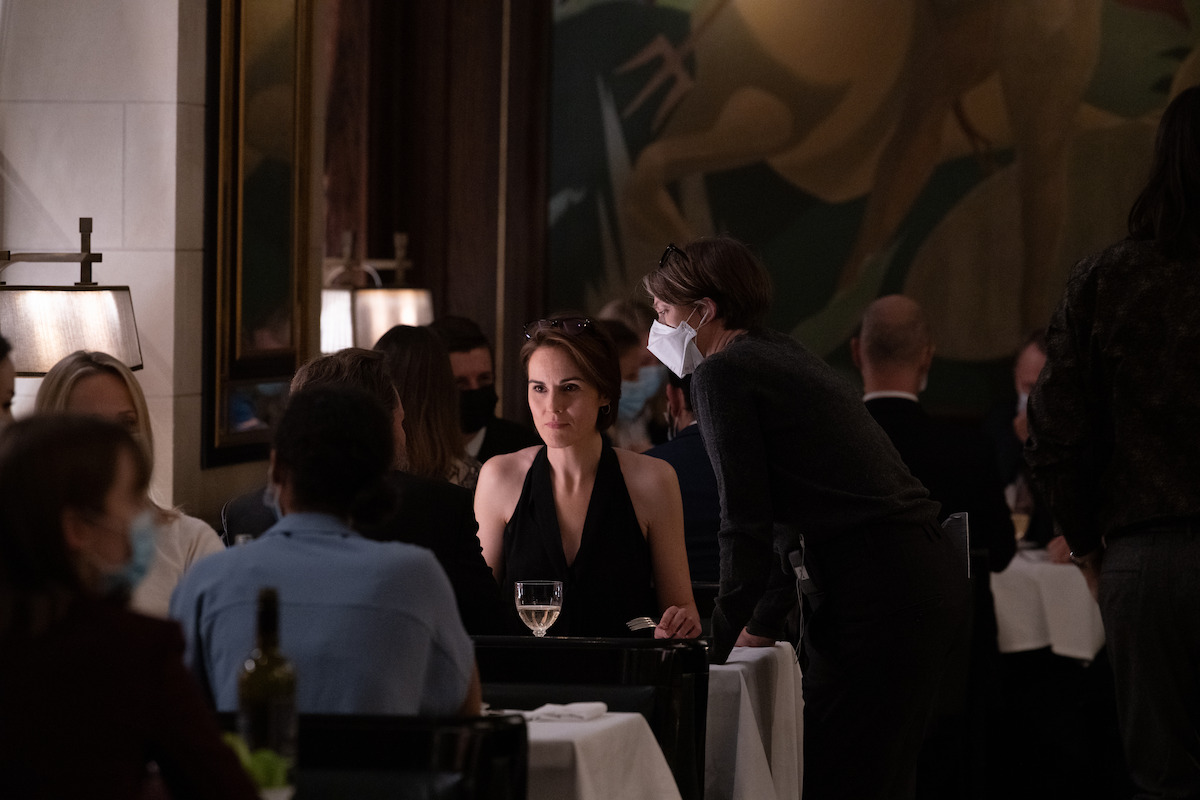
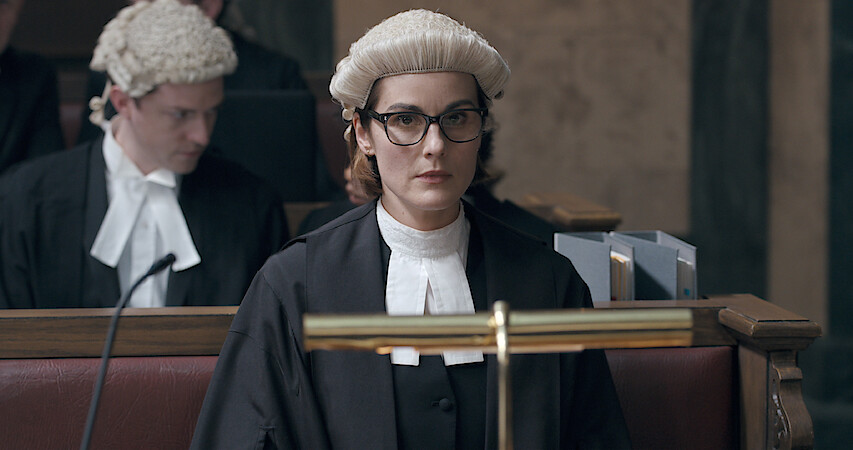
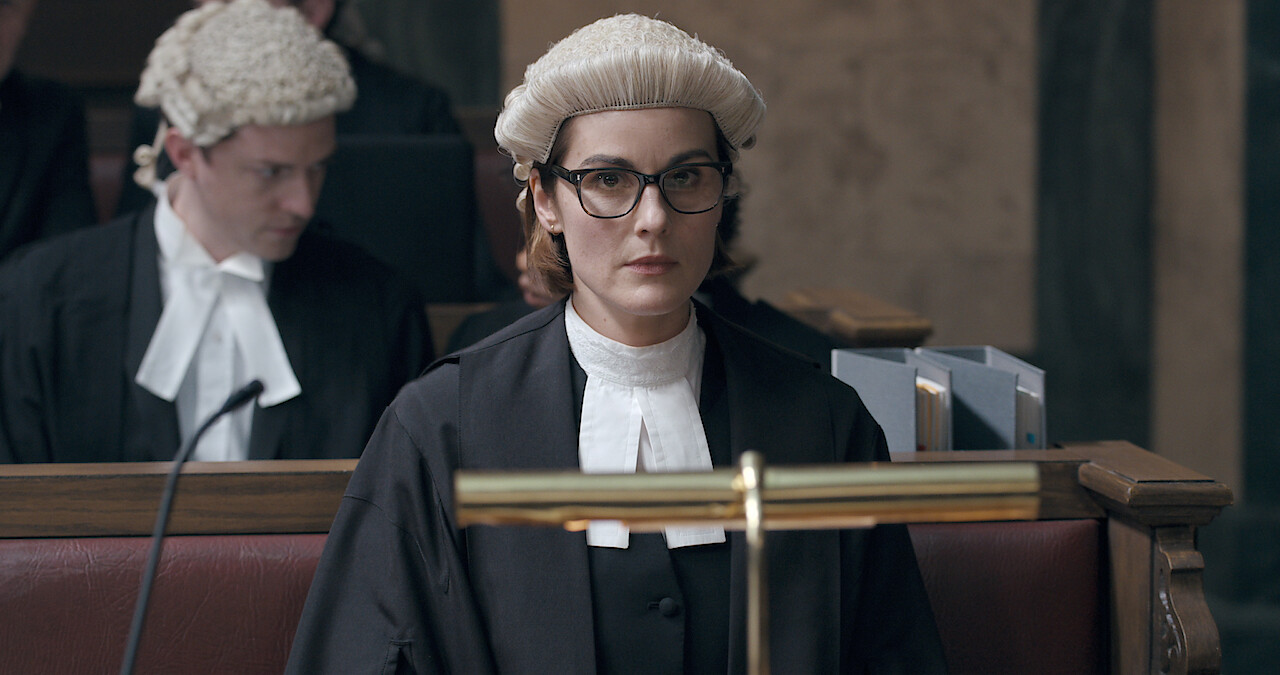
Kate Woodcroft (Michelle Dockery) and her married lover in Anatomy of a Scandal.
Let’s start by talking about casting. Michelle Dockery almost has to deliver two different performances, pre- and post-twist. How did you present the character to her in your early conversations? S.J. Clarkson: With Michelle, we talked about how much there was to hold back from the audience, and not to give away, but also to keep that level of intrigue. Michelle’s so brilliant. She comes on set and she’s learned everything, she’s completely prepared. We had to do those scenes of her breaking down in Episode 6 in week 2 or 3. It was really early on. I really pushed her, and I said, “This has got to be a full-on breakdown, because if she holds it in for the whole series, she’s bottled it up, bottled it up, bottled it up.” She just went for it. Melissa James Gibson: Kate is a woman who, by all appearances, seems to be successfully keeping such a lid on her emotions and is so confident in her trajectory. But her past is insisting itself, it’s just, like, bubbling up, ready to explode. She has bifurcated her identity and it’s no longer internally acceptable to her psyche. So it’s like her real identity is battling to emerge. I think it was an interesting challenge for an actor, and Michelle pulls it off so beautifully that there’s just this swirling underneath her very buttoned-up exterior.
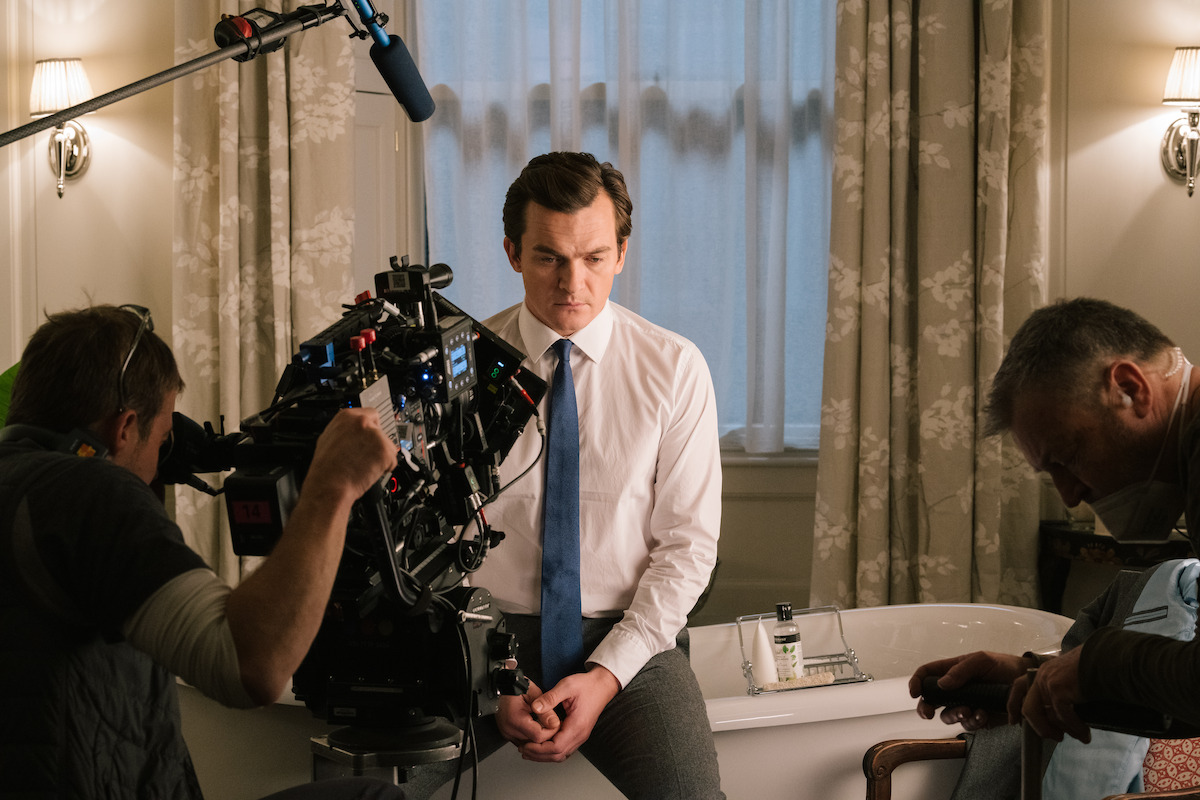
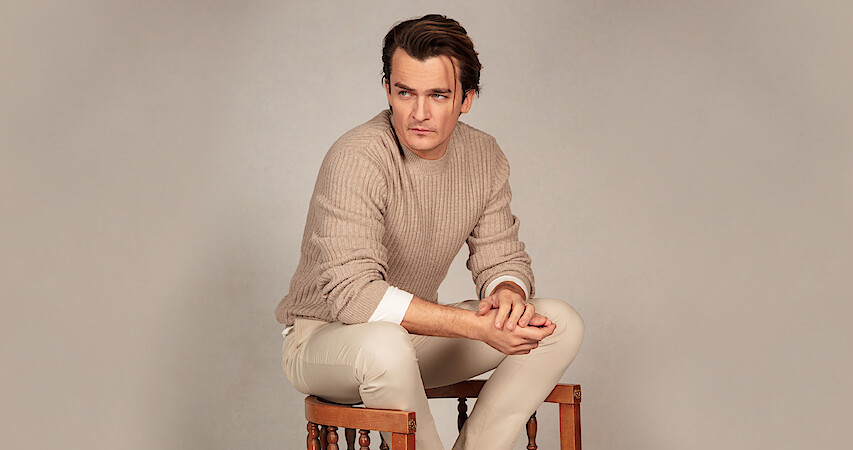
Rupert Friend filming a scene for Anatomy of a Scandal.
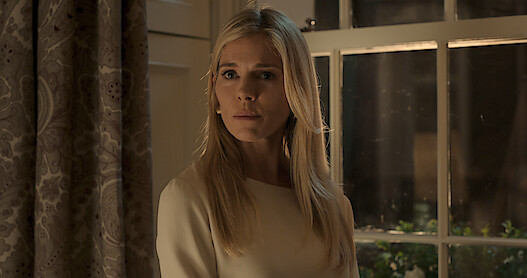
The interesting thing about Rupert Friend is that you immediately want to like him. Was that something you had in mind when deciding how to cast James? Gibson: It was really important for him to be charming and charismatic and be full of conviction about his innocence. It’s not an interesting story if this is someone who knows he’s gotten away with something. When we meet him, he literally thinks he’s done nothing wrong, present or past, in terms of what he’s been accused of. And Rupert inhabited the part with such complexity and really brought nuance to James’ perspective. He thinks he’s fully earned everything that’s come his way. And so I think it’s a little bit of a journey for him in terms of that. Certainly for his wife, Sophie Whitehouse. I think you’re really seeing the active battle this character is going through as she tells herself what is true in this narrative and whether to believe her husband or not.
So much of these characters’ emotional journeys take place internally. Was it a challenge to represent their thoughts in an engaging way on-screen? Clarkson: Getting inside the characters’ heads psychologically is one of the things that really attracted me to this. When you read a book, there’s such detail in description and characters, rather than just narrative — that could be a blessing and a burden. How do you dramatize that? But equally, it just gives you these wonderful cinematic opportunities where you could really let the camera do the talking. So, for example, right at the end of Episode 1, I was like, “How would James feel [hearing that Olivia has accused him of rape]?” At this point you should like him. We should be almost on his side. It feels like he’s been punched in the gut. He reels from it, and that kind of takes us with him and into the next episode.
How do you think that impacted the telling (and retelling) of the elevator scene? Clarkson: There were so many different ways to shoot the lift scene. The blocking was the complete reverse of how we’ve seen it previously, with [Olivia] being the aggressor, because that’s what the wife sees of the husband she loves. She just wants to get away from it. So she steps back out of the lift and is then free falling in the old Bailey, which is where her fate lies. What better way to show that than in a cinematic, visual way?
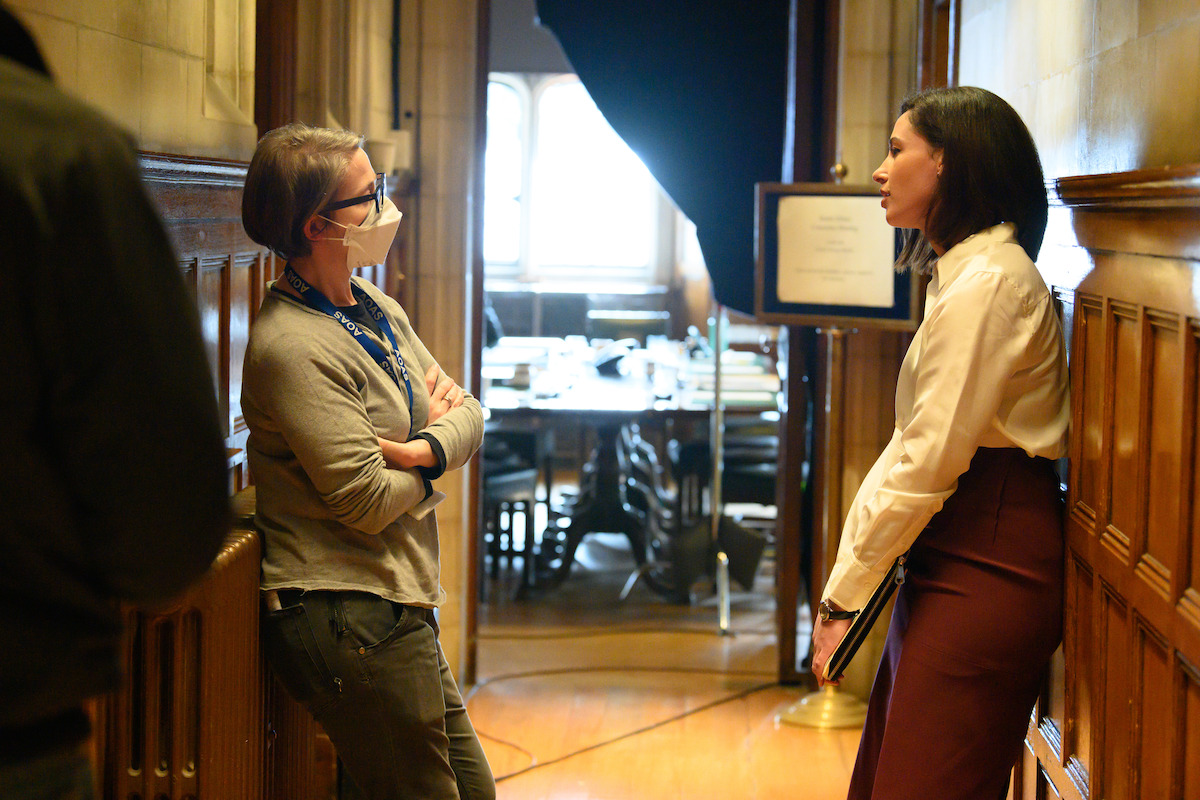
S.J. Clarkson and Naomi Scott on the set of Anatomy of a Scandal.
You really feel like you’re in the characters’ heads. Did that also influence how you approached the flashbacks? Clarkson: Something that I really was excited about exploring was, “What are the details that we see or remember? And what are the details that somebody else sees and remembers?” So when we go back to the drink on the terrace, Olivia remembers drinking Champagne, and James remembers drinking whiskey. Now, does that mean they had Champagne and whiskey, or does that mean they had a bunch of drinks and they’ve just misremembered or mixed up when they had whiskey and when they had Champagne and when that conversation was? What a gift for a director, to be able to kind of take that, to make it fragmented, disjointed but still alluring.
Sophie and Kate go through kind of opposing narrative arcs in that Kate is trying to reconcile with her past, while Sophie eventually breaks from it. Did you always conceive of them as narrative foils? Clarkson: Throughout the whole series, those women are both on a trajectory of discovery about themselves. Sophie realizes her own sort of complicity and agency in kind of like having this lifestyle and turning a blind eye. And then I think Kate also has her own reckoning where she has to realize that she’s been living a lie. She’s been living behind this facade in many ways. I love that scene at the end with Richard, where she says, “I chose you because you weren’t available. I need to stop doing that.” She’s acknowledged that she’s been denying herself intimacy, almost, and denying herself to be connected to people because she’s got this deep, dark, tragic secret that she’s been hanging onto.
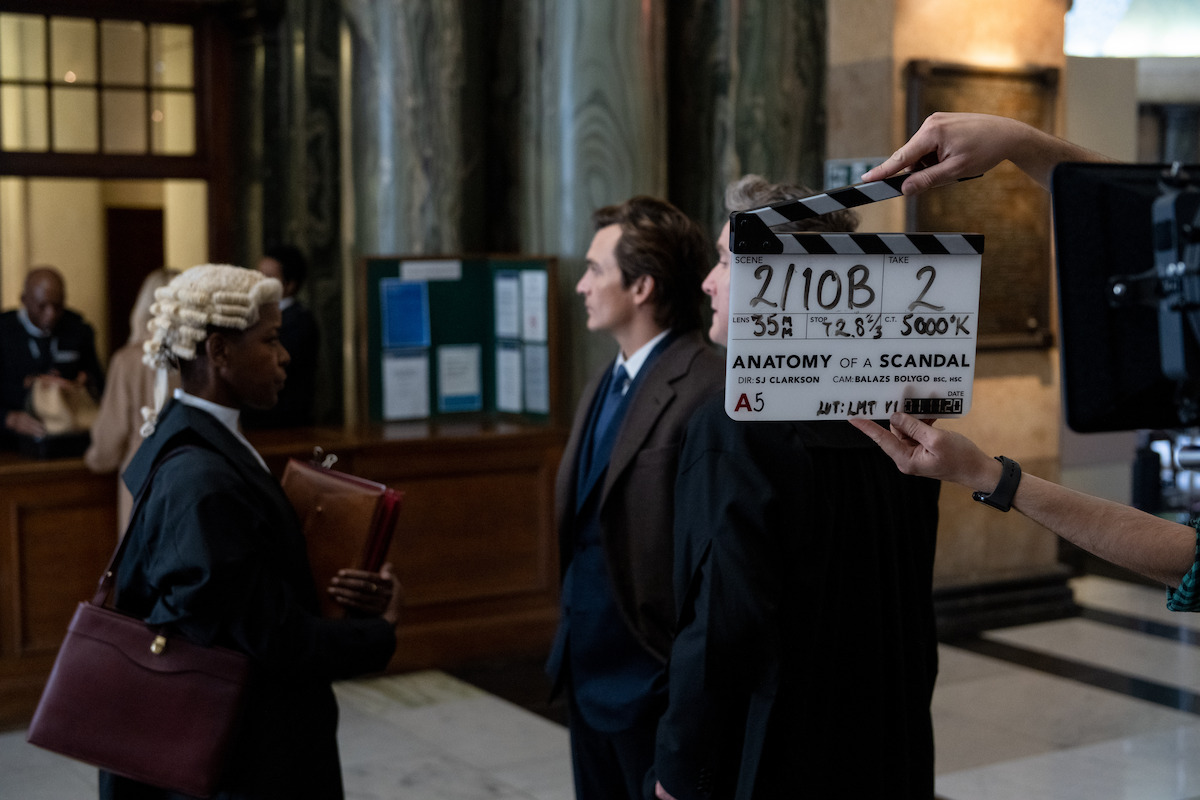
Behind the scenes of Anatomy of a Scandal.
Right, nothing is black-and-white. Everyone is being held accountable. Clarkson: But that’s what makes it fun, because then you’re constantly switching allegiance. You get people to [test screen] these things beforehand, and it’s amazing how they’re like, “Well, is he that bad?” That’s when you really start to peel back the layers and go, “Well, what is perception?” And then, “What is consent?” Do we all have an understanding of what that is? Because I think actually, probably not. At one point, Sophie tells her mother-in-law that she feels like she’s enabled James, adding that Olivia is of a different generation, with different ideas about consent. Do you think this story explores different generational beliefs? Clarkson: Definitely, I think the younger generation have their own privilege, ironically, of kind of having accessibility to more of an open conversation about sex and sexuality and consent and boundaries. That can’t be anything but great and healthy and will, hopefully, make a richer, more well-rounded society moving forward.
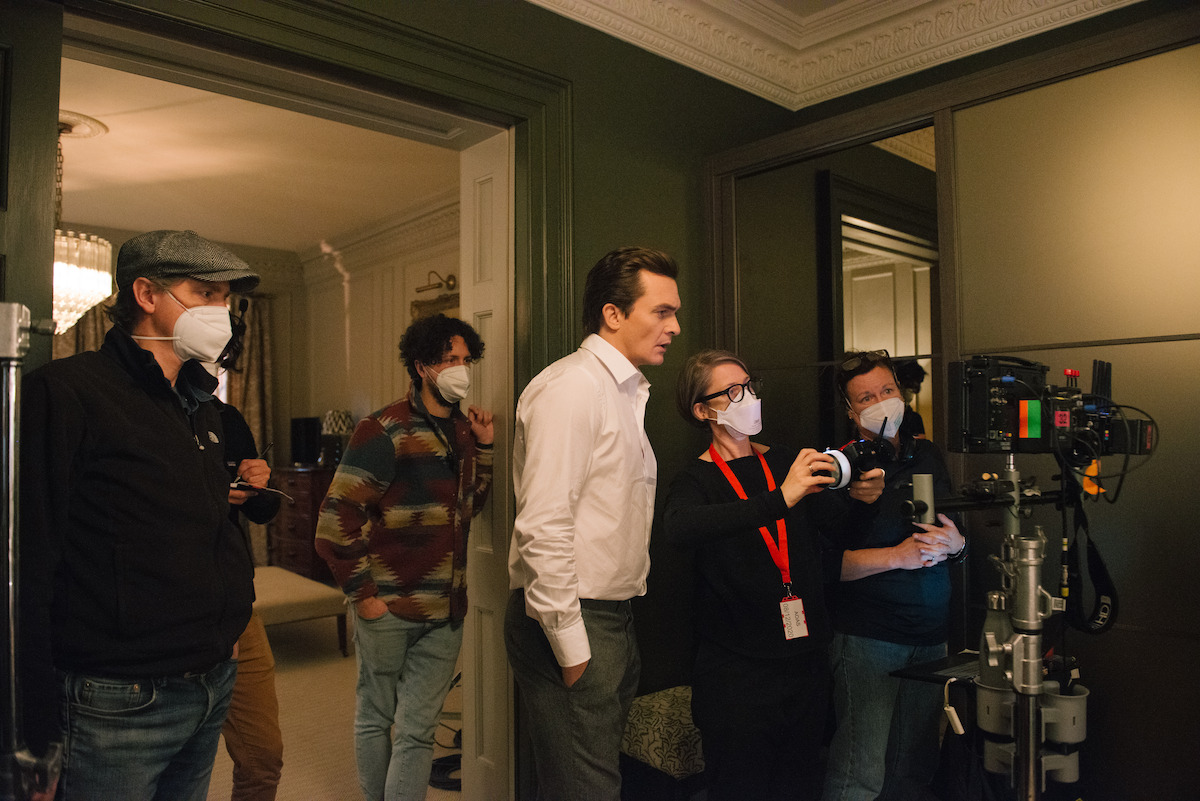
Rupert Friend and S.J. Clarkson on the set of Anatomy of a Scandal.
Overall, this is a really harrowing story and comes at the heels of many public scandals around consent and privilege. Why did you choose to bring it to life now, in this moment? Gibson: There’s never a shortage of public figures thinking that they are above the law or above ethical constraints, so it felt timely that way. The book took place in a pre-#MeToo world, and we made the decision to move it to a post one so that the story was informed by that cultural conversation. Clarkson: The scandal for me really isn’t the incident in the lift, and it’s not necessarily what happened in the past — it’s the sense of entitlement and privilege and how that can be scandalous. I would never say that James is a victim, but he’s certainly a product of a system. He’s been set up to be told that everything he does is right and fun and he’s entitled to it. It’s the fact that he’s always been told yes or he’s been covered for. That level of entitlement is just huge.
What do you hope people take away from this story? Clarkson: I hope people enjoy it and go on a ride. [And] I hope that they take away questions. I hope it’s one of those ones that [you] finish and then it sticks with you, and you think about it days later. That’s certainly how it was for us making it. We would find ourselves as the show was going on, [saying] “Oh, wow, that’s just reminding me of a situation.” And we would talk about it.
This interview has been edited and condensed for length and clarity.