Culture
Don’t Sleep on Asian Club Culture
Why nightlife in Asian cities are rivaling that of Berlin and NYC.
By Monique Jones
Feb. 4, 2022
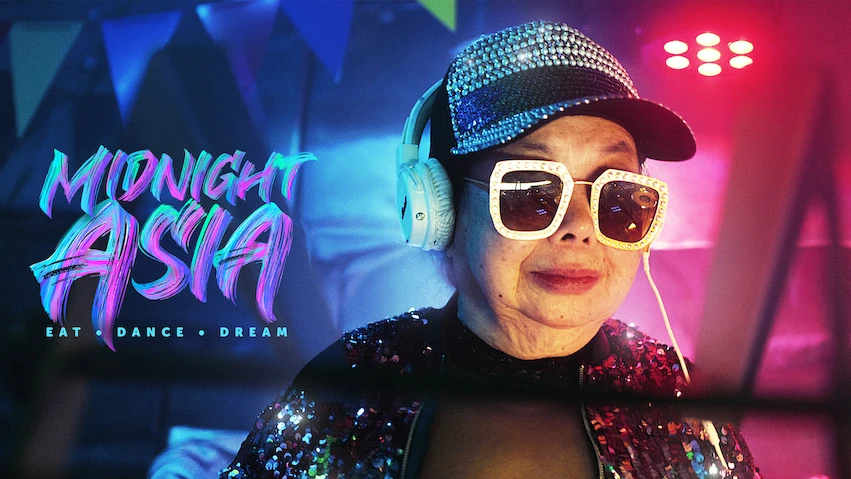
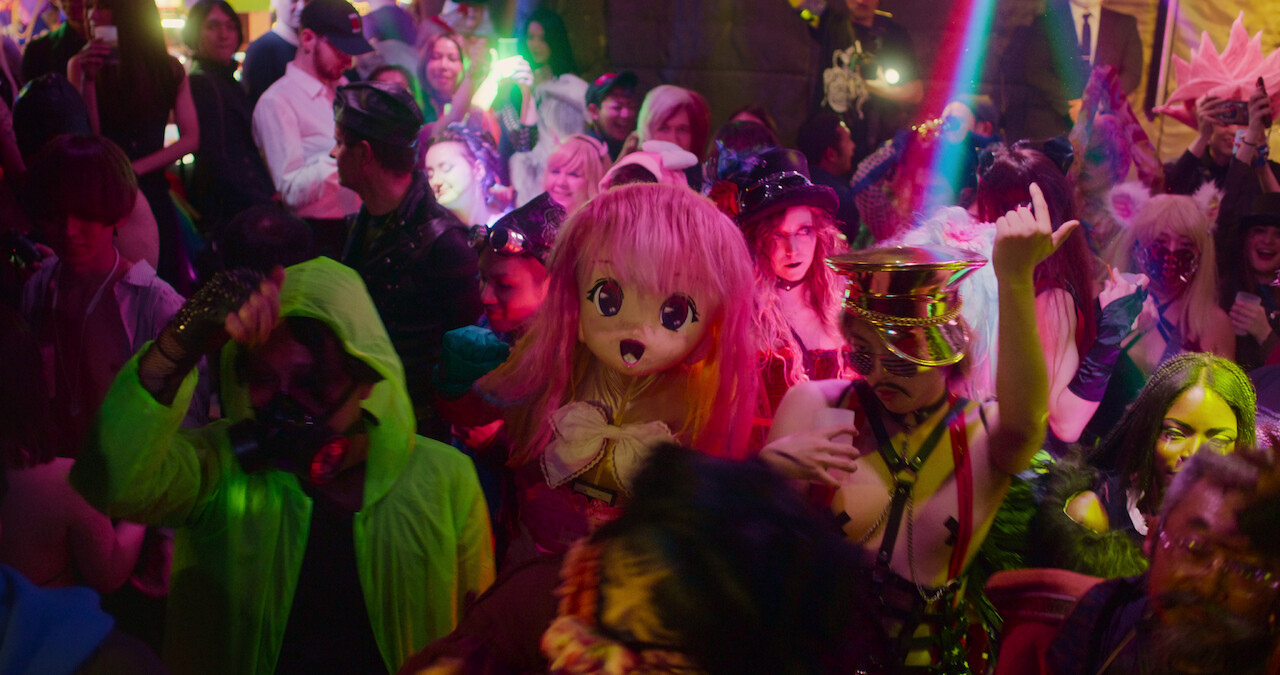
The nighttime is the right time for Asia’s young people, as shown in exciting detail in the new Netflix docuseries Midnight Asia. Each episode hops from one Asian metropolis to another, displaying how the cities’ most creative, daring and button-pushing people help the stressed and worn down unleash their hidden selves.
Partying in the clubs or dining at the hottest restaurants isn’t something new or unique. For centuries, pubs, clubs, beer halls and more have been the epicenter of good times and self expression (and maybe a little rebellion) for young people around the globe. But you’ll see the young adults in Midnight Asia aren’t flocking to these places just because they’re cool; there are several societal factors that lead Asia’s youth to a nocturnal existence — a need for community, exhaustion from economic woes and the urge to let everything go.
Some of the biggest pieces of evidence regarding the globalization of Asia are the FlipTop Battle League events that take place in Manila. The rap battles combine the excitement of rap and hip-hop, created by Black Americans, with the political and cultural resonance that speaks to daily life in Manila. The group has over 200 active emcees, according to founder and CEO Alaric Yuson in Episode 6 of Midnight Asia.
How do you manage such a sprawling organization? Through the Internet, of course! FlipTop has a website for rap submissions as well as a Patreon account to support its mission of spreading hip-hop throughout the region.
The Internet is helping Asia’s youth connect in nightclubs and beyond. Through the globalization of social media and Internet access, anyone who probably would have had trouble finding like-minded people can easily discover local groups and events that cater to their interests. Global Asia reported on Asia’s “internet generation” in 2007, writing that “[e]ven North Korean youth are embracing the country’s limited internet, including online dating.”
“Through the internet Asian youth in different countries are arguably for the first time in history living in the same transnational space and time, although still divided to some extent by language, culture and politics,” according to the article. Global Asia rightly discusses how the Internet has enabled people with nationalistic, xenophobic and racist tendencies to cluster together, citing “anti-Japanese rhetoric on China’s state-owned websites, as well as rightwing nationalist rhetoric within Japan itself.” Still, the Internet has allowed young people who embrace humanistic political views to thrive and find power in numbers.
Some of the online friendships and discussions have fostered the rise of several music subcultures, including the techno music culture currently dominating China’s nightlife.
“Technoculture is defined as a ‘basement culture,’ the locations at which these parties usually take place,” according to Qumin. “The idea is to promote creativity and personal expression. The scene is growing every day and techno music is also becoming popular in cities such as Chengdu, Shenzhen, and Hong Kong.”
Asian youth are also embracing and rebelling through streetwear culture, influenced by Black American hip-hop and rap as well as reality shows like Street Dance of China and Rap of China. China’s interest in streetwear is similar to Manila’s streetwear culture shown in the Midnight Asia FlipTop Battle League events. However, it faces a challenge from the Chinese government, which sees streetwear culture as an affront to “traditional Chinese culture,” according to Qumin. That hasn’t stopped streetwear disciples from bagging the latest fashionable gear.
A common theme in Midnight Asia is how nighttime also offers a release from the pressures of daily life. While we in the West can sympathize (who among the millennials or Gen Z hasn’t felt debilitated by social constraints?), the pressures young Asians are experiencing is intense in a unique way, so much so that subcultures are being birthed from the hope of living without extreme expectations.
In Episode 1 of the docuseries’ exploration of Japan, viewers meet Tokyo radio DJ and personality Ren Yokoi, who discusses why “it’s all about entertaining people” where Tokyo’s nightlife is involved.
“It’s a big city. Within greater Tokyo, we have around 37 million people. It’s the world’s largest metropolitan area. Japanese work so hard. We call it ‘hataraki ari,’ which means ‘working ants.’ It’s a really strict environment. You can never be late. You’ll be stuck in the train full of people. If you have a [stressful] daytime, then you will want to let it go at night.”
“In Tokyo at night, people get a release from their daily stresses,” says author and commentator Iku Okada in the same episode. “When night falls, many people completely flip their switches. It’s a time to take off daytime fronts to return to who they really are.”
The desire young people have to be “who they really are” exhibits itself in a bustling nightlife, as well as in other subcultures that are becoming more popular as economic freedom becomes less possible. CNN reported in 2021 how Chinese youth are adopting a new philosophy they’ve coined “tang ping,” or “lying flat,” because they are exhausted from “the fierce competition for college and jobs and the relentless rat race once they got hired.” CNN’s Sophie Jeong interviewed a 24-year-old who gave her a pseudonym to protect him from “career and political repercussions for his views.”
Jeong also highlighted how youth in other Asian countries are similarly despondent about their future. A 2018 study by the Korea Institute for Health and Public Affairs showed that the majority of South Koreans aged 20-44 were single. Of those who weren’t actively dating, 51 percent of the men and 64 percent of them women were hoping to remain single. ”In South Korea, young people are giving up on marriage and home ownership,” she wrote. “In Japan, they are so pessimistic about the country’s future that they are eschewing material possessions.”
Indeed, Qumin reported in 2019 how China’s youth were embracing a self-deprecating “mourning culture” because of their frustration with the status quo. “These young people do not see a positive future, due to rising living costs and increasing pressure from society,” according to Qumin, adding that those who adhere to the subculture choose to live by Buddhist principles, such as living meagerly. Similar subcultures, such as “satori sedai” (“resignation generation”) in Japan, have cropped up throughout Asian countries as more young adults burn out after trying to vie for competitive jobs with monstrous hours, high real estate prices and seemingly little economic payoff.
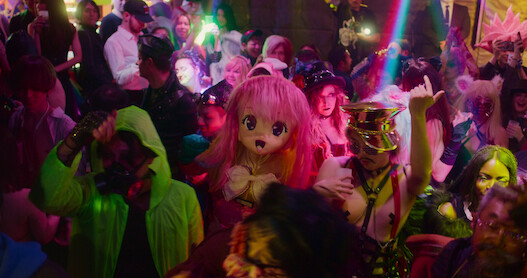
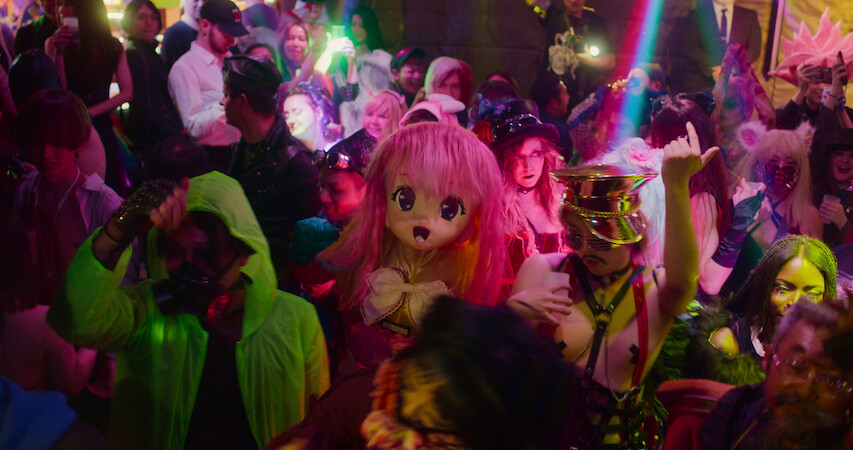
“In the day there are so many rules and burdens that you’ll explode,” said Eri Shibata, a contortionist who performs at Tokyo Kinema Club’s Department H fetish party, where people go dressed up as their kinkiest selves. “It’s thanks to the night that many people can show their passions and true selves,” she says in Midnight Asia Episode 1.
Perhaps the ultimate form of freedom of expression can be found in Sumiko Iwamura, aka DJ Sumirock, who, at 87, is the world’s-oldest professional club DJ. A self-professed night owl, she has earned the respect and love of younger partygoers who admire her spirit and vitality despite her advanced age, as highlighted in the docuseries.
That kind of freedom couldn’t be expressed during the day, when working hours are tight and societal pressures are even tighter. In the safe embrace of the nightlife community, people can live and let live without competing with or judging one another. It’s only at night that a grandma can buck traditional norms and find a place to belong or when a woman who used to work in an office can become a famous contortionist. It’s only at night that people get to be celebrated for being different and for being themselves.
What content creator and writer Sikharin Langkulsen tells Midnight Asia about Bangkok’s nightlife, a reprieve from the hustle and bustle created by the city’s 10 million inhabitants, is a sentiment that can be shared with the feeling the night gives many of Asia’s youth: “Anything is possible for young people here.” Indeed, anything is possible for Asia’s young (and young at heart) once the sun goes down.