


Peter Berg’s World War II epic follows star athletes fighting in the Pacific.

Filmmaker Peter Berg strives for authenticity in everything he makes. Whether it’s capturing the epic highs and lows of high school football or soldiers fighting to survive the battlefields in the Pacific, the director is dedicated to the unvarnished truth. Still, he’s open to the unexpected, which comes in handy when dealing with massive sets and leading sprawling cast and crew. “For me, the idea of flirting with chaos, it’s a strategy for the whole process of filmmaking,” says Berg. “If you go into a scene and you think you’ve got a plan and things start changing very quickly — actors start acting and behaving as human beings, [yet] not in a way that you necessarily thought they would, weather changes, millions of things are constantly happening — and you try and fight that, it can be very frustrating because you can’t control very much. I’ve tried to move, not only away from not controlling everything, but to let things actually become uncontrollable.”
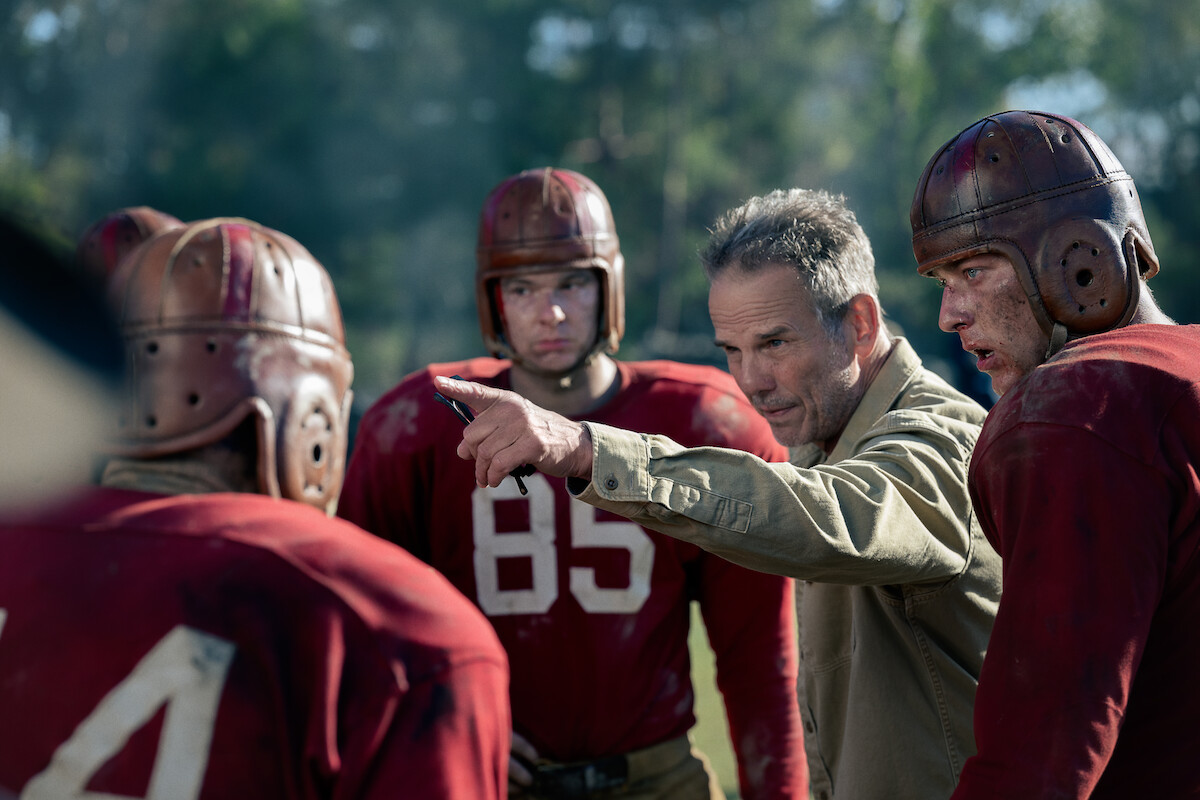
Peter Berg and Tom Francis
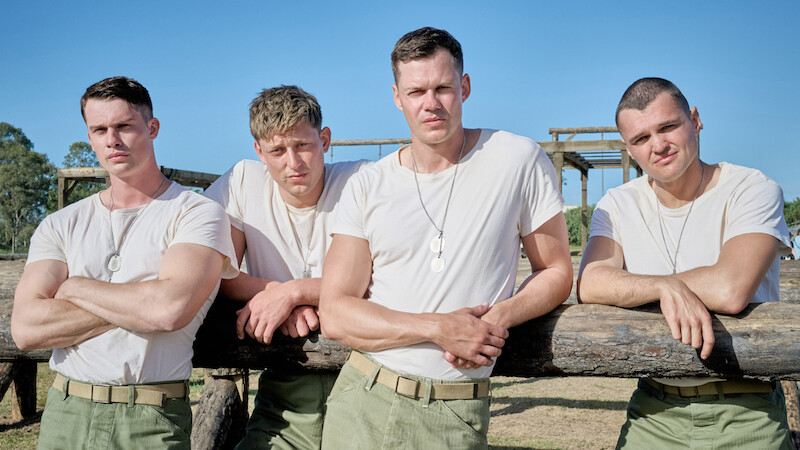
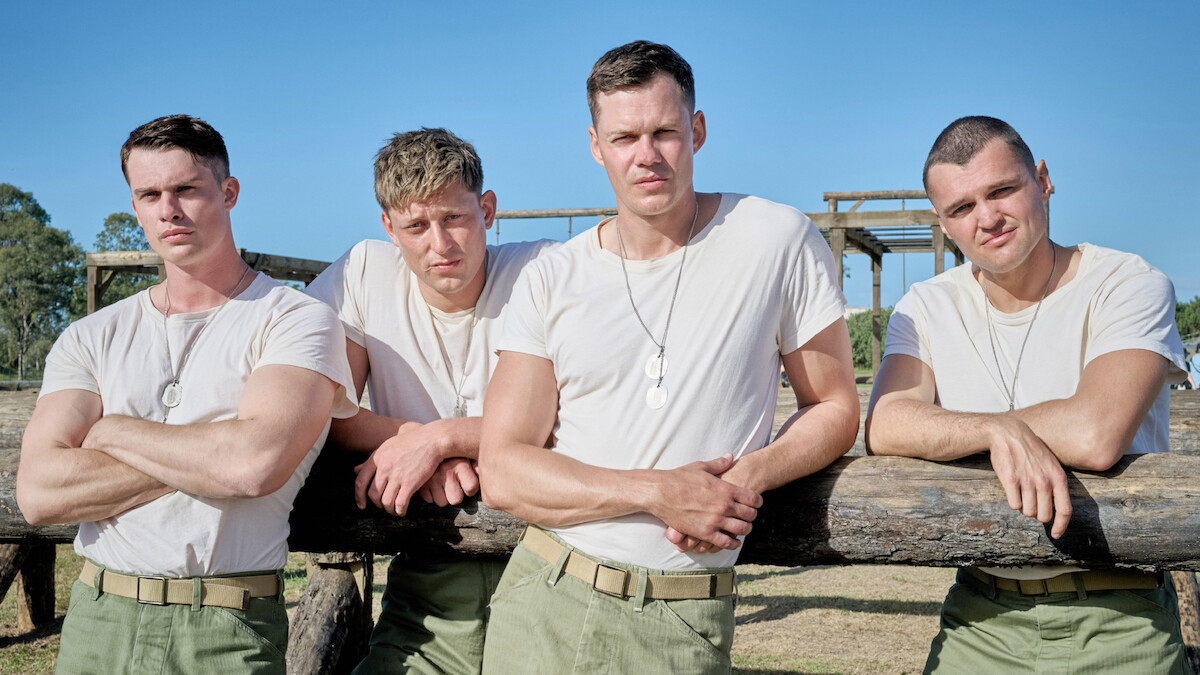
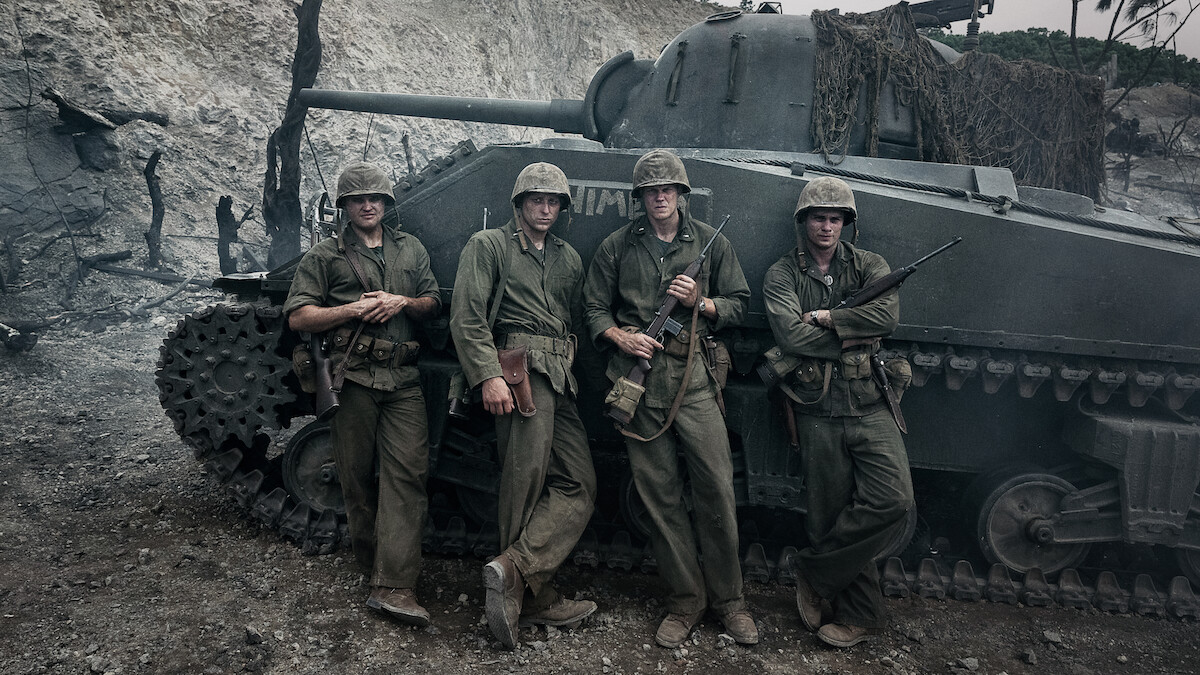
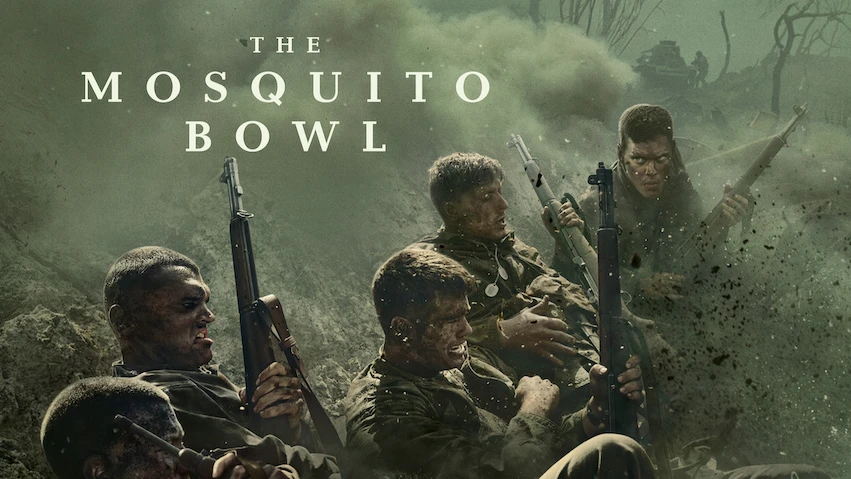
This ethos is on view in the gripping The Mosquito Bowl, Berg’s latest film that examines the brutality of war through an unexpected moment in World War II history. Based on author Buzz Bissinger’s New York Times bestseller The Mosquito Bowl: A Game of Life and Death in World War II, the drama travels back to 1941: College football players John McLaughry (Nicholas Galitzine), Tony Butkovich (Ray Nicholson), Bob Bauman (Bill Skarsgård), and Dave Schreiner (Tom Francis) are undergraduate athletes when millions volunteer for or are drafted into World War II. The young men join the Marines, matriculating to Parris Island, a recruitment and training base outside of Beaufort, South Carolina, where they learn their bodies are more than just instruments of sport before being sent overseas to fight in the Pacific theater. By the time the 4th and 29th regiments reach Christmas Eve of 1944, and with the battle of Okinawa on the horizon, the men have been irreversibly transformed by what they’ve seen and experienced fighting “the Good War.” Morale is at an all-time low. So, when leadership decides that the two athlete-heavy regiments could boost spirits, the young men put on their own bowl game of the ultimate American sport.
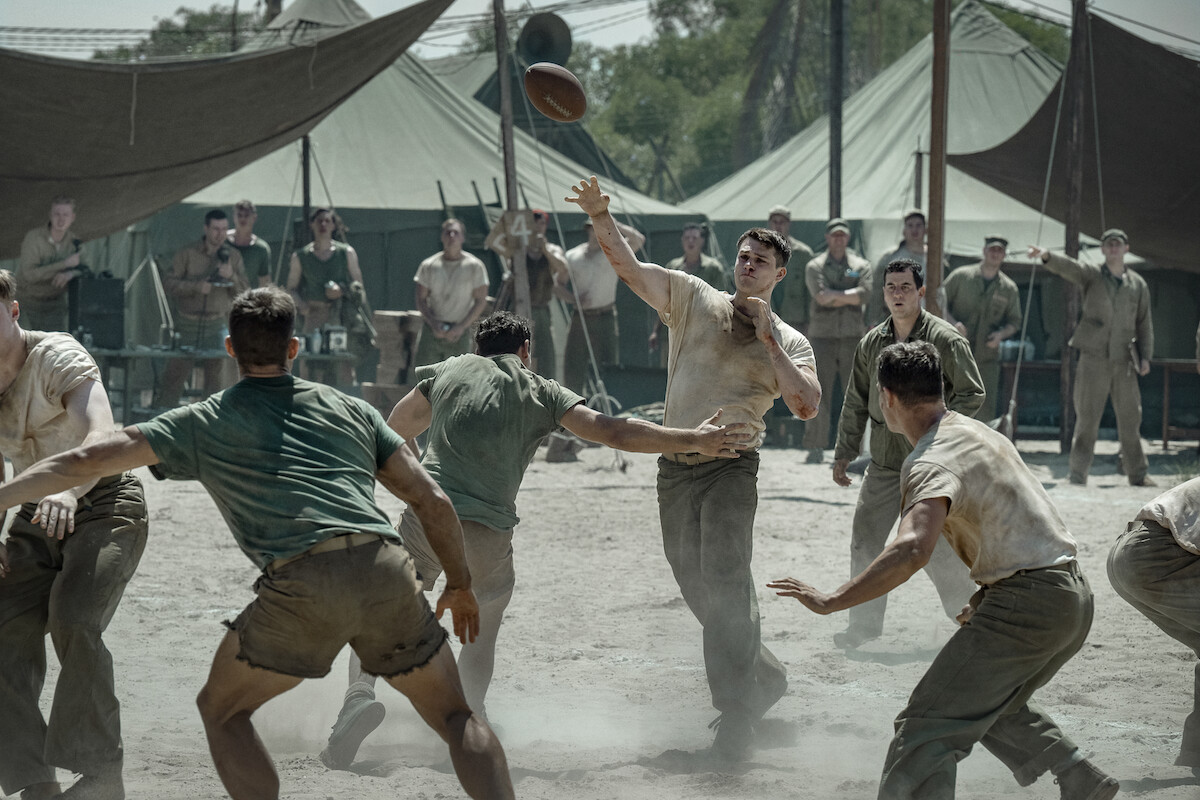
Nicholas Galitzine
Berg is no stranger to telling sports or combat stories — his 2013 film Lone Survivor chronicled a Navy SEAL mission during the war in Afghanistan — and adapting Bissinger’s novel was perhaps a no-brainer for Berg. The two storytellers are cousins, and had already established a creative partnership when the director and writer adapted Bissinger’s immersive small-town football follow-along Friday Night Lights: A Town, a Team, and a Dream into a successful movie and long-running television series of the same name. The Mosquito Bowl gave the filmmaker an opportunity to embed himself even further in the worlds he set out to capture on film. “I like a fairly vérité style. I like it to feel real. Sometimes people will say that they watch a film that I’ve done and it felt a little bit like a documentary, but it’s not,” he says. Berg began researching the project as he spent time on Parris Island, staying at a motel on a nearby air base. “I’d spend my days on the base with the recruits in the Marine Corps, just absorbing the energy, and then I would go back and I’d read Buzz Bissinger’s book, and I’d sit at the tiny little desk and start writing the movie,” he says. “I believe they call it ‘esprit de corps.’ It’s a spirit that is present in every person that you encounter on this base. It’s a clear-eyed sense of purpose that’s very, very inspiring.”
Berg and his ensemble built a supportive camaraderie as they trained for the physical nature of The Mosquito Bowl, going back in time to an unrecognizable era of the sport they’d be depicting. “If you watch football from the ’40s, it was a very different game than it is today,” explains Berg. “We had to learn about the plays, the style, how the equipment was used, and all the things that made up the truth of football in the 1940s. And we did that.” Berg brought in the figures who currently define the sport, including San Francisco 49ers running back Christian McCaffrey, to help the actors understand the game’s nuances. “I felt it was very important for the actors to understand that the way football was played in the ’40s is the father, maybe the grandfather, of how it’s being played today. The spirit of the brotherhood, and the aggression that the game was played with, and the athleticism in the ’40s maybe wasn’t quite what it is today, but it's connected.”
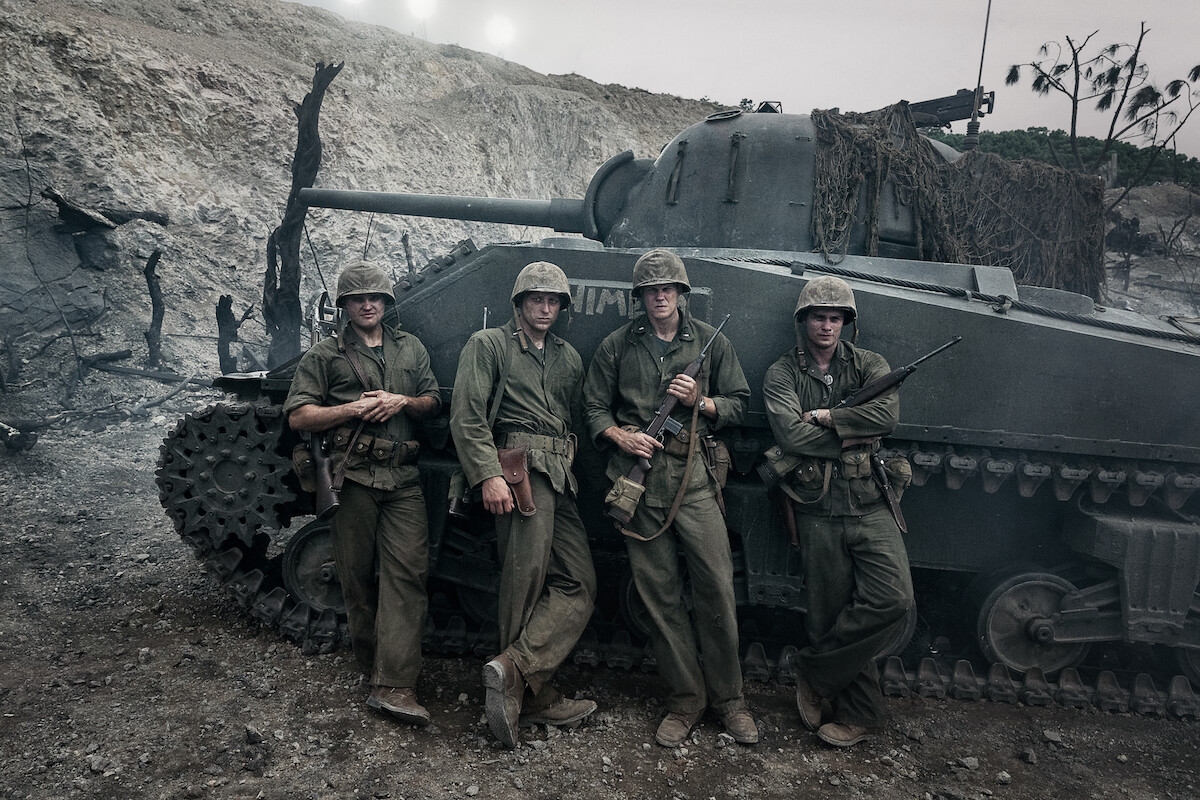
Ray Nicholson as Tony Butkovich, Tom Francis as Dave Schreiner, Bill Skarsgård as Bob Bauman, and Nicholas Galitzine as John McLaughry
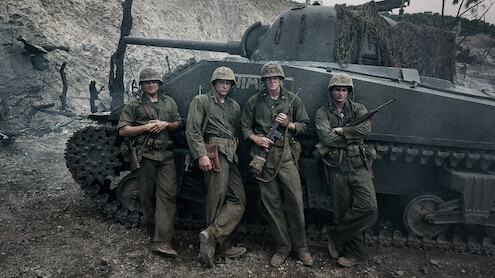
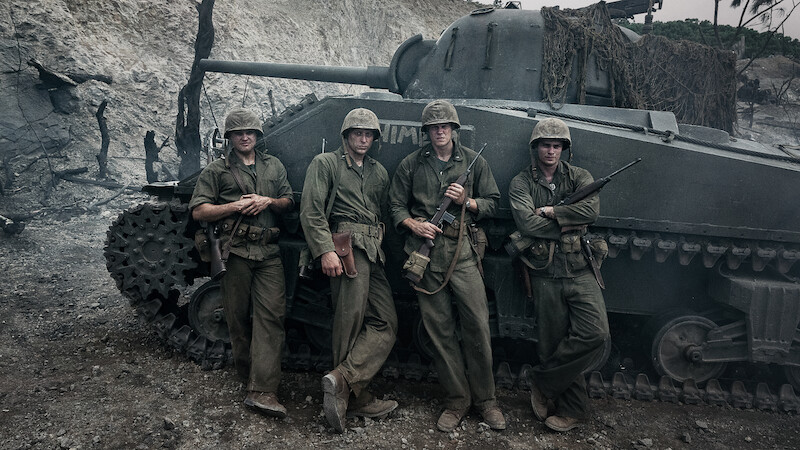
Depicting the sheer violence in the Pacific theater with honesty was also important to Berg; anything less than the actualities faced by the men would do a disservice to the story he wanted to tell. “The Mosquito Bowl is not a blindly patriotic love letter to the American military. It’s a look at the horrors of war and the horrors of violence and what happens when older men, political leaders declare war — well, who has to go and fight that war? What are the costs of those decisions?” he says. “That frames how I approach the violence. It’s always meant to be a catalyst for thought about what war really is. [It’s] a reminder that there’s no glory in war.”
Berg embeds viewers alongside his characters as they head into harrowing action and, ultimately, the battle of Okinawa, which led to more than 200,000 casualties. Throughout, his signature style makes it impossible to look away from the unending trauma the soldiers experienced. “War is hell. War is horrific. War is a representation and a result of failed diplomacy and diplomacy should be treasured, valued, and employed way, way, many, many times before war is declared,” says Berg. “In the case of The Mosquito Bowl, war is declared, and Bob Bauman, David Schreiner, Tony Butkovich, and John McLaughry, they went and they [served] for their families, they did it for their country. Just like the Marines on Parris Island today, our leaders declare war, these men and women will go. I think it’s our responsibility to understand where we’re asking them to go and what we’re asking them to do and to care for them when they come home.” For Berg, the responsibility of bringing this story to the screen meant never flinching, never looking away from the devastating reality of what these men faced.