Find out when the film opens in a cinema near you across the US and Canada.

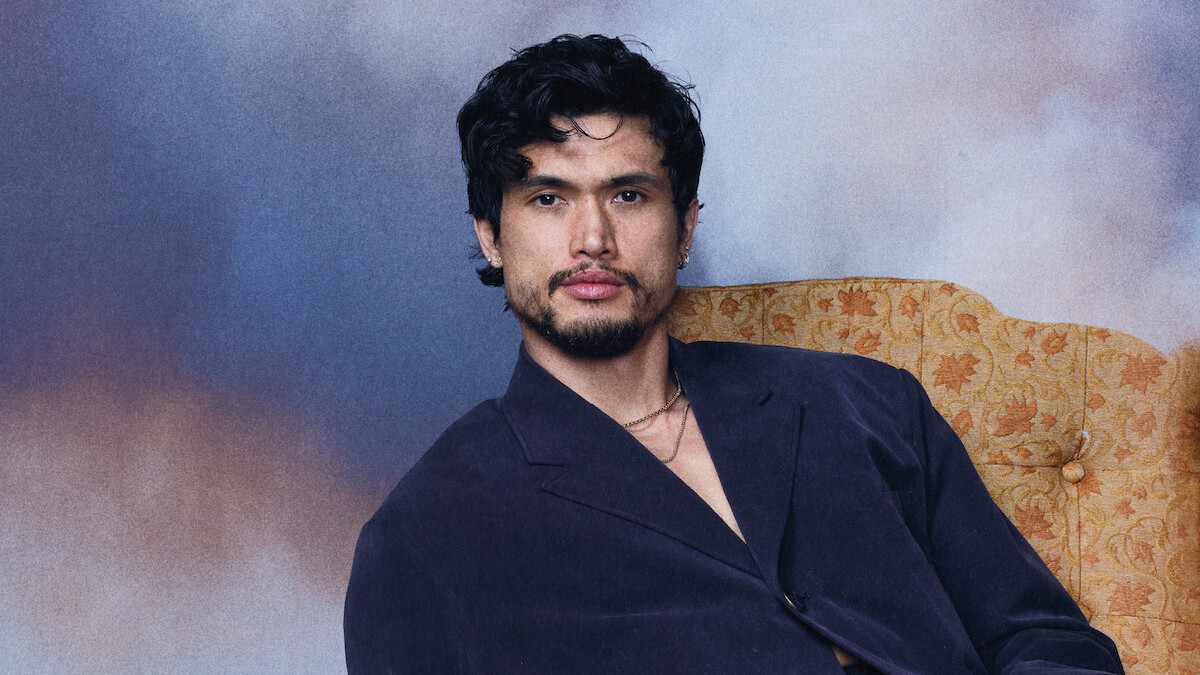
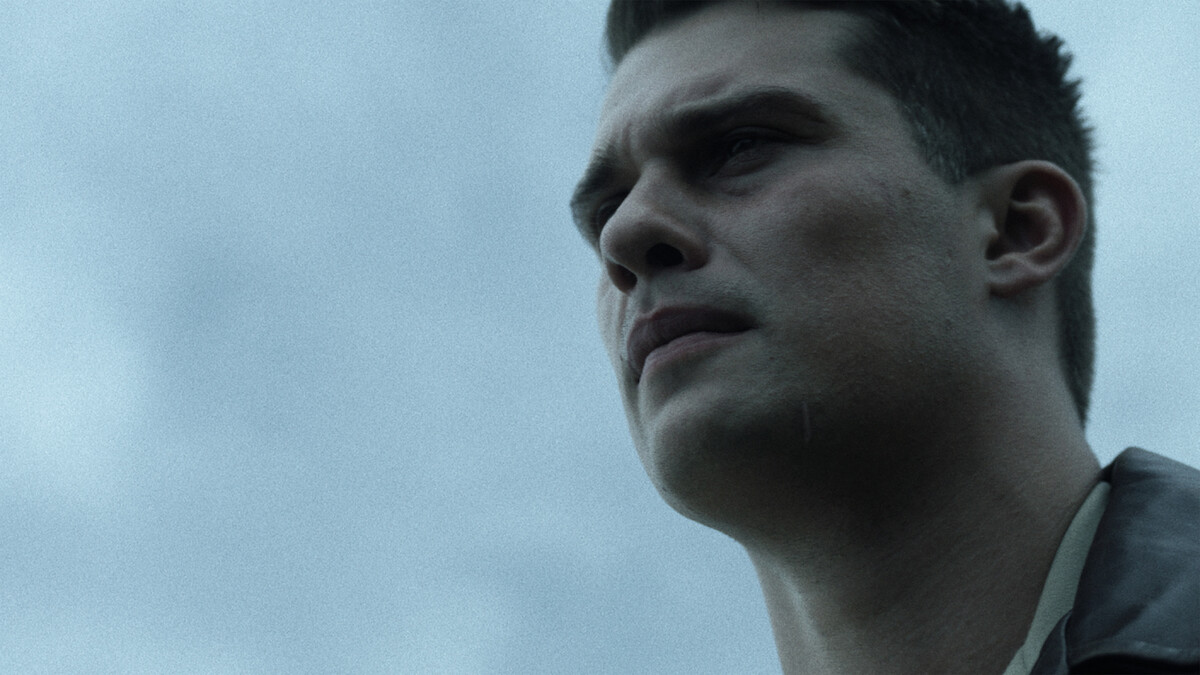
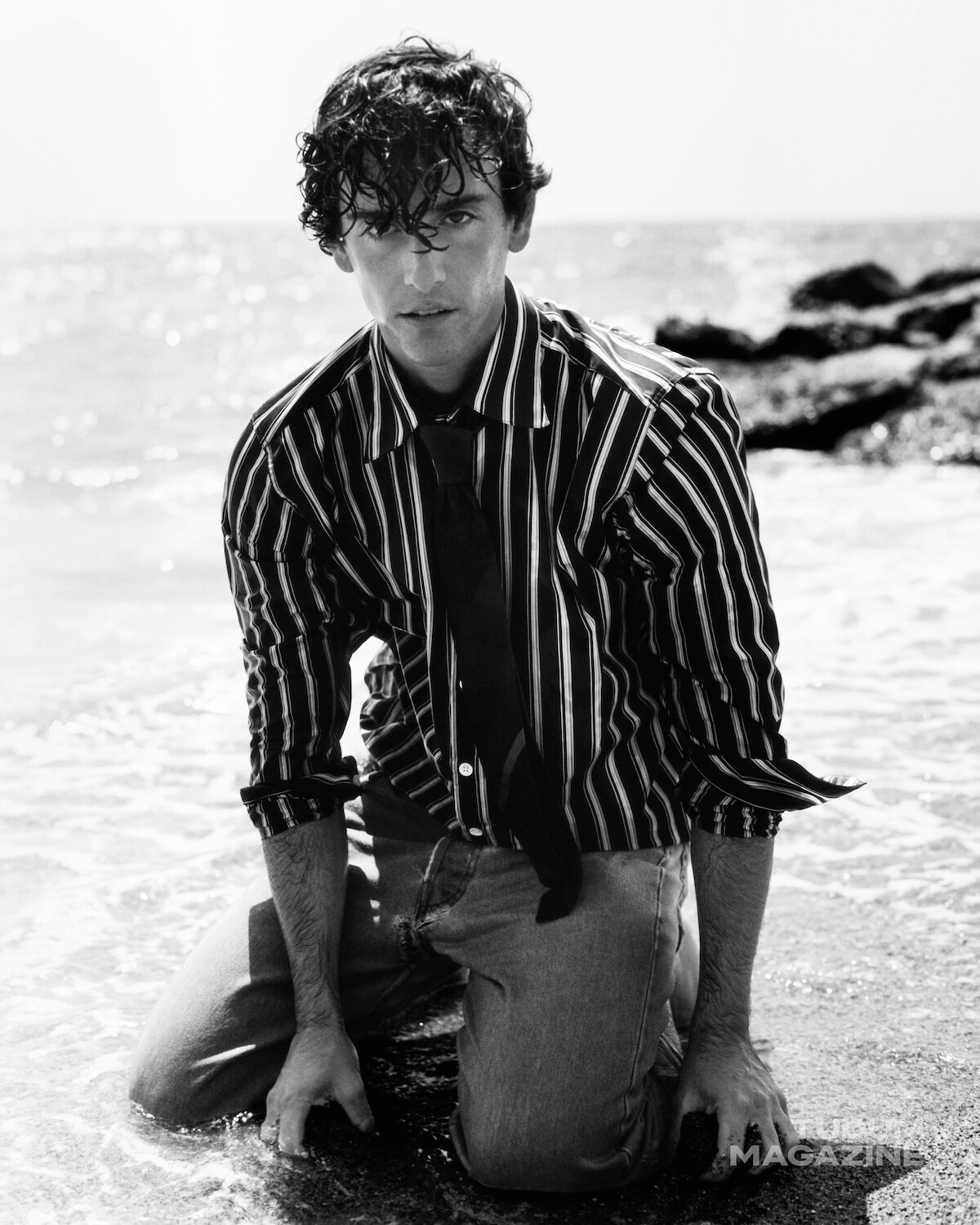
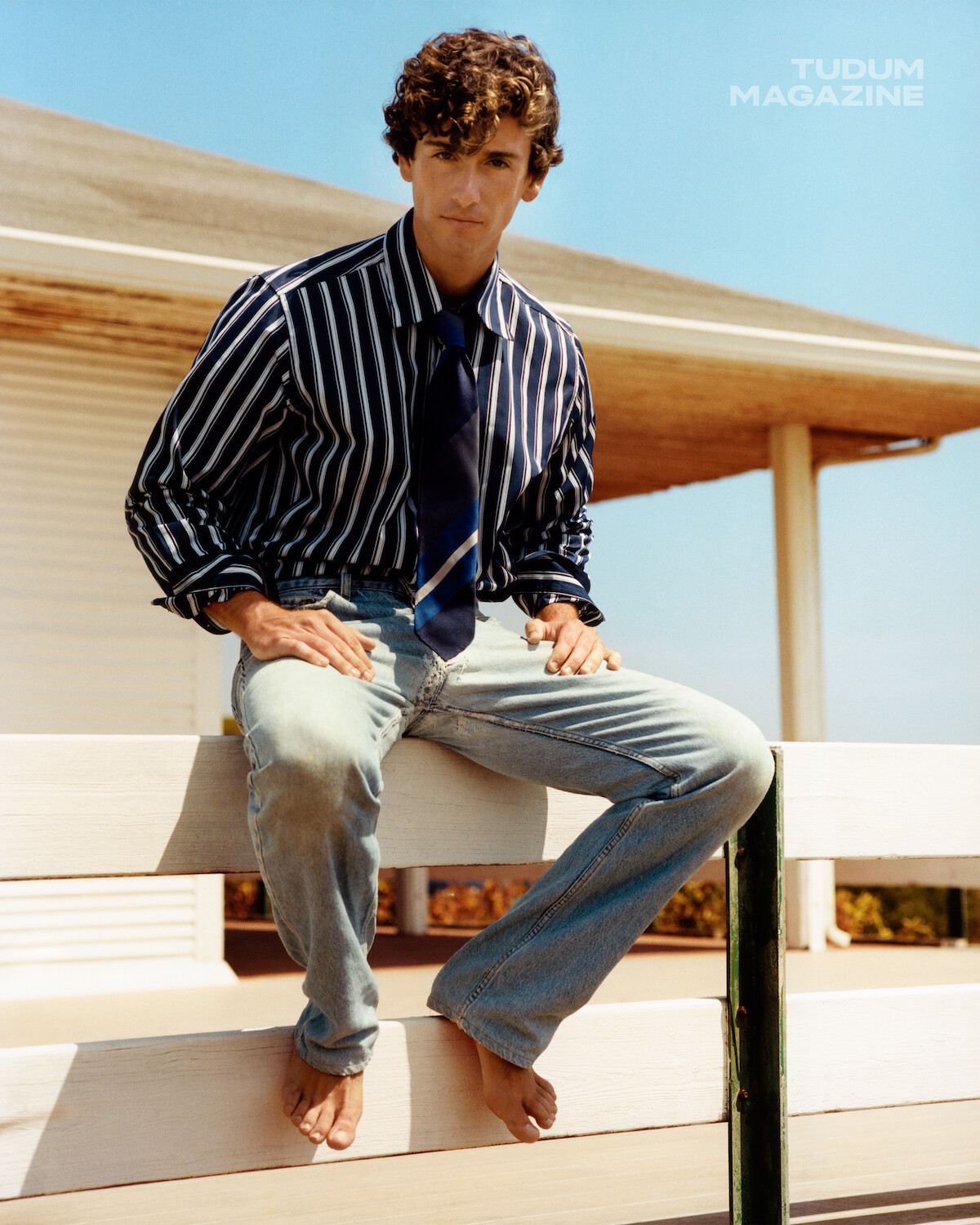
The musician Guitarricadelafuente is taking a moment to catch his breath. Outside the doors of the makeup and styling trailer is a 90-degree Barcelona afternoon, a photographer and crew, and a weathered beach house where he just spent three and a half hours looking down the lens of a camera. Two nights earlier, the 29-year-old singer-songwriter was onstage performing the modern folk songs from his sophomore album Spanish Leather on the 24th night of a tour that spanned three continents. In the middle of this musical odyssey, he made a stop on the French Riviera where he stood alongside Penélope Cruz at the Cannes Film Festival and received a remarkably long ovation for his acting debut.
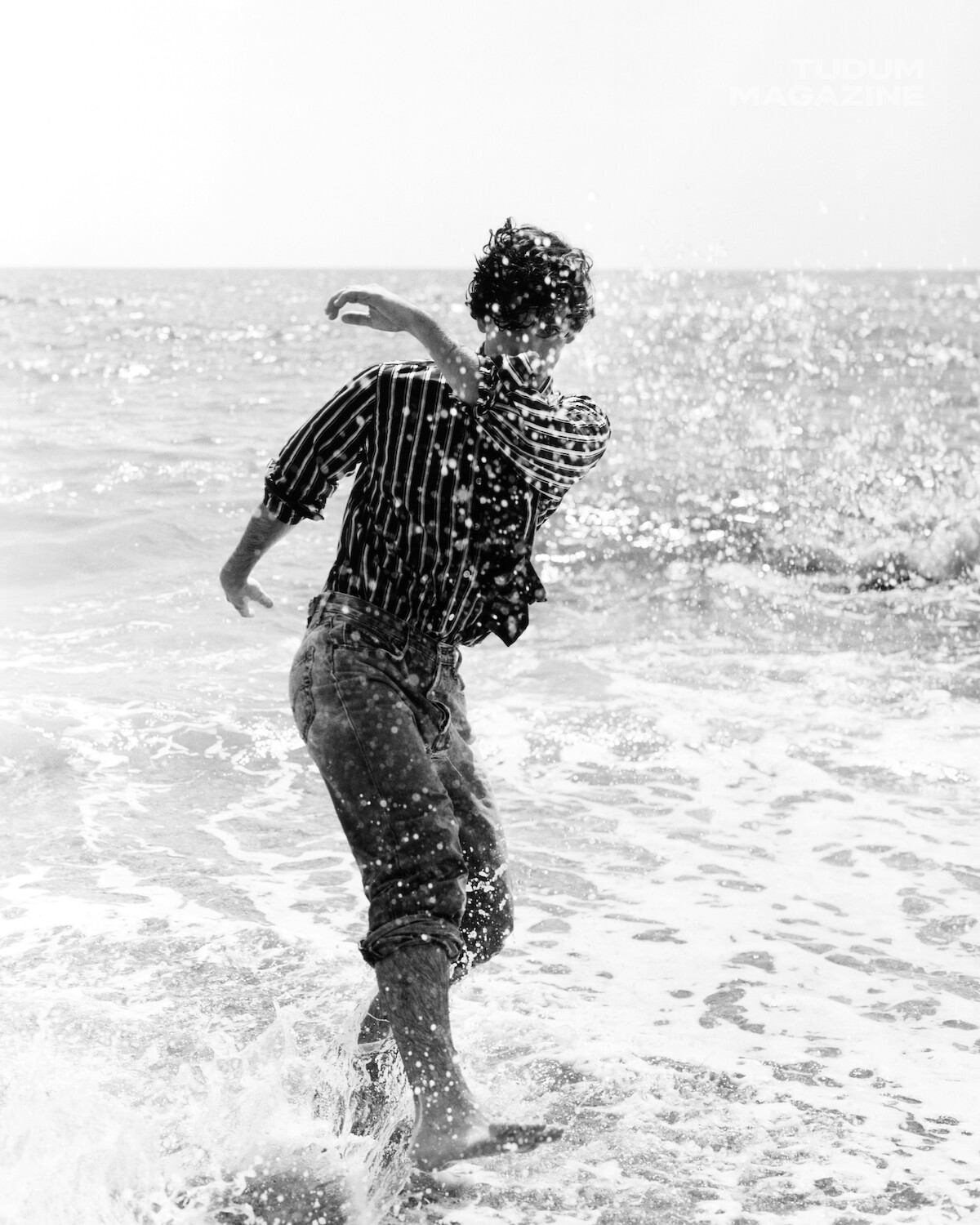
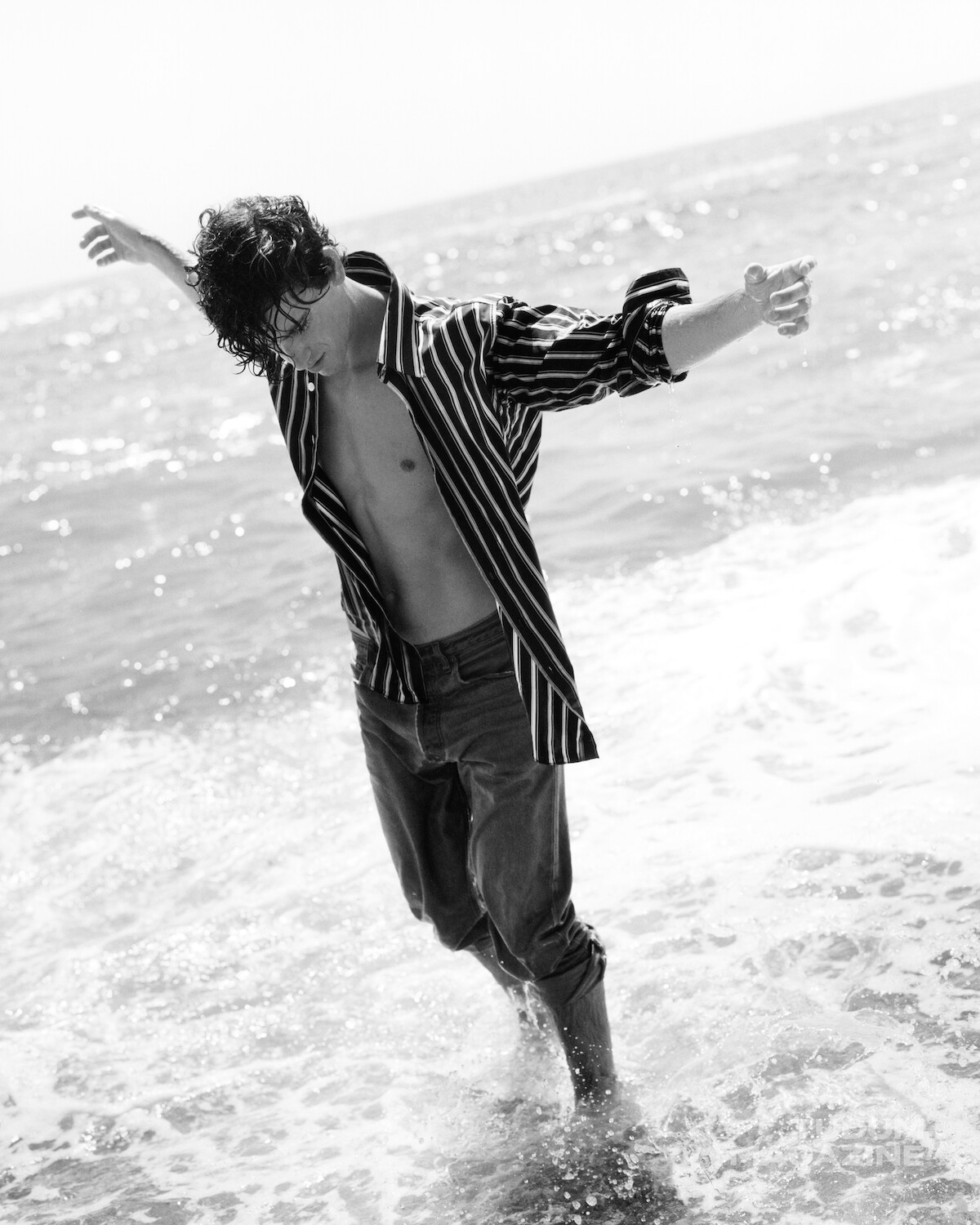
“Watching it there, I wasn’t conscious at all,” recalls the star of the epic drama La Bola Negra as he perches on the chair across from me, hair curling with salt from his dive into the Mediterranean waves at the end of the shoot. “It was the first time I was watching myself playing a character in a movie, and seeing that on the big screen in Cannes was something I couldn’t believe.” Two weeks after the film’s premiere set the Croisette aflame and earned one of the festival’s Best Director award, Guitarricadelafuente (Guitarrica for short) played the Primavera Sound Barcelona festival, just a few miles from his home and from where we sit today. He walked onto the stage in a black T-shirt emblazoned with one word: DREAMER.


Performing for a crowd like the one at Primavera was something he had dreamed of but maybe wouldn’t have believed could happen; when he entered the music business, he didn’t follow the path of someone fiercely pursuing the spotlight. “The name Guitarricadelafuente was a way of being anonymous,” he says of his pseudonym, which combines his paternal surname with the Aragonese word for “small guitar,” an homage to his heritage and to his grandparents, who lived in a village of 80 people in northeastern Spain’s Aragon region.
“My grandfather was a jota singer and musician, and my grandmother used to play piano. Going back to my grandfather’s house, I’d find bandurria guitars all over the place,” he fondly recalls, speaking of discovering music with his cousins. Yet his own music became an introverted exploration: “For me, singing was a very private thing at home — something I did by myself, and not even my parents knew that I sang.”
Under the anonymity of his stage name, Guitarrica posted his first song, “El Conticinio,” to SoundCloud eight years ago, ditching lectures at his architecture degree program in Valencia to record in his bedroom. More songs followed, social media interest grew, and record labels started calling. By 2024, he was onstage at Primavera, singing alongside pop star Troye Sivan. In the audience happened to be Javier Calvo and Javier Ambrossi, the filmmaking duo known as Los Javis. That night, after the performance, Guitarrica ran into the directors who mentioned a project they thought he might be good for. “I imagined they were going to propose a soundtrack, something related to music,” says the singer, who soon after the initial meeting went over to Madrid to visit Los Javis and continue the conversation. “Instead, they talked about an idea.”
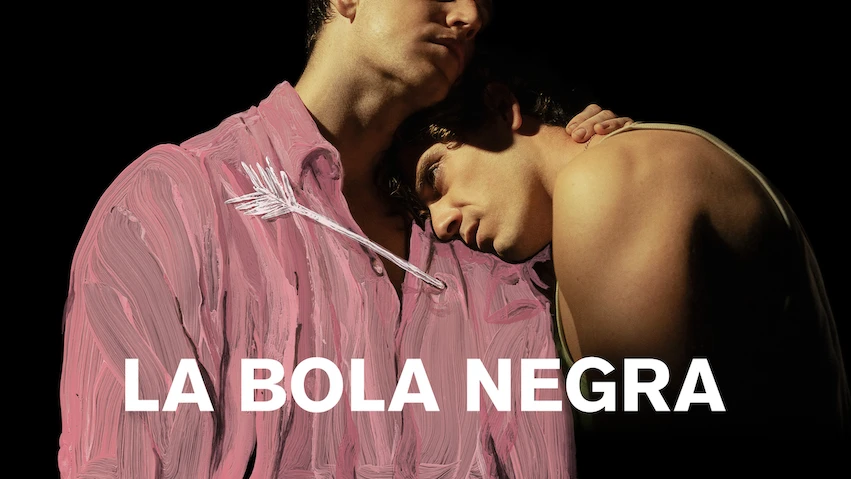
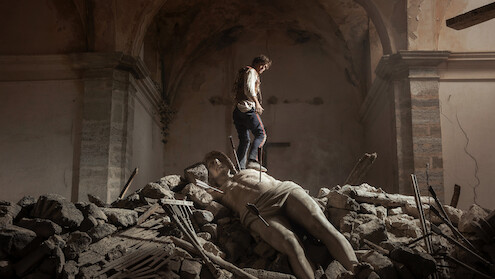
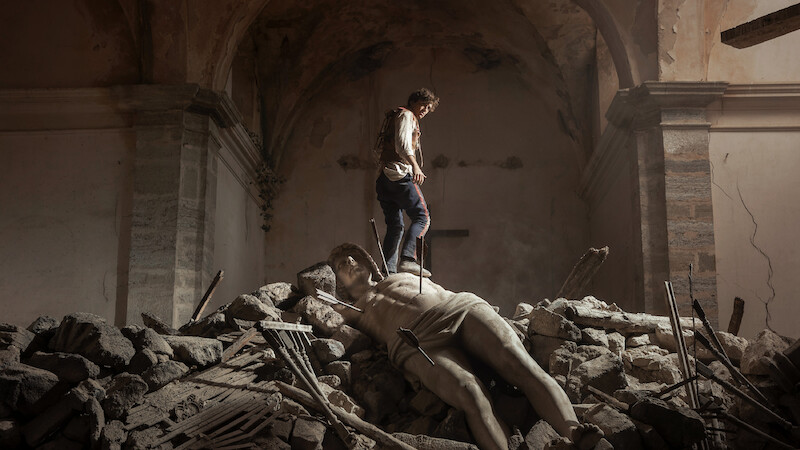
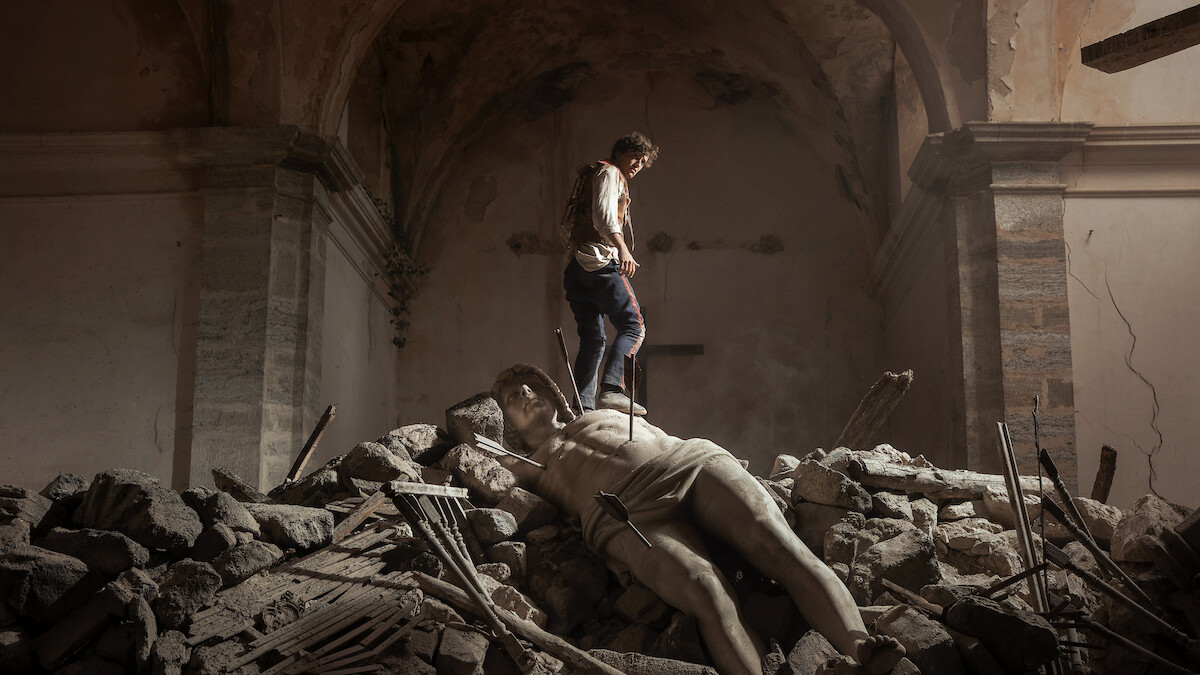
Set in 1937 during the Spanish Civil War, the idea was a story of a fated meeting between two soldiers, Sebastián and Rafael. This is one of the La Bola Negra’s three timelines; the film’s other two intertwining stories, set in 1932 and 2017, are inspired by writer Federico García Lorca, in particular the unfinished play he was working on before he was killed, which lends the film its name. Dextrously, La Bola Negra connects three generations of men through pain and love, across nearly a century of Spanish history.
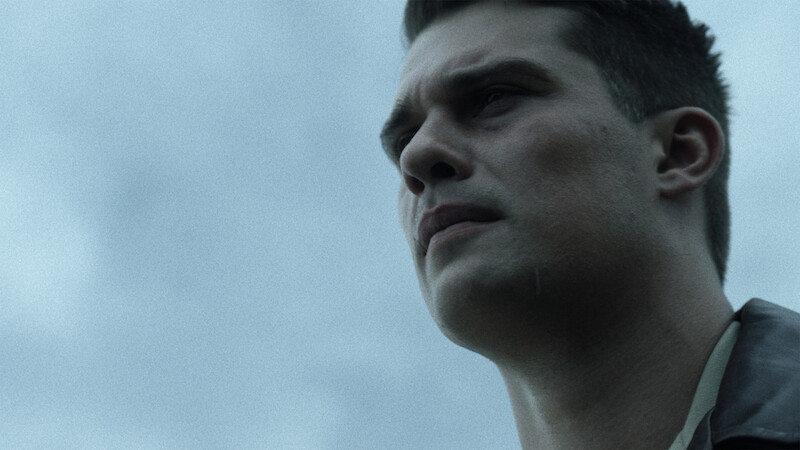
Los Javis saw in Guitarrica precisely what they needed to bring the poignancy of Sebastián’s 1937 story to the screen. “We were big fans of his work. He can sing with that sensitivity onstage, these beautiful songs,” says Calvo, who was unbothered by Guitarrica’s lack of acting experience. “He can do it, he can act. It’s the same. He’s telling a story when he’s singing.” The directors had envisioned Sebastián as a man with “sad musician eyes.” It only takes a minute in Guitarrica’s presence to know that they cast the right person. “Guitarrica was such an enlightenment when we were writing that we were like, ‘If he’s doing it, we can do it. If not, we cannot,’” says Ambrossi. “Sebastián was that important to us. To find him, it was the core of the movie.”
Their early conversations brought Guitarrica closer to the tale — at times beautiful, at times devastating — that he’d be unraveling through his performance. “They were telling me about [Sebastián], this fascist soldier in the Spanish Civil War, and this identity crisis for the character,” he says. In making Spanish Leather, he had already been tapping into the complex ideas and emotions he would need to work with for the character. “For me, there were a lot of things that connected to what I’d been exploring: self-identification, feeling comfortable in your own skin, the significance of Spanish symbols and turning them in your favor, fragile masculinity, showing strength in vulnerability. The way I’ve interpreted my own masculinity, and how I find my place in the world,” he explains. “In every project I work on, something is constantly changing in me, because otherwise you stay steady for the rest of your life, and I think that always reflects in the final result. The album was already done, and what I was already breathing I was able to put into Sebastián.”

While music was his passion, film was always in the background, also inspiring his creativity. “Growing up, there wasn’t much to do in Benicàssim,” he says of his coastal hometown, about a three-hour drive south of Barcelona. Vacationers came for the summer and the town emptied out the rest of the year. “I remember every Sunday I’d go with my parents or some friends to the cinema. That was the highlight of the week.” While the local movie theater mostly featured blockbuster fare, in school he was introduced to the classics and auteurs. “I remember we watched Pedro Almodóvar’s Hable con ella (Talk to Her), and in French class we watched a film by Godard. That was my first deep approach to cinema, where I could appreciate it in an aesthetic way,” he says. “That was the first time cinema really drew my attention: the beauty of the colors, why a film is in black-and-white, what the purpose of a shot is. I started questioning films.”
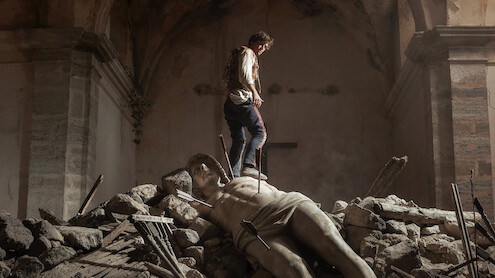
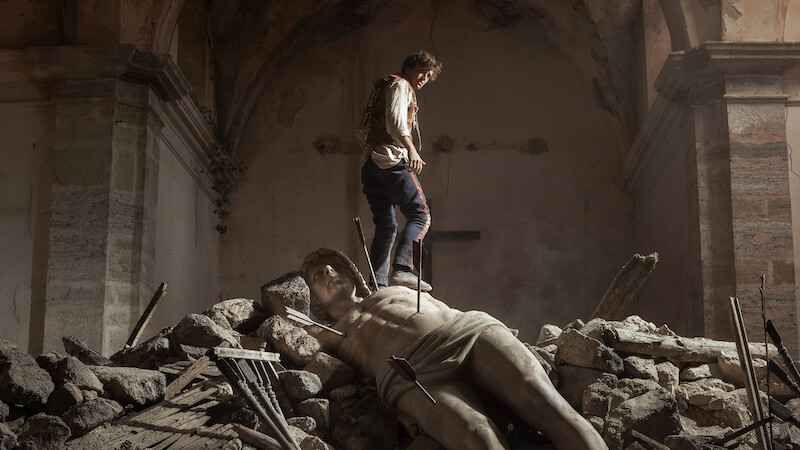
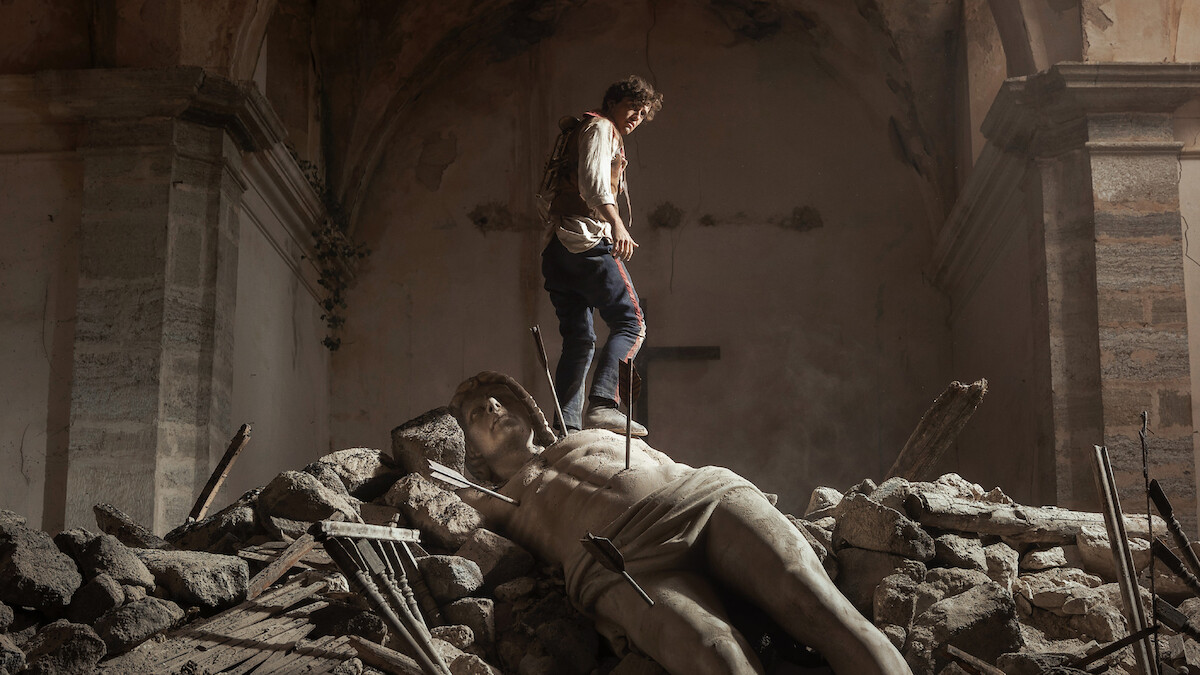
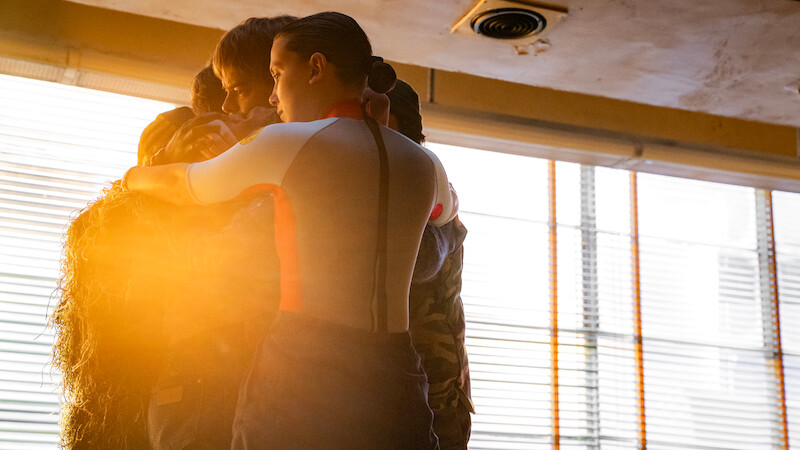
Barely a decade later, he was set to star in a film co-produced by Almodóvar. So began the work of developing Sebastián. “There was a big preparation period before we started filming last summer, where I had my first acting exercises with [Los Javis]. I’ve always been guided and accompanied by them,” he says. As the film opens in the Spanish Civil War, we find Sebastián playing trumpet in a village band. They’re getting ready to celebrate the arrival of the fascist Italian military, which has come to support the Nationalist rebellion against the Second Spanish Republic. Sebastián is relieved when his mother shows up, begrudgingly saluting the planes flying overhead while her son performs. That’s when bombs and artillery drop from the sky, obliterating the town and killing his mother.
To convey the shocking intensity of this moment, Los Javis took an unorthodox approach. “There’s been a very therapeutic, profound discovery in building this character — touching personal things, unveiling things that were covered in dust, to try to bring that emotion to the acting, to what Sebastián is feeling and to connect that with my own reality,” says Guitarrica. “So for [Los Javis], the best idea was to bring my mom in — and kill her, in front of me.” The directors, known for weaving in personal details and cameos to create heightened, authentic emotion in scenes, cast Guitarrica’s mother in the part. “Even now, when I watch it — that scene — it’s like, ‘Oh, my God,’’ Guitarrica says. “It makes me emotional.”

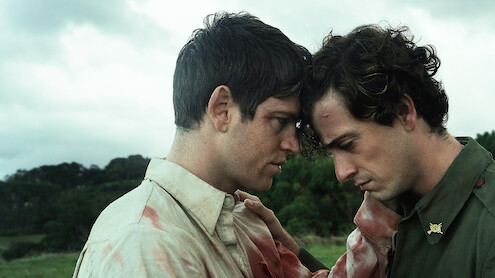
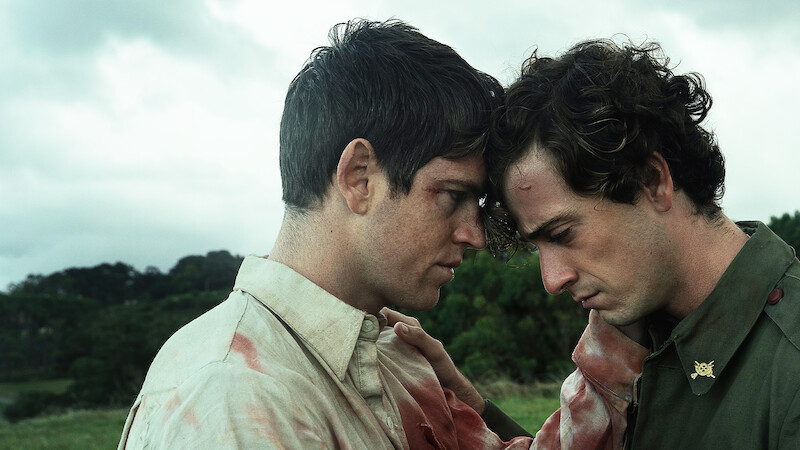
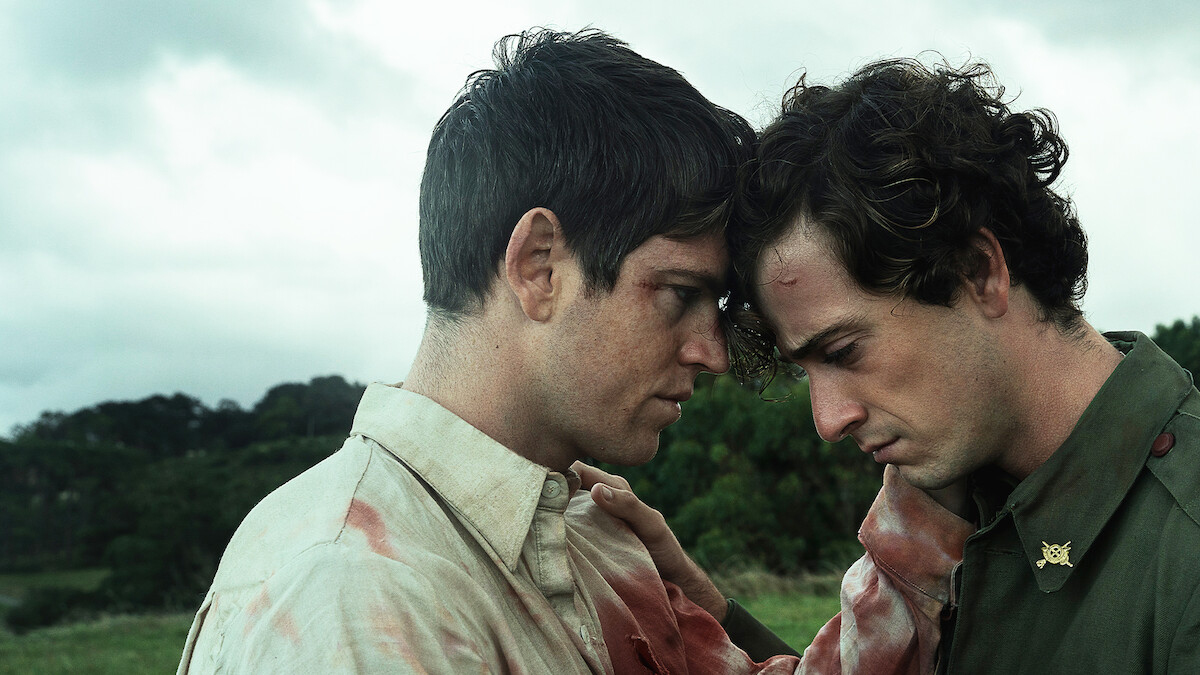
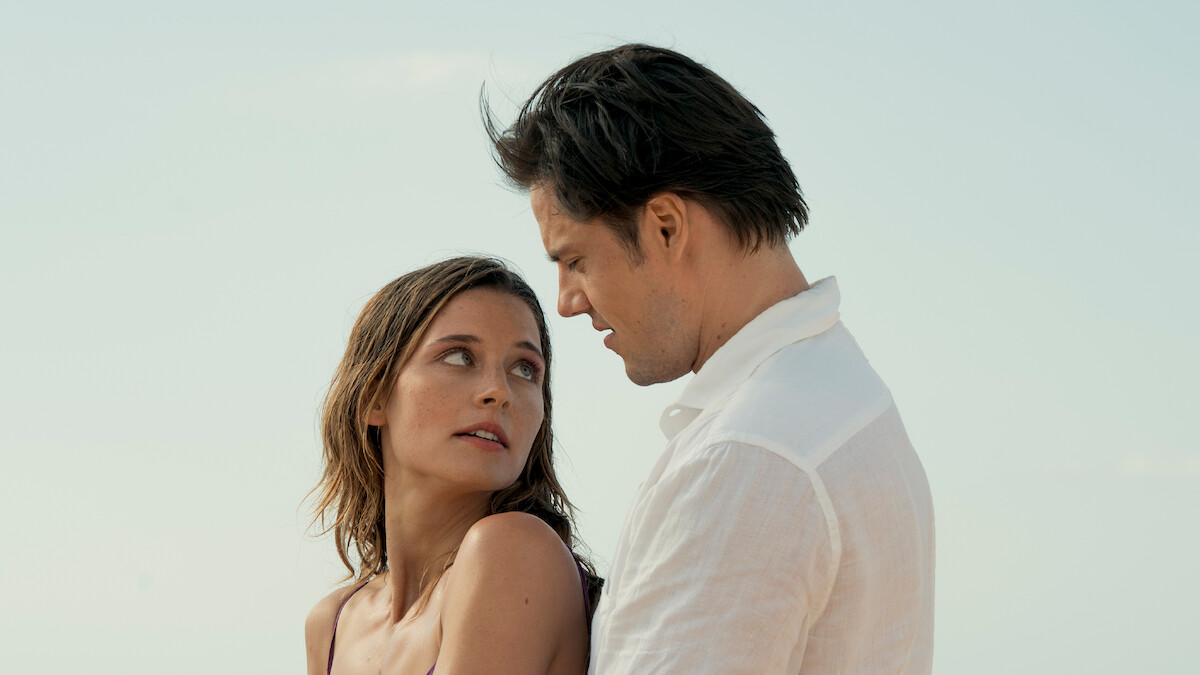
After Sebastián is picked up by the Nationalist troops and forced to join their ranks, he’s tasked with looking after Rafael, a Republican soldier and prisoner of war, played by Miguel Bernardeau. A bond forms, and through it Sebastián begins to explore his sexuality. “For me, playing this character, it’s shown me that not everyone has the chance to live freely. For Sebastián, he’s a guy raised in this village during wartime, and it seems like if you take the luxury of thinking about anything else besides survival, it can be considered selfish in those times,” Guitarrica reflects. “You need to help your family. Here’s your gun — you need to watch this guy, and if he runs, we’re going to kill you and him too. You need to man up as fast as possible. And that’s mixed with being in the middle of a war, where masculinity is already so aggressive all around you. With Rafael, Sebastián feels peace, and feels humanity.”
Sebastián’s inner desires are revealed as he and Rafael get to know each other in tentative, guarded conversations, each unsure how much of themselves to reveal. When he learns Rafael used to work for a theater company, Sebastián says he heard that there are musicians who perform behind the actors onstage. “That’s what I’d like,” he says, “to play in a theater. In a good suit. Being able to see everyone, but let no one see me. As if I was invisible.” Sebastián craves anonymity. Sebastián is a dreamer.
His dreams feel closer than ever when he encounters performer Nené Romero backstage at a show she’s put on for the troops. The scene provided an opportunity for Guitarrica to act opposite an international cinematic great: Penélope Cruz. “In Spain, [especially] I think for everybody, she’s someone you’ve only ever seen in the sky. Getting to meet her, when we first read the script together, I was so nervous,” he says. Nené acts as a window into another world for Sebastián, dishing out stories of her fantastical pre-war life in Madrid to a rural soldier who hangs on to her every word. It is a moment for Sebastián to crack a smile, just as Guitarrica grins softly when he recalls his experience working with Cruz: “She’s been so generous from the start, so helpful with me. In real life, and with Sebastián, she’s been like a mother figure. In the film, she truly shows Sebastián the way — that there’s a way to escape all of this, a sense of hope that we’re going to see each other again in Madrid, with the nightlife and freedom that used to exist. I think she represents the will to live freely, and hope, for him.”
When I ask what it meant to be a part of this story, Guitarrica takes a moment, a breath. “Javier Calvo said, ‘This film just makes you want to live,’ to live the way you want to live,” he responds. “And to not hold anything back — to say the things you have to say to that person, to do what you want to do with your life — because at one point you’re going to arrive at the snow, and there’s no way back.”
The snow, in this onscreen world as throughout Lorca’s work, is connected with death. In the film’s 1932 timeline, the character Carlos (Milo Quifes), has been blackballed from joining a casino because of his sexuality, and a moving passage where he walks along a snow-covered Sierra Nevada peak is scored by plucky piano notes and a celestial voice singing Spanish lyrics that translate to “I keep my desire hidden away in a locket, a relic from the Andalusian empire.” It is “La Nieve,” Guitarricadelafuente’s latest song, written for the film.
“When Los Javis first reached out to me about the role, we were already trading a lot of music references, talking about the album,” the singer-songwriter says. “When I was making Spanish Leather, what really inspired me were a lot of [Spanish] Civil War–era songs from the late ’30s. I even found some by Woody Guthrie — the song ‘Jarama Valley,’ a valley where a big fight took place. It’s this American folk song, talking about a Spanish scenario in an exotic way, that really grabbed my attention.”

It was an inspiration closer to the film, the poet Lorca’s unfinished play, that brought the words of “La Nieve” to Guitarrica’s tongue. “Lorca uses a lot of imagery. Snow appears often in his poetry, almost like flesh. I think he represents folklore in a very magical way, like magical realism, and I wanted to figure out how to make that sound without it being overloaded,” he says. “[It was about] finding the balance between these ultra-powerful words and not making it a super dramatic song, but what the film was actually asking for.”
After La Bola Negra premiered at Cannes to widespread critical acclaim, he now starts the process of reflecting on this major chapter of his life and on bringing this story to the world. “I think it’s gigantic — and for this to happen in Spain … growing up, you wouldn’t see many references like this on television or in cinema. I wish I could have seen this film when I was growing up,” he says. “This acting role was so deep, and so exhausting, so emptying. I consider that when I do something — a song, an album — I put everything of myself into it. And I feel I’ve done that in this film, in the music, in playing Sebastián. Something of me has stayed there.”
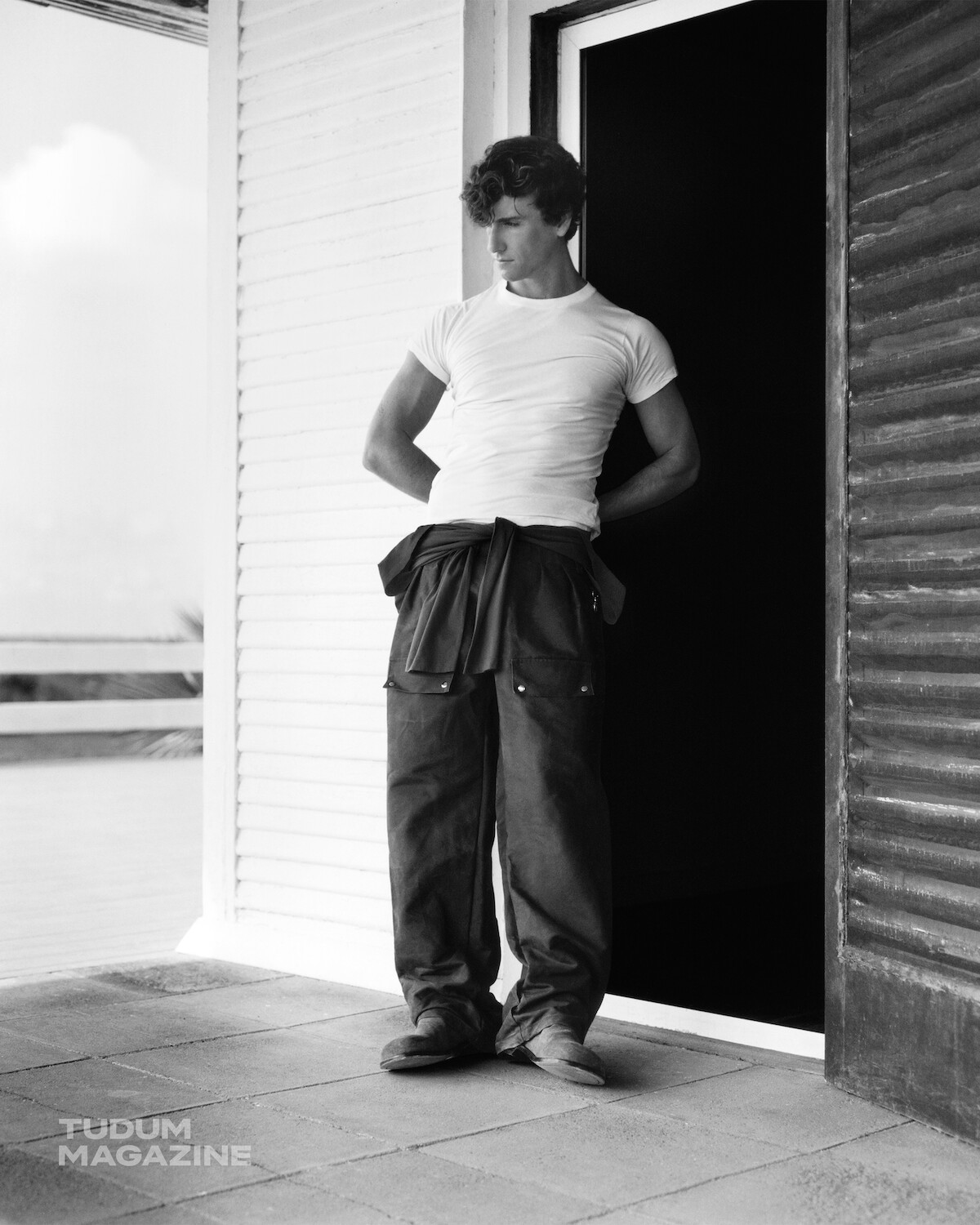
Now is the brief moment for a breath, for a dip in the sea, to slow down and let new inspiration come his way. “I’ve always had the need to be by myself, to take my time and write. These last two years have been the busiest of my life, and I haven’t really been able to do that — and at the same time, that speed has inspired me in a different way,” he says. “Being in hectic times has made me discover a different way of writing songs, of meeting new people and writing with them. But I still have the need to go by the sea, or to my [grandparents’] hometown in Aragon, to take a pause, analyze what’s going on, and try to get focused on the music, writing lyrics, reading, getting inspired.”
He prioritizes that time and space. After we finish our conversation, Guitarricadelafuente will take a much-needed holiday. He will spend time on the Spanish coast, he will travel inward to Aragon, he will be in water, he will be home. There will be music and family and books and time to be with himself. There, he is Álvaro Lafuente Calvo.