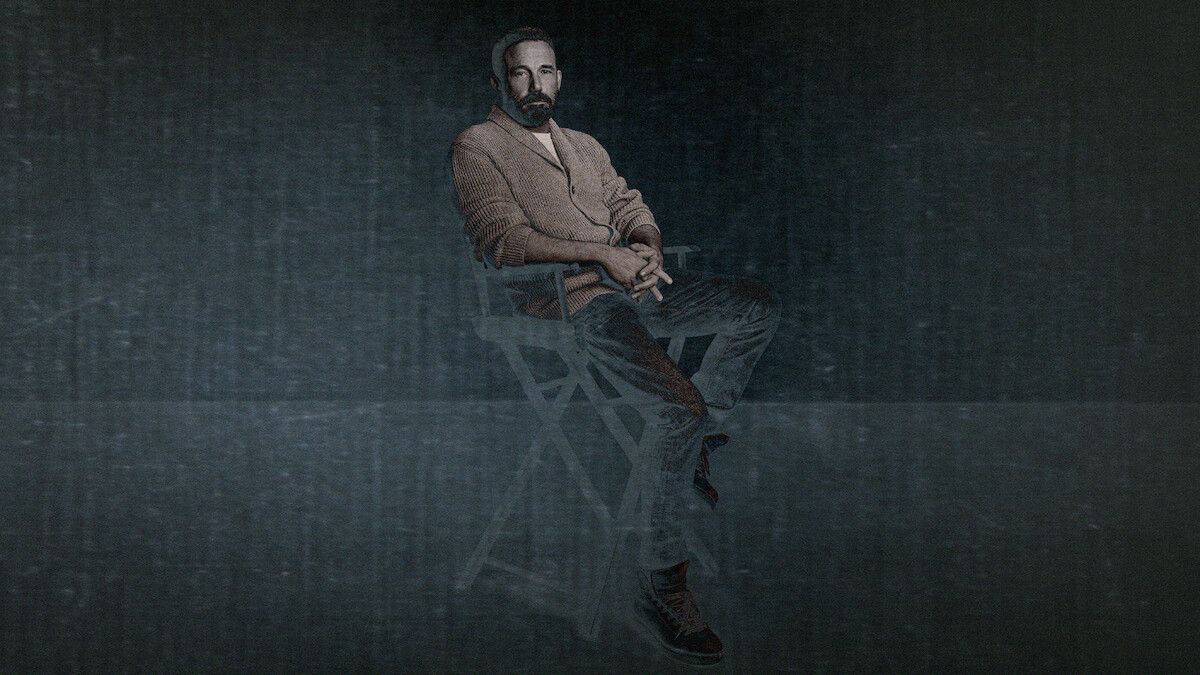
“It had nothing to do with him or his looks.”

There is an alternate future in which Academy Award-winner Brad Bird (The Incredibles, Ratatouille) never gets to make Ray Gunn at all — a reality where the sci-fi detective noir he conceived before beginning his 1999 directorial debut, The Iron Giant, remains exactly what it was for more than three decades: an elevator pitch nobody would finance. Instead, on Dec. 18, Netflix will release the film that Bird has been carrying with him and pitching, in one form or another, since before Pixar proved computer-animated features were possible.
“It’s been, probably, way too long a road,” Bird says with a wry, understandably weary laugh. “I never would’ve believed that it would take this long to get it made, but I’m very happy that it is.”
The idea for the film arrived almost by accident. “This one came from misunderstanding a song,” Bird says. The first time he heard the B-52s’ “Rock Lobster,” he mistook its opening for a nod to “Peter Gunn,” Henry Mancini’s famous detective theme. “And then I went, ‘It’s Ray Gunn.’ And then I went, ‘Oh, that’s cool.’”
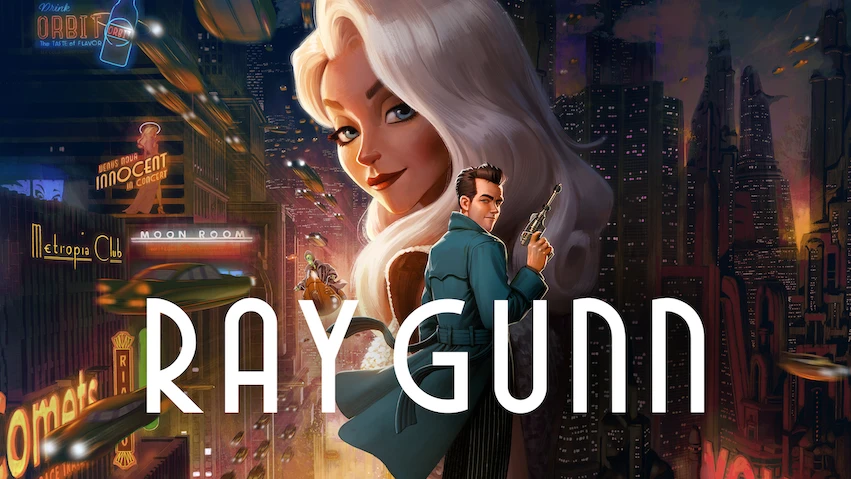
From there, the logline practically wrote itself: “The Maltese Falcon meets Buck Rogers.” A hard-boiled detective story fused with pulpy, space-age science fiction, set in a city where humans and aliens uneasily coexist.
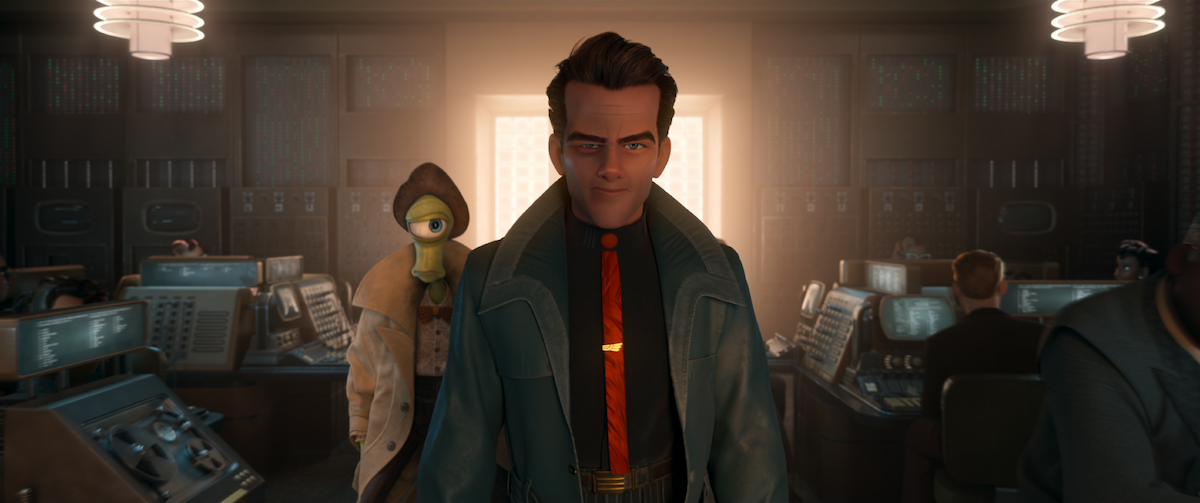
Ray Gunn (voiced by Sam Rockwell) and Eyera (voiced by Tom Waits).
It’s the kind of high-concept mash-up that sounds simple in a pitch meeting and proves enormously difficult to finance — especially as an original, non-franchise animated film aimed as much at adults as at children. That’s also, not coincidentally, a fair description of nearly everything on Bird’s résumé.
The Iron Giant was about a robot with a melancholy, retro heart. The Incredibles was a superhero spectacle in which the parenting drama was every bit as central as the action. Ratatouille was about a rat who dreams of becoming a chef, a premise so improbable that even Pixar second-guessed it during production, believing it would be difficult to market. Bird has spent his career making risky bets look inevitable in hindsight — and then starting the next one from scratch. “It doesn’t seem to matter how big the previous thing was. It doesn’t make it easier,” he says. “I thought that it would make studios trust me more … but I’ve always had to really sell ideas.”
He points to Christopher Nolan as something close to the only exception in the business: a filmmaker who can finance an original idea on the strength of his reputation alone. “How do you improve on the track record of Chris Nolan?” Bird asks. “I am always trying to do something that is challenging for me, but I never feel that I’m in a position where I can just say, ‘This is what I want to do,’ and somebody will want to do it.”
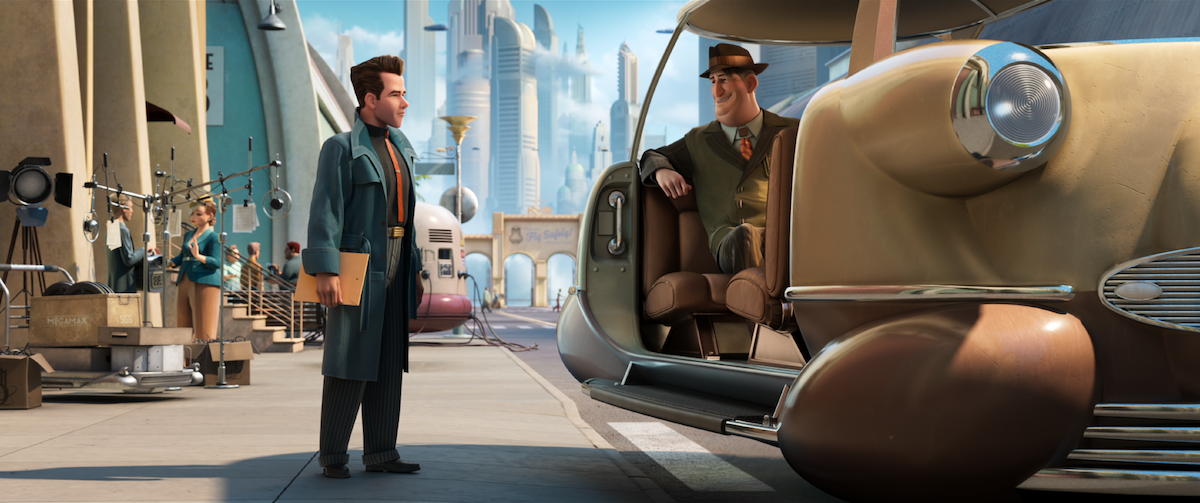
Ray Gunn (Rockwell)
Netflix finally gave Ray Gunn that opportunity — and Bird credits the studio with being willing to take the swing. “I was really happy that Netflix saw potential in this and made it financially possible to make it,” he says. He is candid about the strange moment the movie business is going through right now: an industry that keeps announcing its own death while recognizing that it needs the very new ideas it’s afraid to gamble on. “They kind of secretly know that they have to [adapt] pretty soon,” he says. “They can’t keep wringing out the same washcloths.”
Technology finally caught up with Bird’s idea, too. When he first began developing Ray Gunn, computer animation was barely an option — this was before Toy Story. Decades later, CG has given him tools his younger self could hardly have imagined, particularly when it comes to the quiet, precise performances he wanted from his characters.
“Super, super, super microscopic subtle animation is very difficult to do, if not impossible, in hand-drawn,” he says. “You can do it in CG, and people will see it.” That precision extends to Ray Gunn’s Metropia, the city Bird has been designing in his head for years.
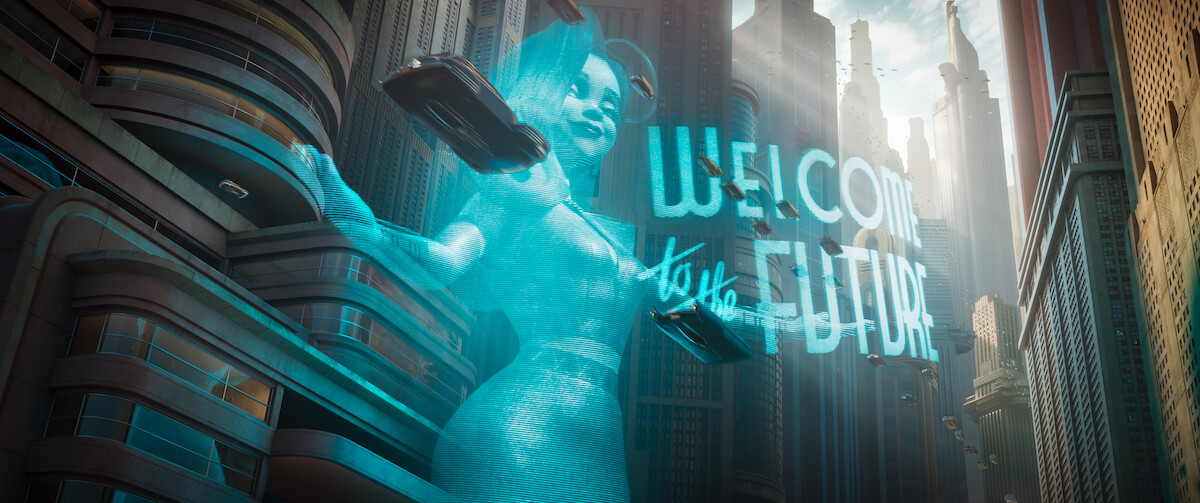
A holographic advertisement of the popster Venus Nova (voiced by Scarlett Johansson) for her new album.
The world of Ray Gunn began with a question: What if World War II had never happened? The result is a retrofuturist metropolis built in a streamlined, optimistic strain of Art Deco that Bird believes vanished from the culture too soon. He points to the Golden Gate Bridge as a real-world touchstone. “It’s a utopian bridge. You look at it, and it feels like a very positive view of the future,” he says. “I keep wondering, if there was more of it, how would it feel?”
In Ray Gunn, there is more of it, in other forms of architecture: mile-high buildings, flying cars, jetpacks, and ultrafast elevators, all layered with the shadows and class tensions of true film noir. Into that city, Bird drops a distinctly Humphrey Bogart-coded hero. Ray, voiced by Sam Rockwell, is a private detective being phased out by machines that have been designed to do his job. He takes cases from an office that has also become his home. His partner is Eyera, a cyclopean alien voiced by Tom Waits, and together they are drawn into a murder investigation connected to Venus Nova, a pop star voiced by Scarlett Johansson, who also sings on the film’s soundtrack. Bobby Cannavale, Michelle Rodriguez and Kathryn Hunter round out the cast.
“You not only want a voice cast to make a convincing soundtrack, but, more importantly, you want something that animators can listen to over and over again and be inspired,” Bird says, noting that an animator might spend three weeks bringing a five-second line of dialogue to life.
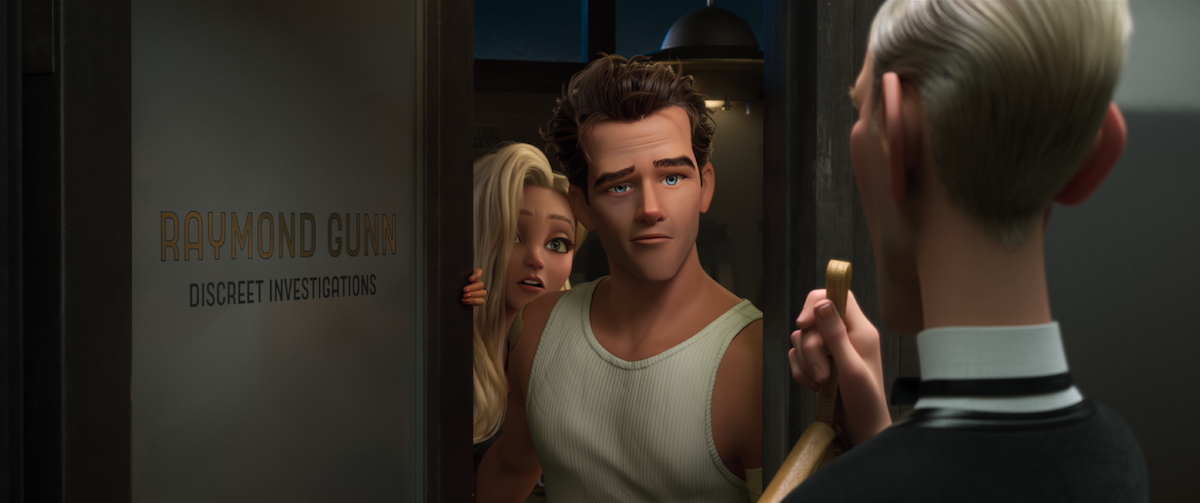
Ray Gunn (Rockwell) and Venus Nova (Johansson)
It is a very grown-up movie, by Bird’s definition of the term — not raunchy or excessively violent, but unwilling to condescend. It’s a distinction he has been arguing for throughout his career, going back to his early days on The Simpsons. “There’s a big chunk of people who don’t see animation … because it seems like it’s too young for them,” he says. “That’s a group I’m anxious to persuade.” Bird is fond of pointing out that Looney Tunes cartoons were not originally made for children. “It was a little treat before the Bogart movie,” he says. “Adult,” as he defines it, means something “you could take a date to, and you wouldn’t feel ashamed.”
For a filmmaker who has spent more than 30 years explaining an idea he could already see vividly in his head, the finish line is finally in sight. “I can’t wait for you to see the finished version of it,” Bird says. “It should be a pretty great experience.”