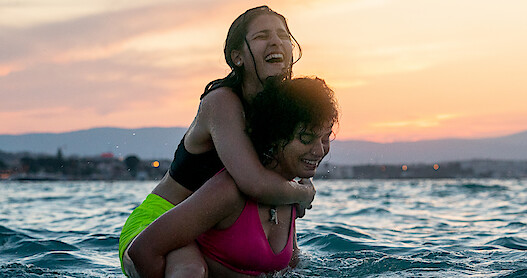
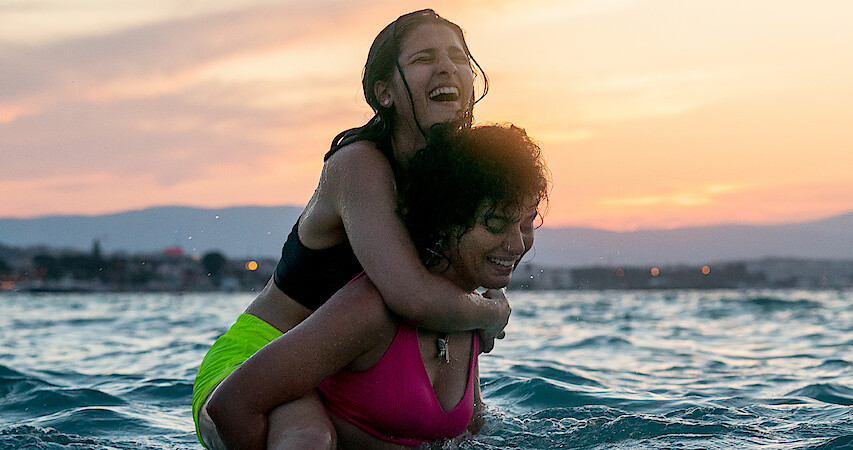
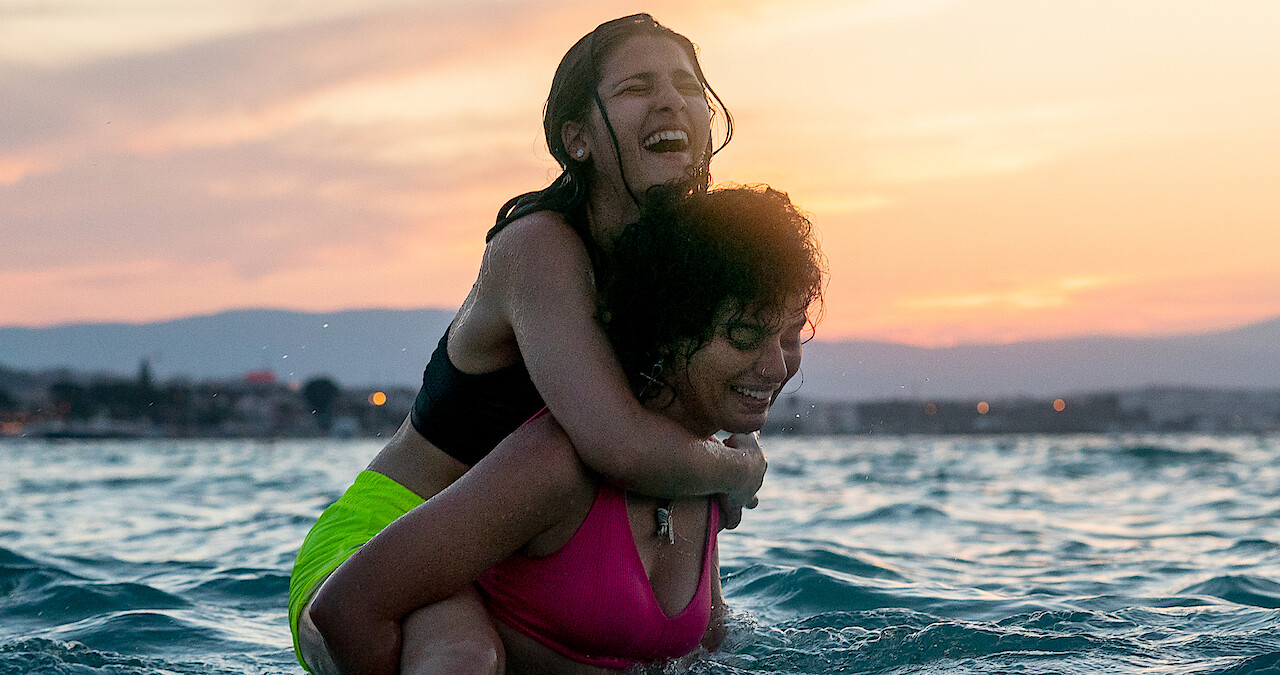
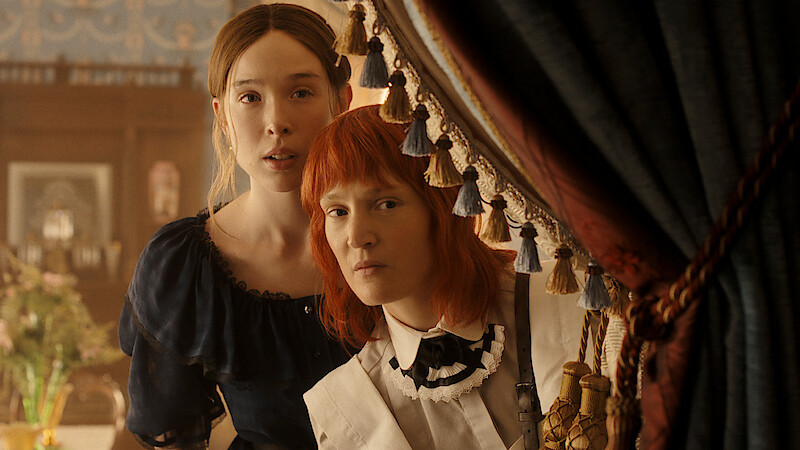
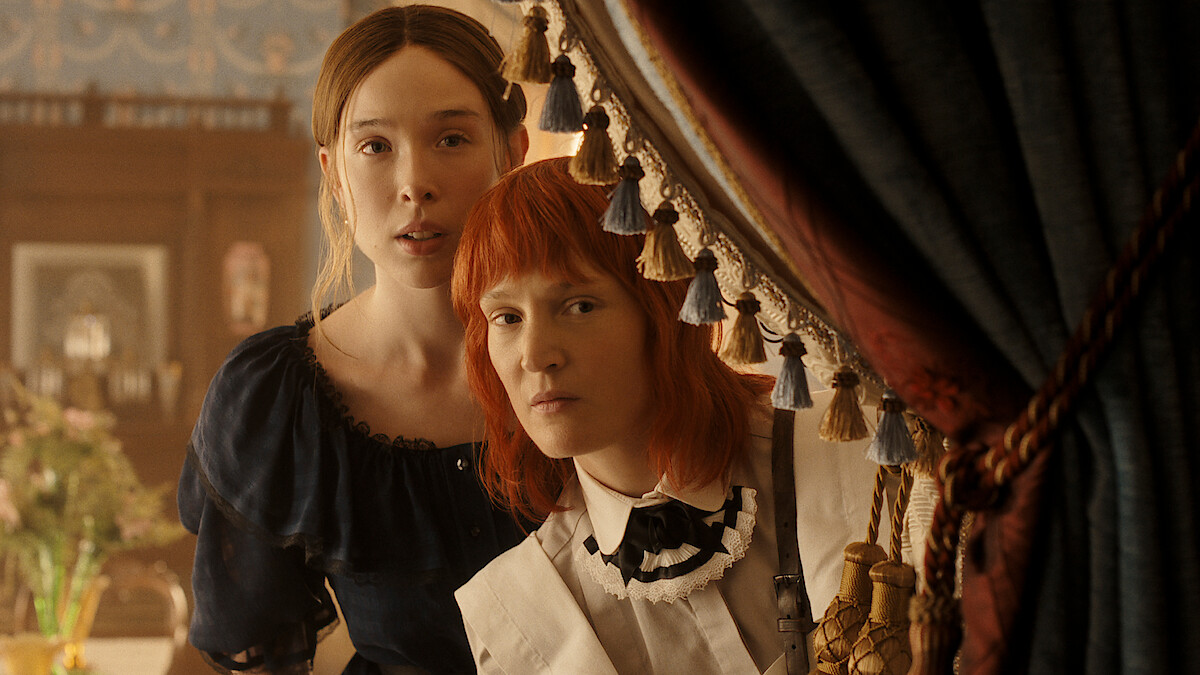
It’s hard to categorize director Sally El Hosaini’s latest film, The Swimmers, which is exactly why she chose to do it. “As a filmmaker, I never want to make a film that I’ve seen before. I’ve never seen a refugee sports movie, and I didn't know what that was… and still don’t!” But when producers approached her with a script about Olympic swimmer Yusra Mardini and her sister Sara — who, as teenage refugees from Syria, swam their way across the Aegean Sea while towing a raft carrying 18 others before making their way on foot to Germany — she couldn’t resist.
Yusra and Sara had been training with their swim-coach father to compete for the Syrian national team when the violence of the Syrian Civil War began to decimate their hometown of Damascus. When they learned that, if they made it to Germany before Yusra turned 18, they could then potentially send for their family and continue to train for the upcoming games in Rio, the family made the difficult decision to allow the girls to go for it.
El Hosaini’s film follows the sisters’ journey to Germany and also Yusra’s route to the Olympics in 2016 and 2020, and Sara’s path to becoming a full-time activist, advocate and humanitarian aid worker, which she remains today. And though she’s proud of her athletic achievements, Yusra is most interested in shining a light on refugees globally. “I understand my responsibility,” she says. “I know that I have a strong voice, and I want to represent more than just us. This movie speaks about millions of stories and not just ours, so really hats off to Sally for that.”
Sally, do you remember when you first became aware of Yusra’s story?
Sally El Hosaini: I had seen Yusra in the news when she competed at the Rio 2016 Olympics, so I was aware of her story. Then the producers contacted me with a screenplay for a film that Jack Thorne had written. When I was reading it, I discovered that Yusra had a sister, Sara, and that this wasn’t a story about one hero, but about two, and that’s when I went hard for the movie. When I Googled Yusra and Sara and saw who they were, they really reminded me of me when I was younger, growing up in Cairo in the ’90s. I was very excited by the opportunity to represent these young women and celebrate them.
Yusra, do you remember your first meeting with Sally?
Yusra Mardini: She says that I was on my phone the whole time (laughs), which I agree with because I can remember very little of our first meeting, but it was lovely. I remember it was cold; it was in Berlin. I showed them around the Olympic stadium where I stayed and where I slept in the clubhouse when we first got to Germany. She was very curious; she wanted to know every single detail, so it was really special.
What did you most want Sally to get about your story?
Mardini: The most important thing for me was that she understood me and my sister and why we were sharing our story. She has a similar background. She has a sister as well. She gets the dynamic. She understands the struggles that are happening in the Arabic world. She understands that the portrayals of Arabic females are always like, “OK, you can’t dream, you can’t be, you can’t, you can’t, you can’t.” It was very important that she understood where we come from, how we lived in Syria and what our ambitions were. And It was important for us to portray more refugee stories, not just ours. Me and my sister had been working with the UNHCR [United Nations High Commissioner for Refugees] for a few years when I met Sally.
Sally, what was the hardest part for you in terms of approaching this material and piecing it together?
El Hosaini: When you’re translating something that’s a real story, you feel a responsibility to Yusra and Sara, but also a responsibility to tell a larger story. But at the same time, you try to make it entertaining. As a filmmaker, I never want to make a film that I’ve seen before, but there were certain values and things that I knew were very important and needed to be in there. I wanted the audience to be more than just outside observers. When you watch the news, you’re used to seeing images of overcrowded dinghies. Every decision that was made creatively was for the audience to be on the journey as a participant with Yusra and Sara, living those experiences with them, as opposed to judging them from the outside. Everybody feels sympathy when they watch the news, but I feel like sympathy isn’t enough anymore. You need to feel empathy. We live in such a divisive world where the term “refugee” has become a political one, when refugees have existed since time immemorial and will continue to exist. This isn’t something new, and we’re all part of that story. I wanted to break down this concept of “other.”
The film really does feel global in its scope.
El Hosaini: Refugees don’t come from one particular place. They come from everywhere in the world. They aren’t just a result of war. They can be as a result of trying to find a better life, of poverty, of climate change. There are so many reasons that people are displaced, and I think we have to look at that and accept that. So many people in the US are the grandchildren and great-grandchildren and great-great-grandchildren of refugees.
You cast two sisters, Manal Issa and Nathalie Issa, to play Yusra and Sara. Was that a happy accident?
El Hosaini: Yeah. I didn’t set out to cast sisters specifically. But I knew that the film needed to be in Arabic, and so I wanted native Arabic speaking actors, but they also had to be bilingual and able to act in English as well. So I was looking for genuinely bilingual individuals to cast. And we did actually set out to find young Syrian women and spent a lot of time doing that. But when we started down that road, we quickly realized that it was going to be very difficult with the paperwork situation, to cast them in the movie. We had to film in the UK, Belgium, Turkey and Germany, and in order to get visas with varying degrees of refugee status that the young women had, it wasn’t going to be possible for us to facilitate that because of the politics. So we expanded the search to the Levant. I had known Manal Issa through her work in independent Lebanese cinema, and when she was auditioning, she mentioned she had a sister who was getting her master’s degree in literature and wasn’t an actress. I got very curious about her sister the more she spoke about her, and I was like, “Do you think she’d want to come do a screen test?” So we reached out to Nathalie, and when I saw the two of them together, I felt like I’d found the Lebanese version of the Mardini sisters.
Yusra, did you meet with Manal and Nathalie before filming began?
Mardini: Yeah, Nathalie came to Hamburg to meet me while she was studying in Berlin. The similarities between me and her were really crazy right away. And then afterwards, I met Manal on set, and the dynamic was amazing.
Is there a scene in the film that was most exciting or emotional for you to watch?
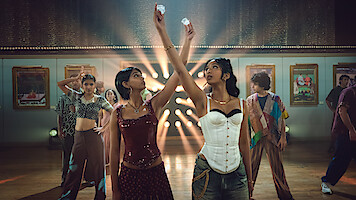
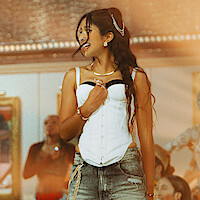
Mardini: The most important scene for me personally is a scene where the girls are dancing at the night club to “Titanium” and you see the bombing happening behind them. That is a really realistic scene. That’s not fiction. That was our life. I told Sally, “Thank you for doing that, because I do not see that in any documentary or in the news.” Either you see everything is destroyed or you see people getting hurt and so on, but you don’t see that people are just trying to have a normal life as well, that there’s still life, sadly, throughout war. So that was very important for me that people understand: We still tried to have a normal life. We still had clubs, we still tried to be normal teenagers. It wasn’t normal for us to coexist like this, but we had to do it because that was the only choice. Unfortunately, I lost a few friends when their houses were bombed. So us teenagers were telling our parents, “Look, I’m going to die either way if I’m home or outside, so let me live my life.”
El Hosaini: That was also very important to me, to subvert not just the stereotypes of who young Arab women are, but also of what the Middle East is. I’m so tired of this beige palette that gets put upon the Middle East. I grew up in Cairo, and I’ve lived in a lot of different cities and visited a lot of cities in the Middle East. It’s so colorful and vibrant and full of life, and yet in cinema, there is this beige that gets put on everything. I really wanted to lean into the life of Damascus because Damascus wasn’t like Homs or Aleppo or other cities that took a really heavy bombing. People coexisted with the war, similarly to the experience people had in Beirut. Life was going on, schools were still in session, people were trying to go to work and just moving around while mortars were dropping for many years. So it was that coexistence that was so important to show, and how Yusra and Sara were just trying to be teenagers.
Do you have a favorite scene, Sally?
El Hosaini: I have so many favorite scenes, and I still get emotional in many different places. Recently, what made me cry is the scene where the sisters meet Sven and he asks Yusra her name.
Yes! When they meet the man who becomes their coach and houses them after they safely make it to Germany. They’re so joyful and confident!
El Hosaini: When she says, “I’m Yusra Mardini,” and then Manal, playing Sara, is like, “Who are you?” For a moment, you pop out of the refugee story and you see these young women for the first time. Because we’ve lived with them, you can’t imagine what they’ve been through to get to that point and now you see them as some young kids walking into the pool without a care in the world. And it’s just that kind of dissonance of that moment that is so emotional.
This interview has been edited for length and clarity.