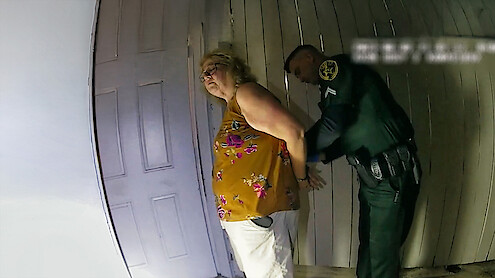
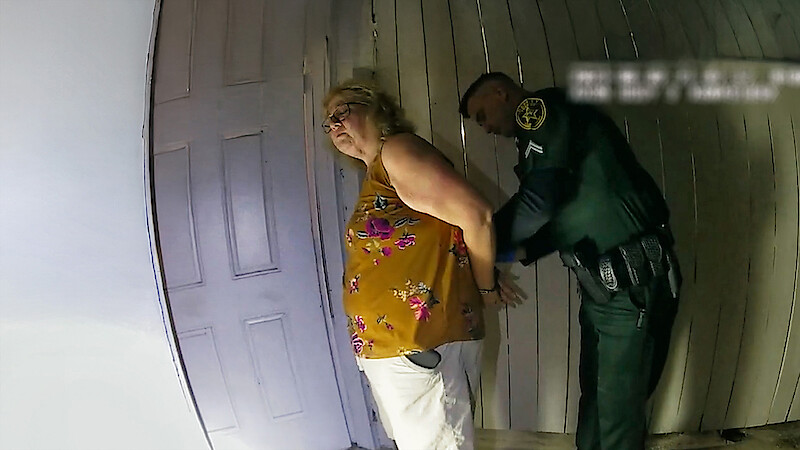
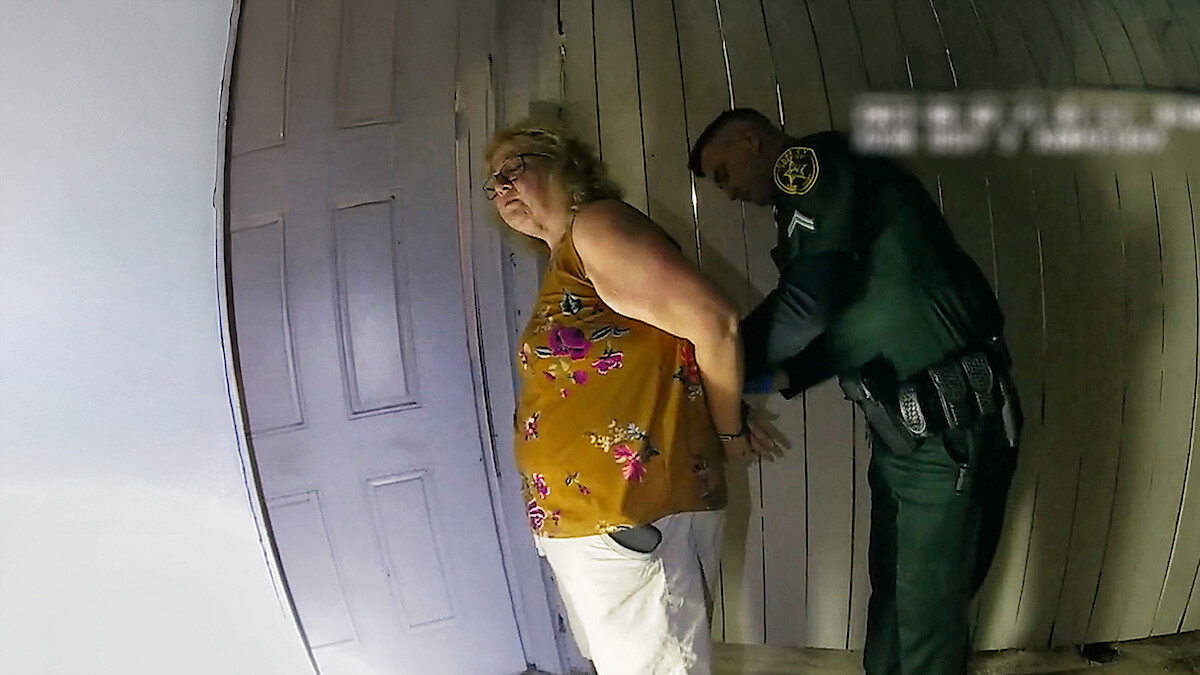
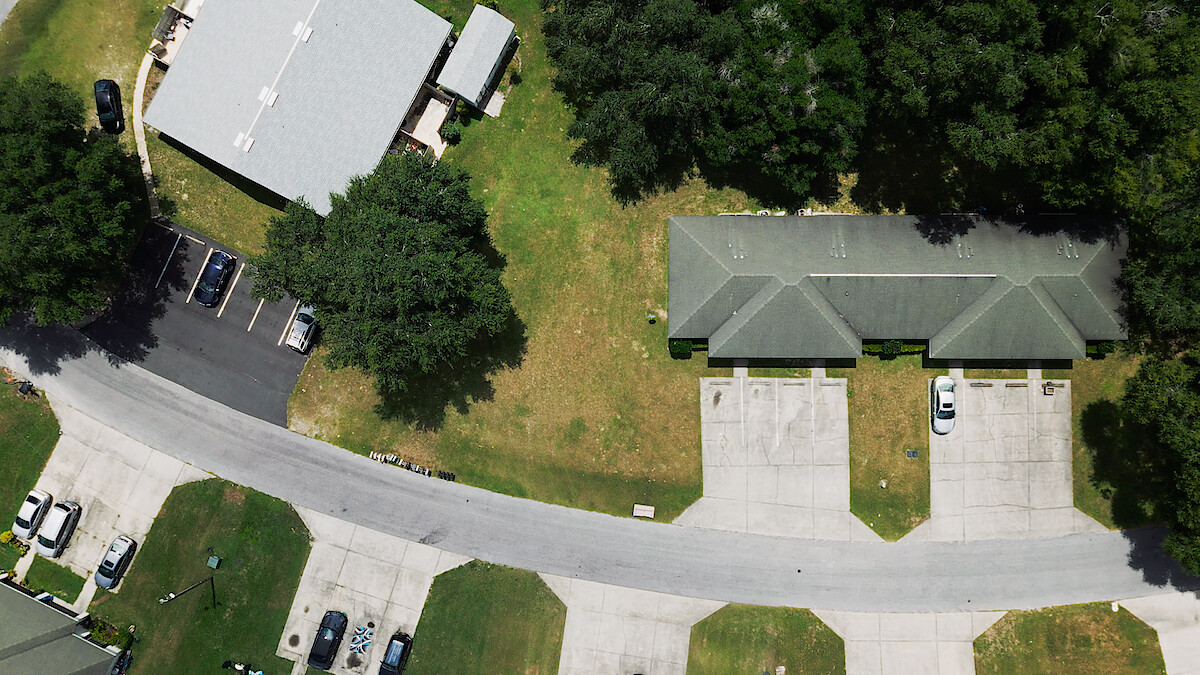
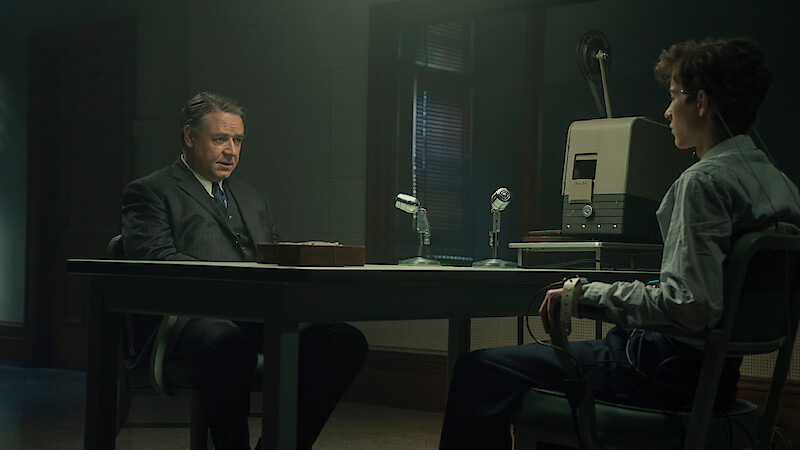
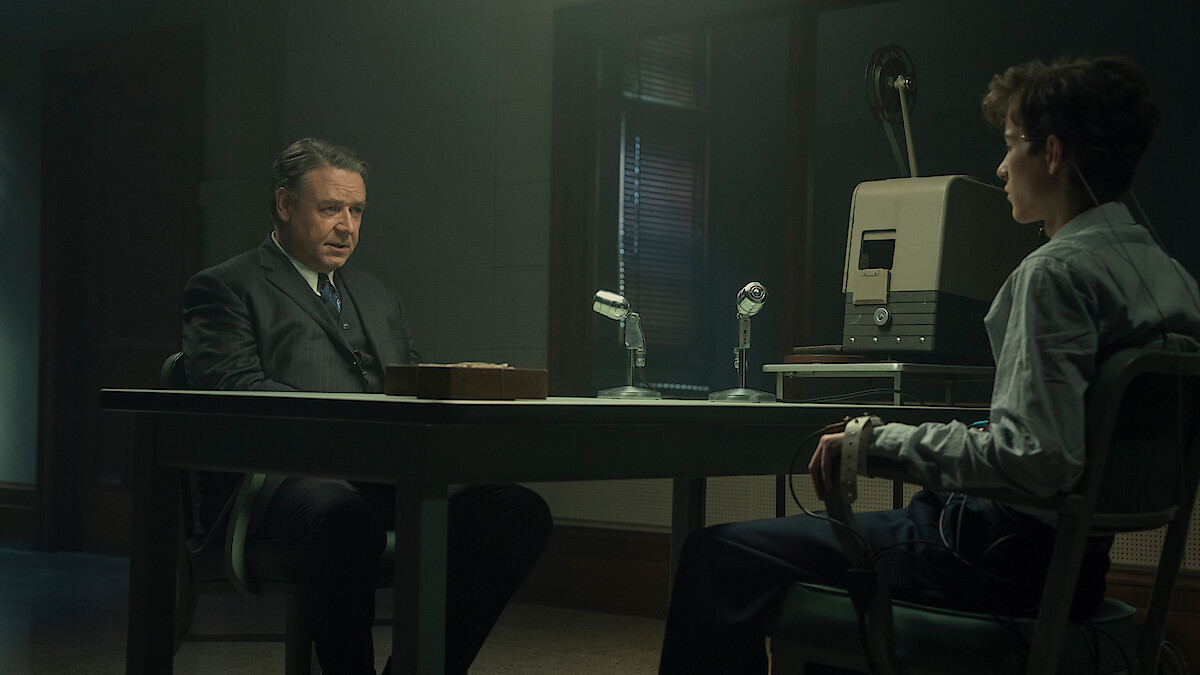
Filmmaker Geeta Gandbhir was mourning the murder of family friend Ajike “AJ” Owens when a path toward some sort of justice was illuminated — one that led to her to make the Critics Choice Documentary Award–winning The Perfect Neighbor. Owens was shot and killed by her neighbor Susan Lorincz in their tight-knit Florida community, where Owens was raising her four children, over a dispute about kids playing in a vacant lot next to Lorincz’s home. As the case against Lorincz was coming together, attorneys for Owens’s family gained access to hours of police body-camera footage and audio recordings through the Freedom of Information Act in the hopes that the material could shed light on the events leading up to Owens’s killing.
When Gandbhir saw the footage, she realized there was an important story to tell that reflected the deepest anxiety of our times. “How do you get from living next door to someone … to picking up a gun and committing such a horrible act? How do you get there? What could possibly lead to that?” the director asks. “How we turn on each other, how we become so polarized … is the beating heart of the film.”
Joining her in assembling this story was a frequent and trusted collaborator, editor Viridiana Lieberman, who had worked with Gandbhir on I Am Evidence. “There’s a long relationship and a shared language,” says Gandhbir. “We had to sync all these hours of police body-camera footage, which just came to us in a jumble, and figure out which audio went with which police officer. There were always two on the scene, and then sometimes there were 12 or 15, and nothing was organized. Figuring out who everyone was a complete puzzle.”
Lieberman felt honored that Gandbhir came to her with such a personal and complex project. “It was going to be this challenge [of], ‘We have these materials. How do we do this thing?’ ” the editor explains. “I had been fantasizing about facing a form-pushing challenge like this and meeting the materials where they are.” Adds Gandbhir, who got her start as an editor, “We really wanted to … not impose any voice-over or interviews or anything like that, so people could feel embedded within the community. Putting together the story was also grief work. We felt like we had to know.”
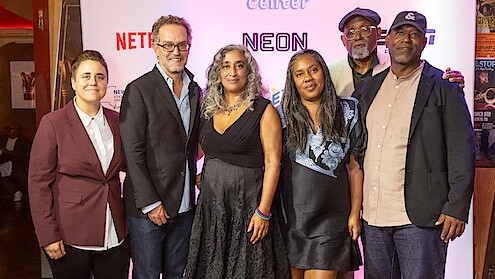
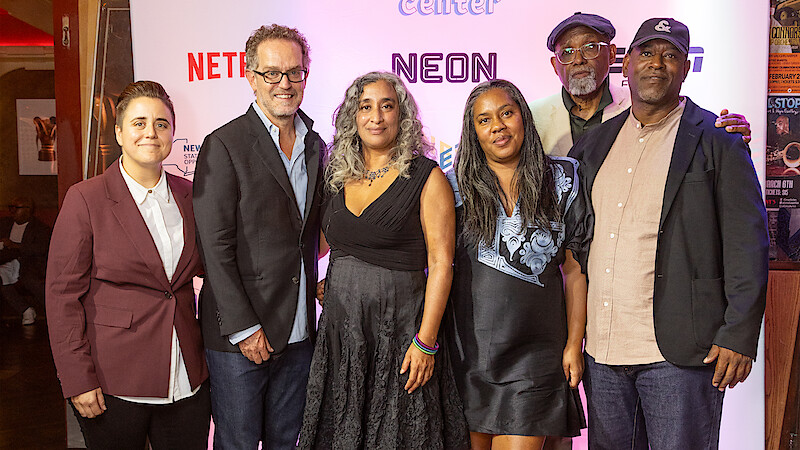
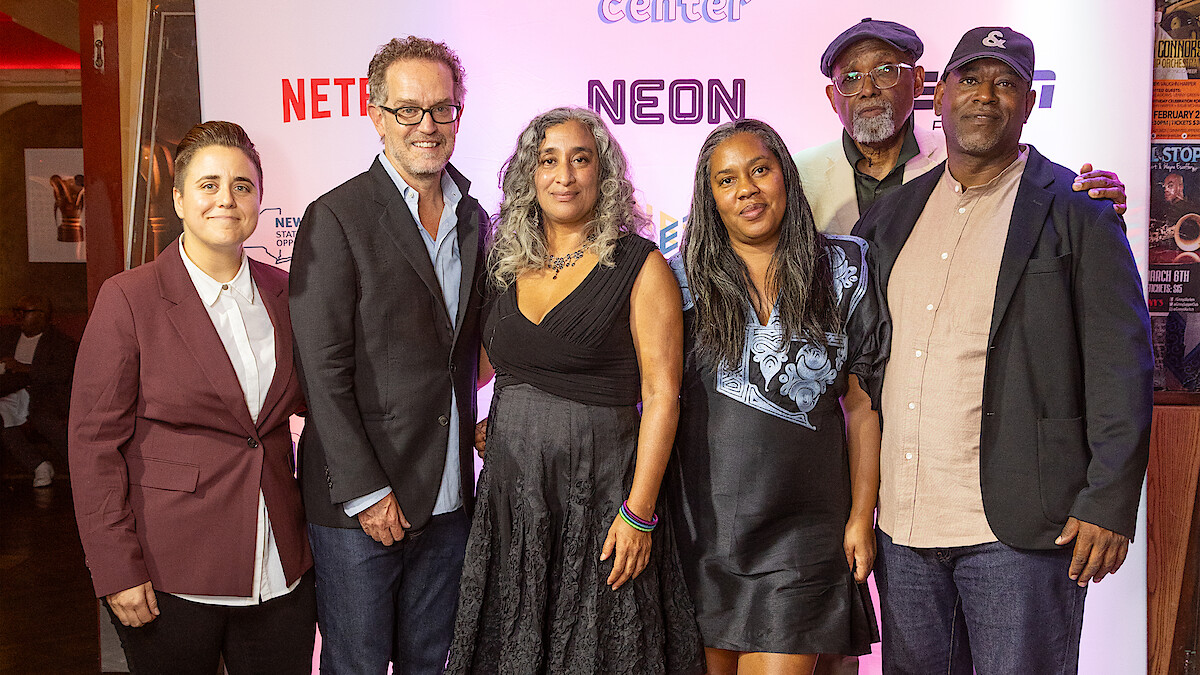
Here, Lieberman, the recent winner of Best Editing at the Critics Choice Documentary Awards, details how the collaboration with Gandbhir came to be, how they resolved to tell this urgent story, and how they pushed the boundaries of documentary storytelling.
When you first heard about this unorganized archive of body-camera footage and police calls, what was your initial feeling? Both practically and emotionally, how did you approach making your way through the material?
Virdiana Lieberman: Geeta said to me, “I think we can make this film out of these materials.” And I, before even seeing anything, was like, “We will.” I was so determined to take that on, especially for what I think we knew intuitively could be this undeniable form. The minute I started watching all the footage, it was so clear that it was there. It was [just] a matter of how to cut it in a way where you were getting all the perspectives and also build this narrative flow, this momentum, the emotion.
One of the best points of direction that Geeta gave me early on was that she wanted the film to be rooted [in] the community, in the neighborhood perspective, which automatically changed the way I was watching this footage, because it wasn’t about procedure, and it wasn’t about the police. So it was really, on a practical level, getting all the footage and seeing what was possible and hearing the canvassing interviews and understanding that there was going to be a way to fill in the gaps when those cameras weren’t on.
As an editor, though, it was something where I went, “Wow, what an incredible challenge to take on.” But on an emotional level, I’ve had the privilege of cutting a handful of personal projects, and it’s an enormous responsibility that I take a lot of pride and care in.
There were moments in our process [when I couldn’t] imagine how hard they were to revisit [for Geeta] and keep going in and keep thinking, “What if?” — seeing all that footage over and over again, to watch people you know. I cried a lot while I edited this film. I cried a lot, just from the experience of being in the footage.
Did you discover anything in the footage that stuck out as crucial to the overall narrative you were both exploring?
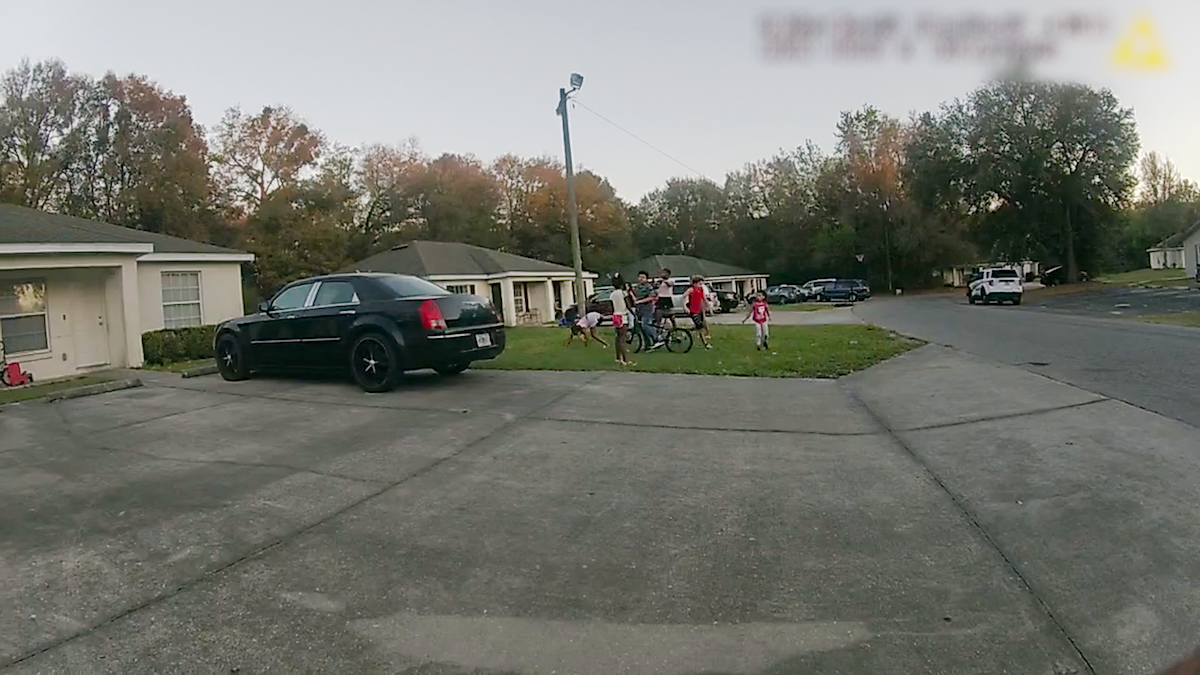
Lieberman: My brain goes right away to that moment everybody always loves to talk about, which is “We’re 11,” when all the kids are in front of the camera and there’s some levity and warmth. And you have the man who’s saying, “All these kids are our own.” The lens of the community before it all happened was something that was really important to us for people to experience. Not just in the facts of the case or the arguments made, [but also] the experience of understanding who these people are and what they had built together in that space and how they supported each other.
Geeta didn’t tell me everything that was in the footage when she gave it to me. I didn’t realize that the Ring camera captured one of the sons running up to say that [the shooting] happened. And I think that became highly influential, because we don’t have footage — probably for the best — of it happening. That was something where I hit the space bar [to pause it] and sat back and was frozen for a long time with full-bodied chills, thinking of the implications of that.
The film ends with Susan Lorincz’s trial and the guilty verdict. Did you always plan to end the film with some sort of coda of justice?
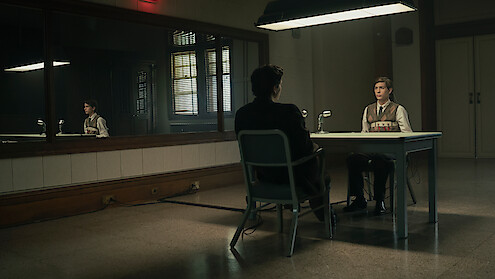
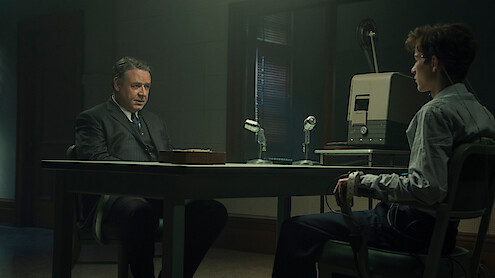
Lieberman: No. Trials get pushed [back] over and over; the scheduling is very hard to predict. That was not in the cards for what this film was going to do. We very much knew we didn’t want that last interrogation to be the final word. We would have a small note from the family, but we could have ended the film there and it would have done the work we wanted it to because of the experience of what happened. So we were done, and then also the trial was happening. And Geeta and I were live texting, watching on YouTube, on the trial cameras, and it was really incredible to all of a sudden put faces to the voices of all the cops that we were [focused] on, traveling through their lens. There was a second when Geeta was like, “Oh my God, do we have to weave all of that?” There was this moment when I was like, “What are we doing?”
I had always had this dream and I never knew what it meant, which was that I always imagined, “What would it be like if you had a film that had active storytelling from the very first frame to the very last frame?” And I didn’t know what that meant. And I don’t mean in [the] credits, when you have an inset box or you have something just running through it. I mean like literal scene work, and I didn’t know how to do that while putting credits up in a tasteful way. But then this happened, and it was like, “Hold on, let me try it and cut real scene work, and as long as we can find a proper place to put these credits, we’ll continue the story.” That was important because, ultimately, beyond the incredible thing of getting to see their faces, the strategies used in the arguments in court say a lot. I mean, when they put up that board that said, “If you fall anywhere in there” [on the chart of levels of burden of proof] I thought, “This is how it happens. This is how justice can slip through the cracks.” And so that was really important. I did cut that four-day trial in, like, a day, and we had to slot it in right when we were going into mix and color. So it was a race to get that in, but I think I had kind of been through boot camp cutting this whole film to be able to do something like that really fast. It was all instinct.
What’s it been like to watch audiences respond to this film, going back to its premiere at Sundance to now, when people are discovering it around the world through Netflix?
Lieberman: When I think about this film, the work it’s already doing in the social justice realm, the call to action that is happening — [that] was the goal, and it’s doing that. But the amount of people it has reached through Netflix is, I mean, my brain can’t really fathom it. But it also excites me with the proof that people can watch things this way, that they can see things that are very observational and raw and take so much from it that we intended or didn’t but [with] the idea of meeting this [material] where it is.
I love talking about the work it can do. Certainly for me, it has now given me an enormous amount of confidence to follow my instincts and to stick to the vision.
The Perfect Neighbor is now streaming on Netflix.