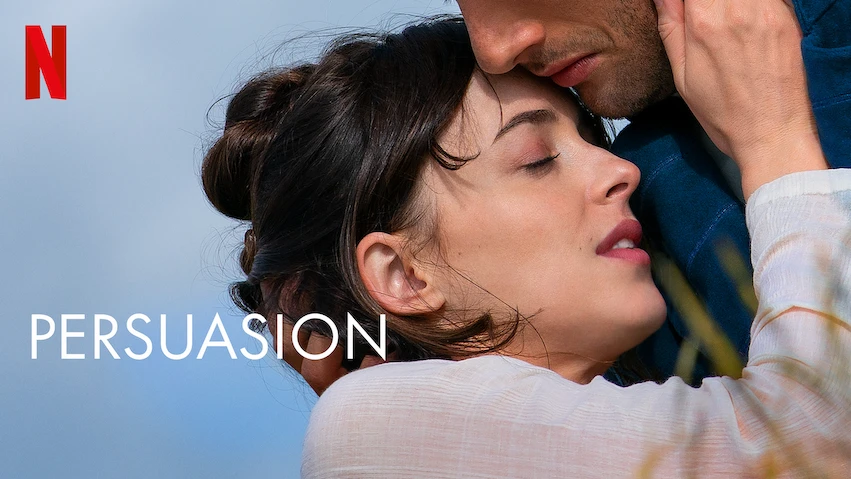
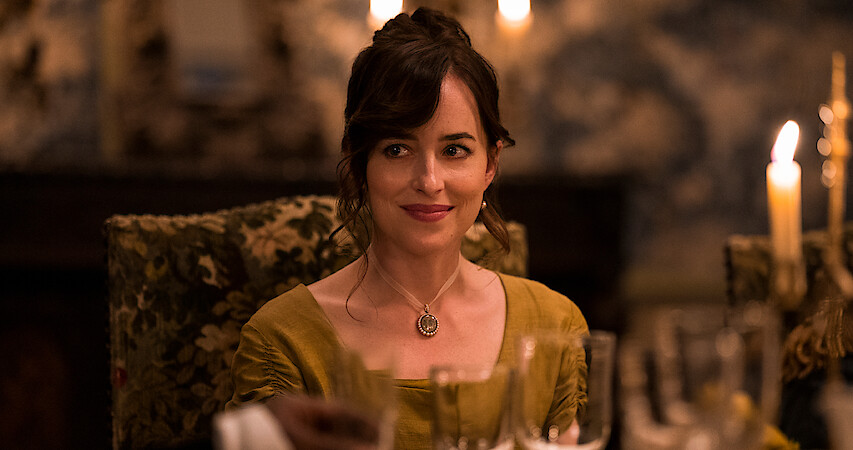
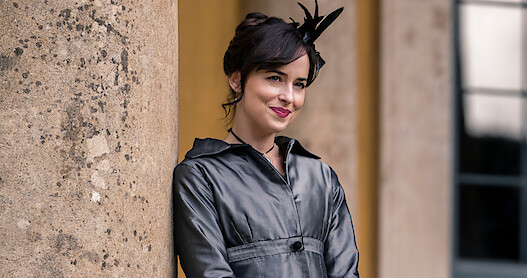
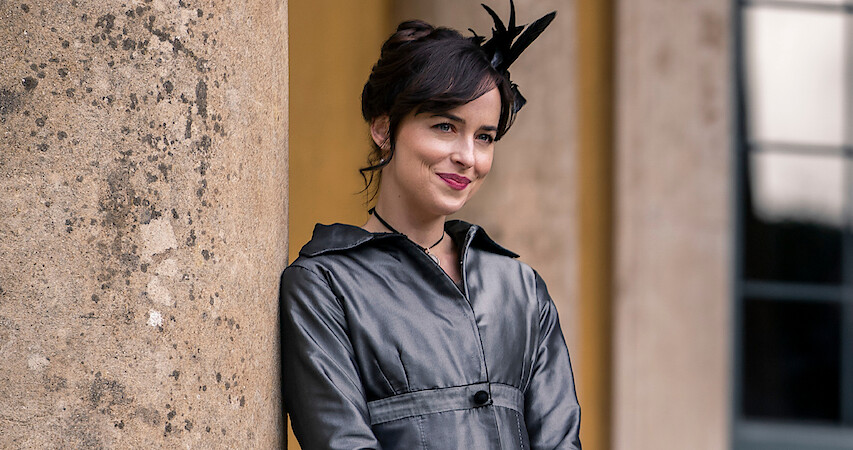
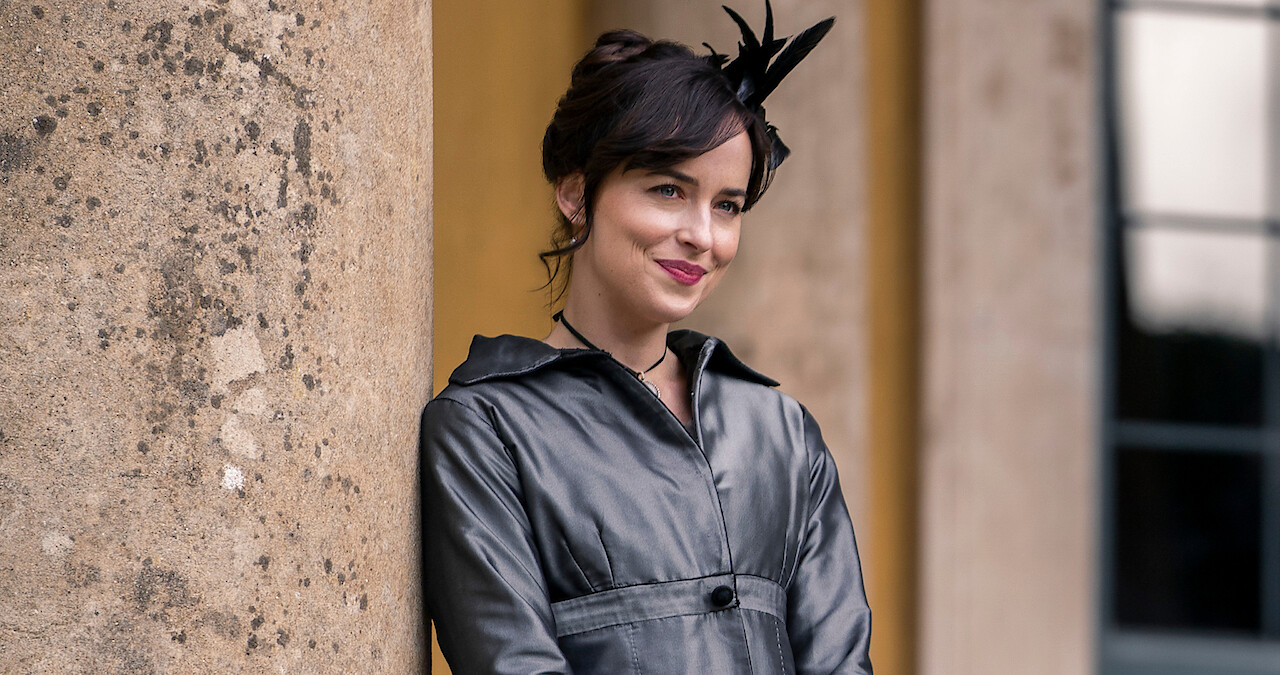
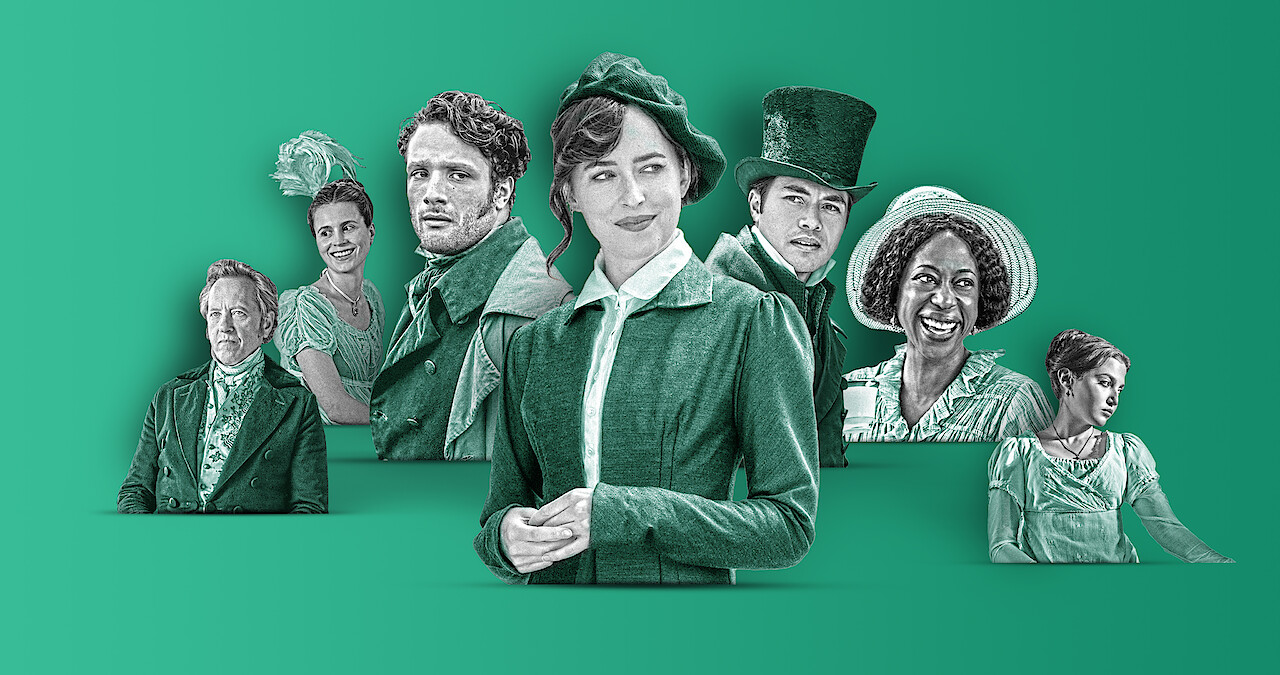
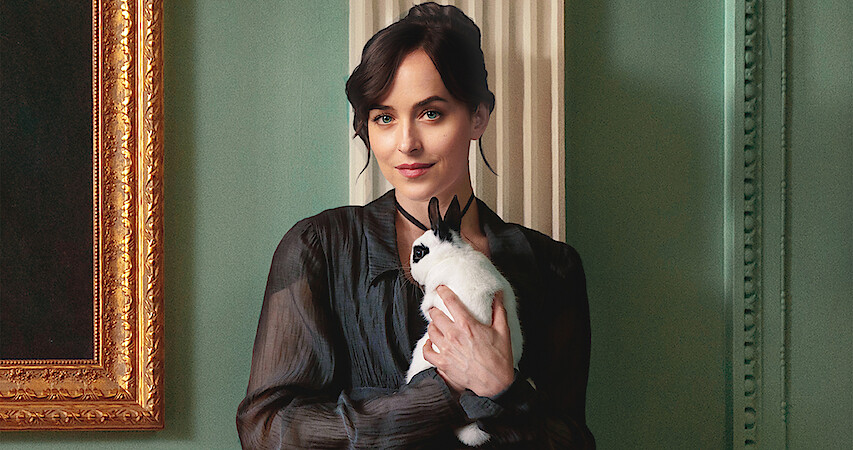
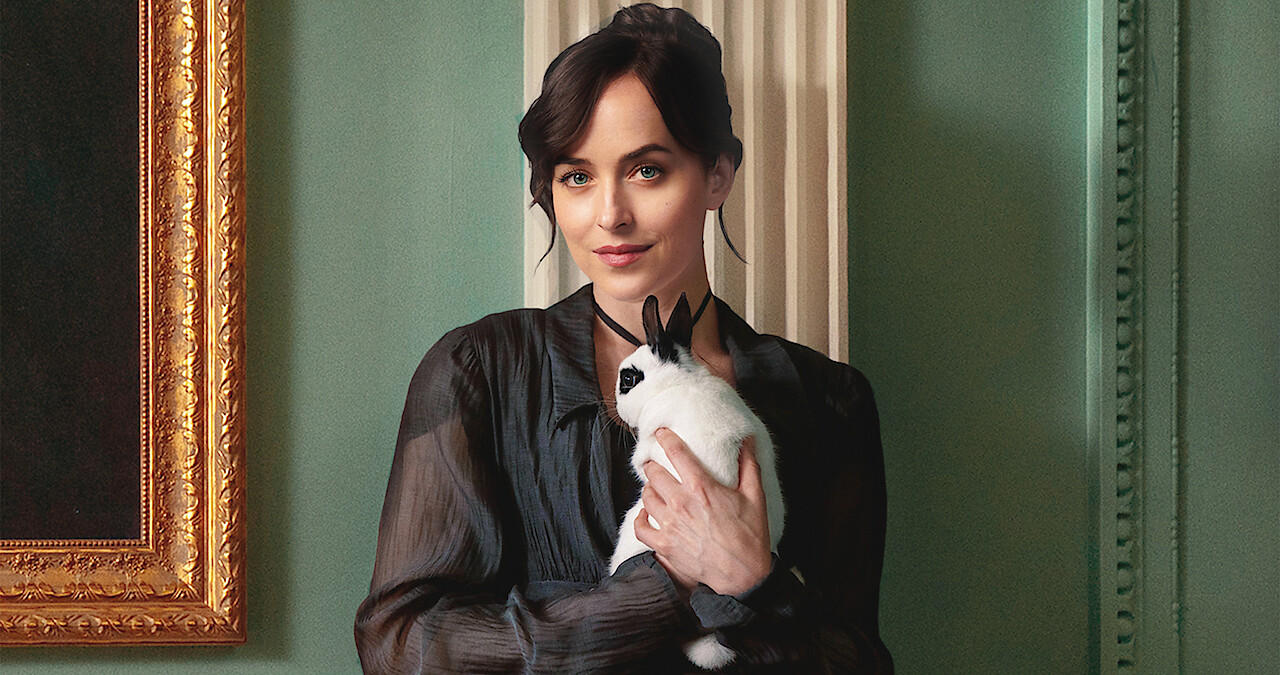
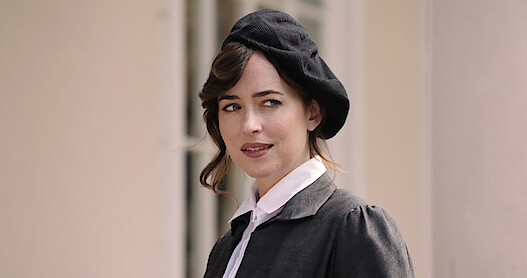
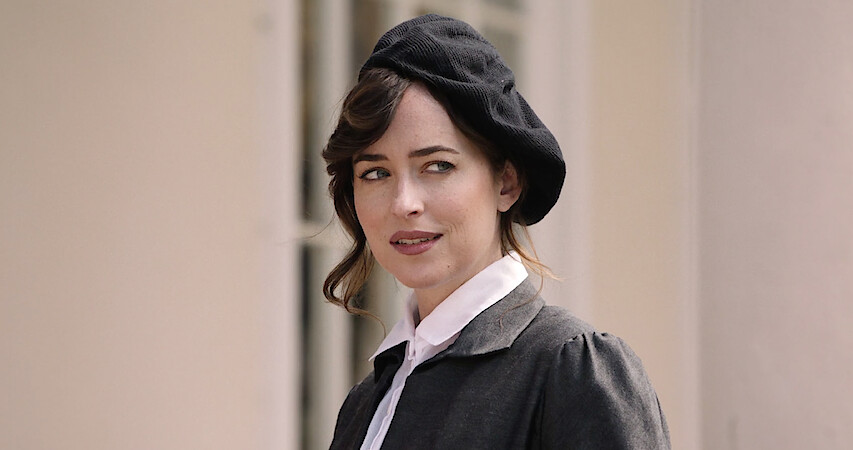
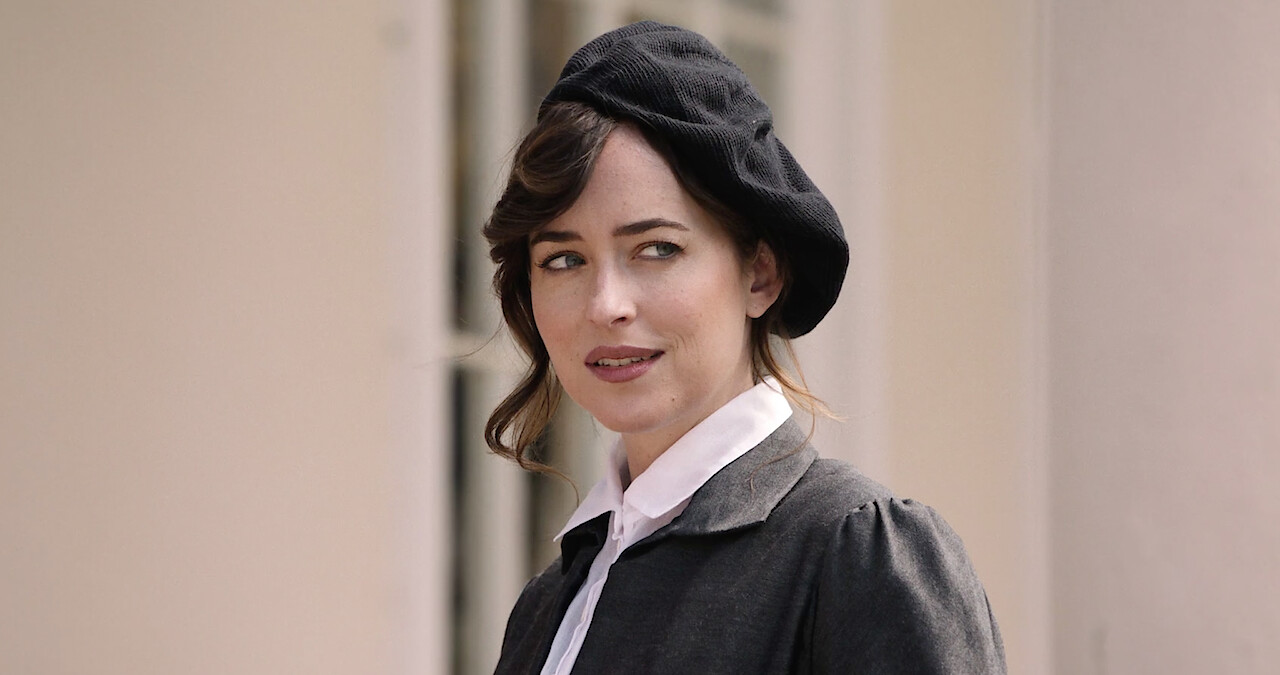
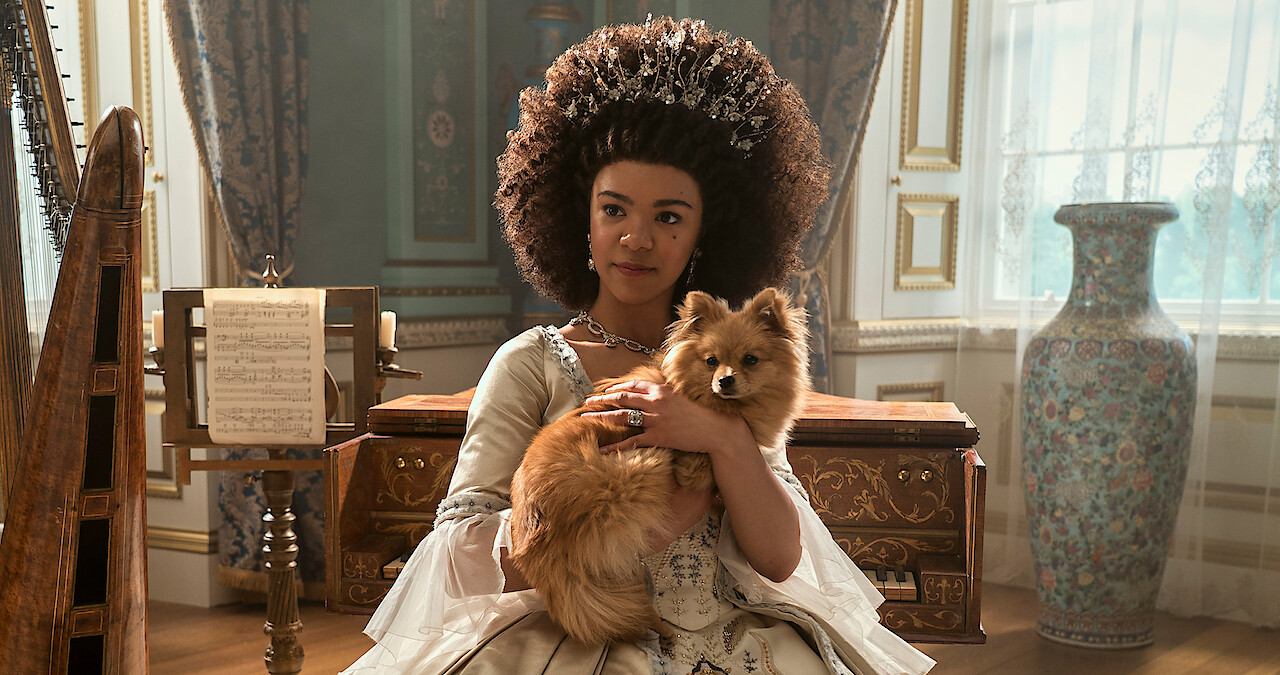
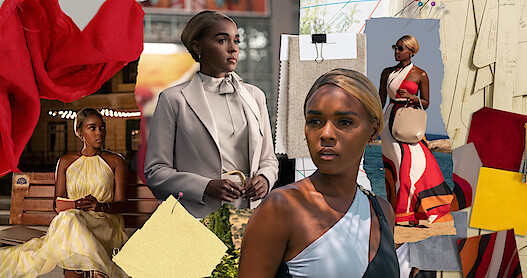
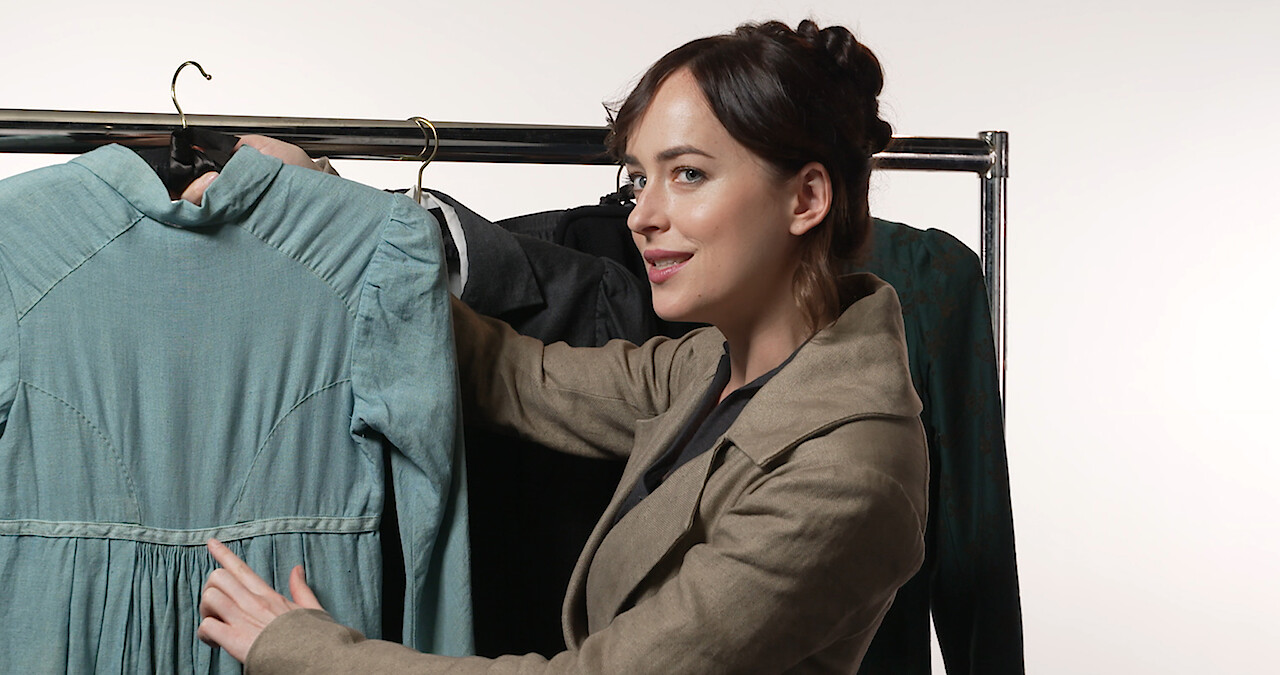
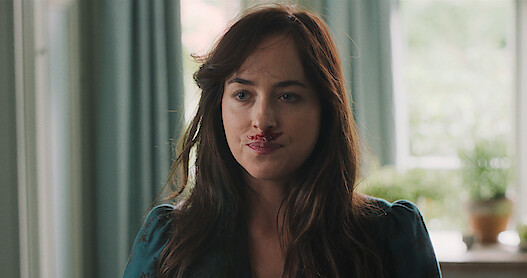
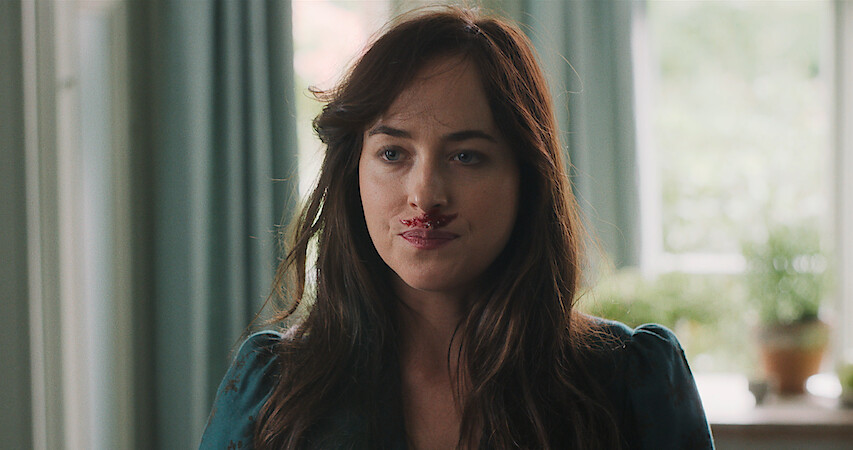
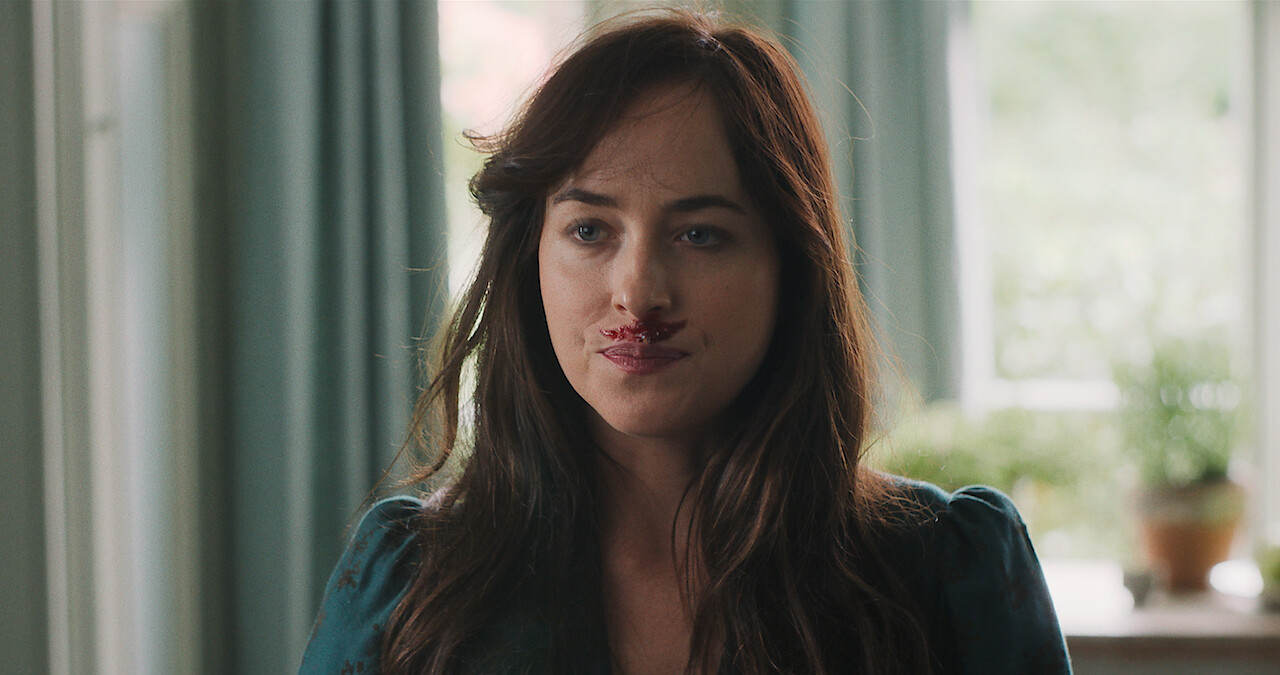
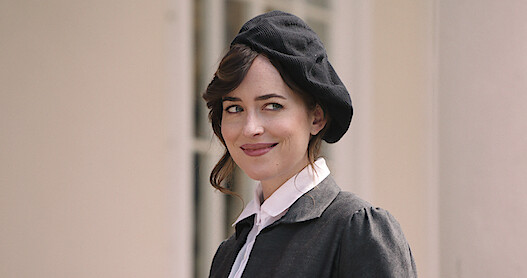
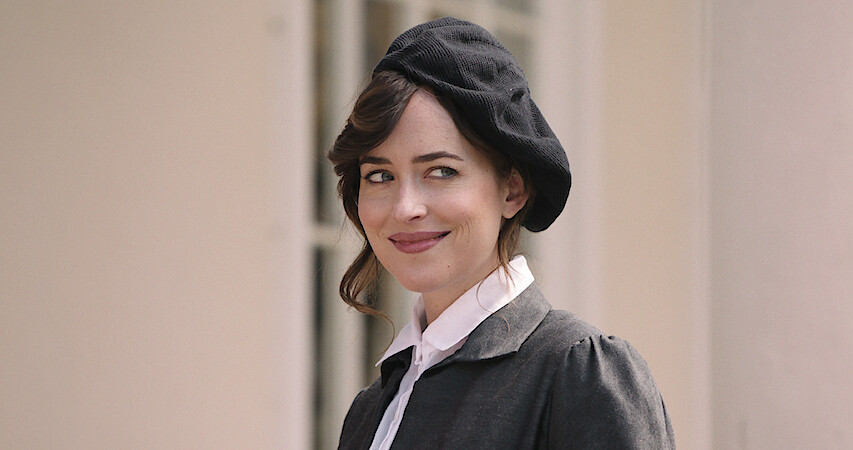
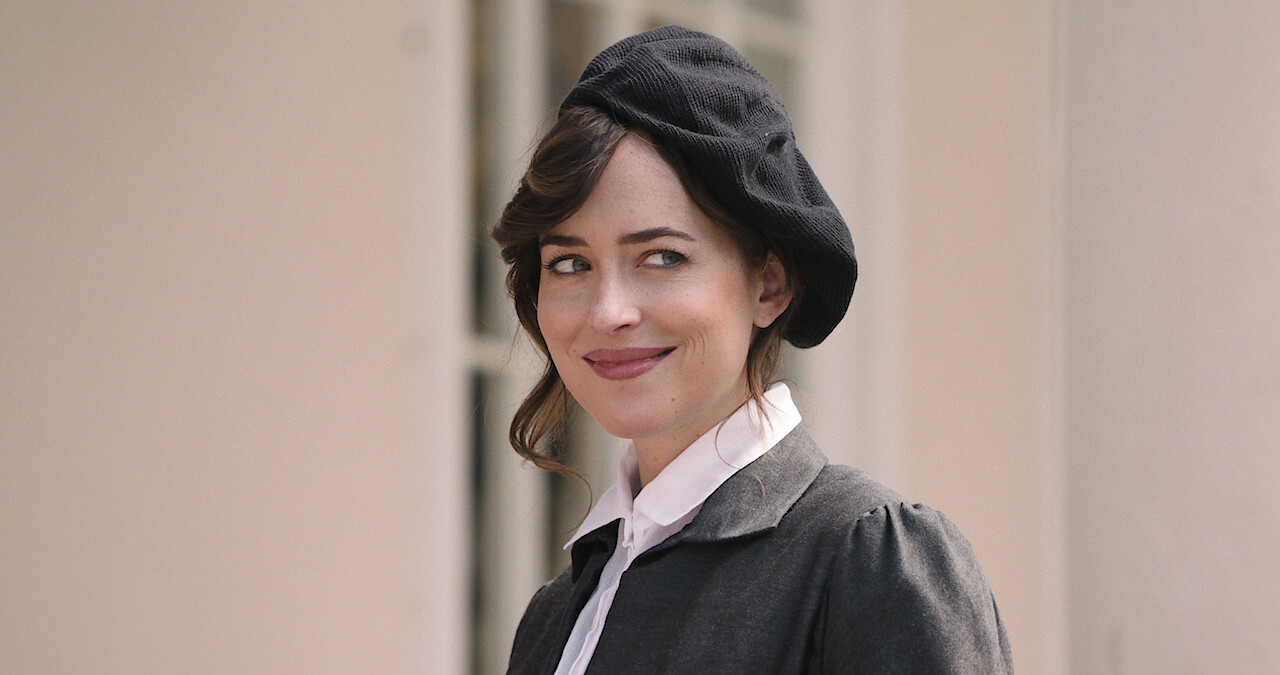
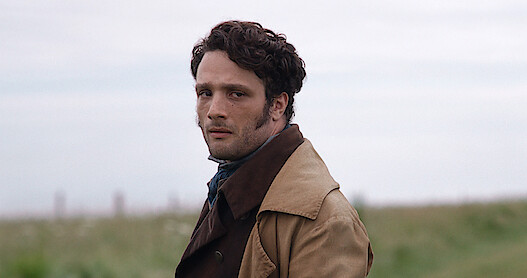
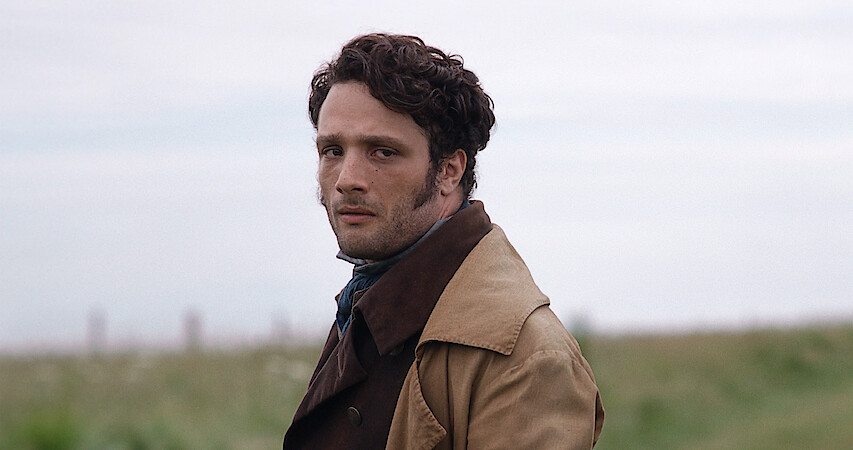
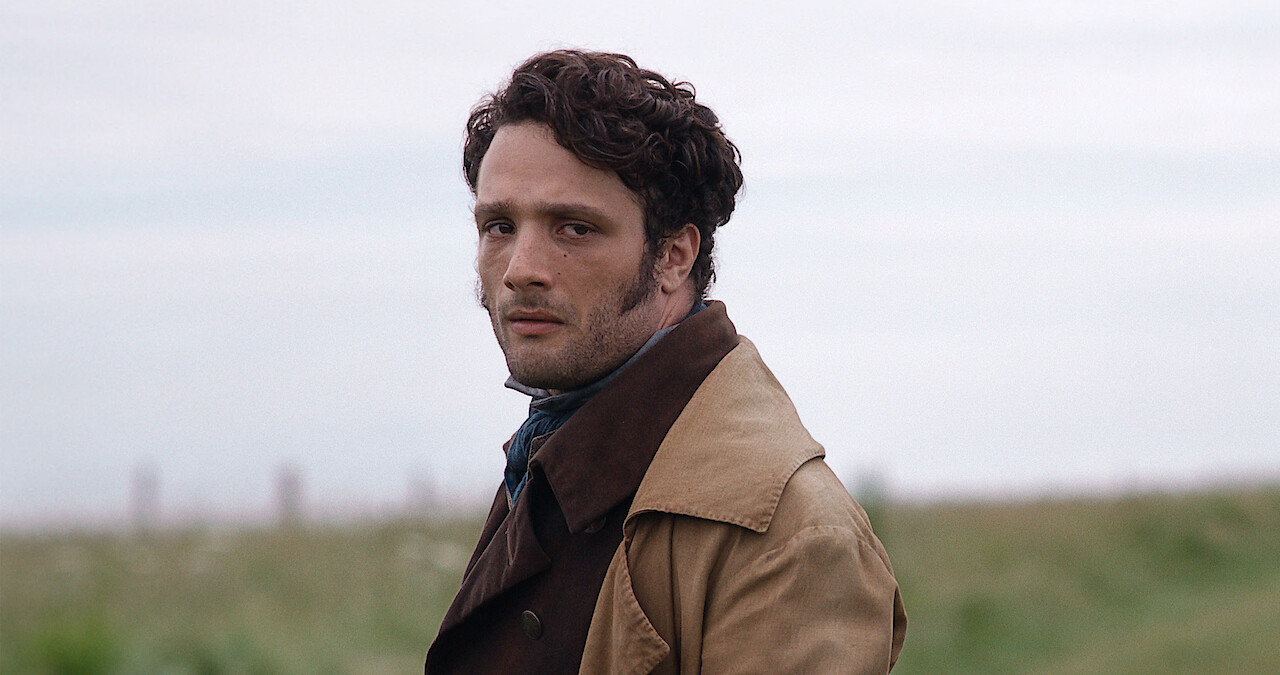
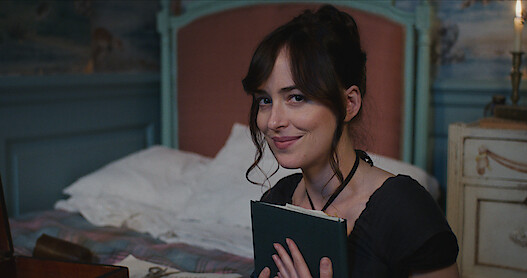
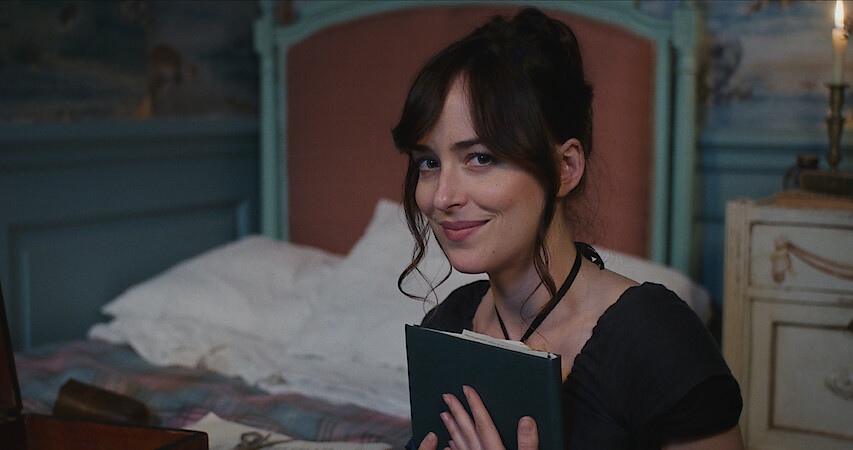
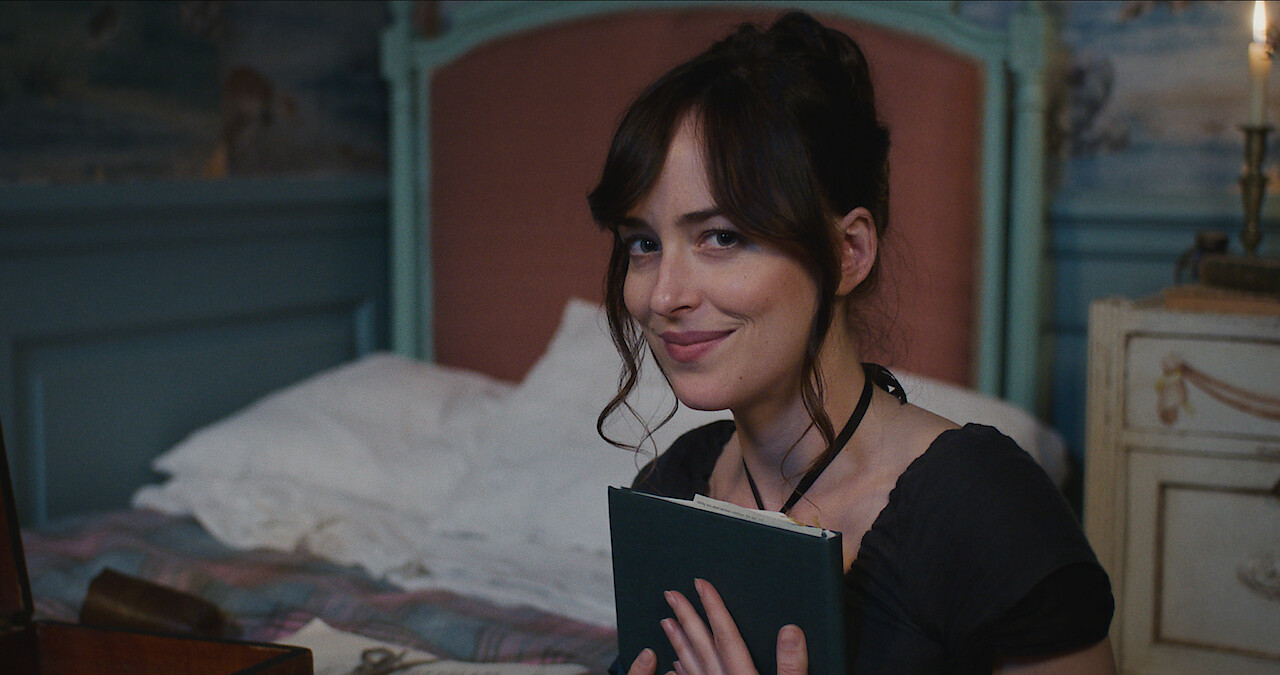
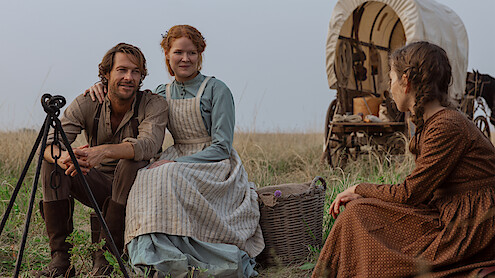
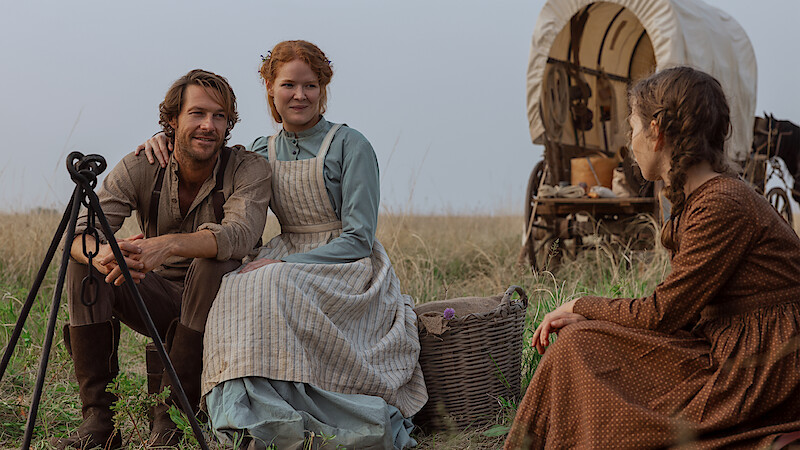
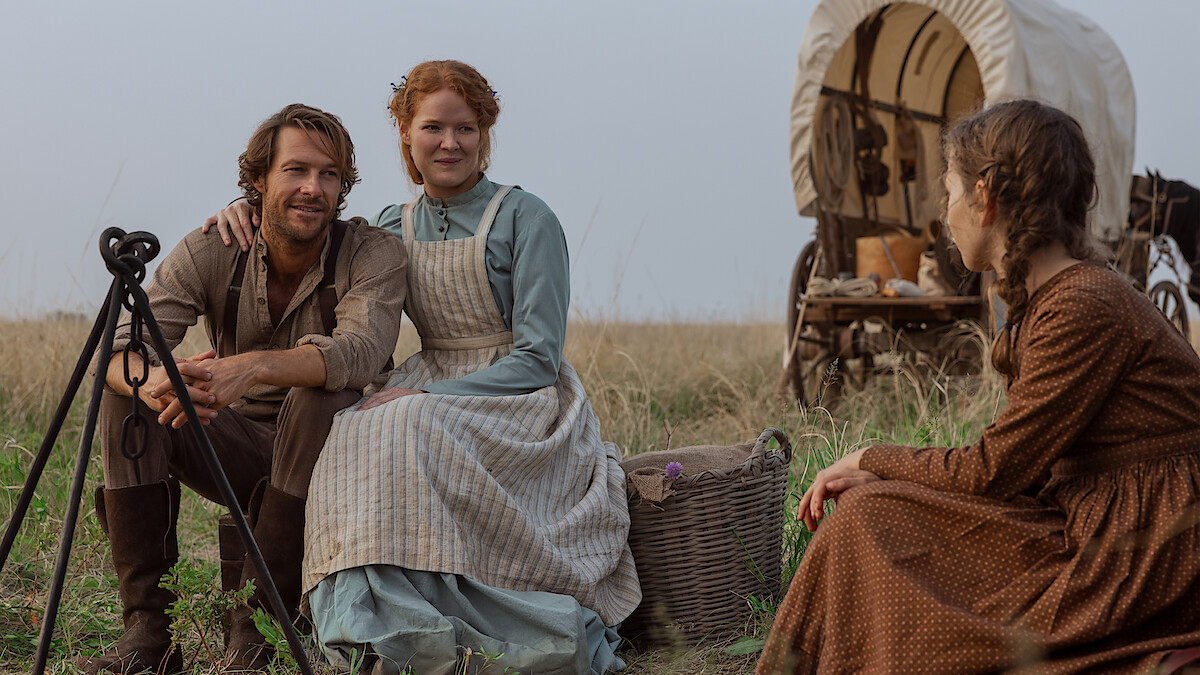
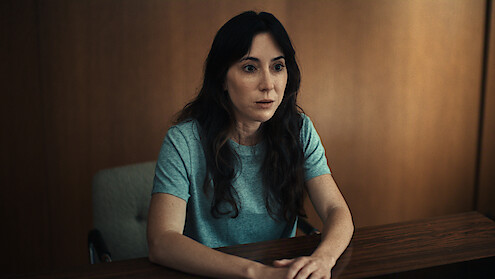
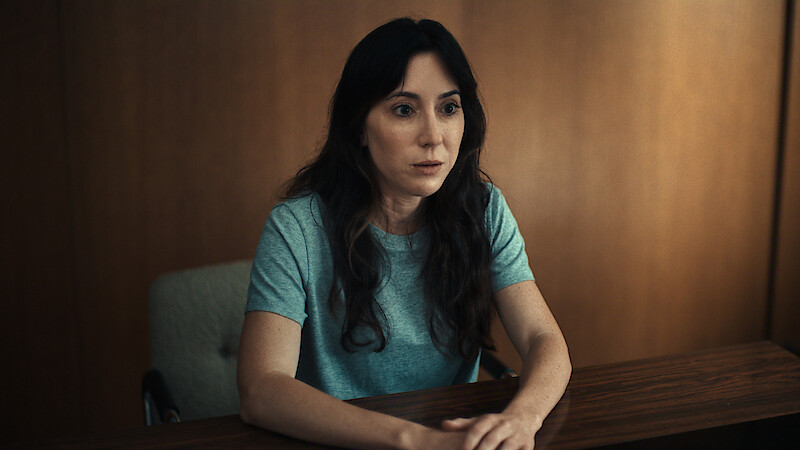
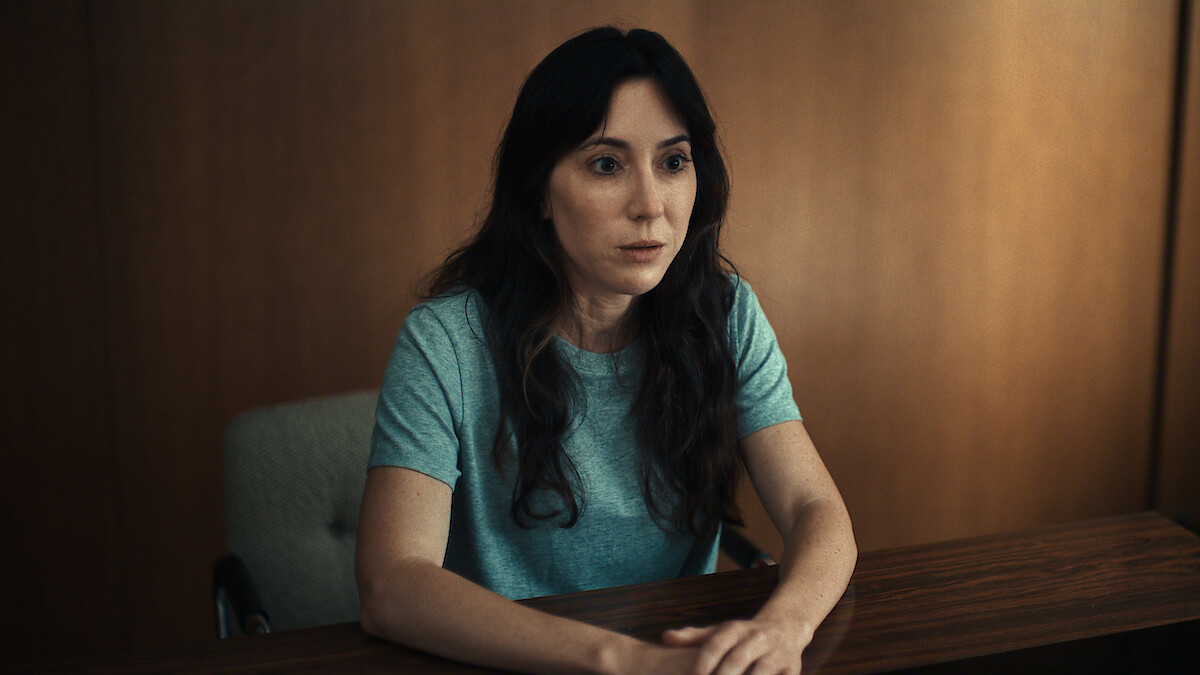
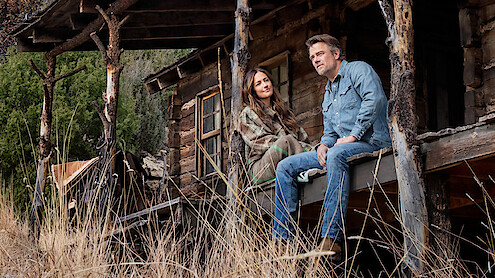
The cold open of Persuasion, based on an 1817 Jane Austen novel of the same name, depicts its lovers, highborn heroine Anne Elliot (Dakota Johnson) and sea captain Fredrick Wentworth (Cosmo Jarvis), canoodling by the water in sumptuous costuming. But it’s the next scene that really gives us insight into Anne. While unraveling her introductory voiceover — she loves wine and can’t help but roll her eyes at her posh family — she flashes a defiant glance at the camera and stares directly into it without fear. One thing about Anne Elliot is clear: Her demeanor is more 1970s rock goddess than timid Regency heroine.
Persuasion’s costume designer Marianne Agertoft says that aesthetic was all part of her plan. “I have an image of Patti Smith holding this black blazer over her shoulder, and she's got this great white shirt on with a little black tie as well,” Agertoft rhapsodizes, referencing Smith’s 1975 Horses album cover. “The way she holds herself — it just says it all for me.” This photo is in the metaphorical DNA of Anne’s closet, making it clear that she isn’t just a regular Regency fashion girl — she’s a cool one.”
There are times in the film when Anne is “in a world of memories, regrets and little action,” as she pines for her long-lost romance with a newly successful Wentworth, according to Agertoft. There are other moments when Anne is overcome by the feelings of “freedom and love.” In any case, her clothes tell a story — as do the wardrobes of everyone around her, from complicated loved ones to dashing love interests. Agertoft is ready to tell Tudum that stylish tale.
#Mood(board)
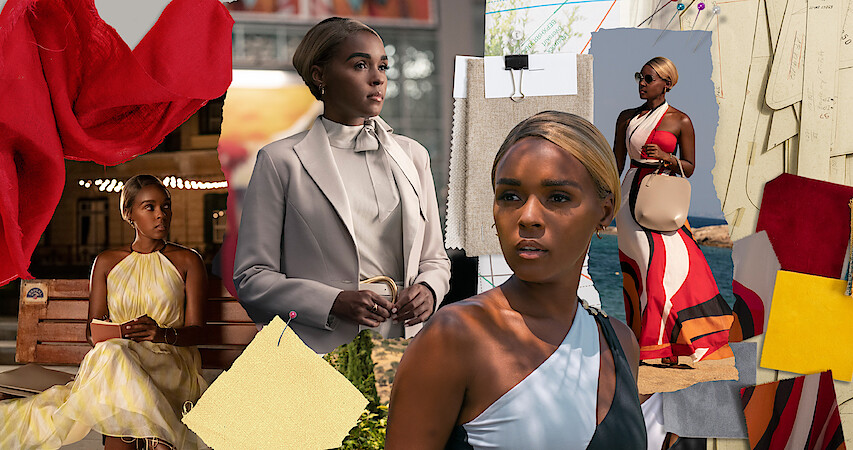
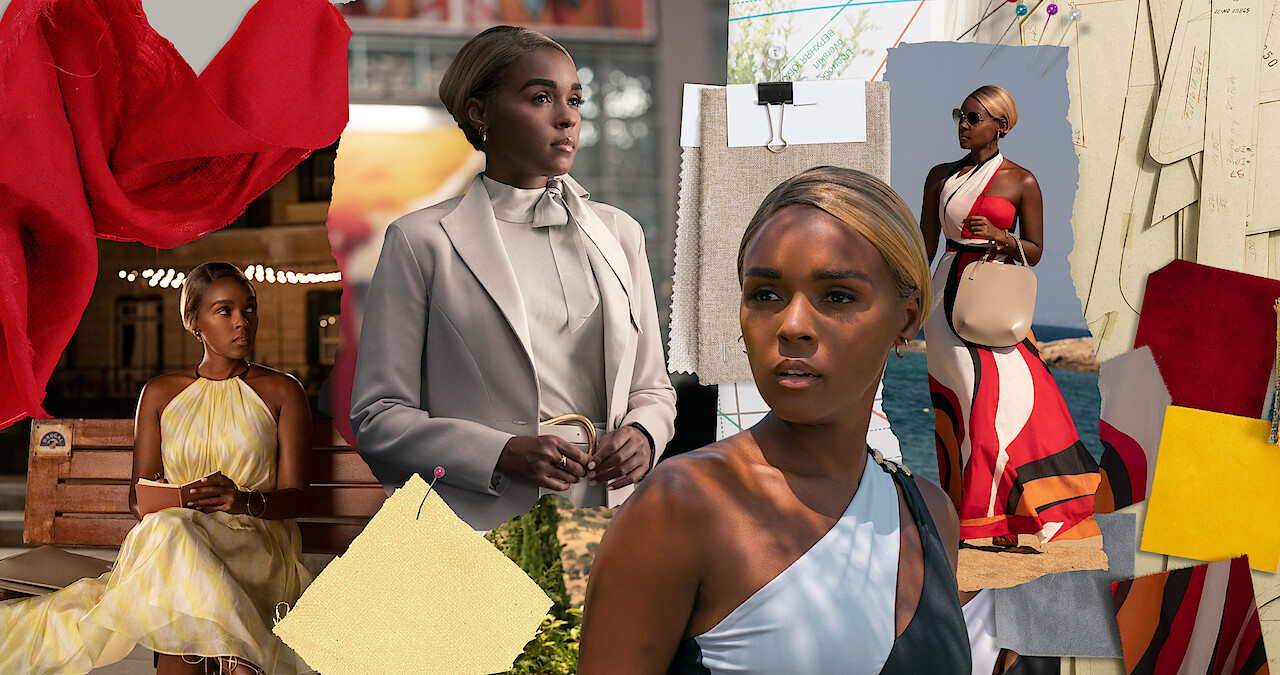
The first step in Agertoft’s Persuasion journey was a mood board. “What I tried to do was go more timeless and not go in with what's in fashion now,” Agertoft tells Tudum. To accomplish that aim, Agertoft put Smith, Debbie Harry and Audrey Hepburn as Holly Golightly in Breakfast at Tiffany’s on her boards. “Anne is quite a complex character,” Agertoft says. “She carries our perception of a little bit of each of those inspiring characters.”
But these “more contemporary heroines” weren’t taken so literally. Instead, for Agertoft it was “the attitude and ease of these sort of women” that resonated with her during production. “It's very much how they wear something, rather than exactly what they wear,” she says. Dakota Johnson was “very much on board.”
Playing with period
As viewers could tell from the moment the Persuasion trailer arrived, the historical romance offers a “very modern feel,” as Agertoft says. “We wanted to strike a visual balance with what's an identifiable feel and look of the period, without having to be overly careful with the historical costume detail and etiquette,” she explains. That meant “loosened” period accuracy and “artistic freedom” where it felt right. “For instance, we were always going to use the bonnets and hats in some way, but not strictly as period etiquette would have dictated,” Agertoft says. “We are selective about who wears what, and that communicates a little bit to the audience about who that character is.”
All about Anne
Throughout Persuasion, it’s clear Anne is out of step with those around her. Agertoft tried to get that point across through her clothing. Take, for example, the scene early in the film where Anne, slumped on a bedroom wall and guzzling wine, accidentally pours gravy on her head while spying on Wentworth at a party next door. “She would’ve never been able to sit that way, had she worn the corset you would’ve worn under a proper dress,” Agertoft points out. But Anne isn’t sporting what she should be wearing. She’s donned men’s front-fastening drawers of the period and wool socks under her housecoat.
“That’s a liberty [we took]. Those pieces did exist, but it’s very, very unlikely that a woman of her social status would’ve worn these,” Agertoft says. Anne then continues to wear that unusually “comfortable” outfit — which also includes a sheer chemise and period-accurate jumps underwear — to family breakfast in the morning. “A woman would not have been so underwear-on-display. But it says something about the relationship with the family and Anne, why they’ve given up on her,” Agertoft says. “If she’d been there all prim and proper, you wouldn’t really understand what their problem is with her. You might not really know why she’s that different.”
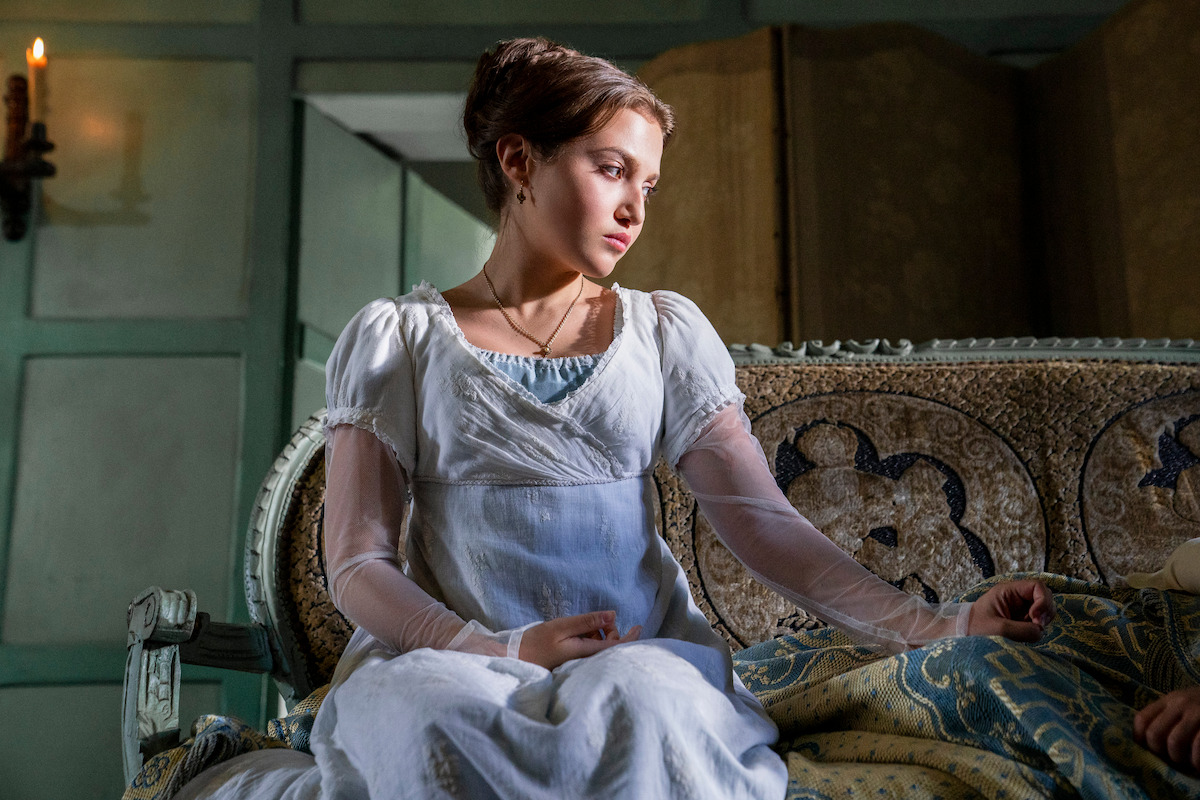
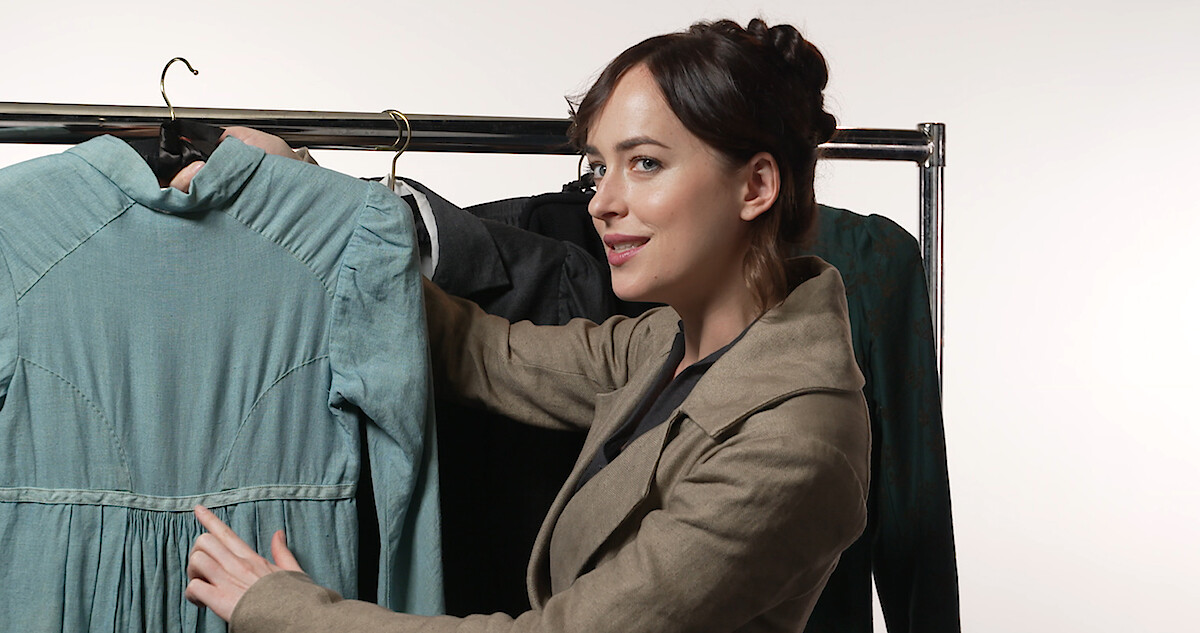
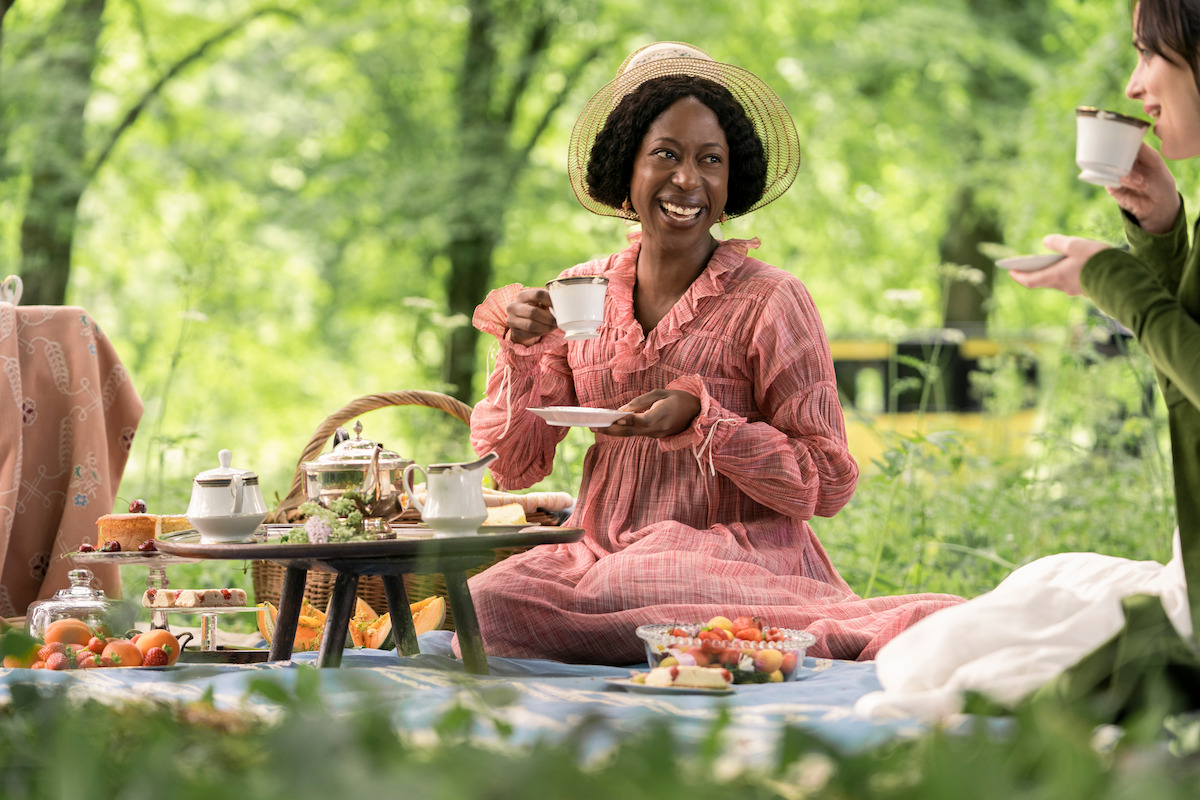
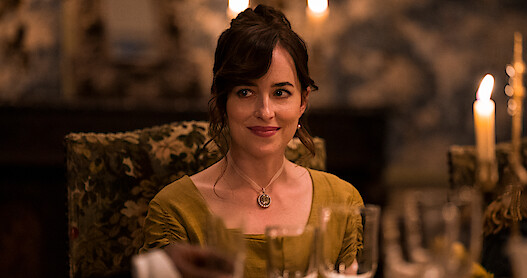
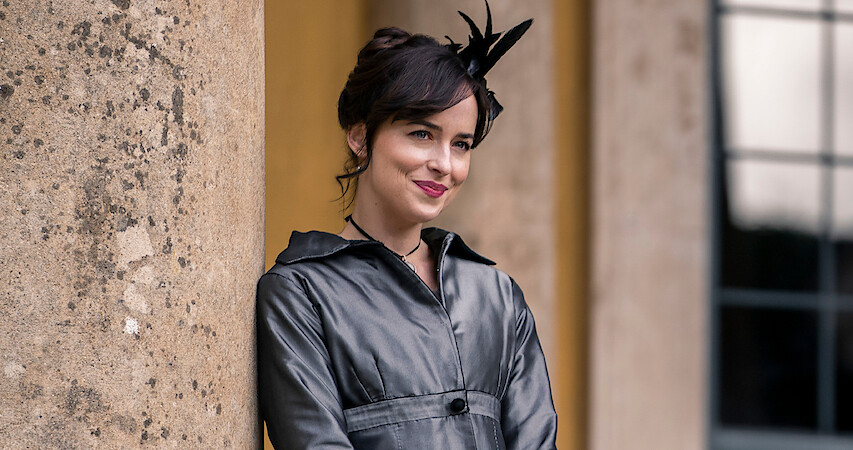
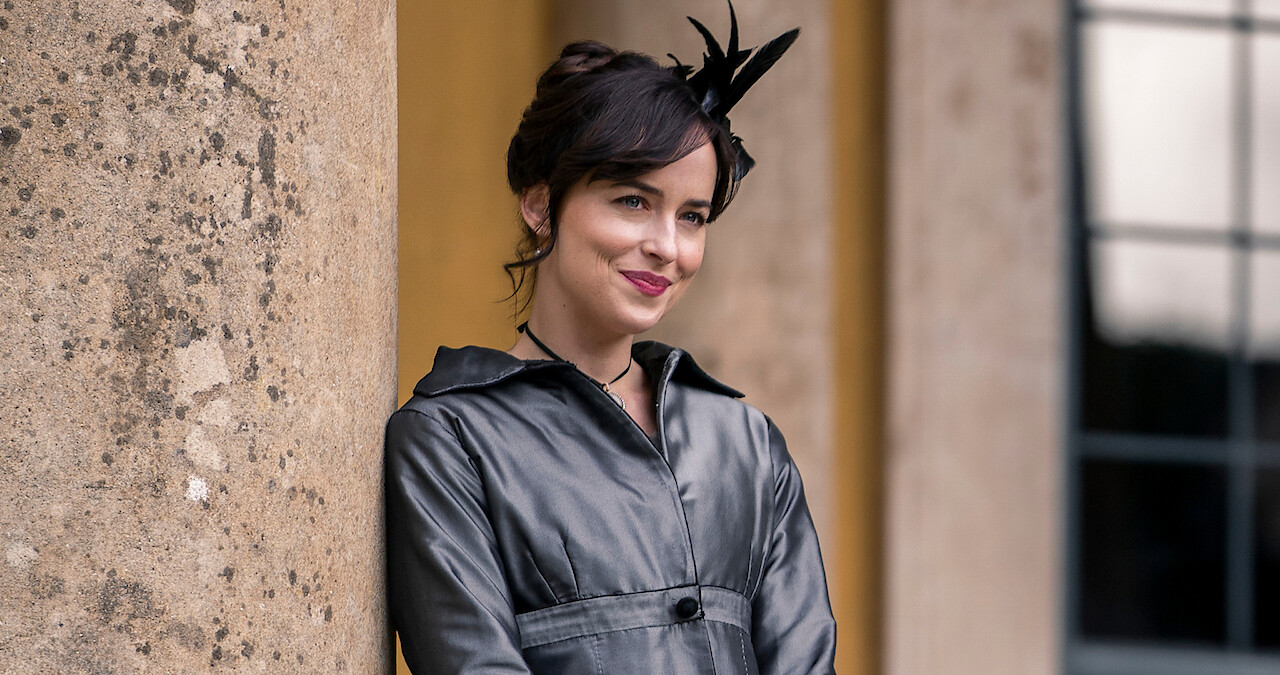
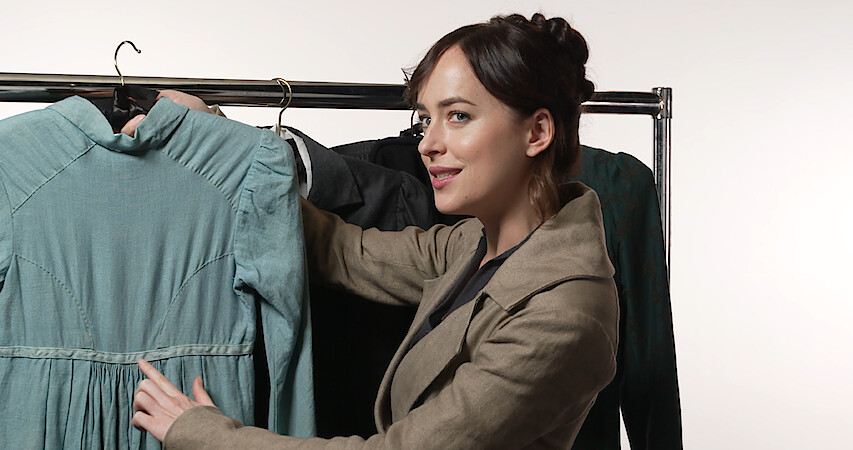
To continue this theme, the costume department decided Anne would have “some favorite garments that she treasures,” which would make up the core of her on-screen wardrobe. This was a more sparse closet “compared to her sisters, who would obviously want as many changes as possible and as much fuss as possible,” Agertoft says. Anne’s siblings, Elizabeth (Yolanda Kettle) and Mary (Mia McKenna-Bruce) love “any opportunity to get dressed up.” Anne’s favorite pieces include the linen coat she wears in Lyme, the charcoal wool coat seen in Bath and the previously mentioned teal housecoat destined to be doused in gravy.
“The lines were kept simple with minimal detail, ever so slightly more casual, just enough to make sure that Anne would stand out from her family and peers,” Agertoft says. “Yet she would blend into the relaxed and loving atmosphere of the Musgrove family.”
The Lady Russell connection
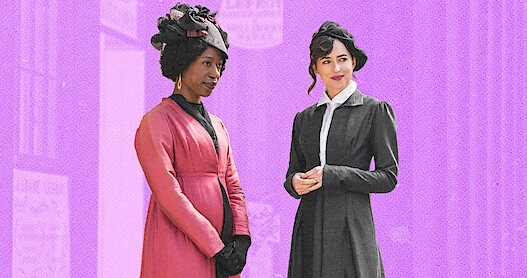
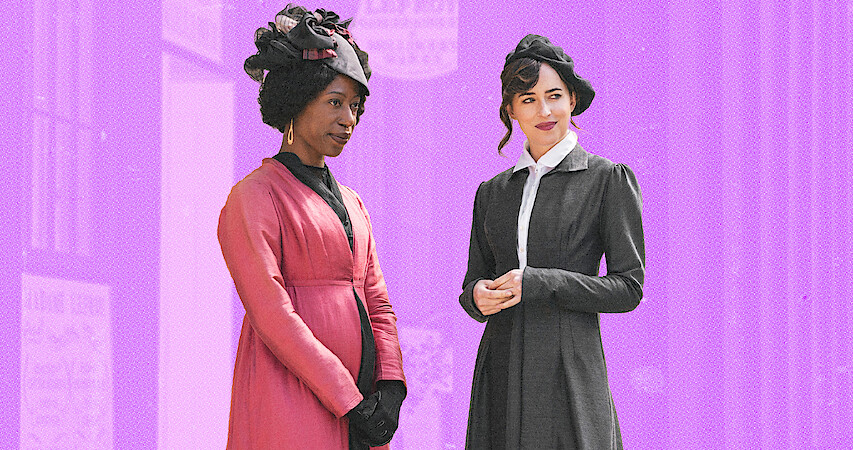
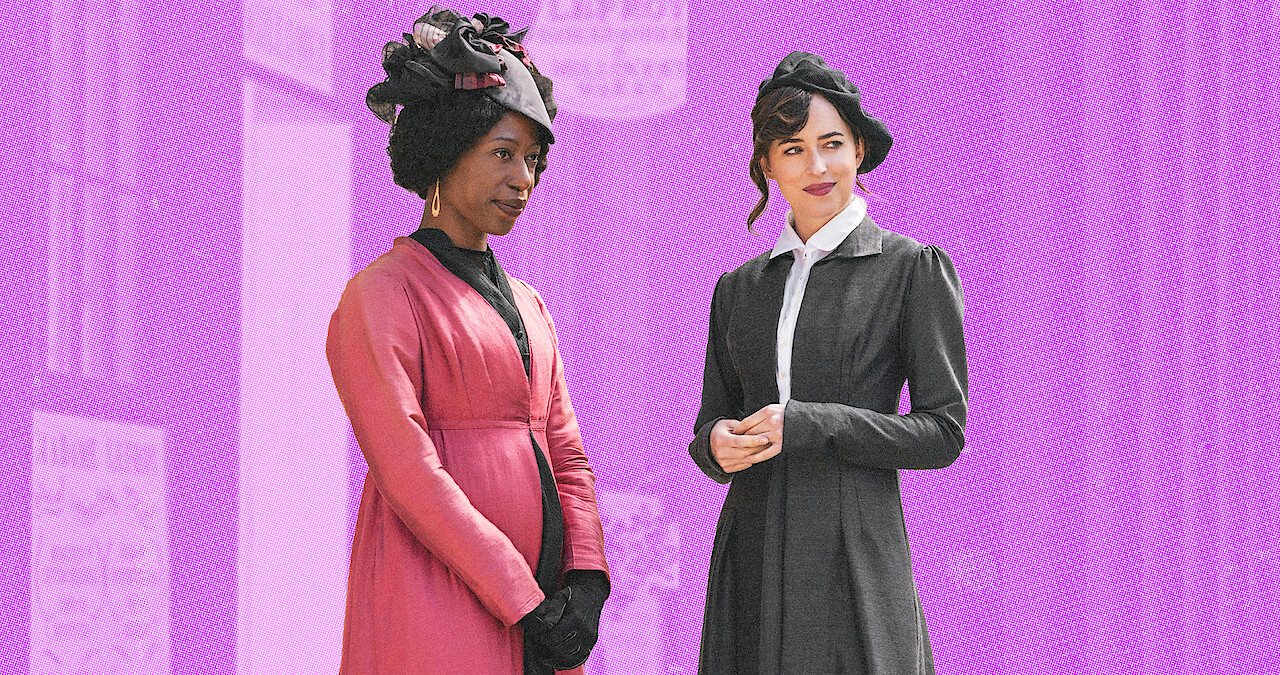
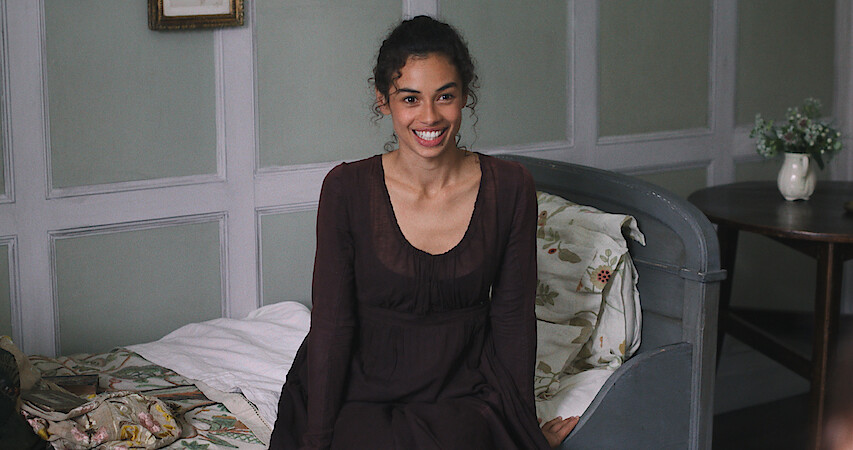
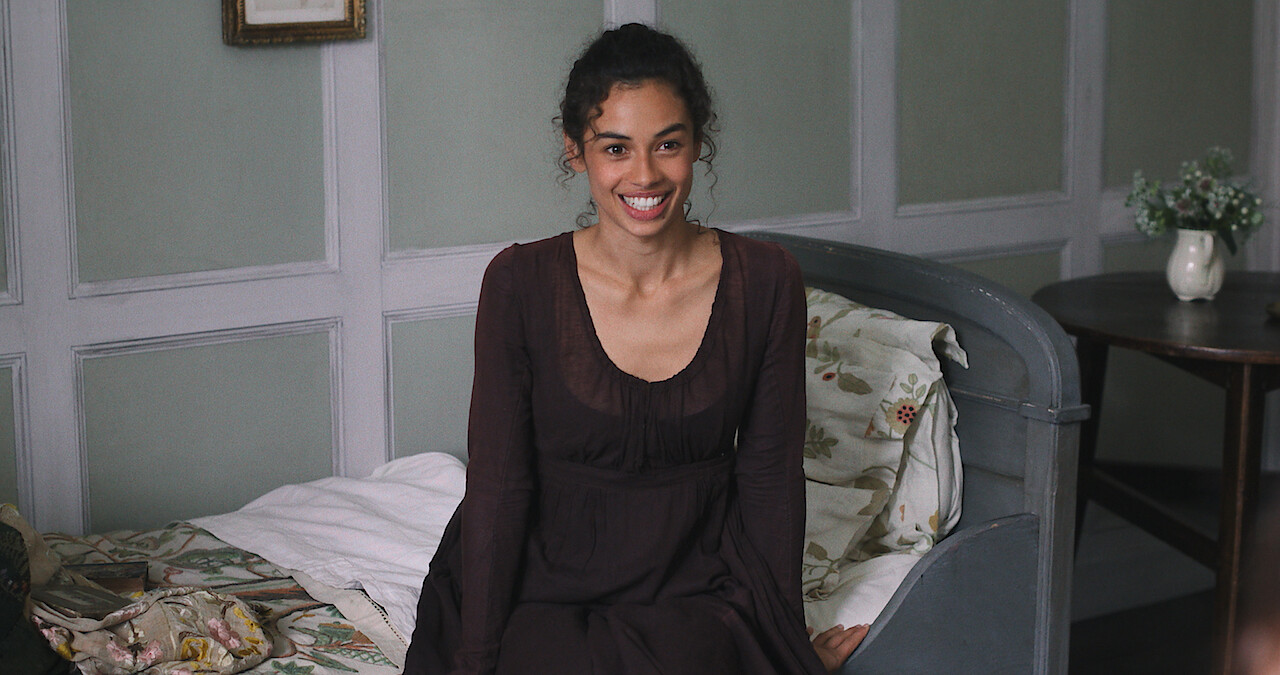
Although the “fabulous” Lady Russell (Nikki Amuka-Bird) helped persuade Anne to break up with Wentworth, there’s still a deep connection between the women — and this can be seen in their style. “There are deliberate similarities in the cut and in the individuality in Anne and Lady Russell’s wardrobe,” Agertoft says, suggesting Anne saw Lady Russell as a fashion “idol.” Like Anne, Lady Russell’s hero garments are lowered toward the waist.
“It feels slightly more timeless and deliberately sets them apart from the more traditional characters like Elizabeth and Mary,” she adds.
The fashion duel for Anne’s heart
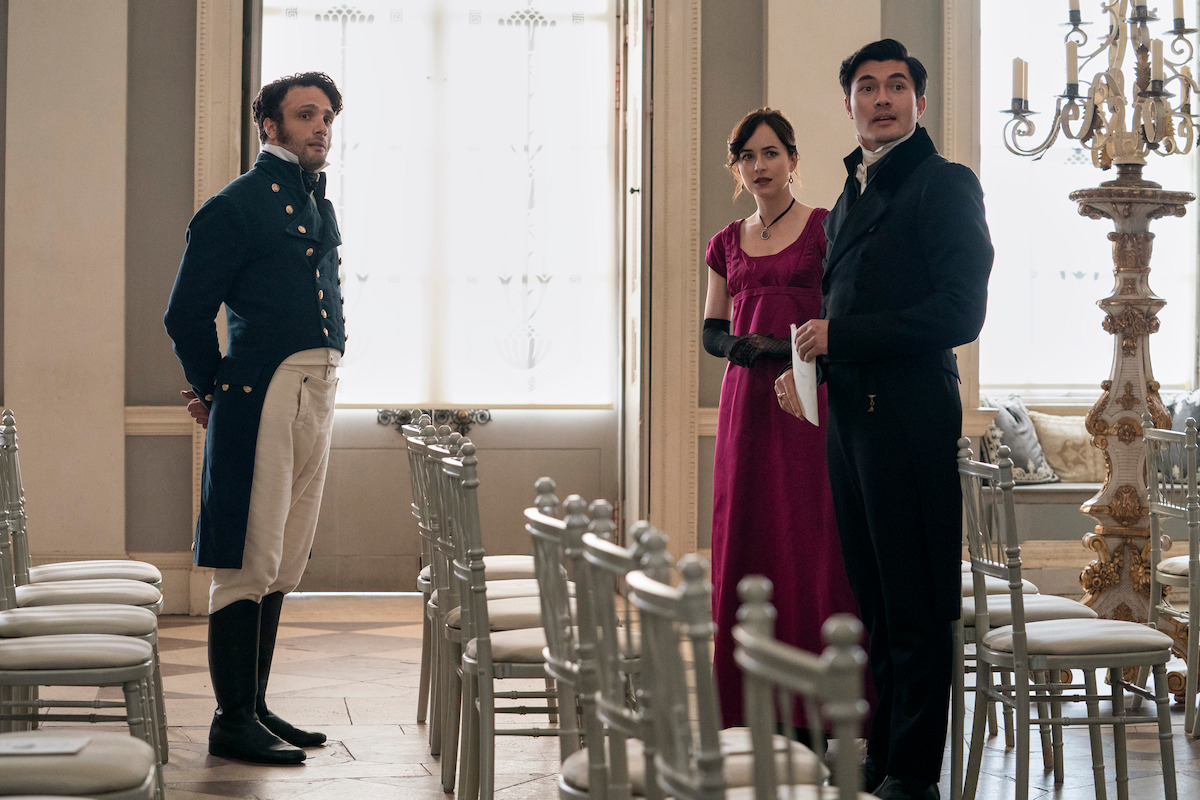
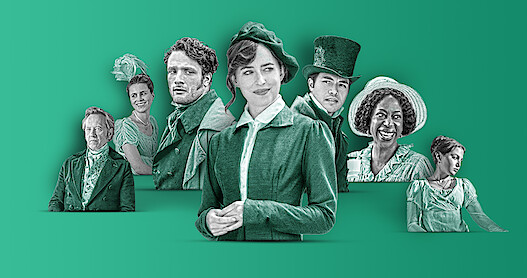
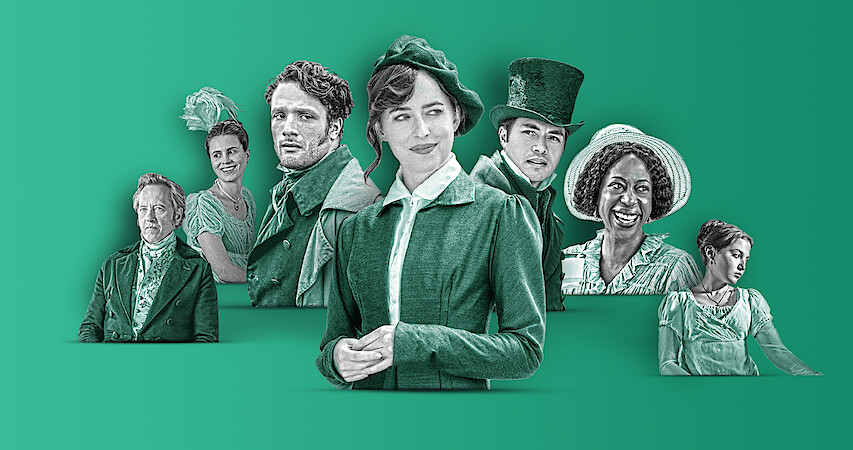
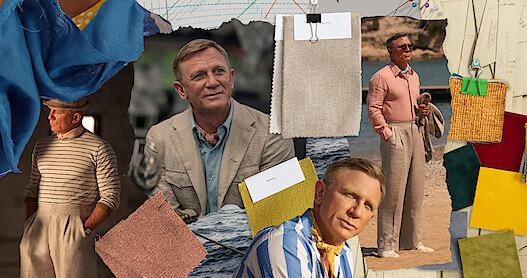
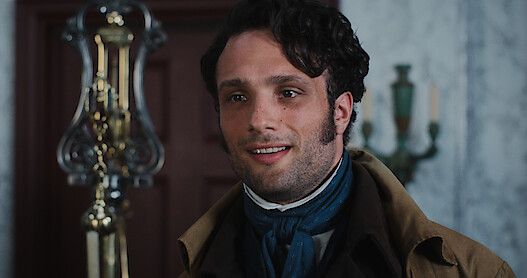
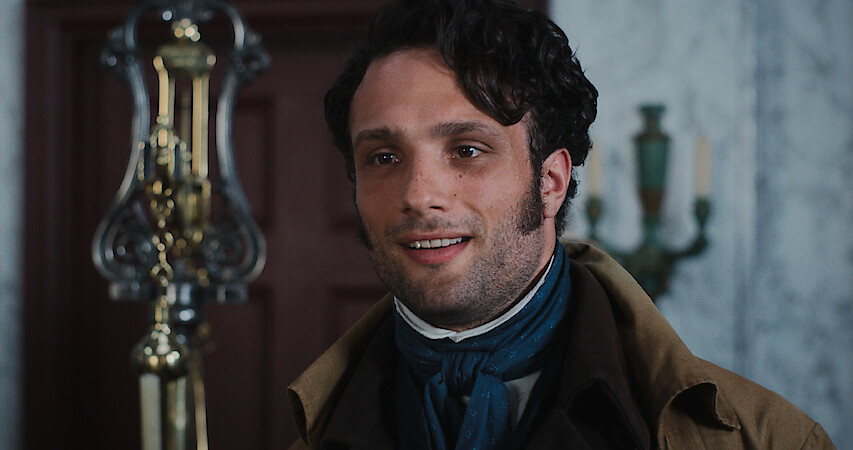
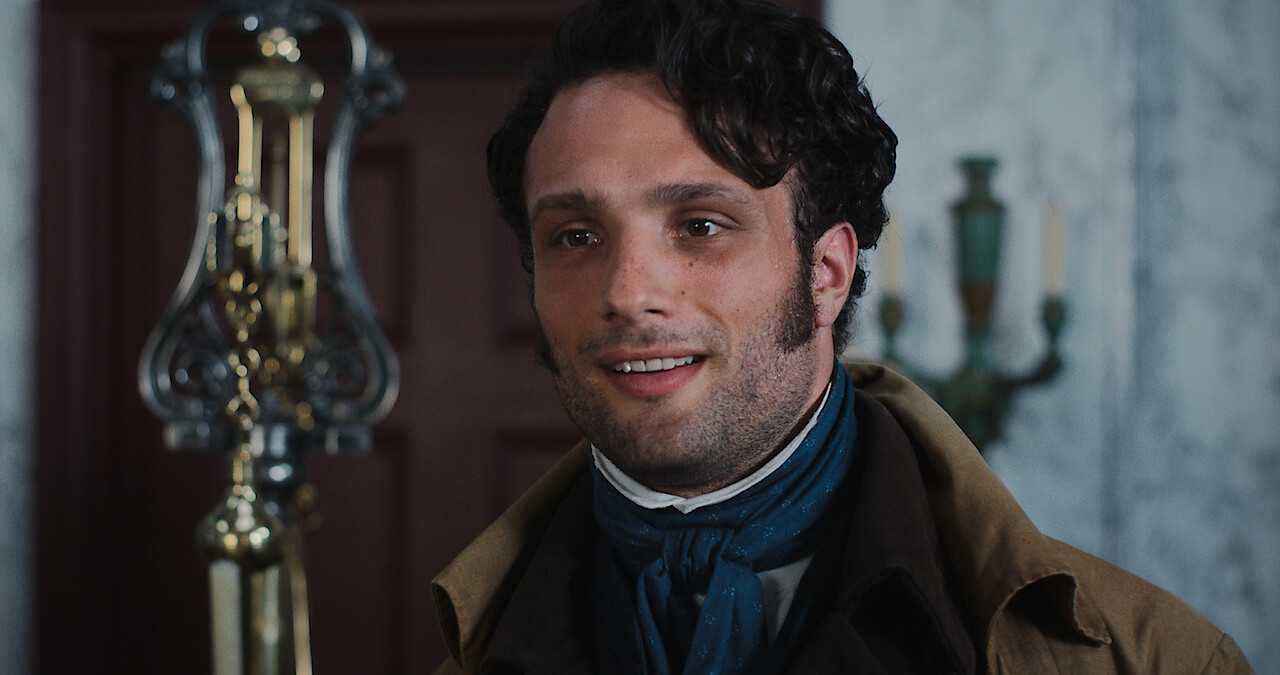
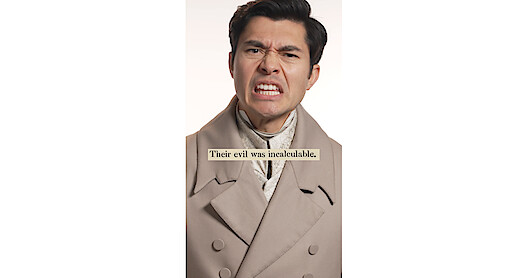
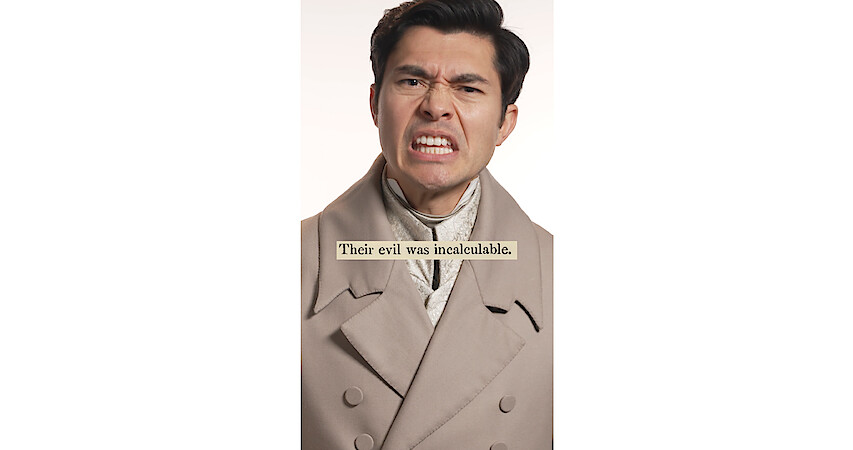
At the heart of Persuasion is a love triangle between Wentworth, Anne and Mr. Elliot (Henry Golding). The tension between Anne and her suitors can be seen in their costumes. Wentworth, like Anne, has a “minimal by choice” closet that allows him to “fit in” without making “too many statements.” He wears an undress uniform of the time versus the much more posh dress uniform of a naval officer. Mr. Elliot, on the other hand, prefers a “super suave, well-fitted and very elegant” style, making him a “vision” in the wedding scene. Agertoft says Golding’s performance gives the clothes a “sort of a swagger” and “brilliant confidence.”
The tension between these men ignites through fashion in their very first scene together, when Elliot passes Anne and her friends during their cliff walk in Lyme. Agertoft purposefully dressed both Wentworth and Elliot in duster coats — “I love duster coats!” she exclaims — but with very different aesthetics. “I had this Ennio Morricone tune at the back of my mind from The Good, the Bad and the Ugly when I decided to put both of them in those coats,” Agertoft reveals. Wentworth is in this “really knackered, old, weatherworn ochre-brown coat that’s really had better days,” while Elliot wears a black duster with a “bit” of sheen and a nod to Americana. “It’s got a bit of an attitude to it. It’s not too practical,” she says.
But Anne loves practical — just ask her many timeless empire waistcoats. And Wentworth is nothing if not sartorially pragmatic with his “comfortable” civilian clothing. “That’s very much where I’d hoped that there would be a bit of resonance between Anne and Wentworth, that they have that in common,” Agertoft says. It seems the couple that shops together stays together (after eight years apart).