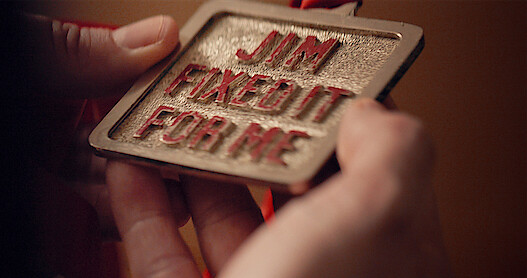
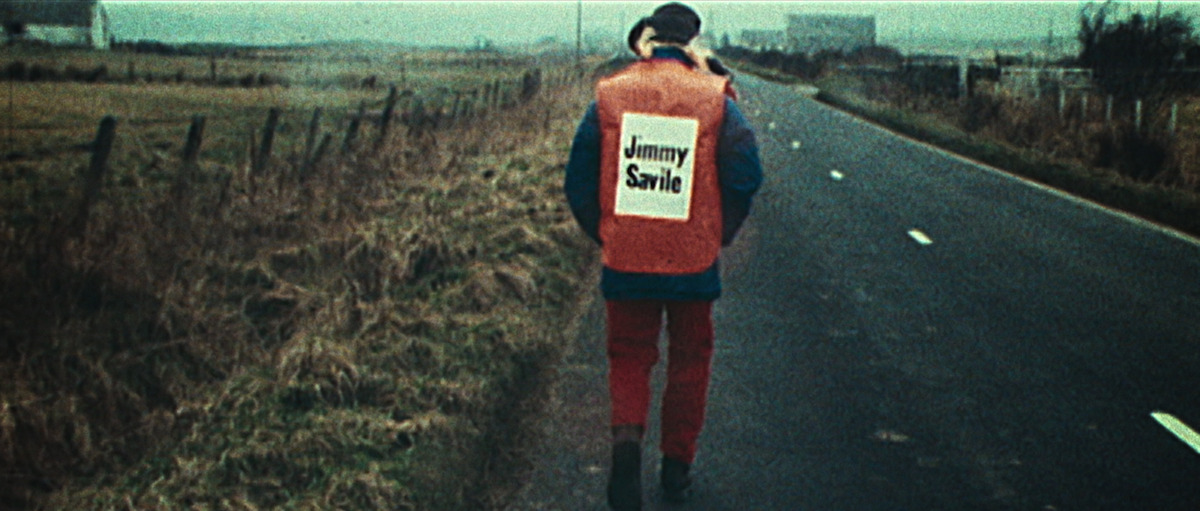
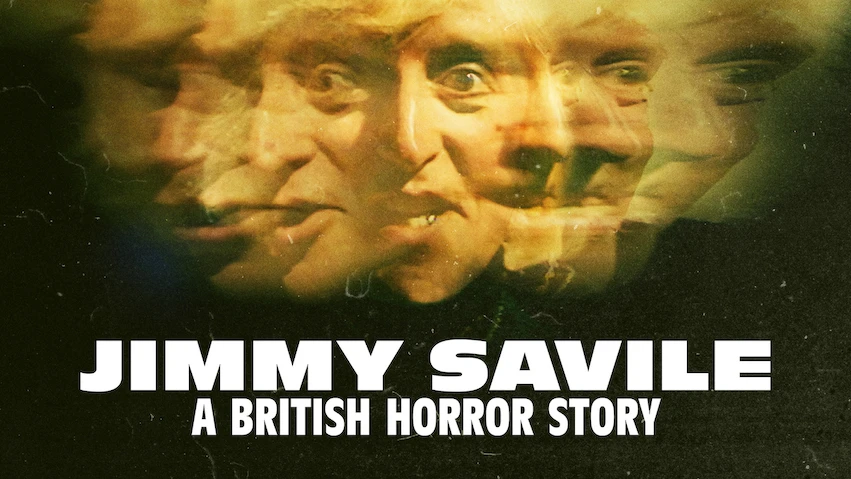
When 84-year-old Sir James “Jimmy” Savile died in 2011, a huge outpouring of grief hit the UK: The front pages of newspapers were covered with glowing tributes to the British radio and television personality, praising his extensive charitable work; the masses commemorated him, detailing all the dreams he turned into reality for children on his long-running TV series Jim’ll Fix It. His funeral was even broadcast live on the BBC. But beneath the carefully cultivated benevolent persona laid a monster — long hidden and ignored — who was responsible for decades of sexual abuse. And then a wave of devastation hit, when hoards of people were left with the realization that this monster could have been stopped while he was alive.
In the years since Savile was publicly repudiated for sexual abuse, there’s been an immense sense of responsibility to bring justice to the survivors he harmed — and, at the same time, a need to bring this harrowing story to a global audience. Many have read about Jimmy Savile — several of his victims finally spoke out against him — but to this point, he’s remained a mystery to the greater public outside the UK. English director Rowan Deacon sought to change that with her comprehensive new two-part documentary, Jimmy Savile: A British Horror Story. Over the course of three hours, Deacon examines — and reexamines — how the Leeds-born star was able to fool the nation for so long. She also explores the high-profile connections that made Savile so untouchable. Tudum caught up with Deacon to discuss why this grim piece of Britain’s cultural past should not be buried and why she’s decided to tell this story in a whole new way, for a whole new audience.
As an English director, I can imagine that, much like the rest of us, you had a connection with Jimmy Savile that predated the criminal we now know him to be. What did he mean to you while growing up?
I grew up writing to be on Jim’ll Fix It. As a child, my perception was, like most people in Britain, that he was magic. The friendly, slightly weird uncle who could grant wishes. I also grew up in Leeds, so I sort of had — later in life — a sense of the weird rumors that swirled around him. I wrote to him, my brother wrote to him. I mean, everyone did — they were inundated with letters.
Generations of children and parents seemed to have this inbuilt trust for him. What was it about him that drew so many people in?
The head of entertainment at the BBC said, “There’s something ecclesiastical about that man.” I think that his weirdness was seen as almost mystical, and so he was seen to be the perfect choice [as presenter], when of course we know in hindsight it was the most hideous choice. He’d been around before even most of our parents had been born. Like the queen, he was always there. It gave him sort of a weird, legendary super status in the public’s eye beyond the average famous person.
And that perception of him was something Savile carefully managed, right? The documentary features startling footage of him explaining how he cultivated what he referred to as “a smoke screen.” Can you explain how you came across that and why you included it in the film?
Yes, that was an extraordinary find — that he was candid about what he’s doing when he’s doing it. The film is interested in that complex psychological game. I think it changes over time. I don’t think the film is trying to blame one single person, one single department, one single thing for this — other than Jimmy Savile.
The hiding in plain sight changes over time, so in the ’60s and ’70s he’s behaving in a lascivious, jokey, pretty gross way about women. What’s astounding about that footage isn’t so much that he’s doing it, but that no one is blinking an eye. That’s the misogynistic culture we lived in. Then later, in the ’90s, when that behavior has become a bit more unacceptable, his creepiness becomes his own schtick. He’s advertising it. It becomes a double bluff.
Why did you feel it’s important to keep Jimmy Savile’s story alive rather than moving on from it?
That’s a good question. It was not a straightforward decision to make the film. There’s been a temptation in this country to say that we shouldn’t speak of that man again. And whilst I sort of understand that it comes from a need to not glamorize him and not give him oxygen, I also think that it leads to a misunderstanding about how things did happen — about how it all happened. And I think precisely because of that, it’s all the more reason to have a measured, comprehensive study of how it happened.
And how, in your eyes, did it all happen?
I think the answer is more complex than “they knew and they protected him.” I don't think they did know what we now know at all. Certainly we didn't find any evidence from anybody who knew that he was abusing people on the scale that he was. I think they thought he was creepy and that's acceptable in a certain time.
So what was the takeaway from that?
In order to learn lessons for the future, we should be transparent and really explorative with this subject matter. I agree that we shouldn’t be sensationalizing it, but I don’t think the films do. I think the films take a really cool, hard look at it in order to make sense of our past. Because if we don’t make sense of our past and make sense of how things have happened, then we can’t really understand what we want to be now and who we want to be in the future. In many ways, it’s a history lesson.
Now that you are on the other side of making this film, and can see the kind of impact it’s had not just in Britain but worldwide, what do you think are the lessons learned from Savile being exposed, albeit posthumously?
I think that you can’t underestimate the size of the Savile revelations in this country for the way in which they forced Britain, in a really brutal way, to look at [how] it dealt with attitudes toward sexual assault, sexual abuse, the treatment of victims in the legal system, the treatments of victims by the police, by their own families, the testimony of sexual assault allegations that were historic and had been swept under the carpet. It unleashed an outpouring of allegations, not just around Savile but around others, and a new way of understanding the way in which child abuse had been an endemic part of our society, horrifically.
It caused us to reassess the way in which children and victims of sexual assault and abuse had not been heard. It was a massively important moment. The Savile revelations were the harbinger of Me Too in this country. It was the beginning of the change in which we are more keen to hold power to question. We’re not living in a panacea, but I do think it was the beginning of a significant cultural change, the reverberations of which we’re still living through.
Given that, can you share whether or not becoming so close to such a distressing story while making the documentary took a personal toll on you?
I think that the weight of the responsibility to tell it properly did. I make documentaries almost solely about distressing subjects, so I’m fairly used to that part of my work. But I do think with Savile, I do think about the importance and the significance of the story in terms of the learning that it can give this country for the future, and in terms of the number of institutions and individuals and parts of the establishment that were involved in it.
And of course, because of the sheer number of victims who are affected by this still today. I think it was the weight of the responsibility of getting it right, of treading a line between making sure that we brought the story to as wide an audience as possible and told it in a way that was compelling and that a wide audience could learn from.
But at the same time, getting it right, getting it factually, tonally and historically correct, that felt like a huge responsibility and quite overawing. That definitely kept me awake at night.
This interview has been edited and condensed for clarity.
If you or someone you love is struggling with sexual violence, there is help.