Nora Awolowo/Netflix
Interview
How ‘Naija Christmas’ Costume Designer Created Gorgeous Signature Looks
Toyin Ogundeji takes us to church.
By Jamie Beckman
Dec. 23, 2021
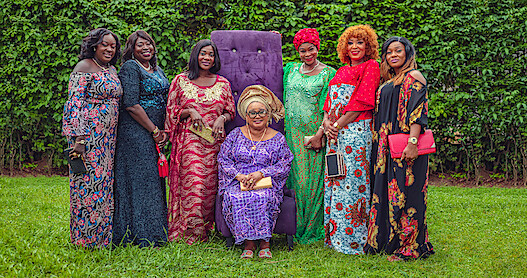
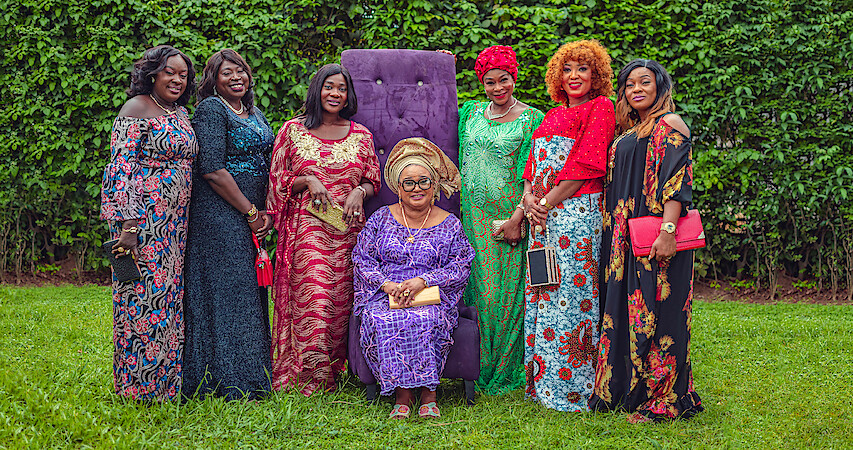
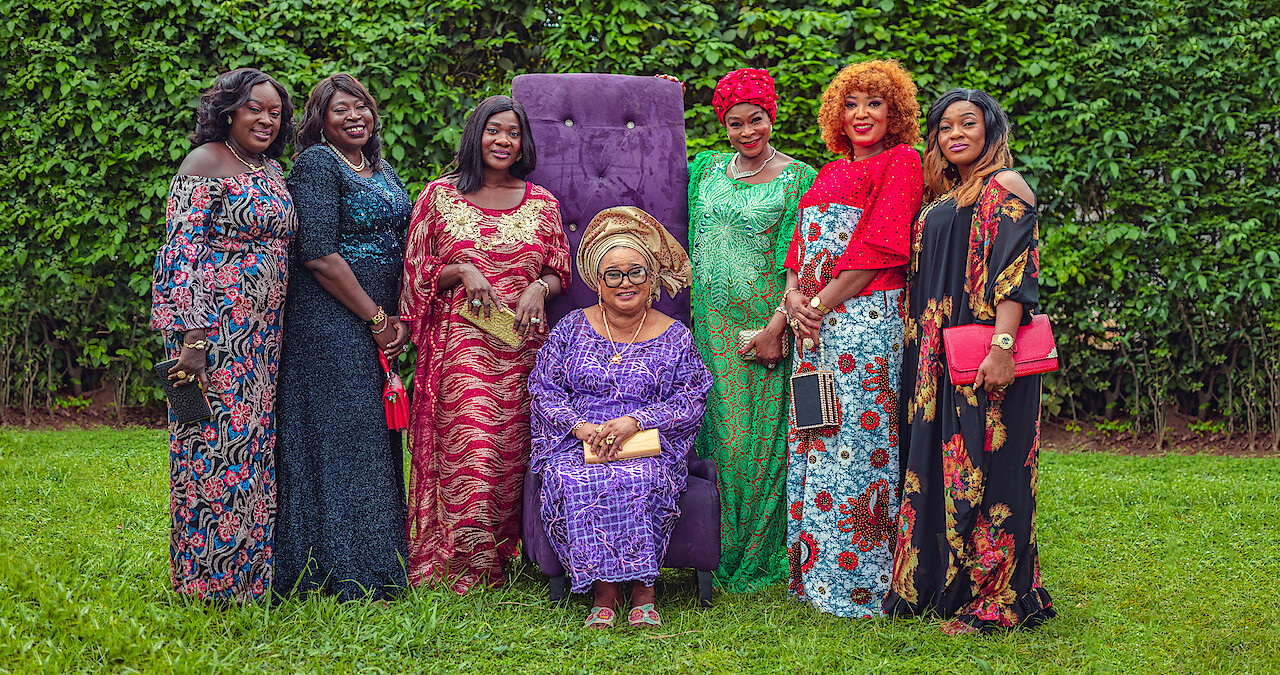
There’s one clique we definitely want to sit with this holiday season: the Ladies of Undiluted Destiny (the LOUDs, for short) in the movie A Naija Christmas. Impeccably dressed in flowing agbadas, chic blouses and wrappers, and colorful turbans and head ties — often crafted from rich fabrics and accented with shimmering stones — this well-heeled group of seven upper-class women in Lagos, Nigeria, rule the roost wherever they go.
You’ll likely find them at church, at charity events they’ve organized and in their own homes, laying down the law... When the group’s matriarch, Mama Agatha Agu (Rachel Oniga, who died after production wrapped), gives her three grown sons a high-stakes task to complete by Christmas, they scramble to make it happen. So how did A Naija Christmas’ costume designer, Toyin Ogundeji, dream up ensembles to match the LOUDs’ vibrant personalities? We asked her for all the details.
She even let us in on a little secret: The LOUDs have only one queen bee, and we know who she is.
We have to know about the types of fabrics you used for these women. Each look was so beautiful.
I [predominantly] used what we call Ankara. It has beautiful different motifs on it. That’s the type they wore for the Christmas gala night. Then [for] the other ones, I used floral silk. I used velvet to mix [with] some other plain materials to make them look colorful. Some of the other costumes I built for them were made from chiffon.
Then I had to add accessories like stones to make them look elegant and classy, for their kind of women. In Nigeria, you have that group of women in the church. They’re usually classy, elegant, and from the story, we see [they’re] generally career women. The ones that aren’t career women [are usually] businesswomen. So most of the time they’re rich people. To show class, I had to add the shimmeries. They predominantly wear these stones so [that] under the camera they could have reflections to show that they’re classy.
That absolutely came through in the movie. What was your biggest inspiration?
I was inspired by seeing churches, how groups appear in churches, how they carry themselves, how women behave in meetings in churches. So that informed my choice of fabric, colors and style.
Were the LOUDs’ costumes personal for you as a designer and resident of Nigeria?
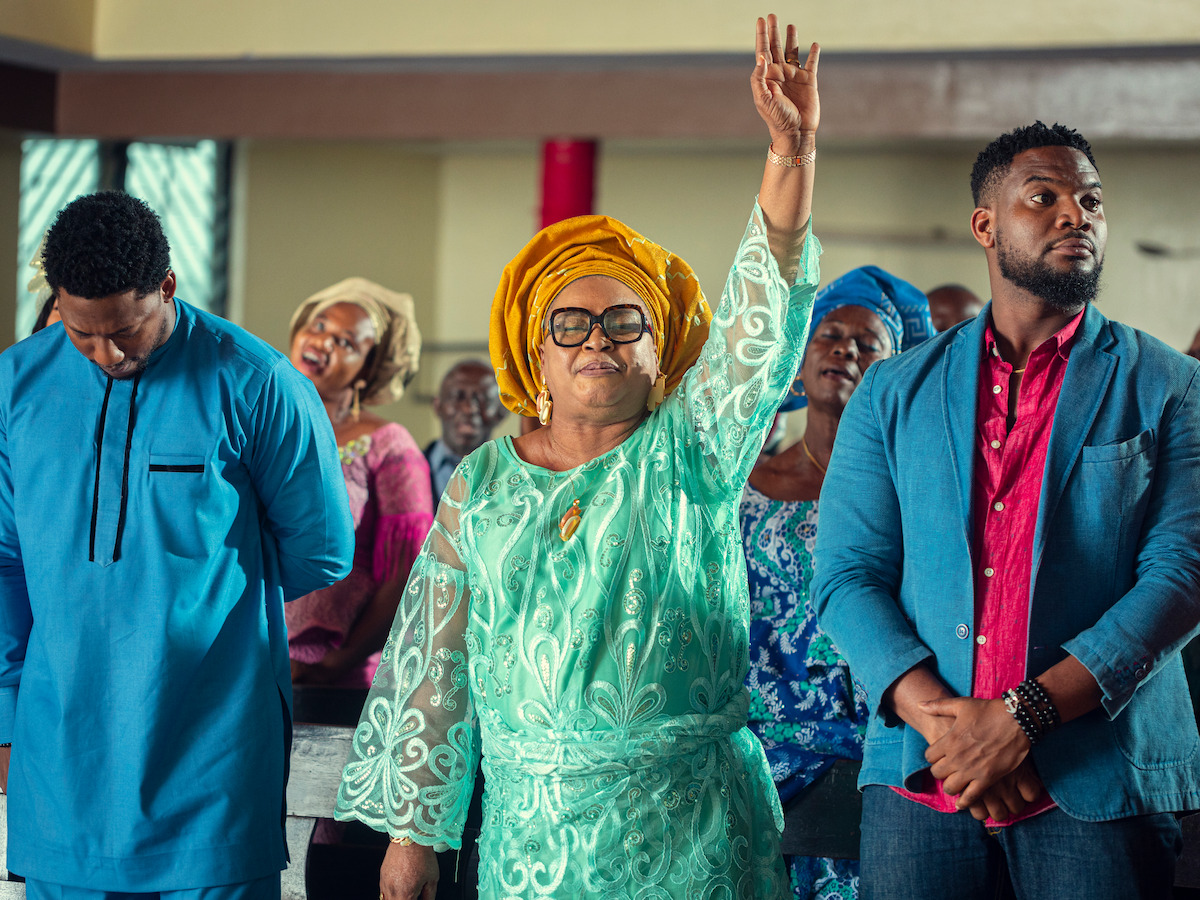
Yeah, they’re personal to me, especially the [scene] we did inside the church. Most services in Nigeria aren’t done without women covering their [heads]. The LOUD women go to the church with this big headgear. Some people make [the headgear] look small. But because they’re LOUD women — and I actually use loud literally — I believe they should look loud, presentable and classy compared to other people in the church.
We have so many tribes in Nigeria. The members of the LOUD were made to come from different tribes in Nigeria: [There] are names from the eastern part of Nigeria and from the western part of Nigeria. Some could be placed in any tribe, like Agatha is Yoruba. So what I did is I looked at Lagos being the base of the story. When you reside in Lagos... whether you’re from any area of Nigeria, you tend to want to conform to the dressing style in Lagos. You don't want people to pinpoint you, to say you are an Igbo woman or Yoruba woman or outside woman. So they tend to wear the same thing, something that makes them look similar.
Is there a queen bee of the LOUDs?
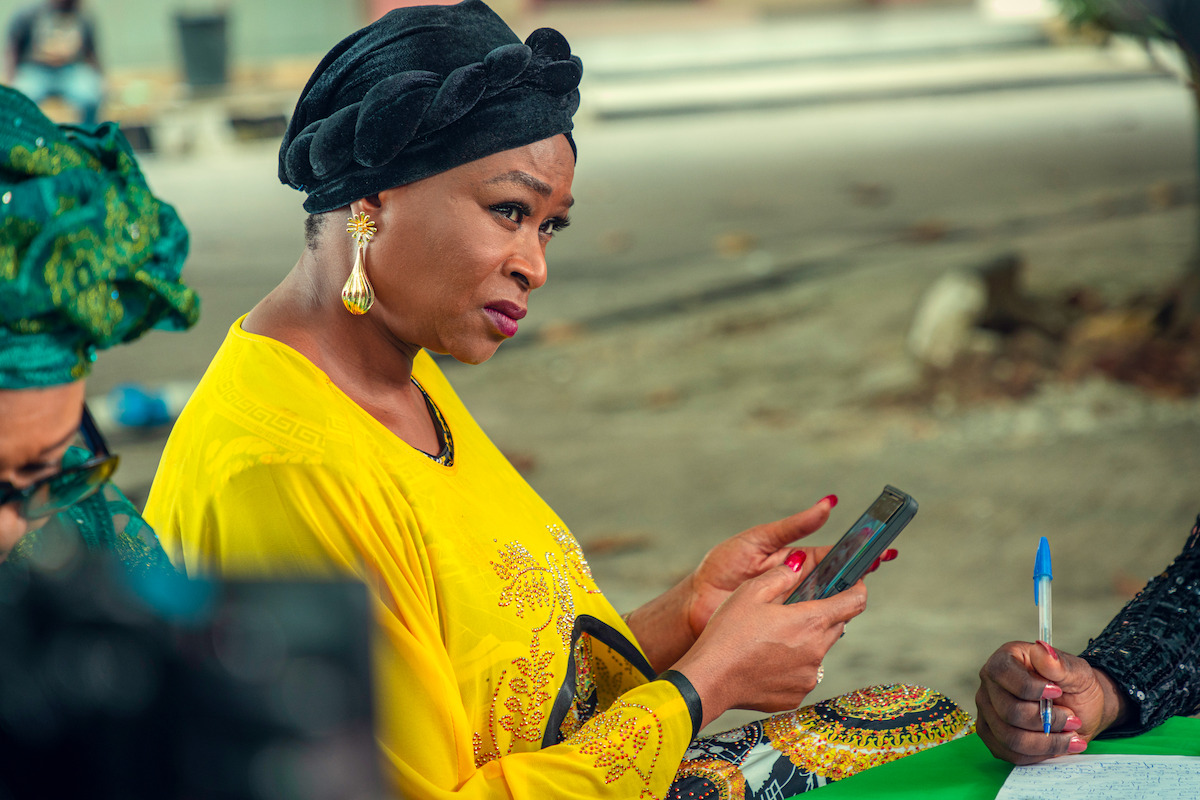
I would say the character Madam Fakorede (Carol King), the deaconess, who was always appearing in turbans. When others would go with the same head tie, she’ll go for a turban… I used that to, in a way, accentuate her. I made her stand out from the other LOUD members, because she has a peculiar character. We know that anytime we see the turban, we are seeing Deaconess Fakorede, and she’s a no-nonsense woman. She doesn’t take whatever Mama Agatha, leader of the LOUD women, is giving them. Even if it’s a good suggestion, she’ll always stand on the other side. Even for that concert they did at the gala night, she didn’t tie the headgear like the others did. She always wanted to stand out like she was not part of them.
How did you set the deaconess’s whole look apart from the others?
I made sure she didn’t dress too traditional. So most of the time she wore a flowing gown to show that elegance, to show the overbearing woman that she is, to show a class like these people that have this sense of “I’m better than you” — this delusion of grandeur… So what I did with her is: The choice of colors that I picked for her, the kind of styles I made for her, stood her out from the remaining ladies.
Is it possible to determine the LOUD women’s matriarchal status by looking at their outfits?
Traditionally and culturally in Nigeria, if you see a woman with a blouse and wrapper — which we call iro and buba — it shows age, especially in Yoruba culture. It shows you are an elderly person. It shows authority. It shows that you are not a child. It shows wisdom. For Mama Agatha, any official outing she had to do, I made her wear that blouse and wrapper.
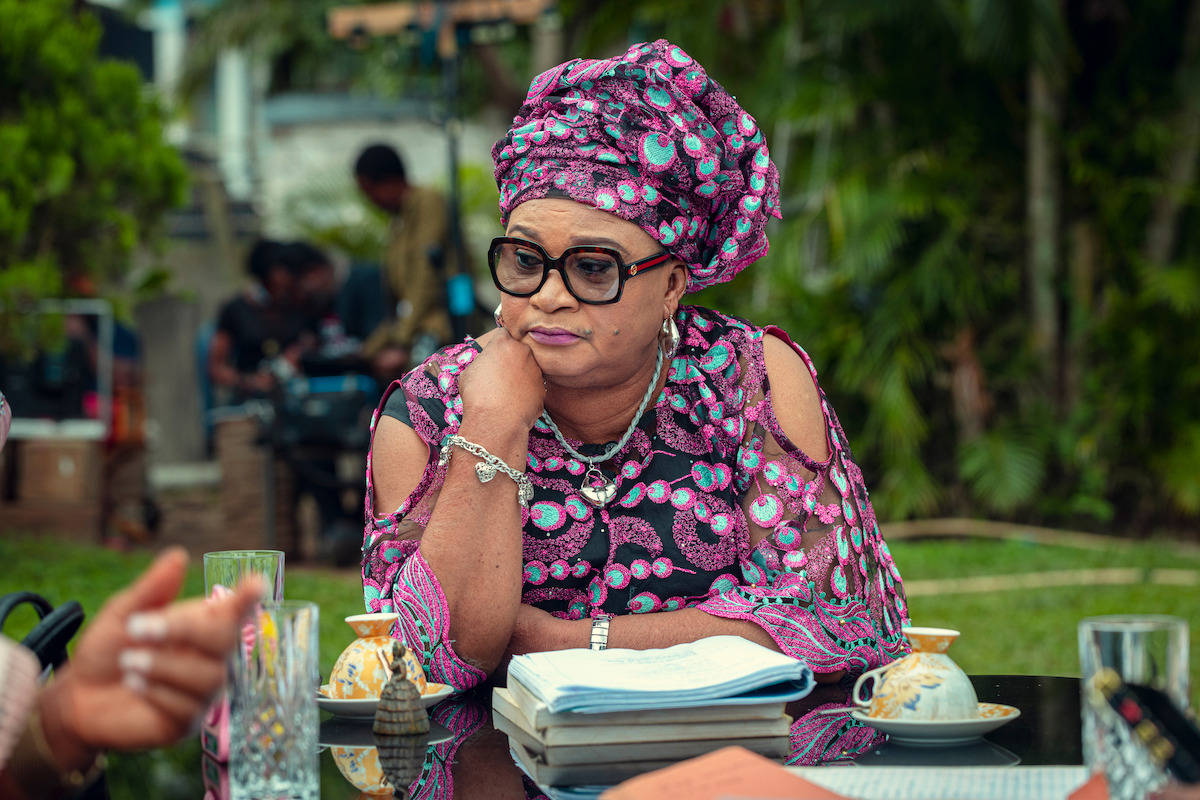
In our culture here, in Yoruba land, the way you wear iro and buba, they believe, is classy. It shows conservativeness, because according to the script, Mama is conservative. All she wanted for herself is to be happy, to make her children go get wives, get families, and settle down. The only one that is heady, and I would say is proud, amongst them is the Madam Deaconess.
What’s a fun holiday wardrobe Easter egg that viewers can look for when they watch the Ladies of Undiluted Destiny in A Naija Christmas? During the concert with [fújì musician] Pasuma, you’ll notice the LOUD women [are wearing] the same color of headgear: The head tie comes in the same color, the same material. We call it gele.
Now in Nigeria, every woman that goes to a party or that goes out... ties the same type of gele. They fold the gele finely into different layers. But traditionally in Nigeria, in Yoruba culture, there’s this beauty about gele [that doesn’t] look the same. Anywhere you turn, gele is where it’s going to stand, because the fabric is very hard. So [if] we twist it around, it’ll stay around. You twist it upside down, it’ll stay upside down. So what I did with them, by not making them tie the same tie, is: There is beauty in variety, which is the essence of Christmas. During Christmas in Nigeria, everybody comes from their various homes with different mindsets of “I want to go and celebrate. What are you celebrating?” The main message is they’re celebrating Jesus Christ. But most of us [also] believe it’s a time to give, a time of celebration and being merry.