Deep Dive
Go Inside the Negotiations at the Heart of Hostage
The new series stars Suranne Jones as a prime minister in crisis.
Aug. 23, 2025
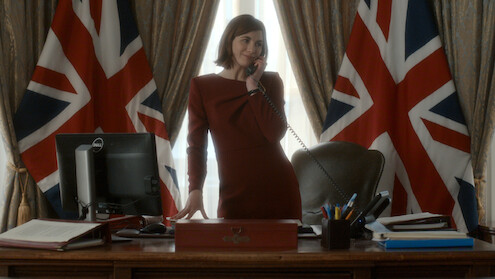
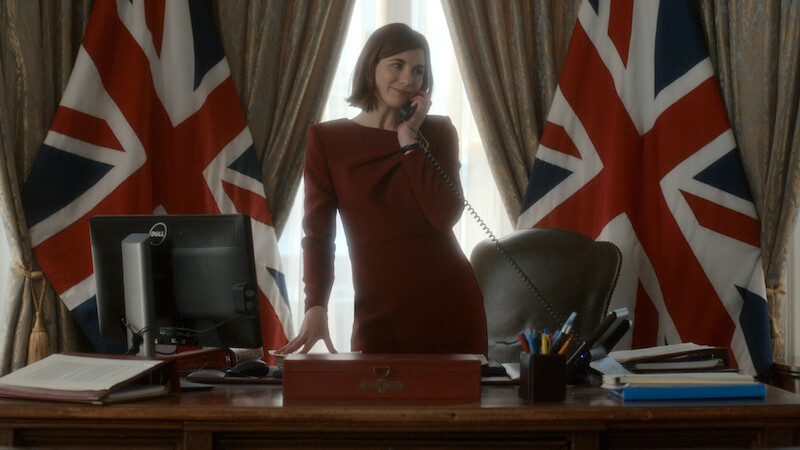
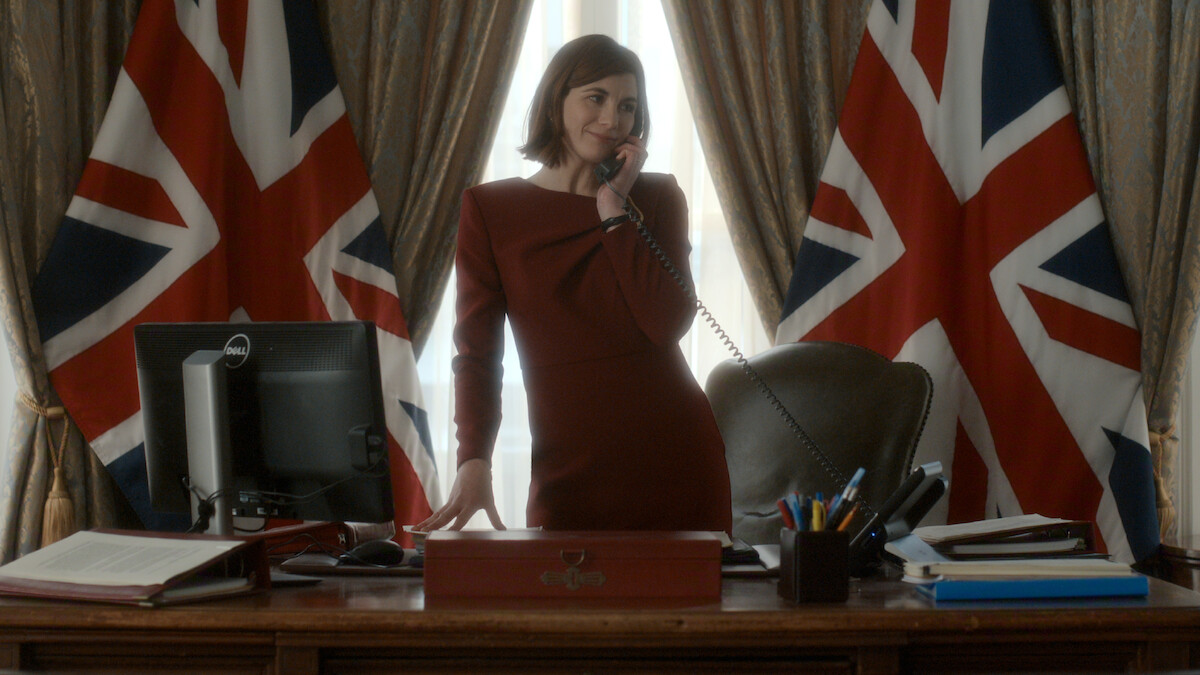
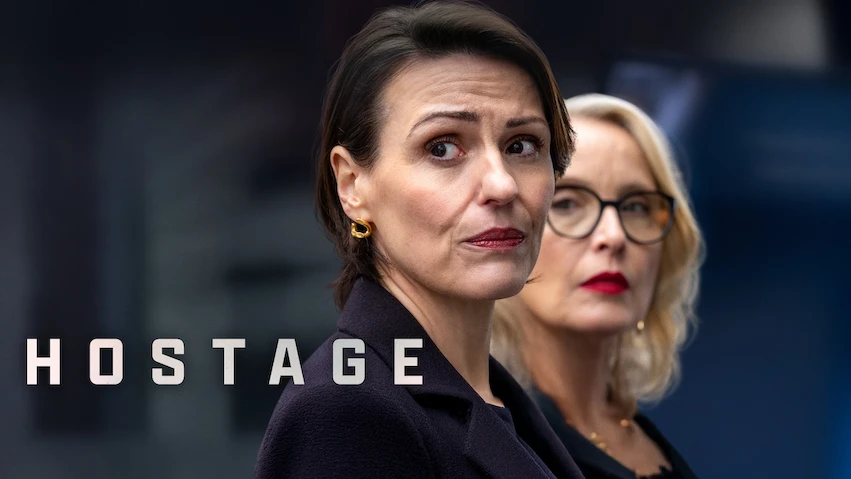
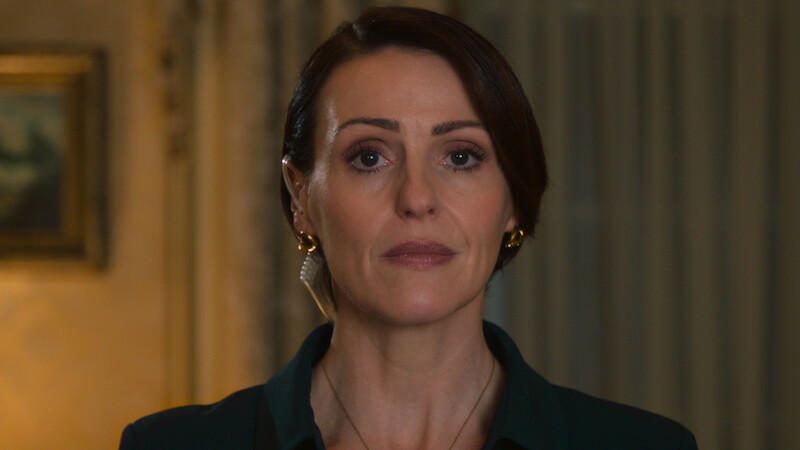
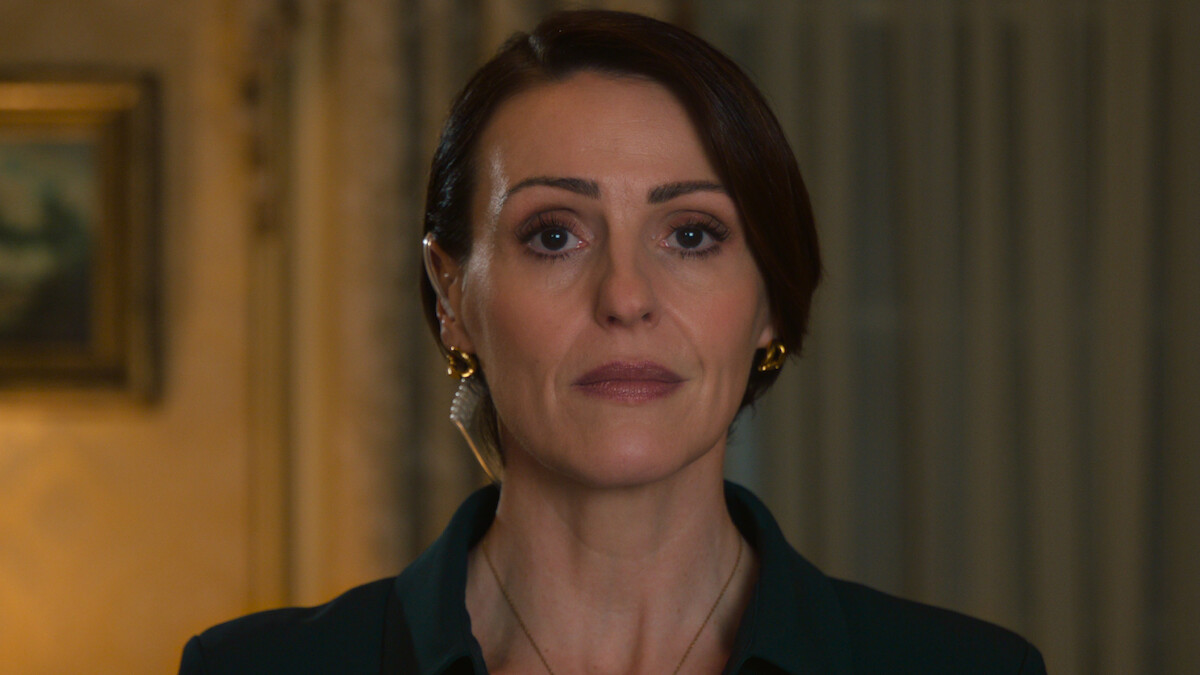
Nothing seems to be going right for Prime Minister Abigail Dalton (Suranne Jones). A drug shortage has hit the shores of England; her approval ratings are plummeting; and her relationship with key international allies is in jeopardy after a hot-mic leak of disparaging comments. As if that wasn’t enough, her husband, Alex (Ashley Thomas) has just been kidnapped. This is Hostage, a race through the halls of power where the stakes are life and death.
“[There are] so many little twists and turns,” Jones tells Tudum. “I think it’s just a brilliant, very fun, on-the-edge-of-your-seat whodunit. You keep thinking it’s one person and it’s not; it’s the next, it’s the next.”
For creator Matt Charman, everything started with Suranne Jones. “With Suranne, I imagined being able to do a show where you had a politician that you were really rooting for, a prime minister that you really believed in,” Charman tells Tudum. “The more I thought about her as prime minister, the more excited I got about making a drama where your central protagonist was someone that ordinarily you might not root for, but that in a show like this, you would absolutely get behind.”
And she’ll need all the help she can get. As tension mounts, Dalton is forced to choose between her country and her family: The kidnappers are demanding her resignation in return for the safety of her husband. But she finds an unlikely ally in French President Vivienne Toussaint (Julie Delpy) — until Toussaint herself is also targeted by the kidnappers. Will Dalton be able to escape the plot and free her husband? And who’s behind this dastardly scheme?
Read on to find out exactly how these Hostage negotiations shake out.
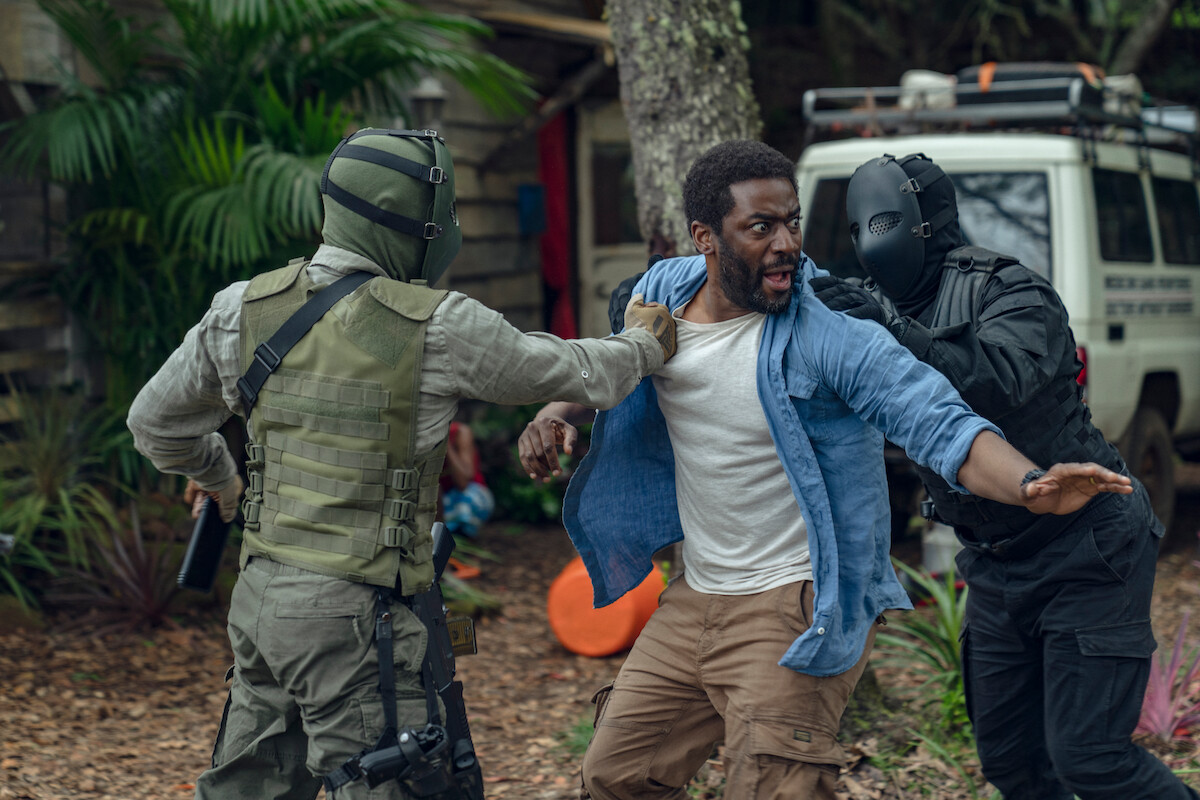
Alex, a doctor working to distribute life-saving medicine and vaccinations in French Guiana, is kidnapped in Episode 1 of Hostage by a group of masked mercenaries. The question of who grabbed him lies at the center of the series, even as Dalton and Toussaint desperately work together to try to rescue him. The kidnappers demand that Dalton resign as prime minister — or else she’ll never see her husband again.
The relationship between Abigail and Alex is rare in politics, by design. “I was always interested in the Dalton character having a really happy marriage,” Charman says. “I wanted to portray something on screen that was quite aspirational, two people that really loved each other and were desperately going to try to find a way back to each other.” Dalton sets out to do so by asking Toussaint and her French special ops team for help. The stakes of the summit between the two countries — already elevated by the drug shortage facing the United Kingdom — just got a little higher.
But just as soldiers are approaching the kidnappers’ camp, Toussaint gets a call, threatening to reveal an unsavory secret: her past affair with her own stepson, Matheo (Corey Mylchreest). Desperate to keep her husband from learning about her indiscretion, Toussaint calls off the raid, and Alex is abandoned once again.
“Her husband is absolutely involved in her ascent to power, so to follow her heart and put herself in the situation she does, and put everything at risk is kind of kamikaze,” says Delpy. “It was interesting to see someone that seems so rational and together, but behind the mask, her life is a mess.”
Charman designed Toussaint’s dilemma to directly parallel Dalton’s. “I wanted one half of this equation to be rock solid and to be really, really complete,” he says. “And so that immediately made me realize that on the other side, something needs to be broken. So I started to explore the idea that Vivienne’s in an unhappy marriage, maybe a marriage that's a political arrangement more than a love match. The united chemistry of one side and the mess of the other felt really, really good.”
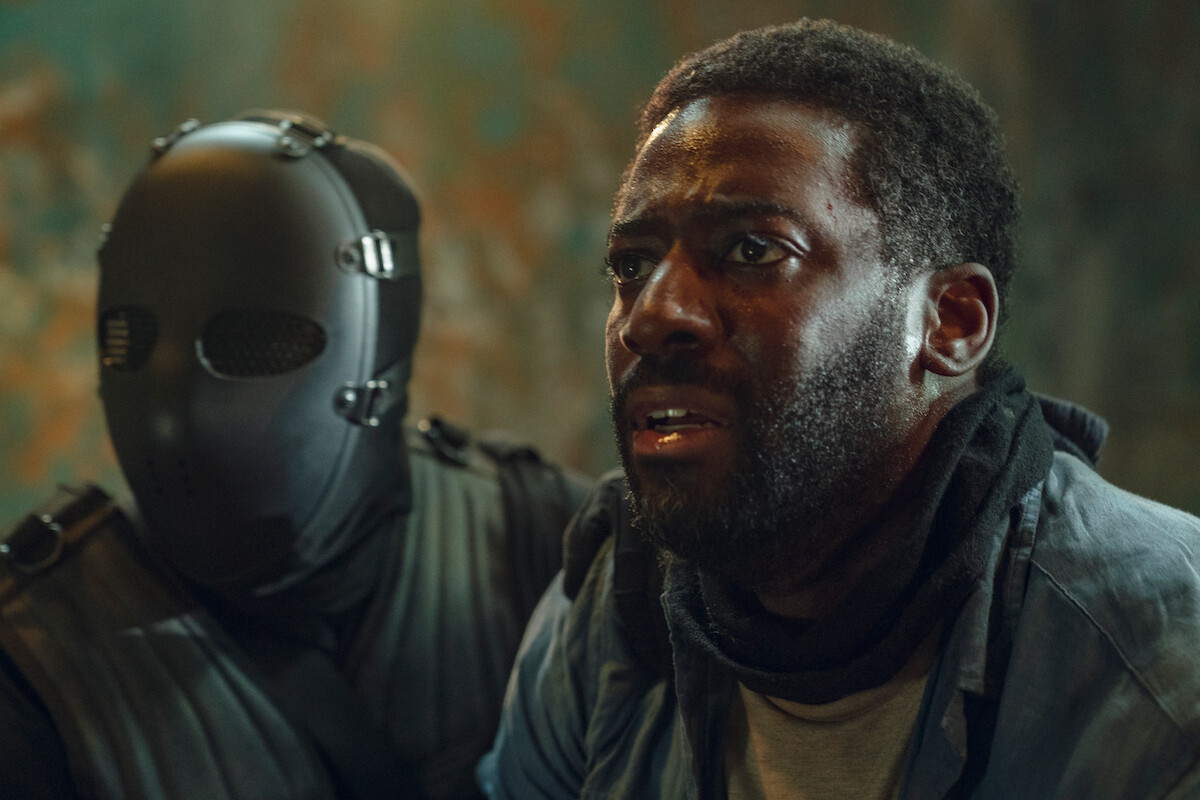
Toussaint ultimately outwits the kidnappers in quite simple fashion — she reveals her indiscretion to the world, neutering the blackmail attempt. It means placing herself at the mercy of her right-wing media mogul husband (Vincent Perez), but Toussaint stands strong, and French special ops are finally sent in to rescue Alex.
The identity of Alex’s kidnapper is also connected to an indiscretion: one of Dalton’s. In the season finale, we learn the lead kidnapper’s name, Shagan (Martin McCann), and his backstory: His pregnant wife was killed after Dalton ordered the evacuation of British troops from Belize. It’s a perversely sympathetic motivation for a character who previously seemed irredeemable.
It all reflects on Dalton’s own actions. “Why has this character done the things they’ve done? Why have they killed people? Why have they pushed themselves to this place?” Charman says of his antagonist. “What I wanted to do was create a really emotional, fraught, difficult situation that would make us as an audience wonder whether Abigail had done something wrong; could she have played this differently?” And when the kidnappers kill Dalton’s ailing father (James Cosmo), she finds herself asking the same questions.
“You have decisions that you make in a split second, which is what she had to do, years before when she was a junior minister,” Jones says. “The repercussions of that, of them waiting until she got into power … the responsibility’s so huge.”
But the time for regrets is long gone as Shagan ramps up his campaign against the British government. In a heartbreaking twist, Matheo realizes that his new girlfriend Saskia (Sophie Robertson) is working with the kidnappers. He brings a laptop full of evidence to Downing Street — but finds himself playing into the terrorists’ hands by bringing a disguised bomb into the heart of the British government. “This wasn’t guys making it up on the hoof,” Charman says. “They had made really advanced plans, planning for a summit months in advance that would bring these two women together.”
Toussaint, meanwhile, is going through her own change of heart. She gives a speech on the steps of Downing Street, decrying her own failure to be true to her politics and promising the U.K. the medicine they need with no strings attached. “You see it in politics all the time,” Delpy says. “They start off a certain way, but then they have to give up on their dreams and make choices that have the least bad result – it’s like Sophie’s Choice in a way. They make sacrifices that are ugly and bad.”
Toussaint rediscovers her conscience just in time. When the laptop explodes, the French president sacrifices herself pushing her stepson and ex-lover Matheo out of the way. Her final speech on the steps of Downing Street, acknowledging her mistakes and promising to move forward with sincerity instead of cynicism, rings in Dalton’s ears as the series goes on.
“Toussaint is so far into the world of politics, and the way that things are played, and the disassociation she's had to create with her emotions to get to a place where she can eventually do good for the people,” Jones says. “Abigail doesn't understand any of that.” Now she does.
The creator of the characters agrees. “The death of Vivienne hangs over the show,” Charman says. “It becomes a sort of guiding light, almost, for Abigail in terms of speaking truth to power, following through, making sure that, even when she seemingly has lost power, that doesn’t mean she gives up.”
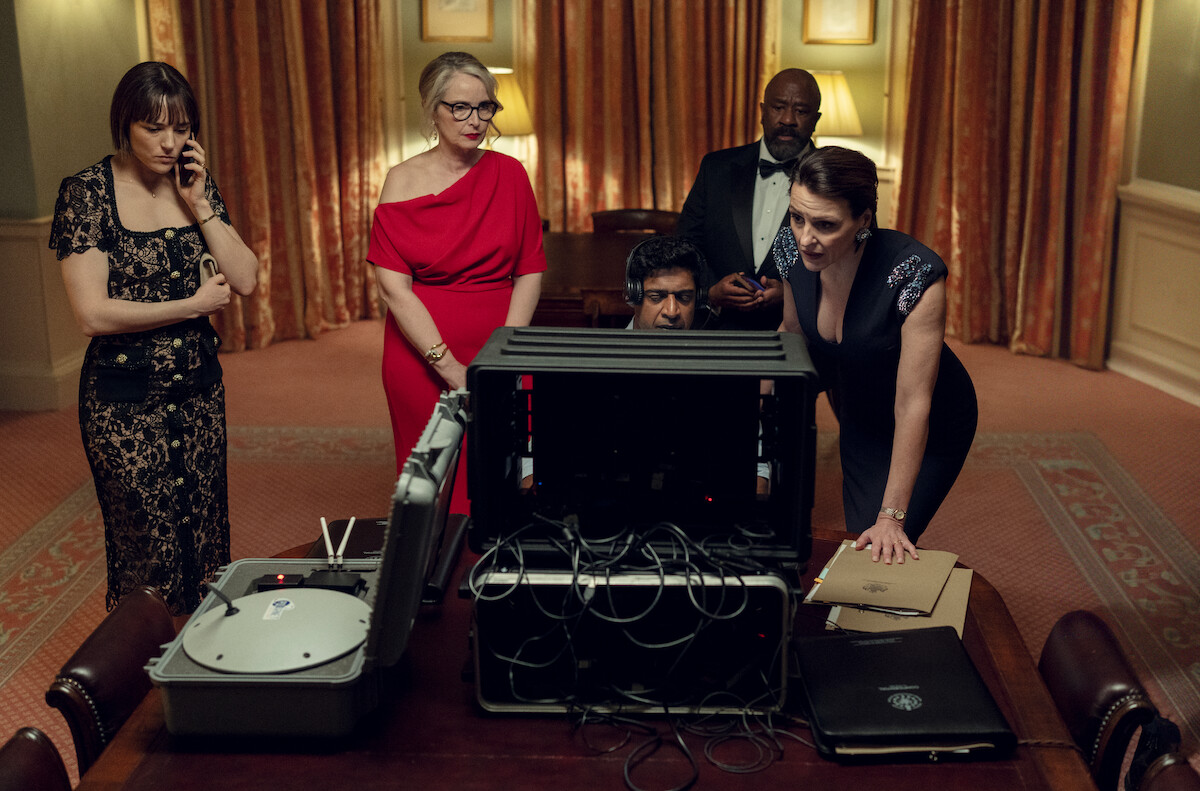
At the kidnapping scheme’s heart is a devastating betrayal: someone at 10 Downing Street is working with the kidnappers. Dalton at first suspects her chief of staff Kofi (Lucian Msamati), whose offshore bank account comes under scrutiny. But the prime minister soon learns that Kofi engaged in insider trading to fund his wife’s medical treatment, an immoral decision that she elects to forgive. Kofi points the finger at Toussaint’s aide Adrienne (Jehnny Beth), the true mole.
The scale of the treachery grows even wider. It soon becomes clear that Dalton is the victim of a military coup led by Shagan’s commanding officer General Livingston (Mark Lewis Jones), who seizes power in the midst of the state of emergency prompted by the kidnapping.
“Mark is so brilliant that you wouldn’t think it was him, because Abigail goes to him for help,” Jones says. “He believes in what he’s doing, and she believes in what she’s doing, and sometimes, even though it’s for the same country, those ideals are so far apart.”
“Within any democracy there are institutional powers whose agenda doesn’t fully line up with an elected politician’s agenda,” Charman adds. “And so I was really interested early on in finding the fault lines between someone who’s won an election, and a group of people who have fought for their country and didn’t feel this politician had the best interest of the country at heart.”
Livingston, furious at Dalton’s cuts to the defense budget, takes advantage of Dalton’s absence when she’s ousted in a vote of no confidence. But she soon manages to turn the tables on him, exposing his involvement in the kidnapping and bombing.
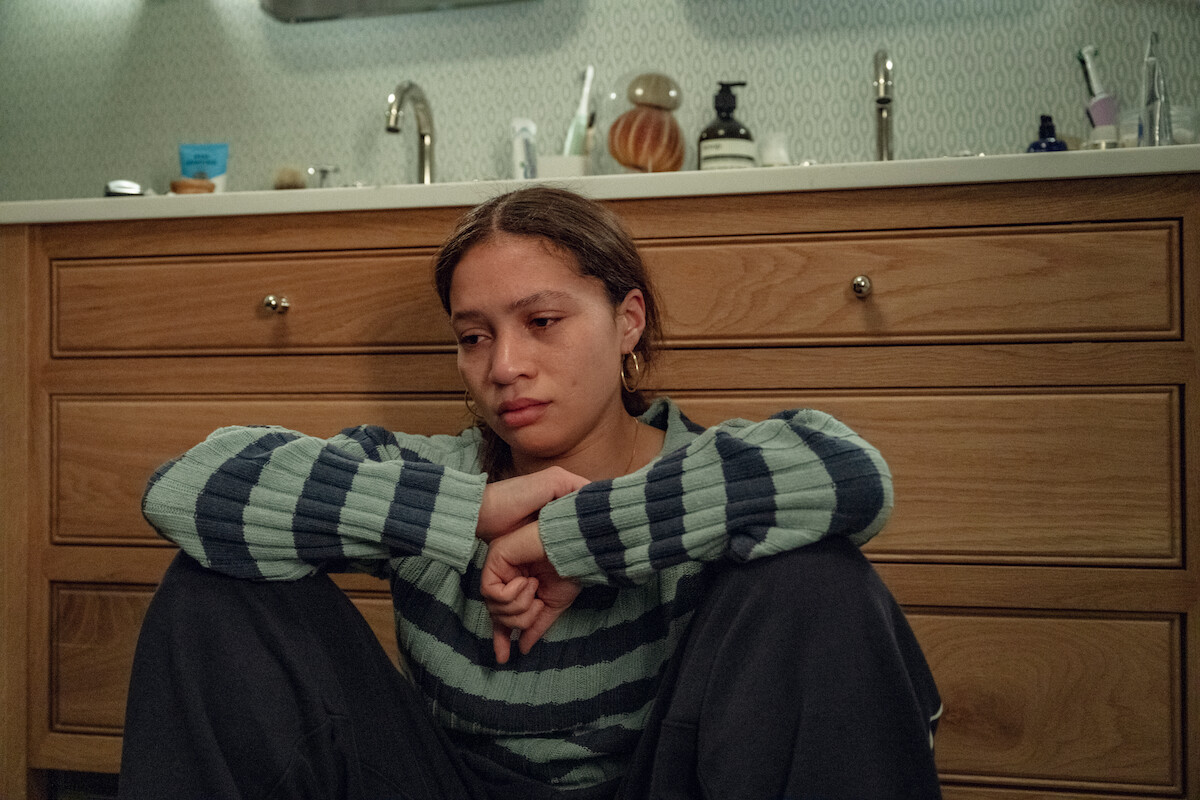
Matheo brings Dalton’s family to a safe house, where they find an unpleasant surprise waiting for them: Saskia and Shagan. Dalton races to rescue her family, once again held hostage. In a tragic twist, it’s Sylvie (Isobel Akuwudike), Dalton’s daughter, who strikes the killing blow, shooting Shagan with a dropped gun.
“I wanted in that moment to feel two things: relief that this threat has gone, but an awful sense of, ’What does this now mean for this family?’ ” Charman says. “You can slay the dragon, but that doesn’t mean everything’s OK. There is collateral damage to all of these things; and that the thing that you wanted to protect more than anything, which is your family, now has a big crack running through it.”
Matheo’s relationship with Saskia comes in handy; she spares his life and leaves the group to wait for the authorities. We flash forward in time, to a reinstated Dalton back at the rebuilt 10 Downing Street, preparing for an address. The crack in her family has been repaired, at least temporarily: Both Alex and Sylvie are there, supporting her. Kofi, too, is back at work, his indiscretions forgiven. Dalton walks down the steps to call a new general election — but not before getting a surge of strength from a portrait of Vivienne Toussaint, prominently placed in the prime minister’s residence.
“She ends the show almost where she started; imagine the good you could do if you allowed yourself to be truly who you are in 10 Downing Street,” Charman says. “She uses Vivienne’s words to call a general election where she will say, ‘This is me, this is the politician I am. If you like that, vote for me. If you don’t, I get it. But no more pretending. This is the person I want to be.’ And that’s inspired directly by Vivienne.”
Hostage is now streaming on Netflix.